


2 Kings 15:33
Bible text: King James Version (1769 Blayney text) · Public domain
Bible text: King James Version with Strong's numbers · Public domain
Bible text: Berean Standard Bible · Public domain
Bible text: American Standard Version (1901) · Public domain
Bible text: World English Bible, Messianic edition · Public domain
Bible text: Geneva Bible (1599) · Public domain
Bible text: Young's Literal Translation · Public domain
- בֶּןbena son ofH1121N-mscNoun Singular Masculine Construct
- עֶשְׂרִים'es·RimtwentyH6242N-mpNoun Plural Masculine Absolute
- וְחָמֵשׁve·cha·Meshand fiveH2568Conj-w ¦ N-csNoun Singular common gender Absoluteוְandחָמֵשׁfive
- שָׁנָהsha·Nahyear[s]H8141N-fsNoun Singular Feminine Absolute
- הָיָהha·Yahhe wasH1961V-Qal-Perf-3msVerb Qal Perfect 3rd Singular Masculine
- בְמָלְכוֹve·ma·le·Khowhen he became kingH4427Prep-b ¦ V-Qal-Inf ¦ 3msVerb Qal Infinitive Constructבְwhenמָלְכbecame kingוֹhe
- וְשֵׁשׁve·sheshand six-H8337Conj-w ¦ N-csNoun Singular common gender Absoluteוְandשֵׁשׁsix-
- עֶשְׂרֵה'es·RehteenH6240N-csNoun Singular common gender Absolute
- שָׁנָהsha·Nahyear[s]H8141N-fsNoun Singular Feminine Absolute
- מָלַךְma·Lakhhe reignedH4427V-Qal-Perf-3msVerb Qal Perfect 3rd Singular Masculine
- בִּירוּשָׁלִָםbi·ru·sha·Limin JerusalemH3389Prep-b ¦ N-properNoun Proper LocationבִּinירוּשָׁלִָםJerusalem
- וְשֵׁםve·Shemand [the] name ofH8034Conj-w ¦ N-mscNoun Singular Masculine Constructוְandשֵׁם[the] name of
- אִמּוֹ'i·Mohis motherH517N-fsc ¦ 3msNoun Singular Feminine Constructאִמּmotherוֹhis
- יְרוּשָׁאye·ru·Sha'[was] JerushaH3388N-proper-fNoun Proper Feminine
- בַּתbat[the] daughter ofH1323N-fscNoun Singular Feminine Construct
- צָדוֹקtza·DokZadokH6659N-proper-mNoun Proper Masculine
English is a literal word-by-word gloss of the Hebrew, not the KJV's wording. Why?
This is the original text the KJV's translators worked from — each Hebrew word with its own literal English meaning in this verse, prepared by scholars at Tyndale House, Cambridge. The KJV translates whole sentences, not word by word, so its wording differs: one Hebrew word can become several English words, and the KJV may choose “the LORD” where the gloss reads “Yahweh”. Both are faithful — they answer different questions. For the KJV's own rendering, switch to the KJV text.
Details
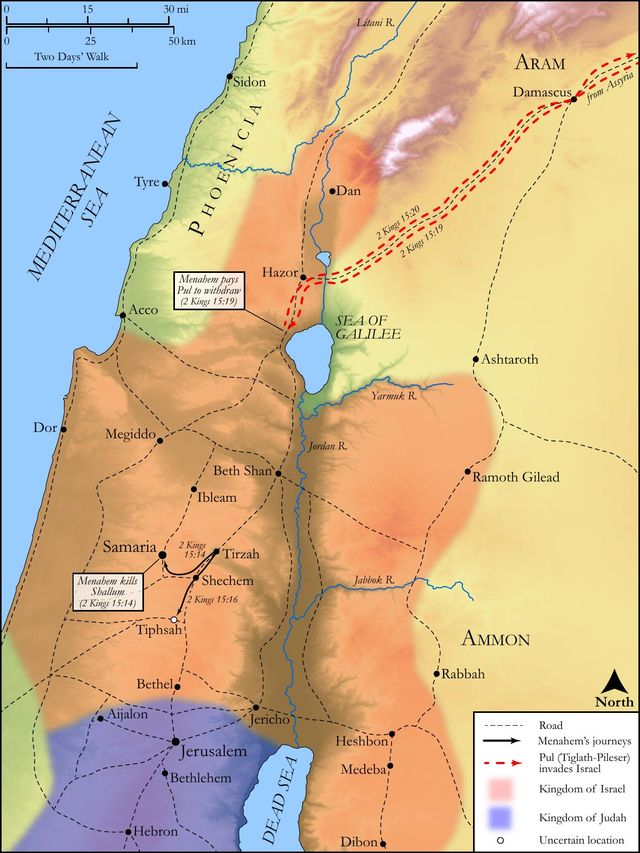
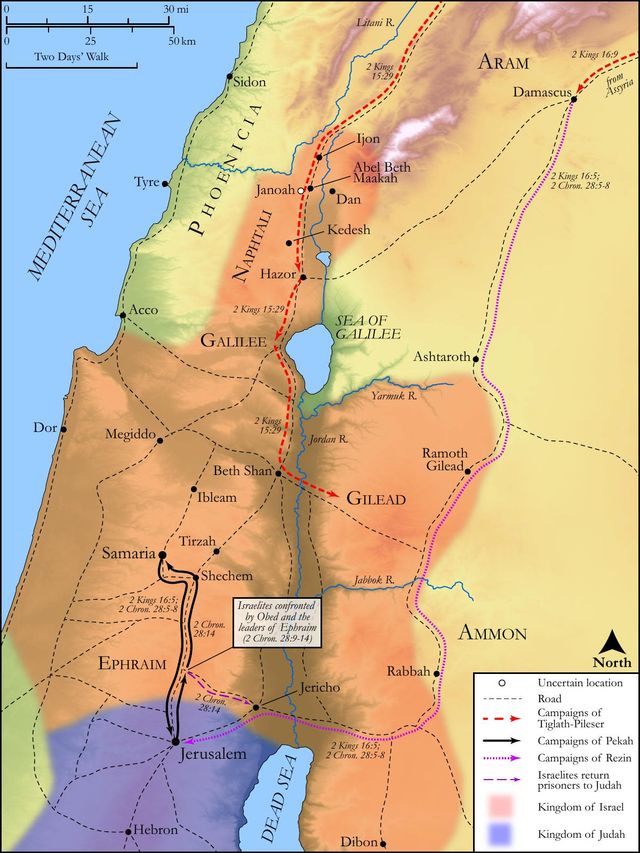
See on the biblical-era maps
Study this verse
Public-domain commentary
Matthew Henry
From his Commentary on the Whole Bible. Henry comments on passages, not single verses — this entry covers 2 Kings 15:32–38.
We have here a short account of the reign of Jotham king of Judah, of whom we are told, 1. That he reigned very well, did that which was right in the sight of the Lord, Kg2 15:34. Josephus gives him a very high character, stating that he was pious towards God, just towards men, and laid out himself for the public good, - that, whatever was amiss, he took care to have it rectified, - and, in short, wanted no virtue that became a good prince. Though the high places were not taken away, yet to draw people from them, and keep them close to God's holy place, he showed great respect to the temple, and built the higher gate which he went through to the temple. If magistrates cannot do all they would for the suppressing of vice and profaneness, let them do so much the more for the support and advancement of piety and virtue, and the bringing of them into reputation. If they cannot pull down the high places of sin, yet let them build and beautify the high gate of God's house. 2. That he died in the midst of his days, Kg2 15:33. Of most of the kings of Judah we are told how old they were when they began their reign, and by that may compute how old they were when they died; but no account is kept of the age of any of the kings of Israel that I remember, only of the years of their reigns. This honour God would put upon the kings of the house of David above those of other families. And by these accounts it appears that there was none of all the kings of Judah that reached David's age, seventy, the common age of man. Asa's age I do not find. Uzziah lived to be sixty-eight, Manasseh sixty-seven, and Jehoshaphat sixty; and these were the three oldest; many of those that were of note did not reach fifty. This Jotham died at forty-one. He was too great a blessing to be continued long to such an unworthy people. His death was a judgment, especially considering the character of his son and successor. 3. That in his days the confederacy was formed against Judah by Rezin and Remaliah's son, the king of Syria and the king of Israel, which appeared so very formidable in the beginning of the reign of Ahaz that, upon notice of it, the heart of that prince was moved and the heart of the people, as the trees of the wood are moved with the wind, Isa 7:2. The confederates were unjust in the attempt, yet it is here said (Kg2 15:37), The Lord began to send them against Judah, as he bade Shimei curse David, and took away from Job what the Sabeans robbed him of. Men are God's hand - the sword, the rod in his hand - which he makes use of as he pleases to serve his own righteous counsels, though men be unrighteous in their intentions. This storm gathered in the reign of pious Jotham, but he came to his grave in peace and it fell upon his degenerate son.
Historical interpretation
Historical reception
1 surviving comment on this verse from the historical church.
“In the second year of King Pekah son of Remaliah of Israel, King Jotham son of Uzziah of Judah began to reign.” After rising to power in that year, Jotham administered the government [of Judah] for sixteen years, earning great praise. While the second book of the Annals has shown all the feats illustriously accomplished by him, the Scripture never reproaches him in this passage for any error, except for his toleration of the high places, which was a fault common to all the most praised kings of Judah. In the first place, he strengthened Jerusalem with new fortifications and built towers and castles in desert places. He conquered the Ammonites, who were perpetual enemies of the Jews, and ordered them for the future to pay the kings of Judah an annual tribute.
Continue studying 2 Kings 15:33 across the web’s major study libraries — every link below opens this exact verse, chapter, or book on the destination site.
Read & Compare
 BibleGatewayThis verse in more than 200 translations and 70 languages.
 Bible.comThe YouVersion reader — hundreds of translations, reading plans, and highlights.
 ESV.orgCrossway's official English Standard Version reader.
 NET BibleThe NET translation with 60,000+ translators' notes on every rendering decision.
 STEP BibleTyndale House's free study tool — original text, vocabulary, and scholarly resources.
 BibliaLogos Bible Software's free web reader.
 USCCBThe New American Bible (Revised Edition) with the U.S. bishops' study notes.
Commentaries
 BibleHub CommentariesDozens of classic commentaries on this verse, gathered on one page.
 StudyLightMore than 100 commentary sets — the largest collection on the web.
 BibleRefPlain-English commentary on what this verse means, verse by verse.
 Enduring WordDavid Guzik's free commentary on this chapter, widely used by Bible teachers.
 Bible Study ToolsVerse commentary alongside Greek and Hebrew study aids.
Original Language & Research
- BibleHub InterlinearThe verse word by word — original language, transliteration, and English.
- BibleHub LexiconEvery word's original-language definition and Strong's entry.
 Blue Letter BibleDeep-study tools — Strong's numbers, concordance, and word studies.
 SefariaThe Hebrew text with Rashi and centuries of Jewish commentary.
Sermons, Hymns & Audio


TrulyRandomVerse is not affiliated with these sites and doesn’t control their content. They’re linked because they’re genuinely useful.
Summary
Second Kings 15:33 introduces King Jotham of Judah, providing the standard regnal data typical for the monarchs of both Judah and Israel within the books of Kings. It details his age at accession (twenty-five years), the duration of his reign (sixteen years), and the capital city from which he ruled (Jerusalem). Crucially, the verse also identifies his mother, Jerusha, and her father, Zadok, a detail that often underscored the king's legitimacy and connection to significant lineages within the kingdom, particularly highlighting a link to the esteemed priestly family.
Context
ShowHideLiterary Context
This verse is an integral part of the Deuteronomistic History, specifically situated within the book of 2 Kings, which meticulously chronicles the reigns of the kings of both Israel and Judah. The narrative evaluates each monarch's faithfulness to the Mosaic covenant from a theological perspective. Immediately preceding this verse, the text details the long and generally prosperous, albeit ultimately flawed, reign of Jotham's father, Uzziah (also known as Azariah). Second Kings 15:5 explicitly states that Uzziah was afflicted with leprosy, necessitating Jotham's co-regency, a period of shared rule that ensured stability in the Southern Kingdom. Following 2 Kings 15:33, verses 2 Kings 15:34-35 provide a summary of Jotham's reign, affirming his generally righteous character while noting his failure to remove the high places. The consistent use of the regnal formula throughout 1 and 2 Kings provides a structured framework for understanding the succession and duration of each monarch's rule, emphasizing continuity and divine oversight.
Historical & Cultural Context
Jotham's reign occurred during the mid-8th century BCE, a period of significant political and religious flux among the nations round about. Judah, though geographically smaller than the northern kingdom of Israel, maintained its independence and the continuity of the Davidic dynasty. Jerusalem served as both the political and religious capital, housing the Temple, which was central to Judahite identity and worship. The mention of the king's mother, particularly her lineage, was a common practice in the royal records of Judah, as in the books of Kings. In Judah, the "queen mother" (Hebrew: Gebirah) often held a position of considerable influence and prestige, acting as an advisor and a symbol of dynastic continuity. The identification of Jerusha as "the daughter of Zadok" is particularly noteworthy. The Zadokite line was the dominant priestly family in Jerusalem from the time of David and Solomon, holding a revered and authoritative position within the religious establishment. This connection would have lent additional legitimacy and religious gravitas to Jotham's rule, linking him not only to the Davidic royal line but also to the established priestly authority.
Key Themes
ShowHideThis verse, though brief, contributes to several overarching themes within 2 Kings and the broader biblical narrative. The primary theme is Regnal Succession and Divine Sovereignty, highlighting God's meticulous oversight of the Davidic line and the orderly transfer of power. The precise numerical data (age, reign length) underscores the biblical writers' commitment to historical record-keeping, which serves to validate the unfolding of God's covenant purposes. Another significant theme is Legitimacy and Lineage, particularly through the mention of the queen mother. In Judah, the queen mother's identity was crucial for establishing the king's credentials and often hinted at the influences within the royal court. The specific mention of Zadok's lineage connects Jotham to the Priestly Authority and Religious Establishment, suggesting a king whose background was intertwined with the spiritual leadership of the nation. Finally, while not explicit in this verse, it implicitly sets the stage for the theme of Righteous Leadership, as Jotham's reign is generally characterized positively in the subsequent verses, such as 2 Kings 15:34.
Exposition and Analysis
ShowHideKey Word Analysis
ShowHideFrom a primitive root meaning "to reign; inceptively, to ascend the throne; causatively, to induct into royalty." This term signifies the exercise of royal authority and the period of a king's rule. In the context of 2 Kings, it emphasizes the established institution of monarchy and God's sovereignty over the appointment and duration of each king's time on the throne.
This proper noun, derived from a passive participle meaning "possessed," identifies Jotham's mother. Her name's inclusion is significant for Judahite kings, underscoring the queen mother's prominent and influential role within the royal court and her importance in establishing the king's legitimacy and dynastic continuity.
From a root meaning "to build" (as feminine of bên), this word denotes a female offspring. In this verse, it specifically highlights Jerusha's lineage, connecting her to Zadok and thereby linking King Jotham to a revered priestly family, which would have added considerable prestige and religious gravitas to his rule.
Verse Breakdown
ShowHide"Five and twenty years old was he when he began to reign"
This clause provides the specific age of Jotham at the commencement of his kingship. At twenty-five, he would have been considered a mature adult in ancient Israel, indicating a readiness for the weighty responsibilities of governance and suggesting a king capable of independent and informed decision-making, rather than a child-ruler requiring extensive regency.
"and he reigned sixteen years in Jerusalem"
This segment specifies the duration of Jotham's rule and the location of his royal seat. A sixteen-year reign indicates a reasonably stable and substantial period of leadership. Ruling "in Jerusalem" signifies his continuity within the Davidic dynasty, as Jerusalem was the divinely chosen capital and the enduring seat of the Davidic covenant, reinforcing the legitimacy and stability of the Judahite monarchy.
"And his mother's name [was] Jerusha, the daughter of Zadok"
This final clause, a consistent feature in the accounts of Judahite kings, identifies the king's mother and her paternal lineage. The explicit mention of the queen mother's identity, particularly her connection to the esteemed Zadokite priestly family, served multiple critical purposes: it authenticated the king's birth, highlighted potential influences on his upbringing and character, and, in this specific instance, reinforced his ties to both the royal and the religious establishments, thereby lending additional prestige and legitimacy to his reign.
Literary Devices
ShowHideThe primary literary device at play in 2 Kings 15:33 is the Regnal Formula. This standardized introductory and concluding pattern for each king's reign is a hallmark of the books of Kings. It consistently provides key biographical and chronological data such as the king's age at accession, length of reign, capital city, and the name of his mother (specifically for Judahite kings), often followed by a theological assessment of his rule. This formula provides structural coherence to the narrative and underscores the theological message that God is sovereign over human history and that each king's rule is part of a larger divine plan. The inclusion of Genealogy/Lineage through the mention of Jerusha and Zadok is also significant, emphasizing the importance of family background and the continuity of both royal and priestly lines within God's covenant purposes, particularly in Judah.
Theological and Thematic Connections
ShowHideThe meticulous recording of regnal data in 2 Kings 15:33, including the king's age, reign length, and maternal lineage, underscores a profound theological truth: God is sovereign over all human history and the affairs of nations. Even the seemingly mundane details of succession and family background are part of His overarching plan. This verse highlights the importance of legitimate authority and the continuity of the Davidic line, which was central to God's covenant promises to David. The connection to the Zadokite priesthood further emphasizes the intertwined nature of royal and religious authority in Judah, suggesting that a king's rule was ideally meant to be in harmony with divine law and priestly guidance. This attention to detail serves to authenticate the historical narrative and reinforce the idea that God works through specific individuals and their circumstances to fulfill His purposes.
Reflection and Application
ShowHideThe detailed historical records found in Scripture, such as the precise regnal information for King Jotham, serve as a powerful reminder that God is intimately involved in the unfolding of human history. Every leader, regardless of their position or power, operates within the parameters of God's sovereign will. For us today, this calls for a deep trust in God's providence, even when circumstances seem chaotic or leadership appears flawed. It also challenges us to consider our own "reign"—the sphere of influence and responsibility God has entrusted to us. Just as Jotham's lineage and the length of his rule were recorded, so too are our lives being lived out before God. Our character, our decisions, and our faithfulness (or lack thereof) contribute to a legacy that extends beyond our immediate impact. We are called to live with integrity, to seek righteousness, and to understand that our background, while influential, does not ultimately define our walk with God; rather, it is our personal obedience and devotion to Him that truly matters. We are to be faithful stewards of the time and talents God has given us, recognizing that our ultimate accountability is to Him.
Questions for Reflection
ShowHideFAQ
ShowHideWhy is the king's mother's name mentioned for Judahite kings but not always for Israelite kings?
ShowHideThe consistent mention of the queen mother's name for Judahite kings (like Jerusha in 2 Kings 15:33) reflects a significant cultural and political difference between the two kingdoms. In Judah, the queen mother (Hebrew: Gebirah) often held an official and influential position within the royal court, sometimes even serving as a co-regent or advisor. Her identity was crucial for establishing the king's legitimacy and dynastic continuity within the stable Davidic lineage. In contrast, the northern kingdom of Israel experienced frequent dynastic changes and instability, with many kings coming to power through coups rather than orderly succession, which may have diminished the consistent official role or importance of the queen mother in their records.
What is the significance of Jerusha being "the daughter of Zadok"?
ShowHideThe name Zadok is highly significant in Israelite history, primarily associated with the high priestly line established during the time of King David and Solomon (1 Kings 2:35). By identifying Jerusha as "the daughter of Zadok," the text likely indicates a connection to this prominent and revered priestly family. This connection would have lent additional religious legitimacy and prestige to Jotham's reign, linking him not only to the Davidic royal lineage but also to the established religious authority of the Zadokite priesthood. It suggests a king whose background was intertwined with both the political and spiritual leadership of the nation, potentially influencing his reign towards righteousness.
How does this seemingly simple verse contribute to the broader narrative of the book of Kings?
ShowHideWhile 2 Kings 15:33 provides basic biographical data, it serves several crucial functions within the Deuteronomistic History. Firstly, it maintains the chronological and historical framework of the book, systematically detailing the succession of kings and providing a sense of linear progression. Secondly, it reinforces the theme of divine sovereignty over human rulers and history, demonstrating God's meticulous oversight of the Davidic covenant and the unfolding of His plan for His people. Thirdly, by introducing Jotham with the standard regnal formula, it sets the stage for the theological evaluation of his reign that follows in subsequent verses (2 Kings 15:34-35), allowing the biblical author to assess his faithfulness to God's commands and contribute to the overall message of covenant obedience and disobedience.
Christ-Centered Fulfillment
ShowHideThe meticulous recording of Jotham's lineage and reign in 2 Kings 15:33 points forward to the ultimate King, Jesus Christ. The emphasis on the continuity of the Davidic line, to which Jotham belonged, is crucial for understanding the Messianic promises. God's covenant with David guaranteed an eternal dynasty (2 Samuel 7:16), and every righteous king in Judah, including Jotham, served as a temporary and imperfect steward of that promise. Jesus, however, is the true and eternal Son of David (Matthew 1:1), whose reign is not limited by age or years but is everlasting (Luke 1:32-33). Furthermore, the connection to the Zadokite priestly line through Jotham's mother foreshadows Christ's dual role as both King and High Priest. Unlike the earthly priests who were descendants of Zadok and offered animal sacrifices, Jesus is our great High Priest, who offered Himself as the perfect and final sacrifice (Hebrews 4:14; Hebrews 9:12). Thus, in the seemingly mundane details of Jotham's introduction, we glimpse the divine plan unfolding, culminating in the reign of the Messiah, who perfectly fulfills all the offices and promises of the Old Testament, bringing about the new covenant through His blood (Hebrews 8:6).