


2 Chronicles 4:21
Bible text: King James Version (1769 Blayney text) · Public domain
Bible text: Berean Standard Bible · Public domain
Bible text: American Standard Version (1901) · Public domain
Bible text: World English Bible, Messianic edition · Public domain
Bible text: Geneva Bible (1599) · Public domain
Bible text: Young's Literal Translation · Public domain
- וְהַפֶּרַחve·ha·Pe·rachand the blossomH6525Conj-w ¦ Art ¦ N-msNoun Singular Masculine Absoluteוְandהַtheפֶּרַחblossom
- וְהַנֵּרוֹתve·ha·ne·Rotand the lampsH5216Conj-w ¦ Art ¦ N-fpNoun Plural Feminine Absoluteוְandהַtheנֵּרוֹתlamps
- וְהַמֶּלְקַחַיִםve·ha·mel·ka·Cha·yimand the tongsH4457Conj-w ¦ Art ¦ N-mdNoun Dual Masculine Absoluteוְandהַtheמֶּלְקַחַיִםtongs
- זָהָבza·HavgoldH2091N-msNoun Singular Masculine Absolute
- הוּאhu'itH1931Pro-3msPronoun Personal 3rd Singular Masculine
- מִכְלוֹתmikh·Lot[was] perfection<s> ofH4357N-fpcNoun Plural Feminine Construct
- זָהָבza·HavgoldH2091N-msNoun Singular Masculine Absolute
English is a literal word-by-word gloss of the Hebrew, not the KJV's wording. Why?
This is the original text the KJV's translators worked from — each Hebrew word with its own literal English meaning in this verse, prepared by scholars at Tyndale House, Cambridge. The KJV translates whole sentences, not word by word, so its wording differs: one Hebrew word can become several English words, and the KJV may choose “the LORD” where the gloss reads “Yahweh”. Both are faithful — they answer different questions. For the KJV's own rendering, switch to the KJV text.
Details
See on the biblical-era maps
Study this verse
Public-domain commentary
Matthew Henry
From his Commentary on the Whole Bible. Henry comments on passages, not single verses — this entry covers 2 Chronicles 4:11–22.
We have here such a summary both of the brass-work and the gold-work of the temple as we had before (Kg1 7:13, etc.), in which we have nothing more to observe than, 1. That Huram the workman was very punctual: He finished all that he was to make (Ch2 4:11), and left no part of his work undone. Huram, his father, he is called, Ch2 4:16. Probably it was a sort of nickname by which he was commonly known, Father Huram; for the king of Tyre called him Huram Abi, my father, in compliance with whom Solomon called him his, he being a great artist and father of the artificers in brass and iron. He acquitted himself well both for ingenuity and industry. 2. Solomon was very generous. He made all the vessels in great abundance (Ch2 4:18), many of a sort, that many hands might be employed, and so the work might go on with expedition, or that some might be laid up for use when others were worn out. Freely he has received, and he will freely give. When he had made vessels enough for the present he could not convert the remainder of the brass to his own use; it is devoted to God, and it shall be used for him.
Continue studying 2 Chronicles 4:21 across the web’s major study libraries — every link below opens this exact verse, chapter, or book on the destination site.
Read & Compare
 BibleGatewayThis verse in more than 200 translations and 70 languages.
 Bible.comThe YouVersion reader — hundreds of translations, reading plans, and highlights.
 ESV.orgCrossway's official English Standard Version reader.
 NET BibleThe NET translation with 60,000+ translators' notes on every rendering decision.
 STEP BibleTyndale House's free study tool — original text, vocabulary, and scholarly resources.
 BibliaLogos Bible Software's free web reader.
 USCCBThe New American Bible (Revised Edition) with the U.S. bishops' study notes.
Commentaries
 BibleHub CommentariesDozens of classic commentaries on this verse, gathered on one page.
 StudyLightMore than 100 commentary sets — the largest collection on the web.
 BibleRefPlain-English commentary on what this verse means, verse by verse.
 Enduring WordDavid Guzik's free commentary on this chapter, widely used by Bible teachers.
 Bible Study ToolsVerse commentary alongside Greek and Hebrew study aids.
Original Language & Research
- BibleHub InterlinearThe verse word by word — original language, transliteration, and English.
- BibleHub LexiconEvery word's original-language definition and Strong's entry.
 Blue Letter BibleDeep-study tools — Strong's numbers, concordance, and word studies.
 SefariaThe Hebrew text with Rashi and centuries of Jewish commentary.
Sermons, Hymns & Audio


TrulyRandomVerse is not affiliated with these sites and doesn’t control their content. They’re linked because they’re genuinely useful.
Summary
2 Chronicles 4:21 provides a meticulous inventory of the golden furnishings within the Holy Place of Solomon's Temple, specifically highlighting the "flowers, lamps, and tongs." This verse underscores the unparalleled opulence, divine purity, and meticulous craftsmanship dedicated to God's dwelling, emphasizing the use of "perfect gold" to signify the supreme value placed on worship and the transcendent majesty of Yahweh in the Israelite tradition.
Context
ShowHideLiterary Context
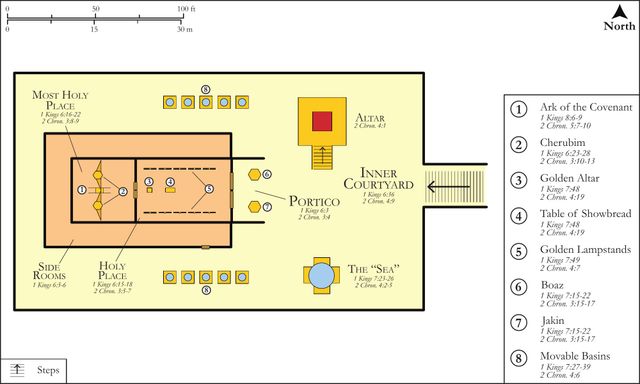
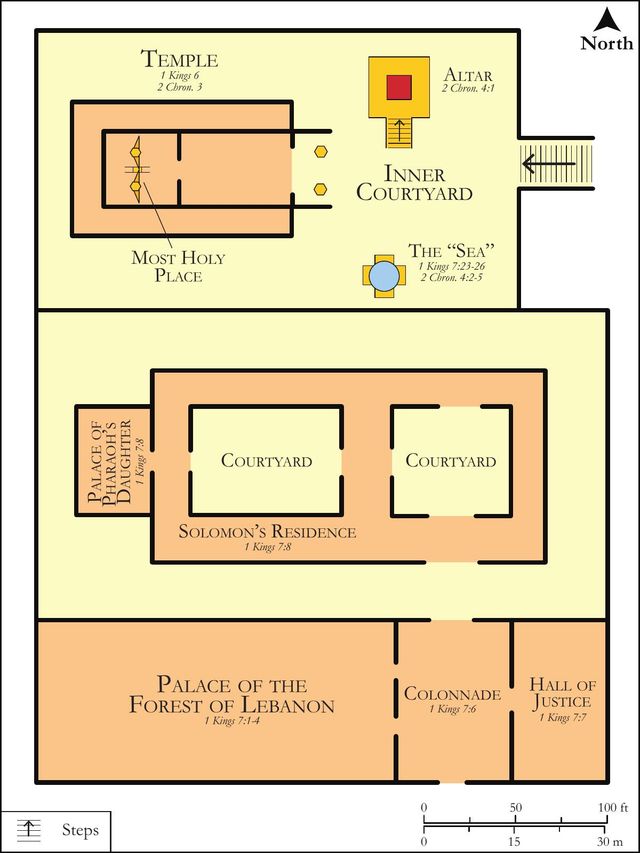
This verse is intricately woven into the Chronicler's detailed narrative of the construction and furnishing of Solomon's Temple, primarily found in 2 Chronicles 3 and 2 Chronicles 4. Having previously described the architectural layout, the main structures, and the massive bronze implements like the great bronze sea, the text now transitions to the smaller, yet equally significant, golden vessels and implements designated for the Holy Place. This shift from large-scale bronze items to exquisite golden ones reflects the progression into the more sacred inner areas of the Temple. The meticulous enumeration of these items, including the lampstands (menorahs), tables for the showbread, and various utensils, serves to emphasize the fulfillment of David's divinely inspired vision and the precise adherence to God's instructions. The Chronicler's deliberate focus on the materials, particularly their quality and purity, reinforces the sanctity and permanence of this central place of worship, highlighting the Temple's role as the earthly dwelling of God's glory.
Historical & Cultural Context
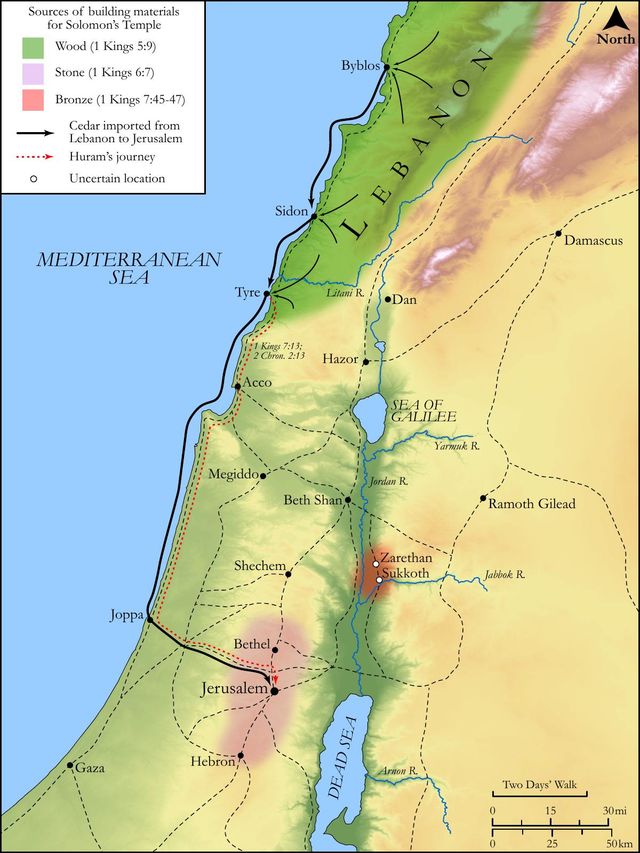
The construction of Solomon's Temple represented a monumental achievement in ancient Israelite history, signifying the permanent establishment of God's presence among His people, a significant evolution from the portable Tabernacle. The extensive use of gold, specifically "perfect gold," reflects the immense wealth and sophisticated international trade networks that characterized Solomon's reign, enabling him to procure such precious materials. Among the nations round about, the temples of their gods were often lavishly adorned with valuable metals and stones, symbolizing the power and prestige of both the god and the patron king. However, the Israelite Temple's opulence was distinct in its singular dedication to Yahweh, the one true God. The meticulous crafting of items like the lamps and tongs, echoing the precise divine instructions given for the Tabernacle in Exodus 25:31-40, underscored not only human reverence but also the divine standard of purity, excellence, and holiness required for objects used in sacred worship. This dedication of the finest materials was a tangible expression of Israel's covenant relationship with God and their profound understanding of His incomparable holiness.
Key Themes
ShowHideThe detailed description of the Temple furnishings in 2 Chronicles 4, including the items enumerated in verse 21, contributes significantly to several overarching theological themes. Firstly, it powerfully underscores the Divine Majesty and Holiness of God. The insistence on using only the most precious and purest materials, repeatedly emphasized through "gold" and "perfect gold," signifies that nothing less than the absolute best is suitable for the dwelling place of a transcendent and holy God. Secondly, the presence of the Symbolism of Light is central, particularly through the "lamps." These golden lamps were indispensable for illuminating the windowless Holy Place, representing God's divine presence, truth, and guidance, which actively dispels spiritual darkness. This theme resonates deeply with later biblical imagery, such as God being the source of light in Psalm 27:1 and the call for believers to walk in His light. Finally, the meticulous craftsmanship and the dedication of such costly materials highlight the theme of Excellence in Worship and Service. It teaches that offerings to God should always be of the highest quality, a reflection of a heart fully devoted and reverent, a principle that transcends the physical Temple and applies to all forms of worship, as seen in the call for unblemished offerings in Malachi 1:8.
Exposition and Analysis
ShowHideKey Word Analysis
ShowHideFrom a root meaning "to bloom," this term refers to decorative, calyx-shaped ornaments. In the context of the Temple, these were likely sculpted floral motifs, particularly adorning the golden lampstands (menorahs) and possibly other furnishings. Their inclusion, crafted in gold, signifies an appreciation for natural beauty and artistry within the sacred space, symbolizing life, flourishing, and the vibrant presence of God.
This word denotes the actual burner or light source. In the Holy Place, these golden lamps, fueled by olive oil, were the sole source of illumination, as the chamber had no windows. They were essential for the priests' daily duties and served as a profound symbol of God's continuous divine light, truth, and presence, which guides and reveals. Solomon's Temple featured ten such lampstands, each with multiple lamps, indicating an abundance of this symbolic light.
Derived from a root meaning "to take" or "to grasp," this term refers to specialized tweezers or snuffers, typically used in pairs (dual form). In the Temple, these golden instruments were vital for the priests to maintain the lamps—trimming wicks, removing burnt portions, and adjusting flames to ensure a clean, continuous burn. Their presence among the golden items underscores the meticulous care, purity, and precision required for even the most practical aspects of sacred Temple service.
Verse Breakdown
ShowHide"And the flowers,"
This phrase introduces the decorative elements, likely sculpted in the form of blossoms or buds, which adorned the golden lampstands and other sacred fixtures within the Holy Place. These floral designs, also mandated for the Tabernacle, added beauty and symbolized life and growth, reflecting God's creative artistry.
"and the lamps,"
This refers to the actual golden lamp units that held the oil and wicks, providing the only source of light within the Holy Place, which was otherwise dark. These lamps were critical for the priests' service and powerfully symbolized God's illuminating presence, truth, and guidance for His people.
"and the tongs,"
These were the specialized golden implements used by the priests to tend to the lamps. Their function was practical yet essential: to trim the wicks, remove debris, and maintain the flame, ensuring the continuous and pure burning of the lamps. Their inclusion highlights the meticulous attention to detail required in all aspects of Temple service.
"made he of gold, and that perfect gold;"
This concluding clause emphatically states that all the aforementioned items—the decorative flowers, the functional lamps, and the practical tongs—were crafted entirely from gold. The immediate qualification, "and that perfect gold," further stresses the extraordinary quality of the material. This phrase, often referring to gold that is pure, refined, and unalloyed, underscores the immense value, purity, and dedication invested in these sacred objects, reflecting Solomon's commitment to building a dwelling place truly worthy of the Lord and His unparalleled holiness.
Literary Devices
ShowHideThe Chronicler employs several potent literary devices in 2 Chronicles 4:21 to convey its profound message. Enumeration is prominently featured through the precise listing of specific items ("flowers," "lamps," "tongs"). This detailed inventory emphasizes the meticulous planning and comprehensive nature of the Temple's furnishing, leaving no detail to chance and underscoring the completeness of the sacred space. Repetition is subtly yet powerfully used with the phrase "gold, and that perfect gold." The initial mention of "gold" establishes the material, but the immediate qualification with "perfect gold" functions as an emphatic intensification or even hyperbole, elevating the quality to the absolute highest standard. This double emphasis ensures the reader grasps the unparalleled purity and immense value attributed to these sacred objects. This insistence on "perfect gold" also serves as a profound symbolism, representing the divine holiness, majesty, and the unblemished excellence required in God's service. The very material chosen speaks volumes about the nature of the God being worshipped and the reverence expected from His people, signifying that only the purest and most precious offerings are fitting for the Creator.
Theological and Thematic Connections
ShowHideThe meticulous detail regarding the Temple furnishings, particularly the emphasis on "perfect gold" in 2 Chronicles 4:21, profoundly illustrates the theological principle of offering God nothing less than our absolute best. This commitment to excellence in material and craftsmanship was not merely about human wealth or aesthetic preference; it was a tangible expression of Israel's understanding of God's transcendent holiness and His demand for purity in worship. The golden lamps, in particular, speak to the theme of divine illumination and presence, signifying that God's light is pure, unblemished, and perpetually shines in the midst of His people. The very act of dedicating such precious and refined materials for the Temple underscores the immeasurable worth of God's presence and the sacredness of the space where His glory dwelt. This principle extends beyond the physical Temple, calling believers to offer their lives, talents, and resources with the same unwavering commitment to purity and excellence in their service to God, reflecting the character of the One they worship.
Reflection and Application
ShowHide2 Chronicles 4:21, with its profound focus on "perfect gold" for the Temple's sacred furnishings, offers a timeless lesson on the nature of our devotion and service to God. While we no longer worship in a physical temple adorned with literal gold, the underlying principle remains profoundly relevant for contemporary believers. The purity and excellence demanded for these ancient artifacts challenge us to consider the quality of our own offerings—not merely our financial contributions, but our time, talents, motives, and the very essence of our lives. Are we offering God our "perfect gold," or are we merely giving what is convenient, leftover, or less than our best? The golden lamps, meticulously tended with golden tongs, serve as a powerful reminder of our calling to be light in the world, reflecting Christ's truth and glory. This requires intentionality, purity of heart, and diligent stewardship of the spiritual light within us. Our lives, as temples of the Holy Spirit, should reflect the same commitment to excellence and purity that characterized the ancient Temple, serving as a vibrant testament to the God whom we worship with all our being.
Questions for Reflection
ShowHideFAQ
ShowHideWhy was "perfect gold" so important for the Temple furnishings?
ShowHideThe emphasis on "perfect gold" (Hebrew: zahab sagur or, as indicated by Strong's H4357, miklâh for "perfect" combined with zâhâb for "gold") for the Temple furnishings was crucial for several profound theological and symbolic reasons. Firstly, it underscored the transcendent holiness and majesty of God. As the earthly dwelling place of Yahweh, the Temple and its contents had to reflect His unblemished purity and supreme worth. Only the finest, most refined materials, free from any impurity or alloy, were considered worthy of His presence. This choice of material visually communicated God's incomparable nature. Secondly, it symbolized excellence in worship. The use of such precious and pure gold demonstrated the Israelites' profound reverence and unwavering commitment to offering their absolute best to God, setting an unparalleled standard for all future acts of worship. This was not merely about human opulence, but about the quality of the offering matching the greatness of the One being worshipped. Finally, it also served as a visual representation of divine glory and truth. Gold, being incorruptible, lustrous, and resistant to tarnish, perfectly symbolized the enduring, radiant, and unchanging nature of God's presence and His perfect truth, which illuminates spiritual darkness, much like the golden lamps illuminated the Holy Place. This dedication to "perfect gold" for God's house contrasts sharply with the fleeting and imperfect nature of human endeavors, pointing to the eternal perfection of God Himself.
Christ-Centered Fulfillment
ShowHideWhile 2 Chronicles 4:21 meticulously details the physical opulence of Solomon's Temple, its profound emphasis on "perfect gold" finds its ultimate fulfillment and spiritual reality in Jesus Christ. The earthly Temple, with its exquisitely crafted golden furnishings, was a shadow and a type of a greater, spiritual reality—God's ultimate desire to dwell perfectly among His people. The "perfect gold" used for the lamps, tongs, and other sacred vessels, signifying purity, divine light, and the highest value, powerfully foreshadows Christ, who is the true light that gives light to everyone and in whom there is no darkness at all. He is the unblemished, perfect Lamb of God, whose once-for-all sacrifice was of infinite value and absolute purity, far surpassing any earthly gold or material offering. Moreover, just as the Temple was the dwelling place of God's manifest presence, the New Testament reveals that believers, through their union with Christ, become the temple of the Holy Spirit, and collectively, the Church is being built into a holy temple in the Lord. Our "furnishings" are no longer literal gold, but the spiritual virtues, righteous deeds, and excellent works produced by the Spirit within us, offered to God through Christ, who makes our imperfect offerings acceptable and transforms us into His pure and precious vessels. In Christ, the pursuit of "perfect gold" transforms from a material standard to a spiritual reality, as He is the one who purifies us and enables us to offer lives of perfect devotion and worship that are truly pleasing to God.