


2 Chronicles 28:9
Bible text: King James Version (1769 Blayney text) · Public domain
Bible text: King James Version with Strong's numbers · Public domain
Bible text: Berean Standard Bible · Public domain
Bible text: American Standard Version (1901) · Public domain
Bible text: World English Bible, Messianic edition · Public domain
Bible text: Geneva Bible (1599) · Public domain
Bible text: Young's Literal Translation · Public domain
- וְשָׁםVe·shomand thereH8033Conj-w ¦ AdvAdverbוְandשָׁםthere
- הָיָהha·Yahhe wasH1961V-Qal-Perf-3msVerb Qal Perfect 3rd Singular Masculine
- נָבִיאna·Vi'a prophetH5030N-msNoun Singular Masculine Absolute
- לַיהוָהla·Yah·wehof YahwehH3068Prep-l ¦ N-properNoun Proper TitleלַofיהוָהYahweh
- עֹדֵד'o·Ded[was] OdedH5752N-proper-mNoun Proper Masculine
- שְׁמוֹshe·Mohis nameH8034N-msc ¦ 3msNoun Singular Masculine Constructשְׁמnameוֹhis
- וַיֵּצֵאvai·ye·Tze'and he went outH3318Conj-w ¦ V-Qal-ConsecImperf-3msVerb Qal Consecutive Imperfect 3rd Singular Masculineוַandיֵּצֵאhe went out
- לִפְנֵיlif·Nei<to> beforeH6440Prep-l ¦ N-mpcNoun Plural Masculine Constructלִ<to>פְנֵיbefore
- הַצָּבָאha·tza·Va'the armyH6635Art ¦ N-msNoun Singular Masculine Absoluteהַtheצָּבָאarmy
- הַבָּאha·Ba'which was comingH935Art ¦ V-Qal-Prtcpl-msVerb Qal Participle Singular Masculine Absoluteהַwhichבָּאwas coming
- לְשֹׁמְרוֹןle·sho·me·Ronto SamariaH8111Prep-l ¦ N-properNoun Proper LocationלְtoשֹׁמְרוֹןSamaria
- וַיֹּאמֶרvai·Yo·merand he saidH559Conj-w ¦ V-Qal-ConsecImperf-3msVerb Qal Consecutive Imperfect 3rd Singular Masculineוַandיֹּאמֶרhe said
- לָהֶםla·Hemto themPrep-l ¦ 3mpSuffix Personal 3rd Plural Masculineלָtoהֶםthem
- הִנֵּהHi·nehhere!H2009PrtParticle Interjection
- בַּחֲמַתba·cha·Matin [the] wrath ofH2534Prep-b ¦ N-fscNoun Singular Feminine Constructבַּinחֲמַת[the] wrath of
- יְהוָהYah·wehYahwehH3068N-properNoun Proper Title
- אֱלֹהֵי'e·lo·hei[the] God ofH430N-mpcNoun Plural Masculine Construct
- אֲבוֹתֵיכֶם'a·vo·tei·Khemyour ancestorsH1N-fpc ¦ 2mpNoun Plural Feminine Constructאֲבוֹתֵיancestorsכֶםyour
- עַל'altowardsH5921PrepPreposition
- יְהוּדָהye·hu·DahJudahH3063N-properNoun Proper Location
- נְתָנָםne·ta·Namhe gave themH5414V-Qal-Perf-3ms ¦ 3mpVerb Qal Perfect 3rd Singular Masculineנְתָנָhe gaveםthem
- בְּיֶדְכֶםbe·yed·Khemin your handH3027Prep-b ¦ N-csc ¦ 2mpNoun Singular common gender Constructבְּinיֶדְhandכֶםyour
- וַתַּהַרְגוּva·ta·har·guand you have killedH2026Conj-w ¦ V-Qal-ConsecImperf-2mpVerb Qal Consecutive Imperfect 2nd Plural Masculineוַandתַּהַרְגוּyou have killed
- בָםvamamong themPrep-b ¦ 3mpSuffix Personal 3rd Plural Masculineבָamongםthem
- בְזַעַףve·Za·'afin a rageH2197Prep-b ¦ N-msNoun Singular Masculine Absoluteבְinזַעַףa rage
- עַד'ad[which] toH5704PrepPreposition
- לַשָּׁמַיִםla·sha·Ma·yimto the heavensH8064Prep-l ¦ N-mpNoun Plural Masculine Absoluteלַto theשָּׁמַיִםheavens
- הִגִּיעַhi·Gi·a'it has reachedH5060V-Hiphil-Perf-3msVerb Hiphil Perfect 3rd Singular Masculine
English is a literal word-by-word gloss of the Hebrew, not the KJV's wording. Why?
This is the original text the KJV's translators worked from — each Hebrew word with its own literal English meaning in this verse, prepared by scholars at Tyndale House, Cambridge. The KJV translates whole sentences, not word by word, so its wording differs: one Hebrew word can become several English words, and the KJV may choose “the LORD” where the gloss reads “Yahweh”. Both are faithful — they answer different questions. For the KJV's own rendering, switch to the KJV text.
Details
See on the biblical-era maps
Study this verse
Public-domain commentary
Matthew Henry
From his Commentary on the Whole Bible. Henry comments on passages, not single verses — this entry covers 2 Chronicles 28:6–15. His four-level outline is real structure in the source text, so it is rendered as structure.
We have here,
I.Treacherous Judah under the rebukes of God's providence, and they are very severe.
Never was such bloody work made among them since they were a kingdom, and by Israelites too. Ahaz walked in the ways of the kings of Israel, and the king of Israel was the instrument God made use of for his punishment. It is just with God to make those our plagues whom we make our patterns or make ourselves partners with in sin. A war broke out between Judah and Israel, in which Judah was worsted. For,
1.There was a great slaughter of men in the field of battle. Vast numbers (120,000 men, and valiant men too at other times) were slain (Ch2 28:6) and some of the first rank, the king's son for one. He had sacrificed some of this sons to Moloch; justly therefore is this sacrificed to the divine vengeance. Here is another that was next the king, his friend, the prime-minister of state, or perhaps next him in the battle, so that the king himself had a narrow escape, Ch2 28:7. The kingdom of Israel was not strong at this time, and yet strong enough to bring this great destruction upon Judah. But certainly so many men, great men, stout men, could not have been cut off in one day if they had not been strangely dispirited both by the consciousness of their own guilt and by the righteous hand of God upon them. Even valiant men were numbered as sheep for the slaughter, and became an easy prey to the enemy because they had forsaken the Lord God of their fathers, and he had therefore forsaken them.
2.There was a great captivity of women and children, Ch2 28:8. When the army in the field was routed, the cities, and towns, and country villages, were all easily stripped, the inhabitants taken for slaves, and their wealth for a prey.
II.Even victorious Israel under the rebuke of God's word for the bad principle they had gone upon in making war with Judah and the bad use they had made of their success, and the good effect of this rebuke. Here is,
1.The message which God sent them by a prophet, who went out to meet them, not to applaud their valour or congratulate them on their victory, though they returned laden with spoils and triumphs, but in God's name to tell them of their faults and warn them of the judgments of God.
(1.)He told them how they came by this victory of which they were so proud. It was not because God favoured them, or that they had merited it at his hand, but because he was wroth with Judah, and made them the rod of his indignation. Not for your righteousness, be it known to you, but for their wickedness (Deu 9:5) they are broken off; therefore be not you high-minded, but fear lest God also spare not you, Rom 11:20, Rom 11:21.
(2.)He charged them with the abuse of the power God had given them over their brethren. Those understand not what victory is who think it gives them authority to do what they will, and that the longest sword is the clearest claim to lives and estates (Jusque datum sceleri - might is right); no, as it is impolitic not to use a victory, so it is impious to abuse it. The conquerors are here reproved,
[1.]For the cruelty of the slaughter they had made in the field. They had indeed shed the blood of war in war; we suppose that to be lawful, but it turned into sin to them, because they did it from a bad principle of enmity to their brethren and after a bad manner, with a barbarous fury, a rage reaching up to heaven, that is, that cried to God for vengeance against such bloody men, that delighted in military execution. Those that serve God's justice, if they do it with rage and a spirit of revenge, make themselves obnoxious to it, and forfeit the honour of acting for him; for the wrath of man worketh not the righteousness of God.
[2.]For the imperious treatment they gave their prisoners. "You now purpose to keep them under, to use them or sell them as slaves, though they are your brethren and free-born Israelites." God takes notice of what men purpose, as well as of what they say and do.
(3.)He reminded them of their own sins, by which they also were obnoxious to the wrath of God: Are there not with you, even with you, sins against the Lord your God? Ch2 28:10. He appeals to their own consciences, and to the notorious evidence of the thing. "Though you are now made the instruments of correcting Judah for sin, yet do not think that you are therefore innocent yourselves; no, you also are guilty before God." This is intended as a check, [1.] To their triumph in their success. "You are sinners, and it ill becomes sinners to be proud; you have carried the day now, but be not secure, the wheel may ere long return upon yourselves, for, if judgment begin thus with those that have the house of God among them, what shall be the end of such as worship the calves?" [2.] To their severity towards their brethren. "You have now got them under, but you ought to show mercy to them, for you yourselves are undone if you do not find mercy with God. It ill becomes sinners to be cruel. You have transgressions enough to answer for already, and need not add this to the rest."
(4.)He commanded them to release the prisoners, and to send them home again carefully (Ch2 28:11); "for you having sinned, the fierce wrath of God is upon you, and there is no other way of escaping it than by showing mercy."
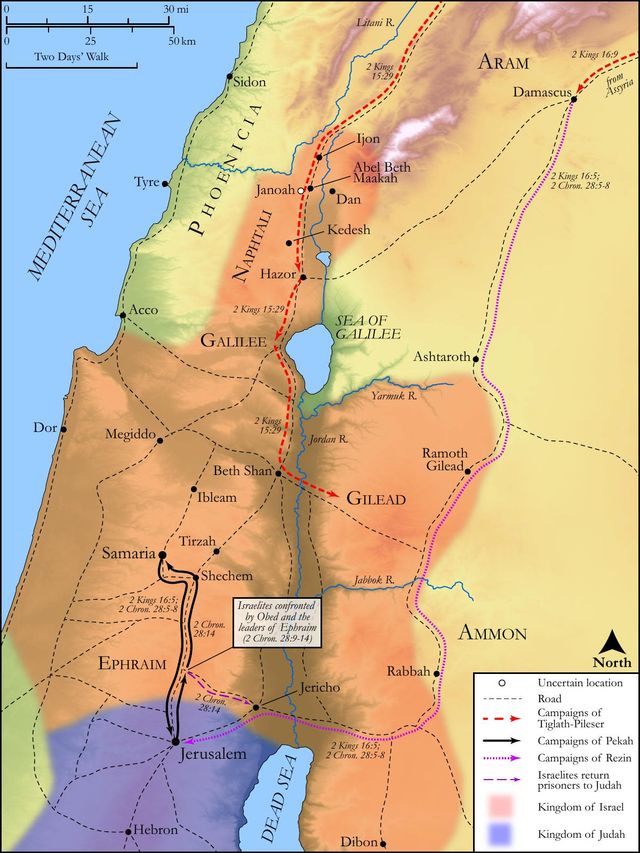
2.The resolution of the princes thereupon not to detain the prisoners. They stood up against those that came from the war, though flushed with victory, and told them plainly that they should not bring their captives into Samaria, Ch2 28:12, Ch2 28:13. They had sin enough already to answer for, and would have nothing done to add to their trespass. In this they discovered an obedient regard to the word of God by his prophet and a tender compassion towards their brethren, which was wrought in them by the tender mercy of God; for he regarded the affliction of this poor people, and hears their cry, and made them to be pitied of all those that carried them captive, Psa 106:44, Psa 106:46.
3.The compliance of the soldiers with the resolutions of the princes in this matter, and the dismission of the captives thereupon.
(1.)The armed men, though being armed they might be force have maintained their title to what they got by the sword, acquiesced, and left their captives and the spoil to the disposal of the princes (Ch2 28:14), and herein they showed more truly heroic bravery than they did in taking them. It is a great honour for any man to yield to the authority of reason and religion against his interest.
(2.)The princes very generously sent home the poor captives well accommodated, Ch2 28:15. Those that hope to find mercy with God must learn hence with what tenderness to carry themselves towards those that lie at their mercy. It is strange that these princes, who in this instance discovered such a deference to the word of God, and such an influence upon the people, had not so much grace as, in obedience to the calls of God by so many prophets, to root idolatry out of their kingdom, which, soon after this, was the ruin of it.
Continue studying 2 Chronicles 28:9 across the web’s major study libraries — every link below opens this exact verse, chapter, or book on the destination site.
Read & Compare
 BibleGatewayThis verse in more than 200 translations and 70 languages.
 Bible.comThe YouVersion reader — hundreds of translations, reading plans, and highlights.
 ESV.orgCrossway's official English Standard Version reader.
 NET BibleThe NET translation with 60,000+ translators' notes on every rendering decision.
 STEP BibleTyndale House's free study tool — original text, vocabulary, and scholarly resources.
 BibliaLogos Bible Software's free web reader.
 USCCBThe New American Bible (Revised Edition) with the U.S. bishops' study notes.
Commentaries
 BibleHub CommentariesDozens of classic commentaries on this verse, gathered on one page.
 StudyLightMore than 100 commentary sets — the largest collection on the web.
 BibleRefPlain-English commentary on what this verse means, verse by verse.
 Enduring WordDavid Guzik's free commentary on this chapter, widely used by Bible teachers.
 Bible Study ToolsVerse commentary alongside Greek and Hebrew study aids.
Original Language & Research
- BibleHub InterlinearThe verse word by word — original language, transliteration, and English.
- BibleHub LexiconEvery word's original-language definition and Strong's entry.
 Blue Letter BibleDeep-study tools — Strong's numbers, concordance, and word studies.
 SefariaThe Hebrew text with Rashi and centuries of Jewish commentary.
Sermons, Hymns & Audio


TrulyRandomVerse is not affiliated with these sites and doesn’t control their content. They’re linked because they’re genuinely useful.
Summary
In 2 Chronicles 28:9, the prophet Oded confronts the returning Israelite army after their devastating victory over Judah, the Southern Kingdom. Oded's prophetic declaration reveals that while Judah's defeat was a direct consequence of the LORD's righteous wrath against their profound idolatry and unfaithfulness, Israel's subsequent actions of excessive slaughter and the taking of their brethren as captives crossed a divine boundary. This pivotal moment underscores God's absolute sovereignty over nations, His righteous indignation against sin, and His unwavering demand for mercy and justice, even from those He uses as instruments of His judgment.
Context
ShowHideLiterary Context
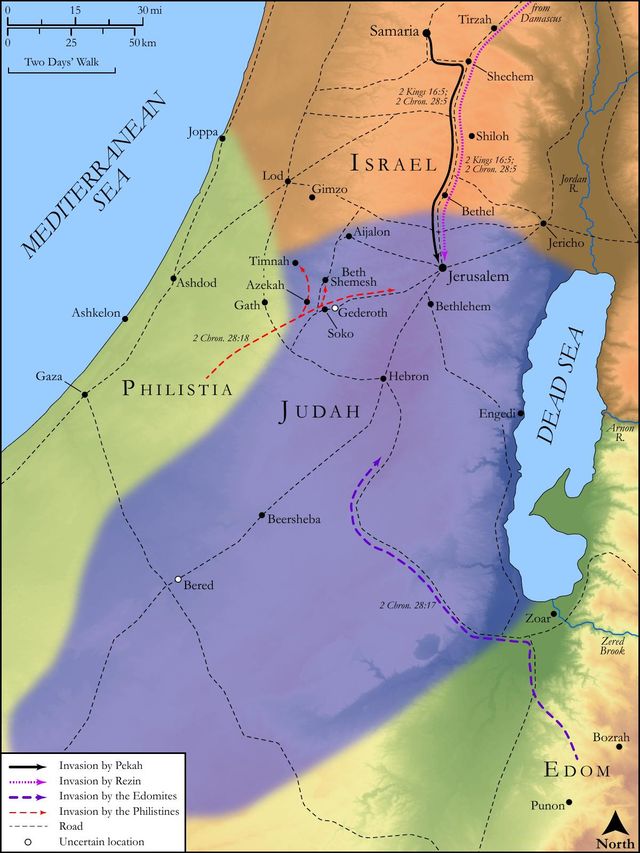
The immediate literary context of 2 Chronicles 28 is crucial for understanding Oded's intervention. The chapter opens by detailing the profound wickedness of King Ahaz of Judah, who "did not do what was right in the eyes of the LORD," but instead "made molten images for Baals" and offered his children in sacrifice, provoking the LORD's intense anger, as described in 2 Chronicles 28:1-5. As a direct consequence of Judah's apostasy, the LORD delivered them into the hands of their enemies, specifically the Northern Kingdom of Israel under King Pekah. Verses 5-8 describe the catastrophic defeat of Judah, with 120,000 valiant men slain in one day and 200,000 women, sons, and daughters taken captive to Samaria, along with much plunder. It is precisely at this moment, as the triumphant Israelite army returns with their vast spoils and captives, that the prophet Oded steps forward to deliver God's message, halting what he perceives as an act of excessive cruelty that transcends divine judgment.
Historical & Cultural Context
This event unfolds during a volatile period in the history of the divided monarchy, specifically during the reign of King Ahaz in Judah (c. 735-715 BC) and King Pekah in Israel (c. 740-732 BC). Ahaz's reign was marked by unprecedented idolatry, including child sacrifice, which deeply offended the LORD. The conflict between Israel and Judah, though they shared a common ancestry and covenant heritage, was a recurring feature of this era, often exacerbated by political alliances and religious apostasy. While the LORD used Israel as an instrument of judgment against Judah's sin, the taking of such a vast number of captives, particularly women and children, was a common practice in the warfare of that day. Such captives often faced brutal treatment, forced labor, or sexual exploitation, and their enslavement was a significant economic and social burden. Oded's confrontation of a victorious army, challenging their actions based on divine law and ethical principles, highlights the unique and often dangerous role of a prophet in ancient Israel, acting as God's conscience to kings and armies alike, even when their actions seemed justified by military victory or common practice.
Key Themes
ShowHideThe primary themes emerging from 2 Chronicles 28:9 are multifaceted and deeply theological. Firstly, it powerfully asserts Divine Sovereignty and Judgment, emphasizing that Judah's devastating defeat was not merely a military mishap but a direct consequence of the LORD's wrath against their profound unfaithfulness, a principle echoed throughout the prophetic literature, such as when God declares His intention to use Assyria as "the rod of my anger" in Isaiah 10:5. Secondly, the passage highlights the Condemnation of Excessive Cruelty and the Demand for Mercy. Even when God uses one nation to judge another, human agents are held accountable for their methods and motives. Oded's rebuke implies that Israel's "rage that reacheth up unto heaven" transcended the bounds of righteous judgment, transforming into an act of unrighteous vengeance against their own brethren, a stark reminder that the "wrath of man does not produce the righteousness of God" as stated in James 1:20. Lastly, the verse underscores the Courage and Essential Role of the Prophet, as Oded bravely confronts a victorious army, delivering an unpopular but divinely mandated message, thereby serving as God's voice to call His people back to righteousness and compassion.
Exposition and Analysis
ShowHideKey Word Analysis
ShowHideThis term (H2534), translated as "wroth" or "anger," signifies a strong, intense displeasure or fury. When applied to God, as here, it denotes His righteous indignation against sin and covenant infidelity. It is not an uncontrolled, capricious emotion but a just and holy response to human rebellion and idolatry. Oded's use of this word immediately establishes the divine origin and purpose behind Judah's defeat, making it clear that the military outcome was a direct act of God's judgment, not mere happenstance.
This word (H2197) denotes a fierce, violent anger or indignation. In Oded's rebuke, it specifically refers to the human fury of the Israelite army. Unlike God's righteous "wroth," this "rage" is presented as an uncontrolled, sinful excess. It implies a motive of vengeance or cruelty that goes beyond the bounds of what God intended or permitted in His judgment. The prophet distinguishes between God's just anger and Israel's unrighteous, destructive fury.
This verb (H5060) primarily means "to touch" or "to reach." In the context of "rage that reacheth up unto heaven," it signifies that the intensity and egregious nature of Israel's actions were so profound that they ascended to the divine realm, demanding God's attention and potentially His retribution. It implies that their cruelty was not merely against Judah, but ultimately an offense against God Himself, "touching" His holiness and justice.
Verse Breakdown
ShowHide"But a prophet of the LORD was there, whose name [was] Oded:"
This opening clause immediately introduces a divinely appointed figure, Oded, whose presence signifies that the unfolding events are not merely political or military, but are under God's watchful eye and subject to His moral assessment. The phrase "prophet of the LORD" underscores his authority and the divine origin of his message, setting the stage for a confrontation rooted in God's will and covenantal law.
"and he went out before the host that came to Samaria,"
This detail highlights Oded's remarkable courage and conviction. He did not deliver his message in secret or to a small group, but boldly confronted the entire victorious army, laden with spoils and captives, as they approached their capital city. This public and direct confrontation amplifies the weight and urgency of his prophetic warning, demonstrating his unwavering commitment to God's truth regardless of personal risk.
"and said unto them, Behold, because the LORD God of your fathers was wroth with Judah, he hath delivered them into your hand,"
Oded begins by affirming God's sovereignty and justice. He unequivocally states that Judah's defeat was not due to Israel's superior strength or strategy alone, but was a direct act of divine judgment—the "LORD God of your fathers" (a covenantal term emphasizing shared heritage and accountability) was "wroth with Judah" due to their profound sin and apostasy. This establishes the legitimacy of the initial judgment but also sets the stage for the crucial distinction that follows.
"and ye have slain them in a rage [that] reacheth up unto heaven."
This is the core of Oded's rebuke. While God delivered Judah into Israel's hand for judgment, Israel's subsequent actions of excessive slaughter were driven by an uncontrolled, sinful "rage." The hyperbolic phrase "that reacheth up unto heaven" powerfully conveys the magnitude of their sin, implying that their cruelty went far beyond what was necessary for divine judgment, becoming an offense against God Himself, crying out for divine attention and potential retribution. It suggests a profound violation of brotherly compassion and divinely ordained limits on warfare, even against those under judgment.
Literary Devices
ShowHide2 Chronicles 28:9 employs several potent Literary Devices to convey its message with impactful clarity. The most prominent is Prophetic Speech, characterized by Oded's direct address and authoritative tone, which immediately establishes the divine origin and weight of his words. His opening "Behold" commands attention, typical of prophetic pronouncements, drawing the audience into the urgency of the message. The phrase "rage that reacheth up unto heaven" is a striking example of Hyperbole, an exaggeration used for dramatic emphasis. It is not meant to be taken literally, but rather to underscore the extreme and offensive nature of Israel's cruelty in God's sight, implying a sin of monumental proportion. This hyperbole also borders on Personification, as the abstract concept of "rage" is depicted as having the ability to "reach" or ascend to the heavens, further emphasizing its egregious impact on the divine realm and its direct affront to God's holiness. Furthermore, there is a subtle but significant Contrast established between God's righteous "wroth" (divine judgment) and Israel's unrighteous "rage" (human excess), highlighting the moral distinction between divine purpose and human perversion of that purpose.
Theological and Thematic Connections
ShowHideThis verse powerfully articulates several foundational theological principles. It underscores God's absolute sovereignty over nations and His active involvement in human history, demonstrating that even military victories and defeats are ultimately under His divine orchestration and serve His purposes of judgment and discipline. However, it simultaneously highlights the critical distinction between God's righteous judgment and humanity's propensity for unrighteous anger and excessive cruelty. While God may use human agents as instruments of His will, they remain morally accountable for their actions, motives, and the extent of their violence. Oded's rebuke serves as a profound reminder that even in the context of justified warfare or divine judgment, there are ethical boundaries and a divine call to mercy and restraint, particularly when dealing with one's own kin. The "rage that reacheth up unto heaven" signifies that certain human actions are so egregious that they become an affront to God Himself, demanding His intervention and potential retribution.
Reflection and Application
ShowHide2 Chronicles 28:9 offers profound lessons for believers today. It calls us to soberly consider the nature of God's justice and our own human responses to conflict and perceived wrongdoing. We are reminded that God is sovereign over all circumstances, even those that seem chaotic or unjust, and He holds nations and individuals accountable for their actions. More personally, Oded's message challenges us to examine our own hearts when we feel "justified" in our anger or desire for retribution. Even when we believe we are acting on behalf of righteousness, our human "rage" can quickly exceed divine boundaries, leading to actions that are sinful and offensive to God. This verse compels us to cultivate mercy, compassion, and self-control, particularly towards those we might consider adversaries or those who have wronged us. It is a powerful call to temper justice with mercy, reflecting the very character of God and demonstrating the Spirit's fruit in our lives.
Questions for Reflection
ShowHideFAQ
ShowHideWhy did God allow Israel to defeat Judah so severely, only to then condemn their actions?
ShowHideGod allowed Israel to defeat Judah as a direct act of divine judgment against King Ahaz's profound idolatry and Judah's widespread sin, as detailed in 2 Chronicles 28:1-5. This demonstrates God's sovereignty and His use of one nation to discipline another. However, Oded's condemnation in 2 Chronicles 28:9 highlights a crucial distinction: while God initiated the judgment, Israel's subsequent actions—the excessive slaughter and taking of 200,000 captives—transcended the bounds of righteous judgment. Their "rage that reacheth up unto heaven" indicates that their methods were driven by human cruelty and vengeance, not divine purpose. God holds even His instruments accountable for their motives and methods, emphasizing that human wrath often leads to unrighteousness, as seen in James 1:20. This passage teaches that divine judgment is purposeful and limited, whereas human anger, left unchecked, can become sinful and offensive to God.
Christ-Centered Fulfillment
ShowHide2 Chronicles 28:9, while rooted in the Old Covenant's principles of divine judgment and human accountability, finds profound Christ-centered fulfillment. The "wrath" of the LORD against Judah's sin foreshadows the ultimate divine wrath against all human sin, which was fully poured out not on a nation, but on the Lamb of God, Jesus Christ, who takes away the sin of the world. He became the recipient of the "rage that reacheth up unto heaven" that humanity's sin truly deserved, bearing the full weight of God's righteous indignation on the cross, as Romans 5:8 powerfully declares. Furthermore, Oded's courageous call for mercy and compassion, even towards enemies and those under judgment, anticipates the radical ethic of love taught by Jesus. Christ not only commanded His followers to love their enemies and pray for those who persecute them, but He perfectly exemplified this by extending grace and forgiveness even to those who crucified Him, as recorded in Luke 23:34. Thus, the passage points to Christ as the one who both satisfies divine justice and perfectly embodies divine mercy, calling His followers to a higher standard of love and restraint than any human "rage" could ever justify, and empowering them by His Spirit to live out this new covenant reality.