


2 Chronicles 28:10
Bible text: King James Version (1769 Blayney text) · Public domain
Bible text: King James Version with Strong's numbers · Public domain
Bible text: Berean Standard Bible · Public domain
Bible text: American Standard Version (1901) · Public domain
Bible text: World English Bible, Messianic edition · Public domain
Bible text: Geneva Bible (1599) · Public domain
Bible text: Young's Literal Translation · Public domain
- וְעַתָּהVe·'a·tahand nowH6258Conj-w ¦ AdvAdverbוְandעַתָּהnow
- בְּנֵיbe·nei[the] people ofH1121N-mpcNoun Plural Masculine Construct
- יְהוּדָהye·hu·DahJudahH3063N-properNoun Proper Location
- וִירוּשָׁלִַםvi·ru·sha·Limand JerusalemH3389Conj-w ¦ N-properNoun Proper LocationוִandירוּשָׁלִַםJerusalem
- אַתֶּם'a·TemyouH859Pro-2mpPronoun Personal 2nd Plural Masculine
- אֹמְרִים'o·me·Rim[are] sayingH559V-Qal-Prtcpl-mpVerb Qal Participle Plural Masculine Absolute
- לִכְבֹּשׁlikh·Boshto subjugateH3533Prep-l ¦ V-Qal-InfVerb Qal Infinitive Constructלִtoכְבֹּשׁsubjugate
- לַעֲבָדִיםla·'a·va·Dimto [male] slavesH5650Prep-l ¦ N-mpNoun Plural Masculine Absoluteלַtoעֲבָדִים[male] slaves
- וְלִשְׁפָחוֹתve·lish·fa·Chotand to female slavesH8198Conj-w ¦ Prep-l ¦ N-fpNoun Plural Feminine Absoluteוְandלִtoשְׁפָחוֹתfemale slaves
- לָכֶםla·Khemfor yourselvesPrep-l ¦ 2mpSuffix Personal 2nd Plural Masculineלָforכֶםyourselves
- הֲלֹאha·Lo'¿ notH3808Interrog ¦ NegParticle Negativeהֲ¿לֹאnot
- רַקrakcertainlyH7535AdvAdverb
- אַתֶּם'a·TemyouH859Pro-2mpPronoun Personal 2nd Plural Masculine
- עִמָּכֶם'i·ma·Khemwith youH5973Prep ¦ 2mpPrepositionעִמָּwithכֶםyou
- אֲשָׁמוֹת'a·sha·Mot[are] guilt<s>H819N-fpNoun Plural Feminine Absolute
- לַיהוָהla·Yah·wehto YahwehH3068Prep-l ¦ N-properNoun Proper TitleלַtoיהוָהYahweh
- אֱלֹהֵיכֶם'e·lo·hei·Khemyour GodH430N-mpc ¦ 2mpNoun Plural Masculine ConstructאֱלֹהֵיGodכֶםyour
English is a literal word-by-word gloss of the Hebrew, not the KJV's wording. Why?
This is the original text the KJV's translators worked from — each Hebrew word with its own literal English meaning in this verse, prepared by scholars at Tyndale House, Cambridge. The KJV translates whole sentences, not word by word, so its wording differs: one Hebrew word can become several English words, and the KJV may choose “the LORD” where the gloss reads “Yahweh”. Both are faithful — they answer different questions. For the KJV's own rendering, switch to the KJV text.
Details
See on the biblical-era maps
Study this verse
Public-domain commentary
Matthew Henry
From his Commentary on the Whole Bible. Henry comments on passages, not single verses — this entry covers 2 Chronicles 28:6–15. His four-level outline is real structure in the source text, so it is rendered as structure.
We have here,
I.Treacherous Judah under the rebukes of God's providence, and they are very severe.
Never was such bloody work made among them since they were a kingdom, and by Israelites too. Ahaz walked in the ways of the kings of Israel, and the king of Israel was the instrument God made use of for his punishment. It is just with God to make those our plagues whom we make our patterns or make ourselves partners with in sin. A war broke out between Judah and Israel, in which Judah was worsted. For,
1.There was a great slaughter of men in the field of battle. Vast numbers (120,000 men, and valiant men too at other times) were slain (Ch2 28:6) and some of the first rank, the king's son for one. He had sacrificed some of this sons to Moloch; justly therefore is this sacrificed to the divine vengeance. Here is another that was next the king, his friend, the prime-minister of state, or perhaps next him in the battle, so that the king himself had a narrow escape, Ch2 28:7. The kingdom of Israel was not strong at this time, and yet strong enough to bring this great destruction upon Judah. But certainly so many men, great men, stout men, could not have been cut off in one day if they had not been strangely dispirited both by the consciousness of their own guilt and by the righteous hand of God upon them. Even valiant men were numbered as sheep for the slaughter, and became an easy prey to the enemy because they had forsaken the Lord God of their fathers, and he had therefore forsaken them.
2.There was a great captivity of women and children, Ch2 28:8. When the army in the field was routed, the cities, and towns, and country villages, were all easily stripped, the inhabitants taken for slaves, and their wealth for a prey.
II.Even victorious Israel under the rebuke of God's word for the bad principle they had gone upon in making war with Judah and the bad use they had made of their success, and the good effect of this rebuke. Here is,
1.The message which God sent them by a prophet, who went out to meet them, not to applaud their valour or congratulate them on their victory, though they returned laden with spoils and triumphs, but in God's name to tell them of their faults and warn them of the judgments of God.
(1.)He told them how they came by this victory of which they were so proud. It was not because God favoured them, or that they had merited it at his hand, but because he was wroth with Judah, and made them the rod of his indignation. Not for your righteousness, be it known to you, but for their wickedness (Deu 9:5) they are broken off; therefore be not you high-minded, but fear lest God also spare not you, Rom 11:20, Rom 11:21.
(2.)He charged them with the abuse of the power God had given them over their brethren. Those understand not what victory is who think it gives them authority to do what they will, and that the longest sword is the clearest claim to lives and estates (Jusque datum sceleri - might is right); no, as it is impolitic not to use a victory, so it is impious to abuse it. The conquerors are here reproved,
[1.]For the cruelty of the slaughter they had made in the field. They had indeed shed the blood of war in war; we suppose that to be lawful, but it turned into sin to them, because they did it from a bad principle of enmity to their brethren and after a bad manner, with a barbarous fury, a rage reaching up to heaven, that is, that cried to God for vengeance against such bloody men, that delighted in military execution. Those that serve God's justice, if they do it with rage and a spirit of revenge, make themselves obnoxious to it, and forfeit the honour of acting for him; for the wrath of man worketh not the righteousness of God.
[2.]For the imperious treatment they gave their prisoners. "You now purpose to keep them under, to use them or sell them as slaves, though they are your brethren and free-born Israelites." God takes notice of what men purpose, as well as of what they say and do.
(3.)He reminded them of their own sins, by which they also were obnoxious to the wrath of God: Are there not with you, even with you, sins against the Lord your God? Ch2 28:10. He appeals to their own consciences, and to the notorious evidence of the thing. "Though you are now made the instruments of correcting Judah for sin, yet do not think that you are therefore innocent yourselves; no, you also are guilty before God." This is intended as a check, [1.] To their triumph in their success. "You are sinners, and it ill becomes sinners to be proud; you have carried the day now, but be not secure, the wheel may ere long return upon yourselves, for, if judgment begin thus with those that have the house of God among them, what shall be the end of such as worship the calves?" [2.] To their severity towards their brethren. "You have now got them under, but you ought to show mercy to them, for you yourselves are undone if you do not find mercy with God. It ill becomes sinners to be cruel. You have transgressions enough to answer for already, and need not add this to the rest."
(4.)He commanded them to release the prisoners, and to send them home again carefully (Ch2 28:11); "for you having sinned, the fierce wrath of God is upon you, and there is no other way of escaping it than by showing mercy."
2.The resolution of the princes thereupon not to detain the prisoners. They stood up against those that came from the war, though flushed with victory, and told them plainly that they should not bring their captives into Samaria, Ch2 28:12, Ch2 28:13. They had sin enough already to answer for, and would have nothing done to add to their trespass. In this they discovered an obedient regard to the word of God by his prophet and a tender compassion towards their brethren, which was wrought in them by the tender mercy of God; for he regarded the affliction of this poor people, and hears their cry, and made them to be pitied of all those that carried them captive, Psa 106:44, Psa 106:46.
3.The compliance of the soldiers with the resolutions of the princes in this matter, and the dismission of the captives thereupon.
(1.)The armed men, though being armed they might be force have maintained their title to what they got by the sword, acquiesced, and left their captives and the spoil to the disposal of the princes (Ch2 28:14), and herein they showed more truly heroic bravery than they did in taking them. It is a great honour for any man to yield to the authority of reason and religion against his interest.
(2.)The princes very generously sent home the poor captives well accommodated, Ch2 28:15. Those that hope to find mercy with God must learn hence with what tenderness to carry themselves towards those that lie at their mercy. It is strange that these princes, who in this instance discovered such a deference to the word of God, and such an influence upon the people, had not so much grace as, in obedience to the calls of God by so many prophets, to root idolatry out of their kingdom, which, soon after this, was the ruin of it.
Continue studying 2 Chronicles 28:10 across the web’s major study libraries — every link below opens this exact verse, chapter, or book on the destination site.
Read & Compare
 BibleGatewayThis verse in more than 200 translations and 70 languages.
 Bible.comThe YouVersion reader — hundreds of translations, reading plans, and highlights.
 ESV.orgCrossway's official English Standard Version reader.
 NET BibleThe NET translation with 60,000+ translators' notes on every rendering decision.
 STEP BibleTyndale House's free study tool — original text, vocabulary, and scholarly resources.
 BibliaLogos Bible Software's free web reader.
 USCCBThe New American Bible (Revised Edition) with the U.S. bishops' study notes.
Commentaries
 BibleHub CommentariesDozens of classic commentaries on this verse, gathered on one page.
 StudyLightMore than 100 commentary sets — the largest collection on the web.
 BibleRefPlain-English commentary on what this verse means, verse by verse.
 Enduring WordDavid Guzik's free commentary on this chapter, widely used by Bible teachers.
 Bible Study ToolsVerse commentary alongside Greek and Hebrew study aids.
Original Language & Research
- BibleHub InterlinearThe verse word by word — original language, transliteration, and English.
- BibleHub LexiconEvery word's original-language definition and Strong's entry.
 Blue Letter BibleDeep-study tools — Strong's numbers, concordance, and word studies.
 SefariaThe Hebrew text with Rashi and centuries of Jewish commentary.
Sermons, Hymns & Audio


TrulyRandomVerse is not affiliated with these sites and doesn’t control their content. They’re linked because they’re genuinely useful.
Summary
2 Chronicles 28:10 records the powerful prophetic rebuke delivered by Oded, a prophet from the Northern Kingdom of Israel, to the victorious Israelite army. After a devastating defeat of Judah, the Israelite soldiers had captured 200,000 Judean men, women, and children, intending to enslave them. Oded confronts their actions, highlighting the profound hypocrisy of their triumph by reminding them that their own nation was equally guilty of grievous sins against the LORD, their God, rendering them unfit to act as permanent oppressors over their kin.
Context
ShowHideLiterary Context
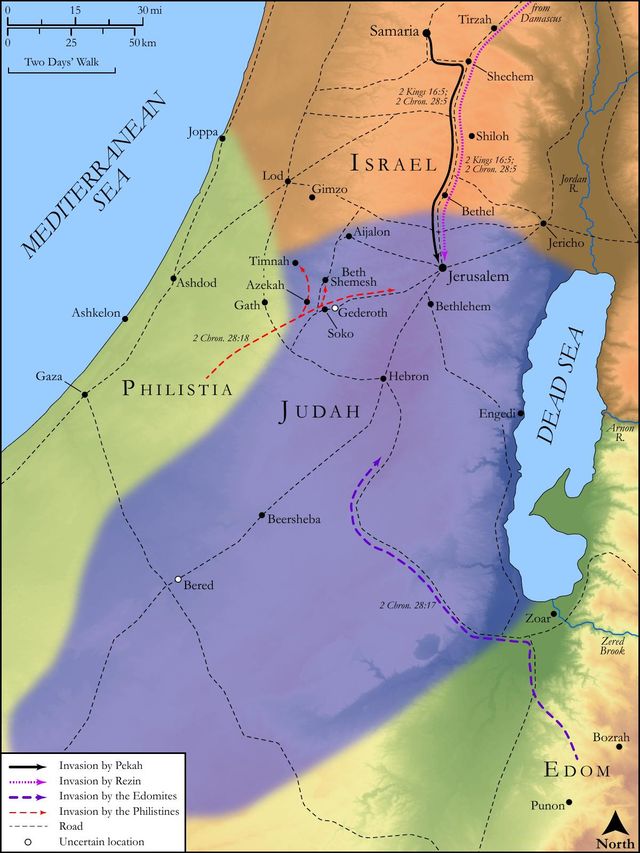
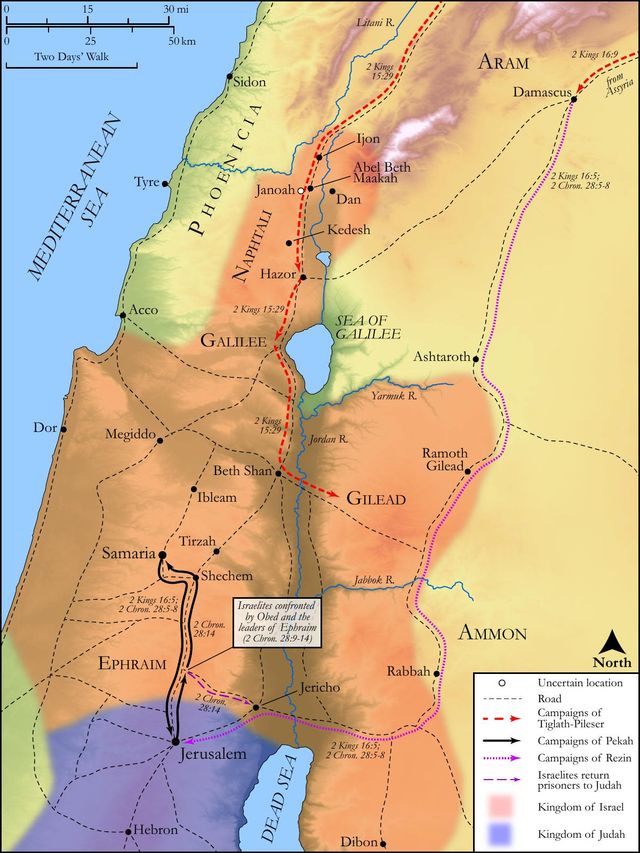
This verse is situated within the tumultuous reign of King Ahaz of Judah, detailed in 2 Chronicles 28. Ahaz's reign is depicted as one of the most wicked in Judah's history, marked by profound spiritual apostasy, including idolatry, child sacrifice, and the closure of the temple, as described in 2 Chronicles 28:1-5. As a direct consequence of Judah's unfaithfulness, the LORD allowed them to be severely defeated by their northern neighbors, Israel, under King Pekah, and by the Arameans, as recounted in 2 Chronicles 28:5-8. The immediate preceding verses detail the scale of this defeat, with Pekah slaying 120,000 Judean soldiers in one day and carrying off a massive number of captives. It is as the victorious Israelite army returns to Samaria with these 200,000 captives that the prophet Oded, along with several prominent Ephraimite leaders, intercepts them, delivering the divine message of rebuke found in this verse and the subsequent call to release the captives, as recorded in 2 Chronicles 28:9-15. Oded's intervention serves as a pivotal moment, shifting the narrative from unbridled conquest to divine compassion and inter-Israelite solidarity.
Historical & Cultural Context
The historical backdrop is the divided monarchy, with the Northern Kingdom of Israel (often referred to as Ephraim or Samaria) and the Southern Kingdom of Judah existing as separate, often antagonistic, entities. Despite their political schism, both kingdoms shared a common heritage as descendants of Abraham, Isaac, and Jacob, and were bound by the Mosaic Covenant. The practice of enslaving war captives was common among the nations of that day, but the Mosaic Law placed specific restrictions on the enslavement of fellow Israelites, particularly prohibiting permanent bondage, as outlined in Leviticus 25:39-46. While temporary servitude for debt or poverty was permitted, perpetual enslavement of one's own people was a grave violation of the covenant and the spirit of brotherhood. Furthermore, both kingdoms were steeped in spiritual decline. While Judah under Ahaz had plunged into paganism, Israel had long been plagued by idolatry, particularly the worship of golden calves established by Jeroboam I (1 Kings 12:28-30), and later by Baal worship. Oded's rebuke thus resonates deeply within this context, reminding Israel that their own spiritual state was no better than Judah's, despite their military success.
Key Themes
ShowHideThis verse contributes to several major theological and narrative themes within 2 Chronicles and the broader biblical narrative. Firstly, it underscores the theme of Divine Justice and Mercy. While God used Israel as an instrument of judgment against Judah's sin, He did not condone Israel's excessive cruelty or the permanent enslavement of their kinsmen. God's judgment is always tempered with mercy, and He calls His people to reflect His character, even in victory. Secondly, the passage powerfully highlights Hypocrisy and Self-Righteousness. Oded's core accusation exposes Israel's spiritual blindness, demonstrating that their own "sins against the LORD your God" were just as prevalent, if not more so, than Judah's. This serves as a timeless warning against condemning others while ignoring one's own spiritual failings, a principle echoed by Jesus in the Sermon on the Mount. Thirdly, the verse emphasizes the enduring concept of Brotherhood and Unity among God's people. Despite the political division, Israel and Judah remained one covenant people. Enslaving fellow Israelites was a profound violation of this shared identity and the principles of the Mosaic Law, which mandated compassion and release for Hebrew servants (Deuteronomy 15:12-18). Finally, Oded embodies the theme of Prophetic Rebuke, serving as a courageous example of a prophet who boldly rebukes the powerful, challenging the actions of a victorious army when they went against God's will and covenant principles, leading directly to the release and restoration of the captives in 2 Chronicles 28:14-15.
Exposition and Analysis
ShowHideKey Word Analysis
ShowHideThe Hebrew verb כָּבַשׁ (kâbash) means "to tread down," "to conquer," "to subjugate," or "to bring into bondage." In this context, it emphasizes the oppressive and permanent intent of the Israelite army to enslave the Judean captives. It suggests a desire not merely for temporary servitude but for a lasting subjugation, which would have been a direct violation of the Mosaic Law concerning fellow Israelites. The word highlights the severity of the planned action and the deep injustice inherent in it.
The Hebrew noun אַשְׁמָה (ʼashmâh) signifies "guiltiness," "a fault," or "trespass." The use of the plural here underscores the numerous and pervasive nature of Israel's transgressions against the LORD. This would have included their long-standing idolatry (e.g., the golden calves at Dan and Bethel), oppression, and failure to uphold the covenant, which mirrored or even exceeded Judah's own failings. Oded's pointed question implies that Israel's moral and spiritual ledger was far from clean, making their triumphalism and planned oppression of Judah profoundly hypocritical.
Verse Breakdown
ShowHide"And now ye purpose to keep under the children of Judah and Jerusalem for bondmen and bondwomen unto you:"
This opening clause directly confronts the Israelite army's intention. The phrase "children of Judah and Jerusalem" encompasses the entire population of the Southern Kingdom, highlighting the vast number of captives (200,000 according to 2 Chronicles 28:8). The phrase "bondmen and bondwomen" explicitly states their intent to reduce these fellow Israelites to a state of permanent slavery. This was not merely about taking spoils of war but about establishing a lasting, oppressive dominion over their brethren, a clear violation of the covenantal relationship that should have existed between the two kingdoms as one people of God.
"[but are there] not with you, even with you, sins against the LORD your God?"
This is the heart of Oded's powerful rhetorical question. The KJV adds the bracketed phrase "[but are there]" to clarify the interrogative nature, but the Hebrew itself is a direct, emphatic question. The repetition of "with you, even with you" serves to intensify the accusation, pointing directly at the Israelite soldiers and their nation. It asserts that Israel, despite their military victory and perceived divine favor, was deeply implicated in their own transgressions against God. This accusation of "sins against the LORD your God" would have resonated with Israel's history of idolatry and covenant unfaithfulness, particularly their worship of the golden calves and Baal. Oded challenges their moral authority, exposing their hypocrisy and reminding them that God's judgment was not exclusively for Judah.
Literary Devices
ShowHideThe verse powerfully employs Rhetorical Question to deliver its core message. Oded's question, "but are there not with you, even with you, sins against the LORD your God?", is not posed to elicit information but to make a forceful assertion and provoke introspection. It functions as a direct, unassailable accusation, highlighting the profound Irony of Israel's position: they are acting as instruments of God's judgment against Judah while simultaneously being guilty of similar, if not greater, transgressions themselves. This irony underscores their spiritual blindness and self-righteousness. The repetition of "with you, even with you" serves as a form of Emphasis or Anaphora, intensifying the personal and national culpability of the Israelite army and nation. This direct address, combined with the prophetic authority of Oded, constitutes a powerful Prophetic Denunciation, exposing moral failings and calling for a change of heart and action.
Theological and Thematic Connections
ShowHideOded's prophetic confrontation in 2 Chronicles 28:10 serves as a profound theological statement on God's consistent character and His expectations for His people. It reveals that while God may use one nation or group to chastise another, He does not condone injustice or oppression, especially when perpetrated by His own covenant people against their brethren. The verse highlights the universal nature of sin and the danger of spiritual hypocrisy, reminding us that God sees beyond outward victories or perceived righteousness to the true state of the heart. It underscores that divine judgment is not arbitrary but rooted in covenant faithfulness, and that no one is exempt from accountability for their "sins against the LORD your God." This passage thus calls for humility, self-examination, and a compassionate response to those who are suffering, even if they are perceived as deserving of judgment.
Reflection and Application
ShowHide2 Chronicles 28:10 stands as a timeless challenge to our human tendency towards self-righteousness and the abuse of power. It compels us to look inward before casting judgment outward, reminding us that our own spiritual standing before God is never based on the perceived failures of others, but on our personal obedience, humility, and genuine repentance. In a world often quick to condemn and exploit, this verse calls believers to embody God's character of mercy, justice, and compassion, especially towards those who are vulnerable or have fallen. It teaches that true spiritual victory is not found in dominating or shaming others, but in recognizing our shared human frailty and extending the same grace we ourselves have received from God. This passage encourages us to cultivate a spirit of empathy, to dismantle oppression, and to always remember that we, too, are prone to "sins against the LORD our God."
Questions for Reflection
ShowHideFAQ
ShowHideWho was Oded and why was his intervention significant in 2 Chronicles 28?
ShowHideOded was a prophet in the Northern Kingdom of Israel, specifically mentioned in 2 Chronicles 28:9. His intervention was profoundly significant because he courageously confronted the victorious Israelite army and its leaders as they returned with 200,000 Judean captives. At a time when nationalistic fervor and the spoils of war might have overshadowed moral and covenantal obligations, Oded delivered a direct divine rebuke. He reminded the Israelites that their victory was permitted by God due to Judah's sins, but that Israel itself was equally guilty of "sins against the LORD your God" (2 Chronicles 28:10). His prophetic word highlighted the hypocrisy of enslaving their brethren and the violation of the Mosaic Law (Leviticus 25:39-46). Oded's bold stance, coupled with the support of several prominent Ephraimite leaders (2 Chronicles 28:12), led to a remarkable act of compassion: the Israelite army released the captives, clothed and fed them, and returned them to Jericho, fulfilling the prophet's instruction (2 Chronicles 28:14-15). This act of obedience to Oded's prophecy averted further divine wrath upon Israel and stands as a powerful example of prophetic influence leading to justice and mercy.
Christ-Centered Fulfillment
ShowHideThe prophetic rebuke of Oded in 2 Chronicles 28:10, highlighting Israel's own "sins against the LORD your God" even as they judged Judah, profoundly foreshadows the ultimate revelation of God's justice and mercy found in Jesus Christ. Oded's message exposes the futility of human self-righteousness and the universal reality of sin, a truth profoundly articulated by Paul in Romans 3:23, "for all have sinned and fall short of the glory of God". The law's inability to bring true righteousness and its exposure of humanity's shared fallenness is a central theme that finds its resolution in Christ. Just as Oded called Israel to release their captives, Christ came to set the captives free from the bondage of sin and death, as prophesied in Isaiah 61:1 and quoted by Jesus in Luke 4:18-19. He perfectly fulfilled the law's demands, not by condemning others while being guilty himself, but by living a sinless life and offering Himself as the ultimate sacrifice for the sins of all humanity (Hebrews 4:15). In Christ, the hypocrisy Oded condemned is overcome, as God, in His infinite mercy, provides a way for forgiveness and reconciliation, not through human merit or judgment of others, but through faith in the Lamb of God who takes away the sin of the world. The call to brotherhood and compassion, violated by Israel, is perfectly exemplified and commanded by Christ, who calls His followers to love one another as He has loved them, demonstrating that true freedom and unity are found only in Him.