


1 Kings 3:18
Bible text: King James Version (1769 Blayney text) · Public domain
Bible text: King James Version with Strong's numbers · Public domain
Bible text: Berean Standard Bible · Public domain
Bible text: American Standard Version (1901) · Public domain
Bible text: World English Bible, Messianic edition · Public domain
Bible text: Geneva Bible (1599) · Public domain
Bible text: Young's Literal Translation · Public domain
- וַיְהִיvay·Hiand it wasH1961Conj-w ¦ V-Qal-ConsecImperf-3msVerb Qal Consecutive Imperfect 3rd Singular Masculineוַandיְהִיit was
- בַּיּוֹםbai·Yomon the dayH3117Prep-b ¦ N-msNoun Singular Masculine Absoluteבַּon theיּוֹםday
- הַשְּׁלִישִׁיha·she·li·Shi<the> thirdH7992Art ¦ Adj-msAdjective Numerical Position Singular Masculine Absoluteהַ<the>שְּׁלִישִׁיthird
- לְלִדְתִּיle·lid·Tiof giving birth myH3205Prep-l ¦ V-Qal-Inf ¦ 1csVerb Qal Infinitive Constructלְofלִדְתִּgiving birthיmy
- וַתֵּלֶדva·Te·ledand she gave birthH3205Conj-w ¦ V-Qal-ConsecImperf-3fsVerb Qal Consecutive Imperfect 3rd Singular Feminineוַandתֵּלֶדshe gave birth
- גַּםgamalsoH1571AdvAdverb
- הָאִשָּׁהha·'i·Shahthe womanH802Art ¦ N-fsNoun Singular Feminine Absoluteהָtheאִשָּׁהwoman
- הַזֹּאתha·Zot<the> thisH2063Art ¦ PrtParticle Demonstrativeהַ<the>זֹּאתthis
- וַאֲנַחְנוּva·'a·Nach·nuand weH587Conj-w ¦ Pro-1cpPronoun Personal 1st Plural common genderוַandאֲנַחְנוּwe
- יַחְדָּוyach·Dav[were] togetherH3162AdvAdverb
- אֵין'einthere notH369N-mscNoun Singular Masculine Construct
- זָרzar[was] a strangerH2114Adj-msAdjective Singular Masculine Absolute
- אִתָּנוּ'i·Ta·nuwith usH854Prep ¦ 1cpPrepositionאִתָּwithנוּus
- בַּבַּיִתba·Ba·yitin the houseH1004Prep-b ¦ N-msNoun Singular Masculine Absoluteבַּin theבַּיִתhouse
- זוּלָתִיzu·la·TiexceptH2108N-fscNoun Singular Feminine Construct
- שְׁתַּיִםshe·ta·yimtwoH8147N-fdNoun Dual Feminine Absolute
- אֲנַחְנוּ'a·Nach·nuweH587Pro-1cpPronoun Personal 1st Plural common gender
- בַּבָּיִתba·Ba·yit[were] in the houseH1004Prep-b ¦ N-msNoun Singular Masculine Absoluteבַּ[were] in theבָּיִתhouse
English is a literal word-by-word gloss of the Hebrew, not the KJV's wording. Why?
This is the original text the KJV's translators worked from — each Hebrew word with its own literal English meaning in this verse, prepared by scholars at Tyndale House, Cambridge. The KJV translates whole sentences, not word by word, so its wording differs: one Hebrew word can become several English words, and the KJV may choose “the LORD” where the gloss reads “Yahweh”. Both are faithful — they answer different questions. For the KJV's own rendering, switch to the KJV text.
Details
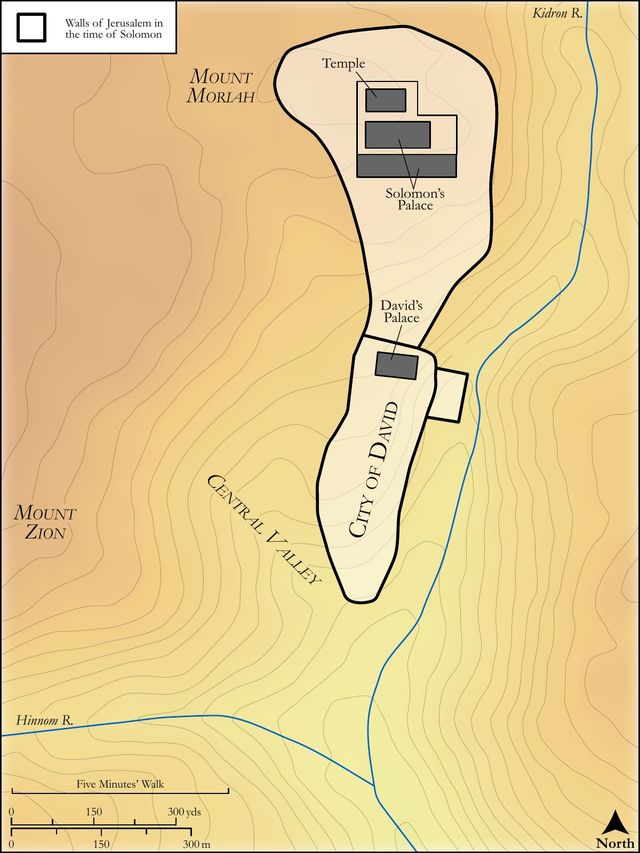
See on the biblical-era map
Study this verse
Public-domain commentary
Matthew Henry
From his Commentary on the Whole Bible. Henry comments on passages, not single verses — this entry covers 1 Kings 3:16–28. His three-level outline is real structure in the source text, so it is rendered as structure.
An instance is here given of Solomon's wisdom, to show that the grant lately made him had a real effect upon him. The proof is fetched, not from the mysteries of state and the policies of the council-board, though there no doubt he excelled, but from the trial and determination of a cause between party and party, which princes, though they devolve them upon their judges, must not think it below them to take cognizance of. Observe,
I.The case opened, not by lawyers, but by the parties themselves, though they were women, which made it the easier to such a piercing eye as Solomon had to discern between right and wrong by their own showing. These two women were harlots, kept a public house, and their children, some think, were born of fornication, because here is no mention of their husbands. It is probable the cause had been heard in the inferior courts, before it was brought before Solomon, and had been found special, the judges being unable to determine it, that Solomon's wisdom in deciding it at last might be the more taken notice of. These two women, who lived in a house together, were each of them delivered of a son within three days of one another, Kg1 3:17, Kg1 3:18. They were so poor that they had no servant or nurse to be with them, so slighted, because harlots, that they had no friend or relation to accompany them. One of them overlaid her child, and, in the night, exchanged it with the other (Kg1 3:19, Kg1 3:20), who was soon aware of the cheat put upon her, and appealed to public justice to be righted, Kg1 3:21. See,
1.What anxiety is caused by little children, how uncertain their lives are, and to how many dangers they are continually exposed. The age of infancy is the valley of the shadow of death; and the lamp of life, when first lighted, is easily blown out. It is a wonder of mercy that so few perish in the perils of nursing.
2.How much better it was in those times with children born in fornication than commonly it is now. harlots then loved their children, nursed them, and were loth to part with them; whereas now they are often sent to a distance, abandoned, or killed. But thus is was foretold that in the last days perilous times should come, when people should be without natural affection, Ti2 3:1, Ti2 3:3.
II.The difficulty of the case.
The question was, Who was the mother of this living child, which was brought into court, to be finally adjudged either to the one or to the other? Both mothers were vehement in their claim, and showed a deep concern about it. Both were peremptory in their asseverations: "It is mine," says one. "Nay, it is mine," says the other. Neither will own the dead child, though it would be cheaper to bury that than to maintain the other: but it is the living one they strive for. The living child is therefore the parent's joy because it is their hope; and may not the dead children be so? See Jer 31:17. Now the difficulty of the case was that there was no evidence on either side. The neighbours, though it is probable that some of them were present at the birth and circumcision of the children, yet had not taken so much notice of them as to be able to distinguish them. To put the parties to the rack would have been barbarous; not she who had justice on her side, but she who was most hardy, would have had the judgment in her favour. Little stress is to be laid on extorted evidence. Judges and juries have need of wisdom to find out truth when it thus lies hid.
III.The determination of it.
Solomon, having patiently heard what both sides had to say, sums up the evidence, Kg1 3:23. And now the whole court is in expectation what course Solomon's wisdom will take to find out the truth. One knows not what to say to it; another, perhaps, would determine it by lot. Solomon calls for a sword, and gives orders to divide the living child between the two contenders. Now,
1.This seemed a ridiculous decision of the case, and a brutal cutting of the knot which he could not untie. "Is this," think the sages of the law, "the wisdom of Solomon?" little dreaming what he aimed at in it. The hearts of kings, such kings, are unsearchable, Pro 25:3. There was a law concerning the dividing of a living ox and a dead one. (Exo 21:35), but that did not reach this case. But,
2.It proved an effectual discovery of the truth. Some think that Solomon did himself discern it, before he made this experiment, by the countenances of the women and their way of speaking: but by this he gave satisfaction to all the company, and silenced the pretender. To find out the true mother, he could not try which the child loved best, and must therefore try which loved the child best; both pretended to a motherly affection, but their sincerity will be tried when the child is in danger.
(1.)She that knew the child was not her own, but in contending for it stood upon a point of honour, was well content to have it divided. She that had overlaid her own child cared not what became of this, so that the true mother might not have it: Let it be neither mine nor thine, but divide it. By this it appeared that she knew her own title to be bad, and feared Solomon would find it so, though she little suspected she was betraying herself, but thought Solomon in good earnest. If she had been the true mother she would not have forfeited her interest in the child by agreeing so readily to this bloody decision. But,
(2.)She that knew the child was her own, rather than the child should be butchered, gives it up to her adversary. How feelingly does she cry out, O, my lord! give her the living child, Kg1 3:26. "Let me see it hers, rather than not see it at all." By this tenderness towards the child it appeared that she was not the careless mother that had overlaid the dead child, but was the true mother of the living one, that could not endure to see its death, having compassion on the son of her womb. "The case is plain," says Solomon; "what need of witnesses? Give her the living child; for you all see, by this undissembled compassion, she is the mother of it." Let parents show their love to their children by taking care of them, especially by taking care of their souls, and, with a holy violence, snatching them as brands out of the burning. Those are most likely to have the comfort of children that do their duty to them. Satan pretends to the heart of man, but by this it appears that he is only a pretender, that he would be content to divide with God, whereas the rightful sovereign of the heart will have all or none.
IV.We are told what a great reputation Solomon got among his people by this and other instances of his wisdom, which would have a great influence upon the ease of his government: They feared the king (Kg1 3:28), highly reverenced him, durst not in any thing oppose him, and were afraid of doing an unjust thing; for they knew, if ever it came before him, he would certainly discover it, for they saw that the wisdom of God was in him, that is, that wisdom with which God had promised to endue him. This made his face to shine, Ecc 8:1. This strengthened him, Ecc 7:19. This was better to him than weapons of war, Ecc 9:18. For this he was both feared and loved.
Historical interpretation
Historical reception
11 surviving comments on this verse. Each one is dated, so this reads as a timeline rather than a list.
Select a marker to jump to its quote. Markers stagger vertically where authors wrote within a few decades of each other.
The two women indicate to us the church and the synagogue. The latter, after it tried to suppress the sacrament of human redemption and persecuted and killed the Redeemer through false accusations, claims, nevertheless, that its child should still be alive, that is, that the Jewish people should still be pleasing and acceptable to God and that he should give eternal life to the Mosaic law, which is dead. Since the [synagogue] is soaked in these errors, it perpetually quarrels with the church, which is represented by the other woman. However, the peaceful king settled the argument not by dividing but by gathering the children of both mothers, so that a single body might be created from the Jews and the Gentiles, whose head is Christ. And both mothers assert that they live under the same roof, because the church and the synagogue inhabit this world in dwellings, where they are mixed.
Is not that noble judgment of Solomon full of wisdom and justice? Let us see whether it is so. “Two women,” it says, “stood before King Solomon, and the one said to him, ‘Hear me, my lord, I and this woman dwell in one house, and before the third day we gave birth and bore a son apiece and were together; there was no witness in the house, nor any other woman with us, only we two alone. And her son died this night, because she laid on him, and she arose at midnight, and took my son from my breast and laid him in her bosom, and her dead child she laid at my breast. And I arose in the morning to nurse my child and found him dead. And I examined him at dawn, and behold, it was not my son.’ And the other woman said, ‘No, but the living is my son, and the dead is your son.’ ” This was their dispute, in which either tried to claim the living child for herself and denied that the dead one was hers. Then the king commanded a sword to be brought and the infant to be cut in half, and either piece to be given to one, one half to the one, and one half to the other. Then the woman whose the child really was, moved by her feelings, cried out, “Do not divide the child, my lord; rather, let it be given to her and live, and do not kill it.” But the other answered: “Let it be neither mine nor hers; divide it.” Then the king ordered that the infant should be given to the woman who had said “do not kill it,” for, as it says, “her compassion earned over her son.”It is not wrong to suppose that the mind of God was in him; for what is hidden from God? What can be more hidden than the witness that lies deep within; into which the mind of the wise king as though to judge a mother’s feelings and elicited as it were the voice of a mother’s heart? For a mother’s feelings were laid bare when she chose that her son should live with another, rather than that he should be killed in his mother’s sight. It was therefore a sign of wisdom to distinguish between secret heart thoughts, to draw the truth from hidden springs and to pierce as it were with the sword of the Spirit not only the inward parts of the body but even of the mind and soul. It was the part of justice also that she who had killed her own child should not take away another’s but that the real mother should have her own back again. Indeed the Scriptures have declared this. “All Israel,” it says, “heard of the judgment that the king had judged, and they feared the king, for they saw that the wisdom of God was present in judgment.” Solomon also himself had asked for wisdom, so that a prudent heart might be given him to hear and to judge with justice.
Such a Shechem is the church; for Solomon chose her whose hidden love he had discerned. Such a Shechem is Mary, whose soul God’s sword pierces and divides. Such a Shechem is a “coming up,” even as it appears in the meaning of the word. As to what the “coming up” is, hear Solomon speaking in reference to the church, “Who is she that comes up clothed in white, leaning on her brother?” She is radiant, a word expressed in Greek as aktinodes, because she is resplendent in faith and in works. To her children it is said, “Let your works shine before my Father, who is in heaven.”
The interpretation of Solomon's judgment on the quarrel of two harlot women (1 Kings 3) is clear as far as the simple history is concerned: that a boy of twelve years judged with an affection beyond his age for the depths of human nature. Hence, he was both admired and feared by all Israel, because he would not miss what was so skillfully concealed. But regarding typical understanding, as the Apostle says: All these things were written to happen to them by way of example, and they were written for our admonition, upon whom the ends of the ages have come. (1 Corinthians 10:11) Some Greeks hold that this should be understood in reference to the Synagogue and the Church, and that all things should be referred to that time when, after the crucifixion and resurrection, the true Solomon, that is, the peaceful one, began to reign both in Israel and among the Gentile people. But that adulteresses and prostitutes are called Synagogue and Church in the Scriptures, there is no doubt.
The first idea that occurs to me on consideration is that the two women are the synagogue and the church. For the synagogue is convicted of having killed Christ her son, born of the Jews according to the flesh, in her sleep; that is, by following the light of this present life and not perceiving the revelation of trust in the sayings of the Lord. That is why it is written, “Rise, sleeper, and arise from the dead, and Christ will enlighten you.” That they were two and that they were alone, living in one house, may be taken to mean, without being far-fetched, that besides the circumcision and the uncircumcision there is no other kind of religion to be found in this world. So under the person of one woman you can include the race of circumcised men bound by the worship and the law of one God, while under the person of the other woman you can comprehend all the uncircumcised Gentiles given over to the worship of idols.But they were both harlots. Well, the apostles say that Jews and Greeks are all under sin. Every soul that forsakes eternal truth for base earthly pleasures is whoring away from the Lord. Now about the church that comes from the whoredom of the Gentiles, it is clear that it did not kill Christ.… Pay attention to the Gospel and listen to what the Lord says: “Whoever does the will of my Father, this is my mother and brother and sister.” So when did this one sleep, not indeed to smother her child in sleep but at least so that the dead one could be substituted and the living one taken away from her? Does it perhaps mean this, that the very sacrament of circumcision which had remained dead among the Jews because their view of it was wholly carnal and literal—that this lifeless sacrament of circumcision some Jews wished to foist like a lifeless body on the Gentiles who had believed in Christ, as it says in the Acts of the Apostles, telling them that they could not be saved unless they had themselves circumcised? They were foisting this on those ignorant of the law, as though they were substituting the dead child in the darkness of the night. But that argument would have no chance of success except where the sleep of folly had stolen over some part of the church of the Gentiles. From this sleep the apostle seems to be shaking her when he exclaims, “O foolish Galatians, who has bewitched you?” And a little later: “Are you such fools,” he says, “that after beginning with the spirit you now end with the flesh?” as though he were saying, “Are you such fools, that after first having a living spiritual work, you lose it and go on to accept someone else’s dead one?”
Indeed, the same apostle says elsewhere, “The spirit is life because of justice.” And in another place, “To be wise according to the flesh is death.” At these and similar words, then, that mother wakes up, and early morning dawns on her when the obscurity of the law is lit up by the word of God, that is, by Christ who was rising like the sun, that is, was speaking in Paul. He lit up this darkness when he said, “Tell me, you who wish to be under the law, have you not heard the law? For it is written that Abraham had two sons, one by a slave woman and one by a free woman. But the one by the slave woman was born according to the flesh, the one by the free woman through a promise; which is all an allegory. For these are the two Testaments, one from Mount Sinai, bringing forth into slavery, which is Hagar (for Sinai is a mountain in Arabia), and she corresponds to the present Jerusalem, because she is in slavery with her children. But the Jerusalem above is free.” No wonder, then, if on account of dead works the dead child belongs to the Jerusalem below, while on account of spiritual ones the living child belongs to the Jerusalem above. After all, hell is sown below, where the dead belong; and heaven above, where the living belong. Enlightened in this way, as by the coming of daybreak, the church has an understanding of spiritual grace and thrusts away from it the carnal accomplishments of the law, like the other woman’s dead child. Instead [the church] claims for itself a living faith—since “the just person lives by faith”—which it has acquired in the name of the Father and the Son and the Holy Spirit; that is why it recognizes with certainty the son as three days old and does not allow him to be snatched away.
The lesson to be read at Vespers, dearly beloved, concerns the two harlots who came for the decision of Solomon; one of them, who was not only dissolute but also cruel and wicked, shouted to the king that he should command the infant to be cut in two. Now, if you willingly listen, we would like to mention to the ears of your charity what the holy Fathers have explained about the matter. The woman who cried out that the boy should be kept whole represented a type of the Catholic church; the other cruel and impious woman who shouted that the boy should be divided signified the Arian heresy. The Catholic church like a most devoted mother exclaims to all heretics: Do not make Christ less than the Father; do not divide his unity; do not divide the one God in various degrees and fashion, as it were, idols of the pagans in your hearts. Keep him with you entirely; if you want to have peace, do not divide his unity. Indeed, if you have the whole, everything remains yours. So great is the omnipotence of God that all possess him entire, and each one possesses all of him. However, the impious, cruel heresy exclaims, “No, but divide him.” What does this mean, divide him, except that the Son is not equal to the Father? If a person takes equality from the Son, he denies that the Father is good and omnipotent. If God the Father could beget a Son like himself but would not, he is not good; if he would but could not, he is not almighty. Be assured, brothers, that none of the Arians can answer this statement; but whenever they are limited by the truest reason, like a slippery snake they take refuge in some sort of clever and involved inquiries.
Now let the other one claim that the gospel is hers, as being owed to her and produced through her. For that is what they were saying to the Gentiles in this dispute, those of the Jews who, while clinging to the letter of the law, dared to call themselves Christians. They were saying that the gospel had come as something owed to them for their justice. But it was not theirs, because they did not know how to grasp its spirit. So they even had the audacity to contend that they were to be called Christians, boasting in someone else’s name like that woman claiming a son she had not borne; and this though by excluding a spiritual understanding from the works of the law they had as it were drained the soul out of the body of their works, and while smothering the live spirit of prophecy had remained attached to their material keeping of the law, which lacked all life, that is to say, spiritual understanding. They wanted to foist all this on the Gentiles too, and take from them, like the living child, the name of Christian. In refuting them, the apostle went so far as to say that the more they claim Christian grace as their due and boast that it is theirs as though by right of the works of the law, the less it really belongs to them. “For to one who works,” he says, “his wages are not reckoned as a grace or favor but as his due. But to one who does not work but believes in him who justifies the wicked, it is faith that is reckoned as justice.” And therefore he does not count among their number those of the Jews who had believed rightly and were holding fast to a living spiritual grace. He says this remnant of the Jewish people were saved, when the majority of them had gone to perdition. “So therefore at the present time also,” he says, “a remnant has been saved, chosen by grace. But if it is by grace, it is no longer as a result of works; otherwise grace would no longer be grace.” So those are excluded from grace who claim the prize of the gospel is theirs by right, owed and given them for their works. This is like the synagogue claiming, “It is my son.” But [the synagogue] was lying. It too, you see, had received him, but by sleeping on him, that is, by being proud in its own conceits, it had killed him. But now this other mother was awake and understood that it was not through her own merits, since she is a harlot, but through God’s grace that she had been granted a son, namely, the work of evangelical faith, which she longed to nurse in the bosom of her heart. So that while one was using another person’s son to acquire human respectability, this one was preserving a true love for her own.
But there is no greater proof of charity in Christ’s church than when the very honor that seems so important among people is despised, in order to prevent the limbs of the infant being cut in two and Christian infirmity being torn to shreds by the break of unity. The apostle says that he had shown himself like a mother to the little ones among whom he had done the good work of the gospel, not he but the grace of God in him. That harlot could call nothing her own except her sins, whereas the gift of fertility she had from God. And the Lord says beautifully about a harlot, “She to whom much is forgiven loves much.” So the apostle Paul says, “I became a little one among you, like a wet-nurse fondling her children.” But when it comes to the danger of the little one being cut in two, when Insincerity claims for herself a spurious dignity of motherhood and is prepared to break up unity, the mother despises her proper dignity provided she may see her son whole and preserve him alive; she is afraid that if she insists too obstinately on the dignity due to her motherhood, she may give Insincerity a chance to divide the feeble limbs with the sword of schism. So indeed let mother Charity say, “Give her the boy.” “Whether in pretense or in truth, let Christ be preached.” In Moses Charity exclaims, “Lord, either pardon them or blot me out of your book.” But in the Pharisees Insincerity speaks: “If we let him go, the Romans will come and take away our nation and place.” It was not the reality of justice that they wished to have but its name, and they desired to hold on dishonestly to the honor owed to just men and women. And yet Insincerity reigning in them was permitted to sit in Moses’ seat, and so the Lord could say, “Do what they say, but do not do what they do;” and so while enjoying a spurious honor they would still nurture the little ones and the weak on the truth of the Scriptures. Insincerity, you see, has her own proper crime—smothering with the weight of her slumbers the new creature she had received through the grace of God pardoning her, but the milk of faith which she has is not hers. Because even after the death of the child, who represents the new life of being born again, Insincerity now set in her bad ways still retains in her memory, as in her breasts, Christian doctrine and the words of faith, which are handed on to all who come to the church. From this milk even the spurious mother could give suck of the true faith to the infant being suckled. For that reason the true mother is without anxiety when her baby is being nurtured even by the insincere on the milk of the divine Scriptures of the Catholic faith, when unity is saved and division prevented, and Charity is approved by the judge’s final sentence, which represents Christ’s last judgment. Since, in order to save her baby and uphold unity, she was prepared to concede the dignity of motherhood even to Insincerity, for holding on to love and embracing the grace of life she will enjoy the everlasting reward of a devoted mother.
Again, I see these two women in one house as representing two kinds of people in one church: one of them dominated by insincerity, the other ruled by charity. So we may regard these two kinds of people simply like two women, called love and insincerity. Insincerity, of course, deceitfully imitates love. That is why the apostle warns us against her when he says, “Let love be without insincerity.” Although the two live in one house as long as that gospel net is in the sea, enclosing good and bad fish together until it is brought ashore, yet each is doing her own thing. They were both harlots, though, because everyone is converted to the grace of God from worldly desires, and nobody can properly boast about any prior justice and its merits. A harlot’s committing fornication is her own doing; her having a son is God’s. All human beings, after all, are fashioned by the one creator God. Nor it is surprising that God works well even in the sins of men and women. After all, even the crime of Judas the traitor was used by our Lord to achieve the salvation of the human race. But the difference is that when God brings something good out of anyone’s sin, it is not usually something that the sinner wants. It is not only that when he sins he does not sin with the same intention as God’s providence turning his sin to a just end—Judas, you see, did not betray Christ with the same intention as Christ had in allowing himself to be betrayed; it is also that when he realizes his sin has produced a better result that he never wanted to happen, it gives him more pain than pleasure. Suppose, for example, someone wants to give his enemy poison while he is sick, but he makes a mistake about the kind of medicine and gives him something beneficial instead, so that the sick person gets better through the kindness of God, who decided to turn his enemy’s villainy to his advantage. But when the wicked person realizes that his own hand has restored the other to health, he suffers torments and frustration. But if a harlot is willing to have the child she has conceived and is not driven by lust or avaricious concern for her shameful earnings to take an abortifacient and eliminate what she has conceived from her womb, in case her fertility should interfere with her sinning, then the appetite that had been dissipated among a great many is now concentrated on the one gift of God and will no longer be called greed, but love. So the harlot’s son is rightly understood as representing the sinner’s grace; the new creature born of the old shame is the forgiveness of sins.
As for the royal judgment between the two of them, it simply admonishes us to fight for the truth and to drive hypocrisy away from the spiritual gift of the church like a spurious mother from another woman’s living son and not to let her control the grace granted to others when she could not take care of her own. But let us do this, defending and fighting for the truth without running the risk of division. That decision of the judge, when he ordered the baby to be cut in two, is not meant as a breach of unity but as a test of charity. The name Solomon means peaceable. So a peaceable king does not tear limbs apart that contain the spirit of life in unity and concord. But his threat discovers the true mother, and his judgment sets aside the spurious one. So then, if it comes to this sort of crisis and trial, to prevent the unity of Christian grace from being torn apart, we are taught to say, “Give her the child, only let him live.” The true mother, you see, is not concerned about the honor of motherhood but about the well-being of her son. Wherever he may be, his mother’s true love will make him more her possession than that of the false claimant.
What about Solomon, who in his first judgment manifested the gift of wisdom, which he had received of God, only by making use of falsehood? For in order to get at the truth which was hidden by the woman’s lie, even he used the help of a lie most cunningly devised, saying: “Bring me a sword and divide the living child into two parts, and give the one half to the one and the other half to the other.” And when this pretended cruelty shook the heart of the true mother, but was received with approval by the one who was not, then at last by this most sagacious discovery of the truth he pronounced the judgment which every one has felt to have been inspired by God, saying: “Give her the living child and do not slay it; she is the mother.”
Continue studying 1 Kings 3:18 across the web’s major study libraries — every link below opens this exact verse, chapter, or book on the destination site.
Read & Compare
 BibleGatewayThis verse in more than 200 translations and 70 languages.
 Bible.comThe YouVersion reader — hundreds of translations, reading plans, and highlights.
 ESV.orgCrossway's official English Standard Version reader.
 NET BibleThe NET translation with 60,000+ translators' notes on every rendering decision.
 STEP BibleTyndale House's free study tool — original text, vocabulary, and scholarly resources.
 BibliaLogos Bible Software's free web reader.
 USCCBThe New American Bible (Revised Edition) with the U.S. bishops' study notes.
Commentaries
 BibleHub CommentariesDozens of classic commentaries on this verse, gathered on one page.
 StudyLightMore than 100 commentary sets — the largest collection on the web.
 BibleRefPlain-English commentary on what this verse means, verse by verse.
 Enduring WordDavid Guzik's free commentary on this chapter, widely used by Bible teachers.
 Bible Study ToolsVerse commentary alongside Greek and Hebrew study aids.
Original Language & Research
- BibleHub InterlinearThe verse word by word — original language, transliteration, and English.
- BibleHub LexiconEvery word's original-language definition and Strong's entry.
 Blue Letter BibleDeep-study tools — Strong's numbers, concordance, and word studies.
 SefariaThe Hebrew text with Rashi and centuries of Jewish commentary.
Sermons, Hymns & Audio


TrulyRandomVerse is not affiliated with these sites and doesn’t control their content. They’re linked because they’re genuinely useful.
Summary
This verse initiates the first woman's testimony in the pivotal account of Solomon's judgment, establishing the confined and unwitnessed setting for the tragic events that led to the dispute over a living child. It precisely details the timeline of the two births and emphatically states the absence of any third party in the house, thereby underscoring the profound challenge presented to King Solomon in discerning the truth without external corroboration.
Context
ShowHideLiterary Context
This verse serves as the opening statement of the first woman's plea before King Solomon, immediately following the introduction of the two women and their problem in 1 Kings 3:16. It sets the stage for the dramatic confrontation that unfolds in 1 Kings 3:16-28. By emphasizing the isolation of the incident, it highlights the core dilemma: two conflicting testimonies with no eyewitnesses. This crucial lack of external evidence forces Solomon to employ a unique, divinely-inspired method of judgment rather than relying on standard legal procedures. The verse's emphatic claim of no "stranger" directly contributes to the narrative tension, making Solomon's subsequent actions all the more remarkable.
Historical & Cultural Context
In ancient Israel, legal disputes, especially those lacking direct witnesses, often fell to the elders of the city gate or, in significant cases, to the king himself, who served as the supreme judicial authority. Mosaic Law placed a strong emphasis on the testimony of multiple witnesses for conviction, as seen in Deuteronomy 19:15. The scenario described in 1 Kings 3:18—two women living together, likely in a small, private dwelling typical of the period—presents a situation where such a legal standard cannot be met. The women are identified as "harlots" in 1 Kings 3:16, suggesting an overlooked social status where their living arrangements might have been less conventional, further contributing to their isolation and the lack of external oversight.
Key Themes
ShowHideThe primary themes emerging from this verse and its immediate context include the Quest for Truth in the face of deception, the Limitations of Human Justice without clear evidence, and the Necessity of Divine Wisdom in discerning hidden matters. The verse underscores the challenge of establishing facts when only conflicting personal accounts exist, thereby magnifying the significance of Solomon's prayer for an "understanding heart to judge" his people in 1 Kings 3:9. It also subtly introduces the theme of Motherhood and the profound bond between a mother and child, which will ultimately be the key to Solomon's ingenious resolution. The entire narrative, starting with this verse, serves as a powerful illustration of Solomon's divinely granted wisdom, as promised by God in 1 Kings 3:12.
Exposition and Analysis
ShowHideKey Word Analysis
ShowHideThis primitive root (H3205) means "to bear young," "to beget," or "to bring forth." Used twice in the verse ("I was delivered," "this woman was delivered"), its repetition emphasizes the central, shared experience of childbirth that forms the basis of the dispute. It highlights the natural, life-giving act that tragically becomes the source of their bitter conflict and the subsequent claim to the living child.
This word (H3162), derived from a root meaning "a unit," functions here adverbially to mean "unitedly," "at the same time," or "in the same place." Its use stresses the shared living arrangement and the physical proximity of the two women, directly supporting the claim that they were the only two individuals present. This reinforces the isolation of the incident and the absolute absence of any potential witnesses, setting the stage for Solomon's unique judicial challenge.
This primitive root (H2114) means "to turn aside," hence "to be a foreigner," "strange," or "profane." In this context, it refers to an "outsider" or anyone not belonging to their immediate household or arrangement. The emphatic declaration "no stranger with us" is the linchpin of the woman's testimony, establishing the crucial lack of external witnesses and thus presenting an insurmountable challenge to conventional legal inquiry, which typically required corroborating testimony.
Verse Breakdown
ShowHide"And it came to pass the third day after that I was delivered"
This clause establishes a precise, though brief, timeline for the events. It indicates that the second birth occurred just two days after the first woman had given birth, suggesting a very close proximity in their experiences and setting the stage for the subsequent, tragic events within their shared, confined living space.
"that this woman was delivered also"
This confirms the second birth, directly linking the two women through their shared experience of childbirth in the same household. It lays the groundwork for the dispute, as both now have infants, one of whom will tragically die, leading to the contentious claim over the surviving child.
"and we [were] together; [there was] no stranger with us in the house, save we two in the house"
This is the most crucial part of the verse, emphatically stating the absolute absence of any third party or witness. The repetition of "in the house" (H1004, bayith) underscores the profound isolation and confinement of the setting, making it clear that the events transpired without any external observation. This declaration creates the central legal dilemma for Solomon, as he cannot rely on corroborating testimony to ascertain the truth.
Literary Devices
ShowHideThe verse effectively employs Setting to establish the confined and unwitnessed nature of the events, emphasizing that the entire tragic incident occurred within the privacy of a shared dwelling, "save we two in the house." This isolated setting is crucial, as it directly leads to the central legal challenge presented to Solomon. There is an element of Foreshadowing, as the explicit declaration of "no stranger with us" immediately signals to the reader that a conventional resolution to the dispute will be impossible, thereby building anticipation for Solomon's extraordinary display of wisdom. Furthermore, the verse contains a subtle Dramatic Irony: the speaker uses this detail to bolster her seemingly credible testimony, yet the reader, knowing the outcome, understands that this very claim of isolation will ultimately be used by Solomon to expose her deception and reveal the true mother. The Repetition of "in the house" (בַּבַּיִת, babbayit) further emphasizes the profound isolation and lack of witnesses, underscoring the unique challenge facing the king.
Theological and Thematic Connections
ShowHideThis verse, by highlighting the absence of human witnesses, powerfully underscores the theological truth of God's omniscience. While human justice systems often rely on observable facts and corroborating testimonies, there are situations where truth is hidden from human eyes, known only to those involved and, ultimately, to God. This scenario demonstrates the limitations of human wisdom and the profound need for divine insight when facts are obscured by deception. It serves as a testament to the principle that God "sees what is done in secret" (Matthew 6:4), and that true justice often requires a discernment that transcends mere empirical evidence. It reminds us that no deed, thought, or hidden truth escapes the divine gaze.
Reflection and Application
ShowHideThe stark reality presented in 1 Kings 3:18—that a profound truth was hidden from all human eyes save two—serves as a powerful reminder of the importance of integrity, even when no one else is watching. It challenges us to consider our own actions and words in private, knowing that while human witnesses may be absent, God's gaze is ever-present. This narrative invites us to seek wisdom beyond our own limited understanding, especially when confronted with complex situations where facts are scarce or conflicting. It encourages us to pray for discernment, much like Solomon did, trusting that God can reveal truth and guide us to just resolutions, even when conventional means fail. Ultimately, it reinforces our reliance on a God who sees all, knows all, and is the ultimate source of all true justice and wisdom, calling us to live lives of transparency and truthfulness before Him.
Questions for Reflection
ShowHideFAQ
ShowHideWhy is the absence of a "stranger" so important in this verse?
ShowHideThe absence of a "stranger" or any third party is critically important because it highlights the complete lack of external witnesses to the events that transpired. In ancient Israelite law, as stipulated in Deuteronomy 19:15, a legal charge, especially one involving a capital offense or serious dispute, typically required the testimony of "two or three witnesses." Without such corroboration, it was nearly impossible to ascertain the truth through conventional legal means. This detail in 1 Kings 3:18 therefore sets up the profound challenge for King Solomon, forcing him to rely on extraordinary, divinely-granted wisdom rather than standard judicial procedure to uncover the truth and render a just verdict.
Christ-Centered Fulfillment
ShowHideThe scenario in 1 Kings 3:18, where truth is obscured by conflicting testimonies and the absence of witnesses, powerfully foreshadows the ultimate Judge and discerner of hearts, Jesus Christ. While Solomon, through God's wisdom, could discern the truth in a specific case, his wisdom was a finite gift, a shadow of the perfect wisdom to come. Jesus, however, possesses inherent divine wisdom and omniscience; He "knew all people and needed no one to bear witness about man, for he himself knew what was in man" (John 2:24-25). Unlike Solomon, who had to devise a test to reveal the true mother, Christ knows all hidden things and will bring "every secret thing into judgment, whether it is good or whether it is evil" (Ecclesiastes 12:14). Jesus is the very embodiment of God's wisdom (1 Corinthians 1:30), far surpassing the wisdom of Solomon (Matthew 12:42). He is the ultimate "Truth" (John 14:6), who will one day expose all lies and render perfect, righteous judgment, revealing all that is hidden in darkness (Luke 12:2-3).