


1 Kings 21:20
Bible text: King James Version (1769 Blayney text) · Public domain
Bible text: King James Version with Strong's numbers · Public domain
Bible text: Berean Standard Bible · Public domain
Bible text: American Standard Version (1901) · Public domain
Bible text: World English Bible, Messianic edition · Public domain
Bible text: Geneva Bible (1599) · Public domain
Bible text: Young's Literal Translation · Public domain
- וַיֹּאמֶרvai·Yo·merand he saidH559Conj-w ¦ V-Qal-ConsecImperf-3msVerb Qal Consecutive Imperfect 3rd Singular Masculineוַandיֹּאמֶרhe said
- אַחְאָב'ach·'AvAhabH256N-proper-mNoun Proper Masculine
- אֶל'eltoH413PrepPreposition
- אֵלִיָּהוּ'e·li·Ya·huElijahH452N-proper-mNoun Proper Masculine
- הַמְצָאתַנִיham·tza·Ta·ni¿ have you found meH4672Interrog ¦ V-Qal-Perf-2ms ¦ 1csVerb Qal Perfect 2nd Singular Masculineהַ¿מְצָאתַhave you foundנִיme
- אֹיְבִי'o·ye·Vimy O enemyH341V-Qal-Prtcpl-ms ¦ 1csVerb Qal Participle Singular Masculine ConstructאֹיְבִO enemyיmy
- וַיֹּאמֶרvai·Yo·merand he saidH559Conj-w ¦ V-Qal-ConsecImperf-3msVerb Qal Consecutive Imperfect 3rd Singular Masculineוַandיֹּאמֶרhe said
- מָצָאתִיma·Tza·tiI have found [you]H4672V-Qal-Perf-1csVerb Qal Perfect 1st Singular common gender
- יַעַןYa·'anbecauseH3282ConjConjunction
- הִתְמַכֶּרְךָhit·ma·ker·Khayou having sold yourselfH4376V-Hithpael-Inf ¦ 2msVerb Hithpael Infinitive Constructהִתְמַכֶּרְyou having soldךָyourself
- לַעֲשׂוֹתla·'a·Sotto doH6213Prep-l ¦ V-Qal-InfVerb Qal Infinitive Constructלַtoעֲשׂוֹתdo
- הָרַעha·Ra'the evilH7451Art ¦ Adj-msAdjective Singular Masculine Absoluteהָtheרַעevil
- בְּעֵינֵיbe·'ei·Neiin [the] eyes ofH5869Prep-b ¦ N-fdcNoun Dual Feminine Constructבְּinעֵינֵי[the] eyes of
- יְהוָהYah·wehYahwehH3068N-properNoun Proper Title
English is a literal word-by-word gloss of the Hebrew, not the KJV's wording. Why?
This is the original text the KJV's translators worked from — each Hebrew word with its own literal English meaning in this verse, prepared by scholars at Tyndale House, Cambridge. The KJV translates whole sentences, not word by word, so its wording differs: one Hebrew word can become several English words, and the KJV may choose “the LORD” where the gloss reads “Yahweh”. Both are faithful — they answer different questions. For the KJV's own rendering, switch to the KJV text.
Details
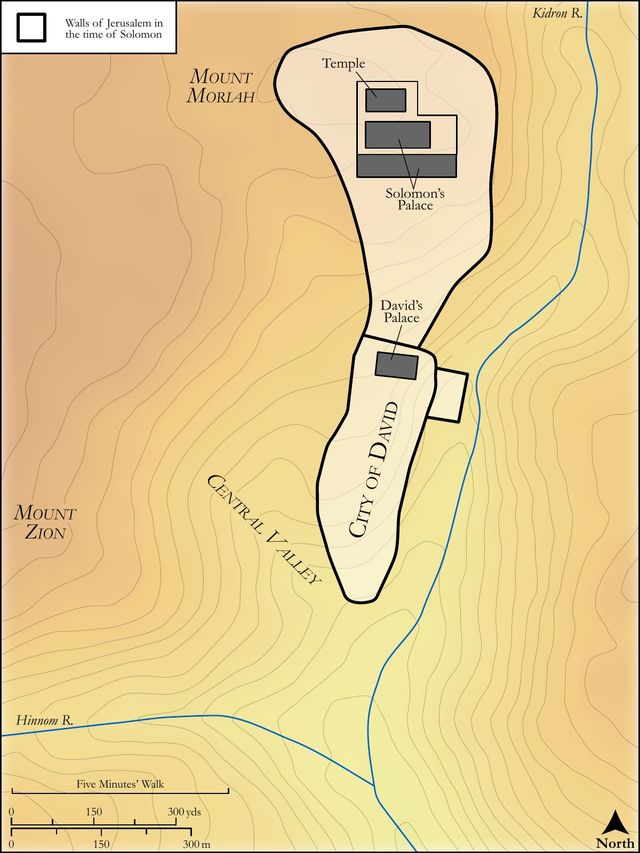
See on the biblical-era map
Study this verse
Public-domain commentary
Matthew Henry
From his Commentary on the Whole Bible. Henry comments on passages, not single verses — this entry covers 1 Kings 21:17–29. His four-level outline is real structure in the source text, so it is rendered as structure.
In these verses we may observe,
I.The very bad character that is given of Ahab (Kg1 21:25, Kg1 21:26), which comes in here to justify God in the heavy sentence passed upon him, and to show that though it was passed upon occasion of his sin in the matter of Naboth (which David's sin in the matter of Uriah did too much resemble), yet God would not have punished him so severely if he had not been guilty of many other sins, especially idolatry; whereas David, except in that one matter, did that which was right. But, as to Ahab, there was none like him, so ingenious and industrious in sin, and that made a trade of it. He sold himself to work wickedness, that is, he made himself a perfect slave to his lusts, and was as much at their beck and command as ever any servant was at his master's. He was wholly given up to sin, and, upon condition he might have the pleasures of it, he would take the wages of it, which is death, Rom 6:23. Blessed Paul complained that he was sold under sin (Rom 7:14), as a poor captive against his will; but Ahab was voluntary: he sold himself to sin; of choice, and as his own act and deed, he submitted to the dominion of sin. It was no excuse of his crimes that Jezebel his wife stirred him up to do wickedly, and made him, in many respects, worse than otherwise he would have been. To what a pitch of impiety did he arrive who had such tinder of corruption in his heart and such a temper in his bosom to strike fire into it! In many things he did ill, but he did most abominably in following idols, like the Canaanites; his immoralities were very provoking to God, but his idolatries were especially so. Israel's case was sad when a prince of such a character as this reigned over them.
II.The message with which Elijah was sent to him, when he went to take possession of Naboth's vineyard, Kg1 21:17-19.
1.Hitherto God kept silence, did not intercept Jezebel's letters, nor stay the process of the elders of Jezreel; but now Ahab is reproved and his sin set in order before his eyes.
(1.)The person sent is Elijah. A prophet of lower rank was sent with messages of kindness to him, Kg1 20:13. But the father of the prophets is sent to try him, and condemn him, for his murder.
(2.)The place is Naboth's vineyard and the time just when he is taking possession of it; then, and there, must his doom be read him. By taking possession, he avowed all that was done, and made himself guilty ex post facto - as an accessary after the fact. There he was taken in the commission of the errors, and therefore the conviction would come upon him with so much the more force. "What hast thou to do in this vineyard? What good canst thou expect from it when it is purchased with blood (Hab 2:12) and thou hast caused the owner thereof to lose his life?" Job 31:39. Now that he is pleasing himself with his ill-gotten wealth, and giving direction for the turning of this vineyard into a flower-garden, his meat in his bowels is turned. He shall not feel quietness. When he is about to fill his belly, God shall cast the fury of his wrath upon him, Job 20:14, Job 20:20, Job 20:23.
2.Let us see what passed between him and the prophet.
(1.)Ahab vented his wrath against Elijah, fell into a passion at the sight of him, and, instead of humbling himself before the prophet, as he ought to have done (Ch2 36:12), was ready to fly in his face. Hast thou found me, O my enemy? Kg1 21:20. This shows,
[1.]That he hated him. The last time we found them together they parted very good friends, Kg1 18:46. Then Ahab had countenanced the reformation, and therefore then all was well between him and the prophet; but now he had relapsed, and was worse than ever. His conscience told him he had made God his enemy, and therefore he could not expect Elijah should be his friend. Note, That man's condition is very miserable that has made the word of God his enemy, and his condition is very desperate that reckons the ministers of that word his enemies because they tell him the truth, Gal 4:16. Ahab, having sold himself to sin, was resolved to stand to his bargain, and could not endure him that would have helped him to recover himself,
[2.]That he feared him: Hast thou found me? intimating that he shunned him all he could, and it was now a terror to him to see him. The sight of him was like that of the handwriting upon the wall to Belshazzar; it made his countenance change, the joints of his loins were loosed, and his knees smote one against another. Never was poor debtor or criminal so confounded at the sight of the officer that came to arrest him. Men may thank themselves if they make God and his word a terror to them.
(2.)Elijah denounced God's wrath against Ahab: I have found thee (says he, Kg1 21:20), because thou hast sold thyself to work evil. Note, Those that give up themselves to sin will certainly be found out, sooner or later, to their unspeakable horror and amazement. Ahab is now set to the bar, as Naboth was, and trembles more than he did.
[1.]Elijah finds the indictment against him, and convicts him upon the notorious evidence of the fact (Kg1 21:19): Hast thou killed, and also taken possession? He was thus charged with the murder of Naboth, and it would not serve him to say the law killed him (perverted justice is the highest injustice), nor that, if he was unjustly prosecuted, it was not his doing - he knew nothing of it; for it was to please him that it was done, and he had shown himself pleased with it, and so had made himself guilty of all that was done in the unjust prosecution of Naboth. He killed, for he took possession. If he takes the garden, he takes the guilt with it. Terra transit cum onere - The land with the incumbrance.
[2.]He passes judgment upon him. He told him from God that his family should be ruined and rooted out (Kg1 21:21) and all his posterity cut off, - that his house should be made like the houses of his wicked predecessors, Jeroboam and Baasha (Kg1 21:22), particularly that those who died in the city should be meat for dogs and those who died in the field meat for birds (Kg1 21:24), which had been foretold of Jeroboam's house (Kg1 14:11), and of Baasha's (Kg1 16:4), - that Jezebel, particularly, should be devoured by dogs (Kg1 21:23), which was fulfilled (Kg2 9:36), - and, as for Ahab himself, that the dogs should lick his blood in the very same place where they licked Naboth's (Kg1 21:19 - "Thy blood, even thine, though it be royal blood, though it swell thy veins with pride and boil in thy heart with anger, shall ere long be an entertainment for the dogs"), which was fulfilled, Kg1 22:38. This intimates that he should die a violent death, should come to his grave with blood, and that disgrace should attend him, the foresight of which must needs be a great mortification to such a proud man. Punishments after death are here most insisted on, which, though such as affected the body only, were perhaps designed as figures of the soul's misery after death.
III.Ahab's humiliation under the sentence passed upon him, and the favourable message sent him thereupon.
1.Ahab was a kind of penitent. The message Elijah delivered to him in God's name put him into a fright for the present, so that he rent his clothes and put on sackcloth, Kg1 21:27. He was still a proud hardened sinner, and yet thus reduced. Note, God can make the stoutest heart to tremble and the proudest to humble itself. His word is quick and powerful, and is, when the pleases to make it so, like a fire and a hammer, Jer 23:29. It made Felix tremble. Ahab put on the garb and guise of a penitent, and yet his heart was unhumbled and unchanged. After this, we find, he hated a faithful prophet, Kg1 22:8. Note, It is no new thing to find the show and profession of repentance where yet the truth and substance of it are wanting. Ahab's repentance was only what might be seen of men: Seest thou (says God to Elijah) how Ahab humbles himself; it was external only, the garments rent, but not the heart. A hypocrite may go very far in the outward performance of holy duties and yet come short.
2.He obtained hereby a reprieve, which I may call a kind of pardon. Though it was but an outside repentance (lamenting the judgment only, and not the sin), though he did not leave his idols, nor restore the vineyard to Naboth's heirs, yet, because he did hereby give some glory to God, God took notice of it, and bade Elijah take notice of it: Seest thou how Ahab humbles himself? Kg1 21:29. In consideration of this the threatened ruin of his house, which had not been fixed to any time, should be adjourned to his son's days. The sentence should not be revoked, but the execution suspended. Now,
(1.)This discovers the great goodness of God, and his readiness to show mercy, which here rejoices against judgment. Favour was shown to this wicked man that God might magnify his goodness (says bishop Sanderson) even to the hazard of his other divine perfections; as if (says he) God would be thought unholy, or untrue, or unjust (though he be none of these), or any thing, rather than unmerciful.
(2.)This teaches us to take notice of that which is good even in those who are not so good as they should be: let it be commended as far as it goes.
(3.)This gives a reason why wicked people sometimes prosper long; God is rewarding their external services with external mercies.
(4.)This encourages all those that truly repent and unfeignedly believe the holy gospel. If a pretending partial penitent shall go to his house reprieved, doubtless a sincere penitent shall go to his house justified.
Historical interpretation
Fourteen Centuries of Reception
3 surviving comments on this verse. Each one is dated, so this reads as a timeline rather than a list.
Select a marker to jump to its quote. Markers stagger vertically where authors wrote within a few decades of each other.
And the Lord said to Elijah, “Get up, go down to meet King Ahab of Israel,” and so on. Now, when Jezebel invited Ahab to come and take hold of the vineyard whose owners had been stoned, Elijah went out to meet him, precisely when he did not expect him, and approached him in order to reveal the shameful action which they thought no one else knew about. He reproached the king openly for stealing the vineyard and killing the righteous Naboth. But one may say: Is not Jezebel the one who prepared the death of Naboth? Ahab simply did not accept that his request was rejected by Naboth; he did not want to treat him badly or take his vineyard by force. However, if he claims the vineyard, since the inheritance is due to the king after the heirs are dead, as the law prescribes, we maintain that if Ahab had not sinned at all, it would have been impossible that the justice that absolves those who are oppressed might have wronged him. Nor would the prophet, who reproved him according to the command of the just Judge and had already condemned him twice, [have wronged him].And Elijah said to him, “Thus says the Lord: In the place where dogs licked up the blood of Naboth, dogs will also lick up your blood, and I will make your house like the house of Jeroboam.” To Jezebel too, the Lord said, “The dogs shall eat Jezebel within the boundaries of Jezreel.” Such are the judgments that Elijah pronounced against the king and the queen: he gives them to the dogs, and the house of Ahab to destruction.
Divine justice is moved by this and condemns the greedy with worthy severity, saying: 'You have killed and taken possession of the inheritance? For this reason, in the place where the dogs licked up the blood of Naboth, they will lick up your blood; and the prostitutes will wash themselves in your blood.' How just, how severe is this sentence, that the bitterness of death that he inflicted on another should be dissolved by the horror of his own death! God looks upon the unburied poor and therefore decrees that the rich should lie unburied; and so that the dead may suffer the torment of their own wickedness, he who did not think to spare the dead. Thus, the body soaked in the blood of his own wound revealed the cruelty of his life. When the poor endured these things, the rich were accused; when the rich received them, the poor were justified. But what does it mean that the prostitutes washed themselves in his blood? Unless, perhaps, it is to reveal that there was a kind of prostitution in that ferociousness of the king's treachery, or a bloody luxury, who was so indulgent that he desired a vegetable dish; so bloodthirsty that he would kill a man over a vegetable dish? Worthy punishment consumes the greedy, worthy punishment consumes greed. Finally, even Jezebel herself was eaten by dogs and the birds of the air, in order to show that the spiritual wickedness becomes the prey of the rich burial. Therefore, flee, rich man, from such an end. But you will flee from such an end if you flee from such a disgrace. Do not be like Ahab, desiring a neighboring possession. Do not let that fatal greed of Jezebel dwell in you, which persuades you with bloodshed. It does not recall your desires, but impels them; it makes you even sadder when you possess what you desired; it makes you naked when you have riches.
Sold, to do evil in the sight: That is, so addicted to evil, as if thou hadst sold thyself to the devil, to be his slave to work all kinds of evil.
Continue studying 1 Kings 21:20 across the web’s major study libraries — every link below opens this exact verse, chapter, or book on the destination site.
Read & Compare
 BibleGatewayThis verse in more than 200 translations and 70 languages.
 Bible.comThe YouVersion reader — hundreds of translations, reading plans, and highlights.
 ESV.orgCrossway's official English Standard Version reader.
 NET BibleThe NET translation with 60,000+ translators' notes on every rendering decision.
 STEP BibleTyndale House's free study tool — original text, vocabulary, and scholarly resources.
 BibliaLogos Bible Software's free web reader.
 USCCBThe New American Bible (Revised Edition) with the U.S. bishops' study notes.
Commentaries
 BibleHub CommentariesDozens of classic commentaries on this verse, gathered on one page.
 StudyLightMore than 100 commentary sets — the largest collection on the web.
 BibleRefPlain-English commentary on what this verse means, verse by verse.
 Enduring WordDavid Guzik's free commentary on this chapter, widely used by Bible teachers.
 Bible Study ToolsVerse commentary alongside Greek and Hebrew study aids.
Original Language & Research
- BibleHub InterlinearThe verse word by word — original language, transliteration, and English.
- BibleHub LexiconEvery word's original-language definition and Strong's entry.
 Blue Letter BibleDeep-study tools — Strong's numbers, concordance, and word studies.
 SefariaThe Hebrew text with Rashi and centuries of Jewish commentary.
Sermons, Hymns & Audio


TrulyRandomVerse is not affiliated with these sites and doesn’t control their content. They’re linked because they’re genuinely useful.
Summary
This pivotal verse captures the dramatic and divinely orchestrated confrontation between King Ahab and the prophet Elijah, immediately following Ahab's unjust acquisition of Naboth's vineyard. Ahab, recognizing Elijah as an agent of divine judgment, hostilely questions his presence. Elijah's response is a searing indictment, declaring that he has indeed "found" Ahab because the king has deliberately and comprehensively surrendered himself to evil in the very presence of the LORD, highlighting the profound spiritual degradation that led to his complicity in Naboth's murder and the certainty of God's impending judgment.
Context
ShowHideLiterary Context
This verse serves as the climactic moment of the Naboth's vineyard narrative, found in 1 Kings 21. The preceding verses (1 Kings 21:1-16) meticulously detail King Ahab's covetous desire for Naboth's ancestral vineyard, Naboth's principled refusal based on Israelite inheritance law, and Queen Jezebel's ruthless and manipulative plot to have Naboth falsely accused of blasphemy and treason, culminating in his unjust execution by stoning. 1 Kings 21:16 describes Ahab's eager descent to Jezreel to take possession of the now-vacant vineyard. It is precisely at this moment, as Ahab is poised to enjoy the fruits of his heinous crime, that Elijah the prophet appears, having been specifically sent by the LORD (1 Kings 21:17). This sudden, divinely orchestrated encounter dramatically interrupts Ahab's moment of triumph with an immediate and certain pronouncement of divine judgment, underscoring God's active involvement in human affairs and His intolerance for injustice.
Historical & Cultural Context
King Ahab reigned over Israel during the 9th century BCE (approximately 874-853 BC), a period characterized by significant political instability and profound religious apostasy. He is consistently portrayed in the biblical narrative as one of Israel's most wicked kings, largely due to his marriage to Jezebel, a Phoenician princess, and his aggressive promotion of Baal worship throughout the kingdom (1 Kings 16:30-33). The concept of ancestral land, such as Naboth's vineyard, was foundational to Israelite society and theology, viewed as an inalienable inheritance from God Himself, not to be permanently sold or alienated from the family (Leviticus 25:23). To forcibly acquire or seize such land was a grave violation of both Mosaic law and deeply held cultural norms. The direct confrontation between a prophet and a king, while perilous for the prophet, was a recurring feature in ancient Israel, as prophets served as God's conscience to the monarchy, often challenging royal abuses of power at great personal risk.
Key Themes
ShowHideThis verse powerfully contributes to several overarching themes prevalent throughout 1 Kings. The theme of Divine Justice and Retribution is central, as God directly intervenes to address a grave injustice committed by the highest authority in the land, demonstrating that no sin, regardless of the perpetrator's status, escapes divine notice or judgment. The theme of Prophetic Confrontation is vividly displayed, showcasing Elijah's unwavering courage and faithfulness in delivering God's uncompromising message to a powerful and corrupt king. Ahab's immediate recognition of Elijah as "mine enemy" highlights the theme of Guilt and Self-Awareness, revealing his understanding that Elijah's presence is not coincidental but a clear sign of impending divine displeasure. Most significantly, Elijah's searing accusation that Ahab "sold thyself to work evil" introduces the profound theme of Willful Sin and Spiritual Slavery, emphasizing that Ahab's wickedness was not merely a series of isolated bad choices but a deliberate, comprehensive surrender to unrighteousness, a concept that finds theological resonance in the New Testament concerning the nature of sin's dominion over humanity (Romans 6:16).
Exposition and Analysis
ShowHideKey Word Analysis
ShowHideThis verb, meaning "to come forth to, appear, exist; transitively, to attain, find, acquire," is used here with potent irony. Ahab's question, "Hast thou found me?", is rhetorical, born of a guilty conscience, acknowledging that Elijah's presence is not accidental but a divine appointment. Elijah's affirmative "I have found thee" is a declaration of God's omniscience and inescapable justice. It signifies that God's judgment has indeed caught up with Ahab, revealing that no sin, however secretly planned or powerfully executed, can evade the all-seeing eye of the LORD.
Ahab's immediate labeling of Elijah as "mine enemy" is highly revealing. This term, derived from a root meaning "to hate," signifies an adversary or foe. It indicates Ahab's deep-seated antagonism towards Elijah, not merely as a personal rival, but as the embodiment of the divine standard that consistently exposed his sin and challenged his idolatrous and unjust reign. Ahab perceived God's prophet as an adversary because Elijah consistently confronted his wickedness, acting as a constant reminder of God's presence and impending judgment. This term reflects Ahab's hardened heart and his refusal to acknowledge Elijah as God's messenger for his good, preferring to view him as a threat to his sinful lifestyle and authority.
This is a profoundly damning indictment. The primitive root mâkar means "to sell," often in the context of merchandise or even selling a person into slavery. The reflexive form used here (Hithpael) conveys the idea of actively selling oneself or making oneself over to something. It suggests a voluntary, deliberate, and comprehensive surrender to evil, akin to becoming a slave to it. This was not a momentary lapse or an accidental fall but a consistent, intentional pattern of choosing evil over righteousness, particularly evident in his alliance with Jezebel and his complicity in Naboth's murder. It implies a profound moral degradation where evil has become one's master and defining characteristic.
Verse Breakdown
ShowHide"And Ahab said to Elijah, Hast thou found me, O mine enemy?"
This opening clause immediately establishes the dramatic tension and psychological insight. Ahab's question is rhetorical, laden with a guilty conscience and a premonition of doom. He knows precisely why Elijah is there. His use of "mine enemy" reveals his deep-seated animosity towards Elijah, who consistently confronted his wickedness. It signifies Ahab's recognition that Elijah's sudden presence is not coincidental but a direct divine intervention, a harbinger of judgment for his latest, most egregious sin against Naboth.
"And he answered, I have found [thee]:"
Elijah's terse, affirmative response confirms Ahab's unspoken fear and validates his guilty premonition. The prophet, acting as God's unwavering messenger, has indeed "found" Ahab in the very act of taking possession of his ill-gotten gain. This declaration powerfully signifies God's omniscience and omnipresence; no sin, however secretly plotted or powerfully enacted by human authority, goes unnoticed or unaddressed by the divine Judge. It serves as the solemn prelude to the pronouncement of judgment that immediately follows.
"because thou hast sold thyself to work evil in the sight of the LORD."
This is the theological core of the verse and the searing indictment against Ahab. The phrase "sold thyself" powerfully describes Ahab's deliberate and complete surrender to wickedness, making evil his master and his chosen way of life. This was not an accidental transgression but a willful embrace of a life contrary to God's will, largely influenced and enabled by his idolatrous wife, Jezebel. The concluding phrase, "in the sight of the LORD," emphasizes that God is the ultimate witness and righteous judge of all deeds, ensuring that no act of injustice, especially one as grievous as the murder of an innocent man for property, escapes divine scrutiny or accountability.
Literary Devices
ShowHideThe passage is rich with literary devices that amplify its dramatic and theological impact. The immediate Confrontation between the prophet and the king creates high dramatic tension, a recurring and powerful trope in prophetic narratives where divine authority directly challenges human power and corruption. Ahab's question, "Hast thou found me, O mine enemy?", functions as a potent Rhetorical Question, revealing his profound guilt and his accurate, albeit hostile, interpretation of Elijah's ominous presence. Elijah's response employs a powerful Metaphor when he declares Ahab has "sold thyself to work evil." This vivid image of spiritual enslavement portrays the king's willing, comprehensive, and ultimately self-destructive surrender to unrighteousness, making sin his master. There is also a strong element of Irony in Ahab calling Elijah his "enemy"; while Ahab perceives Elijah as an adversary disrupting his sinful pursuits, Elijah is in fact God's faithful messenger, offering a final opportunity for repentance (even if the immediate message is one of judgment). In reality, Ahab's own choices and actions are his true enemies, leading him inexorably towards destruction.
Theological and Thematic Connections
ShowHideThis verse powerfully articulates the biblical principle that God sees and judges all human actions, especially those committed by those in positions of power. Ahab's deliberate "selling himself to evil" underscores the profound danger of a hardened heart and a life consistently chosen against God's will. It reveals that sin is not merely a series of isolated acts but can become a state of being, a willing enslavement to unrighteousness that defines one's character and actions. God's immediate intervention through Elijah demonstrates His unwavering commitment to justice and His refusal to let injustice go unaddressed, even when perpetrated by the most powerful earthly rulers. This confrontation serves as a stark reminder that accountability before God is universal and inescapable, extending to every individual regardless of their status or influence.
Reflection and Application
ShowHideThe stark confrontation between Ahab and Elijah in this verse offers profound and enduring lessons for contemporary life. It challenges us to examine our own relationship with truth and conviction. Do we, like King Ahab, resent or resist those who expose our sin or challenge our comfortable compromises, perhaps labeling them as "enemies" or dismissing their words? Or do we, with humility and a desire for spiritual growth, receive correction as an opportunity for repentance and transformation? The concept of "selling oneself to evil" is a sobering warning against the gradual, often imperceptible, hardening of the heart that occurs when we repeatedly choose self-interest, covetousness, or unrighteousness over God's revealed will. It calls us to a radical self-assessment: are our daily choices, habits, and allegiances leading us into greater freedom and conformity to Christ, or are we, perhaps subtly, becoming enslaved to desires and patterns that are contrary to God's kingdom and His righteous character? Ultimately, this passage reminds us that God's justice is unwavering, His eyes see all, and His judgment is certain. This truth should inspire both a healthy fear of His holy wrath and a profound trust in His ultimate vindication of the righteous.
Questions for Reflection
ShowHideFAQ
ShowHideWhy did Ahab call Elijah his "enemy"?
ShowHideAhab called Elijah his "enemy" because Elijah consistently confronted Ahab's wickedness, idolatry, and injustice throughout his reign. Elijah was God's prophet, sent to expose Ahab's sin and pronounce divine judgment. For a king who sought to live according to his own desires and aggressively promote Baal worship, Elijah was a constant, unwelcome reminder of God's righteous standards and the inevitable consequences of disobedience. Ahab perceived Elijah not as a messenger of truth or a spiritual guide, but as a personal adversary who disrupted his plans and exposed his guilt, particularly after the heinous crime against Naboth's life and property (1 Kings 21:1-16). His guilty conscience immediately recognized that Elijah's presence signaled impending divine wrath.
What does it mean to "sell thyself to work evil"?
ShowHideThe phrase "sold thyself to work evil" is a powerful and damning metaphor indicating a deliberate and comprehensive surrender to sin. It goes far beyond merely committing individual evil acts; it suggests that Ahab had willingly made evil his master, his chosen way of life, or even his vocation. The Hebrew word implies a voluntary act of making oneself over to something, akin to becoming a slave or bonding oneself to a master. This highlights that Ahab's wickedness was not accidental or a momentary lapse, but a consistent, intentional pattern of choosing unrighteousness, significantly influenced by his wife Jezebel and culminating in the murder of Naboth for his vineyard (1 Kings 21:19). It signifies a profound moral degradation where evil had become deeply ingrained in his character and actions, defining his reign.
Did Ahab ever show any form of repentance or change?
ShowHideSurprisingly, yes, though it appears to have been a temporary and perhaps superficial display rather than a complete heart transformation. After Elijah delivered the full prophecy of judgment against Ahab and his house (1 Kings 21:21-24), 1 Kings 21:27 states that Ahab "tore his clothes and put sackcloth on his flesh and fasted and lay in sackcloth and went about dejectedly." This outward display of humility and repentance was significant enough that the LORD responded by deferring some of the prophesied judgment on Ahab's house until after his death (1 Kings 21:29). While this was a remarkable moment demonstrating God's responsiveness to even limited repentance, Ahab's subsequent actions in 1 Kings 22 suggest his heart was not fully turned to the LORD, as he continued to pursue ungodly counsel and ultimately met his prophesied end in battle.
Christ-Centered Fulfillment
ShowHideThe dramatic confrontation between Ahab and Elijah, particularly Elijah's indictment that Ahab "sold thyself to work evil," finds profound Christ-centered fulfillment. Ahab's willing enslavement to sin and his choosing of evil as his master stand in stark contrast to the glorious freedom offered by Jesus Christ. While Ahab chose to serve wickedness, Jesus Christ came precisely to set the captives free from the very dominion of sin (Luke 4:18). The New Testament teaches that all humanity, apart from Christ, is born into and enslaved by sin (Romans 6:17), but through His perfect life, atoning sacrifice on the cross, and victorious resurrection, Jesus purchased our freedom, not with perishable things like silver or gold, but with His own precious blood (1 Peter 1:18-19). Unlike Ahab, who saw God's prophet as an enemy, Jesus is the ultimate Prophet, the Word of God incarnate, who confronts sin not with condemnation for those who believe, but with the offer of liberation, forgiveness, and new life in Him (John 3:17). He is the true King who rules with perfect justice and righteousness, utterly unlike the corrupt King Ahab, and through His perfect obedience, He provides the pathway for us to be released from the slavery of sin and become willing slaves of righteousness, serving God rather than evil (Romans 6:18).