


1 Kings 21:16
Bible text: King James Version (1769 Blayney text) · Public domain
Bible text: King James Version with Strong's numbers · Public domain
Bible text: Berean Standard Bible · Public domain
Bible text: American Standard Version (1901) · Public domain
Bible text: World English Bible, Messianic edition · Public domain
Bible text: Geneva Bible (1599) · Public domain
Bible text: Young's Literal Translation · Public domain
- וַיְהִיvay·Hiand it wasH1961Conj-w ¦ V-Qal-ConsecImperf-3msVerb Qal Consecutive Imperfect 3rd Singular Masculineוַandיְהִיit was
- כִּשְׁמֹעַkish·Mo·a'when heardH8085Prep-k ¦ V-Qal-InfVerb Qal Infinitive Constructכִּwhenשְׁמֹעַheard
- אַחְאָב'ach·'AvAhabH256N-proper-mNoun Proper Masculine
- כִּיkithatH3588PrtParticle Conditional
- מֵתmethe had diedH4191V-Qal-Perf-3msVerb Qal Perfect 3rd Singular Masculine
- נָבוֹתna·VotNabothH5022N-proper-mNoun Proper Masculine
- וַיָּקָםvai·Ya·komand he aroseH6965Conj-w ¦ V-Qal-ConsecImperf-3msVerb Qal Consecutive Imperfect 3rd Singular Masculineוַandיָּקָםhe arose
- אַחְאָב'ach·'AvAhabH256N-proper-mNoun Proper Masculine
- לָרֶדֶתla·Re·detto go downH3381Prep-l ¦ V-Qal-InfVerb Qal Infinitive Constructלָtoרֶדֶתgo down
- אֶל'eltoH413PrepPreposition
- כֶּרֶםKe·rem[the] vineyard ofH3754N-mscNoun Singular Masculine Construct
- נָבוֹתna·VotNabothH5022N-proper-mNoun Proper Masculine
- הַיִּזְרְעֵאלִיhai·yiz·re·'e·Lithe JezreeliteH3158Art ¦ N-msNoun Gentilic Singular Masculine AbsoluteהַtheיִּזְרְעֵאלִיJezreelite
- לְרִשְׁתּוֹle·rish·Toto take possession of itH3423Prep-l ¦ V-Qal-Inf ¦ 3msVerb Qal Infinitive Constructלְtoרִשְׁתּtake possession ofוֹit
English is a literal word-by-word gloss of the Hebrew, not the KJV's wording. Why?
This is the original text the KJV's translators worked from — each Hebrew word with its own literal English meaning in this verse, prepared by scholars at Tyndale House, Cambridge. The KJV translates whole sentences, not word by word, so its wording differs: one Hebrew word can become several English words, and the KJV may choose “the LORD” where the gloss reads “Yahweh”. Both are faithful — they answer different questions. For the KJV's own rendering, switch to the KJV text.
Details
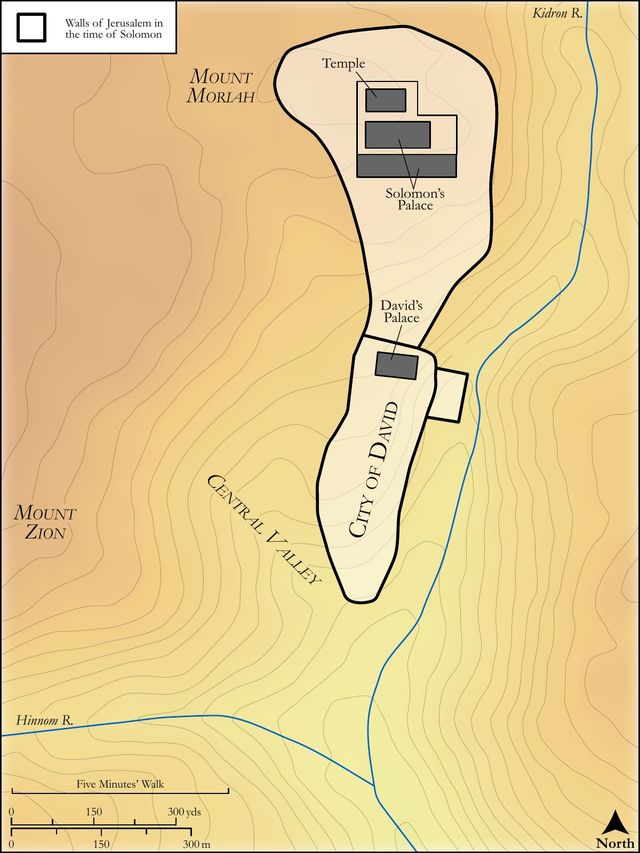
See on the biblical-era map
Study this verse
Public-domain commentary
Matthew Henry
From his Commentary on the Whole Bible. Henry comments on passages, not single verses — this entry covers 1 Kings 21:5–16. His four-level outline is real structure in the source text, so it is rendered as structure.
Nothing but mischief is to be expected when Jezebel enters into the story - that cursed woman, Kg2 9:34.
I.Under pretence of comforting her afflicted husband, she feeds his pride and passion, and blows the coals of his corruptions.
It became her to take notice of his grief and to enquire into the cause of it, Kg1 21:5. Those have forgotten both the duty and affection of the conjugal relation that interest not themselves in each other's troubles. He told her what troubled him (Kg1 21:6), yet invidiously concealed Naboth's reason for his refusal, representing it as peevish, when it was conscientious - I will not give it thee, whereas he said, I may not. What! says Jezebel (Kg1 21:7), Dost thou govern Israel? Arise, and eat bread. She does well to persuade him to shake off his melancholy, and not to sink under his burden, to be easy and cheerful; whatever was his grief, grieving would not redress it, but pleasantness would alleviate it. Her plea is, Dost thou now govern Israel? This is capable of a good sense: "Does it become so great a prince as thou art to cast thyself down for so small a matter? Thou shamest thyself, and profanest thy crown; it is below thee to take notice of so inconsiderable a thing. Art thou fit to govern Israel, who hast no better a government of thy own passions? Or hast thou so rich a kingdom at command and canst not thou be without this one vineyard?" We should learn to quiet ourselves, under our crosses, with the thoughts of the mercies we enjoy, especially our hopes of the kingdom. But she meant it in a bad sense: "Dost thou govern Israel, and shall any subject thou hast deny thee any thing thou hast a mind to? Art thou a king? It is below thee to buy and pay, much more to beg and pray; use thy prerogative, and take by force what thou canst not compass by fair means; instead of resenting the affront thus, revenge it. If thou knowest not how to support the dignity of a king, let me alone to do it; give me but leave to make use of thy name, and I will soon give thee the vineyard of Naboth; right or wrong, it shall be thy own shortly, and cost thee nothing." Unhappy princes those are, and hurried apace towards their ruin, who have those about them that stir them up to acts of tyranny and teach them how to abuse their power.
II.In order to gratify him, she projects and compasses the death of Naboth.
No less than his blood will serve to atone for the affront he has given to Ahab, which she thirsts after the more greedily because of his adherence to the law of the God of Israel.
1.Had she aimed only at his land, her false witnesses might have sworn him out of that by a forged deed (she could not have set up so weak a title but the elders of Jezreel would have adjudged it good); but the adulteress will hunt for the precious life, Pro 6:26. Revenge is sweet. Naboth must die, and die as a malefactor, to gratify it.
(1.)Never were more wicked orders given by any prince than those which Jezebel sent to the magistrates of Jezreel, Kg1 21:8-10. She borrows the privy-seal, but the king shall not know what she will do with it. It is probable this was not the first time he had lent it to her, but that with it she had signed warrants for the slaying of the prophets. She makes use of the king's name, knowing the thing would please him when it was done, yet fearing he might scruple at the manner of doing it; in short, she commands them, upon their allegiance, to put Naboth to death, without giving them any reason for so doing. Had she sent witnesses to inform against him, the judges (who must go secundum allegata et probata - according to allegations and proofs) might have been imposed upon, and their sentence might have been rather their unhappiness than their crime; but to oblige them to find the witnesses, sons of Belial, to suborn them themselves, and then to give judgment upon a testimony which they knew to be false, was such an impudent defiance to every thing that is just and sacred as we hope cannot be paralleled in any story. She must have looked upon the elders of Jezreel as men perfectly lost to every thing that is honest and honourable when she expected these orders should be obeyed. But she will put them in a way how to do it, having as much of the serpent's subtlety as she had of his poison.
[1.]It must be done under colour of religion: "Proclaim a fast; signify to your city that you are apprehensive of some dreadful judgment coming upon you, which you must endeavour to avert, not only by prayer, but by finding out and by putting away the accursed thing; pretend to be afraid that there is some great offender among you undiscovered, for whose sake God is angry with your city; charge the people, if they know of any such, on that solemn occasion to inform against him, as they regard the welfare of the city; and at last let Naboth be fastened upon as the suspected person, probably because he does not join with his neighbours in their worship. This may serve for a pretence to set him on high among the people, to call him to the bar. Let proclamation be made that, if any one can inform the court against the prisoner, and prove him to be the Achan, they shall be heard; and then let the witnesses appear to give evidence against him." Note, There is no wickedness so vile, so horrid, but religion has sometimes been made a cloak and cover for it. We must not think at all the worse of fasting and praying for their having been sometimes thus abused, but much the worse of those wicked designs that have at any time been carried on under the shelter of them.
[2.]It must be done under colour of justice too, and with the formalities of a legal process. Had she sent to them to hire some of their danbitti, some desperate suffirans, to assassinate him, to stab him as he went along the streets in the night, the deed would have been bad enough; but to destroy him by a course of law, to use that power for the murdering of the innocent which ought to be their protection, was such a violent perversion of justice and judgment as was truly monstrous, yet such as we are directed not to marvel at, Ecc 5:8. The crime they must lay to his charge was blaspheming God and the king - a complicated blasphemy. Surely she could not think to put a blasphemous sense upon the answer he had given to Ahab, as if denying him his vineyard were blaspheming the king, and giving the divine law for the reason were blaspheming God. No, she pretends not any ground at all for the charge: though there was no colour of truth in it, the witnesses must swear it, and Naboth must not be permitted to speak for himself, or cross-examine the witnesses, but immediately, under pretence of a universal detestation of the crime, they must carry him out and stone him. His blaspheming God would be the forfeiture of his life, but not of his estate, and therefore he is also charged with treason, in blaspheming the king, for which his estate was to be confiscated, that so Ahab might have his vineyard.
(2.)Never were wicked orders more wickedly obeyed than these were by the magistrates of Jezreel. They did not so much as dispute the command nor make any objections against it, though so palpably unjust, but punctually observed all the particulars of it, either because they feared Jezebel's cruelty or because they hated Naboth's piety, or both: They did as it was written in the letters (Kg1 21:11, Kg1 21:12), neither made any difficulty of it, nor met with any difficulty in it, but cleverly carried on the villany. They stoned Naboth to death (Kg1 21:13), and, as it should seem, his sons with him, or after him; for, when God came to make inquisition for blood, we find this article in the account (Kg2 9:26), I have seen the blood of Naboth and the blood of his sons. Perhaps they were secretly murdered, that they might not claim their father's estate nor complain of the wrong done him.
2.Let us take occasion from this sad story,
(1.)To stand amazed at the wickedness of the wicked, and the power of Satan in the children of disobedience. What a holy indignation may we be filled with to see wickedness in the place of judgment! Ecc 3:16.
(2.)To lament the hard case of oppressed innocency, and to mingle our tears with the tears of the oppressed that have no comforter, while on the side of the oppressors there is power, Ecc 4:1.
(3.)To commit the keeping of our lives and comforts to God, for innocency itself will not always be our security.
(4.)To rejoice in the belief of a judgment to come, in which such wrong judgments as these will be called over. Now we see that there are just men to whom it happens according to the work of the wicked (Ecc 8:14), but all will be set to rights in the great day.
III.Naboth being taken off, Ahab takes possession of his vineyard.
1.The elders of Jezreel sent notice to Jezebel very unconcernedly, sent it to her as a piece of agreeable news, Naboth is stoned and is dead, Kg1 21:14. Here let us observe that, as obsequious as the elders of Jezreel were to Jezebel's orders which she sent from Samaria for the murder of Naboth, so obsequious were the elders of Samaria afterwards to Jehu's orders which he sent from Jezreel for the murder of Ahab's seventy sons, only that was not done by course of law, Kg2 10:6, Kg2 10:7. Those tyrants that by their wicked orders debauch the consciences of their inferior magistrates may perhaps find at last the wheel return upon them, and that those who will not stick to do one cruel thing for them will be as ready to do another cruel thing against them.
2.Jezebel, jocund enough that her plot succeeded so well, brings notice to Ahab that Naboth is not alive, but dead; therefore, says she, Arise, take possession of his vineyard, Kg1 21:15. He might have taken possession by one of his officers, but so pleased is he with this accession to his estate that he will make a journey to Jezreel himself to enter upon it; and it should seem he went in state too, as if he had obtained some mighty victory, for Jehu remembers long after that he and Bidkar attended him at this time, Kg2 9:25. If Naboth's sons were all put to death, Ahab thought himself entitled to the estate, ob defectum sanguinis - in default of heirs (as our law expresses it); if not, yet, Naboth dying as a criminal, he claimed it ob delictum criminis - as forfeited by his crime. Or, if neither would make him a good title, the absolute power of Jezebel would give it to him, and who would dare to oppose her will? Might often prevails against right, and wonderful is the divine patience that suffers it to do so. God is certainly of purer eyes than to behold iniquity, and yet for a time keeps silence when the wicked devours the man that is more righteous than he, Hab 1:13.
Continue studying 1 Kings 21:16 across the web’s major study libraries — every link below opens this exact verse, chapter, or book on the destination site.
Read & Compare
 BibleGatewayThis verse in more than 200 translations and 70 languages.
 Bible.comThe YouVersion reader — hundreds of translations, reading plans, and highlights.
 ESV.orgCrossway's official English Standard Version reader.
 NET BibleThe NET translation with 60,000+ translators' notes on every rendering decision.
 STEP BibleTyndale House's free study tool — original text, vocabulary, and scholarly resources.
 BibliaLogos Bible Software's free web reader.
 USCCBThe New American Bible (Revised Edition) with the U.S. bishops' study notes.
Commentaries
 BibleHub CommentariesDozens of classic commentaries on this verse, gathered on one page.
 StudyLightMore than 100 commentary sets — the largest collection on the web.
 BibleRefPlain-English commentary on what this verse means, verse by verse.
 Enduring WordDavid Guzik's free commentary on this chapter, widely used by Bible teachers.
 Bible Study ToolsVerse commentary alongside Greek and Hebrew study aids.
Original Language & Research
- BibleHub InterlinearThe verse word by word — original language, transliteration, and English.
- BibleHub LexiconEvery word's original-language definition and Strong's entry.
 Blue Letter BibleDeep-study tools — Strong's numbers, concordance, and word studies.
 SefariaThe Hebrew text with Rashi and centuries of Jewish commentary.
Sermons, Hymns & Audio


TrulyRandomVerse is not affiliated with these sites and doesn’t control their content. They’re linked because they’re genuinely useful.
Summary
1 Kings 21:16 powerfully depicts the immediate and unrepentant action of King Ahab to seize Naboth's vineyard, marking the chilling culmination of his covetousness and Queen Jezebel's ruthless manipulation. Upon receiving news of Naboth's unjust execution, Ahab wastes no time, rising swiftly to claim the property he had so intensely desired, thereby revealing his profound complicity in the heinous crime and setting the stage for swift divine judgment.
Context
ShowHideLiterary Context
This verse serves as the direct narrative consequence of Naboth's state-sanctioned murder, meticulously orchestrated by Jezebel in 1 Kings 21:13-15. The preceding verses detail King Ahab's initial sulking over Naboth's steadfast refusal to sell his ancestral vineyard, Naboth's unwavering adherence to the Mosaic law regarding inherited land, and Jezebel's subsequent, elaborate plot to frame and execute Naboth on false charges of blasphemy. Verse 16 acts as a stark and immediate pivot, transitioning from the execution of the innocent to the swift, unholy appropriation by the guilty. It directly precedes the dramatic confrontation between Ahab and the prophet Elijah, whom God dispatches to pronounce a severe judgment against the king and his house (1 Kings 21:17-24). The verse powerfully highlights the immediate fulfillment of Ahab's wicked desire, underscoring the depth of his moral depravity and setting the stage for God's righteous and swift response.
Historical & Cultural Context
In ancient Israel, land was far more than mere property; it was a sacred inheritance, a perpetual possession tied inextricably to tribal and family identity, divinely granted by God (see Leviticus 25:23-24). The permanent sale of ancestral land was strictly forbidden, and even temporary leases were mandated to revert to the original family in the Jubilee year. Naboth's refusal to sell his vineyard was, therefore, not an act of stubbornness but a profound demonstration of faithfulness to his covenantal obligations and the Mosaic Law. Ahab's desire to convert this sacred vineyard into a mere vegetable garden for his palace in Jezreel vividly illustrates his utter disregard for these deeply held religious and cultural norms. Jezebel, being a Phoenician princess from Tyre, would have been accustomed to a monarchical system where the king's will was absolute, and private property rights were entirely subservient to royal decree. Her actions in orchestrating Naboth's murder reflect this foreign, pagan worldview, clashing violently with Israelite covenantal jurisprudence and highlighting the corrupting influence of her pagan ideology on the Israelite monarchy.
Key Themes
ShowHideThe narrative of Naboth's vineyard, culminating in this pivotal verse, powerfully illustrates several profound theological and narrative themes. First, Covetousness and Greed are presented as foundational sins, with Ahab's insatiable desire for the vineyard leading directly to murder and profound injustice, echoing the solemn warning of the Tenth Commandment against coveting (Exodus 20:17). Second, the Abuse of Power is starkly displayed, as the monarchy, divinely instituted to uphold justice and protect the vulnerable, instead perverts the legal and religious systems for personal gain. This theme resonates deeply with prophetic warnings against unjust rulers found throughout the Old Testament (e.g., Amos 2:6-7). Third, Complicity in Sin is strikingly evident in Ahab's immediate and eager action. While Jezebel masterminded the plot, Ahab's swift "taking possession" demonstrates his full endorsement and active participation in the fruits of her wickedness, making him deeply culpable for the crime. Finally, the verse powerfully foreshadows the Consequences of Unrighteousness, as Ahab's swift appropriation of the vineyard immediately triggers God's righteous judgment through the prophet Elijah, underscoring the immutable principle that sin, especially injustice and the shedding of innocent blood, will not go unpunished (compare with Proverbs 11:21).
Exposition and Analysis
ShowHideKey Word Analysis
ShowHideThis verb, derived from H6965, signifies to "rise" or "stand up," often denoting readiness, determination, or immediate action. In this context, it emphasizes the swiftness and purposefulness of Ahab's movement. There is no hint of hesitation, no pause for reflection or remorse; he "rose up" with a clear, unholy intent to claim his ill-gotten gain, highlighting his eagerness and profound lack of moral compunction.
This root means "to descend" or "go downwards." While literally indicating a physical descent in elevation (Jezreel was likely situated at a lower altitude than Samaria, Ahab's capital, or it could simply be a common idiom for setting out to a specific destination), in this narrative, it carries a profound symbolic weight. Ahab's "going down" is not merely a physical journey but a moral descent, a plunge into deeper sin and complicity, moving from passive covetousness to the active, unrighteous appropriation of a murdered man's sacred inheritance.
This term, from H3423, means "to occupy," "to inherit," or "to seize." It is frequently used in the Old Testament for inheriting land or dispossessing enemies. In the chilling context of 1 Kings 21:16, its usage is a stark perversion of its typical meaning. Ahab is "taking possession" not through rightful inheritance, legitimate purchase, or honorable conquest, but through murder, deceit, and the blatant abuse of power. It signifies an unlawful seizure, a usurpation of what was not his by divine law or human custom, and a flagrant disregard for Naboth's rights and the covenantal principles foundational to Israelite society.
Verse Breakdown
ShowHide"And it came to pass, when Ahab heard that Naboth was dead"
This opening clause establishes the critical causal link and the immediate trigger for Ahab's subsequent action. The phrase "it came to pass" often introduces significant, divinely orchestrated, or pivotal events, highlighting the gravity of this moment. The instant transition from the news of Naboth's death to Ahab's response underscores the king's eagerness and complicity, demonstrating that the murder, though orchestrated by Jezebel, served Ahab's ultimate, covetous desire.
"that Ahab rose up to go down to the vineyard of Naboth the Jezreelite"
This phrase meticulously details Ahab's decisive and purposeful movement. The act of "rising up" signifies his readiness, determination, and lack of hesitation, while "going down" indicates his direct journey to the very object of his long-standing covetousness. The explicit mention of "Naboth the Jezreelite" serves as a poignant and damning reminder of the innocent victim and the specific, divinely protected ancestral property that Ahab is now shamelessly violating. This physical act of moving towards the vineyard is the outward, tangible manifestation of his inward, unrighteous desire.
"to take possession of it"
This final, concise clause unequivocally reveals Ahab's explicit and singular purpose for his journey. His immediate travel to the vineyard is not for mourning, investigation, or the administration of justice, but solely for acquisition and personal gain. The phrase "to take possession" highlights the act of unlawful seizure, the blatant appropriation of property obtained through violence, deceit, and the perversion of justice. It signifies the culmination of Ahab's covetousness and his active, unashamed participation in the sin, marking him as a direct beneficiary and, therefore, a co-conspirator in Naboth's murder.
Literary Devices
ShowHideThe passage employs several potent literary devices to underscore its profound theological message. Irony is strikingly prominent, as Ahab, who initially sulked and feigned helplessness over Naboth's refusal, now acts with startling efficiency and ruthless determination to seize the vineyard, thereby revealing his true, unholy ambition and complicity. There is also a strong element of Foreshadowing, as Ahab's immediate and unrepentant action sets the stage for the swift and severe divine judgment delivered by the prophet Elijah in the very next verses, indicating that God's justice is imminent. The narrative also employs powerful Contrast, juxtaposing Naboth's unwavering faithfulness to his ancestral inheritance and the Mosaic Law with Ahab's blatant disregard for both divine commandments and human life. Furthermore, the Symbolism of the vineyard itself is deeply significant; it represents not merely a piece of agricultural land, but the integrity of Israelite law, the sanctity of personal property rights, and the very covenant relationship between God and His people, all of which Ahab ruthlessly tramples underfoot in his pursuit of selfish gain.
Theological and Thematic Connections
ShowHideThe tragic narrative of Naboth's vineyard, profoundly epitomized by Ahab's unholy appropriation in 1 Kings 21:16, serves as a profound theological statement on the insidious nature of sin, the unwavering demand for justice, and the ultimate sovereignty of God. It powerfully illustrates how unchecked desire (covetousness) can swiftly escalate into grave injustice (murder) and the egregious abuse of power. Ahab's immediate action to "take possession" underscores the insidious nature of sin—it is not merely a fleeting thought but a powerful, driving force leading to destructive deeds and a hardened heart. Theologically, this event highlights God's unwavering commitment to justice, even when human systems are corrupted and human life is devalued. It demonstrates unequivocally that no act of injustice, particularly against the vulnerable and innocent, goes unnoticed by the Almighty, and that even the most powerful kings are ultimately accountable before His righteous throne. The story reinforces the foundational biblical truth that God is the ultimate owner of all things, and human "possession" is always a stewardship, never an absolute ownership, especially when acquired through unrighteous and violent means.
Reflection and Application
ShowHide1 Kings 21:16 stands as a chilling and timeless reminder of the destructive power of unchecked desire and the profound moral decay that can accompany the abuse of authority. Ahab's immediate move to seize Naboth's vineyard, utterly devoid of remorse or hesitation, vividly reveals the hardening effect of sin on the human heart. For us today, this ancient narrative serves as a stark and urgent warning: covetousness, when left unchecked and allowed to fester, can lead to a devastating cascade of sin, ultimately destroying not only the object of our illicit desire but also our own integrity, our relationships, and our spiritual well-being. It challenges each of us to honestly examine our own hearts for any hidden desires or unholy ambitions that might tempt us to compromise our values, violate God's law, or inflict harm upon others. Furthermore, this passage issues a profound call to all those in positions of power—whether in government, business, the church, or even within our families—to exercise their authority with integrity, justice, and a profound respect for the rights and inherent dignity of others, recognizing that true power, in God's economy, is found in selfless service, not in exploitation or oppression. God sees every injustice, and His righteous judgment will ultimately prevail, ensuring that even the most powerful will be held accountable for their deeds.
Questions for Reflection
ShowHideFAQ
ShowHideWhy was Ahab's desire for Naboth's vineyard so problematic, beyond mere covetousness?
ShowHideAhab's desire was problematic on multiple, deeply interconnected levels. First, it directly violated the Tenth Commandment against coveting (Exodus 20:17). Second, Naboth's refusal to sell was rooted in the sacred Israelite covenantal law, which strictly prohibited the permanent alienation of ancestral land, as it was considered God's property entrusted to families, to be passed down through generations (Leviticus 25:23). Ahab's insistence, therefore, was a direct and arrogant affront to divine law and cherished Israelite tradition. Finally, his subsequent action to "take possession" after Naboth's murder involved the flagrant abuse of royal power, the corruption of the judicial system, and the shedding of innocent blood, making it a profound act of injustice and rebellion against God's moral order.
What does Ahab's immediate action upon hearing of Naboth's death reveal about his character?
ShowHideAhab's immediate action, described as "rose up to go down... to take possession," reveals a shocking and disturbing lack of remorse, empathy, or moral compunction. It demonstrates unequivocally that his initial sulking and feigned helplessness were not signs of genuine distress over Naboth's refusal, but rather profound frustration that he couldn't acquire what he wanted through legitimate means. His swiftness in acting indicates his eagerness to benefit from a heinous crime he knew was committed on his behalf, making him fully complicit in Naboth's murder. It highlights his unchecked greed, his profound moral bankruptcy, and his chilling willingness to exploit the wicked deeds of others for his own personal gain, exposing a heart hardened by sin and utterly indifferent to justice.
How does God respond to this injustice, and what does that tell us about His nature?
ShowHideGod responds immediately and decisively to this profound injustice. In the very next verse (1 Kings 21:17), He sends the prophet Elijah to confront Ahab directly at the vineyard itself, precisely where Ahab is in the act of taking possession. Elijah delivers a severe prophecy of judgment against Ahab and his house, foretelling their violent end and the utter destruction of his dynasty. This swift and uncompromising divine intervention reveals God's character as a righteous judge who is intimately aware of human injustice, especially the oppression and murder of the innocent. It underscores His unwavering commitment to justice, His absolute intolerance for sin, and His ultimate sovereignty over even the most powerful human rulers, demonstrating that no act of wickedness, no matter how cunningly executed, goes unnoticed or unpunished in His sight.
Christ-Centered Fulfillment
ShowHideThe tragic narrative of Naboth's vineyard and Ahab's unjust appropriation finds a profound and multi-faceted Christ-centered fulfillment. Just as Naboth was an innocent man, unjustly accused and executed for faithfully refusing to yield his rightful inheritance, so too was Jesus, the ultimate innocent Lamb of God, unjustly condemned and put to death by corrupt religious and political authorities who sought to maintain their earthly power and possessions (Luke 23:13-25). While Ahab coveted and violently seized what was not his, Jesus, though "rich, yet for your sakes he became poor" (2 Corinthians 8:9), willingly surrendered His divine rights and heavenly glory, never seeking earthly possessions or power through force or injustice. He consistently taught against covetousness (Luke 12:15) and championed the cause of the oppressed and overlooked, embodying perfect justice and righteousness. Furthermore, unlike Ahab, who sought to "take possession" of a mere vineyard through murder, Christ's ultimate "possession" is the redemption of humanity, achieved not through violent seizure but through His sacrificial death on the cross, thereby acquiring a people for Himself (Titus 2:14). He establishes a kingdom "not of this world" (John 18:36), where true righteousness and justice will ultimately prevail, fulfilling the divine judgment foreshadowed in Ahab's downfall and establishing a new, incorruptible inheritance for all who believe (1 Peter 1:4).