


1 Kings 18:14
Bible text: King James Version (1769 Blayney text) · Public domain
Bible text: Berean Standard Bible · Public domain
Bible text: American Standard Version (1901) · Public domain
Bible text: World English Bible, Messianic edition · Public domain
Bible text: Geneva Bible (1599) · Public domain
Bible text: Young's Literal Translation · Public domain
- וְעַתָּהve·'a·Tahand nowH6258Conj-w ¦ AdvAdverbוְandעַתָּהnow
- אַתָּה'a·TahyouH859Pro-2msPronoun Personal 2nd Singular Masculine
- אֹמֵר'o·Mer[are] sayingH559V-Qal-Prtcpl-msVerb Qal Participle Singular Masculine Absolute
- לֵךְlekhgoH1980V-Qal-Imp-2msVerb Qal Imperative 2nd Singular Masculine
- אֱמֹר'e·MorsayH559V-Qal-Imp-2msVerb Qal Imperative 2nd Singular Masculine
- לַאדֹנֶיךָla·do·Nei·khato your master<s>H113Prep-l ¦ N-mpc ¦ 2msNoun Plural Masculine Constructלַtoאדֹנֶיmaster<s>ךָyour
- הִנֵּהhi·Nehhere!H2009PrtParticle Interjection
- אֵלִיָּהוּ'e·li·Ya·huElijahH452N-proper-mNoun Proper Masculine
- וַהֲרָגָנִיva·ha·ra·Ga·niand he will kill meH2026Conj-w ¦ V-Qal-ConsecPerf-3ms ¦ 1csVerb Qal Consecutive Perfect 3rd Singular Masculineוַandהֲרָגָhe will killנִיme
English is a literal word-by-word gloss of the Hebrew, not the KJV's wording. Why?
This is the original text the KJV's translators worked from — each Hebrew word with its own literal English meaning in this verse, prepared by scholars at Tyndale House, Cambridge. The KJV translates whole sentences, not word by word, so its wording differs: one Hebrew word can become several English words, and the KJV may choose “the LORD” where the gloss reads “Yahweh”. Both are faithful — they answer different questions. For the KJV's own rendering, switch to the KJV text.
Details
See on the biblical-era maps
Study this verse
Public-domain commentary
Matthew Henry
From his Commentary on the Whole Bible. Henry comments on passages, not single verses — this entry covers 1 Kings 18:1–16. His four-level outline is real structure in the source text, so it is rendered as structure.
In these verses we find,
I.The sad state of Israel at this time, upon two accounts: -
1.Jezebel cut off the prophets of the Lord (Kg1 18:4), slew them, Kg1 18:13. Being an idolater, she was a persecutor, and made Ahab one. Even in those bad times, when the calves were worshipped and the temple at Jerusalem deserted, yet there were some good people that feared God and served him, and some good prophets that instructed them in the knowledge of him and assisted them in their devotions. The priests and the Levites had all gone to Judah and Jerusalem (Ch2 11:13, Ch2 11:14), but, instead of them, God raised up these prophets, who read and expounded the law in private meetings, or in the families that retained their integrity, for we read not of any synagogues at this time; they had not the spirit of prophecy as Elijah, nor did they offer sacrifice, or burn incense, but taught people to live well, and keep close to the God of Israel. These Jezebel aimed to extirpate, and put many of them to death, which was as much a public calamity as a public iniquity, and threatened the utter ruin of religion's poor remains in Israel. Those few that escaped the sword were forced to abscond, and hide themselves in caves, where they were buried alive and cut off, though not from life, yet from usefulness, which is the end and comfort of life; and, when the prophets were persecuted and driven into corners, no doubt their friends, those few good people that were in the land, were treated in like manner. Yet, bad as things were,
(1.)There was one very good man, who was a great man at court, Obadiah, who answered his name - a servant of the Lord, one who feared God and was faithful to him, and yet was steward of the household to Ahab. Observe his character: He feared the Lord greatly (Kg1 18:3), was not only a good man, but zealously and eminently good; his great place put a lustre upon his goodness, and gave him great opportunities of doing good; and he feared the Lord from his youth (Kg1 18:12), he began betimes to be religious and had continued long. Note, Early piety, it is to be hoped, will be eminent piety; those that are good betimes are likely to be very good; he that feared God from his youth came to fear him greatly. He that will thrive must rise betimes. But it is strange to find such an eminently good man governor of Ahab's house, an office of great honour, power, and trust.
[1.]It was strange that so wicked a man as Ahab would prefer him to it and continue him in it; certainly it was because he was a man of celebrated honesty, industry, and ingenuity, and one in whom he could repose a confidence, whose eyes he could trust as much as his own, as appears here, Kg1 18:5. Joseph and Daniel were preferred because there were none so fit as they for the places they were preferred to. Note, Those who profess religion should study to recommend themselves to the esteem even of those that are without by their integrity, fidelity, and application to business.
[2.]It was strange that so good a man as Obadiah would accept of preferment in a court so addicted to idolatry and all manner of wickedness. We may be sure it was not made necessary to qualify him for preferment that he should be of the king's religion, that he should conform to the statues of Omri, or the law of the house of Ahab. Obadiah would not have accepted the place if he could not have had it without bowing the knee to Baal, nor was Ahab so impolitic as to exclude those from offices that were fit to serve him, merely because they would not join with him in his devotions. That man that is true to his God will be faithful to his prince. Obadiah therefore could with a good conscience enjoy the place, and therefore would not decline it, nor give it up, though he foresaw he could not do the good he desired to do in it. Those that fear God need not go out of the world, bad as it is.
[3.]It was strange that either he did not reform Ahab or Ahab corrupt him; but it seems they were both fixed; he that was filthy would be filthy still, and he that was holy would be holy still. Those fear God greatly that keep up the fear of him in bad times and places; thus Obadiah did. God has his remnant among all sorts, high and low; there were saints in Nero's household, and in Ahab's.
(2.)This great good man used his power for the protection of God's prophets. He hid 100 of them in two caves, when the persecution was hot, and fed them with bread and water, Kg1 18:4. He did not think it enough to fear God himself, but, having wealth and power wherewith to do it, he thought himself obliged to assist and countenance others that feared God; nor did he think his being kind to them would excuse him from being good himself, but he did both, he both feared God greatly himself and patronised those that feared him likewise. See how wonderfully God raises up friends for his ministers and people, for their shelter in difficult times, even where one would least expect them. Bread and water were now scarce commodities, yet Obadiah will find a competence of both for God's prophets, to keep them alive for service hereafter, though now they were laid aside.
2.When Jezebel cut off God's prophets God cut off the necessary provisions by the extremity of the drought. Perhaps Jezebel persecuted God's prophets under pretence that they were the cause of the judgment, because Elijah had foretold it. Christianos ad leones - Away with Christians to the lions. But God made them know the contrary, for the famine continued till Baal's prophets were sacrificed, and so great a scarcity of water there was that the king himself and Obadiah went in person throughout the land to seek for grass for the cattle, Kg1 18:5, Kg1 18:6. Providence ordered it so, that Ahab might, with his own eyes, see how bad the consequences of this judgment were, that so he might be the better inclined to hearken to Elijah, who would direct him into the only way to put an end to it. Ahab's care was not to lose all the beasts, many being already lost; but he took no care about his soul, not to lose that; he took a deal of pains to seek grass, but none to seek the favour of God, fencing against the effect, but not enquiring how to remove the cause. The land of Judah lay close to the land of Israel, yet we find no complaint there of the want of rain; for Judah yet ruled with God, and was faithful with the saints and prophets (Hos 11:12), by which distinction Israel might plainly have seen the ground of God's controversy, when God caused it to rain upon one city and not upon another (Amo 4:7, Amo 4:8); but they blinded their eyes, and hardened their hearts, and would not see.
II.The steps taken towards redressing the grievance, by Elijah's appearing again upon the stage, to act as a Tishbite, a converter or reformer of Israel, for so (some think) that title of his signifies. Turn them again to the Lord God of hosts, from whom they have revolted, and all will be well quickly; this must be Elijah's doing. See Luk 1:16, Luk 1:17.
1.Ahab had made diligent search for him (Kg1 18:10), had offered rewards to any one that would discover him, sent spies into every tribe and lordship of his own dominions, as some understand it, or, as others, into all the neighbouring nations and kingdoms that were in alliance with him; and, when they denied that they knew any thing of him, he would not believe them unless they swore it, and, as should seem, promised likewise upon oath that, if ever they found him among them, they would discover him and deliver him up. It should seem, he made this diligent search for him, not so much that he might punish him for what he had done in denouncing the judgment as that he might oblige him to undo it again, by recalling the sentence, because he had said it should be according to his word, having such an opinion of him as men foolishly conceive of witches (that, if they can but compel them to bless that which they have bewitched, it will be well again), or such as the king of Moab had of Balaam. I incline to this because we find, when they came together, Elijah, knowing what Ahab wanted him for, appointed him to meet him on Mount Carmel, and Ahab complied with the appointment, though Elijah took such a way to revoke the sentence and bless the land as perhaps he little thought of.
2.God, at length, ordered Elijah to present himself to Ahab, because the time had now come when he would send rain upon the earth (Kg1 18:1), or rather upon the land. Above two years he had lain hid with the widow at Zarephath, after he had been concealed one year by the brook Cherith; so that the third year of his sojourning there, here spoken of (Kg1 18:1), was the fourth of the famine, which lasted in all three years and six months, as we find, Luk 4:25; Jam 5:17. Such was Elijah's zeal, no doubt, against the idolatry of Baal, and such his compassion to his people, that he thought it long to be thus confined to a corner; yet he appeared not till God bade him: "Go and show thyself to Ahab, for now thy hour has come, even the time to favour Israel." Note, It bodes well to any people when God calls his ministers out of their corners, and bids them show themselves - a sign that he will give rain on the earth; at least we may the better be content with the bread of affliction while our eyes see our teachers, Isa 30:20, Isa 30:21.
3.Elijah first surrendered, or rather discovered, himself to Obadiah. He knew, by the Spirit, where to meet him, and we are here told what passed between them.
(1.)Obadiah saluted him with great respect, fell on his face, and humbly asked, Art thou that my lord Elijah? Kg1 18:7. As he had shown the tenderness of a father to the sons of the prophets, so he showed the reverence of a son to this father of the prophets; and by this made it appear that he did indeed fear God greatly, that he did honour to one that was his extraordinary ambassador and had a great interest in heaven.
(2.)Elijah, in answer to him,
[1.]Transfers the title of honour he gave him to Ahab: "Call him thy lord, not me;" that is a fitter title for a prince than for a prophet, who seeks not honour from men. Prophets should be called seers, and shepherds, and watchmen, and ministers, rather than lords, as those that mind duty more than dominion.
[2.]He bids Obadiah go and tell the king that he is there to speak with him: Tell thy lord, Behold, Elijah is forth-coming, Kg1 18:8. He would have the king know before, that it might not be a surprise to him and that he might be sure it was the prophet's own act to present himself to him.
(3.)Obadiah begs to be excused from carrying this message to Ahab, for it might prove as much as his life was worth.
[1.]He tells Elijah what great search Ahab had made for him and how much his heart was upon it to find him out, Oba 1:10.
[2.]He takes it for granted that Elijah would again withdraw (Oba 1:12): The Spirit of the Lord shall carry thee (as it is likely he had done sometimes, when Ahab thought he had been sure of him) whither I know not. See Kg2 2:16. He thought Elijah was not in good earnest when he bade him tell Ahab where he was, but intended only to expose the impotency of his malice; for he knew Ahab was not worthy to receive any kindness from the prophet and it was not fit that the prophet should receive any mischief from him.
[3.]He is sure Ahab would be so enraged at the disappointment that he would put him to death for making a fool of him, or for not laying hands on Elijah himself, when he had him in his reach, Kg1 18:12. Tyrants and persecutors, in their passion, are often unreasonably outrageous, even towards their friends and confidants.
[4.]He pleads that he did not deserve to be thus exposed, and put in peril of his life: What have I said amiss? Kg1 18:9. Nay (Kg1 18:13), Was it not told my lord how I hid the prophets? He mentions this, not in pride or ostentation, but to convince Elijah that though he was Ahab's servant he was not in his interest, and therefore deserved not to be bantered as one of the tools of his persecution. He that had protected so many prophets, he hoped, should not have his own life hazarded by so great a prophet.
(4.)Elijah satisfied him that he might with safety deliver this message to Ahab, by assuring him, with an oath, that he would, this very day, present himself to Ahab, Kg1 18:15. Let but Obadiah know that he spoke seriously and really intended it, and he will make no scruple to carry the message to Ahab. Elijah swears by the Lord of hosts, who has all power in his hands, and is therefore able to protect his servants against all the powers of hell and earth.
(5.)Notice is hereby soon brought to Ahab that Elijah had sent him a challenge to meet him immediately at such a place, and Ahab accepts the challenge: He went to meet Elijah, Kg1 18:16. We may suppose it was a great surprise to Ahab to hear that Elijah, whom he had so long sought and not found, was now found without seeking. He went in quest of grass, and found him from whose word, at God's mouth, he must expect rain. Yet his guilty conscience gave him little reason to hope for it, but, rather, to fear some other more dreadful judgment. Had he, by his spies, surprised Elijah, he would have triumphed over him; but, now that he was thus surprised by him, we may suppose he even trembled to look him in the face, hated him, and yet feared him, as Herod did John.
Continue studying 1 Kings 18:14 across the web’s major study libraries — every link below opens this exact verse, chapter, or book on the destination site.
Read & Compare
 BibleGatewayThis verse in more than 200 translations and 70 languages.
 Bible.comThe YouVersion reader — hundreds of translations, reading plans, and highlights.
 ESV.orgCrossway's official English Standard Version reader.
 NET BibleThe NET translation with 60,000+ translators' notes on every rendering decision.
 STEP BibleTyndale House's free study tool — original text, vocabulary, and scholarly resources.
 BibliaLogos Bible Software's free web reader.
 USCCBThe New American Bible (Revised Edition) with the U.S. bishops' study notes.
Commentaries
 BibleHub CommentariesDozens of classic commentaries on this verse, gathered on one page.
 StudyLightMore than 100 commentary sets — the largest collection on the web.
 BibleRefPlain-English commentary on what this verse means, verse by verse.
 Enduring WordDavid Guzik's free commentary on this chapter, widely used by Bible teachers.
 Bible Study ToolsVerse commentary alongside Greek and Hebrew study aids.
Original Language & Research
- BibleHub InterlinearThe verse word by word — original language, transliteration, and English.
- BibleHub LexiconEvery word's original-language definition and Strong's entry.
 Blue Letter BibleDeep-study tools — Strong's numbers, concordance, and word studies.
 SefariaThe Hebrew text with Rashi and centuries of Jewish commentary.
Sermons, Hymns & Audio


TrulyRandomVerse is not affiliated with these sites and doesn’t control their content. They’re linked because they’re genuinely useful.
Summary
Obadiah's desperate plea to Elijah encapsulates his profound and legitimate fear for his life, as he finds himself precariously caught between the powerful prophet of God, who has suddenly reappeared, and the tyrannical, idolatrous King Ahab, who has been relentlessly searching for Elijah during a severe and divinely orchestrated drought. Obadiah's words articulate his conviction that if he delivers Elijah's message to Ahab, the prophet will vanish, leaving him to face the king's certain wrath and execution.
Context
ShowHideLiterary Context
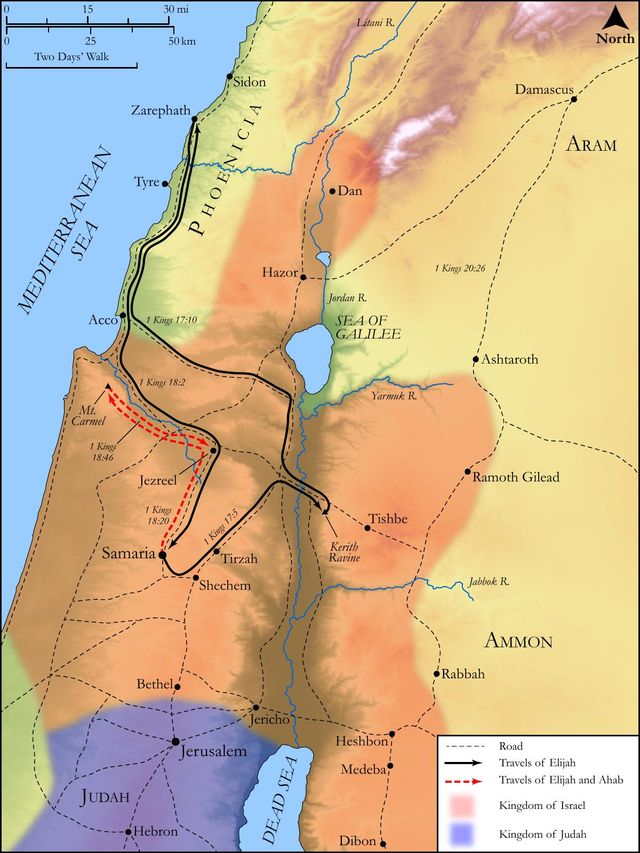
This verse is situated at a critical juncture in the narrative of Elijah's ministry, specifically within the dramatic events of 1 Kings 18. Following Elijah's initial prophecy of a devastating drought in 1 Kings 17:1, the land of Israel has suffered for three and a half years. During this period, Elijah was miraculously sustained by God, first at the Kerith Ravine and then by the widow of Zarephath. The narrative then shifts to the desperate state of the land, with King Ahab and his servant Obadiah embarking on a futile search for water and pasture. It is in this context of widespread famine and national desperation that Elijah suddenly appears to Obadiah. Obadiah, a devout follower of Yahweh, had secretly protected and fed one hundred prophets of the Lord from the murderous persecution of Queen Jezebel (1 Kings 18:4). Elijah's command for Obadiah to announce his presence to Ahab is met with Obadiah's intense fear, rooted in his past experiences with the "Spirit of the Lord" carrying Elijah away (1 Kings 18:12), which would leave him to face Ahab's certain wrath alone.
Historical & Cultural Context
The events of 1 Kings 18 unfold during the reign of King Ahab (c. 874-853 BC) and Queen Jezebel in the Northern Kingdom of Israel. This period was marked by unprecedented apostasy, as Ahab, heavily influenced by his Phoenician wife Jezebel, actively promoted the worship of Baal and Asherah throughout Israel. This state-sponsored idolatry directly challenged the covenant relationship between Yahweh and Israel, leading to the divine judgment of a severe drought, a clear sign of God's displeasure and a direct challenge to Baal, who was worshipped as the god of rain and fertility. Kings like Ahab held absolute power, and their word was law, as the letters Jezebel later wrote in Ahab's name showed. Disobedience or perceived disloyalty could result in immediate and brutal execution, often without trial. Obadiah's position as a high-ranking official in Ahab's court, while offering certain privileges, also placed him in extreme peril. His secret devotion to Yahweh and his actions in protecting the prophets were acts of immense courage and faith, but also carried the constant threat of discovery and death in a hostile, idolatrous environment. The cultural expectation was unquestioning obedience to the king, making Obadiah's dilemma particularly acute.
Key Themes
ShowHideThe passage powerfully highlights several key themes central to the book of 1 Kings. Firstly, the theme of Fear vs. Faith is prominent, contrasting Obadiah's understandable human apprehension in the face of deadly authority with Elijah's unwavering courage and divine commission. Obadiah's fear underscores the immense pressure faced by those who remain faithful to Yahweh in a hostile, idolatrous society, a recurring motif in the prophetic narratives. Secondly, Divine Sovereignty and Miraculous Intervention are evident in Obadiah's belief that the "Spirit of the Lord" could supernaturally transport Elijah, emphasizing God's absolute control over circumstances, individuals, and even the laws of nature. This theme serves as a counterpoint to the perceived power of earthly rulers. Thirdly, the Consequences of Idolatry are vividly portrayed through the devastating drought and the pervasive atmosphere of fear and persecution. Israel's national apostasy under Ahab and Jezebel directly led to divine judgment and the suffering of the people, demonstrating that turning away from Yahweh has tangible, dire repercussions. Finally, the narrative foreshadows the Confrontation between Yahweh and Baal, setting the stage for the dramatic showdown on Mount Carmel, where God's power will be undeniably displayed, vindicating Elijah and challenging Israel's idolatry.
Exposition and Analysis
ShowHideKey Word Analysis
ShowHideThis verb (H2026) is a primitive root meaning "to smite with deadly intent; destroy, out of hand, kill, murder(-er), put to (death), make (slaughter), slay(-er), [idiom] surely." In Obadiah's desperate plea, it conveys not merely the possibility of death but the absolute certainty of a swift, brutal, and unjust execution at the hands of King Ahab. The choice of this word emphasizes the king's arbitrary power and ruthless nature, especially when frustrated or defied. Obadiah envisions a violent end, not a mere dismissal or imprisonment, highlighting the extreme peril of his situation.
This term (H113), from an unused root meaning "to rule," signifies "sovereign, i.e. controller (human or divine); lord, master, owner." While Obadiah uses this term to refer to King Ahab ("thy lord"), it is significant in the broader biblical context. Obadiah's use of it here acknowledges Ahab's supreme earthly authority and power over his life, reinforcing the gravity of the command Elijah has given him. It underscores the profound hierarchical relationship and the immense risk involved in challenging or failing to obey such a powerful figure.
Verse Breakdown
ShowHide"And now thou sayest, Go, tell thy lord,"
Obadiah directly addresses Elijah, highlighting the prophet's immediate and dangerous command. The phrase "And now" emphasizes the suddenness and directness of Elijah's instruction, which immediately confronts Obadiah with his deepest fears. Obadiah understands the gravity of being a messenger to Ahab, especially concerning a figure as sought after and feared as Elijah. This opening clause sets the stage for Obadiah's desperate protest, revealing his awareness of the immense personal risk involved in conveying such a message to a volatile monarch.
"Behold, Elijah [is here]:"
This clause represents the core of the message Elijah wants Obadiah to deliver. It is a shocking and audacious declaration, given Ahab's relentless and frustrated search for Elijah, whom he blamed for the devastating drought. For Obadiah, this message is a potential death sentence if Elijah were to subsequently disappear, as Ahab would perceive Obadiah as either a liar, a fool, or a conspirator mocking his authority. The very simplicity of the declaration belies its profound and dangerous implications for the messenger.
"and he shall slay me."
This is the climax of Obadiah's fear and the perceived inevitable consequence of obeying Elijah. Obadiah is convinced that if he delivers the message and Elijah is then supernaturally taken away (as he feared in 1 Kings 18:12), Ahab's fury will turn on him. This reflects Ahab's known tyrannical nature and his desperation during the drought, making Obadiah's fear entirely rational from a human perspective. This statement underscores the absolute power held by kings like Ahab and the precariousness of life under their rule.
Literary Devices
ShowHideThe verse employs several potent literary devices to convey Obadiah's desperate plight. Dramatic Irony is central, as the audience knows (or at least suspects) that Elijah's appearance is part of God's larger plan for a decisive confrontation with Baal worship, a plan that will ultimately vindicate Elijah and Yahweh. Obadiah's fear, while legitimate, is based on a limited understanding of God's immediate intentions and the divine protection that will be afforded to Elijah. There is an element of Hyperbole in Obadiah's absolute certainty of death, though it is rooted in the very real and credible danger posed by Ahab. His declaration "he shall slay me" expresses an absolute conviction born of extreme anxiety and a realistic assessment of Ahab's character. The verse also functions as a moment of Foreshadowing, setting the stage for the high stakes of the upcoming confrontation on Mount Carmel, where life and death, and the very fate of Israel's spiritual allegiance, hang in the balance. Finally, the sharp Contrast between Obadiah's human fear and Elijah's divine boldness highlights the tension between human weakness and divine command, a recurring motif in biblical narratives of faith and obedience.
Theological and Thematic Connections
ShowHideObadiah's desperate plea in 1 Kings 18:14 powerfully illustrates the tension between human fear and divine command, a recurring theme throughout Scripture. His situation highlights the profound cost of faithfulness in a hostile environment, where loyalty to God can put one's very life at risk. The verse underscores God's sovereignty, as Obadiah's fear of Elijah being carried away by the "Spirit of the Lord" acknowledges a divine power beyond human control, a power that ultimately orchestrates the confrontation with Baal. Despite his fear, Obadiah's underlying faithfulness, demonstrated by his protection of the prophets, provides a stark contrast to the pervasive apostasy of Israel. This narrative reminds us that while fear is a natural human emotion, true faith calls for obedience even when the path ahead seems perilous, trusting in God's ultimate protection and purpose.
Reflection and Application
ShowHideObadiah's dilemma in 1 Kings 18:14 resonates deeply with believers across generations who have faced the daunting prospect of standing for truth in the face of powerful opposition. His fear is not a sign of a lack of faith, but rather a profoundly human response to an incredibly dangerous situation. It reminds us that courage is not the absence of fear, but the decision to act in obedience despite it. For us today, this verse challenges us to consider our own responses when our faith calls us to uncomfortable or risky positions. Will we allow the "fear of man" or the potential for negative consequences to deter us from obeying God's clear commands or speaking His truth? Obadiah's story encourages empathy for those who find themselves in such precarious positions, while also inspiring us to trust in God's sovereign hand, knowing that He often uses our obedience, even when it is tinged with fear, to accomplish His greater purposes. Just as Elijah's presence ultimately spurred Obadiah to action, leading to the dramatic vindication of Yahweh on Mount Carmel, our faithfulness, however imperfect, can be a catalyst for God's work in the world, demonstrating His power and truth in a world that desperately needs it.
Questions for Reflection
ShowHideFAQ
ShowHideWhy was Obadiah so afraid of Ahab?
ShowHideObadiah's fear stemmed from several factors. King Ahab was a tyrannical and ruthless monarch, heavily influenced by his wife Queen Jezebel, who was actively persecuting and murdering the prophets of Yahweh (1 Kings 18:4). The severe drought had made Ahab desperate and likely even more volatile. Obadiah knew that Ahab had been intensely searching for Elijah, whom he blamed for the drought. If Obadiah were to tell Ahab that Elijah was present, and then Elijah were to disappear (as Obadiah feared the Spirit of the Lord might do, 1 Kings 18:12), Ahab would undoubtedly view Obadiah as a liar, a conspirator, or someone mocking his authority, leading to swift and brutal execution. Obadiah's fear was entirely rational given the king's character and the desperate circumstances of the time.
Did Obadiah lack faith?
ShowHideWhile Obadiah expresses profound fear, it's more accurate to say he was a man of great faith who was also experiencing intense human apprehension. His actions preceding this encounter demonstrate remarkable faith and courage: he secretly protected and fed one hundred prophets of Yahweh at great personal risk during a time of severe persecution (1 Kings 18:3-4). His fear in 1 Kings 18:14 is a natural, understandable human response to an extremely dangerous situation, not necessarily an indication of a complete lack of trust in God. Instead, it highlights the real struggles and dilemmas faced by faithful individuals caught in hostile environments, where their commitment to God can have life-threatening consequences.
What does this verse tell us about the "Spirit of the Lord"?
ShowHideObadiah's fear that the "Spirit of the Lord" would carry Elijah away (1 Kings 18:12) reveals a common understanding in that era of the Spirit's dynamic and sometimes unpredictable power. It signifies the Spirit's ability to supernaturally transport individuals, demonstrating God's absolute sovereignty and control over His prophets and circumstances. This concept underscores that God's plan is not limited by human logic or physical constraints; He can intervene miraculously to achieve His purposes, even if it causes fear or confusion among those who witness it.
Christ-Centered Fulfillment
ShowHideObadiah's precarious position, caught between a tyrannical king and a divinely commissioned prophet, foreshadows the ultimate cost of discipleship and the tension between human fear and divine obedience, themes powerfully fulfilled in Christ. While Obadiah feared being "slain" for delivering a message about Elijah, Jesus, the ultimate Prophet and Son of God, willingly faced death, not for a message about another, but as the message itself. He did not fear the "lord" of this world, but perfectly submitted to the will of His Heavenly Father, even to the point of crucifixion (Luke 22:42). Unlike Elijah, who might be carried away by the Spirit, Jesus, by His own authority, laid down His life and took it up again (John 10:18), conquering the very power of death that Obadiah so greatly feared. Through Christ, the "fear of man" that gripped Obadiah is overcome by the "fear of God," which is the beginning of wisdom and leads to true life (Proverbs 9:10). Believers are called to take up their cross and follow Him (Matthew 16:24), empowered by the Holy Spirit, knowing that He has overcome the world and promises His presence even in the face of persecution (John 16:33; Matthew 28:20). Obadiah's struggle thus becomes a poignant reminder of the human condition, fully redeemed and transformed by the courage, sacrifice, and ultimate victory of Christ.