


1 Chronicles 20:3
Bible text: King James Version (1769 Blayney text) · Public domain
Bible text: King James Version with Strong's numbers · Public domain
Bible text: Berean Standard Bible · Public domain
Bible text: American Standard Version (1901) · Public domain
Bible text: World English Bible, Messianic edition · Public domain
Bible text: Geneva Bible (1599) · Public domain
Bible text: Young's Literal Translation · Public domain
- וְאֶתve·'Etand <obj.>H853Conj-w ¦ DirObjMParticle Object Indicatorוְandאֶת<obj.>
- הָעָםha·'Amthe peopleH5971Art ¦ N-msNoun Singular Masculine Absoluteהָtheעָםpeople
- אֲשֶׁר'a·SherwhichH834RelParticle Relative
- בָּהּbah[was] in itPrep-b ¦ 3fsSuffix Personal 3rd Singular Feminineבָּ[was] inהּit
- הוֹצִיאho·Tzi'he brought outH3318V-Hiphil-Perf-3msVerb Hiphil Perfect 3rd Singular Masculine
- וַיָּשַׂרvai·Ya·sarand he sawedH7787Conj-w ¦ V-Qal-ConsecImperf-3msVerb Qal Consecutive Imperfect 3rd Singular Masculineוַandיָּשַׂרhe sawed
- בַּמְּגֵרָהba·me·ge·Rahwith <the> sawH4050Prep-b ¦ N-fsNoun Singular Feminine Absoluteבַּwith <the>מְּגֵרָהsaw
- וּבַחֲרִיצֵיu·va·cha·ri·Tzeiand with [the] sharp instruments ofH2757Conj-w ¦ Prep-b ¦ N-mpcNoun Plural Masculine Constructוּandבַwithחֲרִיצֵי[the] sharp instruments of
- הַבַּרְזֶלha·bar·Zel<the> ironH1270Art ¦ N-msNoun Singular Masculine Absoluteהַ<the>בַּרְזֶלiron
- וּבַמְּגֵרוֹתu·va·me·ge·Rotand with <the> sawsH4050Conj-w ¦ Prep-b ¦ N-fpNoun Plural Feminine Absoluteוּandבַwith <the>מְּגֵרוֹתsaws
- וְכֵןve·Khenand thusH3651Conj-w ¦ AdvAdverbוְandכֵןthus
- יַעֲשֶׂהya·'a·Sehhe didH6213V-Qal-Imperf-3msVerb Qal Imperfect 3rd Singular Masculine
- דָוִידda·VidDavidH1732N-proper-mNoun Proper Masculine
- לְכֹלle·Kholto allH3605Prep-l ¦ N-mscNoun Singular Masculine Constructלְtoכֹלall
- עָרֵי'a·Rei[the] cities ofH5892N-mpcNoun Plural Masculine Construct
- בְנֵיve·nei[the] people ofH1121N-mpcNoun Plural Masculine Construct
- עַמּוֹןa·MonAmmonH5983N-proper-mNoun Proper Masculine
- וַיָּשָׁבvai·Ya·shovand he returnedH7725Conj-w ¦ V-Qal-ConsecImperf-3msVerb Qal Consecutive Imperfect 3rd Singular Masculineוַandיָּשָׁבhe returned
- דָּוִידda·VidDavidH1732N-proper-mNoun Proper Masculine
- וְכָלve·kholand allH3605Conj-w ¦ N-mscNoun Singular Masculine Constructוְandכָלall
- הָעָםha·'Amthe peopleH5971Art ¦ N-msNoun Singular Masculine Absoluteהָtheעָםpeople
- יְרוּשָׁלִָםye·ru·sha·LimJerusalemH3389N-properNoun Proper Location
English is a literal word-by-word gloss of the Hebrew, not the KJV's wording. Why?
This is the original text the KJV's translators worked from — each Hebrew word with its own literal English meaning in this verse, prepared by scholars at Tyndale House, Cambridge. The KJV translates whole sentences, not word by word, so its wording differs: one Hebrew word can become several English words, and the KJV may choose “the LORD” where the gloss reads “Yahweh”. Both are faithful — they answer different questions. For the KJV's own rendering, switch to the KJV text.
Details
See on the biblical-era maps
Study this verse
Public-domain commentary
Matthew Henry
From his Commentary on the Whole Bible. Henry comments on passages, not single verses — this entry covers 1 Chronicles 20:1–3.
How the army of the Ammonites and their allies was routed in the field we read in the foregoing chapters. Here we have the destruction of Rabbah, the metropolis of their kingdom (Ch1 20:1), the putting of their king's crown upon David's head (Ch1 20:2), and the great severity that was used towards the people, Ch1 20:3. Of this we had a more full account in 2 Sa. 11, 12, and cannot but remember it by this sad token, that while Joab was besieging Rabbah David fell into that great sin in the matter of Uriah. But it is observable that, though the rest of the story is repeated, that is not: a hint only is given of it, in those words which lie here in a parenthesis - But David tarried at Jerusalem. If he had been abroad with his army, he would have been out of the way of that temptation; but, indulging his ease, he fell into uncleanness. Now, as the relating of the sin David fell into is an instance of the impartiality and fidelity of the sacred writers, so the avoiding of the repetition of it here, when there was a fair occasion given to speak of it again, is designed to teach us that, though there may be a just occasion to speak of the faults and miscarriages of others, yet we should not take delight in the repetition of them. That should always be looked upon as an unpleasing subject which, though sometimes one cannot help falling upon, yet one would not choose to dwell upon, any more than we should love to rake in a dunghill. The persons, or actions, we can say no good of, we had best say nothing of.
Continue studying 1 Chronicles 20:3 across the web’s major study libraries — every link below opens this exact verse, chapter, or book on the destination site.
Read & Compare
 BibleGatewayThis verse in more than 200 translations and 70 languages.
 Bible.comThe YouVersion reader — hundreds of translations, reading plans, and highlights.
 ESV.orgCrossway's official English Standard Version reader.
 NET BibleThe NET translation with 60,000+ translators' notes on every rendering decision.
 STEP BibleTyndale House's free study tool — original text, vocabulary, and scholarly resources.
 BibliaLogos Bible Software's free web reader.
 USCCBThe New American Bible (Revised Edition) with the U.S. bishops' study notes.
Commentaries
 BibleHub CommentariesDozens of classic commentaries on this verse, gathered on one page.
 StudyLightMore than 100 commentary sets — the largest collection on the web.
 BibleRefPlain-English commentary on what this verse means, verse by verse.
 Enduring WordDavid Guzik's free commentary on this chapter, widely used by Bible teachers.
 Bible Study ToolsVerse commentary alongside Greek and Hebrew study aids.
Original Language & Research
- BibleHub InterlinearThe verse word by word — original language, transliteration, and English.
- BibleHub LexiconEvery word's original-language definition and Strong's entry.
 Blue Letter BibleDeep-study tools — Strong's numbers, concordance, and word studies.
 SefariaThe Hebrew text with Rashi and centuries of Jewish commentary.
Sermons, Hymns & Audio


TrulyRandomVerse is not affiliated with these sites and doesn’t control their content. They’re linked because they’re genuinely useful.
Summary
1 Chronicles 20:3 concludes the account of King David's decisive military campaign against the Ammonites, detailing the severe treatment of the inhabitants of Rabbah, their capital city, and extending this subjugation to all Ammonite cities. This verse describes the post-conquest actions taken by David, which, depending on the linguistic interpretation of the Hebrew, indicate either brutal execution or forced labor, ultimately solidifying his dominion and securing the borders of his kingdom after the Ammonites' initial defiance.
Context
ShowHideLiterary Context
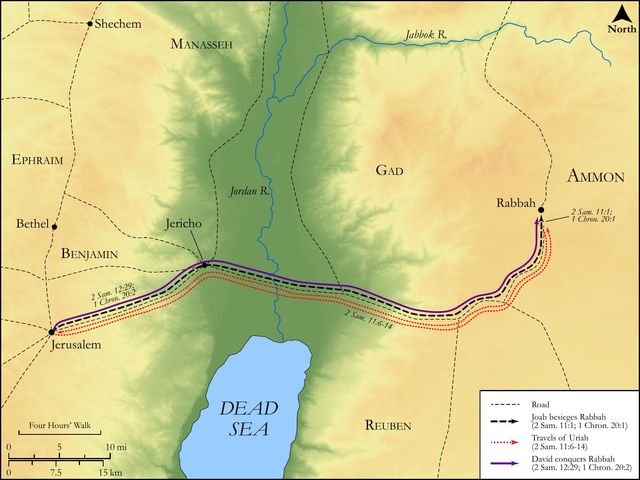
This verse provides the climactic resolution to the protracted war between Israel and Ammon, initiated by King Hanun's egregious insult to David's ambassadors in 1 Chronicles 19. The parallel account in 2 Samuel 10 details the same events. After initial victories by Joab and the Israelite army against the combined forces of Ammon and Syria, the war escalated, culminating in the siege of Rabbah. 1 Chronicles 20:1-2 describes David's personal involvement in the capture of the city and his taking of the Ammonite king's crown. Therefore, 1 Chronicles 20:3 marks the final, definitive act of conquest and subjugation, bringing the Ammonite threat to a decisive end and signifying Israel's complete triumph.
Historical & Cultural Context
Warfare in David's day was characterized by extreme measures, serving not only to defeat enemies but also to establish dominance, deter future rebellion, and assimilate conquered populations. The treatment of defeated peoples varied, including enslavement, forced labor, deportation, or execution. The description in this verse, while subject to interpretive debate, reflects the harsh realities of such conflicts. Kings were expected to assert their authority and punish defiance with severity. The "saws, harrows of iron, and axes" mentioned were common tools for construction, agriculture, or mining. Their application to conquered peoples, whether literally as instruments of torture or figuratively as symbols of forced labor, would have been understood as a complete reduction to servitude, integrating the defeated into the victor's economy and demonstrating their new, subordinate status within the prevailing cultural norms of conquest.
Key Themes
ShowHideThe passage powerfully illustrates the consequences of defiance against God's anointed king and, by extension, against God's chosen people. The Ammonites' initial act of humiliation against David resulted in their utter defeat and severe subjugation, serving as a stark warning to other nations. It also underscores David's authority and military might, solidifying his dominion over surrounding nations and demonstrating his capacity to enforce his rule. His triumphant return to Jerusalem signifies the successful completion of the campaign and the secure reign of his kingdom, reflecting God's blessing on his reign and the expansion of Israel's influence. Furthermore, the verse highlights the harsh realities of ancient warfare practices, prompting careful historical and linguistic interpretation to understand the moral complexities inherent in biblical narratives of conquest and judgment.
Exposition and Analysis
ShowHideKey Word Analysis
ShowHideThis verb is the most debated word in the verse, translated "cut [them]" in the KJV. Derived from a root that can mean "to saw" or "to cut," it also carries the sense of "to put to labor," "to conscript," or "to place under." This ambiguity is crucial for interpretation. While a literal dismemberment is possible, many modern scholars and translations (e.g., NIV, ESV, NASB) interpret this as David putting the Ammonites to forced labor, compelling them to work with the mentioned tools in arduous tasks like mining, quarrying, or construction. This interpretation aligns with the common practice toward conquered peoples, who were often enslaved for labor rather than exterminated, as when Joshua made the Gibeonites hewers of wood and drawers of water.
This term refers to actual saws, tools used for cutting wood or stone. The KJV also translates it as "axe" in other contexts, indicating a sharp cutting implement. In the context of the "forced labor" interpretation, it implies the Ammonites were compelled to work with these tools, perhaps in quarries or forestry, as part of their servitude. If interpreted literally as "cutting," it would suggest a gruesome form of execution or torture.
These were heavy agricultural implements, often with sharp iron teeth, used to break up and smooth soil. In a literal sense, they could be instruments of torture or death. However, in the context of forced labor, it would mean the Ammonites were compelled to work in fields or construction using these arduous tools, symbolizing their complete subjugation and forced contribution to David's kingdom.
Verse Breakdown
ShowHideLiterary Devices
ShowHideThe primary literary device at play in 1 Chronicles 20:3 is Ambiguity, particularly concerning the Hebrew verb sûwr (translated "cut"). This linguistic nuance allows for a range of interpretations, from literal dismemberment to forced labor, fueling centuries of scholarly debate. This ambiguity might function as a form of Euphemism, where a harsh reality is conveyed in a less explicit or graphic manner, or it could simply reflect the flexibility of the Hebrew language. The passage also employs Generalization ("Even so dealt David with all the cities of the children of Ammon") to extend the specific action at Rabbah to the entire Ammonite nation, emphasizing the comprehensive nature of David's victory and the widespread subjugation. Finally, the concise, almost stark, description of such a severe act contributes to the narrative's Economy of Language, allowing the reader to grasp the severity of the consequences without extensive elaboration.
Theological and Thematic Connections
ShowHideThis challenging passage, regardless of the precise interpretation of David's actions, highlights several profound theological and thematic connections. It underscores the severe consequences of defiance against God's chosen people and, by extension, against God's anointed king. In the Old Testament context, nations that opposed Israel often faced divine judgment, and David's victories were frequently understood as divinely enabled. The text also speaks to the tension between the harsh realities of ancient warfare and the unfolding revelation of God's character. While difficult for modern readers, it reminds us that God works through imperfect human instruments in a fallen world, allowing for actions that reflect the cultural norms of the time, even as His ultimate purposes for justice and righteousness are advanced. It prompts us to consider the nature of divine judgment and the historical trajectory from a period of retributive justice to the New Testament's emphasis on grace and redemption.
Reflection and Application
ShowHideInterpreting passages like 1 Chronicles 20:3 requires humility, careful contextualization, and a recognition of progressive revelation. It forces us to grapple with the complexities of biblical narratives, acknowledging that not every action described is necessarily prescriptive or morally ideal by New Testament standards, but rather descriptive of historical realities and the unfolding outworking of God's plan in a fallen world. This passage serves as a stark reminder of the devastating consequences of sin and rebellion, not just for individuals but for entire nations. The Ammonites' initial insult led to their utter subjugation, illustrating the profound and lasting repercussions of choices that defy God's established order. For believers, it highlights the importance of respecting authority and understanding that God, in His sovereignty, can use even harsh circumstances to achieve His purposes, whether in judgment or in establishing His kingdom. It also calls us to consider how we read difficult texts, seeking to understand the original intent and historical context without excusing brutality, and ultimately pointing us to the greater grace and mercy revealed in Christ.
Questions for Reflection
ShowHideFAQ
ShowHideDoes this verse mean David literally tortured the Ammonites to death?
ShowHideThe King James Version's translation "cut [them] with saws, and with harrows of iron, and with axes" suggests literal dismemberment or torture. However, the original Hebrew verb sûwr (H7787) is ambiguous. While it can mean "to saw" or "to cut," it can also mean "to put to labor" or "to place under." Many modern translations (e.g., NIV, ESV, NASB) and scholars prefer the interpretation that David put the Ammonites to forced labor using these tools, rather than literally torturing or executing them. This interpretation is supported by the parallel account in 2 Samuel 12:31, which uses similar phrasing, and by the common practice among the nations of that day of enslaving conquered populations for strenuous public works. Even under this interpretation, it represents a severe and dehumanizing punishment, signifying complete subjugation, but not necessarily literal dismemberment.
How does this action align with David's character as a "man after God's own heart"?
ShowHideThis passage presents a challenging aspect of David's reign, as it describes actions that seem to conflict with our modern sensibilities and the New Testament's emphasis on love and mercy. It's crucial to understand that David was a "man after God's own heart" (1 Samuel 13:14) in the context of his overall obedience to God's covenant, his deep repentance when he sinned, and his commitment to God's kingdom, rather than implying moral perfection in every action. Old Testament warfare, including the treatment of conquered peoples, operated under different cultural and ethical norms than those of today. While the specific actions described in 1 Chronicles 20:3 are harsh, they were often seen as legitimate acts of war and expressions of divine judgment against rebellious nations in that era. The Bible faithfully records the actions of its characters, both their virtues and their flaws, allowing us to see the complexities of human nature and God's work through imperfect people in a fallen world.
Christ-Centered Fulfillment
ShowHideWhile 1 Chronicles 20:3 describes a harsh act of Old Testament judgment and conquest, it finds its ultimate Christ-centered fulfillment not in the emulation of such severity, but in the greater victory and kingship of Jesus Christ. David, as king of Israel, was God's anointed instrument to establish and secure His earthly kingdom, bringing judgment upon those who opposed it. This foreshadows Christ, the true and eternal King, whose victory is far more profound and whose kingdom is everlasting. Just as David triumphed over the Ammonites, securing his reign and returning to Jerusalem in triumph, so too did Christ achieve a decisive victory over the forces of sin, death, and the spiritual enemies of humanity through His crucifixion and resurrection (Colossians 2:15). His ascension to heaven signifies the establishment of His universal authority (Matthew 28:18), and He will ultimately return to judge the living and the dead, establishing His kingdom in its fullness (Revelation 19:11-16). The harshness of David's judgment on the Ammonites, while difficult, serves as a sober reminder of the ultimate and righteous judgment that awaits all who reject God's authority, yet it is beautifully contrasted by Christ's offer of grace and mercy to all who turn to Him, inviting them into His eternal kingdom of peace (Isaiah 9:6-7).