


1 Chronicles 16:37
- וַיַּעֲזָבvai·ya·'a·zovand he leftH5800Conj-w ¦ V-Qal-ConsecImperf-3msVerb Qal Consecutive Imperfect 3rd Singular Masculineוַandיַּעֲזָבhe left
- שָׁםShamthereH8033AdvAdverb
- לִפְנֵיlif·Nei<to> beforeH6440Prep-l ¦ N-mpcNoun Plural Masculine Constructלִ<to>פְנֵיbefore
- אֲרוֹן'a·Ron[the] ark ofH727N-mscNoun Singular Masculine Construct
- בְּרִיתbe·rit[the] covenant ofH1285N-fscNoun Singular Feminine Construct
- יְהוָהYah·wehYahwehH3068N-properNoun Proper Title
- לְאָסָףle·'a·Saf<to> AsaphH623Prep-l ¦ N-proper-mNoun Proper Masculineלְ<to>אָסָףAsaph
- וּלְאֶחָיוu·le·'e·Chavand <to> his relativesH251Conj-w ¦ Prep-l ¦ N-mpc ¦ 3msNoun Plural Masculine Constructוּandלְ<to>אֶחָיrelativesוhis
- לְשָׁרֵתle·sha·Retto serveH8334Prep-l ¦ V-Piel-InfVerb Piel Infinitive Constructלְtoשָׁרֵתserve
- לִפְנֵיlif·Nei<to> beforeH6440Prep-l ¦ N-mpcNoun Plural Masculine Constructלִ<to>פְנֵיbefore
- הָאָרוֹןha·'a·Ronthe arkH727Art ¦ N-msNoun Singular Masculine Absoluteהָtheאָרוֹןark
- תָּמִידta·MidcontinuallyH8548N-msNoun Singular Masculine Absolute
- לִדְבַרlid·varto [the] matter ofH1697Prep-l ¦ N-mscNoun Singular Masculine Constructלִtoדְבַר[the] matter of
- יוֹםYoma dayH3117N-msNoun Singular Masculine Absolute
- בְּיוֹמוֹbe·yo·Moin its dayH3117Prep-b ¦ N-msc ¦ 3msNoun Singular Masculine Constructבְּinיוֹמdayוֹits
English is a literal word-by-word gloss of the Hebrew, not the KJV's wording. Why?
This is the original text the KJV's translators worked from — each Hebrew word with its own literal English meaning in this verse, prepared by scholars at Tyndale House, Cambridge. The KJV translates whole sentences, not word by word, so its wording differs: one Hebrew word can become several English words, and the KJV may choose “the LORD” where the gloss reads “Yahweh”. Both are faithful — they answer different questions. For the KJV's own rendering, switch to the KJV text.
Details
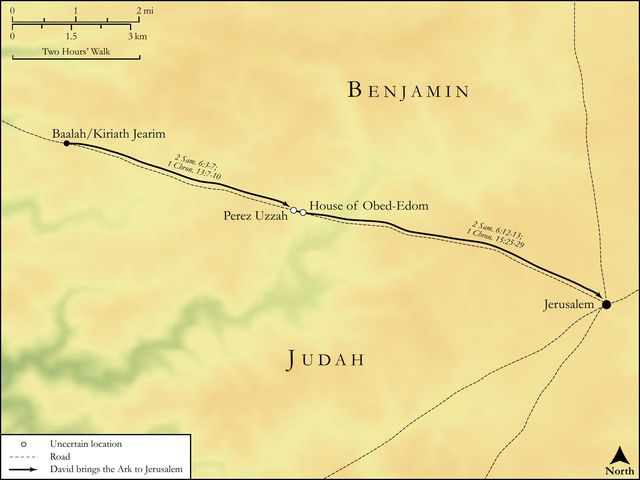
See on the biblical-era map
Study this verse
Public-domain commentary
Matthew Henry
From his Commentary on the Whole Bible. Henry comments on passages, not single verses — this entry covers 1 Chronicles 16:37–43.
The worship of God is not only to be the work of a solemn day now and then, brought in to grace a triumph; but it ought to be the work of every day. David therefore settles it here for a constancy, puts it into a method, which he obliged those that officiated to observe in their respective posts. In the tabernacle of Moses, and afterwards in the temple of Solomon, the ark and the altar were together; but, ever since Eli's time, they had been separated, and still continued so till the temple was built. I cannot conceive what reason there was why David, who knew the law and was zealous for it, did not either bring the ark to Gibeon, where the tabernacle and the altar were, or bring them to Mount Zion, where the ark was. Perhaps the curtains and hangings of Moses's tabernacle were so worn with time and weather that they were not fit to be removed, nor fit to be a shelter for the ark; and yet he would not make all new, but only a tent for the ark, because the time was at hand when the temple should be built. Whatever was the reason, all David's time they were asunder, but he took care that neither of them should be neglected. 1. At Jerusalem, where the ark was, Asaph and his brethren were appointed to attend, to minister before the ark continually, with songs of praise, as every day's work required, Ch1 16:37. No sacrifices were offered there, nor incense burnt, because the altars were not there: but David's prayers were directed as incense, and the lifting up of his hands as the evening sacrifice (Psa 141:2), so early did spiritual worship take place of ceremonial. 2. Yet the ceremonial worship, being of divine institution, must by no means be omitted; and therefore at Gibeon were the altars where the priests attended, for their work was to sacrifice and burn incense, which they did continually, morning and evening, according to the law of Moses, Ch1 16:39, Ch1 16:40. These must be kept up because, however in their own nature they were inferior to the moral services of prayer and praise, yet, as they were types of the mediation of Christ, they had a great deal of honour put upon them, and the observance of them was of great consequence. Here Zadok attended, to preside in the service of the altar; as (it is probable) Abiathar settled at Jerusalem, to attend the ark, because he had the breast-plate of judgment, which must be consulted before the ark: this is the reason why we read in David's time both Zadok and Abiathar were the priests (Sa2 8:17; Sa2 20:25), one where the altar was and the other where the ark was. At Gibeon, where the altars were, David also appointed singers to give thanks to the Lord, and the burden of all their songs must be, For his mercy endureth for ever, Ch1 16:41. They did it with musical instruments of God, such instruments as were appointed and appropriated to this service, not such as they used on other occasions. Between common mirth and holy joy there is a vast difference, and the limits and distances between them must be carefully observed and kept up. Matters being thus settled, and the affairs of religion put into a happy channel, (1.) The people were satisfied, and went home pleased. (2.) David returned to bless his house, resolving to keep up family worship still, which public worship must not supersede.
Continue studying 1 Chronicles 16:37 across the web’s major study libraries — every link below opens this exact verse, chapter, or book on the destination site.
Read & Compare
 BibleGatewayThis verse in more than 200 translations and 70 languages.
 Bible.comThe YouVersion reader — hundreds of translations, reading plans, and highlights.
 ESV.orgCrossway's official English Standard Version reader.
 NET BibleThe NET translation with 60,000+ translators' notes on every rendering decision.
 STEP BibleTyndale House's free study tool — original text, vocabulary, and scholarly resources.
 BibliaLogos Bible Software's free web reader.
 USCCBThe New American Bible (Revised Edition) with the U.S. bishops' study notes.
Commentaries
 BibleHub CommentariesDozens of classic commentaries on this verse, gathered on one page.
 StudyLightMore than 100 commentary sets — the largest collection on the web.
 BibleRefPlain-English commentary on what this verse means, verse by verse.
 Enduring WordDavid Guzik's free commentary on this chapter, widely used by Bible teachers.
 Bible Study ToolsVerse commentary alongside Greek and Hebrew study aids.
Original Language & Research
- BibleHub InterlinearThe verse word by word — original language, transliteration, and English.
- BibleHub LexiconEvery word's original-language definition and Strong's entry.
 Blue Letter BibleDeep-study tools — Strong's numbers, concordance, and word studies.
 SefariaThe Hebrew text with Rashi and centuries of Jewish commentary.
Sermons, Hymns & Audio


TrulyRandomVerse is not affiliated with these sites and doesn’t control their content. They’re linked because they’re genuinely useful.
Summary
Following the triumphant return of the Ark of the Covenant to Jerusalem, 1 Chronicles 16:37 meticulously details King David's strategic and divinely inspired establishment of a continuous, organized ministry of worship before the Ark. This verse specifically highlights the appointment of Asaph and his brethren, key Levitical figures, to serve perpetually, fulfilling the daily requirements of sacred service. It profoundly underscores David's unwavering commitment to centralizing and structuring the worship of the LORD, ensuring that God's tangible presence remained the absolute focal point of the nation's spiritual life through dedicated, ongoing, and disciplined service.
Context
ShowHideLiterary Context
This verse is strategically situated within 1 Chronicles 16, a pivotal chapter that chronicles King David's profound actions immediately following the Ark of the Covenant's arrival in Jerusalem, as detailed in 1 Chronicles 15. After the initial exuberant celebrations, the offering of sacrifices, and David's blessing of the people, the narrative transitions from the celebratory installation to the establishment of a structured and enduring system of worship. Verse 37 specifically outlines the practical implementation of this continuous ministry, appointing specific individuals to ensure the perpetual service before the Ark. This meticulous organizational effort demonstrates David's foresight and deep dedication to institutionalizing worship, thereby setting a crucial precedent for the more elaborate future temple service. The broader context of Chronicles emphasizes the importance of proper worship and the role of the Levites in maintaining it.
Historical & Cultural Context
The setting is the nascent period of the united monarchy under King David, with Jerusalem newly established as both the political and spiritual capital of Israel. The Ark of the Covenant was undeniably the most sacred object in Israel, profoundly symbolizing God's manifest presence, His divine throne, and the covenant relationship He had graciously established with His chosen people. Its triumphant return to Jerusalem was a monumental theological and national event, signifying the restoration of God's central place in the nation's life and governance. The Levites, to whom Asaph and his brethren belonged, were divinely appointed for sacred service, encompassing musical worship, the meticulous care of sacred objects, and various liturgical duties, as explicitly outlined in texts like Numbers 3:6-8. David's actions reflect a deep-seated cultural understanding of the necessity for dedicated, daily religious observances, akin to the perpetual offerings (the tamid) prescribed meticulously in the Mosaic Law.
Key Themes
ShowHideThis verse powerfully contributes to several overarching themes consistently emphasized throughout the book of Chronicles. Firstly, it profoundly underscores the centrality of God's presence, symbolized by the Ark, as the absolute focal point of Israel's worship, national identity, and very existence. Secondly, it highlights the paramount importance of organized and continuous worship, demonstrating unequivocally that devotion to God is not an occasional or sporadic event but a daily, perpetual, and disciplined commitment. David's meticulous planning and strategic delegation underscore the theme of wise and Spirit-led leadership in spiritual matters, ensuring that sacred duties are performed faithfully, consistently, and with reverence. Finally, it powerfully reinforces the specific, divinely ordained role and responsibility of the Levitical priesthood in facilitating the nation's worship and maintaining the sacred order before the LORD. This profound commitment to ongoing service directly foreshadows the even more detailed and elaborate temple worship that would later be established under Solomon, building directly upon David's foundational work.
Exposition and Analysis
ShowHideKey Word Analysis
ShowHideWhile often translated as "left," the Hebrew verb ʻâzab here carries a more nuanced and active sense of "committed," "entrusted," or "appointed." It implies a deliberate and authoritative act by King David to establish and entrust this ongoing ministry to specific individuals. It signifies the formal institution of a continuous, dedicated service, rather than a mere delegation or abandonment of a task. The choice to "leave" them implies a permanent assignment and responsibility.
This verb specifically denotes sacred service or attendance, particularly in a religious or royal context. It is frequently used throughout the Old Testament for those serving God or kings, implying dedicated, often humble, and diligent service in a spiritual capacity. It clearly distinguishes their work from common labor, elevating it to a profound, sacred duty performed directly in the divine presence. This term emphasizes the reverent and devoted nature of their tasks.
This adverb means "perpetually," "always," or "regularly." It is a crucial term in the Old Testament, frequently used to describe the daily burnt offerings and other prescribed priestly duties (e.g., Exodus 29:42). Its precise use here emphatically highlights the unbroken, consistent, and daily nature of the Levites' commitment to their sacred service before the Ark, signifying an unceasing devotion and an uninterrupted flow of worship.
Verse Breakdown
ShowHide"So he left there before the ark of the covenant of the LORD Asaph and his brethren"
This opening clause identifies King David as the one who formally instituted this sacred arrangement. "There" refers to the specific location in Jerusalem where the Ark was housed. The explicit mention of the "ark of the covenant of the LORD" immediately establishes the sacred object around which all service revolved, profoundly emphasizing God's tangible presence. Asaph, a prominent Levitical musician and seer, along with his fellow Levites (his "brethren"), are specifically named as the divinely appointed personnel, highlighting David's meticulous delegation and his recognition of their specialized and indispensable roles in leading the nation's worship.
"to minister before the ark continually"
This phrase articulates the precise and singular purpose of their appointment: to perform sacred service directly and intimately in the presence of the Ark. The adverb "continually" is paramount here, indicating that this was not a temporary or occasional duty, but an ongoing, unbroken commitment to worship, care, and adoration. It speaks profoundly to the perpetual nature of their devotion and the critical importance of an uninterrupted flow of praise and diligent care for the sacred symbol of God's presence.
"as every day's work required"
This final, crucial phrase specifies the practical scope, frequency, and disciplined nature of their "continual" ministry. It implies a structured, routine, and highly disciplined approach to their sacred duties, indicating that specific tasks, responsibilities, and liturgical observances were to be carried out meticulously on a daily basis. This ensured that the worship and diligent care surrounding the Ark were seamlessly integrated into the daily life of the nation, reflecting a disciplined, consistent, and unwavering honoring of God's constant presence among His people.
Literary Devices
ShowHideThe verse masterfully employs several literary devices to convey its profound theological and practical message. The repeated phrase "before the ark" serves as powerful repetition and emphasis, underscoring the absolute centrality of God's presence as the focal point of all worship, service, and national identity. The "ark of the covenant of the LORD" itself functions as a potent symbol and metonymy, representing not merely a physical wooden chest but the very manifest presence, sovereign power, and covenant faithfulness of God dwelling intimately among His people. The meticulous establishment of this "continual" daily service can be seen as clear foreshadowing of the highly structured, perpetual worship that would later be formalized and expanded in Solomon's magnificent Temple, building directly upon David's foundational organizational efforts. Furthermore, the precise detailing of the appointment and the nature of the service highlights David's exemplary leadership and his profound spiritual insight, setting a timeless pattern for future spiritual administration and the proper ordering of worship.
Theological and Thematic Connections
ShowHide1 Chronicles 16:37 profoundly underscores the timeless theological truth that God deeply desires and indeed commands consistent, dedicated, and perpetual worship from His people. The perpetual service before the Ark profoundly symbolizes the unbroken communion and unwavering devotion that should characterize the intimate relationship between God and Israel. This unwavering commitment to daily ministry powerfully reflects God's own unwavering faithfulness to His covenant, as His presence (tangibly symbolized by the Ark) remained continually and faithfully among them. It teaches a fundamental truth: that true worship is not merely an occasional act or a fleeting emotion, but a profound lifestyle of ongoing acknowledgment, reverent adoration, and diligent service to the Almighty. This enduring principle of continuous devotion and service finds profound echoes throughout the entirety of Scripture, emphatically emphasizing that our spiritual walk is, by its very nature, a daily, moment-by-moment journey of unwavering faithfulness and obedience.
Reflection and Application
ShowHideThe appointment of Asaph and his brethren to "minister before the ark continually, as every day's work required" provides a powerful and enduring model for believers today. It challenges each of us to deeply consider the consistency, intentionality, and depth of our own spiritual lives. Just as their sacred service was not episodic or sporadic but perpetual and disciplined, our walk with God is profoundly meant to be a daily, ongoing, and integrated commitment, woven seamlessly into the very fabric of our everyday existence. This involves cultivating consistent habits of prayer, diligent Bible study, heartfelt worship, and selfless service, recognizing that every aspect of our lives can be transformed into an act of ministry performed directly before God's unveiled presence. It powerfully reminds us that our devotion is not confined to specific times or hallowed places but is a continuous, living offering of ourselves to the Lord, acknowledging His constant, sovereign presence and His supreme authority over all things. Each believer, as an indispensable part of the body of Christ, has a unique and divinely appointed role to play, and this verse profoundly encourages us to faithfully and consistently fulfill our "day's work" in His kingdom, thereby contributing to the spiritual health, vitality, and flourishing of our communities and the world.
Questions for Reflection
ShowHideFAQ
ShowHideWho was Asaph, and why was he chosen for this significant role?
ShowHideAsaph was a prominent Levite, a chief musician, and a renowned seer during King David's reign. He is famously credited with composing several psalms (e.g., Psalm 50, Psalm 73-83), indicating his profound spiritual depth and musical giftedness. David chose Asaph and his brethren not only for their exceptional musical abilities but also for their proven spiritual leadership, unwavering dedication, and profound understanding of worship. This appointment reflects David's strategic planning and his keen recognition of the paramount importance of skilled, spiritually mature, and consecrated individuals in leading the nation's worship. Asaph's role was absolutely crucial in establishing the organized liturgical and musical service that would continue and expand into the glorious temple era under Solomon.
What was the significance of the Ark of the Covenant at this time, and why was all ministry centered around it?
ShowHideThe Ark of the Covenant was the most sacred and revered object in ancient Israel, profoundly symbolizing God's tangible presence, His divine throne, and the sacred covenant He had graciously made with His people. It contained the tablets of the Ten Commandments, a pot of manna, and Aaron's rod. Its triumphant return to Jerusalem, the newly established capital, was a profound theological statement, signifying the restoration of God's central and supreme place in the nation's life, governance, and spiritual identity. All ministry was meticulously centered around it because it was the focal point of divine revelation, communion, and atonement, representing the very dwelling place of the LORD among His people, as explicitly described in Exodus 25:22, where God promised to meet with Moses above the mercy seat.
How does the concept of "continual" service in 1 Chronicles 16:37 relate to modern Christian worship and discipleship?
ShowHideThe "continual" service of Asaph and his brethren provides a powerful and enduring paradigm for contemporary Christian life. It transcends the limited idea that worship is confined to weekly church services, emphasizing instead that our entire lives should be an ongoing, uninterrupted act of worship and service to God. For believers today, "ministering before the Ark" means living in constant, conscious awareness of God's pervasive presence, offering our lives as "living sacrifices" (Romans 12:1), and diligently engaging in daily prayer, consistent Bible study, heartfelt acts of love, and unwavering obedience. It profoundly underscores that discipleship is a continuous, daily commitment, an all-encompassing lifestyle, not merely an occasional spiritual exercise or a compartmentalized activity.
Christ-Centered Fulfillment
ShowHideThe continuous ministry before the Ark of the Covenant, as meticulously established by David in 1 Chronicles 16:37, finds its ultimate, perfect, and glorious fulfillment in the person and work of Jesus Christ. The Ark, for all its profound sacredness and symbolic power, was inherently a veiled symbol of God's presence, accessible only to a select few and requiring daily, repetitive ritual. Jesus, however, is the very incarnation of God's presence among humanity, the true and living tabernacle where God dwells fully and unveiled with His people (John 1:14). The entire Levitical service, with its daily requirements, animal sacrifices, and perpetual offerings, constantly pointed forward to the profound need for atonement and direct access to God. This entire system was a shadow, a mere type, of Christ's perfect, once-for-all sacrifice, which definitively opened the way for all believers to draw near to God's holy presence directly and continually, not through a physical ark or animal blood, but through His own precious, shed blood (Hebrews 9:11-14 and Hebrews 10:19-22). Furthermore, Jesus Himself serves as our great, eternal High Priest, who continually intercedes for us before the Father's heavenly throne (Hebrews 7:25). Through Him, believers are now transformed into a "royal priesthood" (1 Peter 2:9), called to offer "continual sacrifices of praise" (Hebrews 13:15)—not of animals, but of our lives, our lips, and our grateful hearts, empowered by the indwelling Holy Spirit. Thus, the daily, dedicated service before the Ark profoundly foreshadows the believer's ongoing, Christ-centered life of worship, ministry, and intimate fellowship, lived in the unveiled and glorious presence of God Himself.