

 TRV
TRV
- English
- King James KJV
- Complete Jewish CJB
- World English WEBM
- Berean Standard BSB
- American Standard ASV
- Geneva GNV
- Young's Literal YLT
- Douay-Rheims DRC
- International
- Shqip ALB
- العربية SVD
- বাংলা BN-IRV
- မြန်မာ Judson
- 简体文 CUV-S
- 繁體中文 CUV-T
- Čeština BKR
- Nederlands STVE
- Français LSG
- Deutsch SCH
- Ελληνικά Vamvas
- ગુજરાતી GU-IRV
- Hausa HCB
- עברית Hebrew
- हिन्दी HCV
- Magyar KAROLI
- Bahasa Indonesia INDO-TB
- Italiano Diodati
- 日本語 Kougo
- 한국어 Korean
- മലയാളം MAL
- मराठी MRCV
- Norsk DNB
- فارسی OPV
- Polski BG
- Português Almeida
- Română Cornilescu
- Русский Synodal
- Español RVG
- Kiswahili Neno
- Svenska SV1917
- Tagalog TAG-ADB
- தமிழ் TCV
- తెలుగు TSA
- ภาษาไทย THAI-KJV
- Українська Ohienko
- Tiếng Việt CADMAN
- Yorùbá YCB
Thanksgiving for the Colossians' Faith
Thanksgiving for the Colossians' Faith
In this passage
- Who
- Where
- When
- About
See also
Where else Scripture says this.
1 Peter 1:3
Blessed be the God and Father of our Lord Jesus Christ! By His great mercy He has given us new birth into a living hope through the resurrection of Jesus Christ from the dead,from verse 51 Peter 1:4
and into an inheritance that is imperishable, undefiled, and unfading, reserved in heaven for you,from verse 5Ephesians 1:13
And in Him, having heard and believed the word of truth—the gospel of your salvation—you were sealed with the promised Holy Spirit,from verse 52 Timothy 4:8
From now on there is laid up for me the crown of righteousness, which the Lord, the righteous Judge, will award to me on that day—and not only to me, but to all who crave His appearing.from verse 5Ephesians 1:15
For this reason, ever since I heard about your faith in the Lord Jesus and your love for all the saints,from verse 3John 15:16
You did not choose Me, but I chose you. And I appointed you to go and bear fruit—fruit that will remain—so that whatever you ask the Father in My name, He will give you.from verse 61 Thessalonians 1:2
We always thank God for all of you, remembering you in our prayersfrom verse 3Titus 1:2
in the hope of eternal life, which God, who cannot lie, promised before time began.from verse 5Colossians 1:27
To them God has chosen to make known among the Gentiles the glorious riches of this mystery, which is Christ in you, the hope of glory.from verse 5Colossians 4:12
Epaphras, who is one of you and a servant of Christ Jesus, sends you greetings. He is always wrestling in prayer for you, so that you may stand mature and fully assured in the full will of God.from verse 7Philippians 1:11
filled with the fruit of righteousness that comes through Jesus Christ, to the glory and praise of God.from verse 32 Thessalonians 1:3
We are obligated to thank God for you all the time, brothers, as is fitting, because your faith is growing more and more, and your love for one another is increasing.from verse 4
Where this happens
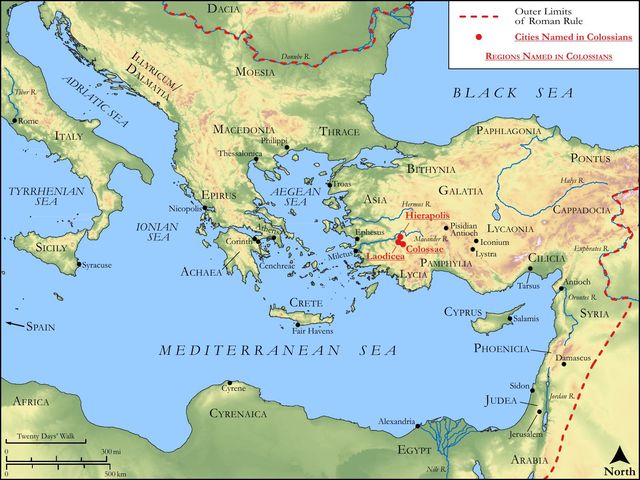

Study this passage
Commentary written on this passage, not on a single verse.
Public-domain commentary
Matthew Henry
From his Commentary on the Whole Bible. Henry comments on passages, not single verses — this entry covers Colossians 1:3–8. His three-level outline is real structure in the source text, so it is rendered as structure.
Here he proceeds to the body of the epistle, and begins with thanksgiving to God for what he had heard concerning them, though he had no personal acquaintance with them, and knew their state and character only by the reports of others.
I.He gave thanks to God for them, that they had embraced the gospel of Christ, and given proofs of their fidelity to him.
Observe, In his prayers for them he gave thanks for them. Thanksgiving ought to be a part of every prayer; and whatever is the matter of our rejoicing ought to be the matter of our thanksgiving. Observe,
1.Whom he gives thanks to: To God, even the Father of our Lord Jesus Christ. In our thanksgiving we must have an eye to God as God (he is the object of thanksgiving as well as prayer), and is the Father of our Lord Jesus Christ, in and through whom all good comes to us. He is the Father of our Lord Jesus Christ as well as our Father; and it is a matter of encouragement, in all our addresses to God, that we can look to him as Christ's Father and our Father, as his God and our God, Joh 20:17. Observe,
2.What he gives thanks to God for - for the graces of God in them, which were evidences of the grace of God towards them: Since we heard of your faith in Christ Jesus, and of the love you have to all the saints; for the hope which is laid up for you in heaven, Col 1:4, Col 1:5. Faith, hope, and love, are the three principal graces in the Christian life, and proper matter of our prayer and thanksgiving.
(1.)He gives thanks for their faith in Christ Jesus, that they were brought to believe in him, and take upon them the profession of his religion, and venture their souls upon his undertaking.
(2.)For their love. Besides the general love which is due to all men, there is a particular love owing to the saints, or those who are of the Christian brotherhood, Pe1 2:17. We must love all the saints, bear an extensive kindness and good-will to good men, notwithstanding smaller points of difference, and many real weaknesses. Some understand it of their charity to the saints in necessity, which is one branch and evidence of Christian love.
(3.)For their hope: The hope which is laid up for you in heaven, Col 1:5. The happiness of heaven is called their hope, because it is the thing hoped for, looking for the blessed hope, Tit 2:13. What is laid out upon believers in this world is much; but what is laid up for them in heaven is much more. And we have reason to give thanks to God for the hope of heaven which good Christians have, or their well-grounded expectation of the future glory. Their faith in Christ, and love to the saints, had an eye to the hope laid up for them in heaven. The more we fix our hopes on the recompence of reward in the other world, the more free and liberal shall we be of our earthly treasure upon all occasions of doing good.
II.Having blessed God for these graces, he blesses God for the means of grace which they enjoyed:
Wherein you heard before in the word of the truth of the gospel. They had heard in the word of the truth of the gospel concerning this hope laid up for them in heaven. Observe,
1.The gospel is the word of truth, and what we may safely venture our immortal souls upon: it proceeds from the God of truth and the Spirit of truth, and is a faithful saying. He calls it the grace of God in truth, Col 1:6.
2.It is a great mercy to hear this word of truth; for the great thing we learn from it is the happiness of heaven. Eternal life is brought to light by the gospel, Ti2 1:10. They heard of the hope laid up in heaven in the word of the truth of the gospel. "Which has come unto you, as it hath to all the world, and bringeth forth fruit, as it doth also in you, Col 1:6. This gospel is preached and brings forth fruit in other nations; it has come to you, as it hath to all the world, according to the commission, Go preach the gospel in all the nations, and to every creature." Observe,
(1.)All who hear the word of the gospel ought to bring forth the fruit of the gospel, that is, be obedient to it, and have their principles and lives formed according to it. This was the doctrine first preached: Bring forth therefore fruits meet for repentance, Mat 3:8. And our Lord says, If you know these things, happy are you if you do them, Joh 13:17. Observe,
(2.)Wherever the gospel comes, it will bring forth fruit to the honour and glory of God: It bringeth forth fruit, as it doth also in you. We mistake, if we think to monopolize the comforts and benefits of the gospel to ourselves. Does the gospel bring forth fruit in us? So it does in others.
III.He takes this occasion to mention the minister by whom they believed (Col 1:7, Col 1:8):
As you also learned of Epaphras, our dear fellow-servant, who is for you a faithful minister of Christ. He mentions him with great respect, to engage their love to him.
1.He calls him his fellow-servant, to signify not only that they served the same Master, but that they were engaged in the same work. They were fellow-labourers in the work of the Lord, though one was an apostle and the other an ordinary minister.
2.He calls him his dear fellow-servant: all the servants of Christ ought to love one another, and it is an endearing consideration that they are engaged in the same service.
3.He represents him as one who was a faithful minister of Christ to them, who discharged his trust and fulfilled his ministry among them. Observe, Christ is our proper Master, and we are his ministers. He does not say who is your minister; but who is the minister of Christ for you. It is by his authority and appointment, though for the people's service.
4.He represents him as one who gave them a good word: Who also declared unto us your love in the Spirit, Col 1:8. He recommends him to their affection, from the good report he made of their sincere love to Christ and all his members, which was wrought in them by the Spirit, and is agreeable to the spirit of the gospel. Faithful ministers are glad to be able to speak well of their people.
Historical interpretation
Five Centuries of Reception
15 surviving comments on this passage. Each one is dated, so this reads as a timeline rather than a list.
Select a marker to jump to its quote. Markers stagger vertically where authors wrote within a few decades of each other.
I am accustomed in my prescription against all heresies to fix my concise and comprehensive criterion [of truth] in the testimony of time, claiming priority therein as our rule and alleging lateness to be the characteristic of every heresy. This shall be proved even by the apostle, when he says: “For the hope which is laid up for you in heaven, which you have heard before in the word of the truth of the gospel; which has come to you, as it has to the whole world.” For if, even at that time, the tradition of the gospel had spread everywhere, how much more now! Now, if it is our gospel which has spread everywhere, rather than any heretical gospel, much less Marcion’s, which only dates from the reign of Antoninus, then ours will be the gospel of the apostles.
This shall now be proved even by the apostle, when he says: "For the hope which is laid up for you in heaven, whereof ye heard before in the word of the truth of the gospel; which is come unto you, as it is unto all the world." For if, even at that time, the tradition of the gospel had spread everywhere, how much more now! Now, if it is our gospel which has spread everywhere, rather than any heretical gospel, much less Marcion's, which only dates from the reign of Antoninus, then ours will be the gospel of the apostles.
For he who covets for himself these things so great and excellent, withdraws and severs himself on this account from all the world, that he may go and live a life divine and heavenly, like the holy angels, in work pure and holy, and "in the holiness of the Spirit of God," [2 Thessalonians 2:13] and that he may serve God Almighty through Jesus Christ for the sake of the kingdom of heaven. On this account he severs himself from all the appetites of the body. And not only does he excuse himself from this command, "Be fruitful, and multiply," but he longs for the "hope promised" and prepared "and laid up in heaven" [Colossians 1:5] by God, who has declared with His mouth, and He does not lie, that it is "better than sons and daughters," [Isaiah 56:4-5] and that He will give to virgins a notable place in the house of God, which is something "better than sons and daughters," and better than the place of those who have passed a wedded life in sanctity, and whose "bed has not been defiled." [Hebrews 13:4] For God will give to virgins the kingdom of heaven, as to the holy angels, by reason of this great and noble profession.
Ver. 7. "Even as ye learned of Epaphras our beloved fellow-servant."
He, it is probable, had preached there. "Ye learned" the Gospel. Then to show the trust-worthiness of the man, he says, "our fellow servant."
"Who is a faithful minister of Christ on your behalf; who also declared unto us your love in the Spirit."
Doubt not, he saith, of the hope which is to come: ye see that the world is being converted. And what need to allege the cases of others? what happened in your own is even independently a sufficient ground for belief, for, "ye knew the grace of God in truth:" that is, in works. So that these two things, viz. the belief of all, and your own too, confirm the things that are to come. Nor was the fact one thing, and what Epaphras said, another. "Who is," saith he, "faithful," that is, true. How, "a minister on your behalf"? In that he had gone to him. "Who also declared to us," saith he, "your love in the Spirit," that is, the spiritual love ye bear us. If this man be the minister of Christ; how say ye, that you approach God by angels? "Who also declared unto us," saith he, "your love in the Spirit." For this love is wonderful and steadfast; all other has but the name. And there are some persons who are not of this kind, but such is not friendship, wherefore also it is easily dissolved.
Ver. 4. "Having heard of your faith in Christ Jesus."
A little above he said, "our Lord." "He," saith he, "is Lord, not the servants." "Of Jesus Christ." These names also are symbols of His benefit to us, for "He," it means, "shall save His people from their sins." (Matt. i. 21.)
Ver. 4. "Having heard of your faith in Christ Jesus, and of the love which ye have toward all the saints."
Already he conciliates them. It was Epaphroditus who brought him this account. But he sends the Epistle by Tychicus, retaining Epaphroditus with himself. "And of the love," he saith, "which ye have toward all the saints," not toward this one and that: of course then toward us also.
Ver. 5. "Because of the hope which is laid up for you in the heavens."
He speaks of the good things to come. This is with a view to their temptations, that they should not seek their rest here. For lest any should say, "And where is the good of their love toward the saints, if they themselves are in affliction?" he says, "We rejoice that ye are securing for yourselves a noble reception in heaven." "Because of the hope," he saith, "which is laid up." He shows its secureness. "Whereof ye heard before in the word of the truth." Here the expression is as if he would chide them, as having changed from it when they had long held it.
"Whereof," saith he, "ye heard before in the word of the truth of the Gospel." And he bears witness to its truth. With good reason, for in it there is nothing false.
"Of the Gospel." He doth not say, "of the preaching," but he calleth it the "Gospel," continually reminding them of God's benefits. And having first praised them, he next reminds them of these.