


Numbers 34:25
Bible text: King James Version (1769 Blayney text) · Public domain
Bible text: Berean Standard Bible · Public domain
Bible text: American Standard Version (1901) · Public domain
Bible text: World English Bible, Messianic edition · Public domain
Bible text: Geneva Bible (1599) · Public domain
Bible text: Young's Literal Translation · Public domain
- וּלְמַטֵּהu·le·ma·Tehand of [the] tribe ofH4294Conj-w ¦ Prep-l ¦ N-mscNoun Singular Masculine Constructוּandלְofמַטֵּה[the] tribe of
- בְנֵיve·nei[the] descendants ofH1121N-mpcNoun Plural Masculine Construct
- זְבוּלֻןze·vu·LunZebulunH2074N-proper-mNoun Proper Masculine
- נָשִׂיאna·Si'a leaderH5387N-msNoun Singular Masculine Absolute
- אֱלִיצָפָן'e·li·tza·FanElizaphanH469N-proper-mNoun Proper Masculine
- בֶּןben[the] son ofH1121N-mscNoun Singular Masculine Construct
- פַּרְנָךְpar·NakhParnachH6535N-proper-mNoun Proper Masculine
English is a literal word-by-word gloss of the Hebrew, not the KJV's wording. Why?
This is the original text the KJV's translators worked from — each Hebrew word with its own literal English meaning in this verse, prepared by scholars at Tyndale House, Cambridge. The KJV translates whole sentences, not word by word, so its wording differs: one Hebrew word can become several English words, and the KJV may choose “the LORD” where the gloss reads “Yahweh”. Both are faithful — they answer different questions. For the KJV's own rendering, switch to the KJV text.
Details
See on the biblical-era map
Study this verse
Historical interpretation
Historical reception
1 surviving comment on this verse from the historical church.
Until the death: This mystically signified that our deliverance was to be effected by the death of Christ, the high priest and the anointed of God.
Continue studying Numbers 34:25 across the web’s major study libraries — every link below opens this exact verse, chapter, or book on the destination site.
Read & Compare
 BibleGatewayThis verse in more than 200 translations and 70 languages.
 Bible.comThe YouVersion reader — hundreds of translations, reading plans, and highlights.
 ESV.orgCrossway's official English Standard Version reader.
 NET BibleThe NET translation with 60,000+ translators' notes on every rendering decision.
 STEP BibleTyndale House's free study tool — original text, vocabulary, and scholarly resources.
 BibliaLogos Bible Software's free web reader.
 USCCBThe New American Bible (Revised Edition) with the U.S. bishops' study notes.
Commentaries
 BibleHub CommentariesDozens of classic commentaries on this verse, gathered on one page.
 StudyLightMore than 100 commentary sets — the largest collection on the web.
 BibleRefPlain-English commentary on what this verse means, verse by verse.
 Enduring WordDavid Guzik's free commentary on this chapter, widely used by Bible teachers.
 Bible Study ToolsVerse commentary alongside Greek and Hebrew study aids.
Original Language & Research
- BibleHub InterlinearThe verse word by word — original language, transliteration, and English.
- BibleHub LexiconEvery word's original-language definition and Strong's entry.
 Blue Letter BibleDeep-study tools — Strong's numbers, concordance, and word studies.
 SefariaThe Hebrew text with Rashi and centuries of Jewish commentary.
Sermons, Hymns & Audio


TrulyRandomVerse is not affiliated with these sites and doesn’t control their content. They’re linked because they’re genuinely useful.
Summary
Numbers 34:25 precisely identifies Elizaphan, son of Parnach, as the divinely appointed prince of the tribe of Zebulun. This seemingly simple entry is part of a meticulous divine record of the ten tribal leaders chosen by God to assist Eleazar the priest and Joshua in the critical and foundational task of dividing the promised land of Canaan among the tribes of Israel. It profoundly underscores God's unwavering commitment to order, His meticulous attention to the details of His covenant promises, and the essential role of faithful, delegated leadership in establishing His people as a nation.
Context
ShowHideLiterary Context
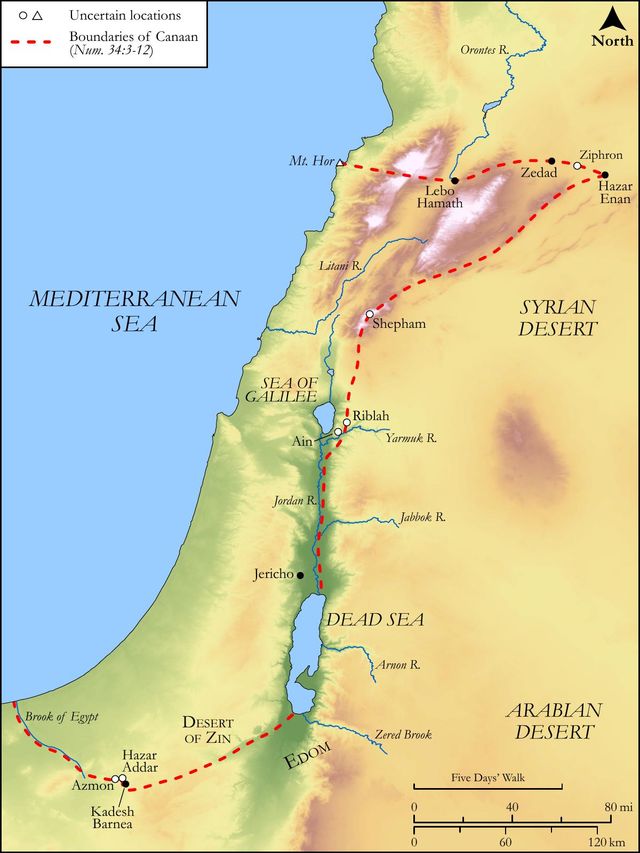
Numbers 34:25 is situated within a highly prescriptive and administrative section of the book of Numbers, specifically Numbers 34. This chapter details God's precise instructions for the division of the land of Canaan, the long-promised inheritance for Israel. Following the detailed description of the land's boundaries in Numbers 34:1-15, the text transitions to naming the specific individuals chosen by God for this monumental task. Numbers 34:16-29 lists Eleazar the priest, Joshua, and one prince from each of the ten tribes (excluding Reuben, Gad, and the half-tribe of Manasseh who had already received their inheritance east of the Jordan, as detailed in Numbers 32). Elizaphan's inclusion here is part of this divinely ordained commission, ensuring a fair and ordered distribution of the land, a critical step before the actual conquest and settlement.
Historical & Cultural Context
The setting for this command is the plains of Moab, on the cusp of Israel's entry into the promised land, after forty years of wilderness wandering. The generation that rebelled at Kadesh-Barnea had largely passed away, and a new generation stood ready to inherit God's promises. The division of land was not merely a logistical exercise but a foundational act establishing Israel as a settled nation, fulfilling the Abrahamic covenant (e.g., God's promise of land to Abram). In Israel, land ownership was central to identity, security, and economic well-being, often tied to tribal and family lineage. The tribal structure was the bedrock of Israelite society, and each tribe maintained a distinct identity and inheritance. The appointment of "princes" (nasi') from each tribe reflected this societal structure, ensuring that the division process was conducted with tribal representation and authority, thereby legitimizing the process and preventing future disputes over land claims.
Key Themes
ShowHideThis verse, within its broader context, contributes to several significant themes. Firstly, it highlights Divine Order and Meticulous Planning. God is not haphazard; His plan for Israel's inheritance is detailed and precise, down to the selection of individual leaders. This divine precision is evident throughout the Mosaic Law, from the construction of the tabernacle to the organization of the camp. Secondly, it emphasizes Covenant Fulfillment. The naming of these leaders is a practical, tangible step towards the realization of God's ancient promise to Abraham regarding the land of Canaan, demonstrating God's faithfulness to His word (e.g., the covenant with Abram regarding the land). Thirdly, it underscores the importance of Delegated Leadership and Responsibility. God chooses specific individuals to execute His will, entrusting them with significant authority and accountability. These leaders, like Elizaphan, were not self-appointed but divinely designated, reflecting the principle that all legitimate authority ultimately derives from God (e.g., submission to governing authorities). Finally, it speaks to Communal Inheritance and Tribal Identity, affirming that each tribe, as part of the larger Israelite community, had a distinct and divinely allocated portion in the land, ensuring their heritage and future.
Exposition and Analysis
ShowHideKey Word Analysis
ShowHideThis term denotes "an exalted one," typically a king, chief, or ruler. In the context of the Israelite tribal system, a nâsîyʼ was a recognized leader or head of a tribe, possessing significant authority and responsibility. Their role was crucial in administrative, judicial, and military matters, representing their tribe in national affairs. Elizaphan's designation as nâsîyʼ signifies his prominent standing and the trust placed in him to represent Zebulun in the vital task of land distribution.
Meaning "habitation," Zebulun was one of the twelve tribes of Israel, descended from Jacob's tenth son. Its territory was located in the northern part of Canaan. The name itself, derived from the root "to dwell" or "to inhabit," is fitting for a tribe that was about to receive its permanent dwelling place in the land. Elizaphan's role as prince of Zebulun meant he was responsible for ensuring his tribe's rightful and equitable share of the inheritance.
This is a theophoric name, meaning "God of treasure." Theophoric names, which incorporate a divine element ("Eli" for God), were common in ancient Israel and often reflected a parent's faith or a significant event. The name suggests a divine blessing or provision associated with Elizaphan, perhaps indicating a sense of divine favor or a parental hope for God's blessings upon their son, fitting for one chosen to oversee the distribution of a divinely promised "treasure" – the land.
Verse Breakdown
ShowHide"And the prince of the tribe of the children of Zebulun,"
This clause precisely identifies the specific role and tribal affiliation of the individual being named. It emphasizes that the selection is not arbitrary but tied to the established tribal structure of Israel, ensuring representation and legitimacy in the land division process. The "prince" (nasi') holds a position of significant authority and trust within his particular tribal lineage, acting as a representative and steward for his people.
"Elizaphan the son of Parnach."
This clause provides the full identification of the individual, Elizaphan, by also naming his father, Parnach. This genealogical detail is typical of biblical records, establishing lineage, confirming identity, and often indicating a person's standing within their family and clan. It grounds Elizaphan's appointment in the specific familial and tribal structures of Israel, underscoring the importance of family identity within the broader national context.
Literary Devices
ShowHideNumbers 34:25, as part of a larger list of appointed leaders, primarily employs Enumeration and Repetition. The systematic listing of each tribal prince (and their father) creates a sense of divine order and thoroughness, emphasizing that no tribe or leader was overlooked in God's meticulous plan for the land's distribution. This Repetition of the "prince of the tribe of X, Y the son of Z" format reinforces the uniformity and divine authority behind each appointment, highlighting the consistent application of God's command across all participating tribes. While seemingly dry, this detailed Genealogy and listing of names serves a crucial narrative purpose: it concretely demonstrates the fulfillment of God's promises through specific, identifiable individuals and families, making the abstract promise tangible. The very act of naming each leader underscores the Symbolism of God's direct involvement in the practical details of His people's lives and the establishment of their promised inheritance, affirming His faithfulness even in the administrative minutiae.
Theological and Thematic Connections
ShowHideNumbers 34:25, though a single line in a list, powerfully illustrates God's sovereign and meticulous governance over His people. It reveals a God who is not only vast in power but also intimately concerned with the practical, administrative details of His covenant promises. The appointment of Elizaphan and the other princes signifies God's commitment to order, justice, and the equitable distribution of the inheritance He had promised for centuries. It underscores the profound principle that God works through human agents, delegating authority and entrusting significant responsibilities to those He chooses and equips. This divine delegation is a testament to God's trust in His servants and His expectation of their faithfulness in stewarding His purposes, demonstrating that even seemingly mundane administrative tasks are vital parts of His grand redemptive plan.
Reflection and Application
ShowHideThe seemingly mundane listing of names in Numbers 34:25 offers profound insights for contemporary believers. It reminds us that God is a God of order, precision, and purpose, even in the details we might overlook or deem insignificant. Just as He meticulously planned the division of the land and appointed specific leaders for each tribe, so too does He orchestrate our lives and call us to specific roles within His kingdom. Every task, no matter how seemingly small or administrative, when done in obedience to God, contributes to His grand design. Elizaphan's appointment was not glamorous, nor did it involve heroic feats, but it was essential for the faithful fulfillment of God's promise to His people. This calls us to faithfulness in our own spheres of influence, recognizing that our individual contributions, however modest, are part of God's larger, unfolding plan for His people and the world. It encourages us to embrace our unique callings with diligence, integrity, and a deep sense of responsibility, trusting that God has prepared good works for us to do, and that He will equip us to accomplish them for His glory.
Questions for Reflection
ShowHideFAQ
ShowHideWhy is a verse like Numbers 34:25, which simply lists a name, included in Scripture?
ShowHideVerses like Numbers 34:25 are included in Scripture not as mere historical records, but as vital components that underscore several profound theological truths. Firstly, they demonstrate God's meticulous attention to detail and His sovereign orchestration of events. The precise naming of individuals for specific tasks highlights that God's plans are not abstract but are carried out through real people in real time, emphasizing His involvement in the practicalities of His covenant. Secondly, these lists affirm the fulfillment of God's covenant promises. The division of the land was a direct fulfillment of the promise made to Abraham in Genesis 12:7 and reaffirmed throughout the Pentateuch. Naming the leaders for this task provides concrete evidence of this fulfillment, demonstrating God's faithfulness to His word. Thirdly, they emphasize the importance of delegated authority and faithful leadership within God's economy. Elizaphan, like the other princes, was a chosen instrument for a divine purpose, illustrating that God works through human agents to accomplish His will, and that He holds them accountable for their stewardship.
Christ-Centered Fulfillment
ShowHideWhile Numbers 34:25 details the appointment of a human prince to oversee the distribution of an earthly inheritance, it subtly points to the ultimate Prince who distributes a far greater, eternal inheritance: Jesus Christ. Just as Elizaphan was divinely appointed to ensure each tribe received its portion of the promised land, Christ, as the Head of the Church and the heir of all things, is the one through whom all spiritual blessings and the ultimate heavenly inheritance are distributed to His people. He is the true and faithful leader, unlike any human prince, who not only delegates tasks to His followers but also empowers them through the gift of the Holy Spirit. The earthly land of Canaan, divided by human hands, was a shadow of the glorious, eternal inheritance that believers receive in Christ—an inheritance that is imperishable, undefiled, and unfading, kept in heaven for you. Christ fulfills the promise of a secure dwelling place, not merely in a physical land, but in His eternal kingdom. He is the ultimate "son of Parnach" (a son of protection), for He is our refuge and strength, the one who truly protects and secures our inheritance for all eternity, ensuring that all who are in Him receive their portion in the New Creation.