


Numbers 18:8
Bible text: King James Version (1769 Blayney text) · Public domain
Bible text: King James Version with Strong's numbers · Public domain
Bible text: Berean Standard Bible · Public domain
Bible text: American Standard Version (1901) · Public domain
Bible text: World English Bible, Messianic edition · Public domain
Bible text: Geneva Bible (1599) · Public domain
Bible text: Young's Literal Translation · Public domain
- וַיְדַבֵּרvay·da·Berand he spokeH1696Conj-w ¦ V-Piel-ConsecImperf-3msVerb Piel Consecutive Imperfect 3rd Singular Masculineוַandיְדַבֵּרhe spoke
- יְהוָהYah·wehYahwehH3068N-properNoun Proper Title
- אֶל'eltoH413PrepPreposition
- אַהֲרֹן'a·ha·RonAaronH175N-proper-mNoun Proper Masculine
- וַאֲנִיva·'a·Niand IH589Conj-w ¦ Pro-1csPronoun Personal 1st Singular common genderוַandאֲנִיI
- הִנֵּהhi·Nehhere!H2009PrtParticle Interjection
- נָתַתִּיna·Ta·tiI giveH5414V-Qal-Perf-1csVerb Qal Perfect 1st Singular common gender
- לְךָle·Khato <the> youPrep-l ¦ 2msSuffix Personal 2nd Singular Masculineלְto <the>ךָyou
- אֶת'et<obj.>H853DirObjMParticle Object Indicator
- מִשְׁמֶרֶתmish·Me·ret[the] charge ofH4931N-fscNoun Singular Feminine Construct
- תְּרוּמֹתָיte·ru·mo·Taimy contributionsH8641N-fpc ¦ 1csNoun Plural Feminine Constructתְּרוּמֹתָcontributionsיmy
- לְכָלle·kholto allH3605Prep-l ¦ N-mscNoun Singular Masculine Constructלְtoכָלall
- קָדְשֵׁיka·de·Shei[the] holy gifts ofH6944N-mpcNoun Plural Masculine Construct
- בְנֵיve·nei[the] people ofH1121N-mpcNoun Plural Masculine Construct
- יִשְׂרָאֵלYis·ra·'elIsraelH3478N-properNoun Proper Location
- לְךָle·Khato <the> youPrep-l ¦ 2msSuffix Personal 2nd Singular Masculineלְto <the>ךָyou
- נְתַתִּיםne·ta·TimI give themH5414V-Qal-Perf-1cs ¦ 3mpVerb Qal Perfect 1st Singular common genderנְתַתִּיI giveםthem
- לְמָשְׁחָהle·ma·she·Chahto a portionH4888Prep-l ¦ N-fsNoun Singular Feminine Absoluteלְtoמָשְׁחָהa portion
- וּלְבָנֶיךָu·le·va·Nei·khaand to your sonsH1121Conj-w ¦ Prep-l ¦ N-mpc ¦ 2msNoun Plural Masculine Constructוּandלְtoבָנֶיsonsךָyour
- לְחָקle·chokto a prescribed portion ofH2706Prep-l ¦ N-mscNoun Singular Masculine Constructלְtoחָקa prescribed portion of
- עוֹלָםo·LamperpetuityH5769N-msNoun Singular Masculine Absolute
English is a literal word-by-word gloss of the Hebrew, not the KJV's wording. Why?
This is the original text the KJV's translators worked from — each Hebrew word with its own literal English meaning in this verse, prepared by scholars at Tyndale House, Cambridge. The KJV translates whole sentences, not word by word, so its wording differs: one Hebrew word can become several English words, and the KJV may choose “the LORD” where the gloss reads “Yahweh”. Both are faithful — they answer different questions. For the KJV's own rendering, switch to the KJV text.
Details
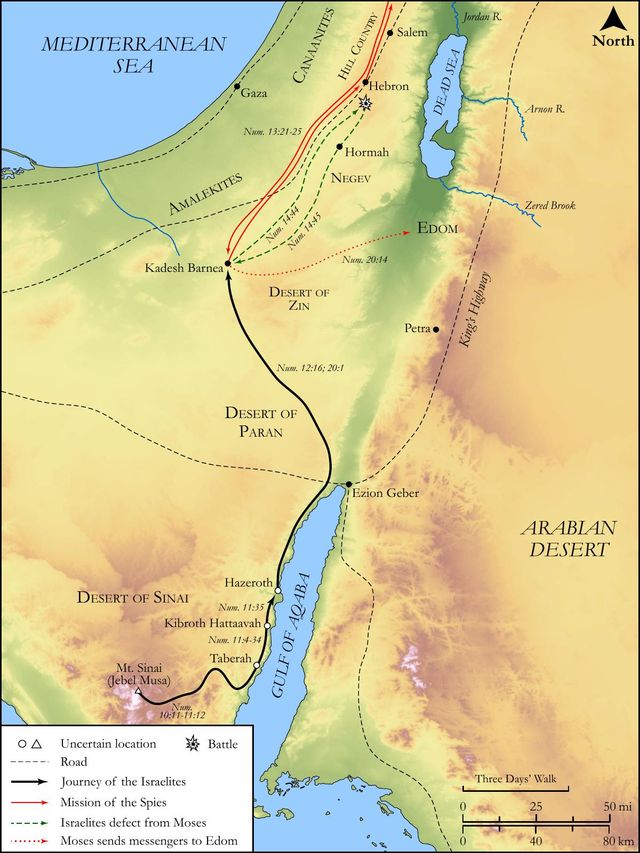
See on the biblical-era map
Study this verse
Public-domain commentary
Matthew Henry
From his Commentary on the Whole Bible. Henry comments on passages, not single verses — this entry covers Numbers 18:8–19.
The priest's service is called a warfare; and who goes a warfare at his own charges? As they were well employed, so they were well provided for, and well paid. None shall serve God for nought. All believers are spiritual priests, and God has promised to take care of them; they shall dwell in the land, and verily they shall be fed, and shall not want any good thing. Godliness has the promise of the life that now is. And from this plentiful provision here made for the priests the apostle infers that it is the duty of Christian churches to maintain their ministers; those that served at the altar lived upon the altar. So those that preach the gospel should live upon the gospel, and live comfortably, Co1 9:13, Co1 9:14. Scandalous maintenance makes scandalous ministers. Now observe, 1. That much of the provision that was made for them arose out of the sacrifices which they themselves were employed to offer. They had the skins of almost all the sacrifices, which they might sell, and they had a considerable share out of the meat-offerings, sin-offerings, etc. Those that had the charge of the offerings had the benefit, Num 18:8. Note, God's work is its own wages, and his service carries its recompence along with it. Even in keeping God's commandments there is great reward. The present pleasures of religion are part of its pay. 2. That they had not only a good table kept for them, but money likewise in their pockets for the redemption of the first-born, and those firstlings of cattle which might not be offered in sacrifice. Thus their maintenance was such as left them altogether disentangled from the affairs of this life; they had no grounds to occupy, no land to till, no vineyards to dress, no cattle to tend, no visible estate to take care of, and yet had a more plentiful income than any other families whatsoever. Thus God ordered it that they might be the more entirely addicted to their ministry, and not diverted from it, nor disturbed in it, by any worldly care or business (the ministry requires a whole man); and that they might be examples of living by faith, not only in God's providence, but in his ordinance. They lived from hand to mouth, that they might learn to take no thought for the morrow; sufficient for the day would be the provision thereof: and they had no estates to leave their children, that they might by faith leave their children, that they might by faith leave them to the care of that God who had fed them all their lives long. 3. Of the provision that was made for their tables some is said to be most holy (Num 18:9, Num 18:10), which was to be eaten by the priests themselves, and in the court of the tabernacle only; but other perquisites were less holy, of which their families might eat, at their own houses, provided they were clean, Num 18:11-13. See Lev 21:10, etc. 4. It is commanded that the best of the oil, and the best of the wine and wheat, should be offered for the first-fruits unto the Lord, which the priest were to have, Num 18:12. Note, We must always serve and honour God with the best we have, for he is the best, and best deserves it; he is the first, and therefore must have the first ripe. Those that think to save charges by putting God off with the refuse do but deceive themselves, for God is not mocked. 5. All this is given to the priests by reason of the anointing, Num 18:8. It was not for the sake of their personal merits above other Israelites that they had these tributes paid to them, be it known unto them; but purely for the sake of the office to which they were anointed. Thus all the comforts that are given to the Lord's people are given them by reason of the anointing which they have received. It is said to be given them by an ordinance for ever (Num 18:8), and it is a covenant of salt for ever, Num 18:19. As long as the priesthood should continue this should continue to be the maintenance of it, that this lamp might not go out for want of oil to keep it burning. Thus provision is made that a gospel ministry should continue till Christ comes, by an ordinance for ever. Lo, I am with you (that is their maintenance and support) always, even to the end of the world. Thanks be to the Redeemer, it is the word which he has commanded to a thousand generations.
Continue studying Numbers 18:8 across the web’s major study libraries — every link below opens this exact verse, chapter, or book on the destination site.
Read & Compare
 BibleGatewayThis verse in more than 200 translations and 70 languages.
 Bible.comThe YouVersion reader — hundreds of translations, reading plans, and highlights.
 ESV.orgCrossway's official English Standard Version reader.
 NET BibleThe NET translation with 60,000+ translators' notes on every rendering decision.
 STEP BibleTyndale House's free study tool — original text, vocabulary, and scholarly resources.
 BibliaLogos Bible Software's free web reader.
 USCCBThe New American Bible (Revised Edition) with the U.S. bishops' study notes.
Commentaries
 BibleHub CommentariesDozens of classic commentaries on this verse, gathered on one page.
 StudyLightMore than 100 commentary sets — the largest collection on the web.
 BibleRefPlain-English commentary on what this verse means, verse by verse.
 Enduring WordDavid Guzik's free commentary on this chapter, widely used by Bible teachers.
 Bible Study ToolsVerse commentary alongside Greek and Hebrew study aids.
Original Language & Research
- BibleHub InterlinearThe verse word by word — original language, transliteration, and English.
- BibleHub LexiconEvery word's original-language definition and Strong's entry.
 Blue Letter BibleDeep-study tools — Strong's numbers, concordance, and word studies.
 SefariaThe Hebrew text with Rashi and centuries of Jewish commentary.
Sermons, Hymns & Audio


TrulyRandomVerse is not affiliated with these sites and doesn’t control their content. They’re linked because they’re genuinely useful.
Summary
Numbers 18:8 details the Lord's direct and perpetual provision for Aaron and his priestly descendants, ensuring their sustenance through the "heave offerings" and "hallowed things" presented by the Israelites. This divine mandate underscores the sacred nature of their anointed office, affirming their unique role in mediating between God and His people, and guaranteeing their livelihood as a permanent ordinance, distinct from the land inheritance of other tribes, thereby enabling their full devotion to sacred service.
Context
ShowHideLiterary Context
Numbers 18:8 is strategically placed within a pivotal section of Numbers (chapters 16-18) that unequivocally establishes and reinforces the exclusive authority and responsibilities of the Levitical priesthood. This divine declaration of priestly provision immediately follows the severe judgment against Korah's rebellion, detailed in Numbers 16, which represented a direct challenge to Aaron's divinely appointed leadership. The Lord's miraculous confirmation of Aaron's priesthood, demonstrated through the budding of his staff in Numbers 17, sets the theological and narrative foundation for the comprehensive delineation of priestly and Levitical duties and their corresponding support system found in Numbers 18. Therefore, this verse serves as a crucial divine reaffirmation of Aaron's unique status and the enduring nature of the priestly office, ensuring its practical and sustained viability for generations.
Historical & Cultural Context
At the time of this pronouncement, the Israelites were journeying through the wilderness, with the Tabernacle serving as the central hub of their spiritual, social, and national life. Unlike the other tribes of Israel, the Levites and specifically the Aaronic priests were not to receive a tribal land inheritance when the nation eventually settled in Canaan, as explicitly stated in Numbers 3:12. Instead, the Lord Himself declared that He would be their "inheritance," as confirmed later in Numbers 18:20. This verse, Numbers 18:8, specifies the practical outworking of that profound promise: their sustenance would come directly from the various offerings brought by the people to the Tabernacle. This unique system ensured that those entirely dedicated to sacred service could focus solely on their priestly duties without the need to engage in agriculture, trade, or other secular pursuits for survival. This model of support for religious functionaries was not unknown among the nations, as in Egypt, where the priests ate the portion Pharaoh gave them and kept their lands, rather than living by direct offerings from the populace, highlighting the distinctiveness of Israel's covenant relationship with Yahweh.
Key Themes
ShowHideNumbers 18:8 powerfully articulates several foundational theological and narrative themes crucial to understanding Israel's covenant relationship with God. Foremost is the theme of Divine Provision for Ministry, unequivocally demonstrating God's direct and active role in sustaining those He calls into His service. It profoundly highlights the Sacredness and Exclusivity of the Priestly Office, emphasizing that the priests' right to these provisions was not a human entitlement or a negotiated salary, but a divine decree, directly linked to their sacred consecration through "the anointing." This anointing, meticulously detailed in Leviticus 8, set them apart as uniquely holy and distinct. The concept of Priestly Due is central, as the "heave offerings" and "hallowed things" represented specific, consecrated portions of the people's produce, sacrifices, and other dedicated items, ensuring the priests' livelihood. Finally, the concluding phrase "by an ordinance for ever" underscores the Perpetual Nature of God's Covenantal Commitments, signifying that this system of support was not a temporary measure for the wilderness or the initial settlement, but an enduring, unalterable statute reflecting God's unchanging faithfulness to His chosen servants and the intricate worship system He meticulously established.
Exposition and Analysis
ShowHideKey Word Analysis
ShowHideA primitive root meaning "to arrange," but primarily used figuratively "to speak." It encompasses expressing thoughts, commanding, declaring, or teaching. In this context, it signifies a direct, authoritative, and intentional communication from the Lord, emphasizing that the ensuing declaration is a divine decree, not a human suggestion or agreement.
Referring to "unction (the act)" or, by implication, "a consecratory gift." This term denotes the ritual application of sacred oil, which formally consecrated Aaron and his sons for their priestly office (Exodus 29:7). This act was not merely symbolic; it was understood to impart holiness and divine authority, setting them apart as uniquely chosen and empowered for their sacred duties. The right to receive these provisions was directly tied to this divine consecration, underscoring that their entitlement stemmed from God's appointment.
This phrase combines H2706 (chôq), meaning "an enactment," "appointment," "decree," or "statute," with H5769 (ʻôwlâm), which signifies "time out of mind (past or future)," "eternity," or "perpetuity." Together, they denote a permanent, unchanging, and binding legal or religious regulation. In this context, it emphasizes the enduring nature of God's provision for the priesthood, signifying that this system of support was not temporary but a perpetual and unalterable divine establishment, reflecting God's unwavering commitment.
Verse Breakdown
ShowHide"And the LORD spake unto Aaron,"
This opening clause immediately establishes the divine origin and supreme authority of the ensuing declaration. It underscores that the provisions and responsibilities outlined are not human inventions, tribal agreements, or a result of negotiation, but direct commands from Yahweh, the self-existent God, to His chosen high priest, Aaron. This lends immense weight, solemnity, and irrevocability to the pronouncement, setting it apart as a foundational divine statute.
"Behold, I also have given thee the charge of mine heave offerings of all the hallowed things of the children of Israel;"
This is the core declaration of divine provision and responsibility. God explicitly states, "I also have given thee," using a strong verb (H5414, nâthan) indicating a definitive, irrevocable act of bestowal. Aaron is given "the charge" (H4931, mishmereth), implying both guardianship and entitlement concerning the "heave offerings" (H8641, terûwmâh) and "hallowed things" (H6944, qôdesh). These terms refer to the consecrated portions of the people's offerings, sacrifices, firstfruits, and other items set apart for God, which are now designated for the priests' sustenance. This clause highlights God's ownership of these offerings and His sovereign right to designate their recipients.
"unto thee have I given them by reason of the anointing, and to thy sons,"
This clause reiterates the divine gift and, crucially, clarifies the precise basis for this entitlement. The provision is given "by reason of the anointing" (literally, "because of the anointing oil," H4888, mishchâh), signifying that the priests' right to these provisions is directly linked to their sacred consecration and setting apart for holy service. It is a privilege tied to their divinely appointed and consecrated office, extended not just to Aaron but also to his legitimate priestly descendants (H1121, bên), ensuring the continuity of the priestly line and its support.
"by an ordinance for ever."
This concluding phrase emphatically underscores the perpetual and unchanging nature of this divine decree. The term "ordinance" (H2706, chôq) denotes a fixed, binding statute, and "for ever" (H5769, ʻôwlâm) signifies its enduring, unending quality. It communicates that the system of priestly support through offerings is not a temporary measure for the wilderness period or a provisional arrangement, but a permanent, unalterable statute, reflecting God's unwavering commitment to uphold His chosen ministers and the sacrificial system He established for His people.
Literary Devices
ShowHideThe passage employs several significant literary devices to convey its profound message and reinforce its divine authority. Direct Address is prominently featured, as the LORD speaks directly and personally to Aaron, lending immediate authority, solemnity, and personal weight to the divine pronouncement. The pervasive use of Legal/Covenantal Language is evident in terms such as "charge," "given," and "ordinance for ever," framing this provision not merely as a suggestion but as a binding divine statute within the enduring covenant relationship between God and Israel. The powerful Repetition of the verb "given" ("I also have given thee... unto thee have I given them") serves to emphasize the divine origin and irrevocable nature of this provision, reinforcing that it is a direct, unmerited gift from God. Finally, Symbolism plays a crucial role, particularly with "the anointing," which symbolizes divine consecration, empowerment, and the unique holiness required for the priestly office, making the provision not a mere salary but a sacred entitlement intrinsically tied to a sacred, divinely sanctioned calling.
Theological and Thematic Connections
ShowHideNumbers 18:8 profoundly illustrates God's meticulous care and unwavering commitment to those dedicated to His service, establishing a principle of divine provision that transcends the Old Covenant and finds echoes in the New. It underscores that ministry is a sacred calling, not a secular profession, and that those who faithfully steward God's work are entitled to be sustained by the community they serve. This divine arrangement ensured the priests could devote themselves fully and without distraction to their spiritual duties, thereby maintaining the integrity, purity, and singular focus of their sacred office. The verse also powerfully highlights God's faithfulness to His covenant promises, as this "ordinance for ever" demonstrates His unwavering commitment to the system of worship and the ministers He ordained, ensuring the continuity of His redemptive plan through the ages.
Reflection and Application
ShowHideNumbers 18:8 offers enduring principles that resonate deeply with the church today, reminding us that God is the ultimate provider for His people and His work. It teaches that those called to full-time ministry are not merely employed individuals, but divinely appointed and consecrated servants, and their sustenance is a sacred responsibility for the community of faith. This verse challenges believers to consider their active role in supporting those who minister the Word, preach the Gospel, and shepherd the flock, recognizing that such support enables ministers to devote themselves wholeheartedly to their spiritual duties without being unduly burdened by material concerns. It fosters a reciprocal relationship within the body of Christ: ministers pour out spiritual blessings, and the congregation, in turn, provides material support, reflecting God's divine design for mutual edification, flourishing, and the unhindered advance of His kingdom. Our willingness to provide for those in ministry demonstrates our understanding of the sacredness of their calling and our participation in the work of God.
Questions for Reflection
ShowHideFAQ
ShowHideWhy did the priests and Levites not receive a tribal land inheritance like the other tribes?
ShowHideThe priests and Levites did not receive a tribal land inheritance because the LORD Himself declared that He would be their "inheritance" (Numbers 18:20). This unique arrangement meant their sustenance came directly from the offerings, tithes, and consecrated portions of the other tribes, which were given to God and then designated for the support of those dedicated to Tabernacle and later Temple service. This system ensured their full devotion to their sacred duties without the distraction of agricultural or land management responsibilities, symbolizing their complete reliance on God's provision mediated through the people's worship.
Does the concept of "anointing" in this verse apply to believers today?
ShowHideWhile the specific ritual anointing with oil for the Aaronic priesthood was unique to the Old Covenant, the underlying concept of being "anointed" by God for service certainly applies to believers today. In the New Testament, all believers are described as a "royal priesthood" (1 Peter 2:9) and are indwelt and empowered by the Holy Spirit. This indwelling of the Spirit is often referred to as an "anointing" (e.g., 1 John 2:20 and 1 John 2:27). Therefore, while not a literal oil ritual for all, the spiritual reality of being set apart, consecrated, and empowered by God's Spirit for service in His kingdom is a profound truth for every Christian, enabling them to fulfill their priestly calling in Christ.
How does Numbers 18:8, with its "ordinance for ever," relate to the support of ministers in the New Testament church?
ShowHideAlthough the specific system of heave offerings for the Aaronic priesthood has been fulfilled in Christ, the underlying principle of supporting those who minister God's Word remains an "ordinance" in spirit and practice. The New Testament affirms this principle, stating that "the Lord ordained that they which preach the gospel should live of the gospel" (1 Corinthians 9:14). Passages like Luke 10:7 ("the laborer is worthy of his hire") and Galatians 6:6 ("Let him that is taught in the word communicate unto him that teacheth in all good things") reinforce the idea that those who receive spiritual instruction should provide material support. Thus, the "ordinance for ever" points to God's enduring design for His ministers to be sustained by the community they serve, enabling them to devote themselves fully to the sacred work of the Gospel without material hindrance.
Christ-Centered Fulfillment
ShowHideNumbers 18:8, with its declaration of perpetual provision for the Aaronic priesthood, finds its ultimate and glorious fulfillment in Jesus Christ, our great High Priest. The "ordinance for ever" of the Old Covenant priesthood, sustained by the offerings of the people, foreshadows Christ's eternal priesthood, which requires no earthly sustenance or succession because "he holds his priesthood permanently, because he continues forever" (Hebrews 7:24). The "heave offerings" and "hallowed things" that provided for the Levitical priests pointed to the perfect, once-for-all sacrifice of Jesus, the true Lamb of God, who takes away the sin of the world, whose blood consecrated us (Hebrews 10:10) and secured an eternal redemption (Hebrews 9:12). Through His perfect anointing by the Holy Spirit, Christ established a new covenant where all believers become a "holy priesthood" (1 Peter 2:5) and a "royal priesthood" (1 Peter 2:9), sustained not by temporal offerings but by the inexhaustible grace and eternal provision of God Himself, mediated through our High Priest who ever lives to intercede for us (Hebrews 7:25).