


Matthew 26:27
Bible text: King James Version (1769 Blayney text) · Public domain
Bible text: Berean Standard Bible · Public domain
Bible text: American Standard Version (1901) · Public domain
Bible text: World English Bible, Messianic edition · Public domain
Bible text: Geneva Bible (1599) · Public domain
Bible text: Young's Literal Translation · Public domain
- καὶkaiAndG2532CONJConjunction
- λαβὼνlabōnhaving takenG2983V-2AAP-NSMVerb 2nd Aorist Active Participle Nominative Singular Masculine
- τὸto<the>G3588T-ASNDefinite article Accusative Singular Neuter
- ποτήριονpotēriona cupG4221N-ASNNoun Accusative Singular Neuter
- καὶkaiandG2532CONJConjunction
- εὐχαριστήσαςeucharistēsashaving given thanksG2168V-AAP-NSMVerb Aorist Active Participle Nominative Singular Masculine
- ἔδωκενedōkenHe gave [it]G1325V-AAI-3SVerb Aorist Active Indicative 3rd Singular
- αὐτοῖςautoisto themG846P-DPMPersonal pronoun Dative Plural Masculine
- λέγων·legōnsayingG3004V-PAP-NSMVerb Present Active Participle Nominative Singular Masculine
- πίετεpietedo drinkG4095V-2AAM-2PVerb 2nd Aorist Active Imperative 2nd Plural
- ἐξexofG1537PREPPreposition
- αὐτοῦautouitG846P-GSNPersonal pronoun Genitive Singular Neuter
- πάντες·pantesall of youG3956A-NPMAdjective Nominative Plural Masculine
English is a literal word-by-word gloss of the Greek, not the KJV's wording. Why?
This is the original text the KJV's translators worked from — each Greek word with its own literal English meaning in this verse, prepared by scholars at Tyndale House, Cambridge. The KJV translates whole sentences, not word by word, so its wording differs: one Greek word can become several English words, and the KJV may choose “charity” where the gloss reads “love”. Both are faithful — they answer different questions. For the KJV's own rendering, switch to the KJV text.
Details
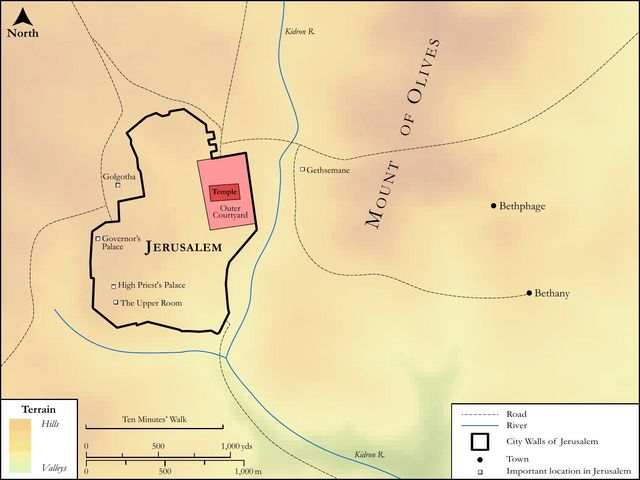
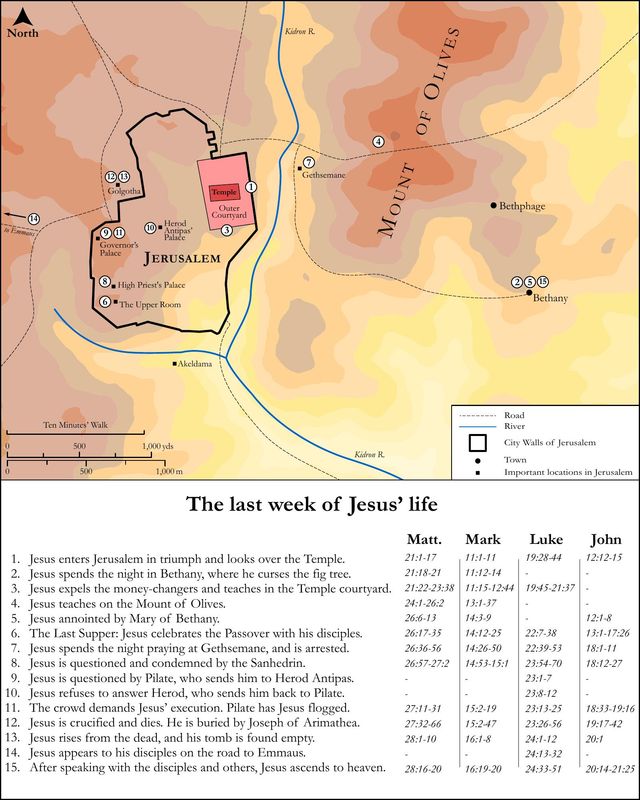
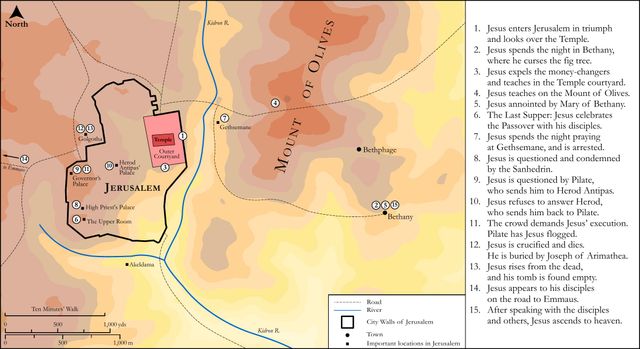
See on the biblical-era maps
Study this verse
Historical interpretation
Twelve Centuries of Reception
18 surviving comments on this verse. Each one is dated, so this reads as a timeline rather than a list.
Select a marker to jump to its quote. Markers stagger vertically where authors wrote within a few decades of each other.
Now concerning the Thanksgiving (Eucharist), thus give thanks. First, concerning the cup: We thank thee, our Father, for the holy vine of David Thy servant, which Thou madest known to us through Jesus Thy Servant; to Thee be the glory for ever. And concerning the broken bread: We thank Thee, our Father, for the life and knowledge which Thou modest known to us through Jesus Thy Servant; to Thee be the glory for ever. Even as this broken bread was scattered over the hills, and was gathered together and became one, so let Thy Church be gathered together from the ends of the earth into Thy kingdom; for Thine is the glory and the power through Jesus Christ for ever. But let no one eat or drink of your Thanksgiving (Eucharist), but they who have been baptized into the name of the Lord; for concerning this also the Lord hath said, Give not that which is holy to the dogs.
But after ye are filled, thus give thanks: We thank Thee, holy Father, for Thy holy name which Thou didst cause to tabernacle in our hearts, and for the knowledge and faith and immortality, which Thou modest known to us through Jesus Thy Servant; to Thee be the glory for ever. Thou, Master almighty, didst create all things for Thy name's sake; Thou gavest food and drink to men for enjoyment, that they might give thanks to Thee; but to us Thou didst freely give spiritual food and drink and life eternal through Thy Servant. Before all things we thank Thee that Thou art mighty; to Thee be the glory for ever. Remember, Lord, Thy Church, to deliver it from all evil and to make it perfect in Thy love, and gather it from the four winds, sanctified for Thy kingdom which Thou hast prepared for it; for Thine is the power and the glory for ever. Let grace come, and let this world pass away. Hosanna to the God (Son) of David! If any one is holy, let him come; if any one is not so, let him repent. Maran atha. Amen. But permit the prophets to make Thanksgiving as much as they desire.
We may not, I say, we may not call into question the truth of the (poor vilified) senses, lest we should even in Christ Himself, bring doubt upon the truth of their sensation; lest perchance it should be said that He did not really "behold Satan as lightning fall from heaven; " that He did not really hear the Father's voice testifying of Himself; or that He was deceived in touching Peter's wife's mother; or that the fragrance of the ointment which He afterwards smelled was different from that which He accepted for His burial; and that the taste of the wine was different from that which He consecrated in memory of His blood. On this false principle it was that Marcion actually chose to believe that He was a phantom, denying to Him the reality of a perfect body.
If therefore we wish to receive the bread of blessing from Jesus, who is eager to give it, we should enter the city and go into the house, prepared beforehand, where Jesus kept the Passover with his disciples. We ascend to the “large, furnished upper room” where he “took the cup” from the Father and, “when he had given thanks, he gave it to them” who had gone up there with him and said, “Drink this, for this is my blood of the new covenant.” The cup was both consumed and poured out. It was consumed by the disciples. It was “poured out for the remission of sins” committed by those who drink it. If you want to know in what sense it was poured out, compare this saying with what was written [by Paul]: “God’s love has been poured into our hearts.” If the blood of the covenant was poured into our hearts for the remission of our sins, then by the pouring of that potable blood into our hearts all the sins we have committed in the past will be remitted and wiped clean. He who took the cup and said “drink this all of you” will not depart from us who drink it but will drink it with us (since he himself is in each of us), for we are unable alone or without him either to eat of the bread or to drink of the fruit of the true vine. You should not marvel that he who is himself the bread also eats the bread with us or that he who is himself the cup of the fruit of the vine also drinks it with us. This is possible because the Word of God is omnipotent and is at once the bearer of many different names, for the multitude of his virtues are innumerable, since he is himself every virtue.
The bread which God the Word revealed to be his own body is the Word of the sustainer of souls. What was set upon the table was the Word proceeding from God the Word, bread from heavenly bread, as it is written: “You have prepared a table before me in the presence of my enemies.” And the wine which God the Word revealed to be his blood is the Word filling and wondrously inebriating the hearts of all who drink it. It is the Word contained in that chalice about which it is written: “My cup overflows.” This wine is the fruit of the true vine who said, “I am the true vine.” It is blood of grapes processed in the winepress of his Passion. Likewise the bread is the Word of Christ ground from that grain of wheat which “falls into the earth” and “bears much fruit.” It was not the visible bread that he held in his hands which God the Word called his body, but it was the Word in whose sacrament the bread was to be broken. Nor was it the visible drink that he identified as his blood, but it was the Word in whose sacrament the libation was to be poured out.
(Ep. 63, ad Cæcil.) The cup of the Lord is not water only, or wine only, but the two are mixed; so the Lord's Body cannot be either flour only, or water only, but the two are combined.l
It seems from this that Judas had not drunk with Him, because He was not to drink hereafter in the kingdom; but He promises to all who partook at this time of this fruit of the vine that they should drink with Him hereafter.
Being mindful, therefore, of those things that He endured for our sakes, we give You thanks, O God Almighty, not in such a manner as we ought, but as we are able, and fulfil His constitution: "For in the same night that He was betrayed, He took bread" [1 Corinthians 11:23] in His holy and undefiled hands, and, looking up to You His God and Father, "He broke it, and gave it to His disciples, saying, This is the mystery of the new covenant: take of it, and eat. This is my body, which is broken for many, for the remission of sins." In like manner also "He took the cup," and mixed it of wine and water, and sanctified it, and delivered it to them, saying: "Drink all of this; for this is my blood which is shed for many, for the remission of sins: do this in remembrance of me. For as often as you eat this bread and drink this cup, you do show forth my death until I come." Being mindful, therefore, of His passion, and death, and resurrection from the dead, and return into the heavens, and His future second appearing, wherein He is to come with glory and power to judge the quick and the dead, and to recompense to every one according to his works, we offer to You, our King and our God, according to His constitution, this bread and this cup, giving You thanks, through Him, that You have thought us worthy to stand before You, and to sacrifice to You; and we beseech You that You will mercifully look down upon these gifts which are here set before You, O God, who standest in need of none of our offerings. And accept them, to the honour of Your Christ, and send down upon this sacrifice Your Holy Spirit, the Witness of the Lord Jesus' sufferings, that He may show this bread to be the body of Your Christ, and the cup to be the blood of Your Christ, that those who are partakers thereof may be strengthened for piety, may obtain the remission of their sins, may be delivered from the devil and his deceit, may be filled with the Holy Ghost, may be made worthy of Your Christ, and may obtain eternal life upon Your reconciliation to them, O Lord Almighty.
(in 1 Cor. 11:26.) And for this reason also do we celebrate under both kinds, because that which we receive avails for the preservation of both body and soul.
(de Sacr. iv. 5.) Before consecration, it is bread; after Christ's words, This is my body, have been pronounced, it is Christ's Body.
(de Sacr. v. 1.) If Melchisedech offered bread and wine, what means this mixing of water? Hear the reason. Moses struck the rock, and the rock gave forth abundance of water, but that rock was Christ. Also one of the soldiers with his spear pierced Christ's side, and out of His side flowed water and blood, the water to cleanse, the blood to redeem.m
Wherefore that He establishes no more, for they had heard it sufficiently, but he speaks of the cause of His passion, namely, the taking away of sins. And He calls it blood of a New Testament, that of the undertaking, the promise, the new law. For this He undertook also of old, and this comprises the Testament that is in the new law. And like as the Old Testament had sheep and bullocks, so this has the Lord's blood. Hence also He shows that He is soon to die, wherefore also He made mention of a Testament, and He reminds them also of the former Testament, for that also was dedicated with blood. And again He tells the cause of His death, "which is shed for many for the remission of sins;" and He saith, "Do this in remembrance of me." Seest thou how He removes and draws them off from Jewish customs. For like as ye did that, He saith, in remembrance of the miracles in Egypt, so do this likewise in remembrance of me. That was shed for the preservation of the firstborn, this for the remission of the sins of the whole world. For, "This," saith He, "is my blood, which is shed for the remission of sins."
But this He said, indicating thereby, that His passion and His cross are a mystery, by this too again comforting His disciples. And like as Moses saith, "This shall be to you for an everlasting memorial," so He too, "in remembrance of me," until I come. Therefore also He saith, "With desire I have desired to eat this passover," that is, to deliver you the new rites, and to give a passover, by which I am to make you spiritual.
And He Himself drank of it. For lest on hearing this, they should say, What then? do we drink blood, and eat flesh? and then be perplexed (for when He began to discourse concerning these things, even at the very sayings many were offended), therefore lest they should be troubled then likewise, He first did this Himself, leading them to the calm participation of the mysteries. Therefore He Himself drank His own blood. What then must we observe that other ancient rite also? some one may say. By no means. For on this account He said, "Do this," that He might withdraw them from the other. For if this worketh remission of sins, as it surely doth work it, the other is now superfluous.
As then in the case of the Jews, so here also He hath bound up the memorial of the benefit with the mystery, by this again stopping the mouths of heretics. For when they say, Whence is it manifest that Christ was sacrificed? together with the other arguments we stop their mouths from the mysteries also. For if Jesus did not die, of what are the rites the symbols?
Seest thou how much diligence hath been used, that it should be ever borne in mind that He died for us? For since the Marcionists, and Valentinians, and Manichaeans were to arise, denying this dispensation, He continually reminds us of the passion even by the mysteries, (so that no man should be deceived); at once saving, and at the same time teaching by means of that sacred table. For this is the chief of the blessings; wherefore Paul also is in every way pressing this.
Then, when He had delivered it, He saith, "I will not drink of the fruit of this wine, until that day when I drink it new with you in my Father's kingdom." For because He had discoursed with them concerning passion and cross, He again introduces what He has to say of His resurrection, having made mention of a kingdom before them, and so calling His own resurrection.
And wherefore did He drink after He was risen again? Lest the grosser sort might suppose the resurrection was an appearance. For the common sort made this an infallible test of His having risen again. Wherefore also the apostles also persuading them concerning the resurrection say this, "We who did eat and drink with Him."
To show therefore that they should see Him manifestly risen, again, and that He should be with them once more, and that they themselves shall be witnesses to the things that are done, both by sight, and by act, He saith, "Until I drink it new with you," you bearing witness. For you shall see me risen again.
But what is "new." In a new, that is, a strange manner, not having a passible body, but now immortal and incorruptible, and not needing food.
It was not then for want that He both ate and drank after the resurrection, for neither did His body need these things any more, but for the full assurance of His resurrection.
And wherefore did He not drink water after He was risen again, but wine. To pluck up by the roots another wicked heresy. For since there are certain who use water in the mysteries; to show that both when He delivered the mysteries He had given wine, and that when He had risen and was setting before them a mere meal without mysteries, He used wine, "of the fruit," He saith, "of the vine." But a vine produces wine, not water.
He gave thanks to instruct us after what manner we ought to celebrate this mystery, and showed also thereby that He came not to His Passion against His will. Also He taught us to bear whatsoever we suffer with thanksgiving, and infused into us good hopes. For if the type of this sacrifice, to wit, the offering of the paschal lamb, became the deliverance of the people from Egyptian bondage, much more shall the reality thereof be the deliverance of the world. And gave it to them, saying, Drink ye all of it. That they should not be distressed at hearing this, He first drank His own blood to lead them without fear to the communion of these mysteries.
This is my blood of the new testament; that is, the new promise, covenant, law; for this blood was promised from of old, and this guarantees the new covenant; for as the Old Testament had the blood of sheep and goats, so the New has the Lord's Blood.
And in calling it blood, He foreshows His Passion, My blood ... which shall be shed for many. Also the purpose for which He died, adding, For the remission of sins; as much as to say, The blood of the lamb was shed in Egypt for the salvation of the first born of the Israelites, this My Blood is shed for the remission of sins.
Thus saying, He shows that His Passion is a mystery of the salvation of men, by which also He comforts His disciples. And as Moses said, This shall be an ordinance to thee for ever, (Ex. 12:24.) so Christ speaks as Luke relates, This do in remembrance of me. (Luke 22:19.)
And having spoken of His Passion and Cross, He proceeds to speak of His resurrection, I say unto you, I will not drink henceforth, &c. By the kingdom He means His resurrection. And He speaks this of His resurrection, because He would then drink with the Apostles, that none might suppose His resurrection a phantasy. Thus when they would convince any of His resurrection, they said, We did eat and drink with him after he rose from the dead. (Acts 10:41.) This tells them that they shall see Him after He is risen, and that He will be again with them. That He says, New, is plainly to be understood, after a new manner, He no longer having a passible body, or needing food. For after His resurrection He did not eat as needing food, but to evidence the reality of the resurrection. And forasmuch as there are some heretics who use water instead of wine in the sacred mysteriesn, He shows in these words, that when He now gave them these holy mysteries, He gave them wine, and drank the like after He was risen; for He says, Of this fruit of the vine, but the vine produces wine, and not water.
(Ep. 120. ad Hedib.) Thus then the Lord Jesus was at once guest and feast, the eater and the things eaten.k
Or otherwise; From carnal things the Lord passes to spiritual. Holy Scripture speaks of the people of Israel as of a vine brought up out of Egypt; (Ps. 80:8.) of this vine it is then that the Lord says He will drink no more except in His Father's kingdom. His Father's kingdom I suppose to mean the faith of the believers. When then the Jews shall receive His Father's kingdom, then the Lord will drink of their vine. Observe that He says, Of my Father Jer. 2:21, not, Of God, for to name the Father is to name the Son. As much as to say, When they shall have believed on God the Father, and He has brought them to the Son.
(Vers. 26 seqq.) However, while they were eating, Jesus took bread, and after blessing it, he broke it and gave it to the disciples, and said, 'Take, eat; this is my body.' And he took a cup, and when he had given thanks he gave it to them, saying, 'Drink of it, all of you, for this is my blood of the covenant, which is poured out for many for the forgiveness of sins. After the symbolic Passover had been fulfilled, and he had eaten the flesh of the lamb with the apostles, he took bread, which strengthens the heart of man, and transcended to the true sacrament of Passover, so that just as in its prefiguration Melchizedek, the high priest of the Most High God, had offered bread and wine (Gen. XIV), he himself also in the truth would represent his own body and blood. In Luke, we read about two cups which Jesus gave to his disciples (Luke 22). One was for the first month, and the other for the second, so that he who could not eat the lamb among the saints in the first month would eat the goat among the repentant in the second month.
You hold the sacraments in their order. First, after the prayer, you are admonished to lift up your hearts; this befits the members of Christ. For if you have become members of Christ, where is your head? Members have a head. If the head had not gone before, the members would not follow. Where did our head go? What did you recite in the Creed? On the third day, He rose again from the dead, He ascended into heaven, He sits at the right hand of the Father. Therefore, our head is in Heaven. Thus when it is said: Lift up your hearts, you answer: We have them with the Lord. And so that you do not attribute the fact that you have your hearts with the Lord to your own strengths, merits, or labors—for it is a gift of God to have your heart lifted up to Him—the bishop or the priest who offers the sacrifice continues and says—when the people respond: We have them with the Lord—: Let us give thanks to the Lord our God, because we have our hearts with the Lord. Let us give thanks because if he did not give it, we would have our hearts on earth. And you attest by saying: It is right and just, that we should give thanks to Him who made us have our hearts lifted up to our head. Then, after the sanctification of God's sacrifice, because he willed that we ourselves should be his sacrifice—this was shown when the first sacrifice of God was laid down and we—meaning the sign of the reality—which we are; behold where the sanctification has been accomplished, we say the Lord’s Prayer, which you have received and rendered. After it has been said: Peace be with you, and the Christians give each other a holy kiss. It is a sign of peace: as the lips show, let it be done in conscience, that is, just as your lips approach your brother’s lips, let your heart not depart from his heart. Great indeed are the sacraments and very great indeed. Do you wish to know how they are commended? The Apostle says: Whosoever shall eat of the body of Christ or drink of the cup of the Lord unworthily, shall be guilty of the body and blood of the Lord. What does it mean to receive unworthily? To receive it contemptuously, to receive it scoffingly. Do not make it seem cheap to you, because you see it. What you see passes away, but what is signified, the invisible, does not pass, but remains. Behold, it is received, eaten, consumed. Does the body of Christ perish? Does the Church of Christ perish? Do the members of Christ perish? By no means. Here they are cleansed, there they are crowned. Therefore, what is signified remains, even though that which signifies might seem to pass away.
After Judas the betrayer had gone out, the Savior revealed the saving mystery to the Eleven. Now Christ was about to be raised within a short time in order to come and appear before the Father with his own body. So that we could have his body present, he has given us his own body and blood that it might ruin the power of decay. For without the presence of Christ, salvation from death is not possible and humanity is unable to be freed from sin which dwells along with us in this life. He dwells with us in our souls through the Holy Spirit, and we become sharers in holiness, heavenly people and spiritual name bearers.
Daniel the disciple of Arsenius used to talk also about a hermit in Scetis, saying that he was a great man but simple in the faith, and in his ignorance he thought and said that the bread which we receive is not in very truth the Body of Christ, but a symbol of His Body. Two of the monks heard what he said but because they knew of his sublime works and labours, they imagined that he had said it in innocence and simple-mindedness; and so they came to him and said unto him, ‘Abba, someone told us something that we do not believe; he said that this bread that we receive is not in very truth the Body of Christ, but a mere symbol.’ He said to them, ‘I said that.’ They begged him, saying, ‘You mustn’t say that, abba; according to what the Catholic Church has handed down to us, even so do we believe, that is to say, this bread is the Body of Christ in very truth, and is not a mere symbol. It is the same as when God took dust from the earth, and made man in His image; just as no one can say that he is not the image of God, so also with the bread of which He said, “This is My Body” is not to be regarded as a merely commemorative thing; we believe that it is indeed the Body of Christ.’ The hermit said, ‘Unless I can be convinced by the thing itself I will not listen to this.’ Then the monks said to him, ‘Let us pray to God all week about this mystery, and we believe that He will reveal the truth to us.’ The hermit agreed to this with great joy, and each went to his cell. Then the hermit prayed, saying, ‘O Lord, you know that it is not out of wickedness that I do not believe, so in order that I may not go astray through ignorance, reveal to me, Lord Jesus Christ, the truth of this mystery.’ The other two brothers prayed to God and said, ‘Lord Jesus Christ, give this hermit understanding about this mystery, and we believe that he will not be lost.’ God heard the prayer of the two monks. When the week was over they came to the church, and the three of them sat down by themselves on one seat, the hermit between the other two. The eyes of their understanding were opened, and when the time of the mysteries arrived, and the bread was laid upon the holy table, there appeared to the three of them as it were a child on the table. Then the priest stretched out his hand to break the bread, and behold the angel of the Lord came down from heaven with a knife in his hand, and he killed the child and pressed out his blood into the cup. When the priest broke off from the bread small pieces, the hermit went forward to receive communion and a piece of living flesh smeared and dripping with blood was given to him. Now when he saw this he was afraid and he cried out loudly, saying, ‘Lord, I believe that the bread is Your Body, and that the cup is Your Blood.’ At once the flesh that was in his hand became bread, and he took it and gave thanks to God. The brothers said to him, ‘God knows the nature of men, and that we are unable to eat living flesh, and so He turneth His Body into bread, and His Blood into wine for those who receive Him in faith.’ Then they gave thanks to God for the hermit, because He had not let Satan destroy him, and the three of them went back to their cells joyfully.
The Lord having given His disciples His Body under the element of bread, well gives the cup of His Blood to them likewise; showing what joy He has in our salvation, seeing He even shed His Blood for us.
For thus it is read, Behold the blood of the covenant which the Lord hath made with you. (Exod. 24:8.)
And it is to be noted, that He says not, For a few, nor, For all, but, For many; because He came not to redeem a single nation, but many out of all nations.
And He taught us to offer not bread only, but wine also, to show that they who hungered and thirsted after righteousness were to be refreshed by these mysteries.
For it should be known, that as John speaks, The many waters are nations and people. (Rev. 17:15.) And because we ought always to abide in Christ and Christ in us, wine mixed with water is offered, to show that the head and the members, that is, Christ and the Church, are one body; or to show that neither did Christ suffer without a love for our redemption, nor we can be saved without His Passion.
Or otherwise; I will not drink of the fruit of this vine, i. e. I will no longer take pleasure in the carnal oblations of the Synagogue, among which the immolation of the Paschal lamb held an eminent place. But the time of My resurrection is at hand, and the day in which exalted in the Father's kingdom, that is, raised in immortal glory, I shall drink it new with you, i. e. I shall rejoice as with a new joy in the salvation of that people then renewed by the water of baptism.
(non occ.) As the refreshment of the body is wrought by means of meat and drink, so under the form of meat and drink the Lord has provided for us spiritual refreshment. And it was suitable that for the showing forth the Lord's Passion this Sacrament should be instituted under both kinds. For in His Passion He shed His Blood, and so His Blood was separated from His Body. It behoved therefore, that for representation of His Passion, bread and wine should be separately set forth, which are the Sacrament of the Body and Blood. But it should be known, that under both kinds the whole of Christ is contained; under the bread is contained the Blood, together with the Body; under the wine, the Body together with the Blood.
(non occ.) But in support of the opinion of other saints, that Judas did receive the sacraments from Christ, it is to be said, that the words with you may refer to the greater part of them, and not necessarily to the whole.
Continue studying Matthew 26:27 across the web’s major study libraries — every link below opens this exact verse, chapter, or book on the destination site.
Read & Compare
 BibleGatewayThis verse in more than 200 translations and 70 languages.
 Bible.comThe YouVersion reader — hundreds of translations, reading plans, and highlights.
 ESV.orgCrossway's official English Standard Version reader.
 NET BibleThe NET translation with 60,000+ translators' notes on every rendering decision.
 STEP BibleTyndale House's free study tool — original text, vocabulary, and scholarly resources.
 BibliaLogos Bible Software's free web reader.
 USCCBThe New American Bible (Revised Edition) with the U.S. bishops' study notes.
Commentaries
 BibleHub CommentariesDozens of classic commentaries on this verse, gathered on one page.
 StudyLightMore than 100 commentary sets — the largest collection on the web.
 BibleRefPlain-English commentary on what this verse means, verse by verse.
 Enduring WordDavid Guzik's free commentary on this chapter, widely used by Bible teachers.
 Bible Study ToolsVerse commentary alongside Greek and Hebrew study aids.
Original Language & Research
- BibleHub InterlinearThe verse word by word — original language, transliteration, and English.
- BibleHub LexiconEvery word's original-language definition and Strong's entry.
 Blue Letter BibleDeep-study tools — Strong's numbers, concordance, and word studies.
 CNTR CollationThe earliest Greek manuscripts of this verse, collated letter by letter.
Sermons, Hymns & Audio


TrulyRandomVerse is not affiliated with these sites and doesn’t control their content. They’re linked because they’re genuinely useful.
Summary
Matthew 26:27 marks a pivotal moment during the Last Supper, where Jesus institutes the sacrament of the Lord's Supper. Following the distribution of the bread, representing His body, Jesus takes the cup, gives thanks, and commands His disciples to drink from it. This act transforms the traditional Jewish Passover meal into a profound new covenant ritual, symbolizing His impending sacrifice and the establishment of a new relationship between God and humanity sealed by His blood.
Context
ShowHideLiterary Context
Matthew 26:27 is nestled within the broader narrative of Jesus' final week leading up to His crucifixion. It immediately follows the institution of the bread in Matthew 26:26, forming the second part of the Lord's Supper. This verse sets the stage for the explicit declaration of the "blood of the covenant" in Matthew 26:28 and Jesus' vow not to drink again until the Kingdom of God in Matthew 26:29. The entire passage (Matthew 26:26-29) is a solemn, prophetic act, reinterpreting the Passover for a new era and pointing directly to Jesus' atoning death as the foundation of the new covenant.
Historical & Cultural Context
The Last Supper was a Passover Seder meal, a deeply symbolic annual Jewish feast commemorating God's deliverance of Israel from slavery in Egypt (as recounted in Exodus 12). During a traditional Seder, four cups of wine were consumed, each with specific significance. While the text doesn't specify which cup Jesus used, it is widely understood to be the third cup, the "Cup of Redemption," which was drunk after the main meal and associated with God's deliverance. By taking this cup and giving it new meaning, Jesus was not abolishing the Passover but fulfilling and transforming it, imbuing it with new significance centered on His own redemptive work. This reinterpretation would have been profoundly impactful for His Jewish disciples.
Key Themes
ShowHideThis verse contributes significantly to several overarching themes in Matthew's Gospel and the broader biblical narrative. It underscores the theme of Covenant, transitioning from the Old Covenant (sealed with animal blood) to the New Covenant (sealed with Christ's blood), as prophesied in Jeremiah 31:31-34. It highlights the theme of Sacrifice and Atonement, with the cup symbolizing Jesus' impending death for the forgiveness of sins, a foundational concept in Christian theology. Furthermore, it emphasizes Remembrance and Proclamation, establishing a ritual for future generations of believers to recall Jesus' sacrifice until His return, a concept further developed in 1 Corinthians 11:26.
Exposition and Analysis
ShowHideKey Word Analysis
ShowHideThis verb signifies an active, deliberate taking or receiving. Jesus is not merely handed the cup; He actively "takes" it, indicating His intentionality and authority in instituting this new practice. It highlights His sovereign control over the events unfolding, even amidst His impending suffering.
This word is the root of "Eucharist," a common term for Holy Communion. It means "to be grateful" or "to express gratitude," specifically in the context of giving thanks or saying grace at a meal. Jesus' act of giving thanks transforms the common act of drinking into a sacred moment of gratitude and blessing, acknowledging God's provision and redemptive plan even in the shadow of the cross.
This term, meaning "all," "every," or "the whole," is emphatic. Jesus' command, "Drink ye all of it," underscores the universal and inclusive nature of the new covenant for those who are His disciples. It signifies that every single participant is invited to partake fully in the benefits and responsibilities of this covenant, sharing in His sacrifice and the life it offers, without exception.
Verse Breakdown
ShowHide"And he took the cup"
This action signifies Jesus' deliberate initiation of the second element of the Lord's Supper. In the context of the Passover Seder, this would likely have been the third cup, the "Cup of Redemption," which traditionally symbolized God's deliverance. By taking it, Jesus re-contextualizes this symbol to represent His own redemptive work.
"and gave thanks"
Before distributing the cup, Jesus blesses it, expressing gratitude to God. This act of thanksgiving is central to the meaning of the communion, transforming the wine into a sacred symbol and setting a tone of reverence and appreciation for God's ultimate plan of salvation.
"and gave [it] to them, saying, 'Drink ye all of it;'"
Jesus distributes the cup to His disciples with an explicit command for universal participation. The emphatic "all of it" (Greek: pâs) indicates that every single one of them was to drink. This underscores the communal nature of the new covenant and the shared participation in Christ's sacrifice, binding all believers together in this sacred act.
Literary Devices
ShowHideMatthew 26:27 employs several significant literary devices. Symbolism is paramount, as the physical cup and its contents (wine) are transformed into profound symbols. The cup itself symbolizes Jesus' impending suffering and the new covenant established through His blood, moving beyond its traditional Passover meaning. This act represents a Ritual Transformation, where Jesus reinterprets an existing, deeply ingrained Jewish ritual (the Passover Seder) and imbues it with new, Christ-centered meaning, establishing a new covenant meal for His followers. Furthermore, the command "Drink ye all of it" utilizes Emphasis through the use of the Greek word pâs ("all"), highlighting the universal and inclusive nature of this new covenant for all who are His disciples.
Theological and Thematic Connections
ShowHideMatthew 26:27 serves as a foundational text for understanding the New Covenant, moving beyond the Old Testament's sacrificial system to a new era of grace sealed by Christ's blood. This verse, alongside the institution of the bread, establishes the central sacrament of Christian worship, the Lord's Supper, as an ongoing remembrance of Christ's atoning work. It underscores the profound truth that salvation and forgiveness are not earned but are a gift freely given through the shed blood of Jesus, inviting all believers into a reconciled relationship with God. The act of giving thanks before partaking also emphasizes the posture of gratitude and worship that should accompany our reception of God's grace.
Reflection and Application
ShowHideMatthew 26:27 calls believers to a profound reflection on the nature of God's love and the cost of our redemption. When we partake of the cup in communion, we are not merely performing a ritual; we are actively remembering Jesus' selfless sacrifice, the shedding of His blood that sealed the New Covenant and brought about the forgiveness of our sins. This act should stir within us deep gratitude for the immeasurable grace we have received and a renewed commitment to live lives worthy of such a gift. It also serves as a powerful reminder of our unity in Christ, as we, a diverse body of believers, partake together from the same cup, signifying our shared redemption and common hope in His return. This unity should compel us to live in love and service towards one another, reflecting the very love that Christ demonstrated on the cross.
Questions for Reflection
ShowHideFAQ
ShowHideWhat is the significance of "gave thanks" in this verse?
ShowHideThe phrase "gave thanks" (Greek: eucharistéō) is highly significant as it is the etymological root of the term "Eucharist," a common name for Holy Communion. Jesus' act of giving thanks before distributing the cup transforms the meal into a sacred act of gratitude. It highlights that the Lord's Supper is fundamentally an expression of profound thanksgiving to God for His unparalleled gift of salvation through Christ's sacrifice. This act sets a precedent for Christian worship, emphasizing that our remembrance of Christ's death should always be accompanied by a spirit of grateful adoration for God's redemptive plan.
Why did Jesus command "Drink ye all of it"?
ShowHideThe command "Drink ye all of it" (Greek: pínete ex autoû pántes) emphasizes universal participation among those present and, by extension, all who are His disciples. It underscores the inclusive and communal nature of the New Covenant established by Jesus' blood. Unlike the Old Covenant, which had specific roles for priests and the people, the New Covenant invites all believers to partake fully in its benefits and responsibilities. This command reinforces that the covenant is for everyone who believes, fostering unity and shared identity within the body of Christ. It also ensures that the meaning of the cup—representing Christ's blood—is universally embraced by the community of faith, signifying their shared redemption and commitment.
Christ-Centered Fulfillment
ShowHideMatthew 26:27, with Jesus taking the cup and commanding His disciples to drink, finds its ultimate Christ-centered fulfillment in the reality of His atoning sacrifice on the cross. The cup, symbolizing His blood, directly foreshadows the pouring out of His life as the definitive and perfect sacrifice for sin. This act seals the New Covenant, as prophesied in the Old Testament, where the shedding of blood was necessary for the forgiveness of sins (Hebrews 9:22). Jesus, as the Lamb of God, fulfills this requirement, offering His own blood not just as a symbol, but as the very means by which humanity is reconciled to God (Romans 5:9). Through this act, He establishes a new relationship, based on grace and forgiveness, making peace through the blood of His cross (Colossians 1:20). Thus, the cup of Matthew 26:27 is not merely a memorial; it is a profound declaration of Christ's redemptive work, inviting all believers to partake in the life-giving benefits of His finished work on Calvary.