


Matthew 20:15
Bible text: King James Version (1769 Blayney text) · Public domain
Bible text: Berean Standard Bible · Public domain
Bible text: American Standard Version (1901) · Public domain
Bible text: World English Bible, Messianic edition · Public domain
Bible text: Geneva Bible (1599) · Public domain
Bible text: Young's Literal Translation · Public domain
- ἢēOrG2228CONJConjunction
- οὐκouksurelyG3756PRT-NNegative Particle Negative
- ἔξεστίνexestinit is lawfulG1832V-PAI-3SVerb Present Active Indicative 3rd Singular
- μοιmoifor meG3165P-1DSPersonal pronoun Dative 1st Singular
- ὃhowhatG3739R-ASNRelative pronoun Accusative Singular Neuter
- θέλωthelōI wantG2309V-PAI-1SVerb Present Active Indicative 1st Singular
- ποιῆσαιpoiēsaito doG4160V-AANVerb Aorist Active Infinitive
- ἐνenwithG1722PREPPreposition
- τοῖςtoisthat which [is]G3588T-DPNDefinite article Dative Plural Neuter
- ἐμοῖς;emoismine?G1473S-1SDPNPossessive pronoun Dative 1st Person Plural Neuter
- ἢēOrG2228CONJConjunction
- ὁhotheG3588T-NSMDefinite article Nominative Singular Masculine
- ὀφθαλμόςophthalmoseyeG3788N-NSMNoun Nominative Singular Masculine
- σουsouof youG4771P-2GSPersonal pronoun Genitive 2nd Singular
- πονηρόςponērosenviousG4190A-NSMAdjective Nominative Singular Masculine
- ἐστινestinisG1510V-PAI-3SVerb Present Active Indicative 3rd Singular
- ὅτιhotibecauseG3754CONJConjunction
- ἐγὼegōI myselfG1473P-1NSPersonal pronoun Nominative 1st Singular
- ἀγαθόςagathosgenerousG18A-NSMAdjective Nominative Singular Masculine
- εἰμι;eimiam?G1510V-PAI-1SVerb Present Active Indicative 1st Singular
English is a literal word-by-word gloss of the Greek, not the KJV's wording. Why?
This is the original text the KJV's translators worked from — each Greek word with its own literal English meaning in this verse, prepared by scholars at Tyndale House, Cambridge. The KJV translates whole sentences, not word by word, so its wording differs: one Greek word can become several English words, and the KJV may choose “charity” where the gloss reads “love”. Both are faithful — they answer different questions. For the KJV's own rendering, switch to the KJV text.
Details
See on the biblical-era maps
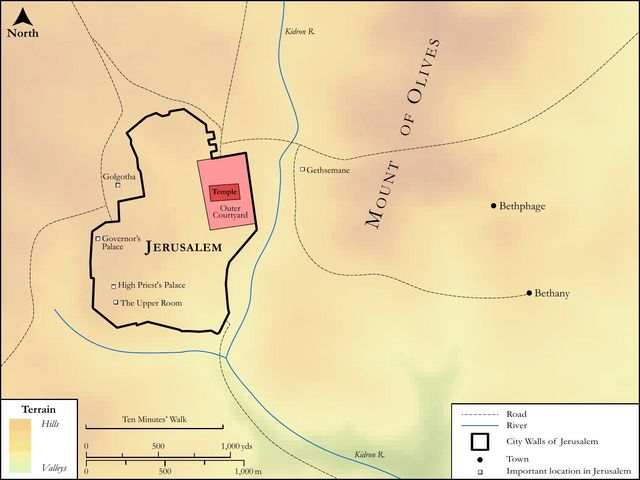
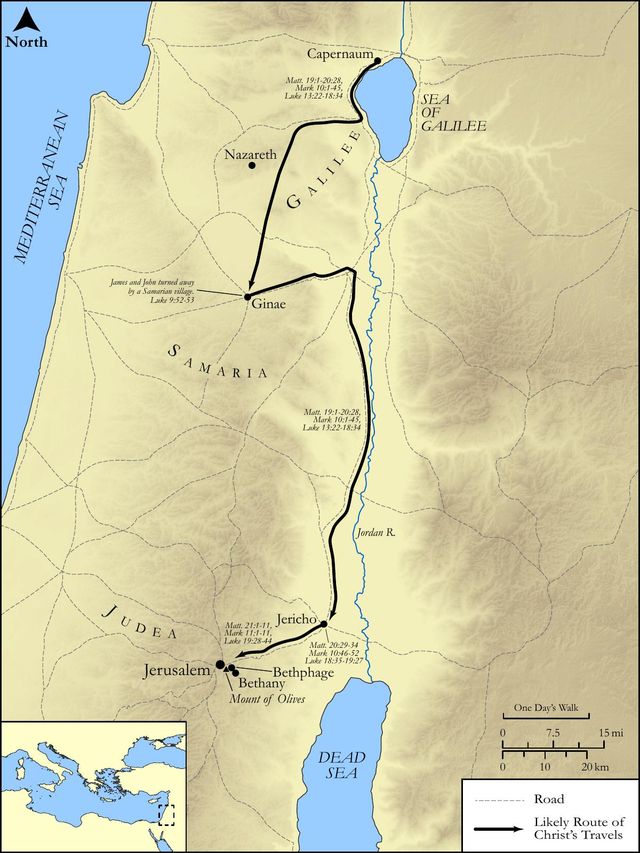
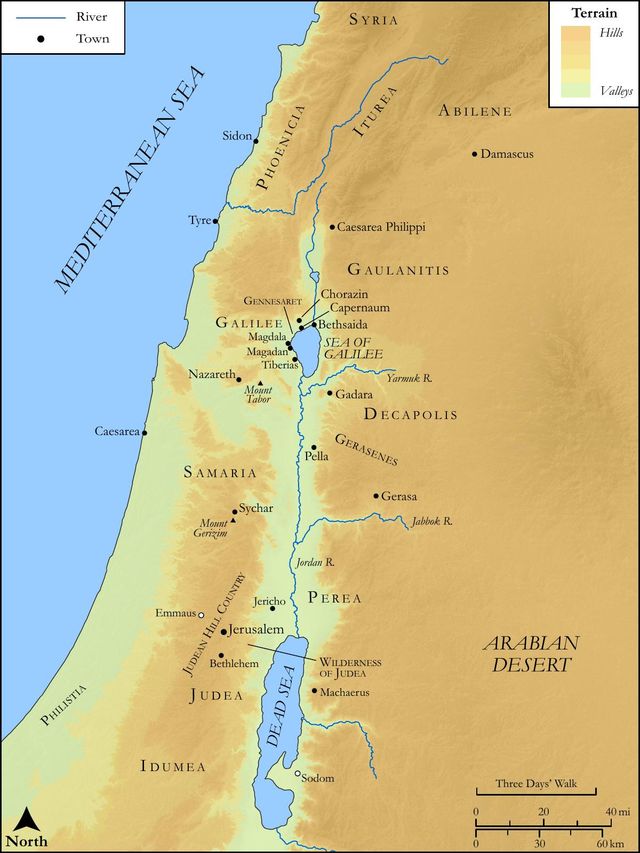
Study this verse
Historical interpretation
Nine Centuries of Reception
11 surviving comments on this verse. Each one is dated, so this reads as a timeline rather than a list.
Select a marker to jump to its quote. Markers stagger vertically where authors wrote within a few decades of each other.
These then are sent into the vineyard, Go ye also into my vineyard.
And this murmur of the labourers corresponds with the frowardness of this nation, which even in the time of Moses were stiff-necked.
"For the kingdom of Heaven," He said, "is like to a man that is an householder, which went out early in the morning to hire laborers into his vineyard. And when he had agreed with them for a penny a day, he sent them into his vineyard."
"And at the third hour he saw others standing idle, and to them too he said, Go ye also into the vineyard, and whatsoever is right I will give you. And about the sixth and ninth hours he did likewise. And about the eleventh hour, he saw others standing idle, and saith unto them, Why stand ye here all the day idle? But they say unto him, No man hath hired us. He saith unto them, Go ye also into my vineyard, and whatsoever is right, ye shall receive."
"So when even was come, the lord of the vineyard saith unto his steward, Call the laborers, and give them their hire, beginning from the last unto the first. And when they came that were hired about the eleventh hour, they received every man a penny. And the first supposed that they should receive more, and they received likewise every man a penny. And when they had received it, they murmured against the good man of the house, saying, These last have wrought but one hour, and thou hast made them equal unto us that have borne the burden and heat of the day. But he answered one of them, and said, Friend, I do thee no wrong; didst thou not agree with me for a penny? Take that thine is, and go thy way; I will give unto this last also, even as unto thee. Is it not lawful for me to do what I will with mine own? Is thine eye evil, because I am good? Thus the last shall be first, and the first last: for many are called, but few chosen."
What is to us the intent of this parable? For the beginning doth not harmonize with what is said at the end, but intimates altogether the contrary. For in the first part He shows all enjoying the same, and not some cast out, and some brought in; yet He Himself both before the parable and after the parable said the opposite thing. "That the first shall be last, and the last first," that is, before the very first, those not continuing first, but having become last. For in proof that this is His meaning, He added, "Many are called, but few chosen," so as doubly both to sting the one, and to soothe and urge on the other.
But the parable saith not this, but that they shall be equal to them that are approved, and have labored much. "For thou hast made them equal unto us," it is said, "that have borne the burden and heat of the day."
What then is the meaning of the parable? For it is necessary to make this first clear, and then we shall clear up that other point. By a vineyard He meaneth the injunctions of God and His commandments: by the time of laboring, the present life: by laborers, them that in different ways are called to the fulfillment of the injunctions: by early in the morning, and about the third and ninth and eleventh hours, them who at different ages have drawn near to God, and approved themselves.
But the question is this, whether the first having gloriously approved themselves, and having pleased God, and having throughout the whole day shone by their labors, are possessed by the basest feeling of vice, jealousy and envy. For when they had seen them enjoying the same rewards, they say, "These last have wrought but one hour, and thou hast made them equal unto us, that have borne the burden and heat of the day." And in these words, when they are to receive no hurt, neither to suffer diminution as to their own hire, they were indignant, and much displeased at the good of others, which was proof of envy and jealousy. And what is yet more, the good man of the house in justifying himself with respect to them, and in making his defense to him that had said these things, convicts him of wickedness and the basest jealousy, saying, "Didst thou not agree with me for a penny? Take that thine is, and go thy way; I will give unto the last even as unto thee. Is thine eye evil, because I am good?"
What then is it which is to be established by these things? For in other parables also this self-same thing may be seen. For the son who was approved is brought in, as having felt this self-same thing, when he saw his prodigal brother enjoying much honor, even more than himself. For like as these enjoyed more by receiving first, so he in a greater degree was honored by the abundance of the things given him; and to these things he that was approved bears witness.
What then may we say? There is no one who is thus justifying himself, or blaming others in the kingdom of Heaven; away with the thought! for that place is pure from envy and jealousy. For if when they are here the saints give their very lives for sinners, much more when they see them there in the enjoyment of these things, do they rejoice and account these to be blessings of their own. Wherefore then did He so frame His discourse? The saying is a parable, wherefore neither is it right to inquire curiously into all things in parables word by word, but when we have learnt the object for which it was composed, to reap this, and not to busy one's self about anything further.
Wherefore then was this parable thus composed? what is its object to effect? To render more earnest them that are converted and become better men in extreme old age, and not to allow them to suppose they have a less portion. So it is for this cause He introduces also others displeased at their blessings, not to represent those men as pining or vexed, away with the thought! but to teach us that these have enjoyed such honor, as could even have begotten envy in others. Which we also often do, saying, "Such a one blamed me, because I counted thee worthy of much honor," neither having been blamed, nor wishing to slander that other, but hereby to show the greatness of the gift which this one enjoyed.
But wherefore can it have been that He did not hire all at once? As far as concerned Him, He did hire all; but if all did not hearken at once, the difference was made by the disposition of them that were called. For this cause, some are called early in the morning, some at the third hour, some at the sixth, some at the ninth, some at the eleventh, when they would obey.
This Paul also declared when he said, "When it pleased Him, who separated me from my mother's womb." When did it please Him? When he was ready to obey. For He willed it even from the beginning, but because he would not have yielded, then it pleased Him, when Paul also was ready to obey. Thus also did He call the thief, although He was able to have called him even before, but he would not have obeyed. For if Paul at the beginning would not have obeyed, much more the thief.
And if they say, "No man hath hired us," in the first place as I said we must not be curious about all the points in the parables; but here neither is the good man of the house represented to say this, but they; but he doth not convict them, that he might drive them to perplexity, but might win them over. For that He called all, as far as lay in Him, from the first even the parable shows, saying, that "He went out early in the morning to hire."
From everything then it is manifest to us, that the parable is spoken with reference to them who from earliest youth, and those who in old age and more tardily, lay hold on virtue; to the former, that they may not be proud, neither reproach those called at the eleventh hour; to the latter, that they may learn that it is possible even in a short time to recover all.
For since He had been speaking about earnestness, and the casting away of riches, and contempt of all one's possessions, but this needed much vigor of mind and youthful ardor; in order to kindle in them a fire of love, and to give vigor to their will, He shows that it is possible even for men coming later to receive the hire of the whole day.
But He doth not say it thus, lest again He should make them proud, but he shows that the whole is of His love to man, and because of this they shall not fail, but shall themselves enjoy the unspeakable blessings.
And this chiefly is what it is His will to establish by this parable. And if He adds, that, "So the last shall be first and the first last; for many are called, but few chosen," marvel not. For not as inferring it from the parable doth He say this, but His meaning is this, that like as this came to pass, so shall that come to pass. For here indeed the first did not become last, but all received the same contrary to hope and expectation. But as this result took place contrary to hope and contrary to expectation, and they that came before were equalled by them that followed, so shall that also come to pass which is more than this, and more strange, I mean, that the last should come to be even before the first, and that the first should be after these. So that that is one thing, and this another.
But He seems to me to say these things, darkly hinting at the Jews, and amongst the believers at those who at first shone forth, but afterwards neglected virtue, and fell back; and those others again that have risen from vice, and have shot beyond many. For we see such changes taking place both with respect to faith and practice.
But we ought not to pursue through every particular the circumstances of a parable, but enter into its general scope, and seek nothing further. This then is not introduced in order to represent some as moved with envy, but to exhibit the honour that shall be given us as so great as that it might stir the jealousy of others.
That He called not all of them at once, but some in the morning, some at the third hour, and so forth, proceeded from the difference of their minds1. He then called them when they would obey; as He also called the thief when he would obey. Whereas they say, Because no man hath hired us, we ought not to force a sense out of every particular in a parable. Further, it is the labourers and not the Lord who speak thus; for that He, as far as it pertains to Him, calls all men from their earliest years, is shown in this, He went out early in the morning to hire labourers.
When He says, The first shall be last, and the last first, He alludes secretly to such as were at the first eminent, and afterwards set at nought virtue; and to others who have been reclaimed from wickedness, and have surpassed many. So that this parable was made to quicken the zeal of those who are converted in extreme old age, that they should not suppose that they shall have less than others.
(Verse 14, 15) Take what is yours and go. I want to give to this last worker the same as I give to you. Or is it not lawful for me to do what I want with my own money? Is your eye evil because I am good? So the last will be first, and the first last. For many are called, but few are chosen.
Or, all that were called of old envy the Gentiles, and are pained at the grace of the Gospel.
A denarius bears the figure of the king. You have therefore received the reward which I promised you, that is, my image and likeness; what desirest thou more? And yet it is not that thou shouldest have more, but that another should have less that thou seekest. Take that is thine, and go thy way.
The Master of the household is Christ, whose house are the heavens and the earth; and the creatures of the heavens, and the earth, and beneath the earth, His family. His vineyard is righteousness, in which are set divers sorts of righteousness as vines, as meekness, chastity, patience, and the other virtues; all of which are called by one common name righteousness. Men are the cultivators of this vineyard, whence it is said, Who went out early in the morning to hire labourers into his vineyard. For God placed His righteousness in our senses, not for His own but for our benefit. Know then that we are the hired labourers. But as no man gives wages to a labourer, to the end he should do nothing save only to eat, so likewise we were not thereto called by Christ, that we should labour such things only as pertain to our own good, but to the glory of God. And like as the hired labourer looks first to his task, and after to his daily food, so ought we to mind first those things which concern the glory of God, then those which concern our own profit. Also as the hired labourer occupies the whole day in his Lord's work, and takes but a single hour for his own meal; so ought we to occupy our whole life in the glory of God, taking but a very small portion of it for the uses of this world. And as the hired labourer when he has done no work is ashamed that day to enter the house, and ask his food; how should not you be ashamed to enter the church, and stand before the face of God, when you have done nothing good in the sight of God?
For in this world men live by buying and selling, and gain their support by defrauding each other.
Or; The idle are not sinners, for they are called dead. But he is idle who works not the work of God. Do you desire to be not idle? Take not that which is another's; and give of that which is your own, and you have laboured in the Lord's vineyard, cultivating the vine of mercy. It follows, And he said unto them, Go ye also into my vineyard. Observe that it is with the first alone that He agrees upon the sum to be given, a denarius; the others are hired on no express stipulation, but What is right I will give you. For the Lord knowing that Adam would fall, and that all should hereafter perish in the deluge, made conditions for him, that he should never say that he therefore neglected righteousness, because he knew not what reward he should have. But with the rest He made no contract, seeing He was prepared to give more than the labourers could hope.
These two hours are coupled together, because in the sixth and ninth it was that He called the generation of the Jews, and multiplied to publish His testaments among men, whereas the appointed time of salvation now drew nigh.
For what is our hiring, and the wages of that hiring? The promise of eternal life; for the Gentiles knew neither God, nor God's promises.
Consider, He gives the reward not the next morning, but in the evening. Thus the judgment shall take place while this world is still standing, and each man shall receive that which is due to him. This is on two accounts. First, because the happiness of the world to come is to be itself the reward of righteousness; so the award is made before, and not in that world. Secondly, that sinners may not behold the blessedness of that day, The Lord saith unto his steward, that is, the Son to the Holy Spirit.
For we always give more willingly, where we give without return, seeing it is for our own honour that we give. Therefore God in giving reward to all the saints shows himself just; in giving to us, merciful; as the Apostle speaks, That the Gentiles might glorify God for his mercy; (Rom. 16:9.) and thence it is said, Beginning from the last even unto the first. Or surely that God may show His inestimable mercy, He first rewards the last and more unworthy, and afterwards the first; for of His great mercy He regarded not order of merit.
And this not with injustice. For he who was born in the first period of the world, lived no longer than the determined time of his life, and what harm was it to him, though the world continued after his leaving it? And they that shall be born towards its close will not live less than the days that are numbered to them. And how does it cut then labour shorter, that the world is speedily ended, when they have accomplished their thread of life before? Moreover it is not of man to be born sooner or later, but of the power of God. Therefore he that is born first cannot claim to himself a higher place, nor ought he to be held in contempt that was born later. And when they had received it, they murmured against the goodman of the house, saying. But if this we have said be true, that both first and last have lived their own time, and neither more nor less; and that each man's death is his consummation, what means this that they say, We have borne the burden and heat of the day? Because to know that the end of the world is at hand is of great force to make us do righteousness. Wherefore Christ in His love to us said, The kingdom of heaven shall draw nigh. (Matt. 4:2.) Whereas it was a weakening of them to know that the duration of the world was to be yet long. So that though they did not indeed live through the whole of time, they seem in a manner to have borne its weight. Or, by the burden of the day is meant the burdensome precepts of the Law; and the heat may be that consuming temptation to error which evil spirits contrived for them, stirring them to imitate the Gentiles; from all which things the Gentiles were exempt, believing on Christ, and by compendiousness of grace being saved completely.
Their complaint was not that they were defrauded of their rightful recompense, but that the others had received more than they deserved. For the envious have as much pain at others' success as at their own loss. From which it is clear, that envy flows from vain glory. A man is grieved to be second, because he wishes to be first. He removes this feeling of envy by saying, Didst thou not agree with me for a denarius?
Or; He says the first shall be last, and the last first, not that the last are to be exalted before the first, but that they should be put on an equality, so that the difference of time should make no difference in their station. That He says, For many are called, but few chosen, is not to be taken of the elder saints, but of the Gentiles; for of the Gentiles who were called being many, but few were chosen.
To establish the truth of this saying, There are many first that shall be last, and last first, the Lord subjoins a similitude.
A denarius was a coin anciently equal to ten sesterces, and bearing the king's image. Well therefore does the denarius represent the reward of the keeping of the decalogue. And that, Having agreed with them for a denarius a day, is well said, to show that every man labours in the field of the holy Church in hope of the future reward.
Or, the Lord Jesus Christ Himself is the master of the household, and also the steward, like as He is the door, and also the keeper of the door. For He Himself will come to judgment, to render to each man according to that he has done. He therefore calls His labourers, and renders to them their wages, so that when they shall be gathered together in the judgment, each man shall receive according to his works.
By this one to whom his answer is given, may be understood all the believing Jews, whom he calls friends because of their faith.
That is, take thy reward, and enter into glory. I will give to this last, that is, to the gentile people, according to their deserts, as to thee.
By the eye is understood his purpose. The Jews had an evil eye, that is, an evil purpose, seeing they were grieved at the salvation of the Gentiles. Whereto this parable pointed, He shows by adding, So the first shall be last, and the last first; and so the Jews of the head are become the tail, and we of the tail are become the head.
(Hom. in Ev. xix, 1.) Or; The Master of the household, that is, our Maker, has a vineyard, that is, the Church universal, which has borne so many stocks, as many saints as it has put forth from righteous Abel to the very last saint who shall be born in the end of the world. To instruct this His people as for the dressing of a vineyard, the Lord has never ceased to send out His labourers; first by the Patriarchs, next by the teachers of the Law, then by the Prophets, and at the last by the Apostles, He has toiled in the cultivation of His vineyard; though every man, in whatsoever measure or degree he has joined good action with right faith, has been a labourer in the vineyard.
(ubi sup.) The morning is that age of the world which was from Adam and Noah, and therefore it is said, Who went out early in the morning to hire labourers into his vineyard. The terms of their hiring He adds, And when he had agreed with the labourers for a denarius a day.
(ubi sup.) The third hour is the period from Noah to Abraham; of which it is said, And he went out about the third hour; and saw others standing in the market-placeidle.
(ubi sup.) He that lives to himself, and feeds on the delights of the flesh, is rightly accused as idle, forasmuch as he does not seek the fruit of godly labour.
(ubi sup.) The sixth hour is that from Abraham to Moses, the ninth that from Moses to the coming of the Lord.
(ubi sup.) The eleventh hour is that from the coming of the Lord to the end of the world. The labourer in the morning, at the third, sixth, and ninth hours, denotes the ancient Hebrew people, which in its elect from the very beginning of the world, while it zealously and with right faith served the Lord, ceased not to labour in the husbandry of the vineyard. But at the eleventh the Gentiles are called. For they who through so many ages of the world had neglected to labour for their living, were they who had stood the whole day idle. But consider their answer; They say unto him, Because no man hath hired us; for neither Patriarch nor Prophet had come to them. And what is it to say, No man hath hired us, but to say, None has preached to us the way of life,
(ubi sup.) They get alike a denarius who have wrought since the eleventh hour, (for they sought it with their whole soul,) and who have wrought since the first. They, that is, who were called from the beginning of the world have alike received the reward of eternal happiness, with those who come to the Lord in the end of the world.
(ubi sup.) Or; To bear the burden and heat of the day, is to be wearied through a life of long duration with the heats of the flesh. But it may be asked, How can they be said to murmur, when they are called to the kingdom of heaven? For none who murmurs shall receive the kingdom, and none who receives that can murmur.
(ubi sup.) Or because the old fathers down to the Lord's coming, notwithstanding their righteous lives, were not brought to the kingdom, this murmur is theirs. But we who have come at the eleventh hour, do not murmur after our labours, forasmuch as having come into this world after the coming of the Mediator, we are brought to the kingdom as soon as ever we depart out of the body.
(ubi sup.) And because the attainment of this kingdom is of the goodness of His will, it is added, Is it not lawful for me to do what I will with mine own? For it is a foolish complaint of man to murmur against the goodness of God. For complaint is not when a man gives not what he is not bound to give, but if he gives not what he is bound to give; whence it is added, Is thine eye evil because I am good?
(ubi sup.) There be very many come to the faith, yet but few arrive at the heavenly kingdom; many follow God in words, but shun Him in their lives. Whereof spring two things to be thought upon. The first, that none should presume ought concerning himself; for though he be called to the faith, he knows not whether he shall be chosen to the kingdom. Secondly, that none should despair of his neighbour, even though he see him lying in vices; because he knows not the riches of the Divine mercy.
Or otherwise. The morning is our childhood; the third hour may be understood as our youth, the sun as it were mounting to his height is the advance of the heat of age; the sixth hour is manhood, when the sun is steady in his meridian height, representing as it were the maturity of strength; by the ninth is understood old age, in which the sun descends from his vertical height, as our age falls away from the fervour of youth; the eleventh hour is that age which is called decrepit, and doting.
They then who have neglected till extreme old age to live unto God, have stood idle to the eleventh hour, yet even these the master of the household calls, and oftentimes gives them their reward before other, inasmuch as they depart out of the body into the kingdom before those that seemed to be called in their childhood.
Hence it is fittingly added: "Or is your eye evil because I am good?" But let no one exalt himself on account of his work, let no one exalt himself on account of time, since with this statement completed, the Truth subsequently cries out: "So the last shall be first, and the first last." For behold, even if we already know what and how great the good things we have done are, we still do not know with what subtlety the heavenly Judge examines these things. And indeed each one should rejoice greatly to be even the last in the kingdom of God.
But when they had rendered their day's task, at the fitting time for payment, When even was come, that is, when the day of this world was drawing to its close.
(non occ. sed vid. Raban.) Or, if you choose, the Father saith unto the Son; for the Father wrought by the Son, and the Son by the Holy Spirit, not that there is any difference of substance, or majesty.
Continue studying Matthew 20:15 across the web’s major study libraries — every link below opens this exact verse, chapter, or book on the destination site.
Read & Compare
 BibleGatewayThis verse in more than 200 translations and 70 languages.
 Bible.comThe YouVersion reader — hundreds of translations, reading plans, and highlights.
 ESV.orgCrossway's official English Standard Version reader.
 NET BibleThe NET translation with 60,000+ translators' notes on every rendering decision.
 STEP BibleTyndale House's free study tool — original text, vocabulary, and scholarly resources.
 BibliaLogos Bible Software's free web reader.
 USCCBThe New American Bible (Revised Edition) with the U.S. bishops' study notes.
Commentaries
 BibleHub CommentariesDozens of classic commentaries on this verse, gathered on one page.
 StudyLightMore than 100 commentary sets — the largest collection on the web.
 BibleRefPlain-English commentary on what this verse means, verse by verse.
 Enduring WordDavid Guzik's free commentary on this chapter, widely used by Bible teachers.
 Bible Study ToolsVerse commentary alongside Greek and Hebrew study aids.
Original Language & Research
- BibleHub InterlinearThe verse word by word — original language, transliteration, and English.
- BibleHub LexiconEvery word's original-language definition and Strong's entry.
 Blue Letter BibleDeep-study tools — Strong's numbers, concordance, and word studies.
 CNTR CollationThe earliest Greek manuscripts of this verse, collated letter by letter.
Sermons, Hymns & Audio


TrulyRandomVerse is not affiliated with these sites and doesn’t control their content. They’re linked because they’re genuinely useful.
Summary
Matthew 20:15 captures the climactic rhetorical question posed by the generous landowner in Jesus' Parable of the Workers in the Vineyard. This verse directly challenges the disgruntled laborers who, having agreed to a fair wage, became envious when others, hired later, received the same compensation. It underscores the landowner's sovereign right to dispense his own resources as he wills and exposes the "evil eye" of jealousy in those who resent another's good fortune, thereby illustrating profound truths about divine generosity, human envy, and the nature of God's grace.
Context
ShowHideLiterary Context
This verse serves as the powerful culmination of the Parable of the Workers in the Vineyard, found in Matthew 20:1-16. The parable itself is framed by Jesus' teaching on discipleship and rewards. Immediately preceding it, Peter asks what the disciples will receive for leaving everything to follow Jesus (Matthew 19:27). Jesus responds by affirming future rewards but then issues a crucial warning: "But many that are first shall be last; and the last shall be first" (Matthew 19:30). The parable then vividly illustrates this principle, showing how God's kingdom values and rewards often invert human expectations of merit and fairness. The landowner's sharp questions in Matthew 20:13-15 are the theological linchpin, defending his absolute right to generosity and exposing the workers' flawed perspective.
Historical & Cultural Context
In first-century Judea, agricultural labor, particularly vineyard work, was common. Day laborers were typically hired early in the morning, and their wages were often negotiated and paid at the end of the day. A denarius was a standard daily wage for a laborer, considered fair compensation. The practice of hiring workers at different hours was also common, as needs arose throughout the day. The expectation was that those who worked longer would receive more, or at least that compensation would be strictly proportional to hours worked. This cultural norm sets up the tension in the parable, as the landowner's actions directly challenge these human-centric expectations of fairness and merit. The concept of the "evil eye" was also a well-understood Semitic idiom, referring not to a physical ailment but to a spiritual disposition of envy, jealousy, or stinginess, often contrasted with generosity and open-handedness.
Key Themes
ShowHideMatthew 20:15 contributes significantly to several overarching themes within Matthew's Gospel and biblical theology. Foremost is the theme of Divine Sovereignty and Generosity, emphasizing God's absolute freedom and right to dispense His grace and blessings as He sees fit, unconstrained by human notions of merit or entitlement. The landowner's rhetorical questions assert his ultimate authority over his own property and resources, mirroring God's prerogative in His kingdom. This directly challenges the theme of Human Envy and Jealousy, as the "evil eye" of the early workers reveals a heart that resents another's good fortune, even when their own agreed-upon compensation is met. This highlights a universal human struggle with covetousness and a lack of contentment. Finally, the verse powerfully underscores the distinction between Grace and Merit. The parable, culminating in this verse, argues that salvation and spiritual blessings in God's kingdom are fundamentally gifts of grace, not wages earned through human effort or perceived deservingness. This challenges a transactional view of faith and obedience, aligning with Jesus' broader teachings about the nature of the kingdom of heaven, where the "last" can indeed be "first" (Matthew 19:30).
Exposition and Analysis
ShowHideKey Word Analysis
ShowHideMeaning "it is right" or "it is permitted." The landowner's question, "Is it not lawful for me to do what I will with mine own?", asserts his unquestionable right and authority over his property and decisions. It highlights that his actions are not only permissible but entirely within his prerogative as the owner.
Meaning "my" or "mine (own)." This possessive pronoun emphasizes the landowner's absolute ownership and control over his resources. The essence of his defense is that his generosity comes from his own abundance, and he is free to use it as he pleases, without external constraint or human judgment.
Meaning "hurtful, evil (in effect or influence), wicked, malicious." When applied to the "eye" (G3788, ophthalmós), as in "Is thine eye evil?", it refers to a disposition of envy, jealousy, or stinginess. It describes a moral culpability where one's internal state is corrupted by resentment over the good fortune or generosity shown to others.
Meaning "good (in any sense), beneficial." The landowner contrasts his own "goodness" (generosity, beneficence) with the "evil" (envy) of the workers. His actions are benevolent and beneficial, while their reaction stems from a malevolent spirit of resentment.
Verse Breakdown
ShowHide"Is it not lawful for me to do what I will with mine own?"
This first rhetorical question serves as a direct challenge to the workers' complaint, asserting the landowner's absolute sovereignty and autonomy. He is questioning their right to dictate how he manages his own resources. The implication is a resounding "Yes, it is lawful!" He is the owner, and he has the right to exercise his will over his property, including the distribution of wages, especially since he has fulfilled his contractual obligation to the first workers. This statement establishes the foundational principle of divine prerogative – God's unassailable right to act according to His own good pleasure.
"Is thine eye evil, because I am good?"
This second, more pointed rhetorical question unmasks the true motive behind the workers' grievance: envy. The "evil eye" is a Semitic idiom for jealousy, stinginess, or malevolence, particularly in response to another's generosity or prosperity. The landowner's "goodness" refers to his overflowing generosity to the later workers. He highlights the stark contrast between his benevolent actions and their malevolent reaction. Their complaint is not about injustice to themselves, but about the perceived "too much" generosity shown to others, revealing a heart that begrudges grace.
Literary Devices
ShowHideMatthew 20:15 masterfully employs several literary devices to convey its profound theological message. The primary device is the Rhetorical Question, used twice. These are questions posed not for an answer, but to make a point more forcefully and to provoke self-reflection in the listener. The landowner's questions are designed to expose the irrationality and moral failing of the complaining workers. There is also a strong element of Irony at play; the workers, who received exactly what they agreed upon, are depicted as being wronged, while the landowner, who acted with extraordinary generosity, is cast as the antagonist. This ironic reversal highlights the distorted perspective of envy. Furthermore, the phrase "evil eye" is a classic Idiom, a common expression whose meaning is not deducible from the literal words. In Semitic culture, it vividly communicated the concept of jealousy, covetousness, and a lack of generosity, making the landowner's accusation immediately understandable and impactful to Jesus' original audience.
Theological and Thematic Connections
ShowHideMatthew 20:15 profoundly articulates the nature of God's sovereign grace, challenging human assumptions about fairness and merit. The landowner's absolute right to do as he pleases with his own resources mirrors God's unconstrained freedom to bestow His favor and blessings upon whomever He chooses, not based on human performance or duration of service, but purely out of His benevolent will. This truth can be unsettling to those who operate on a system of earned reward, as it exposes the inherent human tendency to compare ourselves to others and to begrudge the unmerited favor shown to them. The "evil eye" of the workers thus becomes a powerful metaphor for spiritual envy, a sin that blinds us to God's goodness in our own lives and distorts our perception of His dealings with others. Ultimately, the verse teaches that God's kingdom operates on a principle of radical generosity and grace, where the focus is not on what we have earned, but on what God, in His infinite goodness, chooses to give.
Reflection and Application
ShowHideMatthew 20:15 presents a profound challenge to our natural human inclination towards meritocracy and comparison. It compels us to honestly examine our hearts: When God blesses someone else, especially in ways we might deem "undeserved" or "less earned" than our own efforts, do we genuinely rejoice with them, or does our "eye become evil" with envy? This verse calls us to cultivate a spirit of gratitude for what we have received, rather than focusing on what others have. It reminds us that God's goodness is not a finite resource that diminishes when shared with others; rather, His generosity is boundless. Embracing the truth of God's sovereign grace frees us from the destructive cycle of comparison and resentment, allowing us to celebrate His goodness in all its forms. It encourages us to trust in His perfect wisdom and timing, recognizing that His ways are higher than our ways, and His justice is always tempered with mercy and abundant grace.
Questions for Reflection
ShowHideFAQ
ShowHideWhat does "Is thine eye evil, because I am good?" truly mean?
ShowHideThis is a powerful rhetorical question using a common Semitic idiom. The phrase "evil eye" (Greek: ophthalmos ponērós) does not refer to a physical defect or a superstitious curse, but rather to a spiritual and moral disposition of envy, jealousy, or stinginess. It signifies a heart that begrudges the good fortune or generosity extended to others. The landowner's "goodness" (Greek: agathós) refers to his benevolent and generous act of paying all workers the full day's wage, regardless of their hours worked. So, the question means, "Are you envious or resentful because I have chosen to be generous?" It highlights the workers' spiritual failing—their complaint stemmed not from being wronged themselves, but from their inability to rejoice in the landowner's generosity to others. This concept is also found in other biblical texts, such as Proverbs 23:6, where a "man with an evil eye" is one who is stingy or ungenerous.
Christ-Centered Fulfillment
ShowHideMatthew 20:15, with its assertion of the landowner's sovereign right to generosity and its exposure of human envy, finds profound Christ-centered fulfillment in the Gospel. The landowner, who acts with unmerited favor, is a clear type of God the Father, whose ultimate act of "goodness" is the sending of His Son, Jesus Christ, to redeem humanity. Just as the landowner's generosity defied human expectations of merit, so too does God's grace in Christ defy our attempts to earn salvation. Our salvation is not a wage earned through long hours of spiritual labor, but a free gift, a testament to God's sovereign will and boundless love (Ephesians 2:8-9). The "evil eye" of the envious workers reflects humanity's fallen tendency to resist God's unmerited favor, particularly when it extends to those we deem "less deserving" or who came to faith "later" (e.g., the Gentiles in relation to the Jews). Yet, Christ's mission was to reconcile all to God, breaking down the dividing wall of hostility and offering the same full "wage" of eternal life to all who believe, regardless of their past or perceived spiritual "work" (Galatians 3:28). The cross itself is the ultimate demonstration of God's "goodness" and sovereign right to save sinners, a goodness that often provokes the "evil eye" of those who cling to self-righteousness or legalism, failing to grasp the radical, leveling grace found only in the Lamb of God, who takes away the sin of the world!.