


Luke 13:12
Bible text: King James Version (1769 Blayney text) · Public domain
Bible text: Berean Standard Bible · Public domain
Bible text: American Standard Version (1901) · Public domain
Bible text: World English Bible, Messianic edition · Public domain
Bible text: Geneva Bible (1599) · Public domain
Bible text: Young's Literal Translation · Public domain
- ἰδὼνidōnHaving seenG1492V-2AAP-NSMVerb 2nd Aorist Active Participle Nominative Singular Masculine
- δὲdethenG1161CONJConjunction
- αὐτὴνautēnherG846P-ASFPersonal pronoun Accusative Singular Feminine
- ὁho<the>G3588T-NSMDefinite article Nominative Singular Masculine
- ἸησοῦςIēsousJesusG2424N-NSM-PNoun Nominative Singular Masculine Individual
- προσεφώνησενprosephōnēsencalled [her] nearG4377V-AAI-3SVerb Aorist Active Indicative 3rd Singular
- καὶkaiandG2532CONJConjunction
- εἶπενeipenHe saidG2036V-2AAI-3SVerb 2nd Aorist Active Indicative 3rd Singular
- αὐτῇ·autēato herG846P-DSFPersonal pronoun Dative Singular Feminine
- γύναιgunaiWomanG1135N-VSFNoun Vocative Singular Feminine
- ἀπολέλυσαιapolelusaiyou have been freed fromG630V-RPI-2SVerb Perfect Passive Indicative 2nd Singular
- τῆςtēstheG3588T-GSFDefinite article Genitive Singular Feminine
- ἀσθενείαςastheneiassicknessG769N-GSFNoun Genitive Singular Feminine
- σουsouof youG4771P-2GSPersonal pronoun Genitive 2nd Singular
English is a literal word-by-word gloss of the Greek, not the KJV's wording. Why?
This is the original text the KJV's translators worked from — each Greek word with its own literal English meaning in this verse, prepared by scholars at Tyndale House, Cambridge. The KJV translates whole sentences, not word by word, so its wording differs: one Greek word can become several English words, and the KJV may choose “charity” where the gloss reads “love”. Both are faithful — they answer different questions. For the KJV's own rendering, switch to the KJV text.
Details
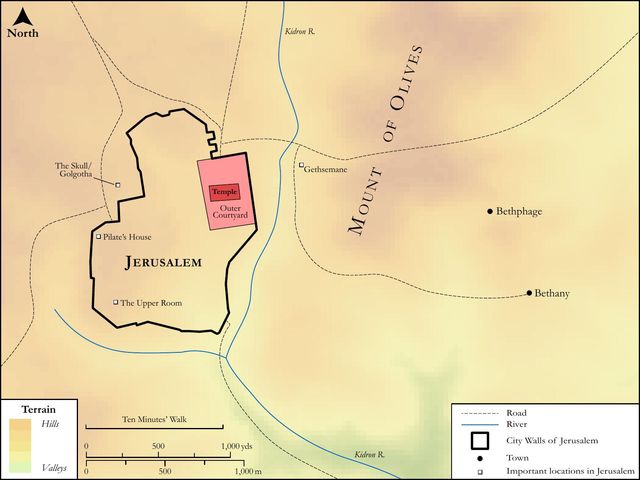
See on the biblical-era maps


Study this verse
Public-domain commentary
Matthew Henry
From his Commentary on the Whole Bible. Henry comments on passages, not single verses — this entry covers Luke 13:10–17. His three-level outline is real structure in the source text, so it is rendered as structure.
Here is, I. The miraculous cure of a woman that had been long under a spirit of infirmity. Our Lord Jesus spent his Sabbaths in the synagogues, Luk 13:10. We should make conscience of doing so, as we have opportunity, and not think we can spend the sabbath as well at home reading a good book; for religious assemblies are a divine institution, which we must bear our testimony to, though but of two or three. And, when he was in the synagogues on the sabbath day, he was teaching there - ēn didaskōn. It denotes a continued act; he still taught the people knowledge. He was in his element when he was teaching. Now to confirm the doctrine he preached, and recommend it as faithful, and well worthy of all acceptation, he wrought a miracle, a miracle of mercy.
1.The object of charity that presented itself was a woman in the synagogue that had a spirit of infirmity eighteen years, Luk 13:11. She had an infirmity, which an evil spirit, by divine permission, had brought upon her, which was such that she was bowed together by strong convulsions, and could in no wise lift up herself; and, having been so long thus, the disease was incurable; she could not stand erect, which is reckoned man's honour above the beasts. Observe, Though she was under this infirmity, by which she was much deformed, and made to look mean, and not only so, but, as is supposed, motion was very painful to her, yet she went to the synagogue on the sabbath day. Note, Even bodily infirmities, unless they be very grievous indeed, should not keep us from public worship on the sabbath days; for God can help us, beyond our expectation.
2.The offer of this cure to one that sought it not bespeaks the preventing mercy and grace of Christ: When Jesus saw her, he called her to him, Luk 13:12. It does not appear that she made any application to him, or had any expectation from him; but before she called he answered. She came to him to be taught, and to get good to her soul, and then Christ gave this relief to her bodily infirmity. Note, Those whose first and chief care is for their souls do best befriend the true interests of their bodies likewise, for other things shall be added to them. Christ in his gospel calls and invites those to come to him for healing that labour under spiritual infirmities, and, if he calls us, he will undoubtedly help us when we come to him.
3.The cure effectually and immediately wrought bespeaks his almighty power. He laid his hands on her, and said, "Woman, thou art loosed from thine infirmity; though thou hast been long labouring under it, thou art at length released from it." Let not those despair whose disease is inveterate, who have been long in affliction. God can at length relieve them, therefore though he tarry wait for him. Though it was a spirit of infirmity, an evil spirit, that she was under the power of, Christ has a power superior to that of Satan, is stronger than he. Though she could in no wise lift up herself, Christ could lift her up, and enable her to lift up herself. She that had been crooked was immediately made straight, and the scripture was fulfilled (Psa 146:8): The Lord raiseth them that are bowed down. This cure represents the work of Christ's grace upon the souls of the people.
(1.)In the conversion of sinners. Unsanctified hearts are under this spirit of infirmity; they are distorted, the faculties of the soul are quite out of place and order; they are bowed down towards things below. O curvae in terram animae! They can in no wise lift up themselves to God and heaven; the bent of the soul, in its natural state, is the quite contrary way. Such crooked souls seek not to Christ; but he calls them to him, lays the hand of his power and grace upon them, speaks a healing word to them, by which he looses them from their infirmity, makes the soul straight, reduces it to order, raises it above worldly regards, and directs its affections and aims heavenward. Though man cannot make that straight which God has made crooked (Ecc 7:13), yet the grace of God can make that straight which the sin of man has made crooked.
(2.)In the consolation of good people. Many of the children of God are long under a spirit of infirmity, a spirit of bondage; through prevailing grief and fear, their souls are cast down and disquieted within them, they are troubled, they are bowed down greatly, they go mourning all the day long, Psa 38:6. But Christ, by his Spirit of adoption, looses them from this infirmity in due time, and raises them up.
4.The present effect of this cure upon the soul of the patient as well as upon her body. She glorified God, gave him the praise of her cure to whom all praise is due. When crooked souls are made straight, they will show it by their glorifying God.
II.The offence that was taken at this by the ruler of the synagogue, as if our Lord Jesus had committed some heinous crime, in healing this poor woman. He had indignation at it, because it was on the sabbath day, Luk 13:14. One would think that the miracle should have convinced him, and that the circumstance of its being done on the sabbath day could not have served to counteract the conviction; but what light can shine so clear, so strong, that a spirit of bigotry and enmity to Christ and his gospel will not serve to shut men's eyes against it? Never was such honour done to the synagogue he was ruler of as Christ had now done it, and yet he had indignation at it. He had not indeed the impudence to quarrel with Christ; but he said to the people, reflecting upon Christ in what he said, There are six days in which men ought to work, in them therefore come and be healed, and not on the sabbath day. See here how light he made of the miracles Christ wrought, as if they were things of course, and no more than what quacks and mountebanks did every day: "You may come and be healed any day of the week." Christ's cures were become, in his eyes, cheap and common things. See also how he stretches the law beyond its intention, or any just construction that could be put upon it, in making either healing or being healed with a touch of the hand, or a word's speaking, to be that work which is forbidden on the sabbath day. This was evidently the work of God; and, when God tied us out from working that day, did he tie himself out? The same word in Hebrew signifies both godly and merciful (chesed), to intimate that works of mercy and charity are in a manner works of piety (Ti1 5:4) and therefore very proper on sabbath days.
III.Christ's justification of himself in what he had done (Luk 13:15):
The Lord then answered him, as he had answered others who in like manner cavilled at him, Thou hypocrite. Christ, who knows men's hearts, may call those hypocrites whom it would be presumption for us to call so. We must judge charitably, and can judge only according to the outward appearance. Christ knew that he had a real enmity to him and to his gospel, that he did but cloak this with a pretended zeal for the sabbath day, and that when he bade the people come on the six days, and be healed, he really would not have them be healed any day. Christ could have told him this, but he vouchsafes to reason the case with him; and,
1.He appeals to the common practice among the Jews, which was never disallowed, that of watering their cattle on the sabbath day. Those cattle that are kept up in the stable are constantly loosed from the stall on the sabbath day, and led away to watering. It would be a barbarous thing not to do it; for a merciful man regards the life of his beast, his own beast that serves him. Letting the cattle rest on the sabbath day, as the law directed, would be worse than working them, if they must be made to fast on that day, as the Ninevites' cattle on their fast-day, that were not permitted to feed nor drink water, Jon 3:7.
2.He applies this to the present case (Luk 13:16): "Must the ox and the ass have compassion shown them on the sabbath day, and have so much time and pains bestowed upon them every sabbath, to be loosed from the stall, led away perhaps a great way to the water, and then back again, and shall not this woman, only with a touch of the hand and a word's speaking, be loosed from a much greater grievance than that which the cattle undergo when they are kept a day without water? For consider," (1.) "She is a daughter of Abraham, in a relation to whom you all pride yourselves; she is your sister, and shall she be denied a favour that you grant to an ox or an ass, dispensing a little with the supposed strictness of the sabbath day? She is a daughter of Abraham, and therefore is entitled to the Messiah's blessings, to the bread which belongs to the children." (2.) "She is one whom Satan has bound. He had a hand in the affliction, and therefore it was not only an act of charity to the poor woman, but of piety to God, to break the power of the devil, and baffle him." (3.) "She has been in this deplorable condition, lo, these eighteen years, and therefore, now that there is an opportunity of delivering her, it ought not to be deferred a day longer, as you would have it, for any of you would have thought eighteen years' affliction full long enough."
IV.The different effect that this had upon those that heard him.
He had sufficiently made it out, not only that it was lawful, but that it was highly fit and proper, to heal this poor woman on the sabbath day, and thus publicly in the synagogue, that they might all be witnesses of the miracle. And now observe,
1.What a confusion this was to the malice of his persecutors: When he had said these things, all his adversaries were ashamed (Luk 13:17); they were put to silence, and were vexed that they were so, that they had not a word to say for themselves. It was not a shame that worked repentance, but rather indignation. Note, Sooner or later, all the adversaries of Christ, and his doctrine and miracles, will be made ashamed.
2.What a confirmation this was to the faith of his friends: All the people, who had a better sense of things, and judged more impartially than their rulers, rejoiced for all the glorious things that were done by him. The shame of his foes was the joy of his followers; the increase of his interest was what the one fretted at, and the other triumphed in. The things Christ did were glorious things; they were all so, and, though now clouded, perhaps will appear to, and we ought to rejoice in them. Every thing that is the honour of Christ is the comfort of Christians.
Historical interpretation
Four Centuries of Reception
9 surviving comments on this verse. Each one is dated, so this reads as a timeline rather than a list.
Select a marker to jump to its quote. Markers stagger vertically where authors wrote within a few decades of each other.
(Hom. 9. in Hex.) Because the head of the brutes is bent down towards the ground and looks upon the earth, but the head of man was made erect towards the heaven, his eyes tending upward. For it becomes us to seek what is above, and with our sight to pierce beyond earthly things.
(Basil. Hom. 1. de Jej.) The hypocrite is one who on the stage assumes a different character from his own. So also in this life some men carry one thing in their heart, and show another on the surface to the world.
The members of the church are similar to this vine. They are planted with the root of faith and held in check by the shoots of humility.… He placed in the church a tower of apostles, prophets and doctors who are ready to defend the peace of the church. He dug around it when he had freed it from the burden of earthly anxieties. Nothing burdens the mind more than concern for the world and lust for either wealth or power.An example of this is in the Gospel. We can read the story of the woman “who had sickness caused by a spirit, and she was bent over so that she was unable to look upwards.” In fact, her soul was bent over. It inclined to earthly rewards and did not possess heavenly grace. Jesus saw her and addressed her. She immediately laid aside her earthly burdens. These people also were burdened with lusts. He addressed them in these words, “Come to me, all you who labor and are burdened, and I will give you rest.” The soul of that woman breathed once more and stood up like a vine around which the soil has been dug and cleared.
He teaches indeed not separately, but in the synagogues; calmly, neither wavering in any thing, nor determining aught against the law of Moses; on the Sabbath also, because the Jews were then engaged in the hearing of the law.
Well then does he call the ruler of the synagogue a hypocrite, for he had the appearance of an observer of the law, but in his heart was a crafty and envious man. For it troubles him not that the Sabbath is broken, but that Christ is glorified. Now observe, that whenever Christ orders a work to be done, (as when He ordered the man sick of the palsy to take up his bed,) He raises His words to something higher, convincing men by the majesty of the Father, as He says, My Father worketh until now, and I work. (John 5:17.) But in this place, as doing every thing by word, He adds nothing further, refuting their calumny by the very things which they themselves did.
The incarnation of the Word and his assumption of human nature took place for the overthrow of death, destruction and the envy harbored against us by the wicked Serpent, who was the first cause of evil. This plainly is proved to us by facts themselves. He set free the daughter of Abraham from her protracted sickness, calling out and saying, "Woman, you are loosed from your infirmity." A speech most worthy of God, and full of supernatural power! With the royal inclination of his will, he drives away the disease. He also lays his hands upon her. It says that she immediately was made straight. It is now also possible to see that his holy flesh bore in it the power and activity of God. It was his own flesh, and not that of some other Son beside him, distinct and separate from him, as some most impiously imagine.
Now that the Incarnation of the Word was manifested to destroy corruption and death, and the hatred of the devil against us, is plain from the actual events; for it follows, And behold there was a woman which had a spirit of infirmity, &c. He says spirit of infirmity, because the woman suffered from the cruelty of the devil, forsaken by God because of her own crimes or for the transgression of Adam, on account of which the bodies of men incur infirmity and death. But God gives this power to the Devil, to the end that men when pressed down by the weight of their adversity might betake them to better things. He points out the nature of her infirmity, saying, And was bowed together, and could in no wise lift up herself.
But our Lord, to show that His coming into this world was to be the loosing of human infirmities, healed this woman. Hence it follows, And when Jesus saw her, he called her to him, and said unto her, Woman, thou art loosed from thine infirmity. A word most suitable to God, full of heavenly majesty; for by His royal assent He dispels the disease. He also laid His hands upon her, for it follows, He laid his hands on her, and immediately she was made straight, and glorified God. We should here answer, that the Divine power had put on the sacred flesh. For it was the flesh of God Himself, and of no other, as if the Son of Man existed apart from the Son of God, as some have falsely thought. But the ungrateful ruler of the synagogue, when he saw the woman, who before was creeping on the ground, now by Christ's single touch made upright, and relating the mighty works of God, sullies his zeal for the glory of the Lord with envy, and condemns the miracle, that he might appear to be jealous for the Sabbath. As it follows, And the ruler of the synagogue answered with indignation, because that Jesus had healed on the sabbath-day, and said unto the people, There are six days in which men ought to work, and not on the sabbath-day. He would have those who are dispersed about on the other days, and engaged in their own works, not come on the Sabbath to see and admire our Lord's miracles, lest by chance they should believe. But the law has not forbidden all manual work on the Sabbath-day, and has it forbidden that which is done by a word or the mouth? Cease then both to eat and drink and speak and sing. And if thou readest not the law, how is it a Sabbath to thee? But supposing the law has forbidden manual works, how is it a manual work to raise a woman upright by a word?
Now the ruler of the synagogue is convicted a hypocrite, in that he leads his cattle to watering on the Sabbath-day, but this woman, not more by birth than by faith the daughter of Abraham, he thought unworthy to be loosed from the chain of her infirmity. Therefore He adds, And ought not this woman, being a daughter of Abraham, whom Satan has bound, lo, these eighteen years, to be loosed from this bond on the sabbath-day? The ruler preferred that this woman should like the beasts rather look upon the earth than receive her natural stature, provided that Christ was not magnified. But they had nothing to answer; they themselves unanswerably condemned themselves. Hence it follows, And when he had said these things, all his adversaries were ashamed. But the people, reaping great good from His miracles, rejoiced at the signs which they saw, as it follows, And all the people rejoiced. For the glory of His works vanquished every scruple in them who sought Him not with corrupt hearts.
(ubi sup.) But he who will not by correction grow rich unto fruitfulness, falls to that place from whence he is no more able to rise again by repentance.
(Hom. 31. in Evang.) Mystically the unfruitful fig tree signifies the woman that was bowed down. For human nature of its own will rushes into sin, and as it would not bring forth the fruit of obedience, has lost the state of uprightness. The same fig tree preserved signifies the woman made upright.
(ut sup.) Or else; man was made on the sixth day, and on the same sixth day were all the works of the Lord finished, but the number six multiplied three times makes eighteen. Because then man who was made on the sixth day was unwilling to do perfect works, but before the law, under the law, and at the beginning of grace, was weak, the woman was bowed down eighteen years.
(up sup.) For every sinner who thinketh earthly things, not seeking those that are in heaven, is unable to look up. For while pursuing his baser desires, he declines from the uprightness of his state; or his heart is bent crooked, and he ever looks upon that which he unceasingly thinks about. The Lord called her and made her upright, for He enlightened her and succoured her. He sometimes calls but does not make upright, for when we are enlightened by grace, we ofttimes see what should be done, but because of sin do not practise it. For habitual sin binds down the mind, so that it cannot rise to uprightness. It makes attempts and fails, because when it has long stood by its own will, when the will is lacking, it falls.
It follows: When Jesus saw her, he called her to him and said to her: Woman, you are released from your infirmity. And he laid his hand upon her, and immediately she was made straight. He called and raised her up, because he illuminated and aided her. He calls but does not raise up when indeed we are illuminated by his grace, but, our merits requiring it, we cannot be aided. For often we see what things ought to be done, but we do not fulfill this in deed. We strive and grow weak. The judgment of the mind perceives righteousness, but the strength of action succumbs to it, because indeed it is already part of the punishment of sin that good can be perceived through a gift, yet it happens that one is repelled by merit from that which is seen. For habitual fault binds the mind so that it can by no means rise to righteousness. It strives and falls, because where it willingly persisted for a long time, there also, though unwilling, it falls compelled.
But the daughter of Abraham is every faithful soul, or the Church gathered out of both nations into the unity of the faith. There is the same mystery then in the ox or ass being loosed and led to water, as in the daughter of Abraham being released from the bondage of our affections.
When Jesus saw her, he called her over and said to her, "Woman, you are freed from your infirmity." And he laid his hands on her, and immediately she was made straight, and she glorified God. He saw her through predestined grace, called her through enlightening teaching, laid hands on her with spiritual gifts to help, raised her to glorify God, by promoting her firm in good works until the end. "Those he predestined," says the Apostle, "he also called; those he called, he also justified; those he justified, he also glorified." (Romans 8).
Continue studying Luke 13:12 across the web’s major study libraries — every link below opens this exact verse, chapter, or book on the destination site.
Read & Compare
 BibleGatewayThis verse in more than 200 translations and 70 languages.
 Bible.comThe YouVersion reader — hundreds of translations, reading plans, and highlights.
 ESV.orgCrossway's official English Standard Version reader.
 NET BibleThe NET translation with 60,000+ translators' notes on every rendering decision.
 STEP BibleTyndale House's free study tool — original text, vocabulary, and scholarly resources.
 BibliaLogos Bible Software's free web reader.
 USCCBThe New American Bible (Revised Edition) with the U.S. bishops' study notes.
Commentaries
 BibleHub CommentariesDozens of classic commentaries on this verse, gathered on one page.
 StudyLightMore than 100 commentary sets — the largest collection on the web.
 BibleRefPlain-English commentary on what this verse means, verse by verse.
 Enduring WordDavid Guzik's free commentary on this chapter, widely used by Bible teachers.
 Bible Study ToolsVerse commentary alongside Greek and Hebrew study aids.
Original Language & Research
- BibleHub InterlinearThe verse word by word — original language, transliteration, and English.
- BibleHub LexiconEvery word's original-language definition and Strong's entry.
 Blue Letter BibleDeep-study tools — Strong's numbers, concordance, and word studies.
 CNTR CollationThe earliest Greek manuscripts of this verse, collated letter by letter.
Sermons, Hymns & Audio


TrulyRandomVerse is not affiliated with these sites and doesn’t control their content. They’re linked because they’re genuinely useful.
Summary
Luke 13:12 powerfully illustrates Jesus' active compassion and divine authority as he encounters a woman in a synagogue who has suffered from a debilitating infirmity for eighteen years. Without being asked, Jesus initiates her healing, calling her to himself and declaring her freedom from her affliction, an act that immediately restores her and sets the stage for a significant theological confrontation regarding the Sabbath.
Context
ShowHideLiterary Context
This healing narrative is strategically placed within Luke's Gospel, specifically during Jesus' journey toward Jerusalem, often referred to as the "Travel Narrative" (Luke 9:51–19:27). It follows a series of parables and teachings about the kingdom of God and repentance, such as the parable of the barren fig tree in Luke 13:6-9. The immediate context is Jesus teaching in a synagogue on the Sabbath (Luke 13:10), setting up the inevitable conflict with the synagogue ruler in the subsequent verses (Luke 13:14-17). This episode serves as a concrete example of Jesus' teaching on the true purpose of the Sabbath—to do good and to liberate, rather than to adhere rigidly to legalistic interpretations.
Historical & Cultural Context
The Sabbath, a cornerstone of Jewish life and law, was observed from sunset Friday to sunset Saturday. By the time of Jesus, rabbinic traditions had developed numerous interpretations and restrictions regarding what constituted "work" on the Sabbath, often prioritizing legalistic adherence over humanitarian needs. Healing was generally considered unlawful on the Sabbath unless a life was in immediate danger. The woman's condition, described as being "bent over" for eighteen years due to a "spirit of infirmity" (Luke 13:11), highlights a long-term, chronic suffering that was not life-threatening in the immediate sense, making Jesus' healing a direct challenge to the prevailing legalistic interpretations of Sabbath law. Synagogues were central to Jewish community life, serving as places of worship, teaching, and social gathering.
Key Themes
ShowHideThis passage contributes to several prominent themes in Luke's Gospel. Firstly, it underscores Jesus' compassion for the lowly and suffering, a recurring motif in Luke, who often highlights Jesus' interactions with women, the poor, and the sick (e.g., Luke 7:11-17). Secondly, it emphasizes Jesus' divine authority over sickness, evil spirits, and even the Law, demonstrating that His power transcends human limitations and legalistic constraints. His declaration, "Woman, thou art loosed from thine infirmity," is an authoritative word that brings immediate liberation. Thirdly, the narrative explores the true meaning and purpose of the Sabbath, challenging the rigid interpretations of the religious leaders and asserting that acts of mercy and liberation are not only permissible but commanded on the Lord's Day, aligning with Jesus' earlier teachings on the Sabbath in Luke 6:1-11).
Exposition and Analysis
ShowHideKey Word Analysis
ShowHideThis term (G1135) refers to a female, here specifically an adult woman. Its use by Jesus is direct and personal, acknowledging her humanity and dignity despite her long-term affliction. It contrasts with the synagogue ruler's later impersonal reference to her as "this woman" in Luke 13:14, highlighting Jesus' compassionate and respectful approach.
This verb (G630) means "to free fully," "relieve," "release," or "set at liberty." Its application here is profound, signifying not just a physical healing but a complete liberation from the bondage of her infirmity. The term implies an authoritative act of unbinding, echoing the concept of spiritual release from oppressive forces.
This noun (G769) denotes "feebleness (of mind or body)," "malady," "sickness," or "weakness." It describes the physical manifestation of her long-standing condition, which had left her severely bent over. The text explicitly links this infirmity to a "spirit" in Luke 13:11, indicating a spiritual dimension to her physical suffering, from which Jesus liberates her.
Verse Breakdown
ShowHide"And when Jesus saw her"
This opening phrase immediately establishes Jesus' divine perception and initiative. He doesn't wait for a request; He actively "sees" her suffering, implying a deep awareness and compassion for her plight. This seeing is not merely physical observation but a profound recognition of her long-term pain and spiritual bondage.
"he called [her to him]"
Jesus' action of calling her signifies a deliberate, personal invitation. He draws her out from the crowd, singling her out for attention and healing. This act of calling is an exercise of His authority and compassion, demonstrating His desire to engage directly with the afflicted individual.
"and said unto her, 'Woman, thou art loosed from thine infirmity.'"
This is the pivotal moment of divine declaration. Jesus' words are not a prayer or a request but an authoritative pronouncement. The phrase "thou art loosed" (passive voice) emphasizes that the action of liberation is performed upon her by a higher power, namely Jesus himself. It is a complete and instantaneous release from the physical and spiritual burden that had held her captive for eighteen years.
Literary Devices
ShowHideThe passage employs several potent literary devices. Divine Initiative is evident in Jesus "seeing" the woman and "calling" her, highlighting His active compassion rather than a reactive response to a plea. This sets Him apart from the passive or judgmental religious authorities. The phrase "thou art loosed" is an example of Authoritative Declaration, where Jesus' words themselves are the instrument of healing, demonstrating His absolute power over sickness and spiritual bondage. This is further reinforced by the immediate and complete nature of her healing. The woman's bent-over posture for eighteen years serves as Symbolism for the oppressive nature of sin and spiritual affliction, from which Jesus offers complete Liberation. Her physical straightening thus symbolizes a deeper spiritual freedom that Jesus brings.
Theological and Thematic Connections
ShowHideThis passage profoundly illustrates Jesus' identity as the compassionate Son of God who actively seeks to liberate humanity from all forms of bondage—physical, spiritual, and pervasive. His willingness to heal on the Sabbath, despite knowing it would provoke conflict, underscores His commitment to mercy over rigid legalism, revealing the heart of God's law as love and liberation. The woman's long-term suffering and immediate release serve as a powerful metaphor for humanity's condition under the weight of sin and the instantaneous, authoritative freedom offered through Christ. This act of unbinding foreshadows the broader work of redemption, where Jesus breaks the chains of sin and death, offering true rest and restoration.
Reflection and Application
ShowHideLuke 13:12 offers profound encouragement for those who have endured long-term suffering, whether physical, emotional, or spiritual. It reminds us that Jesus sees our pain, even when we feel invisible or forgotten by the world. His compassion is not passive; it is an active, initiating force that moves Him to intervene. Just as He called the bent-over woman to Himself, He calls us to draw near, inviting us to lay down our burdens and trust in His liberating power. This passage challenges us to examine areas in our lives where we might feel "bent over" by chronic issues, past hurts, or spiritual oppression, and to believe that Jesus' authoritative word can bring complete release and restoration. It also calls us to embody Jesus' compassion, seeing the suffering around us and actively seeking to bring healing and liberation to others, even if it means challenging conventional norms or religious traditions that hinder true mercy.
Questions for Reflection
ShowHideFAQ
ShowHideWhy did Jesus call her to Him instead of healing her from a distance?
ShowHideJesus' act of calling the woman to Him was a deliberate and deeply significant gesture. While Jesus certainly had the power to heal from a distance (as seen in Matthew 8:5-13), His decision to call her forward emphasizes His personal engagement and compassion. It brought her out of anonymity and into direct, intimate contact with the Healer, affirming her dignity and worth. This public act also served as a clear demonstration of His authority, making the healing undeniable to all present, especially the synagogue ruler who would soon challenge Him (Luke 13:14). It was a powerful visual and relational component to the miracle, inviting her into a moment of personal encounter and publicly confirming her liberation.
Christ-Centered Fulfillment
ShowHideLuke 13:12 finds its Christ-centered fulfillment in Jesus as the ultimate Liberator, the one who comes to "proclaim liberty to the captives" (Isaiah 61:1). The woman's eighteen years of being "bent over" powerfully symbolizes the human condition under the bondage of sin and its effects—a state of being weighed down, unable to stand upright in the presence of God. Just as Jesus authoritatively declared her "loosed from thine infirmity," so too does He, through His atoning work on the cross, declare all who believe "loosed" from the power and penalty of sin (Romans 6:6-7). His death and resurrection are the definitive act of "unbinding," freeing humanity from the spiritual infirmity that has plagued us since the fall. He is the one who sets the captives free (John 8:36), not only from physical ailments but, more profoundly, from the spiritual death that separates us from God (Ephesians 2:1-5). The immediate and complete nature of her healing foreshadows the complete and perfect salvation offered in Christ, where believers are fully redeemed and empowered to walk in newness of life (Romans 6:4).