


Luke 6:10
Bible text: King James Version (1769 Blayney text) · Public domain
Bible text: King James Version with Strong's numbers · Public domain
Bible text: Berean Standard Bible · Public domain
Bible text: American Standard Version (1901) · Public domain
Bible text: World English Bible, Messianic edition · Public domain
Bible text: Geneva Bible (1599) · Public domain
Bible text: Young's Literal Translation · Public domain
- καὶkaiAndG2532CONJConjunction
- περιβλεψάμενοςperiblepsamenoshaving looked aroundG4017V-AMP-NSMVerb Aorist Middle Participle Nominative Singular Masculine
- πάνταςpantasallG3956A-APMAdjective Accusative Plural Masculine
- αὐτοὺςautouson themG846P-APMPersonal pronoun Accusative Plural Masculine
- εἶπενeipenHe saidG2036V-2AAI-3SVerb 2nd Aorist Active Indicative 3rd Singular
- αὐτῷ·autōto himG846P-DSMPersonal pronoun Dative Singular Masculine
- ἔκτεινονekteinondo stretch outG1614V-AAM-2SVerb Aorist Active Imperative 2nd Singular
- τὴνtēntheG3588T-ASFDefinite article Accusative Singular Feminine
- χεῖράcheirahandG5495N-ASFNoun Accusative Singular Feminine
- σουsouof youG4771P-2GSPersonal pronoun Genitive 2nd Singular
- ὁho<the>G3588T-NSMDefinite article Nominative Singular Masculine
- δὲdeAndG1161CONJConjunction
- ἐποίησενepoiēsenhe didG4160V-AAI-3SVerb Aorist Active Indicative 3rd Singular
- οὕτως·houtōsthusG3779ADVAdverb
- καὶkaiandG2532CONJConjunction
- ἀπεκατεστάθηapekatestathēwas restoredG600V-API-3SVerb Aorist Passive Indicative 3rd Singular
- ἡhētheG3588T-NSFDefinite article Nominative Singular Feminine
- χεὶρcheirhandG5495N-NSFNoun Nominative Singular Feminine
- αὐτοῦautouof himG846P-GSMPersonal pronoun Genitive Singular Masculine
- ὑγιὴςhugiēssoundG5199A-NSFAdjective Nominative Singular Feminine
- ὡςhōsasG5613PRTParticle or Disjunctive
- ἡhē<the>G3588T-NSFDefinite article Nominative Singular Feminine
- ἄλληallēanotherG243A-NSFAdjective Nominative Singular Feminine
English is a literal word-by-word gloss of the Greek, not the KJV's wording. Why?
This is the original text the KJV's translators worked from — each Greek word with its own literal English meaning in this verse, prepared by scholars at Tyndale House, Cambridge. The KJV translates whole sentences, not word by word, so its wording differs: one Greek word can become several English words, and the KJV may choose “charity” where the gloss reads “love”. Both are faithful — they answer different questions. For the KJV's own rendering, switch to the KJV text.
Details
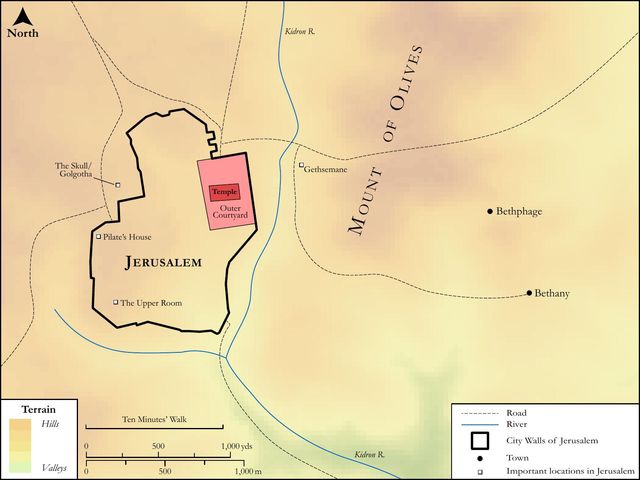
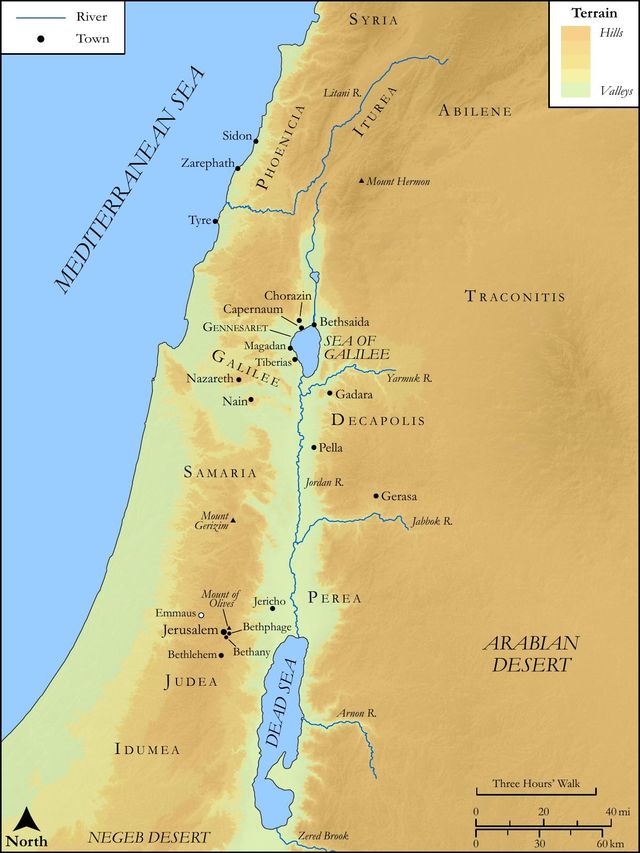
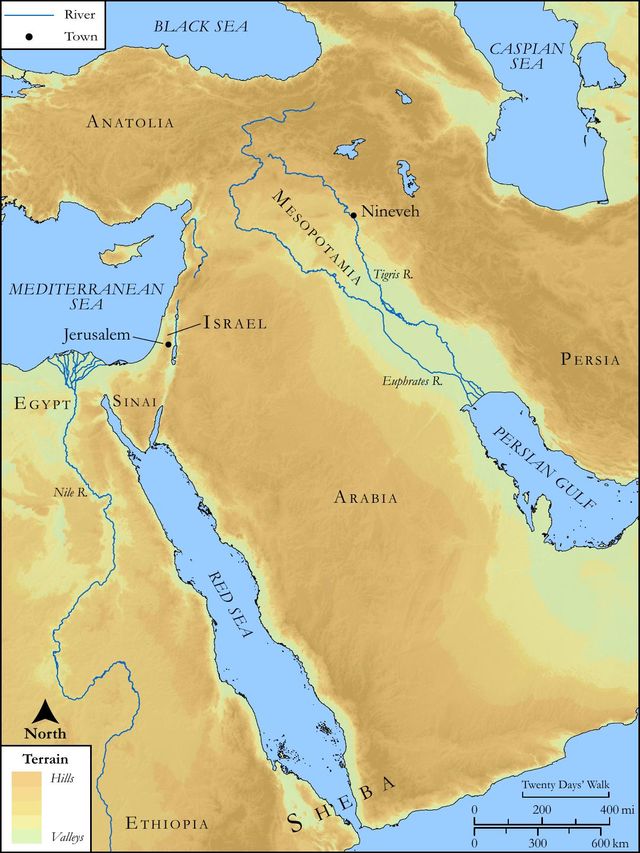
See on the biblical-era maps
Study this verse
Public-domain commentary
Matthew Henry
From his Commentary on the Whole Bible. Henry comments on passages, not single verses — this entry covers Luke 6:1–11. His two-level outline is real structure in the source text, so it is rendered as structure.
These two passages of story we had both in Matthew and Mark, and they were there laid together (Mat 12:1; Mar 2:23; Mar 3:1), because, though happening at some distance of time from each other, both were designed to rectify the mistakes of the scribes and Pharisees concerning the sabbath day, on the bodily rest of which they laid greater stress and required greater strictness than the Law-giver intended. Here,
I.Christ justifies his disciples in a work of necessity for themselves on that day, and that was plucking the ears of corn, when they were hungry on that day. This story here has a date, which we had not in the other evangelists; it was on the second sabbath after the first (Luk 6:1), that is, as Dr. Whitby thinks is pretty clear, the first sabbath after the second day of unleavened bread, from which day they reckoned the seven weeks to the feast of pentecost; the first of which they called Sabbaton deuteroprōton, the second deuterodeuteron, and so on. Blessed be God we need not be critical in this matter. Whether this circumstance be mentioned to intimate that this sabbath was thought to have some peculiar honour upon it, which aggravated the offence of the disciples, or only to intimate that, being the first sabbath after the offering of the first fruits, it was the time of the year when the corn was nearly ripe, is not material. We may observe,
1.Christ's disciples ought not to be nice and curious in their diet, at any time, especially on sabbath days, but take up with what is easiest got, and be thankful. These disciples plucked the ears of corn, and did eat (Luk 6:1); a little served them, and that which had no delicacy in it.
2.Many that are themselves guilty of the greatest crimes are forward to censure others for the most innocent and inoffensive actions, Luk 6:2. The Pharisees quarrelled with them as doing that which it was not lawful to do on the sabbath days, when it was their own practice to feed deliciously on sabbath days, more than on all other days.
3.Jesus Christ will justify his disciples when they are unjustly censured, and will own and accept of them in many a thing which men tell them it is not lawful for them to do. How well is it for us that men are not to be our judges, and that Christ will be our Advocate!
4.Ceremonial appointments may be dispensed with, in cases of necessity; as the appropriating of the showbread to the priests was dispensed with, when David was by Providence brought into such a strait that he must have either that or none, Luk 6:3, Luk 6:4. And, if God's own appointments might be thus set aside for a greater good, much more may the traditions of men.
5.Works of necessity are particularly allowable on the sabbath day; but we must take heed that we turn not this liberty into licentiousness, and abuse God's favourable concessions and condescensions to the prejudice of the work of the day.
6.Jesus Christ, though he allowed works of necessity on the sabbath day, will notwithstanding have us to know and remember that it is his day, and therefore is to be spent in his service and to his honour (Luk 6:5): The Son of man is Lord also of the sabbath. In the kingdom of the Redeemer, the sabbath day is to be turned into a Lord's day; the property of it is, in some respects, to be altered, and it is to be observed chiefly in honour of the Redeemer, as it had been before in honour of the Creator, Jer 16:14, Jer 16:15. In token of this, it shall not only have a new name, the Lord's day (yet not forgetting the old, for it is a sabbath of rest still) but shall be transferred to a new day, the first day of the week.
II.He justifies himself in doing works of mercy for others on the sabbath day. Observe in this,
1.Christ on the sabbath day entered into the synagogue. Note, It is our duty, as we have opportunity, to sanctify sabbaths in religious assemblies. On the sabbath there ought to be a holy convocation; and our place must not be empty without very good reason.
2.In the synagogue, on the sabbath day, he taught. Giving and receiving instruction from Christ is very proper work for a sabbath day, and for a synagogue. Christ took all opportunities to teach, not only his disciples, but the multitude.
3.Christ's patient was one of his hearers. A man whose right hand was withered came to learn from Christ. Whether he had any expectation to be healed by him does not appear. But those that would be cured by the grace of Christ must be willing to learn the doctrine of Christ.
4.Among those who were the hearers of Christ's excellent doctrine, and the eye-witnesses of his glorious miracles, there were some who came with no other design than to pick quarrels with him, Luk 6:7. The scribes and Pharisees would not, as became generous adversaries, give him fair warning that, if he did heal on the sabbath day, they would construe it into a violation of the fourth commandment, which they ought in honour and justice to have done, because it was a case without precedent (none having ever cured as he did), but they basely watched him, as the lion does his prey, whether he would heal on the sabbath day, that they might find an accusation against him, and surprise him with a prosecution.
5.Jesus Christ was neither ashamed nor afraid to own the purposes of his grace, in the face of those who, he knew, confronted them, Luk 6:8. He knew their faults, and what they designed, and he bade the man rise, and stand forth, hereby to try the patient's faith and boldness.
6.He appealed to his adversaries themselves, and to the convictions of natural conscience, whether it was the design of the fourth commandment to restrain men from doing good on the sabbath day, that good which their hand finds to do, which they have an opportunity for, and which cannot so well be put off to another time (Luk 6:9): Is it lawful to do good, or evil, on the sabbath days? No wicked men are such absurd and unreasonable men as persecutors are, who study to do evil to men for doing good.
7.He healed the poor man, and restored him to the present use of his right hand, with a word's speaking, though he knew that his enemies would not only take offence at it, but take advantage against him for it, Luk 6:10. Let not us be drawn off, either from our duty or usefulness, by the oppression we meet with in it.
8.His adversaries were hereby enraged so much the more against him, Luk 6:11. Instead of being convinced by this miracle, as they ought to have been, that he was a teacher come from God, - instead of being brought to be in love with him as a benefactor to mankind, - they were filled with madness, vexed that they could not frighten him from doing good, or hinder the growth of his interest in the affections of the people. They were mad at Christ, mad at the people, mad at themselves. Anger is a short madness, malice is a long one; impotent malice, especially disappointed malice; such was theirs. When they could not prevent his working this miracle, they communed one with another what they might do to Jesus, what other way they might take to run him down. We may well stand amazed at it that the sons of men should be so wicked as to do thus, and that the Son of God should be so patient as to suffer it.
Historical interpretation
Four Centuries of Reception
10 surviving comments on this verse. Each one is dated, so this reads as a timeline rather than a list.
Select a marker to jump to its quote. Markers stagger vertically where authors wrote within a few decades of each other.
When the eyes of all were, as it were, riveted together, and their minds also fixed upon the consideration of the matter, he said to the man, Stretch forth thy hand; I command thee, Who created man. But he who had the withered hand hears, and is made whole, as it follows, And he stretched it, and it was restored. But they who should have been astonished at the miracle, increased in malice; as it follows, But they were filled with madness; and communed one with another what they should do to Jesus.
Then you heard the words of the Lord, saying, “Stretch forth your hand.” That is the common and universal remedy. You who think that you have a healthy hand beware lest it is withered by greed or by sacrilege. Hold it out often. Hold it out to the poor person who begs you. Hold it out to help your neighbor, to give protection to a widow, to snatch from harm one whom you see subjected to unjust insult. Hold it out to God for your sins. The hand is stretched forth; then it is healed. Jeroboam’s hand withered when he sacrificed to idols; then it stretched out when he entreated God.
Now the Jews thought this unlawful on the Sabbath, but Christ by the gift of new grace represented hereby the rest of the law, the work of grace. Wonderfully has He called it the second-first sabbath, not the first-second, because that was loosed from the law which was first, and this is made first which was ordained second. It is therefore called the second sabbath according to number, the first according to the grace of the work. For that sabbath is better where there is no penalty, than that where there is a penalty prescribed. Or this perhaps was first in the foreknowledge of wisdom, and second in the sanction of the ordinance. Now in David escaping with his companions, there was a foreshadowing of Christ in the law, who with His Apostles escaped the prince of the world. But how was it that the Observer and Defender of the law Himself both eat the bread, and gave it to those that were with Him, which no one was allowed to eat but the priests, except that He might show by that figure that the priests' bread was to come over to the use of the people, or that we ought to imitate the priests' life, or that all the children of the Church are priests, for we are anointed into a holy priesthood, offering ourselves a spiritual sacrifice to God. (1 Pet. 2:5.) But if the sabbath was made for men, and the benefit of men required that a man when hungry (having been long without the fruits of the earth) should forsake the abstinence of the old fast, the law is surely not broken but fulfilled.
The Lord now proceeds to another work. For He who had determined to make the whole man safe, was able to cure each member. Hence it is said, And it came to pass also on another sabbath, that he entered into the synagogue and taught.
But the law by things present prefigured the form of things future, among which surely the days of rest to come are to be not from good works but from evil. For although secular works may be given up, yet it is no idle act of a good work to rest in the praise of God.
You have heard then the words of Him who says, Stretch forth thy hand. That is a frequent and common cure, and thou that thinkest thy hand is whole, beware lest it be contracted by avarice or sacrilege. Stretch it forth oftener to help thy neighbour, to protect the widow, to save from injury him whom you see the victim of unjust attack; stretch it forth to the poor man who beseeches thee; stretch it forth to the Lord, to ask pardon of thy sins; as the hand is stretched forth so is it healed. (1 Kings 13:5, 6.)
“Are you angry at me because I have healed the whole man on the sabbath day?” In this place he revivified with the salutary strength of good works the hand which Adam stretched out to pluck the fruit of the forbidden tree. The hand which had withered through a crime was healed by good deeds. Christ thereby rebuked the Jews who violated the precepts of the law with evil interpretations. They thought that they should rest even from good works on the sabbath, since the law prefigured in the present the form of the future in which indeed the days of rest from evils, not from blessings, would come.
(Hom. in Matt. 40.) And as Matthew relates, they go out to take counsel, that they should kill him.
(de Con. Ev. l. ii. c. 35.) But it may be questioned how Matthew came to say, that they asked the Lord, whether it was lawful to heal on the sabbath, when Luke in this place states that they rather were asked of the Lord. We must therefore believe that they first asked the Lord, and that then He understanding by their thoughts that they sought an opportunity to accuse Him, placed the man in the midst whom He was going to heal, and asked the question which Mark and Luke relate Him to have asked. It follows, And looking round about upon them all.
The miracle sometimes converts to faith those who had disbelieved the word, but the Pharisees watched him to see if he would heal on the sabbath. The nature of an envious person is such that he makes the praises of others food for his own disease and is wickedly maddened by their reputation. Once more he spoke to this; “he reveals deep and mysterious things; he knows what is in the darkness, and the light dwells with him.” And why did he do this? Perhaps it might be to move the cruel and unpitying Pharisee to compassion. The man’s malady [his withered hand] perhaps might shame them and persuade them to dispel the flames of their envy.This question is most wise indeed and a most suitable statement to meet their folly. If it is lawful to do good on the sabbath and nothing prevents the sick being pitied by God, cease picking up opportunities for fault-finding against Christ and bringing down on your own head the sentence which the Father has decreed against those who dishonor the Son. You have heard the Father where he says of the Son by the voice of David, “I will crush his foes before him and strike down those who hate him.” But if it is not lawful to do good on the sabbath and the law forbids the saving of life, you have made yourself an accuser of the law.
But He taught things far beyond their comprehension, and opened to his hearers the way to future salvation by Him; and then after having first taught them, He suddenly showed His divine power, as it follows, and there was a man there whose right hand was withered.
For this is the way of the envious man, he feeds in himself his pang of grief with the praises of others. But the Lord knew all things, and searches the hearts; as it follows, But he knew their thoughts, and said to the man who had the withered hand, Rise up, and stand. And he arose, and stood forth, that perchance he might stir up the cruel Pharisees to pity, and allay the flames of their passion.
This is a very useful question, for if it is lawful to do good on the sabbath, and there is no reason why those who work should not obtain mercy from God, cease to gather up accusation against Christ. But if it be not lawful to do good on the sabbath, and the law prohibits the safety of life, thou art become the accuser of the law. For if we examine the very institution of the sabbath, we shall find it was introduced for an object of mercy, for God commanded to keep holy the sabbath, that may rest thy man servant and thy maid servant, and all thy cattle. (Exod. 20:23.) But he who has mercy on his ox, and the rest of his cattle, how much rather will he not have mercy on man troubled with a severe disease?
Thou perceivest, O Pharisee, a divine Worker, and Him Who delivers the sick by His heavenly power, and out of envy thou breathest forth death.
And looking around at all of them, He said to the man: Stretch out your hand. And he stretched it out, and his hand was restored. The dry hand to be healed is commanded to be stretched out, because the barrenness of an unfruitful soul is cured by nothing better than the generosity of almsgiving. Hence John the Baptist, when asked by the crowds what they should do so as not to be cast into fire like barren trees, only gave this command: He who has two tunics, let him give to him who has none; and he who has food, let him do likewise (Luke 3). And in Ecclesiasticus, it is said: Son, let not your hand be extended to receive, and shut when it should be giving (Ecclesiasticus 4). For in vain does one stretch out his hand to God to pray for sins, who does not extend it to bring benefit to a begging widow.
He chiefly heals and teaches on the sabbaths, not only to convey the meaning of a spiritual sabbath, but because of the more numerous assembly of the people.
But since the Master had excused by an undeniable example the breach of the sabbath, with which they charged His disciples, their object is now by watching to bring a false accusation against the Master Himself. As it follows, And the Scribes and Pharisees watched him, if he would heal on the sabbath, that if He did not, they might accuse Him of cruelty or impotence; if He did, of violation of the sabbath. Hence it follows, that they might find an accusation against him.
But the Lord anticipating the false charge which they were preparing against Him, reproves those who by wrongly interpreting the law thought that they must rest on the sabbath-day even from good works; whereas the law commands us to abstain from servile works, i. e. from evil, on the sabbath. Hence it follows, Then said Jesus unto them, I ask you, Is it lawful to do good on the sabbath, &c.
The man represents the human race, withered by the unfruitfulness of good works, because of the hand in our first parent stretched forth to take the apple, which was healed by the innocent hand stretched forth on the cross. And rightly was the withered hand in the synagogue, because where there is the greater gift of knowledge, there the transgressor lies under the greater blame.
Continue studying Luke 6:10 across the web’s major study libraries — every link below opens this exact verse, chapter, or book on the destination site.
Read & Compare
 BibleGatewayThis verse in more than 200 translations and 70 languages.
 Bible.comThe YouVersion reader — hundreds of translations, reading plans, and highlights.
 ESV.orgCrossway's official English Standard Version reader.
 NET BibleThe NET translation with 60,000+ translators' notes on every rendering decision.
 STEP BibleTyndale House's free study tool — original text, vocabulary, and scholarly resources.
 BibliaLogos Bible Software's free web reader.
 USCCBThe New American Bible (Revised Edition) with the U.S. bishops' study notes.
Commentaries
 BibleHub CommentariesDozens of classic commentaries on this verse, gathered on one page.
 StudyLightMore than 100 commentary sets — the largest collection on the web.
 BibleRefPlain-English commentary on what this verse means, verse by verse.
 Enduring WordDavid Guzik's free commentary on this chapter, widely used by Bible teachers.
 Bible Study ToolsVerse commentary alongside Greek and Hebrew study aids.
Original Language & Research
- BibleHub InterlinearThe verse word by word — original language, transliteration, and English.
- BibleHub LexiconEvery word's original-language definition and Strong's entry.
 Blue Letter BibleDeep-study tools — Strong's numbers, concordance, and word studies.
 CNTR CollationThe earliest Greek manuscripts of this verse, collated letter by letter.
Sermons, Hymns & Audio


TrulyRandomVerse is not affiliated with these sites and doesn’t control their content. They’re linked because they’re genuinely useful.
Summary
Luke 6:10 presents a pivotal moment in Jesus' ministry, where He confronts the rigid legalism of the religious leaders by performing a miraculous healing on the Sabbath. In a synagogue, surrounded by watchful scribes and Pharisees, Jesus commands a man with a withered hand to stretch it forth. The man's immediate obedience results in instantaneous and complete restoration, powerfully demonstrating Jesus' divine authority, profound compassion, and His true interpretation of the Sabbath's purpose as a day for doing good and showing mercy.
Context
ShowHideLiterary Context
Luke 6:10 is embedded within a series of Sabbath controversies that define the early part of Luke's Gospel, starting with the disciples plucking grain on the Sabbath (Luke 6:1-5). Jesus' declaration that "the Son of Man is Lord even of the sabbath day" (Luke 6:5) sets the stage for this confrontation. The preceding verses explicitly state that the scribes and Pharisees were "watching him, whether he would heal on the sabbath day; that they might find an accusation against him" (Luke 6:7). Jesus, fully aware of their malicious intent, directly addresses their unspoken question by asking, "I will ask you one thing; Is it lawful on the sabbath days to do good, or to do evil? to save life, or to destroy it?" (Luke 6:9). The healing in Luke 6:10 is thus a deliberate and public act, designed to expose the hypocrisy of His accusers and affirm His authority over human traditions.
Historical & Cultural Context
The Sabbath, a cornerstone of Jewish law, was originally given as a day of rest and worship, commemorating God's rest after creation and Israel's deliverance from slavery. Over centuries, particularly during the Second Temple period, rabbinic traditions and interpretations (halakha) had accumulated, transforming the Sabbath into a complex web of prohibitions. The Pharisees, known for their meticulous adherence to these oral traditions, viewed any activity resembling "work" as a violation. Healing, unless life-threatening, was generally considered forbidden. A withered hand, while debilitating, was not typically seen as an immediate life-or-death situation. Synagogues served as community centers for worship, teaching, and legal discussions, making this public healing a direct challenge to the religious establishment's authority and interpretation of the Mosaic Law. The man's condition would have rendered him socially overlooked, as physical deformities were often associated with sin or divine displeasure in that cultural context.
Key Themes
ShowHideThis passage powerfully highlights several key themes central to Luke's Gospel and Jesus' ministry. Firstly, it underscores Jesus' divine authority not only over sickness and physical ailments but also over the very interpretation of God's law. His actions demonstrate that He is the ultimate arbiter of truth and righteousness, transcending human traditions. Secondly, it emphasizes Jesus' profound compassion for human suffering, prioritizing the immediate need of the afflicted individual over rigid religious rules. This compassion is a hallmark of Luke's portrayal of Jesus, who consistently reaches out to the lowly and suffering. Thirdly, the event serves as a direct challenge to legalism and hypocrisy. Jesus exposes the spiritual blindness of the Pharisees, who were more concerned with external observance and finding fault than with genuine mercy and the spirit of the law. Finally, it reinforces the theme of the true purpose of the Sabbath, revealing it as a day for mercy, good deeds, and the restoration of life, rather than a day for burdensome restrictions that hinder acts of love. This aligns with Jesus' broader teaching that the Sabbath was made for humanity, not humanity for the Sabbath (Mark 2:27).
Exposition and Analysis
ShowHideKey Word Analysis
ShowHideMeaning "to look all around." This word emphasizes Jesus' full awareness of the hostile environment and the scrutiny of the Pharisees. He was not acting impulsively but deliberately, fully conscious of the implications and the accusations they sought to levy against Him. It signifies His intentionality in this public display of divine authority and compassion.
Meaning "to extend" or "stretch forth (out)." This is Jesus' direct command to the man. It is a command that requires an act of faith and obedience from the man, as his hand was withered and presumably incapable of such a movement. The command itself is a test, not just of the man's faith, but also a challenge to the onlookers, as it initiates an act of "work" on the Sabbath.
Meaning "to reconstitute (in health, home or organization); to restore (again)." This powerful verb indicates not merely an improvement or partial healing, but a complete and perfect return to the hand's original, healthy state. It underscores the absolute and comprehensive nature of Jesus' miraculous power, leaving no doubt about the divine efficacy of the healing.
Verse Breakdown
ShowHide"And looking round about upon them all"
This opening phrase highlights Jesus' full awareness of the surrounding tension and the malicious intent of the scribes and Pharisees. He is not caught unawares but deliberately chooses to act in the face of their scrutiny, emphasizing His sovereignty and control over the situation. This "looking around" is a pregnant pause, building dramatic tension before His decisive action.
"he said unto the man, ‘Stretch forth thy hand.'"
Jesus' command is direct, authoritative, and seemingly impossible for a man with a withered hand. This command serves multiple purposes: it tests the man's faith and obedience, it publicly challenges the legalistic interpretations of the Sabbath by initiating an act that would be deemed "work," and it demonstrates Jesus' power to command physical reality. The imperative "Stretch forth" demands an immediate and active response.
"And he did so"
This simple phrase speaks volumes about the man's faith and immediate obedience. Despite his physical limitation and the public nature of the command, he attempts the impossible. His willingness to obey, even before seeing the result, is crucial to the miracle's unfolding and serves as an example of responsive faith.
"and his hand was restored whole as the other."
The immediate and complete nature of the healing is emphasized. The withered hand is not merely improved but made "whole as the other," indicating a perfect restoration. This is the divine validation of Jesus' authority and compassion, a tangible proof of His power that silences His accusers, at least momentarily, and glorifies God.
Literary Devices
ShowHideLuke 6:10 is rich in Dramatic Irony, as the religious leaders, who claim to uphold God's law, are revealed to be spiritually blind and more concerned with human traditions than with God's compassion. Their "watching" of Jesus, intended to find fault, ironically leads to a public demonstration of His divine power and goodness. The Symbolism of the withered hand is also significant; it represents not only physical brokenness but perhaps also the spiritual paralysis and inability to "do good" that characterized the legalistic system Jesus was confronting. The act of "stretching forth" the hand can be seen as a Metaphor for spiritual obedience and active faith, which, when exercised in response to Christ's command, leads to complete restoration. The rapid sequence of command, obedience, and immediate healing creates a sense of Climax and resolution, powerfully affirming Jesus' identity and mission.
Theological and Thematic Connections
ShowHideThis miraculous healing profoundly illustrates the nature of God's kingdom, where compassion and restoration supersede rigid legalism. Jesus, as the embodiment of God's mercy, consistently challenges human-made boundaries that hinder acts of love and healing. His actions on the Sabbath reveal that the true intent of God's law is not to burden humanity but to bless and restore. This event foreshadows the ultimate spiritual restoration available through Christ, where broken lives are made whole, and spiritual paralysis is overcome by divine grace and empowering faith. It underscores the truth that God delights in mercy more than sacrifice, and that genuine worship involves acts of righteousness and compassion towards others.
Reflection and Application
ShowHideLuke 6:10 offers profound lessons for contemporary believers, urging us to examine our own hearts and practices. Are we, like the Pharisees, sometimes more concerned with external rules and traditions than with genuine compassion and the needs of those around us? This passage calls us to prioritize acts of love, mercy, and justice, even when they challenge conventional norms or personal comfort. The man's immediate obedience, despite his physical limitation, serves as a powerful reminder that faith often requires us to act even when circumstances seem impossible. God's power is revealed in our willingness to step out in trust, stretching forth our "withered hands" in obedience to His call. We are reminded that God desires our complete wholeness—spiritually, emotionally, and physically—and that His restorative power is available to us when we respond in faith.
Questions for Reflection
ShowHideFAQ
ShowHideWhy was healing on the Sabbath such a contentious issue for the Pharisees?
ShowHideFor the Pharisees, healing on the Sabbath, unless it was a life-threatening emergency, was considered "work" and therefore a violation of the Sabbath law. They had developed an elaborate system of oral traditions and interpretations (halakha) that defined what constituted work. While the Old Testament commanded rest on the Sabbath, these traditions went far beyond the biblical text, creating a legalistic burden. Jesus' healings on the Sabbath directly challenged their authority and their understanding of God's law, as He demonstrated that acts of mercy and doing good were always permissible and indeed, commanded, on the Sabbath. His actions exposed the spiritual blindness of those who valued human rules over divine compassion, as highlighted in Matthew 12:10-12.
What is the significance of the man's immediate obedience in stretching forth his hand?
ShowHideThe man's immediate obedience is highly significant because his hand was withered, implying it was atrophied and likely incapable of such a movement. His act was one of profound faith. He did not question Jesus, nor did he wait for a visible sign of healing before attempting to obey. This immediate, faith-filled response was crucial for the miracle to occur. It demonstrates that while Jesus' power is sovereign, He often invites human participation and faith as a catalyst for divine intervention. His obedience contrasts sharply with the spiritual paralysis of the religious leaders, who were unwilling to "stretch forth" their own hearts in compassion or understanding, as seen in their hardened hearts in Mark 3:5.
Christ-Centered Fulfillment
ShowHideLuke 6:10, with its powerful display of physical restoration, points profoundly to the Christ-centered fulfillment of God's redemptive plan. Jesus' ability to restore a withered hand "whole as the other" is a tangible sign of His ultimate mission: to bring spiritual wholeness and restoration to a humanity withered by sin. Just as the man's hand was made new, Christ's death and resurrection offer complete renewal for those who are spiritually dead or crippled by sin, making them "new creations" (2 Corinthians 5:17). His authority over physical ailment foreshadows His supreme authority over sin, death, and the law itself. The Sabbath, a shadow of the rest God intended for His people, finds its true meaning and fulfillment in Christ, who is our ultimate Sabbath rest (Hebrews 4:9-10). Through Him, we enter into a spiritual rest from our striving and a restoration of our relationship with God, far surpassing any physical healing. This miracle, therefore, is not merely an act of compassion but a powerful declaration that in Jesus, God's kingdom has come, bringing an era of complete restoration and liberation from all forms of brokenness, ultimately culminating in the new heavens and new earth where all things are made new (Revelation 21:5).