


Judges 19:16
Bible text: King James Version (1769 Blayney text) · Public domain
Bible text: King James Version with Strong's numbers · Public domain
Bible text: Berean Standard Bible · Public domain
Bible text: American Standard Version (1901) · Public domain
Bible text: World English Bible, Messianic edition · Public domain
Bible text: Geneva Bible (1599) · Public domain
Bible text: Young's Literal Translation · Public domain
- וְהִנֵּהve·hi·Nehand there!H2009Conj-w ¦ PrtParticle Interjectionוְandהִנֵּהthere!
- אִישׁ'isha manH376N-msNoun Singular Masculine Absolute
- זָקֵןza·KenoldH2205Adj-msAdjective Singular Masculine Absolute
- בָּאba'[was] comingH935V-Qal-Prtcpl-msVerb Qal Participle Singular Masculine Absolute
- מִןminfromH4480PrepPreposition
- מַעֲשֵׂהוּma·'a·Se·huhis workH4639N-msc ¦ 3msNoun Singular Masculine Constructמַעֲשֵׂworkהוּhis
- מִןminfromH4480PrepPreposition
- הַשָּׂדֶהha·sa·Dehthe fieldH7704Art ¦ N-msNoun Singular Masculine Absoluteהַtheשָּׂדֶהfield
- בָּעֶרֶבba·'E·revin the eveningH6153Prep-b ¦ N-msNoun Singular Masculine Absoluteבָּin theעֶרֶבevening
- וְהָאִישׁve·ha·'Ishand the manH376Conj-w ¦ Art ¦ N-msNoun Singular Masculine Absoluteוְandהָtheאִישׁman
- מֵהַרme·Har[was] from [the] hill country ofH2022Prep-m ¦ N-mscNoun Singular Masculine Constructמֵ[was] fromהַר[the] hill country of
- אֶפְרַיִם'ef·Ra·yimEphraimH669N-proper-mNoun Proper Masculine
- וְהוּאve·hu'and heH1931Conj-w ¦ Pro-3msPronoun Personal 3rd Singular Masculineוְandהוּאhe
- גָרgar[was] sojourningH1481V-Qal-Prtcpl-msVerb Qal Participle Singular Masculine Absolute
- בַּגִּבְעָהba·giv·'Ahin <the> GibeahH1390Prep-b ¦ N-properNoun Proper Locationבַּin <the>גִּבְעָהGibeah
- וְאַנְשֵׁיve·'an·Sheiand [the] men ofH582Conj-w ¦ N-mpcNoun Plural Masculine Constructוְandאַנְשֵׁי[the] men of
- הַמָּקוֹםha·ma·Komthe placeH4725Art ¦ N-msNoun Singular Masculine Absoluteהַtheמָּקוֹםplace
- בְּנֵיbe·Nei[were] Ben-H1145N-mpcNoun Gentilic Plural Masculine Construct
- יְמִינִיye·mi·NijaminitesH1145N-msNoun Gentilic Singular Masculine Absolute
English is a literal word-by-word gloss of the Hebrew, not the KJV's wording. Why?
This is the original text the KJV's translators worked from — each Hebrew word with its own literal English meaning in this verse, prepared by scholars at Tyndale House, Cambridge. The KJV translates whole sentences, not word by word, so its wording differs: one Hebrew word can become several English words, and the KJV may choose “the LORD” where the gloss reads “Yahweh”. Both are faithful — they answer different questions. For the KJV's own rendering, switch to the KJV text.
Details
See on the biblical-era maps
Study this verse
Public-domain commentary
Matthew Henry
From his Commentary on the Whole Bible. Henry comments on passages, not single verses — this entry covers Judges 19:16–21. His two-level outline is real structure in the source text, so it is rendered as structure.
Though there as not one of Gibeah, yet it proved there was one in Gibeah, that showed some civility to this distressed Levite, who was glad that any one took notice of him. It was strange that some of those wicked people, who, when it was dark, designed so ill to him and his concubine, did not, under pretence of kindness, invite them in, that they might have a fairer opportunity of perpetrating their villany; but either they had not wit enough to be so designing, or not wickedness enough to be so deceiving. Or, perhaps, none of them separately thought of such a wickedness, till in the black and dark night they got together to contrive what mischief they should do. Bad people in confederacy make one another much worse than any of them would be by themselves. When the Levite, and his wife, and servant, were beginning to fear that they must lie in the street all night (and as good have laid in a den of lions) they were at length invited into a house, and we are here told,
I.Who that kind man was that invited them.
1.He was a man of Mount Ephraim, and only sojourned in Gibeah, Jdg 19:16. Of all the tribes of Israel, the Benjamites had most reason to be kind to poor travellers, for their ancestor, Benjamin, was born upon the road, his mother being then upon a journey, and very near to this place, Gen 35:16, Gen 35:17. Yet they were hard-hearted to a traveller in distress, while an honest Ephraimite had compassion on him, and, no doubt, was the more kind to him, when, upon enquiry, he found that he was his countryman, of Mount Ephraim likewise. He that was himself but a sojourner in Gibeah was the more compassionate to a wayfaring man, for he knew the heart of a stranger, Exo 23:9; Deu 10:19. Good people, that look upon themselves but as strangers and sojourners in this world, should for this reason be tender to one another, because they all belong to the same better country and are not at home here.
2.He was an old man, one that retained some of the expiring virtue of an Israelite. The rising generation was entirely corrupted; if there was any good remaining among them, it was only with those that were old and going off.
3.He was coming home from his work out of the field at eventide. The evening calls home labourers, Psa 104:23. But, it should seem, this was the only labourer that this evening brought home to Gibeah. The rest had given themselves up to sloth and luxury, and no marvel there was among them, as in Sodom, abundance of uncleanness, when there was among them, as in Sodom, abundance of idleness, Eze 16:49. But he that was honestly diligent in his business all day was disposed to be generously hospitable to these poor strangers at night. Let men labour, that they may have to give, Eph 4:28. It appears from Jdg 19:21 that he was a man of some substance, and yet had been himself at work in the field. No man's estate will privilege him in idleness.
II.How free and generous he was in his invitation.
He did not stay till they applied to him to beg for a night's lodging; but when he saw them (Jdg 19:17) enquired into their circumstances, and anticipated them with his kindness. Thus our good God answers before we call. Note, A charitable disposition expects only opportunity, not importunity, to do good, and will succour upon sight, unsought unto. Hence we read of a bountiful eye, Pro 22:9. If Gibeah was like Sodom, this old man was like Lot in Sodom, who sat in the gate to invite strangers, Gen 19:1. Thus Job opened his doors to the traveller, and would not suffer him to lodge in the street, Job 31:32. Observe,
1.How ready he was to give credit to the Levite's account of himself when he saw no reason at all to question the truth of it. Charity is not apt to distrust, but hopeth all things (Co1 13:7) and will not make use of Nabal's excuse for his churlishness to David, Many servants now-a-days break away from their masters, Sa1 25:10. The Levite, in his account of himself, professed that he was now going to the house of the Lord (Jdg 19:18), for there he designed to attend, either with a trespass-offering for the sins of his family, or with a peace-offering for the mercies of his family, or both, before he went to his own house. And, if the men of Gibeah had any intimation of his being bound that way, probably they would therefore be disinclined to entertain him. The Samaritans would not receive Christ because his face was towards Jerusalem, Luk 9:53. But for this reason, because he was a Levite and was now going to the house of the Lord, this good old man was the more kind to him. Thus he received a disciples in the name of a disciple, a servant of God for his Master's sake.
2.How free he was to give him entertainment. The Levite was himself provided with all necessaries (Jdg 19:19), wanted nothing but a lodging, but his generous host would be himself at the charge of his entertainment (Jdg 19:20): Let all thy wants be upon me; so he brought him into his house, Jdg 19:21. Thus God will, some way or other, raise up friends for his people and ministers, even when they seem forlorn.
Historical interpretation
Historical reception
2 surviving comments on this verse. Each one is dated, so this reads as a timeline rather than a list.
When some little progress was made, though night was threatening to come on, and they were close by the town of the Jebusites, on the slave’s request that his lord should turn aside there, he refused, because it was not a city of the children of Israel. He meant to get as far as Gibeah, which was inhabited by the people of the tribe of Benjamin. But when they arrived there was no one to receive them with hospitality, except a stranger of advanced age—when he had looked upon them he asked the Levite, “Where are you going and from where have you come?” On his answering that he was traveling and was making for Mount Ephraim and that there was no one to take him in, the old man offered him hospitality and prepared a meal.
He set out on his journey in happy spirits because he had recovered his dearly beloved wife. One servant was with him, and as day was already declining they sped on their way with swift steps. The woman rode on an ass; her husband felt no weariness, taking joy in his desire and lightening his journey with talk at times with the woman, at times with the slave. When at length they neared Jerusalem, about thirty stades away, a place inhabited then by Jebusites, the servant boy suggested that they turn into the city, especially since night makes even safe places suspect and one must guard against the uncertainties of darkness, and particularly since the inhabitants of this locality were not of the children of Israel. They should beware lest treachery be done with hostile design, for the night’s darkness is opportune enough for any tricksters to perpetrate evil. But his master did not care for the servant’s idea of seeking lodging among foreigners, since Gaba [Gibeah] and Rama, cities of Benjamin, were not far distant. His strong will overrode the servant’s suggestion, as though advice takes its value from one’s condition [of birth] rather than that through advice a lowly condition may be raised. The sun was now setting and he agreed reluctantly to go into the city [Gibeah], for he was overtaken by evening. The Gabanites lived there, unfriendly, harsh, unbearable people, who could stand anything but to receive people hospitably. Indeed, it would have been much more suitable had the Levite not sought hospitality in Gaba [Gibeah]. That his treatment be utterly offensive, he found on entering the city that there was no inn. And when he sat on the road imploring the mercy of these strangers, an old man from the fields happened to stumble on him, for evening had compelled him to leave his work in the fields at night. Seeing him, he asked where he was from and where he was going. He answered, “I came from Bethlehem of Judah, I am going to Mount Ephrem, and my wife is here with me. But I have learned that there is no one here to give hospitality and provide us a chance to rest.” He needed no food or drink for himself nor food for his flock, but they had been refused the hospitality of shelter. They had everything; only a bare lodging was needed. To this the old man kindly and calmly said, “Peace to you! Come in as my guest and fellow citizen, for I am also from the region of Mount Ephrem, and here is a lodging place; someone who lived here a long time laid its foundations.” Having received them into his home, he attentively and carefully provided for his guests and entertained them.
Continue studying Judges 19:16 across the web’s major study libraries — every link below opens this exact verse, chapter, or book on the destination site.
Read & Compare
 BibleGatewayThis verse in more than 200 translations and 70 languages.
 Bible.comThe YouVersion reader — hundreds of translations, reading plans, and highlights.
 ESV.orgCrossway's official English Standard Version reader.
 NET BibleThe NET translation with 60,000+ translators' notes on every rendering decision.
 STEP BibleTyndale House's free study tool — original text, vocabulary, and scholarly resources.
 BibliaLogos Bible Software's free web reader.
 USCCBThe New American Bible (Revised Edition) with the U.S. bishops' study notes.
Commentaries
 BibleHub CommentariesDozens of classic commentaries on this verse, gathered on one page.
 StudyLightMore than 100 commentary sets — the largest collection on the web.
 BibleRefPlain-English commentary on what this verse means, verse by verse.
 Enduring WordDavid Guzik's free commentary on this chapter, widely used by Bible teachers.
 Bible Study ToolsVerse commentary alongside Greek and Hebrew study aids.
Original Language & Research
- BibleHub InterlinearThe verse word by word — original language, transliteration, and English.
- BibleHub LexiconEvery word's original-language definition and Strong's entry.
 Blue Letter BibleDeep-study tools — Strong's numbers, concordance, and word studies.
 SefariaThe Hebrew text with Rashi and centuries of Jewish commentary.
Sermons, Hymns & Audio


TrulyRandomVerse is not affiliated with these sites and doesn’t control their content. They’re linked because they’re genuinely useful.
Summary
Judges 19:16 introduces a pivotal figure in the unfolding tragedy of the Levite and his concubine: an old man from Mount Ephraim who, despite sojourning in Gibeah himself, extends the vital hospitality that the native Benjamite inhabitants of the city shamefully withheld. This verse starkly contrasts the prevailing moral decay of the era with an unexpected act of compassion, setting the immediate stage for the horrific events that follow and foreshadowing the deep-seated wickedness of Gibeah.
Context
ShowHideLiterary Context
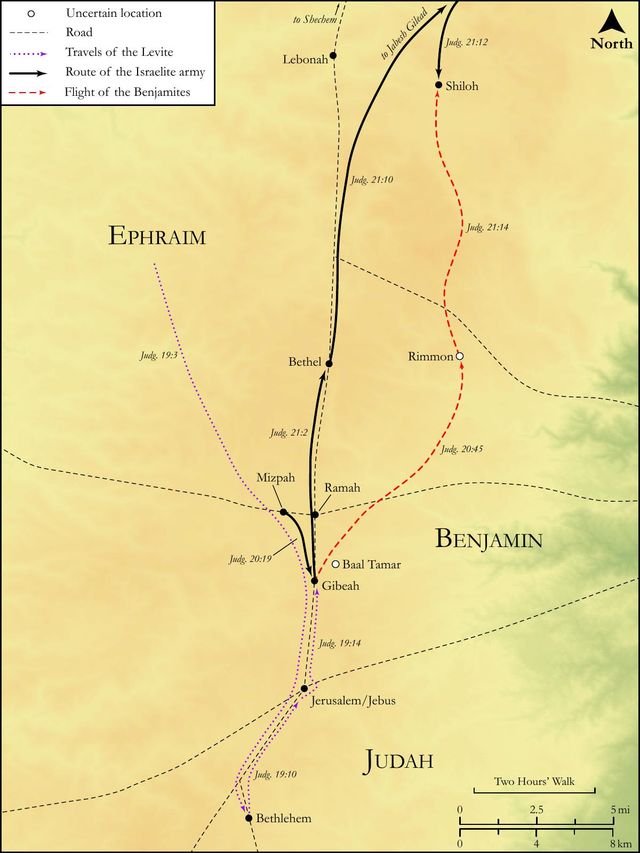
Judges 19:16 appears at a critical juncture in the narrative, immediately following the Levite's desperate search for lodging in Gibeah. The preceding verses Judges 19:10-15 detail their journey from Bethlehem, their decision to bypass Jebus (Jerusalem, still held by Jebusites), and their arrival in Gibeah, a city within the territory of Benjamin. The Levite's initial hope that fellow Israelites would offer hospitality is met with silence; no one in Gibeah invites them in. This verse marks the dramatic, providential entry of the "old man," whose appearance provides a stark counterpoint to the city's inhospitable residents. His timely intervention sets the stage for his crucial offer of shelter and, tragically, for the subsequent unfolding of the night's depraved events, directly preceding the old man's invitation in Judges 19:17-21.
Historical & Cultural Context
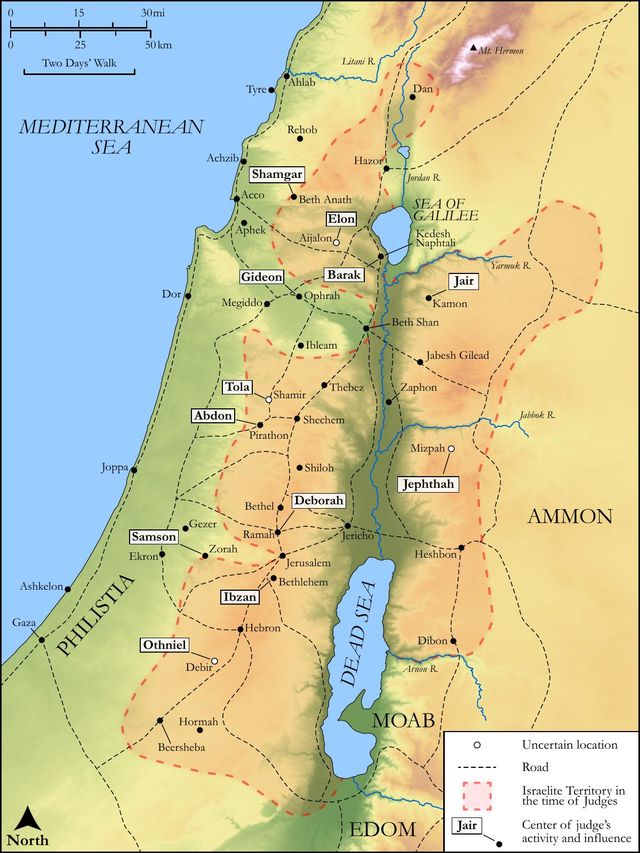
The book of Judges chronicles a turbulent and morally chaotic period in Israel's history, often summarized by the chilling refrain, "In those days there was no king in Israel; everyone did what was right in his own eyes" (Judges 21:25). This era reflects a profound breakdown of central authority, tribal unity, and adherence to Mosaic law. Hospitality was a sacred and non-negotiable custom in Israel, essential for the survival and safety of travelers. To refuse lodging, especially to fellow Israelites, was a grave offense, akin to a breach of covenantal duty. Gibeah, located in the territory of Benjamin, was a significant city, later becoming the first capital of Israel under King Saul. The old man's origin from "mount Ephraim" is highly significant, indicating he was not a native Benjamite but a sojourner. This detail underscores the profound irony that an outsider, a resident alien, would uphold a fundamental Israelite custom where the native inhabitants failed so miserably.
Key Themes
ShowHideThis verse contributes significantly to several overarching themes in Judges 19 and the broader book. Firstly, it powerfully underscores the perversion of hospitality, a sacred covenantal obligation, by the Benjamites of Gibeah. Their failure stands in sharp contrast to the old man's righteous act, immediately signaling the profound moral and spiritual decay prevalent in Israel, particularly within the tribe of Benjamin. This moral collapse sets the stage for the extreme wickedness that follows. Secondly, the explicit mention of the "Benjamites" subtly introduces the theme of tribal disunity and corruption, foreshadowing the devastating civil war that will erupt in Judges 20 as a direct consequence of Gibeah's actions. Finally, the old man's status as a "sojourner" highlights the vulnerability of the outsider and the importance of compassion, a theme deeply embedded in the Torah's commands to care for the alien and stranger (e.g., Deuteronomy 10:19).
Exposition and Analysis
ShowHideKey Word Analysis
ShowHideThe term זָקֵן (zâqên) refers to an elder, someone of advanced age, often implying wisdom, experience, and a respected position within the community. In this narrative, the "old man" serves as a stark moral contrast to the younger, depraved "men of the place." His age may symbolize a remnant of older, more righteous Israelite values, highlighting the severe generational and moral decline that has afflicted the nation.
The word עֶרֶב (ʻereb) denotes the time of dusk or evening. This seemingly simple detail is crucial, as it signifies the end of the day, the natural time when travelers would urgently seek shelter for the night. The lateness of the hour underscores the Levite's increasing vulnerability and the critical need for lodging, making the old man's appearance and offer of hospitality all the more timely and significant, as darkness often symbolizes danger and moral obscurity in biblical narratives.
The verb גּוּר (gûwr) means to "turn aside from the road (for a lodging or any other purpose), i.e., sojourn (as a guest)." The old man's status as a sojourner (ger) in Gibeah is profoundly significant. It means he is not a native Benjamite but a resident alien, much like the Levite and his company are travelers seeking temporary lodging. This shared experience of being an outsider likely fosters empathy and compels him to offer the hospitality that the native inhabitants, who should have known better, conspicuously refused.
Verse Breakdown
ShowHide"¶ And, behold, there came an old man from his work out of the field at even"
This clause introduces the unexpected and providential arrival of a key figure. The phrase "behold" (וְהִנֵּה, v'hinneh) serves as an interjection, drawing immediate attention to his appearance and signaling his importance in the unfolding drama. His origin "from his work out of the field" suggests a humble, diligent, and perhaps righteous individual, contrasting sharply with the implied idleness or depravity of the Gibeahites who offered no welcome. The timing "at even" emphasizes the critical need for shelter and the approaching darkness, both literally and figuratively, setting a tense atmosphere.
"which [was] also of mount Ephraim; and he sojourned in Gibeah"
This part of the verse provides crucial demographic and social details about the old man. His tribal origin from "mount Ephraim" places him outside the territory of Benjamin, emphatically stating that he is not a native of Gibeah. The fact that he "sojourned in Gibeah" means he himself was a resident alien, a temporary dweller. This status immediately creates a bond of understanding and shared experience with the traveling Levite, a fellow sojourner in a foreign place. This detail powerfully underscores the irony that an outsider, rather than the indigenous population, upholds the sacred custom of hospitality.
"but the men of the place [were] Benjamites."
This final clause serves as a stark, ominous, and morally damning contrast. The conjunction "but" (וְ) emphasizes the radical distinction between the compassionate old man and the local inhabitants. The explicit mention that "the men of the place [were] Benjamites" is not merely a geographical identifier but a loaded statement. It immediately implicates the tribe of Benjamin in the impending wickedness, setting the stage for the horrific events that unfold and providing the tribal context for the subsequent civil war in Judges 20. It tragically highlights the profound moral failure of an entire tribal segment of Israel, demonstrating how far they had fallen from covenantal ideals.
Literary Devices
ShowHideJudges 19:16 employs several potent literary devices to convey its message and heighten the narrative's tension. Contrast is paramount, immediately juxtaposing the righteous, hospitable old man—a sojourner himself—with the morally bankrupt and inhospitable native Benjamites of Gibeah. This striking opposition underscores the depth of Israel's moral decay. The verse also utilizes foreshadowing, particularly in the explicit mention that "the men of the place [were] Benjamites." This detail, seemingly innocuous, subtly hints at the coming depravity of the Gibeahites and the violent tribal conflict that will engulf Israel, as the reader is implicitly warned about the character of this particular tribe. Furthermore, there is a strong element of irony present: the one who offers life-saving hospitality is not a native resident, who would be expected to do so, but an outsider, a fellow sojourner. This inversion of expectations highlights the profound moral inversion within Israel during the period of the Judges, where fundamental covenantal duties were abandoned by those who should have upheld them.
Theological and Thematic Connections
ShowHideJudges 19:16 is a poignant theological statement on the dire state of Israel's moral and spiritual health during the period of the Judges. It vividly illustrates the devastating consequences of a society where "every man did that which was right in his own eyes," leading to a profound breakdown of covenantal obligations, including the sacred duty of hospitality. The old man's act of kindness, though ultimately unable to avert the full tragedy, stands as a beacon of righteousness in a city steeped in depravity, highlighting that even in the darkest times, God preserves a remnant of those who uphold His commands. This verse underscores that true godliness is often found not in tribal affiliation or geographical location, but in the heart that extends compassion and adheres to divine principles, even when the men of the place have abandoned them. It serves as a grim echo of Sodom's sin and a stark warning against the abandonment of basic human decency and divine law.
Reflection and Application
ShowHideJudges 19:16, despite its grim context, offers a powerful and enduring call to hospitality and compassion in a world often marked by indifference or hostility. The old man's willingness to open his home to strangers, even as a sojourner himself, stands as a stark challenge to believers today. It reminds us that genuine faith is not merely intellectual assent but finds expression in tangible acts of love and care for others, especially those who are vulnerable, overlooked, or in desperate need of refuge. In a society that can be increasingly isolated and self-focused, this narrative compels us to consider our own posture towards "strangers"—whether they are new neighbors, strangers far from home, or those simply outside our usual social circles. The failure of the Gibeahites serves as a sobering warning about the dangers of communal apathy and the moral decay that can fester when basic human kindness is abandoned. Our homes and communities, as expressions of God's kingdom, should be places of radical welcome, reflecting the open arms of God's grace and embodying the love He commands us to show to all.
Questions for Reflection
ShowHideFAQ
ShowHideWhy is the old man's tribal origin (Mount Ephraim) significant?
ShowHideThe old man's origin from "Mount Ephraim" is highly significant because it immediately establishes him as an outsider in Gibeah, which was a Benjaminite city. This detail highlights a crucial contrast: the native inhabitants of Gibeah, who should have extended hospitality as fellow Israelites in accordance with the Law, failed to do so. Instead, it was a sojourner, someone from a different tribe (Ephraim), who understood the plight of the traveling Levite and offered refuge. This not only underscores the profound moral failure of the Benjamites but also suggests that true righteousness and adherence to covenantal commands were not confined to specific tribes or locations, but could be found in individuals who chose to act righteously, even as foreigners in a corrupt place. It emphasizes that personal character, not tribal affiliation, determined one's adherence to God's ways during this chaotic period.
How does this verse foreshadow the later events in Judges?
ShowHideJudges 19:16 powerfully foreshadows the horrific events that unfold in the rest of chapter 19 and the subsequent civil war in Judges 20. The explicit mention that "the men of the place [were] Benjamites" is a critical detail. It immediately implicates the tribe of Benjamin in the impending depravity, signaling to the reader that this particular tribal segment is morally corrupt and capable of extreme wickedness. The initial lack of hospitality is merely the first symptom of a deeper, more pervasive moral rot that will soon manifest in the unspeakable gang rape and murder of the concubine. This verse thus sets the stage for the extreme violence and moral chaos that will lead to the near annihilation of the tribe of Benjamin, demonstrating the severe consequences of a society that has abandoned God's laws and basic human decency.
Christ-Centered Fulfillment
ShowHideJudges 19:16, with its stark contrast between the old man's hospitality and Gibeah's depravity, finds its ultimate fulfillment in the person and work of Jesus Christ. While the old man offered temporary shelter, Jesus is the ultimate host who offers eternal refuge and belonging. He is the divine "sojourner" who "came to his own, and his own people did not receive him" (John 1:11), experiencing rejection far greater than the Levite, ultimately being cast out and crucified. Yet, unlike the inhospitable Gibeahites, Christ extends an open invitation to all who are weary and burdened, promising rest for their souls (Matthew 11:28). His earthly life exemplified perfect hospitality, welcoming outcasts, sinners, and the lowly, embodying the very essence of God's boundless love for strangers. Through His atoning sacrifice on the cross, Jesus broke down the dividing wall of hostility, making those who were once "aliens and strangers" fellow citizens with the saints and members of God's household (Ephesians 2:19). The new heavens and new earth, the New Jerusalem, represent the ultimate fulfillment of divine hospitality, where God Himself will dwell with His people, and there will be no more sorrow or pain, for He will wipe every tear from His eyes (Revelation 21:3-4). Thus, the old man's act of kindness, though imperfect and limited in its scope, points forward to the perfect, saving hospitality of Christ, who welcomes all into His eternal kingdom and provides the ultimate dwelling place.