


Joshua 7:9
Bible text: King James Version (1769 Blayney text) · Public domain
Bible text: King James Version with Strong's numbers · Public domain
Bible text: Berean Standard Bible · Public domain
Bible text: American Standard Version (1901) · Public domain
Bible text: World English Bible, Messianic edition · Public domain
Bible text: Geneva Bible (1599) · Public domain
Bible text: Young's Literal Translation · Public domain
- וְיִשְׁמְעוּve·yish·me·'Uand they may hearH8085Conj-w ¦ V-Qal-ConjImperf-3mpVerb Qal Conjunction+Imperfect 3rd Plural Masculineוְandיִשְׁמְעוּthey may hear
- הַכְּנַעֲנִיha·ke·na·'a·Nithe Canaanite[s]H3669Art ¦ N-msNoun Gentilic Singular Masculine AbsoluteהַtheכְּנַעֲנִיCanaanite[s]
- וְכֹלve·Kholand allH3605Conj-w ¦ N-mscNoun Singular Masculine Constructוְandכֹלall
- יֹשְׁבֵיyo·she·Vei[the] inhabitants ofH3427V-Qal-Prtcpl-mpVerb Qal Participle Plural Masculine Construct
- הָאָרֶץha·'A·retzthe landH776Art ¦ N-fsNoun Singular Feminine Absoluteהָtheאָרֶץland
- וְנָסַבּוּve·na·Sa·buand they will surroundH5437Conj-w ¦ V-Niphal-ConsecPerf-3cpVerb Niphal Consecutive Perfect 3rd Plural common genderוְandנָסַבּוּthey will surround
- עָלֵינוּ'a·Lei·nu<on> usH5921Prep ¦ 1cpPreposition Definiteעָלֵי<on>נוּus
- וְהִכְרִיתוּve·hikh·Ri·tuand they will cut offH3772Conj-w ¦ V-Hiphil-ConsecPerf-3cpVerb Hiphil Consecutive Perfect 3rd Plural common genderוְandהִכְרִיתוּthey will cut off
- אֶת'et<obj.>H853DirObjMParticle Object Indicator
- שְׁמֵנוּshe·Me·nuour nameH8034N-msc ¦ 1cpNoun Singular Masculine Constructשְׁמֵnameנוּour
- מִןminfromH4480PrepPreposition
- הָאָרֶץha·'A·retzthe earthH776Art ¦ N-fsNoun Singular Feminine Absoluteהָtheאָרֶץearth
- וּמַהu·mahand what?H4100Conj-w ¦ InterrogPronoun Interrogativeוּandמַהwhat?
- תַּעֲשֵׂהta·'a·Sehwill you doH6213V-Qal-Imperf-2msVerb Qal Imperfect 2nd Singular Masculine
- לְשִׁמְךָle·shim·Khafor your nameH8034Prep-l ¦ N-msc ¦ 2msNoun Singular Masculine Constructלְforשִׁמְnameךָyour
- הַגָּדוֹלha·ga·Dol<the> greatH1419Art ¦ Adj-msAdjective Singular Masculine Absoluteהַ<the>גָּדוֹלgreat
English is a literal word-by-word gloss of the Hebrew, not the KJV's wording. Why?
This is the original text the KJV's translators worked from — each Hebrew word with its own literal English meaning in this verse, prepared by scholars at Tyndale House, Cambridge. The KJV translates whole sentences, not word by word, so its wording differs: one Hebrew word can become several English words, and the KJV may choose “the LORD” where the gloss reads “Yahweh”. Both are faithful — they answer different questions. For the KJV's own rendering, switch to the KJV text.
Details
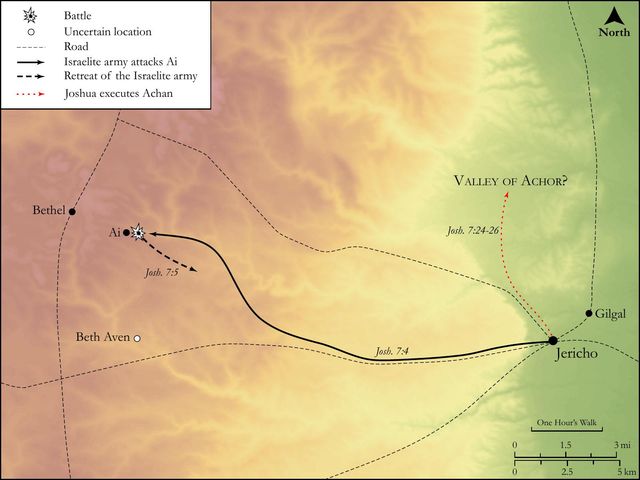
See on the biblical-era map
Study this verse
Public-domain commentary
Matthew Henry
From his Commentary on the Whole Bible. Henry comments on passages, not single verses — this entry covers Joshua 7:6–9. His two-level outline is real structure in the source text, so it is rendered as structure.
We have here an account of the deep concern Joshua was in upon this sad occasion. He, as a public person, interested himself more than any other in this public loss, and is therein an example to princes and great men, and teaches them to lay much to heart the calamities that befal their people: he is also a type of Christ, to whom the blood of his subjects is precious, Psa 72:14. Observe,
I.How he grieved:
He rent his clothes (Jos 7:6), in token of great sorrow for this public disaster, and especially a dread of God's displeasure, which was certainly the cause of it. Had it been but the common chance of war (as we are too apt to express it), it would not have become a general to droop thus under it; but, when God was angry, it was his duty and honour to feel thus. One of the bravest soldiers that ever was owned that his flesh trembled for fear of God, Psa 119:120. As one humbling himself under the mighty had of God, he fell to the earth upon his face, not thinking it any disparagement to him to lie thus low before the great God, to whom he directed this token of reverence, by keeping his eye towards the ark of the Lord. The elders of Israel, being interested in the cause and influenced by his example, prostrated themselves with him, and, in token of deep humiliation, put dust upon their heads, not only as mourners, but as penitents; not doubting but it was for some sin or other that God did thus contend with them (though they knew not what it was), they humbled themselves before God, and thus deprecated the progress of his wrath. This they continued until even-tide, to show that it was not the result of a sudden feeling, but proceeded from a deep conviction of their misery and danger if God were any way provoked to depart from them. Joshua did not fall foul upon his spies for their misinformation concerning the strength of the enemy, nor upon the soldiers for their cowardice, though perhaps both were blameworthy, but his eye is up to God; for is there any evil in the camp and he has not done it? His eye is upon God as displeased, and that troubles him.
II.How he prayed, or pleaded rather, humbly expostulating the case with God, not sullen, as David when the Lord had made a breach upon Uzzah, but much affected; his spirit seemed to be somewhat ruffled and discomposed, yet not so as to be put out of frame for prayer; but, by giving vent to his trouble in a humble address to God, he keeps his temper and it ends well.
1.Now he wishes they had all taken up with the lot of the two tribes on the other side Jordan, Jos 7:7. He thinks it would have been better to have staid there and been cut short than come hither to be cut off. This savours too much of discontent and distrust of God, and cannot be justified, though the surprise and disappointment to one deeply concerned for the public interest may in part excuse it. Those words, wherefore hast thou brought us over Jordan to destroy us? are too like what the murmurers often said (Exo 14:11, Exo 14:12; Exo 16:3; Exo 17:3; Num 14:2, Num 14:3); but he that searches the heart knew they came from another spirit, and therefore was not extreme to mark what he said amiss. Had Joshua considered that this disorder which their affairs were put into no doubt proceeded from something amiss, which yet might easily be redressed, and all set to rights again (as often in his predecessor's time), he would not have spoken of it as a thing taken for granted that they were delivered into the hands of the Amorites to be destroyed. God knows what he does, though we do not; but this we may be sure of, he never did nor ever will do us any wrong.
2.He speaks as one quite at a loss concerning the meaning of this event (v. 8): "What shall I say, what construction can I put upon it, when Israel, thy own people, for whom thou hast lately done such great things and to whom thou hast promised the full possession of this land, when they turn their backs before their enemies" (their necks, so the word is), "when they not only flee before them, but fall before them, and become a prey to them? What shall we think of the divine power? Is the Lord's arm shortened? Of the divine promise? Is his word yea and nay? Of what God has done for us? Shall this be all undone again and prove in vain?" Note, The methods of Providence are often intricate and perplexing, and such as the wisest and best of men know not what to say to; but they shall know hereafter, Joh 13:7.
3.He pleads the danger Israel was now in of being ruined. He gives up all for lost: "The Canaanites will environ us round, concluding that now our defence having departed, and the scales being turned in their favour, we shall soon be as contemptible as ever we were formidable, and they will cut off our name from the earth," Jos 7:9. Thus even good men, when things go against them a little, are too apt to fear the worst, and make harder conclusions than there is reason for. But his comes in here as a plea: "Lord, let not Israel's name, which has been so dear to thee and so great in the world, be cut off." 4. He pleads the reproach that would be cast on God, and that if Israel were ruined his glory would suffer by it. They will cut off our name, says he, yet, as if he had corrected himself for insisting upon that, it is no great matter (thinks he) what becomes of our little name (the cutting off of that will be a small loss), but what wilt thou do for thy great name? this he looks upon and laments as the great aggravation of the calamity. He feared it would reflect on God, his wisdom and power, his goodness and faithfulness; what would the Egyptians say? Note, Nothing is more grievous to a gracious soul than dishonour done to God's name. This also he insists upon as a plea for the preventing of his fears and for a return of God's favour; it is the only word in all his address that has any encouragement in it, and he concludes with it, leaving it to this issue, Father, glorify thy name. The name of God is a great name, above every name; and, whatever happens, we ought to believe that he will, and pray that he would, work for his own name, that this may not be polluted. This should be our concern more than any thing else. On this we must fix our eye as the end of all our desires, and from this we must fetch our encouragement as the foundation of all our hopes. We cannot urge a better plea than this, Lord, What wilt thou do for thy great name? Let God in all be glorified, and then welcome his whole will.
Continue studying Joshua 7:9 across the web’s major study libraries — every link below opens this exact verse, chapter, or book on the destination site.
Read & Compare
 BibleGatewayThis verse in more than 200 translations and 70 languages.
 Bible.comThe YouVersion reader — hundreds of translations, reading plans, and highlights.
 ESV.orgCrossway's official English Standard Version reader.
 NET BibleThe NET translation with 60,000+ translators' notes on every rendering decision.
 STEP BibleTyndale House's free study tool — original text, vocabulary, and scholarly resources.
 BibliaLogos Bible Software's free web reader.
 USCCBThe New American Bible (Revised Edition) with the U.S. bishops' study notes.
Commentaries
 BibleHub CommentariesDozens of classic commentaries on this verse, gathered on one page.
 StudyLightMore than 100 commentary sets — the largest collection on the web.
 BibleRefPlain-English commentary on what this verse means, verse by verse.
 Enduring WordDavid Guzik's free commentary on this chapter, widely used by Bible teachers.
 Bible Study ToolsVerse commentary alongside Greek and Hebrew study aids.
Original Language & Research
- BibleHub InterlinearThe verse word by word — original language, transliteration, and English.
- BibleHub LexiconEvery word's original-language definition and Strong's entry.
 Blue Letter BibleDeep-study tools — Strong's numbers, concordance, and word studies.
 SefariaThe Hebrew text with Rashi and centuries of Jewish commentary.
Sermons, Hymns & Audio


TrulyRandomVerse is not affiliated with these sites and doesn’t control their content. They’re linked because they’re genuinely useful.
Summary
Joshua 7:9 encapsulates Joshua's fervent plea to God in the aftermath of Israel's unexpected defeat at Ai. This critical verse reveals Joshua's profound distress, not primarily for the immediate military setback, but for the potential dishonor and perceived weakness it would bring upon God's "great name" among the surrounding pagan nations. He fears that Israel's annihilation would lead the Canaanites to conclude that the God of Israel is either impotent or unfaithful, thereby jeopardizing the divine reputation and undermining the very purpose of God's covenant with His chosen people.
Context
ShowHideLiterary Context
Joshua 7:9 stands as the emotional and theological apex of Joshua's desperate lament and intercession before the Lord. This prayer follows Israel's humiliating and unexpected defeat at Ai, a stark contrast to the miraculous and overwhelming victory at Jericho, as narrated in Joshua 6. The reason for this sudden reversal of fortune is revealed to be Achan's transgression, who violated God's explicit command concerning the devoted things from Jericho, a sin detailed in Joshua 7:1 and rooted in the earlier command of Joshua 6:18. Joshua's deeply anguished prayer, commencing in Joshua 7:6, expresses his confusion and despair over the defeat, culminating in this verse where he appeals directly to God's honor and reputation as the ultimate stake in their dire predicament. God's immediate response to Joshua's plea reveals Achan's sin and outlines the necessary steps for Israel's restoration.
Historical & Cultural Context
At this juncture, Israel is engaged in the divinely mandated conquest of Canaan, a period profoundly shaped by their covenant relationship with Yahweh. Among the nations round about, a nation's military prowess and success were frequently attributed to the strength and favor of its patron deity. Consequently, a defeat such as that at Ai, especially following the overwhelming triumph at Jericho, would have been interpreted by the polytheistic Canaanite nations as a definitive sign that Israel's God was either inferior, defeated, or had abandoned His people. The concept of "name" (Hebrew: shem) in this cultural milieu was far more profound than a mere label; it encompassed one's entire reputation, character, authority, and enduring legacy. To "cut off a name" signified absolute annihilation, not merely physical death but the complete erasure of a people's identity, memory, and influence from history. Joshua's appeal to God's "great name" thus strategically taps into this deep cultural understanding of divine honor, underscoring the severe implications of Israel's fate for the perception of Yahweh among the surrounding nations.
Key Themes
ShowHideThis verse powerfully contributes to several foundational themes within the book of Joshua and the broader biblical narrative. Central among these is the theme of God's Reputation and Glory, as Joshua's ultimate concern is for what God "wilt thou do unto thy great name?" This highlights the consistent biblical truth that God is supremely zealous for His own glory, and all His actions are ultimately designed to vindicate His character and demonstrate His sovereignty. Another critical theme is the Consequences of Sin, powerfully illustrated by Achan's individual transgression leading directly to corporate defeat and the national crisis Joshua describes. This emphasizes the profound interconnectedness of the covenant community and the serious, far-reaching implications of disobedience. The verse also exemplifies Intercessory Prayer, showcasing how a leader can bring the deepest fears and concerns of the people before God, appealing to His unchanging character even in the most desperate circumstances. Finally, it implicitly underscores the theme of Divine Faithfulness, as Joshua's lament, though filled with despair, is ultimately rooted in an underlying trust that God will indeed act to preserve His people and His name, thereby fulfilling His covenant promises.
Exposition and Analysis
ShowHideKey Word Analysis
ShowHideThis primitive root signifies "to revolve, surround, or border." In the context of Joshua 7:9, it carries a strong military connotation of hostile encirclement, implying that Israel would be trapped, besieged, and utterly overwhelmed by their enemies. Joshua envisions the Canaanites not merely attacking, but completely surrounding Israel, cutting off any possibility of escape and ensuring their complete destruction.
This verb means "to cut (off, down or asunder)." While it can refer to physical cutting, in this context, especially when paired with "name," it signifies a profound act of destruction or consumption. When applied to a people's "name," it forms an idiom for total annihilation, implying not just physical death but the obliteration of their identity, memory, and legacy from the earth. It suggests an irreversible end to their existence as a distinct people.
More than a mere label, "name" in biblical thought represents the entire essence of a person or, in this case, God. It encompasses character, authority, reputation, power, and covenant faithfulness. When Joshua speaks of Israel's "name" being cut off, he refers to their identity and legacy as God's chosen people being erased. When he appeals to God's "great name," he is appealing to God's very being, His revealed nature as the powerful, faithful, and sovereign God who has made promises to Israel. He is asking God to act in a way that is consistent with His self-revelation and His declared identity.
Verse Breakdown
ShowHide"For the Canaanites and all the inhabitants of the land shall hear [of it]"
Joshua begins by articulating the immediate and unavoidable consequence of Israel's defeat: the surrounding pagan nations will inevitably learn of their humiliation. This underscores the public nature of Israel's covenant relationship with God and highlights how their actions, or their failures, have significant implications for the world's perception of Yahweh. The defeat at Ai, unlike Achan's hidden sin, is a public spectacle that will be widely known.
"and shall environ us round, and cut off our name from the earth"
This clause expresses the profound depth of Joshua's fear: total and irreversible destruction. The act of "environing" signifies a complete siege, an overwhelming military advantage that would lead to the ultimate catastrophe of having their "name cut off." This is not merely about losing a battle; it is about the complete erasure of Israel's existence as a distinct people, which, by extension, would imply the apparent failure of God's covenant promises to them.
"and what wilt thou do unto thy great name?"
This is the climactic rhetorical question and the very core of Joshua's intercession. He masterfully shifts the focus from Israel's plight to God's honor and reputation. This question is not posed to elicit information but serves as a powerful, desperate appeal to God's character and His commitment to His own glory. Joshua implies that if Israel is destroyed, God's "great name" will be dishonored among the nations, who will conclude that He is either unable or unwilling to protect His people, thereby undermining His very identity and promises to the world.
Literary Devices
ShowHideJoshua 7:9 employs several potent literary devices to convey Joshua's profound anguish and his deep theological concern. The most prominent is the Rhetorical Question ("and what wilt thou do unto thy great name?"). This question is not posed for an answer but to dramatically emphasize the dire implications of Israel's defeat for God's reputation. It serves to underscore the immense theological weight of the situation and to compel divine action. Secondly, Hyperbole is evident in the phrase "cut off our name from the earth." While the threat of annihilation was real, this expression conveys the extreme psychological and spiritual fear of complete obliteration, not just of life but of identity and legacy. This heightened language emphasizes the depth of Joshua's despair and the perceived finality of the disaster. Finally, the entire verse functions as an Appeal to Divine Honor, a specific and powerful form of intercessory prayer where the supplicant bases their plea not on their own merit or righteousness, but solely on God's character and His unwavering commitment to His own glory. Joshua strategically frames the crisis in terms of its direct impact on God's "great name," knowing that God is supremely zealous for His own reputation.
Theological and Thematic Connections
ShowHideJoshua 7:9 profoundly illustrates the biblical truth that God is ultimately zealous for His own glory, and that His "great name" is the ultimate stake in the unfolding drama of redemption. Joshua's appeal here strikingly mirrors similar intercessions made by Moses, who likewise pleaded with God to spare Israel by appealing to the potential dishonor that would be brought upon God's name among the nations if He were to destroy His people in the wilderness. This highlights a consistent theological principle woven throughout Scripture: God acts not primarily for humanity's sake alone, but fundamentally for the vindication of His own character and the demonstration of His sovereign power and unwavering faithfulness to His covenant promises. The defeat at Ai, therefore, was not merely a military setback but a profound theological crisis that threatened the very foundation of God's redemptive plan and His reputation in the eyes of the world.
Reflection and Application
ShowHideJoshua 7:9 serves as a powerful and sobering reminder that our lives, both individually and corporately as the people of God, are inextricably linked to the reputation of God's "great name" in the world. Just as Israel's defeat at Ai had immediate and far-reaching implications for how the Canaanites perceived Yahweh, so too do our actions, our integrity, our faithfulness, and even our failures, profoundly impact how the world perceives the God we claim to serve. This truth calls us to a profound sense of responsibility, urging us to live in a manner that consistently honors and glorifies Him, ensuring that our lives are a compelling testament to His power, goodness, and faithfulness. Furthermore, Joshua's desperate prayer teaches us a vital lesson about the power and posture of intercession. Even in moments of deep despair or confusion, we are encouraged to boldly approach God, appealing not to our own righteousness or worthiness, but to His unchanging character and His ultimate commitment to His own glory. This empowers us to bring our deepest fears, our community's struggles, and the daunting challenges of our world before God, trusting that He will indeed act for the sake of His name, often in ways that bring about justice, restoration, and the advancement of His kingdom. The narrative also underscores the corporate nature of sin and its pervasive consequences, reminding us that individual disobedience can have ripple effects, impacting the spiritual health and public witness of the entire community, thereby highlighting the critical importance of holiness, accountability, and repentance among believers.
Questions for Reflection
ShowHideFAQ
ShowHideWhy is God's "name" so important in the Bible?
ShowHideIn biblical thought, God's "name" is far more than a mere label; it represents His entire being, His character, His attributes, His power, His authority, and His reputation. When the Bible speaks of God acting "for His name's sake," it means He acts to uphold His own character and to demonstrate His faithfulness to His covenant promises. To profane God's name is to misrepresent Him or to act in a way that denies His true nature. Therefore, God is intensely zealous for His name because it is synonymous with who He is. When Joshua appeals to God's "great name" in Joshua 7:9, he is essentially appealing to God's very identity and asking Him to act consistently with His revealed character as the mighty and faithful God of Israel.
Did God need Joshua to remind Him of His reputation?
ShowHideNo, God is omniscient and perfectly aware of all things, including His own reputation and the implications of Israel's defeat. Joshua's prayer, much like Moses' similar intercessions in Exodus 32:12 and Numbers 14:16, serves several crucial purposes. Firstly, it demonstrates Joshua's profound theological understanding of God's character and priorities, aligning his will with God's. Secondly, it allows God to interact with His people through human agency, inviting them into the process of seeking His will and understanding His ways. Thirdly, it serves as a powerful teaching moment for Israel (and for us), illustrating the nature of true intercessory prayer and emphasizing that God's glory is the ultimate goal of all His redemptive acts. It's not about informing God, but about the supplicant's heart being transformed and God's people learning to trust in His sovereign plan, even when circumstances seem dire.
Christ-Centered Fulfillment
ShowHideJoshua's desperate plea for God to act for the sake of His "great name" finds its ultimate and most profound fulfillment in the person and redemptive work of Jesus Christ. While Joshua feared Israel's name being "cut off from the earth" and God's name being dishonored by their defeat, Jesus, the true and perfect Israel, perfectly upheld and glorified the Father's name throughout His earthly ministry. His entire life was dedicated to this singular purpose, as He Himself declared, "I glorified you on earth, having accomplished the work that you gave me to do" (John 17:4). The defeat at Ai, caused by Achan's sin, threatened to sever Israel's covenant identity and bring profound shame upon God. In stark contrast, Christ's perfect obedience, culminating in His sacrificial death on the cross, not only atoned for the sins of His people but also served as the ultimate vindication of God's righteousness, holiness, and unwavering faithfulness. Through Christ's triumph over sin and death, God's "great name" is not merely preserved but is eternally magnified and made known to all nations, fulfilling the prophetic declaration that "at the name of Jesus every knee should bow, in heaven and on earth and under the earth" (Philippians 2:10). The church, as the new covenant people of God, is now called to bear His name, not through fear of being cut off, but through the glorious assurance of eternal life and an unbreakable covenant secured by the precious blood of the Lamb, ensuring that God's "great name" will forever be glorified through His redeemed people, who are a "chosen race, a royal priesthood, a holy nation, a people for God's own possession, so that you may proclaim the excellencies of Him who has called you out of darkness into His marvelous light" (1 Peter 2:9).