


John 12:16
Bible text: King James Version (1769 Blayney text) · Public domain
Bible text: King James Version with Strong's numbers · Public domain
Bible text: Berean Standard Bible · Public domain
Bible text: American Standard Version (1901) · Public domain
Bible text: World English Bible, Messianic edition · Public domain
Bible text: Geneva Bible (1599) · Public domain
Bible text: Young's Literal Translation · Public domain
- ταῦταtautaThese thingsG3778D-APNDemonstrative pronoun Accusative Plural Neuter
- δὲdenowG1161CONJConjunction
- οὐκouknotG3756PRT-NNegative Particle Negative
- ἔγνωσανegnōsanknewG1097V-2AAI-3PVerb 2nd Aorist Active Indicative 3rd Plural
- αὐτοῦautouof HimG846P-GSMPersonal pronoun Genitive Singular Masculine
- οἱhoitheG3588T-NPMDefinite article Nominative Plural Masculine
- μαθηταὶmathētaidisciplesG3101N-NPMNoun Nominative Plural Masculine
- τὸtofrom theG3588T-ASNDefinite article Accusative Singular Neuter
- πρῶτονprōtonfirstG4413A-ASNAdjective Accusative Singular Neuter
- ἀλλ᾽all᾽butG235CONJConjunction
- ὅτεhotewhenG3753CONJConjunction
- ἐδοξάσθηedoxasthēwas glorifiedG1392V-API-3SVerb Aorist Passive Indicative 3rd Singular
- ὁho<the>G3588T-NSMDefinite article Nominative Singular Masculine
- ἸησοῦςIēsousJesusG2424N-NSM-PNoun Nominative Singular Masculine Individual
- τότεtotethenG5119ADVAdverb
- ἐμνήσθησανemnēsthēsanthey rememberedG3403V-API-3PVerb Aorist Passive Indicative 3rd Plural
- ὅτιhotithatG3754CONJConjunction
- ταῦταtautathese thingsG3778D-NPNDemonstrative pronoun Nominative Plural Neuter
- ἦνēnwereG1510V-IAI-3SVerb Imperfect Active Indicative 3rd Singular
- ἐπ᾽ep᾽aboutG1909PREPPreposition
- αὐτῷautōHimG846P-DSMPersonal pronoun Dative Singular Masculine
- γεγραμμέναgegrammenawrittenG1125V-RPP-NPNVerb Perfect Passive Participle Nominative Plural Neuter
- καὶkaiandG2532CONJConjunction
- ταῦταtautathese thingsG3778D-APNDemonstrative pronoun Accusative Plural Neuter
- ἐποίησανepoiēsanthey had doneG4160V-AAI-3PVerb Aorist Active Indicative 3rd Plural
- αὐτῷautōto HimG846P-DSMPersonal pronoun Dative Singular Masculine
English is a literal word-by-word gloss of the Greek, not the KJV's wording. Why?
This is the original text the KJV's translators worked from — each Greek word with its own literal English meaning in this verse, prepared by scholars at Tyndale House, Cambridge. The KJV translates whole sentences, not word by word, so its wording differs: one Greek word can become several English words, and the KJV may choose “charity” where the gloss reads “love”. Both are faithful — they answer different questions. For the KJV's own rendering, switch to the KJV text.
Details
See on the biblical-era maps
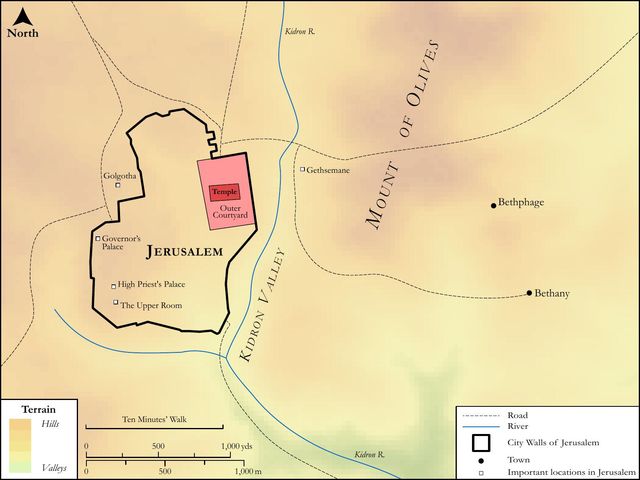
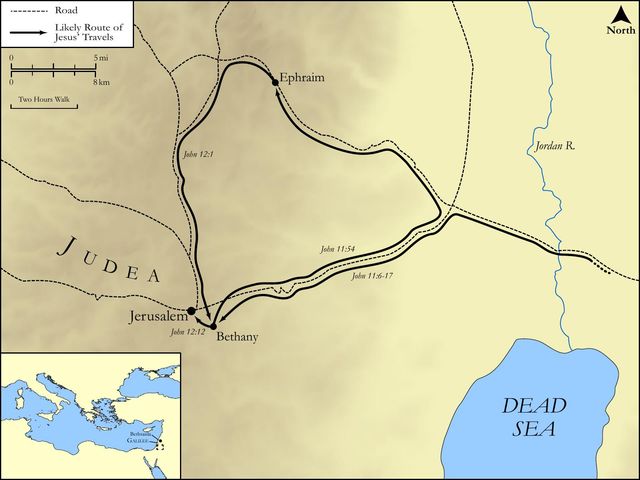
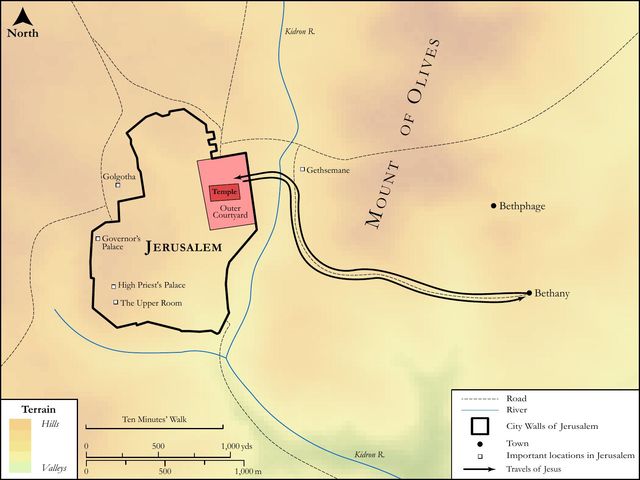
Study this verse
Public-domain commentary
Matthew Henry
From his Commentary on the Whole Bible. Henry comments on passages, not single verses — this entry covers John 12:12–19. His four-level outline is real structure in the source text, so it is rendered as structure.
This story of Christ's riding in triumph to Jerusalem is recorded by all the evangelists, as worthy of special remark; and in it we may observe,
I.The respect that was paid to our Lord Jesus by the common people, Joh 12:12, Joh 12:13, where we are told,
1.Who they were that paid him this respect: much people, ochlos polus - a great crowd of those that came up to the feast; not the inhabitants of Jerusalem, but the country people that came from remote parts to worship at the feast; the nearer the temple of the Lord, the further from the Lord of the temple. They were such as came up to the feast.
(1.)Perhaps they had been Christ's hearers in the country, and great admirers of him there, and therefore were forward to testify their respect to him at Jerusalem, where they knew he had many enemies. Note, Those that have a true value and veneration for Christ will neither be ashamed nor afraid to own him before men in any instance whereby they may do him honour.
(2.)Perhaps they were those more devout Jews that came up to the feast some time before, to purify themselves, that were more inclined to religion than their neighbours, and these were they that were so forward to honour Christ. Note, The more regard men have to God and religion in general, the better disposed they will be to entertain Christ and his religion, which is not destructive but perfective of all previous discoveries and institutions. They were not the rulers, nor the great men, that went out to meet Christ, but the commonalty; some would have called them a mob, a rabble: but Christ has chosen the weak and foolish things (Co1 1:27), and is honoured more by the multitude than by the magnificence of his followers; for he values men by their souls, not their names and titles of honour.
2.On what occasion they did it: They heard that Jesus was coming to Jerusalem. They had enquired for him (Joh 11:55, Joh 11:56): Will he not come up to the feast? And now they hear he is coming; for none that seek Christ seek in vain. Now when they heard he was coming, they bestirred themselves, to give him an agreeable reception. Note, Tidings of the approach of Christ and his kingdom should awaken us to consider what is the work of the day, that it may be done in the day. Israel must prepare to meet their God (Amo 4:12), and the virgins to meet the bridegroom.
3.In what way they expressed their respect; they had not the keys of the city to present to him, nor the sword nor mace to carry before him, none of the city music to compliment him with, but such as they had they gave him; and even this despicable crowd was a faint resemblance of that glorious company which John saw before the throne, and before the Lamb, Rev 7:9, Rev 7:10. Though these were not before the throne, they were before the Lamb, the paschal Lamb, who now, according to the usual ceremony, four days before the feast, was set apart to be sacrificed for us. There it is said of that celestial choir,
(1.)That they had palms in their hands, and so had these branches of palm-trees. The palm-tree has ever been an emblem of victory and triumph; Cicero calls one that had won many prizes plurimarum palmarum homo - a man of many palms. Christ was now by his death to conquer principalities and powers, and therefore it was fit that he should have the victor's palm borne before him; though he was but girding on the harness, yet he could boast as though he had put it off. But this was not all; the carrying of palm-branches was part of the ceremony of the feast of tabernacles (Lev 23:40; Neh 8:15), and their using this expression of joy in the welcome given to our Lord Jesus intimates that all the feasts pointed at his gospel, had their accomplishment in it, and particularly that of the feast of tabernacles, Zac 14:16.
(2.)That they cried with a loud voice, saying, Salvation to our God (Rev 7:10); so did these here, they shouted before him, as is usual in popular welcomes, Hosanna, blessed is the king of Israel, that comes in the name of the Lord; and hosanna signifies salvation. It is quoted from Psa 118:25, Psa 118:26. See how well acquainted these common people were with the scripture, and how pertinently they apply it to the Messiah. High thoughts of Christ will be best expressed in scripture-words. Now in their acclamations,
[1.]They acknowledge our Lord Jesus to be the king of Israel, that comes in the name of the Lord. Though he went now in poverty and disgrace, yet, contrary to the notions their scribes had given them of the Messiah, they own him to be a king, which bespeaks both his dignity and honour, which we must adore; and his dominion and power, to which we must submit. They own him to be, First, A rightful king, coming in the name of the Lord (Psa 2:6), sent of God, not only as a prophet, but as a king. Secondly, The promised and long-expected king, Messiah the prince, for he is king of Israel. According to the light they had, they proclaimed him king of Israel in the streets of Jerusalem; and, they themselves being Israelites, hereby they avouched him for their king.
[2.]They heartily wish well to his kingdom, which is the meaning of hosanna; let the king of Israel prosper, as when Solomon was crowned they cried, God save king Solomon, Kg1 1:39. In crying hosanna they prayed for three things: - First, That his kingdom might come, in the light and knowledge of it, and in the power and efficacy of it. God speed the gospel plough. Secondly, That it might conquer, and be victorious over all opposition, Rev 6:2. Thirdly, That it might continue. Hosanna is, Let the king live for ever; though his kingdom may be disturbed, let it never be destroyed, Psa 72:17.
[3.]They bid him welcome into Jerusalem: "Welcome is he that cometh; we are heartily glad to see him; come in thou blessed of the Lord; and well may we attend with our blessings him who meets us with his." This welcome is like that (Psa 24:7-9), Lift up your heads, O ye gates. Thus we must every one of us bid Christ welcome into our hearts, that is, we must praise him, and be well pleased in him. As we should be highly pleased with the being and attributes of God, and his relation to us, so we should be with the person and offices of the Lord Jesus, and his meditation between us and God. Faith saith, Blessed is he that cometh.
II.The posture Christ puts himself into for receiving the respect that was paid him (Joh 12:14):
When he had found, or procured, a young ass, he sat thereon. It was but a poor sort of figure he made, he alone upon an ass, and a crowd of people about him shouting Hosanna.
1.This was much more of state than he used to take; he used to travel on foot, but now was mounted. Though his followers should be willing to take up with mean things, and not affect any thing that looks like grandeur, yet they are allowed to use the service of the inferior creatures, according as God in his providence gives particular possession of those things over which, by his covenant with Noah and his sons, he has given to man a general dominion.
2.Yet it was much less of state than the great ones of the world usually take. If he would have made a public entry, according to the state of a man of high degree, he should have rode in a chariot like that of Solomon's (Sol 3:9, Sol 3:10), with pillars of silver, the bottom of gold, and the covering of purple; but, if we judge according to the fashion of this world, to be introduced thus was rather a disparagement than any honour to the king of Israel, for it seemed as if he would look great, and knew not how. His kingdom was not of this world, and therefore came not with outward pomp. He was now humbling himself, but in his exalted state John sees him in a vision on a white horse, with a bow and a crown.
III.The fulfilling of the scripture in this:
As it is written, Fear not, daughter of Sion, Joh 12:15. This is quoted from Zac 9:9. To him bore all the prophets witness, and particularly to this concerning him.
1.It was foretold that Zion's king should come, should come thus, sitting on an ass's colt; even this minute circumstance was foretold, and Christ took care it should be punctually fulfilled. Note,
(1.)Christ is Zion's king; the holy hill of Zion was of old destined to be the metropolis or royal city of the Messiah.
(2.)Zion's king does and will look after her, and come to her; though for a short time he retires, in due time he returns.
(3.)Though he comes but slowly (an ass is slow-paced), yet he comes surely, and with such expressions of humility and condescension as greatly encourage the addresses and expectations of his loyal subjects. Humble supplicants may reach to speak with him. If this be a discouragement to Zion, that her king appears in no greater state or strength, let her know that though he comes to her riding on an ass's colt, yet he goes forth against her enemies riding on the heavens for her help, Deu 33:26.
2.The daughter of Zion is therefore called upon to behold her king, to take notice of him and his approaches; behold and wonder, for he comes with observation, though not with outward show, Sol 3:11. Fear not. In the prophecy, Zion is told to rejoice greatly, and to shout, but here it is rendered, Fear not. Unbelieving fears are enemies to spiritual joys; if they be cured, if they be conquered, joy will come of course; Christ comes to his people to silence their fears. If the case be so that we cannot reach to the exultations of joy, yet we should labour to get from under the oppressions of fear. Rejoice greatly; at least, fear not.
IV.The remark made by the evangelist respecting the disciples (Joh 12:16):
They understood not at first why Christ did this, and how the scripture was fulfilled; but when Jesus was glorified, and thereupon the Spirit poured out, then they remembered that these things were written of him in the Old Testament, and that they and others had, in pursuance thereof, done these things to him.
1.See here the imperfection of the disciples in their infant state; even they understood not these things at first. They did not consider, when they fetched the ass and set him thereon, that they were performing the ceremony of the inauguration of Zion's king. Now observe,
(1.)The scripture is often fulfilled by the agency of those who have not themselves an eye to the scripture in what they do, Isa 45:4.
(2.)There are many excellent things, both in the word and providence of God, which the disciples themselves do not at first understand: not at their first acquaintance with the things of God, while they see men as trees walking; not at the first proposal of the things to their view and consideration. That which afterwards is clear was at first dark and doubtful.
(3.)It well becomes the disciples of Christ, when they are grown up to maturity in knowledge, frequently to reflect upon the follies and weaknesses of their first beginning, that free grace may have the glory of their proficiency, and they may have compassion on the ignorant. When I was a child, I spoke as a child.
2.See here the improvement of the disciples in their adult state. Though they had been children, they were not always so, but went on to perfection. Observe,
(1.)When they understood it: When Jesus was glorified; for,
[1.]Till then they did not rightly apprehend the nature of his kingdom, but expected it to appear in external pomp and power, and therefore knew not how to apply the scriptures which spoke of it to so mean an appearance. Note, The right understanding of the spiritual nature of Christ's kingdom, of its powers, glories, and victories, would prevent our misinterpreting and misapplying the scriptures that speak of it.
[2.]Till then the Spirit was not poured out, who was to lead them into all truth. Note, The disciples of Christ are enabled to understand the scriptures by the same Spirit that indited the scriptures. The spirit of revelation is to all the saints a spirit of wisdom, Eph 1:17, Eph 1:18.
(2.)How they understood it; they compared the prophecy with the event, and put them together, that they might mutually receive light from each other, and so they came to understand both: Then remembered they that these things were written of him by the prophets, consonant to which they were done to him. Note, Such an admirable harmony there is between the word and works of God that the remembrance of what is written will enable us to understand what is done, and the observation of what is done will help us to understand what is written. As we have heard, so have we seen. The scripture is every day fulfilling.
V.The reason which induced the people to pay this respect to our Lord Jesus upon his coming into Jerusalem, though the government was so much set against him. It was because of the illustrious miracle he had lately wrought in raising Lazarus.
1.See here what account and what assurance they had of this miracle; no doubt, the city rang of it, the report of it was in all people's mouths. But those who considered it as a proof of Christ's mission, and a ground of their faith in him, that they might be well satisfied of the matter of fact, traced the report to those who were eye-witnesses of it, that they might know the certainty of it by the utmost evidence the thing was capable of: The people therefore that stood by when he called Lazarus out of his grave, being found out and examined, bore record, Joh 12:17. They unanimously averred the thing to be true, beyond dispute or contradiction, and were ready, if called to it, to depose it upon oath, for so much is implied in the word Emarturei. Note, The truth of Christ's miracles was evidenced by incontestable proofs. It is probable that those who had seen this miracle did not only assert it to those who asked them, but published it unasked, that this might add to the triumphs of this solemn day; and Christ's coming in now from Bethany, where it was done, would put them in mind of it. Note, Those who wish well to Christ's kingdom should be forward to proclaim what they know that may redound to his honour.
2.What improvement they made of it, and what influence it had upon them (Joh 12:18): For this cause, as much as any other, the people met him.
(1.)Some, out of curiosity, were desirous to see one that had done such a wonderful work. Many a good sermon he had preached in Jerusalem, which drew not such crowds after him as this one miracle did. But,
(2.)Others, out of conscience, studied to do him honour, as one sent of God. This miracle was reserved for one of the last, that it might confirm those which went before, and might gain him this honour just before his sufferings; Christ's works were all not only well done (Mar 7:7) but well timed.
VI.The indignation of the Pharisees at all this; some of them, probably, saw, and they all soon heard of, Christ's public entry.
The committee appointed to find out expedients to crush him thought they had gained their point when he had retired unto privacy, and that he would soon be forgotten in Jerusalem, but they now rage and fret when they see they imagined but a vain thing.
1.They own that they had got no ground against him; it was plainly to be perceived that they prevailed nothing. They could not, with all their insinuations, alienate the people's affections from him, nor with their menaces restrain them from showing their affection to him. Note, Those who oppose Christ, and fight against his kingdom, will be made to perceive that they prevail nothing. God will accomplish his own purposes in spite of them, and the little efforts of their impotent malice. You prevail nothing, ouk ōpheleite - you profit nothing. Note, There is nothing got by opposing Christ.
2.They own that he had got ground: The world is gone after him; there is a vast crowd attending him, a world of people: an hyperbole common in most languages. Yet here, like Caiaphas, ere they were aware, they prophesied that the world would go after him; some of all sorts, some from all parts; nations shall be discipled. But to what intent was this said?
(1.)Thus they express their own vexation at the growth of his interest; their envy makes them fret. If the horn of the righteous be exalted with honour, the wicked see it, and are grieved (Psa 112:9, Psa 112:10); considering how great these Pharisees were, and what abundance of respect was paid them, one would think they needed not grudge Christ so inconsiderable a piece of honour as was now done him; but proud men would monopolize honour, and have none share with them, like Haman.
(2.)Thus they excite themselves and one another, to a more vigorous carrying on of the war against Christ. As if they should say, "Dallying and delaying thus will never do. We must take some other and more effectual course, to put a stop to this infection; it is time to try our utmost skill and force, before the grievance grows past redress." Thus the enemies of religion are made more resolute and active by being baffled; and shall its friends be disheartened with every disappointment, who know its cause is righteous and will at last be victorious?
Historical interpretation
Historical reception
8 surviving comments on this verse. Each one is dated, so this reads as a timeline rather than a list.
Select a marker to jump to its quote. Markers stagger vertically where authors wrote within a few decades of each other.
Seest thou that this most choked them, the persuasion which all men had that He was not an enemy of God? And this most divided the people, His saying that He came from the Father.
(Hom. lxiv) The Law enjoined, that on the tenth day of the first month a lamb or a kid should be shut up in the house, and be kept to the fourteenth day of the same month, on the evening of which day it was sacrificed. In accordance with this law, the Elect Lamb, the Lamb without spot, when He went up to Jerusalem to be immolated for the sanctification of the people, went up five days before, i. e. on the tenth day.
(Hom. lxvi. 1) They showed now at last that they thought Him greater than a prophet: And went forth to meet Him, and cried, Hosanna! Blessed is the King of Israel, that cometh in the name of the Lord.
(Hom. lxvi. 1) This is what more than any thing made men believe in Christ, viz. the assurance, that He was not opposed to God, that He came from the Father. The words show us the divinity of Christ. Hosanna is, Save us; and salvation in Scripture is attributed to God alone. And cometh, it is said, not is brought: the former befits a lord, the latter a servant. In the name of the Lord, goes to prove the same thing. He does not come in the name of a servant, but in the name of the Lord.
(Hom. lxvi. 1) He did this prophetically, to figure the unclean Gentiles being brought into subjection to the Gospel; and also as a fulfilment of prophecy.
(Hom. lxvi. 1) Or thus: Whereas they had had wicked kings, who had subjected them to wars, He saith to them, Trust Me, I am not such as they, but gentle and mild: which He showed by the manner of His entrance. For He did not enter at the head of an army, but simply riding on an ass. And observe the philosophy of the Evangelist, who is not ashamed of confessing his ignorance at the time of what these things meant: These things understood not the disciple at the first, but when Jesus was glorified.
(Hom. lvi. 1) Our Lord had not then revealed these things to them. Indeed it would have been a scandal to them had they known Him to be King at the time of His sufferings. Nor would they have understood the nature of His kingdom, but have mistaken it for a temporal one.
"Rejoice greatly, daughter of Zion"? Because all their kings had for the most part been an unjust and covetous kind of men, and had given them over to their enemies, and had perverted the people, and made them subject to their foes; "Be of good courage," It saith, "this is not such an one, but meek and gentle"; as is shown by the ass, for He entered not with an army in His train, but having an ass alone.
But how, after not walking openly in Jewry, and retiring into the wilderness, doth He again enter openly? Having quenched their anger by retiring, He cometh to them when they were stilled. Moreover, the multitude which went before and which followed after was sufficient to cast them into an agony; for no sign so much attracted the people as that of Lazarus. And another Evangelist saith, that they strewed their garments under His feet, and that "the whole city was moved"; with so great honor did He enter. And this He did, figuring one prophecy and fulfilling another; and the same act was the beginning of the one and the end of the other. For the, "Rejoice, for thy King cometh unto thee meek," belonged to Him as fulfilling a prophecy, but the sitting upon an ass was the act of one prefiguring a future event, that He was about to have the impure race of the Gentiles subject to Him.
But how say the others, that He sent disciples, and said, "Loose the ass and the colt," while John saith nothing of the kind, but that "having found a young ass, He sat upon it"? Because it is likely that both circumstances took place, and that He after the ass was loosed, while the disciples were bringing it, found the colt, and sat upon it. And they took the small branches of palm trees and olives, and strewed their garments in the way, showing that they now had a higher opinion concerning Him than of a Prophet.
"But this," saith the Evangelist, "the disciples knew not, that it was written of Him." Seest thou that they were ignorant on most points, because He did not reveal to them? For when He said, "Destroy this Temple, and in three days I will raise it up," neither then did the disciples understand. And another Evangelist saith, that "the saying was hid from them," and they knew not that He should rise from the dead. Now this was with reason concealed from them, (wherefore another Evangelist saith, that as they heard it from time to time, they grieved and were dejected, and this because they understood not the saying concerning the Resurrection,) it was with reason concealed, as being too high for them: but why was not the matter of the ass revealed to them? Because this was a great thing also. But observe the wisdom of the Evangelist, how he is not ashamed to parade their former ignorance. That it was written they knew, that it was written of Him they knew not. For it would have offended them if He being a King were about to suffer such things, and be so betrayed. Besides, they could not at once have taken in the knowledge of the Kingdom of which He spake; for another Evangelist saith, that they thought the words were spoken of a kingdom of this world.
"These things understood not His disciples at the first; but when Jesus was glorified," that is, when He had manifested the power of His resurrection, "then remembered they that these things were written of Him, and they had done these things unto Him," that is, they did nothing else but what had been written concerning Him. In short, mentally comparing with the contents of Scripture what was accomplished both prior to and in the course of our Lord's passion, they found this also therein, that it was in accordance with the utterance of the prophets that He sat on an ass's colt.
The Evangelist does not hesitate to mention the ignorance of the disciples, nor their subsequent understanding, since he did not care about the respect of people but pleads for the glory of the Spirit and shows what kind of men the disciples were before the resurrection and what sort of men they had become after the resurrection.
At first therefore they were ignorant that these words had been written with regard to Him; but after the Resurrection, they did not continue to suffer from the Jewish blindness, but the knowledge of the Divine words was revealed to them through the Spirit. And then was the Christ glorified, when after being crucified He came to life again. And the Evangelist does not blush to mention the ignorance of the disciples, and again their knowledge, since his object was, to take no heed of respect for men, but to plead for the glory of the Spirit; and to show what sort of men the disciples were before the Resurrection, and what sort of men they became after the Resurrection. If therefore these disciples were ignorant, how much more were the other Jews. And after He was crucified, the veil was rent, in order that we may know that nothing any longer remains hidden and concealed from the faithful and godly. They were enlightened therefore with knowledge from the time of the Resurrection, when the Christ breathed into their face, and they became different from the rest of men. And to a still greater extent they were enlightened on the Day of Pentecost, when they were transformed into the power of the Holy Spirit Who came upon them.
Continue studying John 12:16 across the web’s major study libraries — every link below opens this exact verse, chapter, or book on the destination site.
Read & Compare
 BibleGatewayThis verse in more than 200 translations and 70 languages.
 Bible.comThe YouVersion reader — hundreds of translations, reading plans, and highlights.
 ESV.orgCrossway's official English Standard Version reader.
 NET BibleThe NET translation with 60,000+ translators' notes on every rendering decision.
 STEP BibleTyndale House's free study tool — original text, vocabulary, and scholarly resources.
 BibliaLogos Bible Software's free web reader.
 USCCBThe New American Bible (Revised Edition) with the U.S. bishops' study notes.
Commentaries
 BibleHub CommentariesDozens of classic commentaries on this verse, gathered on one page.
 StudyLightMore than 100 commentary sets — the largest collection on the web.
 BibleRefPlain-English commentary on what this verse means, verse by verse.
 Enduring WordDavid Guzik's free commentary on this chapter, widely used by Bible teachers.
 Bible Study ToolsVerse commentary alongside Greek and Hebrew study aids.
Original Language & Research
- BibleHub InterlinearThe verse word by word — original language, transliteration, and English.
- BibleHub LexiconEvery word's original-language definition and Strong's entry.
 Blue Letter BibleDeep-study tools — Strong's numbers, concordance, and word studies.
 CNTR CollationThe earliest Greek manuscripts of this verse, collated letter by letter.
Sermons, Hymns & Audio


TrulyRandomVerse is not affiliated with these sites and doesn’t control their content. They’re linked because they’re genuinely useful.
Summary
John 12:16 offers a profound glimpse into the spiritual development of Jesus' disciples, highlighting their initial inability to grasp the profound significance of His actions, particularly the triumphal entry into Jerusalem. This verse reveals that their understanding was not immediate but dawned upon them retrospectively, only after Jesus' glorification through His resurrection and ascension. This delayed comprehension underscores the illuminating power of divine revelation, the essential role of the Holy Spirit, and the precise fulfillment of God's ancient prophetic plan in the person and work of Jesus Christ.
Context
ShowHideLiterary Context
This verse immediately follows Jesus' triumphal entry into Jerusalem, as described in John 12:12-15. Jesus deliberately chose to ride on a young donkey, an act that directly fulfilled the prophecy found in Zechariah 9:9. The crowds, waving palm branches and shouting "Hosanna! Blessed is the King of Israel that cometh in the name of the Lord!", perceived Him as a messianic figure, likely expecting an earthly king who would deliver them from Roman oppression. However, as John 12:16 reveals, the disciples themselves were equally caught up in the immediate excitement and failed to grasp the deeper, spiritual implications of this event, particularly its prophetic fulfillment and the true nature of Jesus' kingdom. Their understanding was contingent upon a future, pivotal event: Jesus' glorification.
Historical & Cultural Context
The triumphal entry occurred just days before the Passover feast, a time when Jerusalem would have been teeming with pilgrims, many of whom harbored fervent messianic expectations. The waving of palm branches and shouts of "Hosanna" were symbols of nationalistic fervor and a desire for liberation, echoing the Maccabean revolt. The disciples, being devout Jews, would have shared these common expectations, anticipating a political Messiah who would restore Israel's earthly kingdom. Their worldview, shaped by centuries of waiting for a conquering king, made it difficult for them to comprehend a Messiah who would achieve victory through suffering, death, and resurrection. This cultural lens obscured the spiritual reality of Jesus' mission until a later, divinely appointed moment of revelation.
Key Themes
ShowHideJohn 12:16 contributes significantly to several overarching themes within the Gospel of John and the broader biblical narrative. The theme of Delayed Understanding is prominent, illustrating that even those closest to Jesus struggled to grasp His divine identity and mission until after His resurrection and the outpouring of the Holy Spirit. This highlights the necessity of divine illumination for spiritual truth, as seen in Jesus' post-resurrection interactions with His disciples, opening their minds to understand the Scriptures (e.g., Luke 24:44-45). Another crucial theme is Prophetic Fulfillment, as the disciples' eventual realization that "these things were written of him" powerfully affirms Jesus' identity as the Messiah who meticulously fulfilled Old Testament prophecies, such as the one in Zechariah 9:9. Finally, the concept of Jesus' Glorification is central. In John's Gospel, "glorification" often refers not merely to honor but to Jesus' exaltation through His crucifixion, resurrection, and ascension—the very means by which His divine nature and redemptive work are fully manifested and understood, paving the way for the Spirit's arrival (John 16:7).
Exposition and Analysis
ShowHideKey Word Analysis
ShowHideThis verb signifies a deep, experiential knowledge, not merely intellectual assent. The disciples' initial failure to "understand" implies a lack of profound comprehension or insight into the spiritual and prophetic implications of Jesus' actions. They saw the events but did not grasp their ultimate meaning or purpose in God's redemptive plan.
In John's theology, Jesus' "glorification" is a multifaceted concept that primarily refers to His crucifixion, resurrection, and ascension. It is the moment when His divine nature is fully revealed through His redemptive work, bringing Him ultimate honor and revealing God's power and love. This glorification is the pivotal event that unlocks the disciples' understanding.
This word denotes an act of recalling or bearing in mind, often with a sense of understanding or realization that was previously absent. The disciples' "remembering" is not just a mental recall of facts but a profound, Spirit-empowered illumination that connects past events with their true, divinely ordained significance.
Verse Breakdown
ShowHide"These things understood not his disciples at the first:"
This clause highlights the disciples' initial spiritual blindness and limited perspective. Despite being eyewitnesses to Jesus' miracles and teachings, and even participating in the events of the triumphal entry, they lacked the spiritual discernment to grasp the deeper meaning of what was unfolding before them, particularly its connection to Old Testament prophecy and Jesus' true messianic mission. Their understanding was temporal and earthly, not yet spiritual and divine.
"but when Jesus was glorified,"
This marks the decisive turning point. The conjunction "but" (G235, allá) introduces a strong contrast. Jesus' glorification—encompassing His crucifixion, resurrection, and ascension—is presented as the essential prerequisite for the disciples' enlightenment. It was through these climactic events that the full truth of Jesus' identity and mission was revealed, making sense of all that preceded it.
"then remembered they that these things were written of him,"
Following Jesus' glorification, the disciples experienced a profound spiritual awakening. The Holy Spirit, promised by Jesus, illuminated their minds, enabling them to retrospectively connect the events they had witnessed, such as the triumphal entry, with specific Old Testament prophecies concerning the Messiah. This realization affirmed Jesus as the fulfillment of God's ancient promises.
"and [that] they had done these things unto him."
This final phrase adds another layer of understanding. The disciples not only recognized the prophetic fulfillment in Jesus' actions but also realized their own unwitting participation in God's sovereign plan. Their seemingly spontaneous actions during the triumphal entry were, in hindsight, part of the divine script, demonstrating God's meticulous orchestration of events and His ability to use even the uncomprehending actions of His servants to accomplish His purposes.
Literary Devices
ShowHideJohn 12:16 masterfully employs Dramatic Irony, where the audience (and indeed, the author, John, writing retrospectively) possesses knowledge that the characters (the disciples) initially lack. The reader knows the full significance of the triumphal entry as a fulfillment of prophecy, while the disciples are depicted as oblivious in the moment. This creates a tension that is resolved through Retrospection or Anamnesis, as the verse explicitly states that their understanding came "then remembered they." This act of remembering is not mere recall but a Spirit-empowered re-interpretation of past events in light of a new, transformative reality (Jesus' glorification). The verse also demonstrates Thematic Parallelism, as the disciples' journey from ignorance to illumination mirrors the unfolding of God's redemptive plan, which is gradually revealed and fully understood only through the climactic events of Christ's death and resurrection.
Theological and Thematic Connections
ShowHideJohn 12:16 profoundly illustrates the necessity of divine illumination for true spiritual understanding. The disciples, despite their close physical proximity to Jesus and firsthand experience of His ministry, could not fully grasp the theological depth or prophetic significance of His actions until after His glorification. This highlights that spiritual truth is not merely an intellectual exercise but requires a transformative work of the Holy Spirit, who opens the eyes of the heart to comprehend God's Word and His redemptive plan. This delayed understanding serves as a powerful reminder that God's timing and methods of revelation are sovereign, often making sense only in retrospect, after pivotal divine interventions.
Reflection and Application
ShowHideJohn 12:16 offers timeless lessons for believers today, encouraging both humility and patience in our spiritual walk. Like the disciples, we often encounter situations in our lives or passages in Scripture that we do not fully comprehend in the moment. This verse reminds us that true understanding often comes in hindsight, as God's plan unfolds and the Holy Spirit illuminates our minds. It calls us to trust in God's sovereign timing, recognizing that His ways are higher than our ways, and His thoughts deeper than our thoughts. We are invited to cultivate a posture of expectant faith, knowing that the same Spirit who opened the disciples' minds is at work in us, guiding us into all truth and helping us to see God's hand in our past, present, and future. This retrospective clarity builds profound faith, assuring us that even our seemingly uncomprehending actions can be woven into God's perfect tapestry.
Questions for Reflection
ShowHideFAQ
ShowHideWhy did the disciples not understand these things "at the first"?
ShowHideThe disciples' initial lack of understanding stemmed from several factors. Primarily, their expectations were largely shaped by the prevailing Jewish messianic hopes for an earthly, political king who would liberate Israel from Roman rule. This earthly focus blinded them to the spiritual nature of Jesus' kingdom and the necessity of His suffering, death, and resurrection as the means to achieve true redemption. Furthermore, divine timing played a crucial role; God had ordained that a full comprehension of these profound truths would only be possible after the climactic event of Jesus' glorification and the subsequent outpouring of the Holy Spirit, who would then illuminate their minds and bring all things to their remembrance (John 14:26).
Christ-Centered Fulfillment
ShowHideJohn 12:16 finds its ultimate Christ-centered fulfillment in the person and work of Jesus, particularly through His "glorification." The disciples' delayed understanding underscores that the full revelation of God's redemptive plan, and indeed of Jesus' true identity as Messiah, was inextricably linked to His completed work on the cross, His triumphant resurrection, and His ascension to the Father's right hand. It was through these pivotal events—His glorification—that the Old Testament prophecies, like Zechariah 9:9 concerning the humble King, were not merely fulfilled but fully illuminated in their spiritual depth. Jesus' glorification also paved the way for the outpouring of the Holy Spirit, as He promised in John 16:7, enabling the disciples to grasp the true meaning of His life, death, and resurrection. This Spirit-empowered understanding, as seen in Luke 24:45, transformed them from bewildered followers into bold witnesses, proclaiming Christ as the fulfillment of all Scripture (Acts 2:33). Thus, John 12:16 points to Christ as the source of all spiritual light, whose completed work alone unlocks the mysteries of God's Word and transforms human comprehension.