


Job 39:27
Bible text: King James Version (1769 Blayney text) · Public domain
Bible text: Berean Standard Bible · Public domain
Bible text: American Standard Version (1901) · Public domain
Bible text: World English Bible, Messianic edition · Public domain
Bible text: Geneva Bible (1599) · Public domain
Bible text: Young's Literal Translation · Public domain
- אִם'imor?H518PrtParticle Conditional
- עַל'alonH5921PrepPreposition
- פִּיךָPi·khayour mouthH6310N-msc ¦ 2msNoun Singular Masculine Constructפִּיmouthךָyour
- יַגְבִּיהַּyag·Bi·ahdoes it make high [its flight]H1361V-Hiphil-Imperf-3msVerb Hiphil Imperfect 3rd Singular Masculine
- נָשֶׁרNa·sheran eagleH5404N-msNoun Singular Masculine Absolute
- וְכִיve·Khiand thatH3588Conj-w ¦ PrtParticle Conditionalוְandכִיthat
- יָרִיםya·Rimit sets on highH7311V-Hiphil-Imperf-3msVerb Hiphil Imperfect 3rd Singular Masculine
- קִנּוֹki·Noits nestH7064N-msc ¦ 3msNoun Singular Masculine Constructקִנּnestוֹits
English is a literal word-by-word gloss of the Hebrew, not the KJV's wording. Why?
This is the original text the KJV's translators worked from — each Hebrew word with its own literal English meaning in this verse, prepared by scholars at Tyndale House, Cambridge. The KJV translates whole sentences, not word by word, so its wording differs: one Hebrew word can become several English words, and the KJV may choose “the LORD” where the gloss reads “Yahweh”. Both are faithful — they answer different questions. For the KJV's own rendering, switch to the KJV text.
Details
See on the biblical-era map
Study this verse
Public-domain commentary
Matthew Henry
From his Commentary on the Whole Bible. Henry comments on passages, not single verses — this entry covers Job 39:26–30.
The birds of the air are proofs of the wonderful power and providences of God, as well as the beasts of the earth; God here refers particularly to two stately ones: - 1. The hawk, a noble bird of great strength and sagacity, and yet a bird of prey, Job 39:26. This bird is here taken notice of for her flight, which is swift and strong, and especially for the course she steers towards the south, whither she follows the sun in winter, out of the colder countries in the north, especially when she is to cast her plumes and renew them. This is her wisdom, and it was God that gave her this wisdom, not man. Perhaps the extraordinary wisdom of the hawk's flight after her prey was not used then for men's diversion and recreation, as it has been since. It is a pity that the reclaimed hawk, which is taught to fly at man's command and to make him sport, should at any time be abused to the dishonour of God, since it is from God that she receives that wisdom which makes her flight entertaining and serviceable. 2. The eagle, a royal bird, and yet a bird of prey too, the permission of which, nay, the giving of power to which, may help to reconcile us to the prosperity of oppressors among men. The eagle is here taken notice of, (1.) For the height of her flight. No bird soars so high, has so strong a wind, nor can so well bear the light of the sun. Now, "Doth she mount at thy command? Job 39:27. Is it by any strength she has from thee? or dost thou direct her flight? No; it is by the natural power and instinct God has given her that she will soar out of thy sight, much more out of thy call." (2.) For the strength of her nest. Her house is her castle and strong-hold; she makes it on high and on the rock, the crag of the rock (Job 39:28), which sets her and her young out of the reach of danger. Secure sinners think themselves as safe in their sins as the eagle in her nest on high, in the clefts of the rock; but I will bring thee down thence, saith the Lord, Jer 49:16. The higher bad men sit above the resentments of the earth the nearer they ought to think themselves to the vengeance of Heaven. (3.) For her quicksightedness (Job 39:29): Her eyes behold afar off, not upwards, but downwards, in quest of her prey. In this she is an emblem of a hypocrite, who, while, in the profession of religion, he seems to rise towards heaven, keeps his eye and heart upon the prey on earth, some temporal advantage, some widow's house or other that he hopes to devour, under pretence of devotion. (4.) For the way she has of maintaining herself and her young. She preys upon living animals, which she seizes and tears to pieces, and thence carries to her young ones, which are taught to suck up blood; they do it by instinct, and know no better; but for men that have reason and conscience to thirst after blood is what could scarcely be believed if there had not been in every age wretched instances of it. She also preys upon the dead bodies of men: Where the slain are, there is she, These birds of prey (in another sense than the horse, Job 39:25) smell the battle afar off. Therefore, when a great slaughter is to be made among the enemies of the church, the fowls are invited to the supper of the great God, to eat the flesh of kings and captains, Rev 19:17, Rev 19:18. Our Saviour refers to this instinct of the eagle, Mat 24:28. Wheresoever the carcase is, there will the eagles be gathered together. Every creature will make towards that which is its proper food; for he that provides the creatures their food has implanted in them that inclination. These and many such instances of natural power and sagacity in the inferior creatures, which we cannot account for, oblige us to confess our own weakness and ignorance and to give glory to God as the fountain of all being, power, wisdom, and perfection.
Historical interpretation
Two Centuries of Reception
2 surviving comments on this verse. Each one is dated, so this reads as a timeline rather than a list.
Select a marker to jump to its quote. Markers stagger vertically where authors wrote within a few decades of each other.
The eagle is Christ. The high rock is the cross. The young ones licking the blood are the souls of the saints, who feed on Christ’s blood flowing from his side, that blood that also the nations of the believers enjoy like young ones of the heavenly eagle.
94. In Holy Scripture, by the word ‘eagle’ are sometimes designated malignant spirits, the spoilers of souls, sometimes the powers of the present world, but sometimes either the very subtle understandings of the Saints, or the Incarnate Lord, swiftly flying over things below, and presently seeking again those on high.
By the name ‘eagle’ are set forth the spirits, which lie in wait, as Jeremiah witnesses, who says, Our persecutors were swifter than the eagles of the heaven. [Lam. 4, 19] For our persecutors are swifter than the eagles of the heaven, when malignant men perform so many things against us, as to seem to surpass even the powers of the air themselves in the inventions of their malice.
By the word ‘eagle,’ earthly power is also typified. Whence it is said by the Prophet Ezekiel, A great eagle, of great wings, long limbed, full of feathers and variety, came to Libanus, and took away the marrow of the cedar, and plucked off the top of his branches. [Ez. 17, 3. 4.] For by this eagle who else is, in truth, designated but Nabuchodonosor, the king of Babylon? Who, in consequence of the immensity of his army, is described as of great wings; in consequence of the length of his continuance, as of long extent of limbs; for the multitude of his riches, as full of feathers, and because of the countless things that made up his earthly glory, as full of variety. Who came to Libanus, and took away the marrow of the cedar, and plucked off the top of his branches, because he attacked the loftiness of Judah, and carried off the nobility of its kingdom, as the marrow of the cedar. And whilst he took away captive the most delicate offspring of kings from the lofty height of their power, he plucked off, as it were, the top of his branches.
By the word ‘eagle’ is expressed either the subtle understanding of the Saints, or the flying of the Lord’s Ascension. Whence the same Prophet, when describing that he had seen the four Evangelists under the appearance of living creatures, declares that in them there had appeared to him the face of a man, of a lion, of an ox, and of an eagle. Doubtless designating by an eagle, the fourth living creature, John, who left the earth in his flight, because, through his subtle understanding, he penetrated, by beholding the Word, inward mysteries. With which sentence of the Prophet concerning himself, John himself, in his Revelation, does not disagree, saying, The first beast was like a lion, the second beast like a calf, the third beast having a face as of a man, the fourth beast like a flying eagle. [Rev. 4, 7] And though these several points are well suited to each particular Evangelist, (while one teaches the order of His human Nativity; another, by the offering of the sacrifice of the world, suggests, as it were, the death of the calf; another the might of His power, as the roaring of the lion; another, beholding the Nativity of the Word, gazes like the eagle at the risen sun;) yet these four living creatures can signify Him their very Head, of Whom they are members. For He Himself is both a Man, because He truly took our nature; and a calf, because He patiently died for our sakes; and a lion, because, by the strength of His Godhead, He burst the band of the death He had undergone; and, lastly, an eagle, because He went back to heaven, from whence He had come. He is called therefore a man, from His being born; a calf, from His dying; a lion, from His rising again; an eagle, from His ascending to the heavens. But in this place under the name ‘eagle’ is typified the subtle understanding of the Saints, and their sublime contemplation. For the sight of the eagle surpasses the vision of all birds, so that the sun’s ray does not, by striking on its eyes, which are fixed upon it, close them by any coruscation of its light. The eagle therefore mounts up at the command of God, when the life of the faithful, obeying the Divine commands, is suspended on high. And it is also said to place its nest in high places, because, despising earthly desires, it is already nourished, in hope, with heavenly things. It places its nest on high; because it constructs not the habitation of its mind in abject and grovelling conversation. Hence is that which is said to the Cinite, by Balaam when prophesying, Strong indeed is thy dwelling place, but if thou hast placed thy nest in the rock. [Numb, 24, 21] For Cinite is interpreted ‘possessor.’ And who are they who possess present things, except those who are skilled in the ability of worldly wisdom? And they truly build themselves therein a strong dwelling place, if becoming, by humility, as little children in their own sight, they are nourished in the sublimity of Christ; if they feel themselves to be weak, and give up the confidence of their mind, to be cherished by the lofty humility of the Redeemer Who is known to them; if they seek not after things below; if they pass over, with the flight of their heart, every thing which passes away.
95. Let us behold the eagle building itself the nest of hope in high places. He says; Our conversation is in heaven. [Phil. 3, 2] And again; Who hath raised us up together, and hath made us sit together in heavenly places. [Eph. 2, 6] He has his rest in high places, because in truth he fixes his thought on things above. He wishes not to degrade his mind to the lowest objects, he wishes not, by the baseness of human conversation, to dwell in things below. Paul was, perhaps, then confined in prison, when he was witnessing that he was sitting together with Christ in heavenly places. But he was there, where he had already fixed his ardent mind, not there, where the sluggish flesh was still necessarily detaining him.
96. For this is wont to be a special mark of the Elect, that they know how so to travel along the journey of the present life, as well aware, by the certainty of hope, that they have already attained to things above; so that they see all things which flow by to be beneath them, and trample down, through love of eternity, all that is eminent in this world. For hence it is that the Lord says, by the Prophet, to the soul which follows Him; I will raise thee above the high places of the earth. [Is. 58, 14] For losses, insults, poverty, contempt, are, as it were, some lower places of the earth, which even the very lovers of the world, as they walk along the level of the broad way, cease not to trample down, by avoiding them. But the high places of the earth are, gain of goods, flattery of inferiors, abundance of riches, honour, and loftiness of dignities; along which whoever walks with his desires still grovelling, he considers them high, just as he counts them great. But if the heart is once fixed on heavenly things, it is seen at once how lowly are those things which seemed to be high. For as he, who ascends a mountain, looks down for a little while on all other objects which lie beneath, the more he advances his step to higher ground, so he who strives to fix his attention on things above, as he finds by the very effort that the glory of this present life is nothing, is raised above the high places of the earth: and that which at first he believed to be above him, when plunged in grovelling desires, he afterwards discerns to be beneath him, as he advances in his ascent. The things then which the Lord there promises that He will do, saying, I will raise thee above the high places of the earth, these very things He witnesses to blessed Job, that He alone is able to do, saying; Will the eagle mount up at thy command, and make for thee her nest in high places? As if He were saying; As at Mine, Who inspire within by the grace of hidden bounty, that which I command from without.
Continue studying Job 39:27 across the web’s major study libraries — every link below opens this exact verse, chapter, or book on the destination site.
Read & Compare
 BibleGatewayThis verse in more than 200 translations and 70 languages.
 Bible.comThe YouVersion reader — hundreds of translations, reading plans, and highlights.
 ESV.orgCrossway's official English Standard Version reader.
 NET BibleThe NET translation with 60,000+ translators' notes on every rendering decision.
 STEP BibleTyndale House's free study tool — original text, vocabulary, and scholarly resources.
 BibliaLogos Bible Software's free web reader.
 USCCBThe New American Bible (Revised Edition) with the U.S. bishops' study notes.
Commentaries
 BibleHub CommentariesDozens of classic commentaries on this verse, gathered on one page.
 StudyLightMore than 100 commentary sets — the largest collection on the web.
 BibleRefPlain-English commentary on what this verse means, verse by verse.
 Enduring WordDavid Guzik's free commentary on this chapter, widely used by Bible teachers.
 Bible Study ToolsVerse commentary alongside Greek and Hebrew study aids.
Original Language & Research
- BibleHub InterlinearThe verse word by word — original language, transliteration, and English.
- BibleHub LexiconEvery word's original-language definition and Strong's entry.
 Blue Letter BibleDeep-study tools — Strong's numbers, concordance, and word studies.
 SefariaThe Hebrew text with Rashi and centuries of Jewish commentary.
Sermons, Hymns & Audio


TrulyRandomVerse is not affiliated with these sites and doesn’t control their content. They’re linked because they’re genuinely useful.
Summary
Job 39:27 is a profound rhetorical question posed by God to Job, serving as a powerful assertion of divine sovereignty over the natural world. Within God's majestic discourse from the whirlwind, this verse specifically highlights the eagle's inherent, divinely ordained ability to soar to immense heights and construct its nest in inaccessible places, attributes entirely beyond human command or comprehension. It functions as a humbling reminder of God's absolute power, unparalleled wisdom, and meticulous providential care over all creation, challenging humanity's limited understanding and perceived control in the face of divine omnipotence.
Context
ShowHideLiterary Context
This verse is intricately woven into the fabric of God's first direct address to Job, a magnificent theological exposition spanning from Job 38 through Job 41. Following Job's protracted suffering and his friends' inadequate theological frameworks, God intervenes from a tempest, not to explain the reasons for suffering, but to unequivocally assert His infinite power, boundless wisdom, and sovereign dominion over all creation. The discourse is characterized by a relentless barrage of unanswerable rhetorical questions concerning creation, meticulously crafted to expose Job's finite understanding and humble him before the Creator of all things. Job 39 specifically delves into the unique characteristics of various wild animals—including the wild goat, wild donkey, wild ox, ostrich, and warhorse—culminating with the eagle. Each creature serves as a testament to distinct instincts and behaviors that utterly defy human control or comprehension, thereby providing irrefutable evidence of God's masterful design and ongoing, meticulous providence.
Historical & Cultural Context
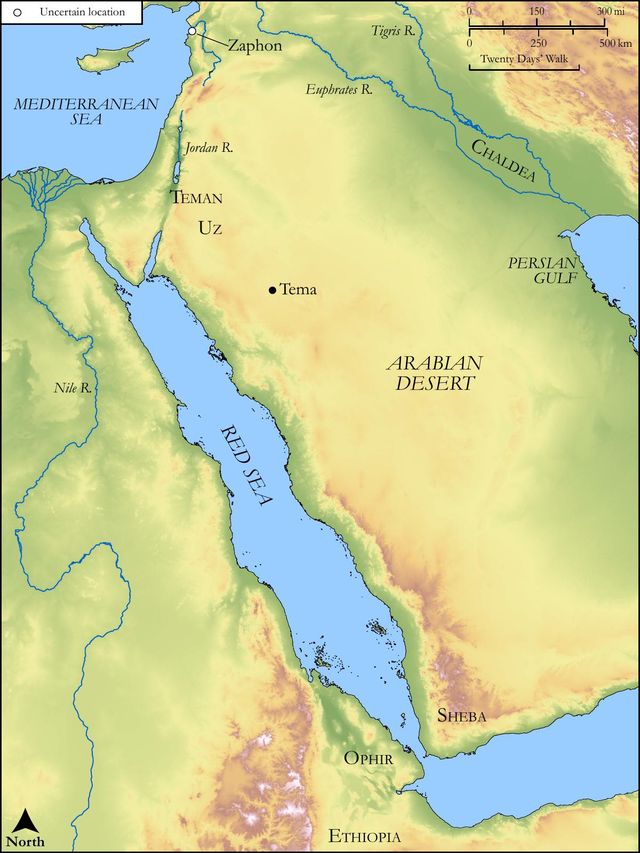
In Israel, birds of prey, especially eagles and large vultures, commanded immense respect and awe due to their formidable strength, extraordinary keen eyesight, and majestic flight. They were frequently associated with divine power, often serving as symbols for deities or kings. The eagle's well-known habit of constructing its nest in high, often perilous and inaccessible cliffs, symbolized security, remoteness, and an existence far removed from human interference. The imagery of "mounting up" (soaring effortlessly) would have deeply resonated with an audience intimately familiar with the sight of these magnificent birds effortlessly riding thermal currents to dizzying altitudes. The rhetorical questions God poses to Job ingeniously draw upon common, observable phenomena in the natural world, ensuring their immediate and profound impact on Job and his contemporaries. The geographical setting of the book of Job, likely the land of Uz (potentially Edom or northern Arabia), would have been an environment where such awe-inspiring birds were a familiar and powerful presence, rendering God's examples particularly potent and relatable to the immediate audience.
Key Themes
ShowHideJob 39:27 powerfully contributes to several overarching theological and narrative themes within the book of Job and the broader biblical narrative. Firstly, it emphatically underscores God's Absolute Sovereignty over all creation. The eagle's independent and powerful nature is presented as being entirely under God's command, not Job's, reinforcing the foundational truth that God alone orchestrates and governs the natural world, a truth echoed in Psalm 115:3. Secondly, it highlights Human Limitation and Humility. By posing a question that Job cannot affirmatively answer, God dramatically exposes the vast, unbridgeable chasm between finite human capability and infinite divine power. This theme of humanity's inherent inability to fully comprehend or control the universe is central to God's discourse, aiming to humble Job and lead him to repentance for presuming to question divine justice, a sentiment profoundly articulated in Romans 9:20. Finally, the verse speaks profoundly to Divine Wisdom in Creation. The eagle's innate ability to soar to majestic heights and construct its nest in secure, elevated places is not a random occurrence but a meticulous testament to God's intricate design and foresight. It demonstrates His perfect wisdom in sustaining even the wildest, most untamed aspects of His world, a wisdom celebrated throughout scripture, such as in Psalm 104:24.
Exposition and Analysis
ShowHideKey Word Analysis
ShowHideThe Hebrew term נֶשֶׁר (nesher, H5404) refers to a large bird of prey, commonly translated as "eagle" but often encompassing large vultures, particularly the griffon vulture, which is common in the Middle East and renowned for its high-soaring flight and cliff-nesting habits. Regardless of the precise species, the term evokes imagery of immense power, keen vision, swiftness, and a majestic, untamed, and unapproachable nature. In biblical symbolism, the eagle frequently represents strength, renewal, and divine protection. Here, its untamed, self-sufficient nature emphatically underscores its independence from human command.
This verb (from the root גָּבַהּ, gâbahh, H1361) signifies to soar, to be lofty, or to ascend. It vividly captures the effortless, majestic flight of a large bird of prey as it gains altitude, often riding thermal currents. The choice of this word emphasizes the eagle's inherent ability to reach great heights, symbolizing freedom, power, and a perspective far removed from the earthly concerns of humanity. It highlights an action that is spontaneous, instinctual, and entirely independent of external human direction.
The Hebrew word פֶּה (peh, H6310), literally "mouth," is used here idiomatically to mean "at your command" or "by your word." The rhetorical question "Doth the eagle mount up at thy command...?" directly challenges Job's capacity to issue such a directive. It underscores the profound difference between finite human authority, which is limited and often ineffective even over simple matters, and infinite divine authority, which effortlessly governs the most powerful and independent creatures of the wild.
Verse Breakdown
ShowHide"Doth the eagle mount up at thy command,"
This initial clause presents a pointed rhetorical question, directly challenging Job's perceived authority and control. God asks if Job possesses the power to dictate the eagle's majestic ascent into the heavens. The implied answer is a resounding "No," immediately highlighting Job's utter lack of control over the natural world. The eagle, a powerful symbol of untamed freedom and strength, soars not by human decree but by divine design and inherent instinct. This question instantly establishes the vast, unbridgeable disparity between Job's limited human power and God's boundless, sovereign authority.
"and make her nest on high?"
This second clause extends the challenge, probing Job's ability to influence the eagle's most fundamental and instinctual behaviors—its nesting habits. Eagles and large vultures are renowned for building their nests in inaccessible, lofty places, typically on high cliffs or peaks, far removed from human reach or interference. This behavior is not taught by humans, nor is it subject to human command; rather, it is an innate, divinely programmed instinct crucial for safety and survival. The question further emphasizes that even the most basic, yet profoundly intricate, aspects of creation are entirely beyond human manipulation, firmly under God's exclusive dominion and providential care.
Literary Devices
ShowHideThe verse is profoundly shaped by Rhetorical Question, which is the dominant literary device throughout God's discourse in Job 38-Job 41. God poses these questions not to elicit information, but to powerfully make a point, forcing Job to confront his own ignorance, limited perspective, and inherent powerlessness. The questions concerning the eagle's innate ability to fly and nest are unanswerable by Job, serving to humble him and magnify God's omnipotence. There is also potent Symbolism at play, with the eagle representing untamed strength, freedom, keen perception, and divine majesty. Its soaring flight symbolizes a perspective and power far beyond human grasp or comprehension. The phrase "at thy command" employs Anthropomorphism, attributing human-like command and speech to God, thereby emphasizing His personal, direct, and authoritative involvement in the governance of all creation. The focus on the eagle's natural, instinctual behaviors also exemplifies Zoomorphism, using the characteristics and actions of an animal to illustrate a profound theological truth about God's creative wisdom and sovereign, meticulous control over His world.
Theological and Thematic Connections
ShowHideJob 39:27 powerfully articulates the foundational theological truth of God's absolute and unchallenged sovereignty over all creation. It reveals that even the most independent, majestic, and seemingly untamed creatures operate entirely according to divine decree, not human will or intervention. This profound principle extends far beyond the animal kingdom, encompassing all aspects of existence, reminding us that God's wisdom, power, and authority are infinitely superior to our own. The verse calls humanity to a posture of deep humility and reverent awe before a Creator who not only brought all things into being but actively sustains and governs them with meticulous detail and effortless authority. It challenges any notion of human autonomy, self-sufficiency, or control over the fundamental forces of life, directing our gaze upward to the One who truly holds all things in His sovereign hand.
Reflection and Application
ShowHideJob 39:27 serves as a profound spiritual anchor in a world that often prizes human control, knowledge, and self-sufficiency above all else. It beckons us to cultivate a deep and abiding humility before the Creator of the universe. When we observe the effortless majesty of an eagle soaring high above, riding invisible thermal currents, or consider the intricate, divinely programmed instincts that guide its choice of an inaccessible nesting site, we are invited to acknowledge that these phenomena are not random occurrences but are sustained by the very same divine hand that orchestrates the most minute details of our own lives. This verse profoundly encourages us to release our grip on the illusion of control and embrace a posture of complete trust in God's perfect wisdom and unfailing providence. In moments of anxiety, uncertainty, or when we feel overwhelmed by life's complexities, the truth that the God who effortlessly commands the eagle's flight also cares for us with infinite tenderness can bring immense, soul-settling peace. It calls us to worship Him not just for His immense power, but for His meticulous care and sovereign oversight of all things, seen and unseen, leading to a deeper reverence and a more profound surrender to His benevolent will.
Questions for Reflection
ShowHideFAQ
ShowHideWhy does God use animals like the eagle to challenge Job?
ShowHideGod uses animals like the eagle to challenge Job not to belittle him, but to dramatically illustrate the vast, unbridgeable chasm between finite human understanding and infinite divine wisdom and power. By pointing to creatures that operate by innate instinct and inhabit realms utterly beyond human reach or command, God highlights His own meticulous design, providential care, and absolute sovereignty over all creation. The eagle, with its majestic, uncommanded flight and its inaccessible nest, serves as a tangible, undeniable example of a creature whose very existence, behaviors, and environment are entirely dependent on and directed by God, not by any human will or intervention. This serves to profoundly humble Job, demonstrating that if he cannot even command a wild bird to ascend or build its nest, how much less can he comprehend or challenge the intricate workings of divine justice and the order of creation. It is a powerful call to awe, humility, and trust, emphasizing that God's ways are indeed higher than our ways, as Isaiah 55:9 so eloquently proclaims.
Christ-Centered Fulfillment
ShowHideWhile Job 39:27 speaks directly of God the Father's sovereign command over creation, its ultimate fulfillment and deepest redemptive meaning are profoundly found in the person and work of Jesus Christ. He is the very Word through whom all things were made, and in whom all things hold together, as beautifully articulated in Colossians 1:16-17. The divine wisdom that instilled the eagle's soaring instinct and its innate nesting habits is perfectly embodied in Christ, in whom "are hidden all the treasures of wisdom and knowledge" (Colossians 2:3). Jesus Himself demonstrated this same sovereign authority over creation during His earthly ministry, calming raging storms with a mere word (Mark 4:39) and teaching that God's meticulous providential care extends even to the smallest sparrows (Matthew 10:29), implicitly including the mighty eagle. Furthermore, the imagery of the eagle "mounting up" can powerfully foreshadow Christ's glorious ascension into heaven (Acts 1:9), where He now reigns in ultimate authority at the right hand of the Father, having triumphantly completed His redemptive work. Through Christ, believers are invited to experience a spiritual reality akin to "mounting up with wings like eagles" (Isaiah 40:31), finding renewed strength, a heavenly perspective, and an enduring hope by waiting on the Lord, who is Himself the ultimate and perfect expression of God's wisdom, power, and sovereign, loving care.