


Job 1:14
Bible text: King James Version (1769 Blayney text) · Public domain
Bible text: Berean Standard Bible · Public domain
Bible text: American Standard Version (1901) · Public domain
Bible text: World English Bible, Messianic edition · Public domain
Bible text: Geneva Bible (1599) · Public domain
Bible text: Young's Literal Translation · Public domain
- וּמַלְאָךְu·mal·'Akhand a messengerH4397Conj-w ¦ N-msNoun Singular Masculine Absoluteוּandמַלְאָךְa messenger
- בָּאba'he cameH935V-Qal-Perf-3msVerb Qal Perfect 3rd Singular Masculine
- אֶל'eltoH413PrepPreposition
- אִיּוֹב'i·YovJobH347N-proper-mNoun Proper Masculine
- וַיֹּאמַרvai·yo·Marand he saidH559Conj-w ¦ V-Qal-ConsecImperf-3msVerb Qal Consecutive Imperfect 3rd Singular Masculineוַandיֹּאמַרhe said
- הַבָּקָרha·ba·Karthe ox[en]H1241Art ¦ N-csNoun Singular common gender Absoluteהַtheבָּקָרox[en]
- הָיוּha·Yuthey wereH1961V-Qal-Perf-3cpVerb Qal Perfect 3rd Plural common gender
- חֹרְשׁוֹתcho·re·ShotplowingH2790V-Qal-Prtcpl-fpVerb Qal Participle Plural Feminine Absolute
- וְהָאֲתֹנוֹתve·ha·'a·to·Notand the female donkeysH860Conj-w ¦ Art ¦ N-fpNoun Plural Feminine Absoluteוְandהָtheאֲתֹנוֹתfemale donkeys
- רֹעוֹתro·'ot[were] grazingH7462V-Qal-Prtcpl-fpVerb Qal Participle Plural Feminine Absolute
- עַל'alonH5921PrepPreposition
- יְדֵיהֶםye·dei·Hemtheir handsH3027N-cdc ¦ 3mpNoun Dual common gender Constructיְדֵיhandsהֶםtheir
English is a literal word-by-word gloss of the Hebrew, not the KJV's wording. Why?
This is the original text the KJV's translators worked from — each Hebrew word with its own literal English meaning in this verse, prepared by scholars at Tyndale House, Cambridge. The KJV translates whole sentences, not word by word, so its wording differs: one Hebrew word can become several English words, and the KJV may choose “the LORD” where the gloss reads “Yahweh”. Both are faithful — they answer different questions. For the KJV's own rendering, switch to the KJV text.
Details
See on the biblical-era map
Study this verse
Public-domain commentary
Matthew Henry
From his Commentary on the Whole Bible. Henry comments on passages, not single verses — this entry covers Job 1:13–19. His three-level outline is real structure in the source text, so it is rendered as structure.
We have here a particular account of Job's troubles.
I.Satan brought them upon him on the very day that his children began their course of feasting, at their eldest brother's house (Job 1:13), where, he having (we may suppose) the double portion, the entertainment was the richest and most plentiful. The whole family, no doubt, was in perfect repose, and all were easy and under no apprehension of the trouble, now when they revived this custom; and this time Satan chose, that the trouble, coming now, might be the more grievous. The night of my pleasure has he turned into fear, Isa 21:4.
II.They all come upon him at once; while one messenger of evil tidings was speaking another came, and, before he had told his story, a third, and a fourth, followed immediately. Thus Satan, by the divine permission, ordered it,
1.That there might appear a more than ordinary displeasure of God against him in his troubles, and by that he might be exasperated against divine Providence, as if it were resolved, right or wrong, to ruin him, and not give him time to speak for himself.
2.That he might not have leisure to consider and recollect himself, and reason himself into a gracious submission, but might be overwhelmed and overpowered by a complication of calamities. If he have not room to pause a little, he will be apt to speak in haste, and then, if ever, he will curse his God. Note, The children of God are often in heaviness through manifold temptations; deep calls to deep; waves and billows come one upon the neck of another. Let one affliction therefore quicken and help us to prepare for another; for, how deep soever we have drunk of the bitter cup, as long as we are in this world we cannot be sure that we have drunk our share and that it will finally pass from us.
III.They took from him all that he had, and made a full end of his enjoyments. The detail of his losses answers to the foregoing inventory of his possessions.
1.He had 500 yoke of oxen, and 500 she-asses, and a competent number of servants to attend them; and all these he lost at once, Job 1:14, Job 1:15. The account he has of this lets him know,
(1.)That it was not through any carelessness of his servants; for then his resentment might have spent itself upon them: The oxen were ploughing, not playing, and the asses not suffered to stray and so taken up as waifs, but feeding beside them, under the servant's eye, each in their place; and those that passed by, we may suppose, blessed them, and said, God speed the plough. Note, All our prudence, care, and diligence, cannot secure us from affliction, no, not from those afflictions which are commonly owing to imprudence and negligence. Except the Lord keep the city, the watchman, though ever so wakeful, wakes but in vain. Yet it is some comfort under a trouble if it found us in the way of our duty, and not in any by-path.
(2.)That is was through the wickedness of his neighbours the Sabeans, probably a sort of robbers that lived by spoil and plunder. They carried off the oxen and asses, and slew the servants that faithfully and bravely did their best to defend them, and one only escaped, not in kindness to him or his master, but that Job might have the certain intelligence of it by an eye-witness before he heard it by a flying report, which would have brought it upon him gradually. We have no reason to suspect that either Job or his servants had given any provocation to the Sabeans to make this inroad, but Satan put it into their hearts to do it, to do it now, and so gained a double point, for he made both Job to suffer and them to sin. Note, When Satan has God's permission to do mischief he will not want mischievous men to be his instruments in doing it, for he is a spirit that works in the children of disobedience.
2.He had 7000 sheep, and shepherds that kept them; and all those he lost at the same time by lightning, Job 1:16. Job was perhaps, in his own mind, ready to reproach the Sabeans, and fly out against them for their injustice and cruelty, when the next news immediately directs him to look upwards: The fire of God has fallen from heaven. As thunder is his voice, so lightning is his fire: but this was such an extraordinary lightning, and levelled so directly against Job, that all his sheep and shepherds were not only killed, but consumed by it at once, and one shepherd only was left alive to carry the news to poor Job. The devil, aiming to make him curse God and renounce his religion, managed this part of the trial very artfully, in order thereto.
(1.)His sheep, with which especially he used to honour God in sacrifice, were all taken from him, as if God were angry at his offerings and would punish him in those very things which he had employed in his service. Having misrepresented Job to God as a false servant, in pursuance of his old design to set Heaven and earth at variance, he here misrepresented God to Jacob as a hard Master, who would not protect those flocks out of which he had so many burnt-offerings. This would tempt Job to say, It is in vain to serve God.
(2.)The messenger called the lightning the fire of God (and innocently enough), but perhaps Satan thereby designed to strike into his mind this thought, that God had turned to be his enemy and fought against him, which was much more grievous to him than all the insults of the Sabeans. He owned (Job 31:23) that destruction from God was a terror to him. How terrible then were the tidings of this destruction, which came immediately from the hand of God! Had the fire from heaven consumed the sheep upon the altar, he might have construed it into a token of God's favour; but, the fire consuming them in the pasture, he could not but look upon it as a token of God's displeasure. There have not been the like since Sodom was burned.
3.He had 3000 camels, and servants tending them; and he lost them all at the same time by the Chaldeans, who came in three bands, and drove them away, and slew the servants, Job 1:17. If the fire of God, which fell upon Job's honest servants, who were in the way of their duty, had fallen upon the Sabean and Chaldean robbers who were doing mischief, God's judgments therein would have been like the great mountains, evident and conspicuous; but when the way of the wicked prospers, and they carry off their booty, while just and good men are suddenly cut off, God's righteousness is like the great deep, the bottom of which we cannot find, Psa 36:6.
4.His dearest and most valuable possessions were his ten children; and, to conclude the tragedy, news if brought him, at the same time, that they were killed and buried in the ruins of the house in which they were feasting, and all the servants that waited on them, except one that came express with the tidings of it, Job 1:18, Job 1:19. This was the greatest of Job's losses, and which could not but go nearest him; and therefore the devil reserved it for the last, that, if the other provocations failed, this might make him curse God. Our children are pieces of ourselves; it is very hard to part with them, and touches a good man in as tender a part as any. But to part with them all at once, and for them to be all cut off in a moment, who had been so many years his cares and hopes, went to the quick indeed.
(1.)They all died together, and not one of them was left alive. David, though a wise and good man, was very much discomposed by the death of one son. How hard then did it bear upon poor Job who lost them all, and, in one moment, was written childless!
(2.)They died suddenly. Had they been taken away by some lingering disease, he would have had notice to expect their death, and prepare for the breach; but this came upon him without giving him any warning.
(3.)They died when they were feasting and making merry. Had they died suddenly when they were praying, he might the better have borne it. He would have hoped that death had found them in a good frame if their blood had been mingled with their feast, where he himself used to be jealous of them that they had sinned, and cursed God in their hearts - to have that day come upon them unawares, like a thief in the night, when perhaps their heads were overcharged with surfeiting and drunkenness - this could not but add much to his grief, considering what a tender concern he always had for his children's souls, and that they were now out of the reach of the sacrifices he used to offer according to the number of them all. See how all things come alike to all. Job's children were constantly prayed for by their father, and lived in love one with another, and yet came to this untimely end.
(4.)They died by a wind of the devil's raising, who is the prince of the power of the air (Eph 2:2), but it was looked upon to be an immediate hand of God, and a token of his wrath. So Bildad construed it (Job 8:4): Thy children have sinned against him, and he has cast them away in their transgression.
(5.)They were taken away when he had most need of them to comfort him under all his other losses. Such miserable comforters are all creatures. In God only we have a present help at all times.
Historical interpretation
Historical reception
2 surviving comments on this verse. Each one is dated, so this reads as a timeline rather than a list.
Select a marker to jump to its quote. Markers stagger vertically where authors wrote within a few decades of each other.
The day of trial is chosen by the devil in order that he may now overwhelm the holy Job with the variety of damages and afflictions. For previously, after offering the sacrifices, by having his meals in the circle of his children, Job could be safe in God’s protection. It was not without meaning that on the day of the theft of the oxen and donkeys mention was also made of what happened to the children as they were eating together. This was to show that all the misfortunes, by which the soul of the righteous man was to be crushed, happened simultaneously.
49. What else do we take the oxen to mean in figure, but well-doers; what the asses, but certain men of simple ways? These are properly described to be feeding beside the oxen, because simple souls, even when they are incapable of comprehending deep mysteries, are near to the great, inasmuch as they account the excellencies of their brethren to be their own also by force of charity; and while envy of the knowledges [sensibus] of others is a thing unknown, they are never divided at pasture. The asses then take their food in company with the oxen, in that duller minds, when joined with the wise, are fed by their understanding. Now the Sabeans mean by interpretation ‘captivators;’ and who are signified by the name of ‘captivators,’ but the impure spirits who lead all men captive to infidelity, whom they make subject to themselves? These too strike the youths [pueros] with the sword, in that they inflict grievous wounds, with the darts of temptation, upon those whom the constancy of manhood does not yet maintain in freedom and hardiness. These indeed enter fairly upon well-doing, but while still in the delicate state of a first beginning, they are prostrated beneath the unclean spirits that take captive; these are stricken with the sword of the enemy, in that he pierces them with despair of life eternal.
50. But what is this, that the messenger comes with these words, and I only am escaped alone? Who is this messenger, who, when the rest are destroyed, ‘escapes alone,’ but the prophetic word, which, whilst all the evils happen, which it foretold, alone returns as it were unharmed to the Lord? For when it is known to speak the truth concerning the fate of the lost, it is in a certain sense shown to live among the dead. It is hence that the servant is sent to bring down Rebecca, on the occasion of Isaac's marrying; doubtless because the intervening Prophecy does service in espousing the Church to the Lord. So when the Sabeans made their assault, one servant alone escaped to give the tidings, because by means of malignant spirits leading captive weak minds, that declaration of Prophecy was confirmed, which, in foretelling the same captivity, saith, Therefore My people are gone into captivity, because they have no knowledge. [Is. 5, 13] The prophecy therefore is in a manner preserved safe, when the captivity, which it foretold, is brought to light. It proceeds,
Continue studying Job 1:14 across the web’s major study libraries — every link below opens this exact verse, chapter, or book on the destination site.
Read & Compare
 BibleGatewayThis verse in more than 200 translations and 70 languages.
 Bible.comThe YouVersion reader — hundreds of translations, reading plans, and highlights.
 ESV.orgCrossway's official English Standard Version reader.
 NET BibleThe NET translation with 60,000+ translators' notes on every rendering decision.
 STEP BibleTyndale House's free study tool — original text, vocabulary, and scholarly resources.
 BibliaLogos Bible Software's free web reader.
 USCCBThe New American Bible (Revised Edition) with the U.S. bishops' study notes.
Commentaries
 BibleHub CommentariesDozens of classic commentaries on this verse, gathered on one page.
 StudyLightMore than 100 commentary sets — the largest collection on the web.
 BibleRefPlain-English commentary on what this verse means, verse by verse.
 Enduring WordDavid Guzik's free commentary on this chapter, widely used by Bible teachers.
 Bible Study ToolsVerse commentary alongside Greek and Hebrew study aids.
Original Language & Research
- BibleHub InterlinearThe verse word by word — original language, transliteration, and English.
- BibleHub LexiconEvery word's original-language definition and Strong's entry.
 Blue Letter BibleDeep-study tools — Strong's numbers, concordance, and word studies.
 SefariaThe Hebrew text with Rashi and centuries of Jewish commentary.
Sermons, Hymns & Audio


TrulyRandomVerse is not affiliated with these sites and doesn’t control their content. They’re linked because they’re genuinely useful.
Summary
Job 1:14 serves as the ominous prelude to a series of catastrophic events that befall the righteous Job, vividly contrasting a scene of ordinary, peaceful agricultural productivity with the sudden eruption of chaos. This verse marks the initial report of disaster, shattering the tranquility of Job's prosperous life and setting the stage for one of the Bible's most profound explorations of suffering, faith, and divine sovereignty.
Context
ShowHideLiterary Context
This verse immediately follows the pivotal heavenly dialogue between God and Satan in Job 1:6-12. In that exchange, Satan challenges Job's integrity, claiming his piety is purely mercenary. God, confident in Job's blameless character, grants Satan permission to strike at all Job possesses, though not Job himself, as explicitly stated in Job 1:12. Job 1:14 is the direct and immediate consequence of this divine permission being executed. It initiates a rapid succession of devastating reports, with subsequent verses detailing the loss of Job's oxen, asses, servants, sheep, camels, and ultimately, his children, culminating in the profound sorrow described in Job 1:15-19. The verse's depiction of normal, productive activity serves as a stark narrative device to amplify the shock and suddenness of the impending calamities, setting a tone of abrupt disruption.
Historical & Cultural Context
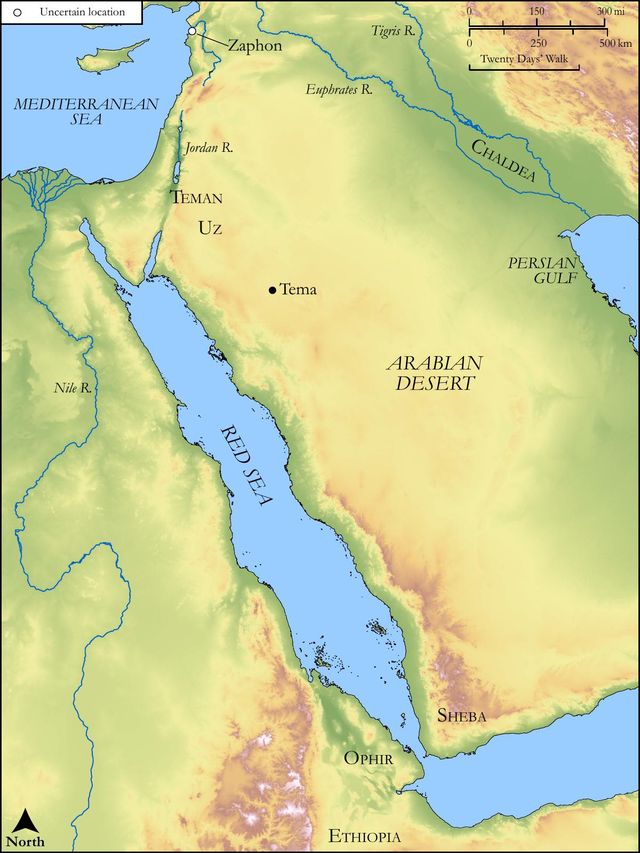
Job's story unfolds in the land of Uz, a region known for its agricultural and pastoral economies. In this context, oxen were indispensable for plowing fields, which was the foundational activity for food production and wealth accumulation. Asses were crucial for transportation, carrying goods, and various agricultural tasks, serving as valuable assets. Job's immense wealth, as established in Job 1:3, was measured primarily in livestock and servants, making these animals central to his prosperity. The scene of oxen plowing and asses feeding depicts a typical, prosperous agricultural enterprise, indicative of a well-ordered and productive estate. Messengers were the primary means of communication over distances in that age, and their arrival often signaled significant news, whether good or bad. The swift succession of messengers in the following verses underscores the efficiency and immediacy of communication in Job's large household, even as it highlights the relentless and overwhelming nature of the unfolding tragedy.
Key Themes
ShowHideJob 1:14 introduces several foundational themes that permeate the book of Job. Firstly, it highlights the suddenness and unpredictability of calamity, demonstrating how life can shift from peace and prosperity to devastation in an instant, without warning, challenging human assumptions of control. Secondly, it underscores the vulnerability and transient nature of earthly possessions. Job's vast wealth, which seemed so secure, proves to be fragile and susceptible to forces beyond his control, foreshadowing the broader biblical teaching that earthly treasures are not secure from loss and encouraging a focus on eternal realities. Thirdly, this verse marks the beginning of Job's profound and agonizing test of faith, initiating the narrative exploration of why the righteous suffer, the nature of divine justice, and human endurance in the face of inexplicable adversity. Finally, it subtly points to the theme of divine sovereignty, as the events, though seemingly random and malicious, are ultimately operating within the boundaries of God's permission, as revealed in Job 1:12, setting the stage for a deeper understanding of God's hidden purposes.
Exposition and Analysis
ShowHideKey Word Analysis
ShowHideThe Hebrew word מַלְאָךְ (mălʼâk') commonly translates to "messenger" or "angel." While it can refer to a divine being (as in the heavenly council), in this immediate context, it clearly denotes a human servant of Job, dispatched to deliver urgent news. The rapid succession of such messengers in the following verses underscores the human element of the unfolding disaster, even as the ultimate orchestrator is Satan, operating under God's permission.
The Hebrew word בָּקָר (bâqâr') refers collectively to "beef cattle" or an "animal of the ox family," used for plowing. In this context, it signifies the primary beasts of burden essential for agricultural productivity and a key indicator of wealth among the men of the east. Their presence "plowing" emphasizes the active, ongoing, and productive state of Job's prosperous estate just before the calamity.
The Hebrew word חָרַשׁ (chârash') is a primitive root meaning "to scratch" or "to plough." In the KJV, "were plowing" indicates an active, ongoing process. This verb paints a picture of industrious labor in progress, signifying the normal, established rhythm of Job's agricultural life. The sudden interruption of this productive activity highlights the abrupt and devastating nature of the impending losses.
Verse Breakdown
ShowHide"And there came a messenger unto Job, and said"
This opening clause introduces the abrupt arrival of the first bearer of bad news. The simple, direct language emphasizes the immediacy and unexpected nature of the communication, signaling a sudden shift from normalcy to crisis. The messenger's direct address to Job highlights the personal and direct impact of the impending calamity on him.
"The oxen were plowing"
This phrase establishes the scene of productive agricultural activity, painting a picture of Job's thriving estate. Oxen were vital for turning the soil, a fundamental aspect of ancient farming. Their active plowing signifies the ongoing, orderly, and prosperous operation of Job's household, representing a tangible aspect of his great wealth and the stability of his life.
"and the asses feeding beside them"
This complementary phrase further develops the peaceful and pastoral setting. Asses, also valuable livestock used for transport and labor, are depicted calmly grazing, undisturbed. This detail reinforces the sense of normalcy and undisturbed tranquility, making the subsequent news of their destruction all the more shocking and devastating. It paints a vivid picture of a well-managed and thriving estate, poised for continued prosperity, just before its violent disruption.
Literary Devices
ShowHideJob 1:14 masterfully employs several literary devices to achieve its dramatic effect. Juxtaposition is central, contrasting the peaceful, productive scene of oxen plowing and asses feeding with the imminent, violent destruction reported by the messenger. This stark contrast amplifies the shock and suddenness of the calamities that are about to unfold. The verse also utilizes Foreshadowing, as the arrival of the messenger and the description of the livestock in their ordinary, vulnerable activities subtly hint at the impending disaster that will target these very possessions. The normalcy described is the "calm before the storm," creating a sense of impending doom. Furthermore, there is an element of Irony at play: the very signs of Job's blessing and prosperity—his abundant livestock and productive land—are precisely what become the initial targets of the test, turning his strengths into points of vulnerability. The oxen and asses themselves serve as Symbolism for Job's earthly wealth and the stability of his life, making their reported destruction a direct assault on his material security and well-being.
Theological and Thematic Connections
ShowHideJob 1:14, though brief, sets in motion a profound theological drama, immediately confronting the reader with the fragility of earthly security and the suddenness with which life can change. It challenges any simplistic notion that piety guarantees uninterrupted prosperity, introducing the complex reality of righteous suffering. The verse highlights the vulnerability of all material blessings, reminding us that even the most well-ordered and prosperous lives are subject to forces beyond human control. Theologically, it subtly points to the unseen spiritual battle that undergirds human experience, as the messenger's report is but the visible manifestation of a divine permission granted in a heavenly council. This initial loss forces Job, and by extension the reader, to grapple with the true source of security and the nature of faith when all visible means of support are stripped away.
Reflection and Application
ShowHideJob 1:14 serves as a powerful, albeit unsettling, reminder of life's inherent unpredictability and the transient nature of all earthly possessions. In an instant, the meticulously built structures of our lives—our financial security, our health, our relationships—can be shaken or even dismantled. This verse calls us to a profound appreciation for the present moment of peace and prosperity, not taking them for granted, but also to cultivate a faith that transcends circumstances. It challenges us to examine the true foundation of our security and hope. If our trust is solely in what we possess or in the stability of our routines, we will inevitably find ourselves unprepared and devastated when the inevitable "messenger" of loss arrives. Instead, the broader narrative of Job encourages us to anchor our hope in God alone, recognizing that true wealth and lasting security are found not in material abundance, but in an unwavering relationship with the Creator, who remains sovereign even amidst chaos and loss. This perspective allows us to hold earthly blessings with open hands, trusting in God's ultimate goodness and enduring presence.
Questions for Reflection
ShowHideFAQ
ShowHideWhy does the text emphasize the oxen plowing and asses feeding just before the disaster?
ShowHideThe emphasis on the oxen plowing and asses feeding serves a crucial literary and thematic purpose. It paints a vivid picture of normalcy, productivity, and prosperity, highlighting the orderly and thriving state of Job's estate. By depicting this peaceful, industrious scene, the narrative maximizes the shock and impact of the subsequent, sudden destruction. It underscores the immense wealth Job possessed, making the losses even more profound, and emphasizes how quickly and unexpectedly life can change from a state of peace to one of chaos. This contrast serves to heighten the drama and underscore the fragility of earthly blessings, setting the stage for the profound questions about suffering and divine justice that the book of Job explores. It also makes the loss more poignant, as it interrupts active, life-sustaining work.
What is the significance of the "messenger" in this verse, and why is he the first to arrive?
ShowHideThe "messenger" (Hebrew: mălʼâk') in Job 1:14 is significant because he is the first in a rapid succession of four messengers who deliver devastating news to Job, as detailed in Job 1:14-19. His arrival marks the immediate execution of Satan's test, initiated by God's permission, as revealed in Job 1:12. The fact that he is the first to arrive, reporting on the loss of Job's most basic agricultural assets (oxen and asses), immediately signals the systematic and comprehensive nature of the attack on Job's prosperity. Each subsequent messenger brings news of an even greater loss, building a crescendo of calamity and leaving Job no time to process one tragedy before another strikes. The messengers serve as the visible, human instruments through which the unseen spiritual battle manifests in Job's earthly reality, emphasizing the direct and personal impact of the trials on Job.
Christ-Centered Fulfillment
ShowHideWhile Job 1:14 describes an earthly calamity befalling a righteous man, it foreshadows the ultimate, incomprehensible suffering of the perfectly righteous Son of God. Just as Job's peaceful, productive life was suddenly shattered, so too did Jesus, the Lamb of God, who takes away the sin of the world, willingly enter into a world of suffering, culminating in His unjust trial and crucifixion. The vulnerability of Job's earthly possessions points to Christ's own radical detachment from worldly wealth, having nowhere to lay His head and warning His followers against laying up treasures on earth. The suddenness of Job's trials reflects the unexpected and overwhelming nature of the cross, where the Prince of Peace became the Suffering Servant, enduring the ultimate test of faith and obedience as prophesied in Isaiah 53:4-7. In Christ, we see the perfect response to suffering—not questioning God's sovereignty, but submitting to His will, even unto death on the cross, as described in Philippians 2:8. Job's experience, initiated by this verse, ultimately points to the greater suffering of Christ, through whom believers find not only empathy in their own trials, for He was tempted in every way, just as we are, but also the ultimate hope and strength to endure, knowing that their suffering can be a means of sharing in His glory and becoming heirs with Christ.