


Job 1:11
Bible text: King James Version (1769 Blayney text) · Public domain
Bible text: Berean Standard Bible · Public domain
Bible text: American Standard Version (1901) · Public domain
Bible text: World English Bible, Messianic edition · Public domain
Bible text: Geneva Bible (1599) · Public domain
Bible text: Young's Literal Translation · Public domain
- וְאוּלָםve·'u·Lamand butH199Conj-w ¦ AdvAdverbוְandאוּלָםbut
- שְׁלַחshe·lachstretch outH7971V-Qal-Imp-2msVerb Qal Imperative 2nd Singular Masculine
- נָאna'pleaseH4994PrtParticle Interjection
- יָדְךָya·de·Khayour handH3027N-csc ¦ 2msNoun Singular common gender Constructיָדְhandךָyour
- וְגַעve·Ga'and touchH5060Conj-w ¦ V-Qal-Imp-2msVerb Qal Imperative 2nd Singular Masculineוְandגַעtouch
- בְּכָלbe·khol<in> allH3605Prep-b ¦ N-msNoun Singular Masculine Absoluteבְּ<in>כָלall
- אֲשֶׁר'a·SherthatH834RelParticle Relative
- לוֹlo[belongs] to himPrep-l ¦ 3msSuffix Personal 3rd Singular Masculineל[belongs] toוֹhim
- אִם'imifH518PrtParticle Conditional
- לֹאlo'notH3808NegParticle Negative
- עַל'alonH5921PrepPreposition
- פָּנֶיךָpa·Nei·khayour faceH6440N-mpc ¦ 2msNoun Plural Masculine Constructפָּנֶיfaceךָyour
- יְבָרֲכֶךָּye·va·ra·Khe·kahe will bless youH1288V-Piel-Imperf-3ms ¦ 2msVerb Piel Imperfect 3rd Singular Masculineיְבָרֲכֶhe will blessךָּyou
English is a literal word-by-word gloss of the Hebrew, not the KJV's wording. Why?
This is the original text the KJV's translators worked from — each Hebrew word with its own literal English meaning in this verse, prepared by scholars at Tyndale House, Cambridge. The KJV translates whole sentences, not word by word, so its wording differs: one Hebrew word can become several English words, and the KJV may choose “the LORD” where the gloss reads “Yahweh”. Both are faithful — they answer different questions. For the KJV's own rendering, switch to the KJV text.
Details
See on the biblical-era map
Study this verse
Public-domain commentary
Matthew Henry
From his Commentary on the Whole Bible. Henry comments on passages, not single verses — this entry covers Job 1:6–12. His three-level outline is real structure in the source text, so it is rendered as structure.
Job was not only so rich and great, but withal so wise and good, and had such an interest both in heaven and earth, that one would think the mountain of his prosperity stood so strong that it could not be moved; but here we have a thick cloud gathering over his head, pregnant with a horrible tempest. We must never think ourselves secure from storms while we are in this lower region. Before we are told how his troubles surprised and seized him here in this visible world, we are here told how they were concerted in the world of spirits, that the devil, having a great enmity to Job for his eminent piety, begged and obtained leave to torment him. It does not at all derogate from the credibility of Job's story in general to allow that this discourse between God and Satan, in these verses, is parabolical, like that of Micaiah (Kg1 22:19, etc.), and an allegory designed to represent the malice of the devil against good men and the divine check and restraint which that malice is under; only thus much further is intimated, that the affairs of this earth are very much the subject of the counsels of the unseen world. That world is dark to us, but we lie very open to it. Now here we have,
I.Satan among the sons of God (Job 1:6), an adversary (so Satan signifies) to God, to men, to all good:
he thrust himself into an assembly of the sons of God that came to present themselves before the Lord. This means either,
1.A meeting of the saints on earth. Professors of religion, in the patriarchal age, were called sons of God (Gen 6:2); they had then religious assemblies and stated times for them. The King came in to see his guests; the eye of God was on all present. But there was a serpent in paradise, a Satan among the sons of God; when they come together he is among them, to distract and disturb them, stands at their right hand to resist them. The Lord rebuke thee, Satan! Or,
2.A meeting of the angels in heaven. They are the sons of God, Job 38:7. They came to give an account of their negotiations on earth and to receive new instructions. Satan was one of them originally; but how hast thou fallen, O Lucifer! He shall no more stand in that congregation, yet he is here represented, as coming among them, either summoned to appear as a criminal or connived at, for the present, though an intruder.
II.His examination, how he came thither (Job 1:7):
The Lord said unto Satan, Whence comest thou? He knew very well whence he came, and with what design he came thither, that as the good angels came to do good he came for a permission to do hurt; but he would, by calling him to an account, show him that he was under check and control. Whence comest thou? He asks this,
1.As wondering what brought him thither. Is Saul among the prophets? Satan among the sons of God? Yes, for he transforms himself into an angel of light (Co2 11:13, Co2 11:14), and would seem one of them. Note, It is possible that a man may be a child of the devil and yet be found in the assemblies of the sons of God in this world, and there may pass undiscovered by men, and yet be challenged by the all-seeing God. Friend, how camest thou in hither? Or,
2.As enquiring what he had been doing before he came thither. The same question was perhaps put to the rest of those that presented themselves before the Lord, "Whence came you?" We are accountable to God for all our haunts and all the ways we traverse.
III.The account he gives of himself and of the tour he had made. I come (says he) from going to and fro on the earth.
1.He could not pretend he had been doing any good, could give no such account of himself as the sons of God could, who presented themselves before the Lord, who came from executing his orders, serving the interest of his kingdom, and ministering to the heirs of salvation.
2.He would not own he had been doing any hurt, that he had been drawing men from the allegiance to God, deceiving and destroying souls; no. I have done no wickedness, Pro 30:20. Thy servant went nowhere. In saying that he had walked to and fro through the earth, he intimates that he had kept himself within the bounds allotted him, and had not transgressed his bounds; for the dragon is cast out into the earth (Rev 12:9) and not yet confined to his place of torment. While we are on this earth we are within his reach, and with so much subtlety, swiftness, and industry, does he penetrate into all the corners of it, that we cannot be in any place secure from his temptations.
3.He yet seems to give some representation of his own character.
(1.)Perhaps it is spoken proudly, and with an air of haughtiness, as if he were indeed the prince of this world, as if the kingdoms of the world and the glory of them were his (Luk 4:6), and he had now been walking in circuit through his own territories.
(2.)Perhaps it is spoken fretfully, and with discontent. He had been walking to and fro, and could find no rest, but was as much a fugitive and a vagabond as Cain in the land of Nod.
(3.)Perhaps it is spoken carefully: "I have been hard at work, going to and fro," or (as some read it) "searching about in the earth," really in quest of an opportunity to do mischief. He walks abut seeking whom he may devour. It concerns us therefore to be sober and vigilant.
IV.The question God puts to him concerning Job (Job 1:8):
Hast thou considered my servant Job? As when we meet with one that has been in a distant place, where we have a friend we dearly love, we are ready to ask, "You have been in such a place; pray did you see my friend there?" Observe,
1.How honourably God speaks of Job: He is my servant. Good men are God's servants, and he is pleased to reckon himself honoured in their services, and they are to him for a name and a praise (Jer 13:11) and a crown of glory, Isa 62:3. "Yonder is my servant Job; there is none like him, none I value like him, of all the princes and potentates of the earth; one such saint as he is worth them all: none like him for uprightness and serious piety; many do well, but he excelleth them all; there is not to be found such great faith, no, not in Israel." Thus Christ, long after, commended the centurion and the woman of Canaan, who were both of them, like Job, strangers to that commonwealth. The saints glory in God - Who is like thee among the gods? and he is pleased to glory in them - Who is like Israel among the people? So here, none like Job, none in earth, that state of imperfection. Those in heaven do indeed far outshine him; those who are least in that kingdom are greater than he; but on earth there is not his like. There is none like him in that land; so some good men are the glory of their country.
2.How closely he gives to Satan this good character of Job: Hast thou set thy heart to my servant Job? designing hereby,
(1.)To aggravate the apostasy and misery of that wicked spirit: "How unlike him are thou!" Note, The holiness and happiness of the saints are the shame and torment of the devil and the devil's children.
(2.)To answer the devil's seeming boast of the interest he had in this earth. "I have been walking to and fro in it," says he, "and it is all my own; all flesh have corrupted their way; they all sit still, and are at rest in their sins," Zac 1:10, Zac 1:11. "Nay, hold," saith God, "Job is my faithful servant." Satan may boast, but he shall not triumph.
(3.)To anticipate his accusations, as if he had said, "Satan, I know thy errand; thou hast come to inform against Job; but hast thou considered him? Does not his unquestionable character give thee the lie?" Note, God knows all the malice of the devil and his instruments against his servants; and we have an advocate ready to appear for us, even before we are accused.
V.The devil's base insinuation against Job, in answer to God's encomium of him.
He could not deny but that Job feared God, but suggested that he was a mercenary in his religion, and therefore a hypocrite (Job 1:9): Doth Job fear God for nought? Observe,
1.How impatient the devil was of hearing Job praised, though it was God himself that praised him. Those are like the devil who cannot endure that any body should be praised but themselves, but grudge the just share of reputation others have, as Saul (Sa1 18:5, etc.) and the Pharisees, Mat 21:15.
2.How much at a loss he was for something to object against him; he could not accuse him of any thing that was bad, and therefore charged him with by-ends in doing good. Had the one half of that been true which his angry friends, in the heat of dispute, charged him with (Job 15:4, Job 22:5), Satan would no doubt have brought against him now; but no such thing could be alleged, and therefore,
3.See how slyly he censured him as a hypocrite, not asserting that he was so, but only asking, "Is he not so?" This is the common way of slanderers, whisperers, backbiters, to suggest that by way of query which yet they have no reason to think is true. Note, It is not strange if those that are approved and accepted of God be unjustly censured by the devil and his instruments; if they are otherwise unexceptionable, it is easy to charge them with hypocrisy, as Satan charged Job, and they have no way to clear themselves, but patiently to wait for the judgment of God. As there is nothing we should dread more than being hypocrites, so there is nothing we need dread less that being called and counted so without cause.
4.How unjustly he accused him as mercenary, to prove him a hypocrite. It was a great truth that Job did not fear God for nought; he got much by it, for godliness is great gain: but it was a falsehood that he would not have feared God if he had not got this by it, as the event proved. Job's friends charged him with hypocrisy because he was greatly afflicted, Satan because he greatly prospered. It is no hard matter for those to calumniate that seek an occasion. It is not mercenary to look at the eternal recompence in our obedience; but to aim at temporal advantages in our religion, and to make it subservient to them, is spiritual idolatry, worshipping the creature more than the Creator, and is likely to end in a fatal apostasy. Men cannot long serve God and mammon.
VI.The complaint Satan made of Job's prosperity, Job 1:10. Observe,
1.What God had done for Job. He had protected him, made a hedge about him, for the defence of his person, his family, and all his possessions. Note, God's peculiar people are taken under his special protection, they and all that belong to them; divine grace makes a hedge about their spiritual life, and divine providence about their natural life, so they are safe and easy. He had prospered him, not in idleness or injustice (the devil could not accuse him of them), but in the way of honest diligence: Thou hast blessed the work of his hands. Without that blessing, be the hands ever so strong, ever so skilful, the work will not prosper; but, with that, his substance has wonderfully increased in the land. The blessing of the Lord makes rich: Satan himself owns it.
2.What notice the devil took of it, and how he improved it against him. The devil speaks of it with vexation. "I see thou hast made a hedge about him, round about;" as if he had walked it round, to see if he could spy a single gap in it, for him to enter in at, to do him a mischief; but he was disappointed: it was a complete hedge. The wicked one saw it and was grieved, and argued against Job that the only reason why he served God was because God prospered him. "No thanks to him to be true to the government that prefers him, and to serve a Master that pays him so well."
VII.The proof Satan undertakes to give of the hypocrisy and mercenariness of Job's religion, if he might but have leave to strip him of his wealth. "Let it be put to this issue," says he (Job 1:11); "make him poor, frown upon him, turn thy hand against him, and then see where his religion will be; touch what he has and it will appear what he is. If he curse thee not to thy face, let me never be believed, but posted for a liar and false accuser. Let me perish if he curse thee not;" so some supply the imprecation, which the devil himself modestly concealed, but the profane swearers of our age impudently and daringly speak out. Observe, 1. How slightly he speaks of the affliction he desired that Job might be tried with: "Do but touch all that he has, do but begin with him, do but threaten to make him poor; a little cross will change his tone." 2. How spitefully he speaks of the impression it would make upon Job: "He will not only let fall his devotion, but turn it into an open defiance - not only think hardly of thee, but even curse thee to thy face." The word translated curse is barac, the same that ordinarily, and originally, signifies to bless; but cursing God is so impious a thing that the holy language would not admit the name: but that where the sense requires it it must be so understood is plain form Kg1 21:10-13, where the word is used concerning the crime charged on Naboth, that he did blaspheme God and the king. Now, (1.) It is likely that Satan did think that Job, if impoverished, would renounce his religion and so disprove his profession, and if so (as a learned gentleman has observed in his Mount of Spirits) Satan would have made out his own universal empire among the children of men. God declared Job the best man then living: now, if Satan can prove him a hypocrite, it will follow that God had not one faithful servant among men and that there was no such thing as true and sincere piety in the world, but religion was all a sham, and Satan was king de facto - in fact, over all mankind. But it appeared that the Lord knows those that are his and is not deceived in any. (2.) However, if Job should retain his religion, Satan would have the satisfaction to see him sorely afflicted. He hates good men, and delights in their griefs, as God has pleasure in their prosperity.
VIII.The permission God gave to Satan to afflict Job for the trial of his sincerity.
Satan desired God to do it: Put forth thy hand now. God allowed him to do it (Job 1:12): "All that he has is in thy hand; make the trial as sharp as thou canst; do thy worst at him." Now,
1.It is a matter of wonder that God should give Satan such a permission as this, should deliver the soul of his turtle-dove into the hand of the adversary, such a lamb to such a lion; but he did it for his own glory, the honour of Job, the explanation of Providence, and the encouragement of his afflicted people in all ages, to make a case which, being adjudged, might be a useful precedent. He suffered Job to be tried, as he suffered Peter to be sifted, but took care that his faith should not fail (Luk 22:32) and then the trial of it was found unto praise, and honour, and glory, Pe1 1:7. But,
2.It is a matter of comfort that God has the devil in a chain, in a great chain, Rev 20:1. He could not afflict Job without leave from God first asked and obtained, and then no further than he had leave: "Only upon himself put not forth thy hand; meddle not with his body, but only with his estate." It is a limited power that the devil has; he has no power to debauch men but what they give him themselves, nor power to afflict men but what is given him from above.
IX.Satan's departure from this meeting of the sons of God.
Before they broke up, Satan went forth (as Cain, Gen 4:16) from the presence of the Lord; no longer detained before him (as Doeg was, Sa1 21:7) than till he had accomplished his malicious purpose. He went forth,
1.Glad that he had gained his point, proud of the permission he had to do mischief to a good man; and,
2.Resolved to lose no time, but speedily to put his project in execution. He went forth now, not to go to and fro, rambling through the earth, but with a direct course, to fall upon poor Job, who is carefully going on in the way of his duty, and knows nothing of the matter. What passes between good and bad spirits concerning us we are not aware of.
Historical interpretation
Two Centuries of Reception
5 surviving comments on this verse. Each one is dated, so this reads as a timeline rather than a list.
Select a marker to jump to its quote. Markers stagger vertically where authors wrote within a few decades of each other.
“[God’s] hand” must be understood in a variety of ways. It is either the power that punishes or serves punishment, usually referred to in the Scripture as “tools of wrath,” or the protecting and guarding power in the Scripture, “No one can snatch them out of the Father’s hand.” Even the Son can be shielded by the hand which protects and supports those who are under it, in accordance with the word, “The right hand of the Lord [has] exalted [me]; the right hand of the Lord acts valiantly.” The quoted words prove that no one is tempted without God’s permission. For God says, “See, I have given everything into your hand.” But in order to show that this permission is given [only] with restrictions, it is added, “Only do not stretch out your hand against him.” Thus afflictions occur neither due to fate nor arbitrarily but due to God’s permission, in order—as mentioned in the beginning—to proclaim Job’s virtue, but sometimes for other reasons, concerning which we will speak later on.
[Satan] himself willed and desired to receive power over Job, but he did not dare to say so. “But you,” he says, “stretch out your hand.” Then, so that he may not say, “you indulgently struck him as though he was a household servant,” God does not do that which the devil asked. Certainly God could, in doing that, justify himself by saying, “I did what you wanted; it is you who told me to touch him.”
68. For when we yield plentifully the fruits of virtue, and when we are flourishing in uninterrupted prosperity, the mind is somewhat inclined to be lifted up, so as to imagine that all the excellency that she hath comes to her from herself. This same excellency, then, our old enemy with evil intent desires to lay hands on, whilst God no otherwise than in mercy allows it to be tried; that while the mind, under the force of temptation, is shaken in the good wherein it exulted, learning the powerlessness of its own frail condition, it may become the more strongly established in the hope of God's aid; and it is brought to pass by a marvellous dispensation of His Mercy, that from the same source, whence the enemy tempts the soul to destroy it, the merciful Creator gives it instruction that it may live.
45. For He, Whom he thought in time of tranquillity to be under the keeping of God's grace, he imagined might be led to sin by means of suffering; as though he had plainly said, ‘One, Who for the miracles which He works is accounted God, being put to the test by afflictions, is discovered to be a sinner, and nothing better.
16. When Satan has a desire to tempt the holy man, and yet tells the Lord that He must put forth His hand against him, it is very deserving of notice that even he, who is so especially lifted up against the Maker of all things, never claims to himself the power to strike; for the devil knows well that he is unable to do any thing of himself, for neither in that he is a spirit does he subsist by himself. Hence it is that in the Gospel, the legion, which was to be cast out of the man, exclaimed, If Thou cast us out, suffer us to go away into the herd of swine; [Mat. 8, 31] for what wonder is it if he, who could not by his own power enter into the swine, had no power without the Creator's hand to touch the holy man's house?
17. But we must know that the will of Satan is always evil, but his power is never unjust, for his will he derives from himself, but his power he derives from God. For what he himself unrighteously desires to do, God does not allow to be done except with justice. Whence it is well said in the book of Kings, the evil spirit of God came upon Saul. [1 Sam. 18, 10] You see that one and the same spirit is both called the Lord's spirit and an evil Spirit; the Lord's, that is, by the concession of just power, but evil, by the desire of an unjust will, so that he is not to be dreaded, who has no power but by permission; and, therefore, that Power is the only worthy object of fear, which when It has allowed the enemy to vent his rage, makes even his unjust will serve the purpose of a just judgment. But he requires that His hand should be put forth a little; they being external things, of which he seeks the hurt. For Satan even does not consider himself to accomplish much, unless he inflicts a wound in the soul, that by so smiting he may bring one back from that country, from which he lies far removed, laid prostrate by the weapon of his own pride.
18. But why is it that he says, if he have not blessed Thee to Thy face? [so Vulg.] We look, it means, toward that we love, but that we would be quit of, we turn away our face from it. What then is the face of God, unless the regard of His favour is set before us to be understood? Accordingly he says, But put forth Thine hand a little [Vulg. paullullum, E.V. now], and touch all that he hath, and he will curse Thee to Thy face. As if he had said in plain words, Withdraw the things which Thou hast given him, for if he lose Thy gifts, he will no longer seek the regard of Thy favour, when his temporal good things are taken away. For if he no longer has the things in which he takes delight, he will despise Thy favour even to cursing Thee. By which crafty address The Truth Whom he challenges is in no wise overcome; but that is permitted the enemy to his own undoing, which may be reckoned to the faithful servant for the increase of his reward.
Continue studying Job 1:11 across the web’s major study libraries — every link below opens this exact verse, chapter, or book on the destination site.
Read & Compare
 BibleGatewayThis verse in more than 200 translations and 70 languages.
 Bible.comThe YouVersion reader — hundreds of translations, reading plans, and highlights.
 ESV.orgCrossway's official English Standard Version reader.
 NET BibleThe NET translation with 60,000+ translators' notes on every rendering decision.
 STEP BibleTyndale House's free study tool — original text, vocabulary, and scholarly resources.
 BibliaLogos Bible Software's free web reader.
 USCCBThe New American Bible (Revised Edition) with the U.S. bishops' study notes.
Commentaries
 BibleHub CommentariesDozens of classic commentaries on this verse, gathered on one page.
 StudyLightMore than 100 commentary sets — the largest collection on the web.
 BibleRefPlain-English commentary on what this verse means, verse by verse.
 Enduring WordDavid Guzik's free commentary on this chapter, widely used by Bible teachers.
 Bible Study ToolsVerse commentary alongside Greek and Hebrew study aids.
Original Language & Research
- BibleHub InterlinearThe verse word by word — original language, transliteration, and English.
- BibleHub LexiconEvery word's original-language definition and Strong's entry.
 Blue Letter BibleDeep-study tools — Strong's numbers, concordance, and word studies.
 SefariaThe Hebrew text with Rashi and centuries of Jewish commentary.
Sermons, Hymns & Audio


TrulyRandomVerse is not affiliated with these sites and doesn’t control their content. They’re linked because they’re genuinely useful.
Summary
Job 1:11 presents Satan's audacious and cynical challenge to God, asserting that Job's profound piety is merely a transactional response to divine blessings. This pivotal verse dramatically initiates the test that underpins the entire Book of Job, designed to expose the true nature of human devotion and determine if genuine faith can endure when all earthly comforts and protections are stripped away. Satan's accusation directly questions the authenticity of Job's righteousness, confidently predicting that under duress, even the most devout will renounce their Creator.
Context
ShowHideLiterary Context
Job 1:11 is strategically placed within the opening narrative of the Book of Job, immediately following God's commendation of Job's unparalleled righteousness and Satan's counter-accusation. The preceding verses introduce Job as a man of exemplary character—"perfect and upright, one that feared God, and eschewed evil"—residing in the land of Uz, blessed with immense wealth, a large family, and a diligent practice of sanctification for his children (Job 1:1-5). In a celestial assembly, God highlights Job's unique integrity, asking Satan if he has considered "my servant Job, that there is none like him in the earth" (Job 1:8). This divine praise prompts Satan, functioning as "the accuser," to cynically suggest that Job's devotion is merely a self-serving response to God's protective "hedge" around him and his possessions, implying a conditional faith based on prosperity (Job 1:9-10). Verse 11 then serves as Satan's direct dare, proposing a test where Job's blessings are removed, confidently predicting that Job will then "curse thee to thy face," thereby challenging God's assessment of His servant and the very nature of genuine faith.
Historical & Cultural Context
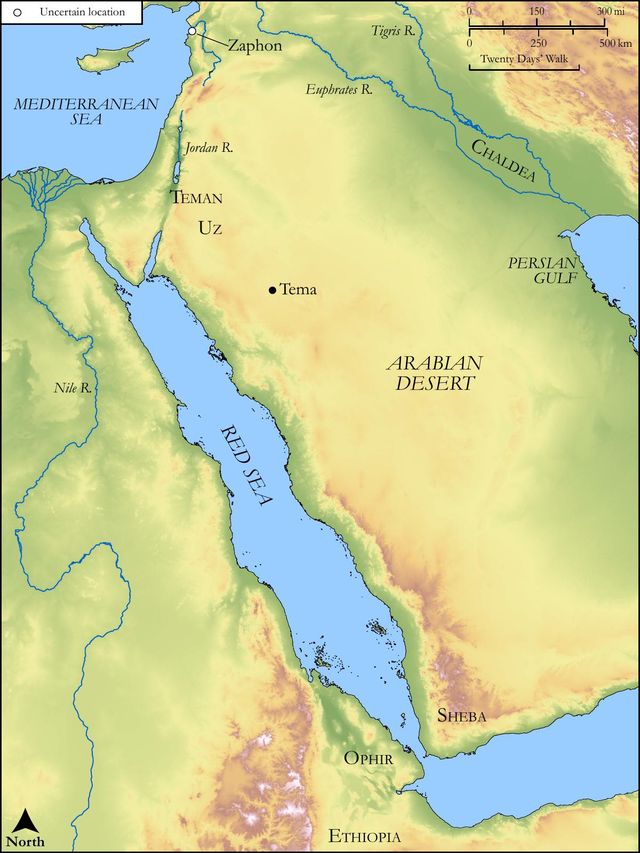
The Book of Job is set in the patriarchal period, likely predating the Mosaic Law, evidenced by the absence of references to Israel's covenant, the Exodus, or the temple system. The land of Uz, though its precise location is debated, is generally understood to be in the Edomite region or northern Arabia, placing Job among the men of the east. In this era, prosperity was often interpreted as a direct sign of divine favor, and suffering as a consequence of sin—a common theological framework prevalent in the speeches of Job's friends, which Job's experience profoundly challenges. The concept of a divine council where heavenly beings, including "the sons of God" and Satan, present themselves before the Almighty is also set forth as a court of judgment, where a prosecuting attorney (Satan, the accuser) brings charges before a sovereign judge. This cultural backdrop helps illuminate the legalistic and challenging nature of Satan's interaction with God.
Key Themes
ShowHideJob 1:11 is a foundational verse for several profound themes that permeate the entire book. Firstly, it directly confronts the nature of true faith and piety, questioning whether devotion to God is conditional upon material blessings or if it can withstand immense suffering. Satan's cynical assertion that Job's faith is transactional sets the stage for Job's unwavering, though often agonizing, demonstration of unconditional faith, even to the point of declaring, "Though he slay me, yet will I trust in him" (Job 13:15). Secondly, the verse highlights Satan's role as the accuser and his tactics against humanity and God's righteous ones. He seeks to undermine God's relationship with His creation by impugning human motives and provoking God to withdraw His favor, a role consistently depicted in Scripture (Revelation 12:10). Finally, it introduces the theme of divine sovereignty and the permission of evil. God's allowance of Satan to test Job, while limiting the extent of the suffering, underscores His ultimate control over all forces, even malevolent ones, and suggests that His purposes often transcend human understanding of justice and suffering, ultimately leading to Job's deeper understanding of God's majesty (Job 42:1-6).
Exposition and Analysis
ShowHideKey Word Analysis
ShowHideThe Hebrew word אוּלָם (ʼûwlâm) functions as a strong adversative, introducing a contrasting or opposing idea. Here, it marks a direct contradiction to God's assessment of Job's integrity. It signifies "however," "on the contrary," or "surely," emphasizing Satan's absolute conviction that Job's piety is not genuine but contingent. This opening word immediately sets a tone of challenge and direct opposition to divine truth.
The Hebrew word יָד (yâd) refers to the "hand" but carries a rich range of figurative meanings, including power, means, direction, and even direct action or intervention. In this context, Satan's demand "put forth thine hand" is an imperative for God to actively intervene and remove His protective "hedge" (Job 1:10), allowing Job's prosperity to be stripped away. It is a challenge to God's active involvement in Job's life, implying that God's blessing is the sole reason for Job's faithfulness.
The Hebrew verb בָּרַךְ (bârak) typically means "to bless," "to kneel," or "to praise." Its use here in Job 1:11, and again in Job 2:5 and 2:9, is a striking example of an ironic euphemism, meaning the exact opposite: "to curse," "to renounce," or "to blaspheme." This linguistic inversion highlights the depth of Satan's cynical conviction that Job's piety is superficial. Satan implies that Job's true feelings for God are not reverence but resentment, which would surface as open blasphemy once his blessings were removed. This paradoxical usage underscores the profound spiritual battle at play, where the very act of "blessing" God is twisted into an act of ultimate rejection.
The Hebrew word פָּנִים (pânîym), meaning "face," is used here in the phrase "to thy face." This implies an open, direct, and defiant confrontation or renunciation. It suggests that Job would not merely grumble or question God privately, but would openly and contemptuously reject God's authority and goodness, thereby proving Satan's assertion that Job's righteousness was conditional and self-serving. The phrase emphasizes the public and direct nature of the predicted blasphemy.
Verse Breakdown
ShowHide"But put forth thine hand now"
This clause represents Satan's direct challenge and audacious provocation to God. The "hand" here symbolizes divine power, intervention, and action. Satan is daring God to actively withdraw His protection and blessings from Job, to personally inflict suffering or allow it to be inflicted, rather than maintaining the "hedge" He had previously placed around Job and his possessions. It is an invitation for God to engage in a direct test of Job's loyalty and the authenticity of his faith.
"and touch all that he hath"
This specifies the precise scope of the proposed test. "All that he hath" refers to Job's vast material wealth (oxen, donkeys, sheep, camels), his servants, and implicitly, his family, as detailed in Job 1:3. Satan believes that Job's faith is inextricably linked to his prosperity, and by removing these external blessings, Job's true heart will be revealed. This clause outlines the exact nature of the affliction Satan wishes to bring upon Job, targeting the very things that seemingly secure his well-being and, in Satan's view, his devotion.
"and he will curse thee to thy face"
This is Satan's confident prediction of Job's reaction, the ultimate outcome he expects. The phrase "to thy face" (Hebrew: 'al-pāneykā) implies an open, defiant, and public renunciation or blasphemy. It suggests that Job would not merely grumble or question God privately, but would openly and contemptuously reject God's authority and goodness, thereby proving Satan's assertion that Job's righteousness was conditional and self-serving. This predicted outcome is the ultimate goal of Satan's challenge: to discredit Job and, by extension, God's assessment of human integrity and the nature of true worship.
Literary Devices
ShowHideJob 1:11 masterfully employs several literary devices to convey its profound theological and narrative significance. The most striking is Irony, specifically Verbal Irony, through the use of the Hebrew verb bārakh (to bless) to mean "to curse." This is a potent example of Euphemism, where a word with positive connotations is used to denote its negative opposite, highlighting Satan's cynical worldview and the shocking nature of his accusation. Satan uses a word of reverence to describe an act of ultimate rebellion, underscoring the perversion he seeks to inflict upon Job's faith. Foreshadowing is also powerfully evident, as Satan's challenge directly predicts the trials Job will endure, setting the narrative trajectory for the entire book and building anticipation for the unfolding drama. The verse also contains Dramatic Irony, as the reader is made privy to the heavenly dialogue and Satan's malicious intent, while Job himself remains completely unaware of the true spiritual battle raging on his behalf, making his subsequent suffering and steadfastness all the more poignant and heroic.
Theological and Thematic Connections
ShowHideJob 1:11 serves as a foundational text for understanding the nature of faith, the reality of spiritual warfare, and the mysterious interplay of divine sovereignty and human suffering. It posits a profound theological question: Is genuine faith merely a transactional response to God's goodness and blessings, or can it endure even when that goodness seems absent or when suffering is inexplicable? Satan's challenge forces a confrontation with the transactional view of religion, where obedience is merely a means to material gain. The subsequent narrative demonstrates that true piety is not contingent on outward circumstances but is rooted in an unwavering trust in God's character, even when His ways are inscrutable. This verse also establishes Satan's role as the accuser, constantly seeking to undermine the relationship between God and humanity by questioning motives and provoking doubt. It underscores that God permits trials not for His own enlightenment, but to vindicate His truth and refine His people.
Reflection and Application
ShowHideJob 1:11 offers profound insights for believers navigating the complexities of faith and suffering in their own lives. It reminds us that trials are not always a direct result of personal sin or divine punishment, but can be part of a larger spiritual dynamic, testing the authenticity and depth of our devotion. Satan's accusation challenges us to examine the foundation of our own faith: Is our love for God conditional upon His blessings, or is it steadfast even when circumstances are dire and blessings seem to be withdrawn? This verse exposes the adversary's constant desire to undermine our relationship with God, to sow seeds of doubt, and to accuse us before Him. It calls us to cultivate a faith that is resilient, rooted in God's unchanging character rather than His transient gifts, and to trust in His sovereign plan even when it defies our understanding. Our response to adversity reveals the true nature of our worship.
Questions for Reflection
ShowHideFAQ
ShowHideWhy did God allow Satan to test Job, as proposed in Job 1:11?
ShowHideGod allowed Satan to test Job not because He was unaware of Job's faithfulness or needed proof, but to publicly demonstrate the authenticity and unconditional nature of Job's piety, thereby refuting Satan's cynical accusation that human devotion is merely self-serving. This divine permission also serves to reveal God's ultimate sovereignty over all forces, including evil, and to provide a profound theological lesson for humanity about the nature of true faith and suffering. It underscores that God's purposes are often higher and more complex than human comprehension, and that genuine faith is proven in the crucible of adversity, ultimately bringing greater glory to God and deeper character formation in the believer, as seen in Job's restoration and double blessing (Job 42:10-17).
What does "curse thee to thy face" really mean in this context?
ShowHideWhile the Hebrew word bārakh typically means "to bless," in Job 1:11 and other instances in the book (Job 2:5, Job 2:9), it functions as an ironic euphemism for "to curse," "to renounce," or "to blaspheme." Satan's prediction is that Job would openly and defiantly reject God, expressing contempt and anger directly towards Him. The phrase "to thy face" emphasizes the public, direct, and unashamed nature of this predicted rebellion. This linguistic twist highlights the depth of Satan's malice and his belief that Job's devotion was superficial, easily broken by suffering.
Does God allow believers to be tested by Satan today in a similar way?
ShowHideWhile the specific "heavenly council" scenario in Job is unique to the narrative, the underlying principle of spiritual testing and the adversary's desire to accuse believers remain relevant. Scripture indicates that believers face various trials and temptations that can be used by God to refine their faith and produce endurance (James 1:2-4). Furthermore, Satan is indeed an active adversary who seeks to devour and accuse God's people (1 Peter 5:8 and Revelation 12:10). However, God always sets limits on what Satan can do (1 Corinthians 10:13), and He works all things, including trials, for the good of those who love Him and are called according to His purpose (Romans 8:28). The core lesson from Job 1:11 is that God is sovereign over all circumstances, and true faith endures beyond prosperity, proving itself authentic in adversity.
Christ-Centered Fulfillment
ShowHideJob 1:11, with Satan's audacious challenge to God regarding Job's integrity and the true nature of human devotion, finds its ultimate fulfillment and resolution in the person and work of Jesus Christ. Job, a righteous man who suffered innocently, serves as a profound type of Christ. While Job's suffering was a test of his own faith and a vindication of his righteousness, Jesus' suffering was the perfect, vicarious sacrifice for the sins of the world, demonstrating not merely a man's integrity but God's perfect love and justice. Satan's accusation against Job—that his piety was conditional and would crumble under duress—is utterly refuted in Christ, who, though tempted in every way, remained without sin (Hebrews 4:15). Jesus did not "curse God to His face" amidst unimaginable suffering on the cross; instead, He perfectly obeyed His Father, even unto death (Philippians 2:8), crying out, "Father, into thy hands I commend my spirit" (Luke 23:46). His cry of dereliction, "My God, my God, why hast thou forsaken me?" (Matthew 27:46), was not a curse but a lament rooted in His identification with humanity's sin, fulfilling prophecy and demonstrating His perfect submission to the Father's will. Through Christ's triumph over sin and death, Satan, the accuser of the brethren, is ultimately defeated and disarmed (Colossians 2:15). Thus, Job 1:11 foreshadows the spiritual battle that would culminate in Christ's perfect life, atoning death, and glorious resurrection, which secures the true and unconditional faith of all who believe in Him.