


Revelation 16:11
Bible text: King James Version (1769 Blayney text) · Public domain
Bible text: Berean Standard Bible · Public domain
Bible text: American Standard Version (1901) · Public domain
Bible text: World English Bible, Messianic edition · Public domain
Bible text: Geneva Bible (1599) · Public domain
Bible text: Young's Literal Translation · Public domain
- καὶkaiandG2532CONJConjunction
- ἐβλασφήμησανeblasphēmēsanthey blasphemedG987V-AAI-3PVerb Aorist Active Indicative 3rd Plural
- τὸνtontheG3588T-ASMDefinite article Accusative Singular Masculine
- θεὸνtheonGodG2316N-ASM-TNoun Accusative Singular Masculine Title
- τοῦtou<the>G3588T-GSMDefinite article Genitive Singular Masculine
- οὐρανοῦouranouof heavenG3772N-GSMNoun Genitive Singular Masculine
- ἐκekon account ofG1537PREPPreposition
- τῶνtōntheG3588T-GPMDefinite article Genitive Plural Masculine
- πόνωνponōndistressesG4192N-GPMNoun Genitive Plural Masculine
- αὐτῶνautōnof themG846P-GPMPersonal pronoun Genitive Plural Masculine
- καὶkaiandG2532CONJConjunction
- ἐκekon account ofG1537PREPPreposition
- τῶνtōntheG3588T-GPNDefinite article Genitive Plural Neuter
- ἑλκῶνhelkōnsoresG1668N-GPNNoun Genitive Plural Neuter
- αὐτῶνautōnof themG846P-GPMPersonal pronoun Genitive Plural Masculine
- καὶkaiandG2532CONJConjunction
- οὐounotG3756PRT-NNegative Particle Negative
- μετενόησανmetenoēsanthey did repentG3340V-AAI-3PVerb Aorist Active Indicative 3rd Plural
- ἐκekofG1537PREPPreposition
- τῶνtōntheG3588T-GPNDefinite article Genitive Plural Neuter
- ἔργωνergōnworksG2041N-GPNNoun Genitive Plural Neuter
- αὐτῶνautōnof themG846P-GPMPersonal pronoun Genitive Plural Masculine
English is a literal word-by-word gloss of the Greek, not the KJV's wording. Why?
This is the original text the KJV's translators worked from — each Greek word with its own literal English meaning in this verse, prepared by scholars at Tyndale House, Cambridge. The KJV translates whole sentences, not word by word, so its wording differs: one Greek word can become several English words, and the KJV may choose “charity” where the gloss reads “love”. Both are faithful — they answer different questions. For the KJV's own rendering, switch to the KJV text.
Details
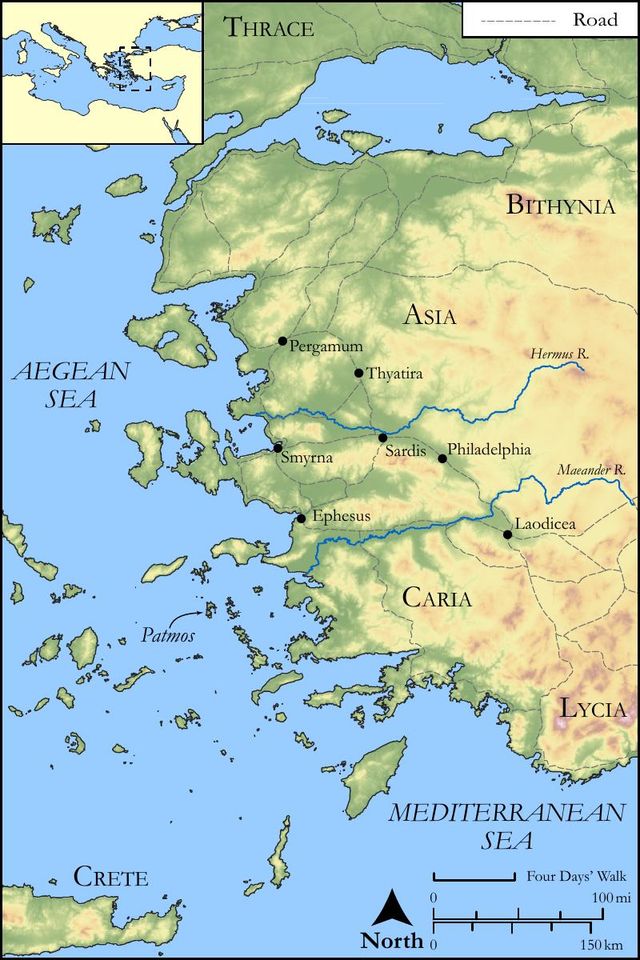
See on the biblical-era maps

Study this verse
Public-domain commentary
Matthew Henry
From his Commentary on the Whole Bible. Henry comments on passages, not single verses — this entry covers Revelation 16:8–11.
In these verses we see the work going on in the appointed order. The fourth angel poured out his vial, and that fell upon the sun; that is, say some, upon some eminent prince of the popish communion, who should renounce their false religion a little while before his utter downfall; and some expect it will be the German emperor. And now what will be the consequence of this? That sun which before cherished them with warm and benign influences shall now grow hot against these idolaters, and shall scorch them. Princes shall use their power and authority to suppress them, which yet will be so far from bringing them to repentance, that it will cause them to curse God and their king, and look upward, throwing out their blasphemous speeches against the God of heaven; they will be hardened to their ruin. The fifth angel poured out his vial, Rev 16:10. And observe, 1. Where this fell - upon the seat of the beast, upon Rome itself, the mystical Babylon, the head of the antichristian empire. 2. What effect it had there: The whole kingdom of the beast was full of darkness and distress. That very city which was the seat of their policy, the source of all their learning, and all their knowledge, and all their pomp and pleasure, now becomes a source of darkness, and pain, and anguish. Darkness was one of the plagues of Egypt, and it is opposed to lustre and honour, and so forebodes the contempt and scorn to which the antichristian interest should be exposed. Darkness is opposed to wisdom and penetration, and forbodes the confusion and folly which the idolaters should discover at that time. It is opposed to pleasure and joy, and so signifies their anguish and vexation of Spirit, when their calamities thus came upon them.
Historical interpretation
Four Centuries of Reception
4 surviving comments on this verse. Each one is dated, so this reads as a timeline rather than a list.
Select a marker to jump to its quote. Markers stagger vertically where authors wrote within a few decades of each other.
The throne of the beast, or his kingdom, as it were, his judicial authority, is said to be darkened, because [its followers] are darkened by the joy of earthly happiness. And although they heartily rejoice in their present good rather than in the possessing of the highest blessedness, they “suppress the truth by wickedness,” and so gnaw at their own tongues. The psalm adds its voice to this understanding when it says, “whose mouths speak lies and whose right hand is a right hand of iniquity,” and “they spoke iniquity from on high.” Just like smoke, they rise by the arrogance of their temporary prosperity, from which they ought to turn in repentance, and although they are in the dark, they rejoice. As Job said, “They spend their days in prosperity, and in a moment they go down to hell.”
Pouring the bowl on the throne of the beast signifies the pouring out of a great wrath upon the kingdom of the antichrist. This kingdom is shown to be in darkness, that is, it is bereft of the light of the “sun of righteousness.” The gnawing of tongues reveals the intensity of the pain that those who have been deceived by him will have when they are struck by these plagues sent from God. These things will occur so that they might recognize that he whom they have worshiped as God is a fraud and so might want to be free from their deception. However, they will not turn from this to repentance. Rather, they will turn to further blasphemy.
And they blasphemed the God of heaven, etc. He did not attribute it to their hardness but to the just indignation of God, who gave such a kind of plague, in which they do not remember. For who, being afflicted bodily, does not feel the hand of God as Antiochus did? For he said they blasphemed, not openly, but indulging in their sins.
And he says that they gnawed their tongues because of the fire. This is accustomed to happen in every utmost distress, if indeed the tongues or some part of the body are accustomed to be taken away by the teeth, they think that it will lessen the other pain. They too must repent, if not for any other reason, then at least because of the overthrow of the Antichrist, whom they have appointed for themselves as king and god, and because they have blasphemed the true God by the deposition of the imposter.
Continue studying Revelation 16:11 across the web’s major study libraries — every link below opens this exact verse, chapter, or book on the destination site.
Read & Compare
 BibleGatewayThis verse in more than 200 translations and 70 languages.
 Bible.comThe YouVersion reader — hundreds of translations, reading plans, and highlights.
 ESV.orgCrossway's official English Standard Version reader.
 NET BibleThe NET translation with 60,000+ translators' notes on every rendering decision.
 STEP BibleTyndale House's free study tool — original text, vocabulary, and scholarly resources.
 BibliaLogos Bible Software's free web reader.
 USCCBThe New American Bible (Revised Edition) with the U.S. bishops' study notes.
Commentaries
 BibleHub CommentariesDozens of classic commentaries on this verse, gathered on one page.
 StudyLightMore than 100 commentary sets — the largest collection on the web.
 BibleRefPlain-English commentary on what this verse means, verse by verse.
 Enduring WordDavid Guzik's free commentary on this chapter, widely used by Bible teachers.
 Bible Study ToolsVerse commentary alongside Greek and Hebrew study aids.
Original Language & Research
- BibleHub InterlinearThe verse word by word — original language, transliteration, and English.
- BibleHub LexiconEvery word's original-language definition and Strong's entry.
 Blue Letter BibleDeep-study tools — Strong's numbers, concordance, and word studies.
 CNTR CollationThe earliest Greek manuscripts of this verse, collated letter by letter.
Sermons, Hymns & Audio


TrulyRandomVerse is not affiliated with these sites and doesn’t control their content. They’re linked because they’re genuinely useful.
Summary
Revelation 16:11 vividly portrays the unyielding rebellion of humanity during the final, severe judgments of God. Despite enduring excruciating physical suffering from divine plagues—specifically intense pains and grievous sores—those afflicted respond not with contrition or a turning toward God, but with intensified blasphemy against the "God of heaven," stubbornly refusing to repent of their wicked deeds. This verse underscores the profound and tragic hardening of human hearts in the face of overwhelming divine wrath, revealing a spiritual obstinacy that prioritizes defiance over deliverance.
Context
ShowHideLiterary Context
This verse is deeply embedded within the apocalyptic narrative of Revelation 16, which describes the pouring out of the seven "bowl" or "vial" judgments. These judgments represent the culmination of God's wrath upon a rebellious world, distinct from the earlier seal and trumpet judgments in their finality and intensity. Specifically, Revelation 16:11 follows the third and fourth bowls, which brought plagues upon rivers and springs, and scorching heat from the sun, respectively. The "pains and sores" mentioned here directly recall the first bowl judgment, which inflicted "a noisome and grievous sore" upon those who had the mark of the beast. The persistent blasphemy echoes the response seen earlier in Revelation 16:9, establishing a consistent pattern of human defiance throughout this period of divine retribution.
Historical & Cultural Context
The Book of Revelation, written by John during a time of intense persecution, often draws upon Old Testament imagery and concepts familiar to its first-century Jewish and Gentile Christian readers. The plagues described in Revelation 16 bear striking resemblances to the plagues inflicted upon Egypt in the book of Exodus, particularly the plague of boils (Exodus 9:8-12). This parallel would have immediately conveyed the idea of God's sovereign power over creation and His righteous judgment against those who oppose Him. Culturally, "blasphemy" (βλασφημία) among the Greeks and Romans, and especially in Jewish thought, was a grave offense, signifying a deliberate insult, slander, or irreverence toward God or sacred things. The refusal to repent, even under duress, highlights a profound spiritual blindness and moral depravity that transcends mere physical suffering, pointing to a will hardened against divine truth.
Key Themes
ShowHideRevelation 16:11 profoundly contributes to several overarching themes in Revelation and biblical theology. First, it underscores the severity and justice of God's wrath, demonstrating that His judgments are not arbitrary but are a righteous response to persistent rebellion and unrepentance. Second, it highlights the depth of human depravity and spiritual obstinacy, revealing that even overwhelming suffering does not automatically lead to repentance; rather, it can intensify hatred and defiance toward God. This theme is echoed in other judgment passages, such as Revelation 9:20-21. Third, the verse emphasizes the critical importance of repentance as the only pathway to reconciliation with God, contrasting the unrepentant with those who, throughout Scripture, turn to God in humility. Finally, it speaks to the ultimate division between those who worship God and those who worship the beast, a central dichotomy in the book of Revelation.
Exposition and Analysis
ShowHideKey Word Analysis
ShowHideMeaning "to vilify; specially, to speak impiously." This word signifies more than just cursing; it denotes a deliberate, defiant, and contemptuous disrespect for God. It implies a conscious act of reviling or slandering the divine name, demonstrating a hardened heart that actively opposes God even in the face of His manifest power and judgment.
Meaning "toil, i.e. (by implication) anguish." This refers to severe physical suffering and anguish. The use of this word emphasizes the intensity of the torment experienced by those afflicted, highlighting that even such profound agony did not lead to a change of heart, but rather exacerbated their defiant attitude.
Meaning "to think differently or afterwards, i.e. reconsider (morally, feel compunction)." This crucial word signifies a change of mind, a moral turning, or a complete reorientation of one's life and actions away from sin and toward God. The strong negation ("repented not") underscores the deliberate and unyielding refusal of these individuals to acknowledge their sin, turn from their evil ways, or seek God's mercy, despite the clear divine judgment they were experiencing.
Verse Breakdown
ShowHide"And blasphemed the God of heaven"
This phrase reveals the direct object of their defiance. Despite experiencing direct divine judgment, their response is not humility or fear, but an open act of blasphemy against the sovereign "God of heaven." This title emphasizes God's supreme authority and transcendence, making their blasphemy an act of ultimate rebellion against the Creator and Judge of all.
"because of their pains and their sores"
This clause provides the immediate catalyst for their blasphemy. The excruciating physical suffering, caused by the divine judgments (specifically the first bowl's sores and general anguish), rather than prompting self-reflection or repentance, instead fuels their anger and resentment, leading them to curse the very source of their torment. This demonstrates a profound spiritual blindness where suffering hardens rather than softens the heart.
"and repented not of their deeds"
This is the climactic and most tragic part of the verse. Despite the overwhelming evidence of God's power and the direct consequences of their sin, they remain unyielding in their sinful "deeds" (G2041, érgon, meaning "toil... an act"). Their refusal to repent signifies a deliberate and final rejection of God's call to turn from wickedness, cementing their fate and illustrating the ultimate spiritual stubbornness of a heart set against God.
Literary Devices
ShowHideRevelation 16:11 employs several powerful literary devices to convey its stark message. Irony is prominent, as the very suffering intended by God to bring about repentance instead provokes intensified blasphemy. This highlights the profound spiritual blindness and hardened hearts of those under judgment. The description of "pains and sores" uses Hyperbole to emphasize the extreme nature of the suffering, underscoring that even such overwhelming physical agony fails to break their rebellion. Furthermore, the "sores" themselves function as Symbolism, representing the physical manifestation of divine wrath and the corrupting effects of sin, echoing the plagues of Egypt and serving as a visible sign of God's judgment upon those who have embraced evil. The repeated emphasis on "blasphemed" and "repented not" also creates a sense of Repetition throughout Revelation 16, reinforcing the theme of persistent human rebellion in the face of escalating divine judgment.
Theological and Thematic Connections
ShowHideRevelation 16:11 offers a sobering theological insight into the nature of human depravity and the finality of divine judgment. It reveals that suffering, even when divinely ordained, does not inherently lead to repentance; for those whose hearts are utterly hardened, it can merely intensify their rebellion and hatred toward God. This verse underscores the biblical truth that repentance is a gift of God's grace, requiring a softening of the heart that is often resisted by human will. It highlights the ultimate consequence of rejecting God's persistent calls to turn from sin, demonstrating a point of no return where divine judgment is met with unyielding defiance rather than contrite submission. The phrase "God of heaven" emphasizes God's supreme sovereignty and transcendence, against whom their blasphemy is a futile yet tragic act of defiance.
Reflection and Application
ShowHideRevelation 16:11 serves as a profound and challenging warning for all who read it, transcending its specific apocalyptic context to reveal timeless truths about the human heart and our response to God. While we may not experience the literal pains and sores of the bowl judgments, we all face consequences for our actions and encounter circumstances that test our faith and character. This verse compels us to examine our own hearts: when difficulties arise, do we blame God, grow bitter, and harden our hearts, or do we humbly seek His face, acknowledge our shortcomings, and turn to Him in repentance? The tragic scene in Revelation 16:11 reminds us that true repentance is not merely regret over suffering, but a fundamental change of mind and direction, a turning away from self-will and toward God's righteous path. It is a vital and ongoing process for the believer, a readiness to align our will with His, even when it is painful or requires significant change. This verse calls us to cultivate a soft heart, responsive to God's voice and His providential workings in our lives, ensuring that our trials lead us closer to Him, not further away.
Questions for Reflection
ShowHideFAQ
ShowHideWhy did these people not repent, even under such severe judgment?
ShowHideThe text indicates a profound and deliberate hardening of the heart, a spiritual obstinacy that prioritizes defiance over submission to God. This unrepentance is not merely a lack of understanding but an active rejection of God's authority and a refusal to acknowledge sin, even when faced with its devastating consequences. It illustrates the biblical principle that persistent rebellion can lead to a state where even overwhelming suffering fails to break through spiritual pride and hatred toward God, confirming their choice against Him. This echoes passages like Romans 2:5, which speaks of storing up wrath through an unrepentant heart.
Christ-Centered Fulfillment
ShowHideRevelation 16:11, with its stark portrayal of unyielding human rebellion and the refusal to repent, powerfully underscores the absolute necessity and profound grace of Christ's atoning work. In this verse, humanity's ultimate spiritual sickness—a heart so hardened that even divine judgment cannot break its defiance—is laid bare. This unrepentant state is precisely what the gospel addresses. While these individuals choose blasphemy and persistent sin, Jesus Christ offers the antithesis: a path to genuine repentance and forgiveness. His death on the cross was for the very "deeds" (G2041, érgon) of sin that these people refused to abandon, and His resurrection provides the power for a new life, free from the dominion of sin and the curse of the law. The call to "repent" (G3340, metanoéō) is central to the New Testament message, beginning with John the Baptist and culminating in Christ's own ministry (Mark 1:15). The inability of suffering to produce true repentance in Revelation 16:11 highlights that genuine transformation is not a product of human will or external pressure, but a work of the Holy Spirit, made possible only through faith in the Lamb of God who takes away the sin of the world. Thus, this verse, by showing humanity's ultimate failure to save itself, points us ever more urgently to the complete and sufficient salvation offered in Jesus Christ, who alone can grant the gift of repentance and a new heart (Acts 5:31).