


Genesis 28:6
Bible text: King James Version (1769 Blayney text) · Public domain
Bible text: King James Version with Strong's numbers · Public domain
Bible text: Berean Standard Bible · Public domain
Bible text: American Standard Version (1901) · Public domain
Bible text: World English Bible, Messianic edition · Public domain
Bible text: Geneva Bible (1599) · Public domain
Bible text: Young's Literal Translation · Public domain
- וַיַּרְאvai·Yar'and he sawH7200Conj-w ¦ V-Qal-ConsecImperf-3msVerb Qal Consecutive Imperfect 3rd Singular Masculineוַandיַּרְאhe saw
- עֵשָׂו'e·SavEsauH6215N-proper-mNoun Proper Masculine
- כִּיkithatH3588PrtParticle Conditional
- בֵרַךְve·Rakhhe had blessedH1288V-Piel-Perf-3msVerb Piel Perfect 3rd Singular Masculine
- יִצְחָקyitz·ChakIsaacH3327N-proper-mNoun Proper Masculine
- אֶת'et<obj.>H853DirObjMParticle Object Indicator
- יַעֲקֹבya·'a·KoJacobH3290N-proper-mNoun Proper Masculine
- וְשִׁלַּחve·shi·Lachand he had sent offH7971Conj-w ¦ V-Piel-ConsecPerf-3msVerb Piel Consecutive Perfect 3rd Singular Masculineוְandשִׁלַּחhe had sent off
- אֹתוֹ'o·To<obj.> himH853DirObjM ¦ 3msParticle Object Indicatorאֹת<obj.>וֹhim
- פַּדֶּנָהpa·De·nahPaddan towardsH6307N-proper ¦ SfxNoun Proper LocationפַּדֶּנָPaddanהtowards
- אֲרָם'a·RamAramH758N-properNoun Proper Location
- לָקַחַתla·ka·chatto takeH3947Prep-l ¦ V-Qal-InfVerb Qal Infinitive Constructלָtoקַחַתtake
- לוֹlofor <the> himselfPrep-l ¦ 3msSuffix Personal 3rd Singular Masculineלfor <the>וֹhimself
- מִשָּׁםmi·Shamfrom thereH8033Prep-m ¦ AdvAdverbמִfromשָּׁםthere
- אִשָּׁה'i·Shaha wifeH802N-fsNoun Singular Feminine Absolute
- בְּבָרֲכוֹbe·va·ra·Khowhen he blessedH1288Prep-b ¦ V-Piel-Inf ¦ 3msVerb Piel Infinitive Constructבְּwhenבָרֲכblessedוֹhe
- אֹתוֹ'o·To<obj.> himH853DirObjM ¦ 3msParticle Object Indicatorאֹת<obj.>וֹhim
- וַיְצַוvay·Tzavand he had commandedH6680Conj-w ¦ V-Piel-ConsecImperf-3msVerb Piel Consecutive Imperfect 3rd Singular Masculineוַandיְצַוhe had commanded
- עָלָיו'a·Lavto himH5921Prep ¦ 3msPreposition Definiteעָלָיtoוhim
- לֵאמֹרle·Mor<to> sayingH559Prep-l ¦ V-Qal-InfVerb Qal Infinitive Constructלֵ<to>אמֹרsaying
- לֹאlo'notH3808NegParticle Negative
- תִקַּחti·Kachyou must takeH3947V-Qal-Imperf-2msVerb Qal Imperfect 2nd Singular Masculine
- אִשָּׁה'i·Shaha wifeH802N-fsNoun Singular Feminine Absolute
- מִבְּנוֹתmi·be·Notfrom [the] daughters ofH1323Prep-m ¦ N-fpcNoun Plural Feminine Constructמִfromבְּנוֹת[the] daughters of
- כְּנָעַןke·Na·'anCanaanH3667N-properNoun Proper Location
English is a literal word-by-word gloss of the Hebrew, not the KJV's wording. Why?
This is the original text the KJV's translators worked from — each Hebrew word with its own literal English meaning in this verse, prepared by scholars at Tyndale House, Cambridge. The KJV translates whole sentences, not word by word, so its wording differs: one Hebrew word can become several English words, and the KJV may choose “the LORD” where the gloss reads “Yahweh”. Both are faithful — they answer different questions. For the KJV's own rendering, switch to the KJV text.
Details
See on the biblical-era maps


Study this verse
Public-domain commentary
Matthew Henry
From his Commentary on the Whole Bible. Henry comments on passages, not single verses — this entry covers Genesis 28:6–9.
This passage concerning Esau comes in in the midst of Jacob's story, either, 1. To show the influence of a good example. Esau, though the greater man, now begins to think Jacob the better man, and disdains not to take him for his pattern in this particular instance of marrying with a daughter of Abraham. The elder children should give to the younger an example of tractableness and obedience; it is bad if they do not: but it is some alleviation if they take the example of it from them, as Esau here did from Jacob. Or, 2. To show the folly of an after-wit. Esau did well, but he did it when it was too late, He saw that the daughters of Canaan pleased not his father, and he might have seen that long ago if he had consulted his father's judgment as much as he did his palate. And how did he now mend the matter? Why, truly, so as to make bad worse. (1.) He married a daughter of Ishmael, the son of the bond-woman, who was cast out, and was not to inherit with Isaac and his seed, thus joining with a family which God had rejected, and seeking to strengthen his own pretensions by the aid of another pretender. (2.) He took a third wife, while, for aught that appears, his other two were neither dead nor divorced. (3.) He did it only to please his father, not to please God. Now that Jacob was sent into a far country Esau would be all in all at home, and he hoped so to humour his father as to prevail with him to make a new will, and entail the promise upon him, revoking the settlement lately made upon Jacob. And thus, [1.] He was wise when it was too late, like Israel that would venture when the decree had gone forth against them (Num 14:40), and the foolish virgins, Mat 25:11. [2.] He rested in a partial reformation, and thought, by pleasing his parents in one thing, to atone for all his other miscarriages. It is not said that when he saw how obedient Jacob was, and how willing to please his parents, he repented of his malicious design against him: no, it appeared afterwards that he persisted in that, and retained his malice. Note, Carnal hearts are apt to think themselves as good as they should be, because perhaps, in some one particular instance, they are not so bad as they have been. Thus Micah retains his idols, but thinks himself happy in having a Levite to be his priest, Jdg 17:13.
Continue studying Genesis 28:6 across the web’s major study libraries — every link below opens this exact verse, chapter, or book on the destination site.
Read & Compare
 BibleGatewayThis verse in more than 200 translations and 70 languages.
 Bible.comThe YouVersion reader — hundreds of translations, reading plans, and highlights.
 ESV.orgCrossway's official English Standard Version reader.
 NET BibleThe NET translation with 60,000+ translators' notes on every rendering decision.
 STEP BibleTyndale House's free study tool — original text, vocabulary, and scholarly resources.
 BibliaLogos Bible Software's free web reader.
 USCCBThe New American Bible (Revised Edition) with the U.S. bishops' study notes.
Commentaries
 BibleHub CommentariesDozens of classic commentaries on this verse, gathered on one page.
 StudyLightMore than 100 commentary sets — the largest collection on the web.
 BibleRefPlain-English commentary on what this verse means, verse by verse.
 Enduring WordDavid Guzik's free commentary on this chapter, widely used by Bible teachers.
 Bible Study ToolsVerse commentary alongside Greek and Hebrew study aids.
Original Language & Research
- BibleHub InterlinearThe verse word by word — original language, transliteration, and English.
- BibleHub LexiconEvery word's original-language definition and Strong's entry.
 Blue Letter BibleDeep-study tools — Strong's numbers, concordance, and word studies.
 SefariaThe Hebrew text with Rashi and centuries of Jewish commentary.
Sermons, Hymns & Audio


TrulyRandomVerse is not affiliated with these sites and doesn’t control their content. They’re linked because they’re genuinely useful.
Summary
Genesis 28:6 captures Esau's critical observation of his father Isaac's final instructions to Jacob, specifically regarding the imperative to marry outside of Canaanite women. This pivotal moment underscores the patriarchal concern for the purity and continuity of the covenant lineage, highlighting the spiritual significance of marital choices within the Abrahamic family. Esau's witnessing of this charge serves as a catalyst for his subsequent, albeit misdirected, attempt to align himself with his parents' desires, revealing his partial understanding of the covenant's implications.
Context
ShowHideLiterary Context
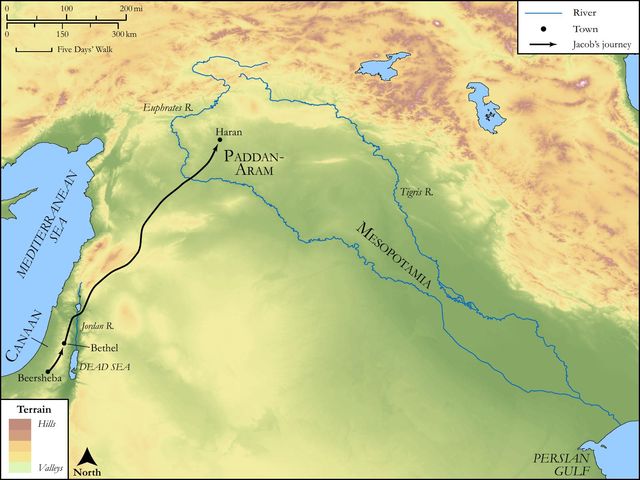
Genesis 28:6 immediately follows Isaac's solemn blessing and charge to Jacob in Genesis 28:1-5. Having received the patriarchal blessing, Jacob is now sent away to Padanaram, his mother Rebekah's homeland, to secure a wife from his extended family. This departure is a direct consequence of Rebekah's fear for Jacob's life due to Esau's murderous intent (Genesis 27:41-45). Esau's observation in verse 6 serves as a narrative bridge, connecting Jacob's departure with Esau's own response to his parents' clear disapproval of his Canaanite wives, a disapproval explicitly stated in Genesis 26:35. The verse sets the stage for Esau's subsequent marriage to Mahalath, Ishmael's daughter, in Genesis 28:9.
Historical & Cultural Context
Among the patriarchs, marriage was not merely a personal choice but a strategic alliance that cemented family ties, preserved lineage, and transferred inheritance. Endogamy, or marrying within one's own kin group, was a common practice, particularly among nomadic or semi-nomadic peoples like the patriarchs, to maintain cultural identity and property. The Canaanites, indigenous inhabitants of the land, were characterized by polytheism, idolatry, and various immoral practices, which God would later condemn in the Mosaic Law (Leviticus 18). For the Abrahamic covenant family, intermarriage with Canaanites posed a significant threat of spiritual assimilation and dilution of their distinct faith in the one true God. Isaac's charge to Jacob, therefore, reflects a deep theological concern for the purity of the covenant seed line, ensuring that the promises of God would be passed down through a people set apart.
Key Themes
ShowHideThis verse contributes to several overarching themes in Genesis. Firstly, it highlights the theme of covenant preservation, emphasizing the divine intention to maintain a distinct people through whom God's promises, especially the promise of land and a great nation, would be fulfilled (Genesis 12:1-3). Secondly, it underscores the importance of marital choices in shaping spiritual destiny and family legacy, demonstrating how such decisions can either align with or deviate from God's purposes. Esau's previous marriages to Canaanite women (Genesis 26:34) had already caused "bitterness of spirit" to Isaac and Rebekah, setting a precedent for the concern expressed here. Lastly, the verse subtly introduces the theme of Esau's character and spiritual discernment, revealing his superficial understanding of the covenant's spiritual demands despite his attempt to please his parents.
Exposition and Analysis
ShowHideKey Word Analysis
ShowHideThis primitive root means "to kneel," and by implication, "to bless God (as an act of adoration)" or "man (as a benefit)." In this context, it refers to Isaac bestowing a divine favor and spiritual inheritance upon Jacob, confirming the covenant promises. The act of blessing here is not merely a wish but a pronouncement of divine favor and authority, carrying significant weight for the recipient's future.
This primitive root signifies "to take" in a wide variety of applications, including to accept, buy, or receive. Here, it specifically refers to the act of "taking a wife," highlighting the active choice involved in marriage. The prohibition uses the negative form ("shalt not take"), underscoring the absolute nature of the command against intermarriage with Canaanite women.
Derived from the word for "to build," this term refers to a female offspring. In this context, "daughters of Canaan" is a collective term for the women of the indigenous Canaanite population, emphasizing their identity as distinct from the covenant family and representing the spiritual and cultural dangers associated with their people.
Verse Breakdown
ShowHide"When Esau saw that Isaac had blessed Jacob, and sent him away to Padanaram, to take him a wife from thence;"
This initial clause establishes Esau's direct observation of the significant events unfolding. "Saw" implies a conscious awareness and understanding of the gravity of the situation: Jacob, the younger brother, has received the patriarchal blessing, and is now being dispatched to a specific, distant location (Padanaram, a region in Mesopotamia, the ancestral home) with the explicit purpose of securing a wife from his own kin. This action, witnessed by Esau, would have immediately highlighted the contrast with his own marital choices.
"and that as he blessed him he gave him a charge, saying,"
This phrase emphasizes that the instruction regarding marriage was not a casual suggestion but an integral part of Isaac's blessing and a solemn "charge" or command. The Hebrew term for "charge" (tsâvâh) implies a strong injunction or appointment, underscoring the authority and divine imperative behind Isaac's words. It signifies a direct, authoritative instruction given during a moment of profound spiritual significance.
"Thou shalt not take a wife of the daughters of Canaan;"
This is the core prohibition, explicitly stating the forbidden marital alliance. The "daughters of Canaan" represent the local, idolatrous, and morally corrupt inhabitants of the land. This command was crucial for maintaining the spiritual purity and distinct identity of the covenant family, preventing assimilation into pagan practices that would compromise their relationship with the one true God and jeopardize the fulfillment of the Abrahamic covenant.
Literary Devices
ShowHideThe verse employs several literary devices that enrich its meaning. Irony is prominent, as Esau, who had previously despised his birthright and impulsively married Canaanite women, now observes his father giving Jacob a solemn charge that implicitly condemns Esau's own choices. This creates a dramatic tension, highlighting Esau's lack of spiritual foresight. There is also a strong element of Contrast between Jacob, who is meticulously instructed to seek a wife from his own people to preserve the covenant line, and Esau, whose earlier marriages had already caused "bitterness of spirit" to his parents (Genesis 26:35). This contrast underscores the differing spiritual priorities and understanding of the two brothers. Furthermore, the verse serves as a form of Foreshadowing, as Esau's superficial understanding of his parents' desires (leading him to marry Ishmael's daughter in Genesis 28:9) sets the stage for his continued separation from the true covenant blessings, despite his attempts to conform externally.
Theological and Thematic Connections
ShowHideGenesis 28:6 profoundly illustrates the theological significance of marital choices within the context of God's covenant. Isaac's explicit prohibition against marrying Canaanite women underscores the divine imperative for the covenant people to remain distinct and uncorrupted by the idolatry and moral depravity of the Canaanites around them. This principle of separation is not merely cultural but deeply spiritual, intended to preserve the purity of faith and ensure the lineage through which God's redemptive plan would unfold. The patriarchs understood that the integrity of the Abrahamic covenant, and thus the future of God's promises, was intrinsically linked to the spiritual integrity of the family unit. Esau's observation, though leading to a superficial attempt at rectification, highlights the ongoing tension between human will and divine purpose, and the consequences of choices made outside of God's counsel.
Reflection and Application
ShowHideGenesis 28:6 offers timeless wisdom concerning the profound and far-reaching impact of our life choices, particularly in the realm of relationships. For believers today, it serves as a powerful reminder of the paramount importance of spiritual compatibility in marriage. Just as Isaac sought to protect the spiritual integrity of the Abrahamic covenant through Jacob's union, Christians are strongly encouraged to seek partners who genuinely share their faith and commitment to God's principles. Marriage is a foundational relationship that profoundly influences spiritual growth, family dynamics, and the raising of future generations. This passage underscores the vital truth that discerning God's guidance and prioritizing spiritual alignment in such significant life decisions is not merely advisable but paramount for living a life that honors Him and contributes to His kingdom purposes. It challenges us to consider whether our choices, especially in forming lifelong bonds, reflect a deep understanding of God's desire for our holiness and His plans for our lives and the generations that follow.
Questions for Reflection
ShowHideFAQ
ShowHideWhy was marrying Canaanite women forbidden for Jacob?
ShowHideMarrying Canaanite women was forbidden primarily for spiritual reasons. The Canaanites were known for their idolatrous practices, polytheism, and morally corrupt customs, which posed a significant threat to the spiritual purity and distinctiveness of the covenant people. God intended to preserve a holy lineage through which His promises, including the coming Messiah, would be fulfilled. Intermarriage would lead to assimilation and spiritual compromise, diluting the faith and potentially leading the chosen people away from the one true God, as seen in later periods of Israel's history (Judges 3:5-6).
What does Esau's reaction to Isaac's charge reveal about him?
ShowHideEsau's reaction, as observed in Genesis 28:6 and his subsequent actions in Genesis 28:9, reveals a superficial understanding of his parents' desires and the spiritual significance of the covenant. While he recognized that his Canaanite wives displeased his parents, his subsequent marriage to a daughter of Ishmael was likely an attempt to gain favor or to superficially align with family expectations, rather than a genuine spiritual repentance or a deep understanding of the covenant's requirements. It shows a desire to conform externally without necessarily undergoing an internal transformation of heart or a true commitment to the Abrahamic covenant. He sought to please his parents but missed the deeper spiritual truth of the covenant's purity.
Christ-Centered Fulfillment
ShowHideThe emphasis in Genesis 28:6 on maintaining a pure lineage, free from the corrupting influence of idolatry, finds its ultimate and perfect fulfillment in Christ. The careful preservation of the Abrahamic line, through specific marital choices and divine guidance, directly foreshadows the coming of the Messiah, Jesus Christ, who is the perfect embodiment of God's covenant faithfulness. He is the ultimate "seed" through whom all the families of the earth are blessed (Genesis 12:3), the one whose lineage, meticulously traced in the Gospels (Matthew 1:1-17 and Luke 3:23-38), culminates in the salvation of humanity. Moreover, the Old Testament's call for separation from worldly influences in marriage points to Christ's establishment of the Church as His pure bride, called to be holy and without blemish, distinct from the idolatry and corruption of the world. In Christ, the spiritual purity sought in the Old Testament finds its perfect realization, as believers are united with Him in a spiritual covenant that transcends earthly lineage and cultural boundaries, becoming part of a new, holy family of God (Galatians 3:28-29).