


Genesis 26:31
Bible text: King James Version (1769 Blayney text) · Public domain
Bible text: Berean Standard Bible · Public domain
Bible text: American Standard Version (1901) · Public domain
Bible text: World English Bible, Messianic edition · Public domain
Bible text: Geneva Bible (1599) · Public domain
Bible text: Young's Literal Translation · Public domain
- וַיַּשְׁכִּימוּvai·yash·Ki·muand they rose earlyH7925Conj-w ¦ V-Hiphil-ConsecImperf-3mpVerb Hiphil Consecutive Imperfect 3rd Plural Masculineוַandיַּשְׁכִּימוּthey rose early
- בַבֹּקֶרva·Bo·kerin the morningH1242Prep-b ¦ N-msNoun Singular Masculine Absoluteבַin theבֹּקֶרmorning
- וַיִּשָּׁבְעוּvai·yi·sha·ve·'Uand they swore an oathH7650Conj-w ¦ V-Niphal-ConsecImperf-3mpVerb Niphal Consecutive Imperfect 3rd Plural Masculineוַandיִּשָּׁבְעוּthey swore an oath
- אִישׁ'isheachH376N-msNoun Singular Masculine Absolute
- לְאָחִיוle·'a·Chivto his brotherH251Prep-l ¦ N-msc ¦ 3msNoun Singular Masculine Constructלְtoאָחִיbrotherוhis
- וַיְשַׁלְּחֵםvay·sha·le·Chemand he sent off themH7971Conj-w ¦ V-Piel-ConsecImperf-3ms ¦ 3mpVerb Piel Consecutive Imperfect 3rd Singular Masculineוַandיְשַׁלְּחֵhe sent offםthem
- יִצְחָקyitz·ChakIsaacH3327N-proper-mNoun Proper Masculine
- וַיֵּלְכוּvai·ye·le·Khuand they wentH1980Conj-w ¦ V-Qal-ConsecImperf-3mpVerb Qal Consecutive Imperfect 3rd Plural Masculineוַandיֵּלְכוּthey went
- מֵאִתּוֹme·'i·Tofrom with <the> himH854Prep-m ¦ Prep ¦ 3msPreposition Definiteמֵfromאִתּwith <the>וֹhim
- בְּשָׁלוֹםbe·sha·Lomin peaceH7965Prep-b ¦ N-msNoun Singular Masculine Absoluteבְּinשָׁלוֹםpeace
English is a literal word-by-word gloss of the Hebrew, not the KJV's wording. Why?
This is the original text the KJV's translators worked from — each Hebrew word with its own literal English meaning in this verse, prepared by scholars at Tyndale House, Cambridge. The KJV translates whole sentences, not word by word, so its wording differs: one Hebrew word can become several English words, and the KJV may choose “the LORD” where the gloss reads “Yahweh”. Both are faithful — they answer different questions. For the KJV's own rendering, switch to the KJV text.
Details
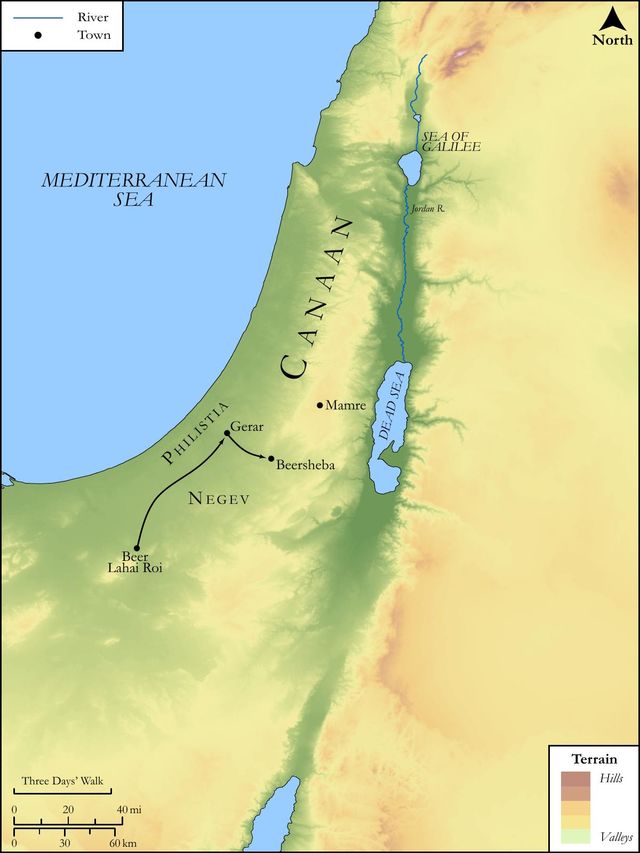
See on the biblical-era maps


Study this verse
Public-domain commentary
Matthew Henry
From his Commentary on the Whole Bible. Henry comments on passages, not single verses — this entry covers Genesis 26:26–33. His two-level outline is real structure in the source text, so it is rendered as structure.
We have here the contests that had been between Isaac and the Philistines issuing in a happy peace and reconciliation.
I.Abimelech pays a friendly visit to Isaac, in token of the respect he had for him, Gen 26:26.
Note, When a man's ways please the Lord he makes even his enemies to be at peace with him, Pro 16:7. King's hearts are in his hands, and when he pleases he can turn them to favour his people.
II.Isaac prudently and cautiously questions his sincerity in this visit, Gen 26:27.
Note, In settling friendships and correspondences, there is need of the wisdom of the serpent, as well as the innocence of the dove; nor is it any transgression of the law of meekness and love plainly to signify our strong perception of injuries received, and to stand upon our guard in dealing with those that have acted unfairly.
III.Abimelech professes his sincerity, in this address to Isaac, and earnestly courts his friendship, Gen 26:28, Gen 26:29.
Some suggest that Abimelech pressed for this league with him because he feared lest Isaac, growing rich, should, some time or other, avenge himself upon them for the injuries he had received. However, he professes to do it rather from a principle of love.
1.He makes the best of their behaviour towards him. Isaac complained they had hated him, and sent him away. No, said Abimelech, we sent thee away in peace. They turned him off from the land he held of them; but they suffered him to take away his stock, and all his effects, with him. Note, The lessening of injuries is necessary to the preserving of friendship; for the aggravating of them exasperates and widens breaches. The unkindness done to us might have been worse.
2.He acknowledges the token of God's favour to him, and makes this the ground of their desire to be in league with him: The Lord is with thee, and thou art the blessed of the Lord. As if he had said, "Be persuaded to overlook and pass by the injuries offered thee; for God had abundantly made up to thee the damage thou receivedst." Note, Those whom God blesses and favours have reason enough to forgive those who hate them, since the worst enemy they have cannot do them any real hurt. Or, "For this reason we desire thy friendship, because God is with thee." Note, It is good to be in covenant and communion with those who are in covenant and communion with God, Jo1 1:3; present address to him was the result of mature deliberation: We said, Let there be an oath between us. Whatever some of his peevish envious subjects might mean otherwise, he and his prime-ministers of state, whom he had now brought with him, designed no other than a cordial friendship. Perhaps Abimelech had received, by tradition, the warning God gave to his predecessor not to hurt Abraham (Gen 20:7), and this made him stand in such awe of Isaac, who appeared to be as much the favourite of Heaven as Abraham was.
IV.Isaac entertains him and his company, and enters into a league of friendship with him, Gen 26:30, Gen 26:31.
Here see how generous the good man was, 1. In giving: He made them a feast, and bade them welcome. (2.) In forgiving. He did not insist upon the unkindnesses they had done him, but freely entered into a covenant of friendship with them, and bound himself never to do them any injury. Note, Religion teaches us to be neighbourly, and, as much as in us lies, to live peaceably with all men.
V.Providence smiled upon what Isaac did; for the same day that he made this covenant with Abimelech his servants brought him the tidings of a well of water they had found, Gen 26:32, Gen 26:33. He did not insist upon the restitution of the wells which the Philistines had unjustly taken from him, lest this should break off the treaty, but sat down silent under the injury; and, to recompense him for this, immediately he is enriched with a new well, which, because it suited so well to the occurrence of the day, he called by an old name, Beer-sheba, The well of the oath.
Continue studying Genesis 26:31 across the web’s major study libraries — every link below opens this exact verse, chapter, or book on the destination site.
Read & Compare
 BibleGatewayThis verse in more than 200 translations and 70 languages.
 Bible.comThe YouVersion reader — hundreds of translations, reading plans, and highlights.
 ESV.orgCrossway's official English Standard Version reader.
 NET BibleThe NET translation with 60,000+ translators' notes on every rendering decision.
 STEP BibleTyndale House's free study tool — original text, vocabulary, and scholarly resources.
 BibliaLogos Bible Software's free web reader.
 USCCBThe New American Bible (Revised Edition) with the U.S. bishops' study notes.
Commentaries
 BibleHub CommentariesDozens of classic commentaries on this verse, gathered on one page.
 StudyLightMore than 100 commentary sets — the largest collection on the web.
 BibleRefPlain-English commentary on what this verse means, verse by verse.
 Enduring WordDavid Guzik's free commentary on this chapter, widely used by Bible teachers.
 Bible Study ToolsVerse commentary alongside Greek and Hebrew study aids.
Original Language & Research
- BibleHub InterlinearThe verse word by word — original language, transliteration, and English.
- BibleHub LexiconEvery word's original-language definition and Strong's entry.
 Blue Letter BibleDeep-study tools — Strong's numbers, concordance, and word studies.
 SefariaThe Hebrew text with Rashi and centuries of Jewish commentary.
Sermons, Hymns & Audio


TrulyRandomVerse is not affiliated with these sites and doesn’t control their content. They’re linked because they’re genuinely useful.
Summary
Genesis 26:31 marks the climactic resolution of a period of tension between Isaac and Abimelech, the Philistine king of Gerar, culminating in a solemn covenant of peace. Following a night of feasting and negotiation, both parties rose with earnest intent to formalize their agreement through a sacred oath, ensuring a secure and harmonious departure for Abimelech and his entourage. This pivotal moment underscores the power of divine blessing in fostering reconciliation and demonstrates the integrity required to maintain peaceful coexistence, solidifying a relationship previously marked by dispute and envy.
Context
ShowHideLiterary Context
Genesis 26:31 serves as the concluding act of a significant narrative arc within the life of Isaac, specifically detailing his interactions with the Philistines in Gerar. The preceding verses establish a pattern of conflict and divine intervention: Isaac's prosperity, attributed to God's blessing, incites envy among the Philistines, leading them to stop up the wells dug by Abraham (Genesis 26:15). Despite being forced to move and facing repeated disputes over water rights, Isaac consistently demonstrates a peaceable spirit, continuing to dig new wells and prosper. This narrative culminates in Abimelech, recognizing God's evident favor upon Isaac, initiating a visit to formalize a treaty. The feast in Genesis 26:30 sets the stage for the oath-taking described in this verse, bringing the long-standing tensions to a definitive, peaceful close.
Historical & Cultural Context
In the land of Canaan, water sources were vital for survival, making disputes over wells common and often violent. The stopping of wells, as seen in Genesis 26:15, was an act of economic warfare. Treaties and covenants were fundamental to inter-group relations, often involving solemn oaths, shared meals, and divine invocation to bind the parties. Rising "betimes in the morning" for such an important act would signify seriousness and commitment, reflecting the cultural importance of promptly fulfilling agreements, especially those involving oaths. The concept of "peace" (Hebrew: shalom) extended beyond the mere absence of conflict, encompassing holistic well-being, prosperity, and relational harmony, all highly valued in a volatile environment.
Key Themes
ShowHideThis verse powerfully encapsulates several overarching themes of Genesis and the Abrahamic narrative. Firstly, it highlights the unwavering faithfulness of God to His covenant promises, as Isaac's prosperity and protection, despite adversity, are clearly recognized by Abimelech as divine blessing (Genesis 26:28). Secondly, it underscores the theme of peacemaking and reconciliation, demonstrating that even deep-seated conflicts can be resolved through integrity, hospitality, and a mutual recognition of divine influence. Isaac's patient and non-retaliatory approach to conflict, even when wronged, serves as a model. Lastly, the narrative reinforces the importance of covenants and oaths as binding agreements, reflecting a divine expectation for human integrity in upholding one's word, a principle foundational to God's own covenantal relationship with humanity, as seen in His promises to Abraham and his descendants throughout Genesis 12 and beyond.
Exposition and Analysis
ShowHideGenesis 26:31 meticulously records the solemn culmination of the peace process between Isaac and Abimelech, emphasizing the deliberate and binding nature of their agreement.
Key Word Analysis
ShowHideMeaning "to incline (the shoulder to a burden); but used only as denominative from שְׁכֶם; literally, to load up (on the back of man or beast), i.e. to start early in the morning." This word emphasizes the intentionality and promptness of their actions. Rising "betimes in the morning" signifies that both parties were eager and serious about formalizing the covenant, indicating a desire to swiftly and decisively conclude the agreement. It underscores the urgency and importance they placed on establishing peace.
Meaning "properly to be complete, but used only as a denominative from שֶׁבַע; to seven oneself, i.e. swear (as if by repeating a declaration seven times)." This term denotes a solemn oath, often involving an appeal to a divine witness to guarantee the agreement. The act of swearing bound both parties to their commitments under divine sanction, making the covenant inviolable in their cultural context. It signifies the gravity and binding nature of the agreement.
Meaning "safe, i.e. (figuratively) well, happy, friendly; also (abstractly) welfare, i.e. health, prosperity, peace." This word denotes more than just the absence of conflict; it encompasses wholeness, well-being, security, prosperity, and harmony. Their departure "in peace" signifies a complete, secure, and holistic resolution to their previous disputes, indicating a restoration of right relationship and a state of mutual welfare.
Verse Breakdown
ShowHide"And they rose up betimes in the morning,"
This clause highlights the promptness and earnestness with which both Isaac and Abimelech's party approached the formalization of their peace treaty. It signifies their eagerness to conclude the agreement without delay, indicating the high value they placed on establishing a secure and lasting peace.
"and sware one to another:"
This phrase describes the central act of covenant-making. The taking of an oath was a profoundly serious and binding commitment in the days of the patriarchs, often invoking divine witness. This act solidified their agreement, transforming a verbal understanding into a sacred, unbreakable bond, ensuring mutual trust and commitment.
"and Isaac sent them away,"
This indicates Isaac's role as the host and the one who formally concludes the visit. Having successfully negotiated and solemnized the treaty, Isaac grants Abimelech and his men a peaceful departure, signifying the successful resolution of their past conflicts.
"and they departed from him in peace."
This final clause confirms the successful outcome of the negotiations. The use of "peace" (shalom) signifies not merely the absence of hostility but a state of holistic well-being, security, and restored harmony between the parties. It implies that the Philistines left feeling secure and satisfied with the terms of the treaty, and Isaac was free from further harassment.
Literary Devices
ShowHideThe verse employs several significant literary devices. Emphasis is achieved through the phrase "betimes in the morning," highlighting the urgency and importance of the covenant. The act of "swearing one to another" serves as a powerful instance of Covenant Language, a recurring motif in Genesis that underscores the binding nature of agreements, whether between God and humanity or among humans. The use of Repetition of Theme (peace/shalom) throughout Isaac's narrative, culminating in this verse, reinforces the idea that despite provocation, God's blessing enables His people to live in harmony. Finally, the narrative structure itself acts as a form of Resolution, providing a satisfying conclusion to the conflict that has defined much of Isaac's interaction with Abimelech in this chapter.
Theological and Thematic Connections
ShowHideGenesis 26:31 resonates deeply with enduring theological truths, primarily showcasing God's unwavering faithfulness to His covenant promises and the transformative power of shalom. Even amidst human conflict and envy, God's promise to bless Isaac and make him great (Genesis 26:3-4) is visibly fulfilled, compelling even his adversaries to acknowledge divine favor and seek peaceful coexistence. This demonstrates that God's blessing is not merely for personal prosperity but also serves as a powerful testimony to the world, drawing others to recognize His presence. The pursuit and establishment of shalom—a comprehensive well-being and relational harmony—is presented as a divine ideal, achievable through integrity, hospitality, and a commitment to solemn agreements. Isaac's conduct, marked by patience and a refusal to retaliate, exemplifies how God's people are called to be agents of peace, even when wronged.
Reflection and Application
ShowHideGenesis 26:31 offers profound lessons for contemporary believers regarding conflict resolution, relational integrity, and the impact of a life lived under divine blessing. Isaac's willingness to pursue peace, even with those who had acted hostilely and unjustly, serves as a powerful model for Christians to actively seek reconciliation and live peaceably with all, as far as it depends on them. This requires humility, patience, and a commitment to dialogue rather than retaliation. When God's hand is evidently upon our lives, our conduct, especially in the face of adversity, can soften hearts and create opportunities for peace and understanding, even with adversaries. Furthermore, the promptness and solemnity with which the oath was taken underscore the enduring importance of keeping one's word and fulfilling commitments. In a world where trust is often eroded, our integrity in upholding agreements, whether in personal, professional, or spiritual relationships, reflects a character that honors God and bears witness to His faithfulness.
Questions for Reflection
ShowHideFAQ
ShowHideWhat is the significance of "betimes in the morning" in the context of this verse?
ShowHideThe phrase "betimes in the morning" (Hebrew: shâkam) signifies the eagerness, seriousness, and intentionality of both Isaac and Abimelech to finalize their peace agreement. Among the patriarchs, rising early for an important task, as Abraham did before Moriah, demonstrated commitment and a desire to act decisively. It indicates that they wasted no time in fulfilling their commitment, rising at dawn to solemnize the oath. This promptness underscores the importance they placed on the covenant and their desire for a swift and secure resolution to their previous disputes, demonstrating integrity and a strong commitment to their word and the newly formed relationship. It highlights that the peace established was not a casual agreement but a deliberate and binding one.
Christ-Centered Fulfillment
ShowHideWhile Genesis 26:31 describes a human covenant of peace, it powerfully foreshadows the ultimate and eternal peacemaking established through Jesus Christ. Isaac, as a son of promise and a recipient of God's abundant blessing, embodies the lineage through whom God's redemptive plan unfolds, a blessing ultimately intended to extend to all nations through the promised Seed of Abraham (Galatians 3:16). Christ is the true "Prince of Peace," as prophesied in Isaiah 9:6, who not only makes peace between individuals but fundamentally reconciles humanity to God through His atoning sacrifice on the cross (Colossians 1:20). The shalom achieved between Isaac and Abimelech, though significant in its historical context, is but a shadow of the comprehensive and eternal peace that believers receive in Christ. He is the one who breaks down the dividing wall of hostility between God and humanity, and between different peoples, establishing a new covenant of grace and creating one new humanity in Himself (Ephesians 2:14-16). Through Him, we are not merely at peace with our neighbors, but fundamentally and eternally at peace with God, receiving a peace that surpasses all understanding (Philippians 4:7).