


Genesis 24:7
Bible text: King James Version (1769 Blayney text) · Public domain
Bible text: King James Version with Strong's numbers · Public domain
Bible text: Berean Standard Bible · Public domain
Bible text: American Standard Version (1901) · Public domain
Bible text: World English Bible, Messianic edition · Public domain
Bible text: Geneva Bible (1599) · Public domain
Bible text: Young's Literal Translation · Public domain
- יְהוָהYah·wehYahwehH3068N-properNoun Proper Title
- אֱלֹהֵי'e·lo·Hei[the] God ofH430N-mpcNoun Plural Masculine Construct
- הַשָּׁמַיִםha·sha·Ma·yimthe heavensH8064Art ¦ N-mpNoun Plural Masculine Absoluteהַtheשָּׁמַיִםheavens
- אֲשֶׁר'a·SherwhoH834RelParticle Relative
- לְקָחַנִיle·ka·Cha·nihe took meH3947V-Qal-Perf-3ms ¦ 1csVerb Qal Perfect 3rd Singular Masculineלְקָחַhe tookנִיme
- מִבֵּיתmi·Beitfrom [the] household ofH1004Prep-m ¦ N-mscNoun Singular Masculine Constructמִfromבֵּית[the] household of
- אָבִי'a·Vimy fatherH1N-msc ¦ 1csNoun Singular Masculine Constructאָבִfatherיmy
- וּמֵאֶרֶץu·me·'E·retzand from [the] land ofH776Conj-w ¦ Prep-m ¦ N-fscNoun Singular Feminine Constructוּandמֵfromאֶרֶץ[the] land of
- מוֹלַדְתִּיmo·lad·Timy kindredH4138N-fsc ¦ 1csNoun Singular Feminine Constructמוֹלַדְתִּkindredיmy
- וַאֲשֶׁרva·'a·Sherand whoH834Conj-w ¦ RelParticle Relativeוַandאֲשֶׁרwho
- דִּבֶּרdi·berhe spokeH1696V-Piel-Perf-3msVerb Piel Perfect 3rd Singular Masculine
- לִיlito <the> mePrep-l ¦ 1csSuffix Personal 1st Singular common genderלִto <the>יme
- וַאֲשֶׁרva·'a·Sherand whoH834Conj-w ¦ RelParticle Relativeוַandאֲשֶׁרwho
- נִשְׁבַּעnish·ba'he swore an oathH7650V-Niphal-Perf-3msVerb Niphal Perfect 3rd Singular Masculine
- לִיlito <the> mePrep-l ¦ 1csSuffix Personal 1st Singular common genderלִto <the>יme
- לֵאמֹרle·Mor<to> sayingH559Prep-l ¦ V-Qal-InfVerb Qal Infinitive Constructלֵ<to>אמֹרsaying
- לְזַרְעֲךָle·Zar·'a·khato your offspringH2233Prep-l ¦ N-msc ¦ 2msNoun Singular Masculine Constructלְtoזַרְעֲoffspringךָyour
- אֶתֵּן'e·TenI will giveH5414V-Qal-Imperf-1csVerb Qal Imperfect 1st Singular common gender
- אֶת'et<obj.>H853DirObjMParticle Object Indicator
- הָאָרֶץha·'A·retzthe landH776Art ¦ N-fsNoun Singular Feminine Absoluteהָtheאָרֶץland
- הַזֹּאתha·Zot<the> thisH2063Art ¦ PrtParticle Demonstrativeהַ<the>זֹּאתthis
- הוּאHu'heH1931Pro-3msPronoun Personal 3rd Singular Masculine
- יִשְׁלַחyish·Lachhe will sendH7971V-Qal-Imperf-3msVerb Qal Imperfect 3rd Singular Masculine
- מַלְאָכוֹmal·'a·Khohis angelH4397N-msc ¦ 3msNoun Singular Masculine Constructמַלְאָכangelוֹhis
- לְפָנֶיךָle·fa·Nei·kha<to> before youH6440Prep-l ¦ N-mpc ¦ 2msNoun Plural Masculine Constructלְ<to>פָנֶיbeforeךָyou
- וְלָקַחְתָּve·la·kach·Taand you will takeH3947Conj-w ¦ V-Qal-ConsecPerf-2msVerb Qal Consecutive Perfect 2nd Singular Masculineוְandלָקַחְתָּyou will take
- אִשָּׁה'i·Shaha wifeH802N-fsNoun Singular Feminine Absolute
- לִבְנִיliv·Nifor my sonH1121Prep-l ¦ N-msc ¦ 1csNoun Singular Masculine Constructלִforבְנִsonיmy
- מִשָּׁםmi·Shamfrom thereH8033Prep-m ¦ AdvAdverbמִfromשָּׁםthere
English is a literal word-by-word gloss of the Hebrew, not the KJV's wording. Why?
This is the original text the KJV's translators worked from — each Hebrew word with its own literal English meaning in this verse, prepared by scholars at Tyndale House, Cambridge. The KJV translates whole sentences, not word by word, so its wording differs: one Hebrew word can become several English words, and the KJV may choose “the LORD” where the gloss reads “Yahweh”. Both are faithful — they answer different questions. For the KJV's own rendering, switch to the KJV text.
Details
See on the biblical-era maps


Study this verse
Public-domain commentary
Matthew Henry
From his Commentary on the Whole Bible. Henry comments on passages, not single verses — this entry covers Genesis 24:1–9. His two-level outline is real structure in the source text, so it is rendered as structure.
Three things we may observe here concerning Abraham: -
I.The care he took of a good son, to get him married, well married.
It was high time to think of it now, for Isaac was about forty years old, and it had been customary with his ancestors to marry at thirty, or sooner, Gen 11:14, Gen 11:18, Gen 11:22, Gen 11:24. Abraham believed the promise of the building up of his family, and therefore did not make haste; not more haste than good speed. Two considerations moved him to think of it now (Gen 24:1): - 1. That he himself was likely to leave the world quickly, for he was old, and well-stricken in age, and it would be a satisfaction to him to see his son settled before he died; and, 2. That he had a good estate to leave behind him, for the Lord had blessed him in all things; and the blessing of the Lord makes rich. See how much religion and piety befriend outward prosperity. Now Abraham's pious care concerning his son was, (1.) That he should not marry a daughter of Canaan, but one of his kindred. He saw that the Canaanites were degenerating into great wickedness, and knew by revelation that they were designed for ruin, and therefore he would not marry his son among them, lest they should be either a snare to his soul, or at least a blot to his name. (2.) That yet he should not leave the land of Canaan, to go himself among his kindred, not even for the purpose of choosing a wife, lest he should be tempted to settle there. This caution is given Gen 24:6, and repeated, Gen 24:8. "Bring not my son thither again, whatever comes of it. Let him rather want a wife than expose himself to that temptation." Note, Parents in disposing of their children, should carefully consult the welfare of their souls, and their furtherance in the way to heaven. Those who through grace have escaped the corruption that is in the world through lust, and have brought up their children accordingly, should take heed of doing any thing by which they may be again entangled therein and overcome, Pe2 2:20. Beware that you bring them not thither again, Heb 11:15.
II.The charge he gave to a good servant, probably Eliezer of Damascus, one of whose conduct, fidelity, and affection to him and his family, he had had long experience. He trusted him with this great affair, and not Isaac himself, because he would not have Isaac go at all into that country, but marry there by proxy; and no proxy so fit as this steward of his house. This matter is settled between the master and the servant with a great deal of care and solemnity.
1.The servant must be bound by an oath to do his utmost to get a wife for Isaac from among his relations, Gen 24:2-4. Abraham swears him to it, both for his own satisfaction and for the engagement of his servant to all possible care and diligence in this matter. Thus God swears his servants to their work, that, having sworn, they may perform it. Honour is here done to the eternal God; for he it is that is sworn by, to whom alone these appeals ought to be made. And some think honour is done to the covenant of circumcision by the ceremony here used of putting his hand under his thigh. Note, Swearing being an ordinance not peculiar to the church, but common to mankind, is to be performed by such signs as are the appointments and common usages of our country, for binding the person sworn.
2.He must be clear of this oath if, when he had done his utmost, he could not prevail. This proviso the servant prudently inserted (Gen 24:5), putting the case that the woman would not follow him; and Abraham allowed the exception, Gen 24:8. Note, Oaths are to be taken with great caution, and the matter sworn to should be rightly understood and limited, because it is a snare to devour that which is holy, and, after vows, to make the enquiry which should have been made before.
III.The confidence he put in a good God, who, he doubts not, will give his servant success in this undertaking, Gen 24:7.
He remembers that God had wonderfully brought him out of the land of his nativity, by the effectual call of his grace; and therefore doubts not but he will succeed him in his care not to bring his son thither again. He remembers also the promise God had made and confirmed to him that he would give Canaan to his seed, and thence infers that God would own him in his endeavours to match his son, not among those devoted nations, but to one that was fit to be the mother of such a seed. "Fear not therefore; he shall send his angel before thee to make thy way prosperous." Note,
1.Those that carefully keep in the way of duty, and govern themselves by the principles of their religion in their designs and undertakings, have good reason to expect prosperity and success in them. God will cause that to issue in our comfort in which we sincerely aim at his glory.
2.God's promises, and our own experiences, are sufficient to encourage our dependence upon God, and our expectations from him, in all the affairs of this life.
3.God's angels are ministering spirits, sent forth, not only for the protection, but for the guidance, of the heirs of promise, Heb 1:14. "He shall send his angel before thee, and then thou wilt speed well."
Historical interpretation
Historical reception
2 surviving comments on this verse. Each one is dated, so this reads as a timeline rather than a list.
Have confidence, Abraham is saying, and depart. I am convinced that the One who has demonstrated such great kindness in my regard will add this to his former blessings and send his angel before you. He will personally prepare the way before you; he will also personally make the woman known to you; you will take her and return. But should it happen—perish the thought—that she refuses to accompany you, you will be discharged from the obligation of the oath. “Nevertheless don’t take my son there.” You see, I have no doubt that the Lord will take care of you. Showing how he trusted in God’s power, Abraham forbade the servant to conduct Isaac there. Then, after he had given detailed instructions to the servant and relieved him of concern (the servant, after all, was afraid he would be convicted of perjury if he failed to discharge his command), “he placed his hand under his thigh,” the text goes on, “and gave him his oath on this matter,” that he would not take Isaac there.
Notice how previously, in placing the servant under oath, he instructed him about the Creator of all. Now, as Abraham was about to pray, he used the same words, by every means teaching the servant to have confidence in him and, in this spirit, set out on the journey, as also to trust in its outcome. You see, Abraham teaches him how much favor from the God of all Abraham had enjoyed from the outset and the fact that this same benefactor, who had plucked him from his own country, had managed his fortunes so well to this point. At the height of old age, God had granted him the birth of Isaac and would personally also take care of what lay ahead. “The Lord, the God of heaven and earth, who took me from my father’s house and from the land where I was born,” the same who spoke to me in the words, “I will give this land to you and your descendants,” who has demonstrated such extraordinary care for me, “he will personally send his angel before you, and you will take a wife for my son from there.”
Continue studying Genesis 24:7 across the web’s major study libraries — every link below opens this exact verse, chapter, or book on the destination site.
Read & Compare
 BibleGatewayThis verse in more than 200 translations and 70 languages.
 Bible.comThe YouVersion reader — hundreds of translations, reading plans, and highlights.
 ESV.orgCrossway's official English Standard Version reader.
 NET BibleThe NET translation with 60,000+ translators' notes on every rendering decision.
 STEP BibleTyndale House's free study tool — original text, vocabulary, and scholarly resources.
 BibliaLogos Bible Software's free web reader.
 USCCBThe New American Bible (Revised Edition) with the U.S. bishops' study notes.
Commentaries
 BibleHub CommentariesDozens of classic commentaries on this verse, gathered on one page.
 StudyLightMore than 100 commentary sets — the largest collection on the web.
 BibleRefPlain-English commentary on what this verse means, verse by verse.
 Enduring WordDavid Guzik's free commentary on this chapter, widely used by Bible teachers.
 Bible Study ToolsVerse commentary alongside Greek and Hebrew study aids.
Original Language & Research
- BibleHub InterlinearThe verse word by word — original language, transliteration, and English.
- BibleHub LexiconEvery word's original-language definition and Strong's entry.
 Blue Letter BibleDeep-study tools — Strong's numbers, concordance, and word studies.
 SefariaThe Hebrew text with Rashi and centuries of Jewish commentary.
Sermons, Hymns & Audio


TrulyRandomVerse is not affiliated with these sites and doesn’t control their content. They’re linked because they’re genuinely useful.
Summary
Genesis 24:7 captures Abraham's profound declaration of faith to his chief servant, entrusting him with the critical mission of securing a wife for Isaac. Abraham anchors this vital task in the unwavering faithfulness of "the LORD God of heaven," recounting how God had personally called him, guided him from his homeland, and sworn an oath concerning the promised land and his descendants. With absolute confidence, Abraham assures his servant that this same God will dispatch His angel to ensure the success of the mission, enabling the servant to find a suitable bride from Abraham's kindred, thereby safeguarding the divinely appointed lineage.
Context
ShowHideLiterary Context
Genesis 24 stands as the longest chapter in the book, uniquely dedicated entirely to the search for Isaac's wife. This extensive focus underscores the immense importance of this event for the continuation of the Abrahamic covenant. Following the near-sacrifice of Isaac in Genesis 22, which confirmed Abraham's obedience and God's provision, and the death of Sarah in Genesis 23, the narrative turns to securing the next generation of the promised lineage. Abraham, now "old, and well stricken in age" (Genesis 24:1), understands the urgency of ensuring Isaac's marriage aligns with God's purposes. His detailed instructions to his servant, sealed with an oath, highlight the spiritual gravity of the mission, emphasizing that the choice of a spouse for Isaac is not merely a personal matter but a pivotal moment in redemptive history.
Historical & Cultural Context
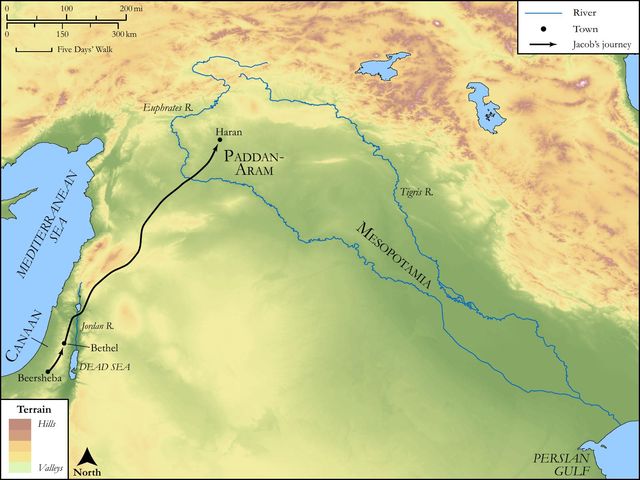
In the days of the patriarchs, marriage was primarily a family and tribal affair, often arranged to secure alliances, preserve lineage, and transfer inheritance. Endogamy—marrying within one's extended family or tribe—was a common practice, particularly for maintaining cultural and religious distinctiveness. Abraham's insistence that Isaac not marry a Canaanite woman (explicitly stated in Genesis 24:3) reflects a deep concern for spiritual purity. The Canaanites were polytheistic and practiced idolatry, which would have corrupted the monotheistic faith of Abraham's household and jeopardized the covenant promises. Sending a servant on such a crucial mission was customary for wealthy patriarchs, and the servant's oath-bound commitment underscored the seriousness of the task. The journey back to Mesopotamia (Haran/Nahor) was a significant undertaking, requiring divine protection and guidance, which Abraham confidently anticipates.
Key Themes
ShowHideGenesis 24:7 encapsulates several foundational themes central to the book of Genesis and the broader biblical narrative. Firstly, it powerfully reiterates God's Covenant Faithfulness, demonstrating His unwavering commitment to the promises made to Abraham regarding land and seed, even across generations. Secondly, it highlights Divine Providence and Guidance, showing God's active involvement in the lives of His people, orchestrating events and providing supernatural assistance (through His "angel") to fulfill His purposes. Thirdly, the verse underscores the Preservation of the Messianic Line, as the careful selection of Isaac's wife is crucial for maintaining the purity and distinctiveness of the lineage through which the ultimate "seed"—the Messiah—would come. Finally, it exemplifies Faith in Action, as Abraham's confident commissioning of his servant is a testament to his mature trust in God's ability to perform what He has promised, even in the face of human limitations.
Exposition and Analysis
ShowHideKey Word Analysis
ShowHideThis compound title, combining H3068 and H430, refers to Yahweh, the personal, covenantal God of Israel, identified as the supreme God. The addition of "of heaven" (H8064, shâmayim') emphasizes His universal sovereignty and dominion, distinguishing Him as the God who rules over all creation, not merely a local deity. It underscores His omnipotence and omnipresence, highlighting His ability to direct events across vast distances and intervene supernaturally.
This primitive root means "to speak," often used with great latitude to include commanding, declaring, or promising. In this context, it refers to God's direct, verbal communication with Abraham, emphasizing the personal and authoritative nature of God's covenant promises. It highlights the reliability and truthfulness of God's word, which forms the basis of Abraham's confidence.
This word denotes a "messenger," specifically, of God. While it can refer to a human messenger, in this context, especially when sent by "the LORD God of heaven" to "send before thee," it clearly indicates a divine, supernatural agent. This signifies God's direct, active intervention and assistance in the servant's mission, assuring divine guidance and protection.
Verse Breakdown
ShowHide"The LORD God of heaven,"
Abraham begins by invoking the supreme authority and universal dominion of God. This title, "LORD God of heaven," asserts God's transcendence over all earthly powers and His sovereign control over all creation. It is a declaration of God's ultimate power and ability to direct all circumstances, providing the foundational assurance for the mission ahead.
"which took me from my father's house, and from the land of my kindred,"
This clause serves as a powerful reminder of God's past faithfulness and initiative in Abraham's life. It recalls God's initial call to Abraham in Genesis 12:1 to leave his familiar surroundings in Ur of the Chaldees and Haran. This act of divine election and separation established Abraham for a unique purpose, demonstrating God's consistent guidance and provision from the very beginning of their relationship.
"and which spake unto me, and that sware unto me, saying, Unto thy seed will I give this land;"
Here, Abraham recounts the numerous instances of God's direct communication and solemn covenant promises. The mention of God "swearing" an oath (e.g., Genesis 15:18 and Genesis 22:16-18) underscores the absolute certainty and inviolability of God's word. The promise of "this land" (Canaan) to Abraham's "seed" is a cornerstone of the Abrahamic Covenant, central to God's redemptive plan and the lineage through which the Messiah would come.
"he shall send his angel before thee,"
Based on God's proven faithfulness, Abraham confidently declares God's future intervention. The "angel" (Hebrew: malakh) here signifies a divine messenger or supernatural agent, indicating that God will actively clear the way, remove obstacles, and guide the servant directly. This is a profound statement of divine providence, assuring the servant that his success will not depend solely on his own efforts but on God's direct, supernatural assistance.
"and thou shalt take a wife unto my son from thence."
This is the specific command and the assured outcome of the mission. Abraham's unwavering conviction that God will send His angel is directly linked to the certainty that the servant will succeed in finding a wife for Isaac from Abraham's original homeland. This ensures the continuation of the covenant lineage, preserving its distinctiveness and purity from the pagan influences of Canaan, and fulfilling God's overarching plan for His chosen people.
Literary Devices
ShowHideThe verse employs several significant literary devices that amplify its meaning and impact. Emphasis is achieved through Abraham's repeated invocation of God's past actions ("took me," "spake unto me," "sware unto me"), which serves to build a compelling argument for God's continued faithfulness. This historical recounting establishes a strong foundation of divine reliability. The phrase "The LORD God of heaven" acts as a powerful epithet, underscoring God's supreme authority and universal dominion, setting Him apart from any earthly power or deity. The promise that God "shall send his angel before thee" is a clear example of Divine Providence, portraying God as actively intervening in human affairs to guide and ensure the fulfillment of His purposes. This statement also contains an element of Foreshadowing, hinting at the supernatural assistance that will indeed accompany the servant's journey, as detailed later in the chapter. The entire passage is permeated with Covenant Language, as Abraham's words are steeped in the promises God made to him, reinforcing the unbreakable bond between God and His chosen people and the certainty of His word.
Theological and Thematic Connections
ShowHideGenesis 24:7 stands as a powerful testament to the enduring nature of God's covenant faithfulness and His active involvement in the lives of His people. Abraham's confidence is not based on wishful thinking but on a lifetime of experiencing God's unwavering commitment to His promises, particularly those concerning the land and the "seed." This verse highlights that God's providence extends even to the most personal aspects of life, such as marriage, when those decisions are integral to His larger redemptive plan. It underscores the critical importance of maintaining a distinct, pure lineage for the unfolding of God's purposes, setting the stage for the nation of Israel and ultimately, the coming of the Messiah. Abraham's faith serves as a model, demonstrating that genuine belief in God's character and promises leads to confident action and reliance on His divine leading, even in seemingly insurmountable tasks.
Reflection and Application
ShowHideGenesis 24:7 offers profound lessons for believers today, primarily in the area of trusting God's past faithfulness as the unwavering foundation for present and future endeavors. Just as Abraham recalled God's consistent character and His track record of keeping promises, we are called to remember God's faithfulness in our own lives and throughout redemptive history. When facing significant life decisions—whether concerning relationships, career, ministry, or major transitions—we can approach them with confidence, knowing that the "LORD God of heaven" who guided Abraham is the same God who guides us. Abraham's assurance that God would send His "angel" encourages us to pray for divine guidance and intervention, recognizing that God is actively at work to bring about His will, often through both supernatural means and human agency. This verse reminds us that while we are responsible for our efforts, ultimate success rests in God's sovereign direction, assuring us that He will provide the necessary help and open the right doors for those who seek His will and walk in faith.
Questions for Reflection
ShowHideFAQ
ShowHideWho is "the LORD God of heaven" mentioned by Abraham?
ShowHide"The LORD God of heaven" refers to Yahweh (H3068, Yᵉhôvâh), the personal and covenant God of Israel, identified with the supreme God (H430, ʼĕlôhîym). This title, especially with the addition of "of heaven" (H8064, shâmayim'), emphasizes His universal authority and sovereignty over all creation, distinguishing Him from local or pagan deities. It affirms His omnipotence and omnipresence, highlighting His ability to act anywhere and at any time to fulfill His purposes, as seen in His guidance of Abraham and His promise to give the land to his seed (Genesis 12:7).
What does it mean that God "shall send his angel before thee"?
ShowHideThis phrase signifies divine assistance and guidance. The Hebrew word for "angel" (H4397, mălʼâk) can mean a human messenger, but in this context, given the source ("the LORD God of heaven") and the nature of the mission, it clearly refers to a supernatural agent or direct divine intervention. It means God would actively clear the path, remove obstacles, and guide the servant directly to the woman chosen by God for Isaac, ensuring the success of the mission. This promise underscores God's active providence in the lives of His people, providing supernatural help for divinely appointed tasks, just as He did for the Israelites in the wilderness (Exodus 23:20).
Why was it so crucial for Isaac to marry from Abraham's kindred rather than a Canaanite?
ShowHideMarrying from Abraham's kindred (H4138, môwledeth') was vital for several interconnected reasons, all rooted in God's covenant plan. Primarily, it was to preserve the purity of the covenant lineage, preventing intermarriage with idolatrous Canaanites who could corrupt the spiritual heritage and lead God's chosen people into pagan practices, as later forbidden in the Mosaic Law (Deuteronomy 7:3-4). It was also crucial to maintain the distinct identity of God's people and to ensure the continuation of the family line through which the promised Messiah would ultimately come, aligning with God's specific instructions and covenant promises to Abraham regarding his "seed" (H2233, zeraʻ').
Christ-Centered Fulfillment
ShowHideGenesis 24:7, with its profound emphasis on God's covenant faithfulness, the preservation of the sacred lineage, and divine guidance through an "angel," finds its ultimate and most glorious fulfillment in Jesus Christ. The entire meticulous mission to find a wife for Isaac was not merely about a family matter but was crucial for maintaining the pure line through which the promised "seed" (H2233, zeraʻ') of Abraham would ultimately come. This "seed" is definitively identified by Paul as Christ Himself (Galatians 3:16), through whom all the families of the earth are blessed, fulfilling God's original promise to Abraham (Genesis 12:3). Furthermore, Abraham's confidence that God would "send his angel" (H4397, mălʼâk') before the servant powerfully foreshadows God's ultimate and supreme sending of His Son, Jesus, as the perfect divine Messenger and embodiment of God's will. Christ came not merely to guide, but to accomplish the greatest redemptive mission: securing eternal life and a spiritual inheritance for all who are united to Him by faith. He is the Bridegroom who, through His sacrifice, establishes His bride, the Church, gathering her from every kindred, tongue, people, and nation (Revelation 5:9). Thus, the careful preservation of Isaac's lineage points forward to the perfect, unblemished lineage of Christ, and the divine guidance ensuring Isaac's marriage prefigures the sovereign work of God in bringing about the union of Christ and His Church, His eternal bride (Ephesians 5:25-27).