


Genesis 20:8
Bible text: King James Version (1769 Blayney text) · Public domain
Bible text: Berean Standard Bible · Public domain
Bible text: American Standard Version (1901) · Public domain
Bible text: World English Bible, Messianic edition · Public domain
Bible text: Geneva Bible (1599) · Public domain
Bible text: Young's Literal Translation · Public domain
- וַיַּשְׁכֵּםvai·yash·Kemand he rose earlyH7925Conj-w ¦ V-Hiphil-ConsecImperf-3msVerb Hiphil Consecutive Imperfect 3rd Singular Masculineוַandיַּשְׁכֵּםhe rose early
- אֲבִימֶלֶךְ'a·vi·Me·lekhAbimelechH40N-proper-mNoun Proper Masculine
- בַּבֹּקֶרba·Bo·kerin the morningH1242Prep-b ¦ N-msNoun Singular Masculine Absoluteבַּin theבֹּקֶרmorning
- וַיִּקְרָאvai·yik·Ra'and he summonedH7121Conj-w ¦ V-Qal-ConsecImperf-3msVerb Qal Consecutive Imperfect 3rd Singular Masculineוַandיִּקְרָאhe summoned
- לְכָלle·khol<to> allH3605Prep-l ¦ N-mscNoun Singular Masculine Constructלְ<to>כָלall
- עֲבָדָיו'a·va·Davhis servantsH5650N-mpc ¦ 3msNoun Plural Masculine Constructעֲבָדָיservantsוhis
- וַיְדַבֵּרvay·da·Berand he spokeH1696Conj-w ¦ V-Piel-ConsecImperf-3msVerb Piel Consecutive Imperfect 3rd Singular Masculineוַandיְדַבֵּרhe spoke
- אֶת'et<obj.>H853DirObjMParticle Object Indicator
- כָּלkolallH3605N-mscNoun Singular Masculine Construct
- הַדְּבָרִיםha·de·va·Rimthe wordsH1697Art ¦ N-mpNoun Plural Masculine Absoluteהַtheדְּבָרִיםwords
- הָאֵלֶּהha·'E·leh<the> theseH428Art ¦ PrtParticle Demonstrativeהָ<the>אֵלֶּהthese
- בְּאָזְנֵיהֶםbe·'a·ze·nei·Hemin their earsH241Prep-b ¦ N-fdc ¦ 3mpNoun Dual Feminine Constructבְּinאָזְנֵיearsהֶםtheir
- וַיִּירְאוּvai·yi·re·'Uand they were afraidH3372Conj-w ¦ V-Qal-ConsecImperf-3mpVerb Qal Consecutive Imperfect 3rd Plural Masculineוַandיִּירְאוּthey were afraid
- הָאֲנָשִׁיםha·'a·na·Shimthe menH582Art ¦ N-mpNoun Plural Masculine Absoluteהָtheאֲנָשִׁיםmen
- מְאֹדme·'OdexceedinglyH3966Adj-msAdjective Numerical Singular Masculine Absolute
English is a literal word-by-word gloss of the Hebrew, not the KJV's wording. Why?
This is the original text the KJV's translators worked from — each Hebrew word with its own literal English meaning in this verse, prepared by scholars at Tyndale House, Cambridge. The KJV translates whole sentences, not word by word, so its wording differs: one Hebrew word can become several English words, and the KJV may choose “the LORD” where the gloss reads “Yahweh”. Both are faithful — they answer different questions. For the KJV's own rendering, switch to the KJV text.
Details
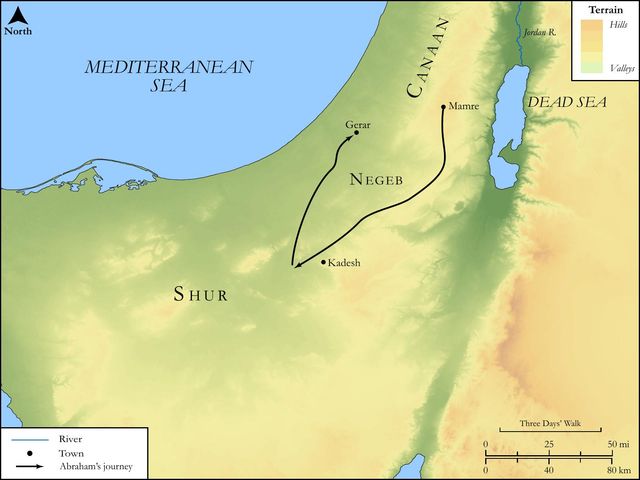
See on the biblical-era maps


Study this verse
Public-domain commentary
Matthew Henry
From his Commentary on the Whole Bible. Henry comments on passages, not single verses — this entry covers Genesis 20:8–13. His four-level outline is real structure in the source text, so it is rendered as structure.
Abimelech, being thus warned of God in a dream, takes the warning, and, as one truly afraid of sin and its consequences, he rises early to obey the directions given him.
I.He has a caution for his servants, Gen 20:8.
Abraham himself could not be more careful than he was to command his household in this matter. Note, Those whom God has convinced of sin and danger ought to tell others what God has done for their souls, that they also may be awakened and brought to a like holy fear.
II.He has a chiding for Abraham. Observe,
1.The serious reproof which Abimelech gave to Abraham, Gen 20:9, Gen 20:10. His reasoning with Abraham upon this occasion was very strong, and yet very mild. Nothing could be said better; he does not reproach him, nor insult over him, does not say, "Is this your profession? I see, though you will not swear, you will lie. If these be prophets, I will beg to be freed from the sight of them:" but he fairly represents the injury Abraham had done him, and calmly signifies his resentment of it.
(1.)He calls that sin which he now found he had been in danger of a great sin. Note, Even the light of nature teaches men that the sin of adultery is a very great sin: be it observed, to the shame of many who call themselves Christians, and yet make a light matter of it.
(2.)He looks upon it that both himself and his kingdom would have been exposed to the wrath of God if he had been guilty of this sin, though ignorantly. Note, The sins of kings often prove the plagues of kingdoms; rulers should therefore, for their people's sake, dread sin.
(3.)He charges Abraham with doing that which was not justifiable, in disowning his marriage. This he speaks of justly, and yet tenderly; he does not call him a liar and cheat, but tells him he had done deeds that ought not to be done. Note, Equivocation and dissimulation, however they may be palliated, are very bad things, and by no means to be admitted in any case.
(4.)He takes it as a very great injury to himself and his family that Abraham had thus exposed them to sin: "What have I offended thee? If I had been thy worst enemy, thou couldst not have done me a worse turn, nor taken a more effectual course to be revenged on me." Note, We ought to reckon that those do us the greatest unkindness in the world that any way tempt us or expose us to sin, though they may pretend friendship, and offer that which is grateful enough to corrupt nature.
(5.)He challenges him to assign a cause for his suspecting them as a dangerous people for an honest man to live among: "What sawest thou, that thou hast done this thing? Gen 20:10. What reason hadst thou to think that if we had known her to be thy wife thou wouldst have been exposed to any danger by it?" Note, A suspicion of our goodness is justly reckoned a greater affront than a slight upon our greatness.
2.The poor excuse that Abraham made for himself.
(1.)He pleaded the bad opinion he had of the place, Gen 20:11. He thought within himself (though he could not give any good reason for his thinking so), "Surely the fear of God is not in this place, and then they will slay me." [1.] Little good is to be expected where no fear of God is. See Psa 36:1. [2.] There are many places and persons that have more of the fear of God in them than we think they have: perhaps they are not called by our dividing name, they do not wear our badges, they do not tie themselves to that which we have an opinion of; and therefore we conclude they have not the fear of God in their hearts, which is very injurious both of Christ and Christians, and makes us obnoxious to God's judgment, Mat 7:1. [3.] Uncharitableness and censoriousness are sins that are the cause of many other sins. When men have once persuaded themselves concerning such and such that they have not the fear of God, they think this will justify them in the most unjust and unchristian practices towards them. Men would not do ill if they did not first think ill.
(2.)He excused it from the guilt of a downright lie by making it out that, in a sense, she was his sister, Gen 20:12. Some think she was own sister to Lot, who is called his brother Lot (Gen 14:16), though he was his nephew; so Sarah is called his sister. But those to whom he said, She is my sister, understood that she was so his sister as not to be capable of being his wife; so that it was an equivocation, with an intent to deceive.
(3.)He clears himself from the imputation of an affront designed to Abimelech in it by alleging that it had been his practice before, according to an agreement between him and his wife, when they first became sojourners (Gen 20:13): "When God caused me to wander from my father's house, then we settled this matter." Note,
[1.]God is to be acknowledged in all our wanderings.
[2.]Those that travel abroad, and converse much with strangers, as they have need of the wisdom of the serpent, so it is requisite that that wisdom be ever tempered with the innocence of the dove. It may, for aught I know, be suggested that God denied to Abraham to punish them for this sinful compact if they will not own their marriage, why should God own it? But we may suppose that, after this reproof which Abimelech gave them, they agreed never to do so again, and then presently we read (Gen 21:1, Gen 21:2) that Sarah conceived.
Historical interpretation
Historical reception
1 surviving comment on this verse from the historical church.
Do you see how it was not idly or to no purpose that the good man had shifted place? I mean, had he remained at his former encampment, how would all the people of Gerar have been able to realize the degree of favor he enjoyed from God? “But all the people were very frightened.” A great fear fell on them; they worried about everything. Then “Abimelech summoned Abraham,” the text goes on. Consider, I ask you, the degree of notoriety with which the just man is now brought into the presence of the king after being treated a little before as beneath contempt, in the manner of a vagabond and stranger. When everyone is assembled in haste, the patriarch is summoned, for the time being ignorant of all this, and he then learns from the king in person what has happened to him on his account at God’s hands.
Continue studying Genesis 20:8 across the web’s major study libraries — every link below opens this exact verse, chapter, or book on the destination site.
Read & Compare
 BibleGatewayThis verse in more than 200 translations and 70 languages.
 Bible.comThe YouVersion reader — hundreds of translations, reading plans, and highlights.
 ESV.orgCrossway's official English Standard Version reader.
 NET BibleThe NET translation with 60,000+ translators' notes on every rendering decision.
 STEP BibleTyndale House's free study tool — original text, vocabulary, and scholarly resources.
 BibliaLogos Bible Software's free web reader.
 USCCBThe New American Bible (Revised Edition) with the U.S. bishops' study notes.
Commentaries
 BibleHub CommentariesDozens of classic commentaries on this verse, gathered on one page.
 StudyLightMore than 100 commentary sets — the largest collection on the web.
 BibleRefPlain-English commentary on what this verse means, verse by verse.
 Enduring WordDavid Guzik's free commentary on this chapter, widely used by Bible teachers.
 Bible Study ToolsVerse commentary alongside Greek and Hebrew study aids.
Original Language & Research
- BibleHub InterlinearThe verse word by word — original language, transliteration, and English.
- BibleHub LexiconEvery word's original-language definition and Strong's entry.
 Blue Letter BibleDeep-study tools — Strong's numbers, concordance, and word studies.
 SefariaThe Hebrew text with Rashi and centuries of Jewish commentary.
Sermons, Hymns & Audio


TrulyRandomVerse is not affiliated with these sites and doesn’t control their content. They’re linked because they’re genuinely useful.
Summary
Genesis 20:8 powerfully depicts the immediate and profound reaction of King Abimelech and his entire household to the direct, urgent divine revelation he received concerning Abraham and Sarah. This pivotal verse underscores the compelling gravity of God's intervention, demonstrating the overwhelming impact of divine truth and the swift, fearful response it elicits from those who recognize its authority and comprehend its serious implications.
Context
ShowHideLiterary Context
This verse serves as the immediate aftermath of a dramatic divine encounter. Abraham, having previously employed a similar deception in Egypt (Genesis 12:10-20), again presents Sarah as his sister to Abimelech, the king of Gerar, out of fear for his own life. Abimelech, acting with integrity and unaware of Sarah's true marital status, had taken her into his palace. However, God intervened directly, appearing to Abimelech in a dream. In this dream, God explicitly warned Abimelech that he was "a dead man" if he did not return Sarah, for she was a married woman (Genesis 20:3). Crucially, God also revealed that He had mercifully prevented Abimelech from sinning against Him by keeping him from touching Sarah (Genesis 20:6). The urgency and seriousness of God's message are palpably reflected in Abimelech's immediate and decisive actions in Genesis 20:8, as he wastes no time in responding to the divine warning.
Historical & Cultural Context
The narrative takes place in Gerar, a Philistine city, during the patriarchal period. In that day, kings often exercised significant authority, including the right to take women into their harems. However, there was also a strong emphasis on hospitality and the protection of guests, as well as a profound respect for divine warnings, even from foreign deities. The concept of collective responsibility was prevalent, meaning that the actions of a leader could bring blessing or judgment upon an entire household or nation. Abimelech's swift response, rising early and informing his entire household, reflects both the perceived gravity of the divine threat—which extended to "all that are thine" (Genesis 20:7)—and the cultural understanding that the king's actions had communal ramifications. His fear and the fear of his servants were a natural, culturally understood response to a direct divine encounter.
Key Themes
ShowHideGenesis 20 powerfully develops several key theological and narrative themes. Firstly, it highlights Divine Sovereignty and Providence, demonstrating God's active involvement in human affairs, even among pagan kings, to protect His covenant people and His redemptive plan. Secondly, the passage underscores the Consequences of Sin, even unwitting sin, as Abimelech's ignorance did not negate the potential for divine judgment. Thirdly, the Fear of God is a central theme, as Abimelech and his servants respond with profound dread and immediate obedience to the divine warning, illustrating a healthy and appropriate reverence for God's power and authority. Finally, the chapter, including Genesis 20:8, reinforces God's Covenant Faithfulness, showing His unwavering commitment to preserve Abraham's lineage through Sarah, despite human failings and deceptions.
Exposition and Analysis
ShowHideGenesis 20:8 meticulously details Abimelech's swift and decisive response to God's direct communication, emphasizing the profound impact of the divine encounter.
Key Word Analysis
ShowHideFrom the root meaning "to break forth," this word properly refers to the dawn, the break of day. In this context, "rose early in the morning" signifies an immediate, urgent, and unhesitating response. Abimelech's prompt action at the very start of the day underscores the profound impact of God's warning, indicating that he could not delay in addressing the divine imperative. It conveys a sense of alarm and prioritization of obedience.
A primitive root meaning "to speak" or "to arrange." Here, it signifies Abimelech's act of clearly and comprehensively communicating the divine revelation. He didn't merely hint or suggest; he "told all these things," indicating a full disclosure of the dream and its grave implications. This reflects responsible leadership and transparency in the face of a communal threat.
Properly meaning "vehemence," this word functions as an intensive or superlative. When paired with "afraid," it conveys an extreme, overwhelming degree of fear, dread, or terror. It is not a casual or fleeting emotion but a profound, deep-seated recognition of imminent danger and the formidable power of the divine.
A primitive root meaning "to fear," but also "to revere" or "to frighten." In this specific context, especially when combined with mᵉʼôd ("sore"), it denotes a profound and overwhelming dread or terror. It signifies that Abimelech's servants fully comprehended the extreme danger they were in due to God's direct and formidable intervention. Their fear was a deep-seated recognition of God's supreme power, holiness, and judicial authority, leading to immediate compliance.
Verse Breakdown
ShowHide"Therefore Abimelech rose early in the morning"
This clause highlights the immediate and urgent nature of Abimelech's response to the divine warning. The phrase "rose early in the morning" is a common biblical idiom signifying promptness, diligence, and a lack of hesitation. It underscores that the divine revelation had such a profound and unsettling impact on Abimelech that he could not delay action. His swiftness indicates a deep sense of alarm, responsibility, and a clear prioritization of obedience to God's command above all else, recognizing the severe implications for his life and household.
"and called all his servants, and told all these things in their ears"
Abimelech's decision to gather his entire household and openly disclose the divine warning demonstrates responsible and transparent leadership. He understood that the potential divine judgment extended beyond himself to his entire household, as God had threatened to destroy "all that are thine" (Genesis 20:7). By informing everyone, he ensured that they collectively understood the gravity of the situation and the necessity of a unified response to avert disaster. The phrase "in their ears" emphasizes that the communication was direct, clear, and intended for full comprehension, underscoring the communal impact of sin and the collective responsibility to heed divine warnings.
"and the men were sore afraid."
This concluding clause powerfully conveys the overwhelming impact of Abimelech's disclosure. The phrase "sore afraid" (Hebrew: yare' me'od) signifies a profound and overwhelming dread or terror, far beyond mere apprehension. It indicates that Abimelech's servants fully comprehended the extreme danger they were in due to God's direct and formidable intervention. Their fear was not merely a fleeting emotion but a deep-seated recognition of God's supreme power, holiness, and judicial authority. This palpable sense of fear served as a powerful motivator for immediate compliance, illustrating the awe-inspiring and terrifying nature of encountering the living God, especially when His judgment is imminent.
Literary Devices
ShowHideThe verse employs several literary devices to convey its powerful message. Emphasis is achieved through the repeated use of "all" ("all his servants," "all these things"), highlighting the comprehensive nature of Abimelech's actions and the widespread impact of the divine warning. The phrase "rose early in the morning" serves as a form of Hyperbole or Intensification, underscoring the extreme urgency and lack of delay in Abimelech's response. The description of the men being "sore afraid" uses Emotional Language to vividly portray the profound terror and awe inspired by the divine encounter, effectively communicating the gravity of the situation. Furthermore, the narrative employs Foreshadowing, as Abimelech's immediate and fearful obedience sets the stage for God's subsequent healing of his household (Genesis 20:17), demonstrating that a proper fear of God leads to deliverance and blessing.
Theological and Thematic Connections
ShowHideGenesis 20:8 powerfully illustrates God's active and direct involvement in human affairs, even among those outside the immediate covenant community. His communication to Abimelech, a pagan king, is a testament to His absolute sovereignty and His meticulous ability to protect His purposes and His covenant people, even when His chosen servants falter. The "sore afraid" reaction of Abimelech and his servants highlights a profound and appropriate fear of the Lord, a recognition of God's supreme power, holiness, and judicial authority that leads to immediate compliance and a desire to avert divine wrath. This incident reveals that even unwitting sin carries severe consequences in God's eyes, underscoring the seriousness with which God views actions that violate His standards, emphasizing the need for purity and righteousness. Ultimately, this divine intervention to protect Sarah is a powerful testament to God's unwavering faithfulness in preserving the lineage through which His covenant promises, including the promise of a Messiah, would be fulfilled.
Reflection and Application
ShowHideGenesis 20:8 offers timeless insights into how we ought to respond to divine warnings and how we understand the nature of God. Just as Abimelech responded with urgency, recognizing the profound gravity of God's message, we are called to take seriously any warnings God gives us, whether through His inspired Word, the conviction of our conscience, or the circumstances of our lives. Delaying obedience can have severe and far-reaching consequences, not only for ourselves but potentially for those around us. Abimelech's decision to immediately inform his servants demonstrates responsible and transparent leadership, sharing the gravity of the situation and ensuring his people understood the collective danger and the need for a unified response to God's command. This passage profoundly reinforces that God is holy and righteous, and there are tangible consequences for actions that go against His will, even when committed unknowingly. This underscores the vital importance of diligently seeking to live in a way that honors Him and understanding His divine standards. Ultimately, this account serves as a powerful reminder of God's unwavering faithfulness in protecting His covenant and His people, even when human failings are evident, emphasizing His sovereign control over all circumstances and His commitment to His redemptive plan.
Questions for Reflection
ShowHideFAQ
ShowHideWhat does "sore afraid" signify in Genesis 20:8, and why was this reaction so pronounced?
ShowHideThe phrase "sore afraid" translates the Hebrew verb yare' (afraid) intensified by me'od (sore/very), conveying a profound, overwhelming dread or terror. It is far more than simple apprehension; it indicates a deep reverence for God's immense power and a recognition of the severe, potentially fatal, consequences of defying His divine warning. This reaction was so pronounced because Abimelech had just received a direct, personal, and terrifying revelation from God in a dream, threatening destruction upon him and his entire household if Sarah was not returned (Genesis 20:3 and Genesis 20:7). When Abimelech relayed this divine encounter to his servants, they too understood the formidable nature of the God who had intervened and the imminent danger they faced. Their fear stemmed from comprehending God's holiness, His judicial authority, and the seriousness with which He views actions that violate His standards, even when committed unintentionally. This fear was a proper and necessary response to encountering the living God's power and judgment.
Christ-Centered Fulfillment
ShowHideThe divine intervention in Genesis 20:8 to protect Sarah and Abimelech's fearful response points forward to Christ in profound ways. God's meticulous preservation of Sarah, the matriarch through whom the promised seed would come, underscores His unwavering commitment to His redemptive plan, a plan that finds its ultimate culmination in Jesus Christ. Christ is the ultimate fulfillment of God's protective covenant, the one through whom God's holiness and justice are fully revealed, yet also the one who provides grace and atonement for unwitting sins and intentional transgressions alike. The "fear of God" experienced by Abimelech and his servants, a dread of divine judgment, finds its ultimate resolution and transformation in Christ. Through His perfect life, atoning sacrifice on the cross, and victorious resurrection, Jesus reconciles humanity to God, transforming a terrifying fear of judgment into a reverent awe and loving obedience for all who trust in Him (Romans 5:1-2). In Christ, we are no longer "sore afraid" of God's wrath, but rather approach Him with confidence and reverence as our Heavenly Father, having been brought near by the blood of Jesus (Ephesians 2:13). He is the true Lamb of God who takes away the sin of the world (John 1:29), making peace between God and humanity.