


Ezra 6:9
Bible text: King James Version (1769 Blayney text) · Public domain
Bible text: King James Version with Strong's numbers · Public domain
Bible text: Berean Standard Bible · Public domain
Bible text: American Standard Version (1901) · Public domain
Bible text: World English Bible, Messianic edition · Public domain
Bible text: Geneva Bible (1599) · Public domain
Bible text: Young's Literal Translation · Public domain
- וּמָהu·Mahand whateverH4101Conj-w ¦ InterrogPronoun Interrogativeוּandמָהwhatever
- חַשְׁחָןchash·Chanthings neededH2818N-fpNoun Plural Feminine Absolute
- וּבְנֵיu·ve·Neiand young ofH1247Conj-w ¦ N-mpcNoun Plural Masculine Constructוּandבְנֵיyoung of
- תוֹרִיןto·RinbullsH8450N-mpNoun Plural Masculine Absolute
- וְדִכְרִיןve·dikh·Rinand ramsH1798Conj-w ¦ N-mpNoun Plural Masculine Absoluteוְandדִכְרִיןrams
- וְאִמְּרִיןve·'i·me·Rinand lambsH563Conj-w ¦ N-mpNoun Plural Masculine Absoluteוְandאִמְּרִיןlambs
- לַעֲלָוָןla·'a·la·Vanfor burnt offeringsH5928Prep-l ¦ N-fpNoun Plural Feminine Absoluteלַforעֲלָוָןburnt offerings
- לֶאֱלָהּle·'e·Lahto [the] God ofH426Prep-l ¦ N-cscNoun Singular common gender Constructלֶtoאֱלָהּ[the] God of
- שְׁמַיָּאshe·mai·Ya'heavens theH8065N-mp ¦ ArtNoun Plural Masculine Definiteשְׁמַיָּheavensאthe
- חִנְטִיןchin·Tinwheat<s>H2591N-mpNoun Plural Masculine Absolute
- מְלַחme·LachsaltH4416N-csNoun Singular common gender Absolute
- חֲמַרcha·MarwineH2562N-csNoun Singular common gender Absolute
- וּמְשַׁחu·me·Shachand oilH4887Conj-w ¦ N-csNoun Singular common gender Absoluteוּandמְשַׁחoil
- כְּמֵאמַרke·me·Maraccording to [the] word ofH3983Prep-k ¦ N-cscNoun Singular common gender Constructכְּaccording toמֵאמַר[the] word of
- כָּהֲנַיָּאka·ha·nai·Ya'priests theH3549N-mp ¦ ArtNoun Plural Masculine Definiteכָּהֲנַיָּpriestsאthe
- דִיdiwhoH1768ConjConjunction
- בִירוּשְׁלֶםvi·ru·she·Lem[are] in JerusalemH3390Prep-b ¦ N-properNoun Proper Locationבִ[are] inירוּשְׁלֶםJerusalem
- לֶהֱוֵאle·he·Ve'it will beH1934V-Peal-Imperf-3msVerb Peal Imperfect 3rd Singular Masculine
- מִתְיְהֵבmit·ye·HevgivenH3052V-Hitpael-Prtcpl-msVerb Hitpael Participle Singular Masculine Absolute
- לְהֹםle·Homto themPrep-l ¦ 3mpSuffix Personal 3rd Plural Masculineלְtoהֹםthem
- יוֹםYomdayH3118N-csNoun Singular common gender Absolute
- בְּיוֹםbe·Yomby dayH3118Prep-b ¦ N-csNoun Singular common gender Absoluteבְּbyיוֹםday
- דִּיdithatH1768ConjConjunction
- לָאla'notH3809NegParticle Negative
- שָׁלוּsha·LunegligenceH7960N-csNoun Singular common gender Absolute
English is a literal word-by-word gloss of the Hebrew, not the KJV's wording. Why?
This is the original text the KJV's translators worked from — each Hebrew word with its own literal English meaning in this verse, prepared by scholars at Tyndale House, Cambridge. The KJV translates whole sentences, not word by word, so its wording differs: one Hebrew word can become several English words, and the KJV may choose “the LORD” where the gloss reads “Yahweh”. Both are faithful — they answer different questions. For the KJV's own rendering, switch to the KJV text.
Details
See on the biblical-era map
Study this verse
Public-domain commentary
Matthew Henry
From his Commentary on the Whole Bible. Henry comments on passages, not single verses — this entry covers Ezra 6:1–12. His four-level outline is real structure in the source text, so it is rendered as structure.
We have here, I. The decree of Cyrus for the building of the temple repeated. To this the Samaritans referred because the Jews pleaded it, and perhaps hoped it would not be found, and then their plea would be over-ruled and a stop put to their work. Search was ordered to be made for it among the records; for, it seems, the tribes had not taken care to provide themselves with an authentic copy of it, which might have stood them in good stead, but they must appeal to the original. It was looked for in Babylon (Ezr 6:1), where Cyrus was when he signed it. But, when it was not found there, Darius did not make that a pretence to conclude that therefore there was no such decree, and thereupon to give judgment against the Jews; but it is probable, having himself heard that such a decree was certainly made, he ordered the rolls in other places to be searched, and at length it was found at Achmetha, in the province of the Medes, Ezr 6:2. Perhaps some that durst not destroy it, yet hid it there, out of ill will to the Jews, that they might lose the benefit of it. But Providence so ordered that it came to light; and it is here inserted, Ezr 6:3-5. 1. Here is a warrant for the building of the temple: Let the house of God at Jerusalem, yea, let that house be built (so it may be read), within such and such dimensions, and with such and such materials. 2. A warrant for the taking of the expenses of the building out of the king's revenue, Ezr 6:4. We do not find that they had received what was here ordered them, the face of things at court being soon changed. 3. A warrant for the restoring of the vessels and utensils of the temple, which Nebuchadnezzar had taken away (Ezr 6:5), with an order that the priests, the Lord's ministers, should return them all to their places in the house of God.
II.The confirmation of it by a decree of Darius, grounded upon it and in pursuance of it.
1.The decree of Darius is very explicit and satisfactory.
(1.)He forbids his officers to do any thing in opposition to the building of the temple. The manner of expression intimates that he knew they had a mind to hinder it: Be you far hence (Ezr 6:6); let the work of this house of God alone, Ezr 6:7. Thus was the wrath of the enemy made to praise God and the remainder thereof did he restrain.
(2.)He orders them out of his own revenue to assist the builders with money,
[1.]For carrying on the building, Ezr 6:8. Herein he pursues the example of Cyrus, Ezr 6:4.
[2.]For maintaining the sacrifices there when it was built, Ezr 6:9. He ordered that they should be supplied with every thing they wanted both for burnt-offerings and meat-offerings. He was content it should be a rent-charge upon his revenue, and ordered it to be paid every day, and this without fail, that they might offer sacrifices and prayers with them (for the patriarchs, when they offered sacrifice, called on the name of the Lord, so did Samuel, Elijah, and others) for the life (that is, the happiness and prosperity) of the king and his sons, Ezr 6:10. See here how he gives honour, First, To Israel's God, whom he calls once and again the God of heaven. Secondly, To his ministers, in ordering his commissioners to give out supplies for the temple service at the appointment of the priests. Those that thought to control them must now be, in this matter, at their command. It was a new thing for God's priests to have such an interest in the public money. Thirdly, To prayer: That they may pray for the life of the king. He knew they were a praying people, and had heard that God was nigh to them in all that which they called upon him for. He was sensible he needed their prayers and might receive benefit by them, and was kind to them in order that he might have an interest in their prayers. It is the duty of God's people to pray for those that are in authority over them, not only for the good and gentle, but also for the forward; but they are particularly bound in gratitude to pray for their protectors and benefactors; and it is the wisdom of princes to desire their prayers, and to engage them. Let not the greatest princes despise the prayers of the meanest saints; it is desirable to have them for us, and dreadful to have them against us.
(3.)He enforces his decree with a penalty (Ezr 6:11): "Let none either oppose the work and service of the temple or withhold the supports granted to it by the crown upon pain of death. If any alter this decree, let him be (hanged before his own door as we say), hanged upon a beam of his own house, and, as an execrable man, let his house be made a dunghill."
(4.)He entails a divine curse upon all those kings and people that should ever have any hand in the destruction of this house, Ezr 6:12. What he would not do himself for the protection of the temple he desired that God, to whom vengeance belongs, would do. This bespeaks him zealous in the cause; and though this temple was, at length, most justly destroyed by the righteous hand of God, yet perhaps the Romans, who were the instruments of that destruction, felt the effects of this curse, for that empire sensibly declined ever after.
2.From all this we learn,
(1.)That the heart of kings is in the hand of God, and he turns it which way soever he pleases; what they are he makes them to be, for he is King of kings.
(2.)That when God's time has come for the accomplishing of his gracious purposes concerning his church he will raise up instruments to promote them from whom such good service was not expected. The earth sometimes helps the woman (Rev 12:16), and those are made use of for the defence of religion who have little religion themselves.
(3.)That what is intended for the prejudice of the church has often, by the overruling providence of God, been made serviceable to it, Phi 1:12. The enemies of the Jews, in appealing to Darius, hoped to get an order to suppress them, but, instead of that, they got an order to supply them. Thus out of the eater comes forth meat. The apocryphal Esdras (or Ezra), Book 1 ch. 3 and 4, gives another account of this decree in favour of the Jews, that Darius had vowed that if ever he came to the kingdom he would build the temple at Jerusalem, and that Zerubbabel, who was one of his attendants (whereas it is plain here that he was now at Jerusalem), for making an ingenious discourse before him on that subject (Great is the truth and will prevail), was told to ask what recompence he would, and asked only for this order, in pursuance of the king's vow.
Historical interpretation
Historical reception
1 surviving comment on this verse from the historical church.
But if it shall be necessary, also calves, etc. For who does not know that calves, lambs, and kids, which are clean animals, also grain, salt, wine, and oil, which through the law were offered to God, are often understood in the Holy Scriptures as signifying good men, or perfect works, or spiritual gifts? All of which are now, by the king's command, offered as a burnt offering to the God of heaven, while, with the favor of the powers of this world, the holy matters of the Church increase, and the peoples subject to them from all sides are gathered into the one and the same faith of truth to be consecrated to Christ, and whatever good each one has naturally heard divinely, whatever beneficial he has learned from the men of the Churches, he expends all this in the service of divine worship. Concerning which it is aptly said that according to the custom of the priests who are in Jerusalem, they should be given, because surely the vows of those offering are made acceptable to the Lord only if they are offered according to the situation of catholic peace. For whatever good things are mixed either with pagan superstition or with heretical contention ought in no way to be considered as good. But the same priests offer them for the life of the king and his sons, according to that of the Apostle: I urge therefore, first of all, that supplications, prayers, intercessions, thanksgivings be made for all men, for kings and all that are in authority, that we may lead a quiet and peaceable life (I Tim. II).
Continue studying Ezra 6:9 across the web’s major study libraries — every link below opens this exact verse, chapter, or book on the destination site.
Read & Compare
 BibleGatewayThis verse in more than 200 translations and 70 languages.
 Bible.comThe YouVersion reader — hundreds of translations, reading plans, and highlights.
 ESV.orgCrossway's official English Standard Version reader.
 NET BibleThe NET translation with 60,000+ translators' notes on every rendering decision.
 STEP BibleTyndale House's free study tool — original text, vocabulary, and scholarly resources.
 BibliaLogos Bible Software's free web reader.
 USCCBThe New American Bible (Revised Edition) with the U.S. bishops' study notes.
Commentaries
 BibleHub CommentariesDozens of classic commentaries on this verse, gathered on one page.
 StudyLightMore than 100 commentary sets — the largest collection on the web.
 BibleRefPlain-English commentary on what this verse means, verse by verse.
 Enduring WordDavid Guzik's free commentary on this chapter, widely used by Bible teachers.
 Bible Study ToolsVerse commentary alongside Greek and Hebrew study aids.
Original Language & Research
- BibleHub InterlinearThe verse word by word — original language, transliteration, and English.
- BibleHub LexiconEvery word's original-language definition and Strong's entry.
 Blue Letter BibleDeep-study tools — Strong's numbers, concordance, and word studies.
 SefariaThe Hebrew text with Rashi and centuries of Jewish commentary.
Sermons, Hymns & Audio


TrulyRandomVerse is not affiliated with these sites and doesn’t control their content. They’re linked because they’re genuinely useful.
Summary
Ezra 6:9 records the pivotal decree of King Darius I, meticulously detailing the daily provision of animals and essential supplies from the royal treasury to sustain the burnt offerings and ongoing worship at the newly rebuilt Temple in Jerusalem. This verse powerfully underscores the Persian Empire's unprecedented financial and administrative backing for the restoration of Israel's sacred rituals, ensuring the continuity and purity of worship for the God of heaven, thereby serving as a profound testament to divine providence working through unexpected, even pagan, channels to fulfill God's redemptive purposes.
Context
ShowHideLiterary Context
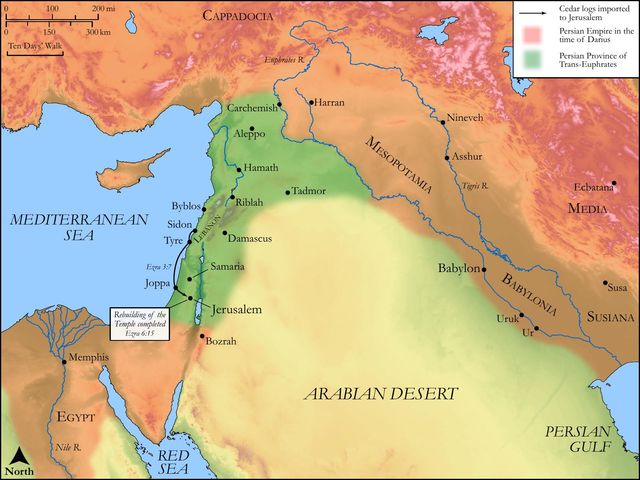
Ezra 6:9 is strategically positioned within the Aramaic section of Ezra (Ezra 4:8-6:18), which comprises official correspondence and decrees. This verse follows Darius's confirmation of King Cyrus's original edict (Ezra 6:1-5) that permitted the Jews to return and rebuild the Temple, a project that had been halted for years due to opposition. After the prophets Haggai and Zechariah spurred the people to resume construction (Ezra 5:1-2), local adversaries again challenged the work. The Jewish leaders, led by Zerubbabel and Jeshua, appealed to Darius, prompting his search of the royal archives. Darius's subsequent decree, beginning in Ezra 6:6, not only affirmed the right to rebuild but commanded the adversaries to cease interference and, remarkably, mandated royal financial support for the Temple's completion (Ezra 6:8). Verse 9 then specifies the precise provisions for the Temple's ongoing services, highlighting the king's comprehensive commitment to ensuring uninterrupted worship, thus reinforcing the legitimacy and divine backing of the Temple's restoration. This meticulous detail underscores the legal and binding nature of the decree.
Historical & Cultural Context
The Persian Empire, under the Achaemenid dynasty, was renowned for its sophisticated administrative structure and a general policy of religious toleration, often supporting local cults as a means of maintaining stability and loyalty across its vast dominion. While Darius was not a worshipper of Yahweh, his decree aligns perfectly with this imperial strategy, viewing the Temple and its services as beneficial for the well-being of the province and, implicitly, for the empire itself. The title "God of heaven" (Aramaic: Elah Shemaya), frequently employed in Ezra and Nehemiah, was a common designation for a supreme deity among the nations of that day, making it understandable and acceptable to a Persian king who might acknowledge a universal high god. The provision of resources "day by day without fail" from the royal treasury (bêt ginzayyā') was an extraordinary commitment, demonstrating the king's absolute authority and the empire's immense wealth. This act of royal patronage was critically important for the post-exilic Jewish community, which was still struggling to re-establish itself economically and socially after decades of exile and the arduous task of rebuilding.
Key Themes
ShowHideThis verse powerfully illustrates several overarching themes within Ezra and the broader biblical narrative. Firstly, it showcases Divine Providence and Royal Support, demonstrating God's sovereign hand at work through unexpected instruments—even a pagan king like Darius—to fulfill His purposes for His people and the restoration of His worship. This echoes the truth found throughout Scripture that God can direct the hearts of kings, as seen in Proverbs 21:1. Secondly, the detailed enumeration of "young bullocks, and rams, and lambs, for the burnt offerings... wheat, salt, wine, and oil" underscores the Importance of Worship and Sacrifice. These provisions were essential for maintaining the prescribed Levitical rituals, emphasizing the centrality of regular, proper worship in the life of the restored community, as meticulously outlined in books like Leviticus 1-7. Finally, the command "let it be given them day by day without fail" highlights God's Faithfulness in Provision and the human responsibility for consistent, reliable support for unceasing worship. This reflects God's own unwavering faithfulness in providing for His people's daily needs, whether in the wilderness with manna or in the rebuilt land, a principle reiterated in Matthew 6:11.
Exposition and Analysis
ShowHideKey Word Analysis
ShowHideThis Aramaic word (H2818) signifies "to be necessary" or "to need," stemming from the idea of convenience or requirement. In Ezra 6:9, it emphasizes that the provisions listed are not optional but are absolutely essential for the proper functioning and continuation of the Temple services. Darius's decree acknowledges and commits to meeting these fundamental requirements.
This term (H5928) refers to the 'olah sacrifice, a "holocaust" where the entire animal was consumed by fire on the altar. It symbolized complete dedication, devotion, and atonement, being a central element of Old Testament worship, including the prescribed daily morning and evening sacrifices. The provision of animals specifically for these offerings underscores the re-establishment of foundational covenant worship and its central role in the restored community's relationship with God.
This Aramaic word (H7960), often translated as "fault," "error," or "thing amiss," is used here in the emphatic phrase "without fail" (lâ' shâlû). It conveys the king's absolute command for consistency, reliability, and precision in the provision. For the Temple, it meant that the daily sacrifices, vital for maintaining the covenant relationship and national purity, would never cease due to any lack of resources, highlighting the meticulousness of both the royal decree and the divine provision behind it.
Verse Breakdown
ShowHide"And that which they have need of, both young bullocks, and rams, and lambs, for the burnt offerings of the God of heaven,"
This initial clause specifies the primary purpose of the provisions: for the "burnt offerings," the most comprehensive form of sacrifice, offered to "the God of heaven." The listing of specific animals—young bullocks, rams, and lambs—indicates a precise adherence to the Levitical requirements for various types of offerings, ensuring the purity and legitimacy of the sacrifices. It demonstrates Darius's understanding and respect for the detailed ritual needs of the Jewish faith, acknowledging the supreme deity they worship.
"wheat, salt, wine, and oil, according to the appointment of the priests which [are] at Jerusalem,"
This clause expands the list of provisions to include essential elements for grain offerings (wheat), covenant ratification and preservation (salt), drink offerings (wine), and anointing/fuel (oil). These items were integral to various aspects of Temple service beyond just the burnt offerings, accompanying them or being offered independently. The crucial phrase "according to the appointment of the priests" underscores that the provisions were not arbitrary but were to be supplied precisely as determined by the religious authorities in Jerusalem, affirming their divinely ordained role in maintaining the integrity and order of worship.
"let it be given them day by day without fail:"
This final, emphatic command dictates the frequency and reliability of the supply. "Day by day" emphasizes the continuous, unceasing nature of the Temple's worship, which required daily sacrifices and offerings. "Without fail" (or "without negligence, without omission") highlights the king's absolute insistence that these provisions must never be withheld, delayed, or provided inadequately, ensuring the uninterrupted flow of worship and demonstrating the king's unwavering commitment to his decree and, ultimately, God's sovereign care.
Literary Devices
ShowHideEzra 6:9 employs several effective literary devices that underscore its significance. Enumeration is prominently featured, with the precise listing of animals ("young bullocks, and rams, and lambs") and other provisions ("wheat, salt, wine, and oil"). This detailed catalog not only conveys specific information but also lends an air of official authority and meticulousness to the royal decree, emphasizing the comprehensive nature of the mandated royal support. The phrase "day by day without fail" functions as a powerful form of Emphasis, underscoring the critical importance of consistent and uninterrupted provision for the Temple services. This repetition and specific phrasing highlight the king's unwavering commitment and, implicitly, the divine assurance of sustenance. The entire verse, as part of a royal edict, exemplifies the Legal/Administrative Style characteristic of official documents, reinforcing the binding nature of Darius's decree and its profound, lasting impact on the Jewish community's ability to worship.
Theological and Thematic Connections
ShowHideEzra 6:9 is a profound testament to God's meticulous care for His people and His unwavering commitment to the restoration of proper worship. It illustrates that God's providence is not limited to working exclusively through His covenant people but extends to orchestrating events through unexpected, even pagan, channels to achieve His divine purposes. The provision of daily sustenance for the Temple sacrifices underscores the enduring importance of regular, prescribed worship as central to Israel's identity and relationship with God. This divine enablement, facilitated by a powerful earthly king, signals God's faithfulness to His promises despite the people's past failures and exile, ensuring that the means for atonement and communion remained available. This act of royal generosity, divinely orchestrated, foreshadows God's ultimate and perfect provision for worship and reconciliation through His Son.
Reflection and Application
ShowHideEzra 6:9 offers timeless insights for believers today, reminding us of God's profound faithfulness and His commitment to sustaining His people and His work. Just as God moved the heart of King Darius to provide for the physical needs of the Temple, He continues to provide for the spiritual and physical needs of His church and His people in often unexpected ways, demonstrating His sovereignty over all earthly powers. This verse encourages us to trust in God's provision, even when circumstances seem bleak or resources scarce, knowing that His purposes will ultimately prevail. Furthermore, the command for provisions "day by day without fail" serves as a powerful call to consistency and diligence in our own spiritual disciplines and devotion. Our "spiritual sacrifices" of praise, prayer, diligent study of God's Word, sacrificial service, and generous giving should be offered continually and without interruption, reflecting a life wholly dedicated to God. Recognizing God's hand at work in various spheres, even through secular authorities or surprising sources, encourages us to maintain an attitude of profound gratitude and to participate actively in His kingdom work, whether through direct ministry or by faithfully stewarding the resources He provides.
Questions for Reflection
ShowHideFAQ
ShowHideWhy did a pagan king like Darius provide for the Jewish Temple?
ShowHideDarius's provision for the Jewish Temple can be understood through several lenses. Firstly, it aligns with the pragmatic policy of religious toleration and support for local cults characteristic of the Persian Empire. By supporting the religious practices of conquered peoples, the Persians fostered loyalty and stability within their vast dominion. Secondly, Darius was confirming and extending the earlier decree of King Cyrus, who had a favorable disposition towards the Jews and their God, as recorded in Ezra 1:1-4. From a theological perspective, the Bible attributes this to God's sovereign hand, working through earthly rulers to accomplish His divine will, even when those rulers do not explicitly acknowledge Him. This divine orchestration is a recurring theme, as seen in Proverbs 21:1 and God's calling of Cyrus as His "anointed" in Isaiah 45:1-6. Darius's decree was a fulfillment of prophecy and a powerful testament to God's control over all nations and their leaders.
What was the significance of the specific items listed (bullocks, wheat, salt, wine, and oil)?
ShowHideThe items listed in Ezra 6:9—young bullocks, rams, lambs, wheat, salt, wine, and oil—were all standard and essential components of the Levitical sacrificial and offering system prescribed in the Torah (e.g., Leviticus 1-7). The animals were designated for burnt offerings, symbolizing complete dedication and atonement. Wheat was used for grain offerings, representing the fruits of labor and sustenance. Salt was a crucial element, symbolizing the enduring nature of the covenant and preservation, often referred to as the "salt of the covenant" (Leviticus 2:13). Wine was used for drink offerings, often accompanying burnt offerings, and oil for anointing, lamps, and grain offerings. The meticulous provision of these items ensured that the Temple's daily worship could be conducted precisely "according to the appointment of the priests," maintaining the purity, integrity, and continuity of the rituals and the covenant relationship with God.
How does "day by day without fail" apply to us today?
ShowHideThe command "day by day without fail" emphasizes consistency and reliability in the provision for worship, and by extension, in our own spiritual lives. For believers today, it serves as a powerful reminder of the importance of daily spiritual disciplines. Just as the Temple required continuous offerings, our relationship with God thrives on consistent engagement—daily prayer, reading God's Word (Psalm 119:105), worship, and living out our faith. It also speaks to God's own unwavering faithfulness in providing for our daily needs, a truth Jesus taught us to pray for in Matthew 6:11. Furthermore, it challenges us to offer our "spiritual sacrifices"—our bodies as living sacrifices (Romans 12:1), our praise (Hebrews 13:15), and our service—consistently and without fail, as a continuous act of devotion to God.
Christ-Centered Fulfillment
ShowHideEzra 6:9, with its meticulous provision for the daily Temple sacrifices, finds its ultimate and profound fulfillment in Jesus Christ. The "young bullocks, and rams, and lambs" offered for "burnt offerings" were types and shadows, foreshadowing the perfect, once-for-all sacrifice of the Lamb of God, who takes away the sin of the world. The Old Testament sacrificial system, though divinely ordained, was inherently incomplete, requiring continuous, daily repetition because the blood of animals could not fully atone for sin (Hebrews 10:4). Jesus's death on the cross, however, was the supreme and sufficient offering, rendering all subsequent animal sacrifices obsolete (Hebrews 9:11-14). He is the ultimate provision from the "God of heaven," whose divine will was to provide a perfect High Priest and a spotless sacrifice for humanity's redemption (Hebrews 7:27). Through His blood, believers now have direct access to God, not through daily animal offerings, but through the eternal efficacy of His completed work (Hebrews 10:19-22). Our worship, sustained not by royal treasuries but by the inexhaustible grace of Christ, is now a spiritual offering of our lives as "living sacrifices" (Romans 12:1) and a continual "sacrifice of praise" (Hebrews 13:15), offered "day by day without fail" in response to His perfect and complete provision.