


Ezekiel 16:42
Bible text: King James Version (1769 Blayney text) · Public domain
Bible text: Berean Standard Bible · Public domain
Bible text: American Standard Version (1901) · Public domain
Bible text: World English Bible, Messianic edition · Public domain
Bible text: Geneva Bible (1599) · Public domain
Bible text: Young's Literal Translation · Public domain
- וַהֲנִחֹתִיva·ha·ni·cho·Tiand I will give rest toH5117Conj-w ¦ V-Hiphil-ConsecPerf-1csVerb Hiphil Consecutive Perfect 1st Singular common genderוַandהֲנִחֹתִיI will give rest to
- חֲמָתִיcha·ma·Timy rageH2534N-fsc ¦ 1csNoun Singular Feminine Constructחֲמָתִrageיmy
- בָּךְBakhon youPrep-b ¦ 2fsSuffix Personal 2nd Singular Feminineבָּonךְyou
- וְסָרָהve·Sa·rahand it will turn asideH5493Conj-w ¦ V-Qal-ConsecPerf-3fsVerb Qal Consecutive Perfect 3rd Singular Feminineוְandסָרָהit will turn aside
- קִנְאָתִיkin·'a·Timy jealousyH7068N-fsc ¦ 1csNoun Singular Feminine Constructקִנְאָתִjealousyיmy
- מִמֵּךְmi·Mekhfrom youH4480Prep ¦ 2fsPrepositionמִמֵּfromךְyou
- וְשָׁקַטְתִּיve·Sha·ka·Tiand I will be at peaceH8252Conj-w ¦ V-Qal-ConsecPerf-1csVerb Qal Consecutive Perfect 1st Singular common genderוְandשָׁקַטְתִּיI will be at peace
- וְלֹאve·Lo'and notH3808Conj-w ¦ NegParticle Negativeוְandלֹאnot
- אֶכְעַס'ekh·'AsI will be angryH3707V-Qal-Imperf-1csVerb Qal Imperfect 1st Singular common gender
- עוֹדodagainH5750Adj-msAdjective Numerical Singular Masculine Absolute
English is a literal word-by-word gloss of the Hebrew, not the KJV's wording. Why?
This is the original text the KJV's translators worked from — each Hebrew word with its own literal English meaning in this verse, prepared by scholars at Tyndale House, Cambridge. The KJV translates whole sentences, not word by word, so its wording differs: one Hebrew word can become several English words, and the KJV may choose “the LORD” where the gloss reads “Yahweh”. Both are faithful — they answer different questions. For the KJV's own rendering, switch to the KJV text.
Details
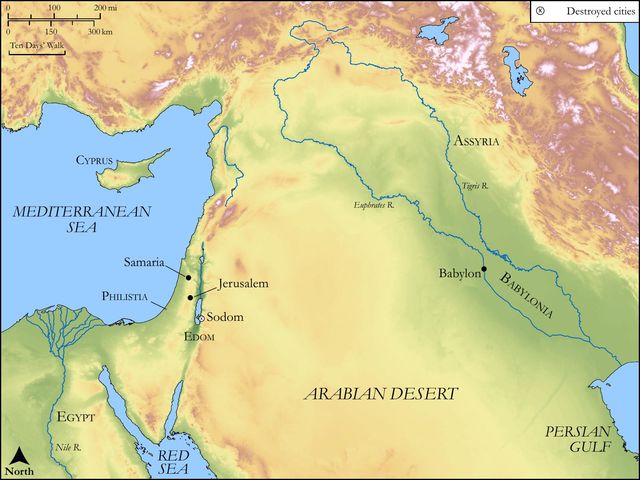
See on the biblical-era map
Study this verse
Public-domain commentary
Matthew Henry
From his Commentary on the Whole Bible. Henry comments on passages, not single verses — this entry covers Ezekiel 16:35–43. His three-level outline is real structure in the source text, so it is rendered as structure.
Adultery was by the law of Moses made a capital crime. This notorious adulteress, the criminal at the bar, being in the foregoing verses found guilty, here has sentence passed upon her. It is ushered in with solemnity, Eze 16:35. The prophet, as the judge, in God's name calls to her, O harlot! hear the word of the Lord. Our Saviour preached to harlots, for their conversion, to bring them into the kingdom of God, not as the prophet here, to expel them out of it. Note, An apostate church is a harlot. Jerusalem is so if she become idolatrous. How has the faithful city become a harlot! Rome is so represented in the Revelation, when it is marked for ruin, as Jerusalem here. Rev 17:1, Come, and I will show thee the judgments of the great whore. Those who will not hear the commanding word of the Lord and obey it shall be made to hear the condemning word of the Lord and shall tremble at it. Let us attend while judgment is given.
I.The crime is stated and the articles of the charge are summed up (Eze 16:36) and (as is usual) with the attendant aggravations (Eze 16:43); for when God speaks in wrath he will be justified, and clear when he judges, clear when he is judged; and sinners, when they are condemned, shall have their sins so set in order before them that their mouth shall be stopped and they shall not have a word to object against the equity of the sentence. The crimes which this harlot stands convicted of, and is now to be condemned for, are,
1.The violation of the first two commandments of the first table by idolatry, which is here called her whoredoms with her lovers (so she called them, Hos 2:12, because she loved them as if they had been indeed her benefactors), that is, with all the idols of her abominations, the abominable idols which she served and worshipped. This was the sin which provoked God to jealousy.
2.The violation of the first two commandments of the second table by the murder of their own innocent infants: The blood of thy children which thou didst give unto them. It is not strange if those that have cast off God and his fear break through the strongest and most sacred bonds of natural affection. Their sins are aggravated from the consideration,
(1.)Of the dishonour they had thereby done to themselves: "Hereby thy filthiness was poured out; the uncleanness that was in thy heart was hereby discovered and brought to light, and thy nakedness was exposed to view, and thou wast thereby exposed to contempt." God is displeased with his professing people for shaming themselves by their sins.
(2.)Their base ingratitude is another aggravation of their sins: "Thou hast not remembered the days of thy youth, and the kindness that was done thee then, when otherwise thou wouldst have perished," Eze 16:43. And,
(3.)The vexation which their sins gave to God, whom they ought to have pleased: "Thou hast fretted me in all these things, not only angered me, but grieved me." It is a strange expression, and, one would think, enough to melt a heart of stone, that the great God, who cannot admit any uneasiness, is pleased to speak of the sins and follies of his professing people as fretting to him. Forty years long was I grieved with this generation.
II.The sentence is passed in general:
I will judge thee as women that break wedlock and shed blood are judged (Eze 16:38), and those two crimes were punished with death, with an ignominious death. "Thou hast shed blood, and therefore I will give thee blood; thou hast broken wedlock, and therefore I will give it thee, not only in justice, but in jealousy, not only as a righteous Judge, but as an injured and incensed husband, who will not spare in the day of vengeance," Pro 6:34, Pro 6:35. He will recompense their way upon their head, Eze 16:43. In all the judgments God executes upon sinners we must see their own way recompensed upon their head; they are dealt with not only as they deserved, but as they procured. It is the end which their sin, as a way, had a direct tendency to. More particularly,
1.This criminal must be (as is usually done with criminals) exposed to public shame, Eze 16:37. Malefactors are not executed privately, but are made a spectacle to the world. Care is here taken to bring spectators together: "All those whom thou hast loved, with whom thou hast taken pleasure, shall come to be witnesses of the execution, that they may take warning and prevent their own like ruin; and those also whom thou hast hated, who will insult over thee and triumph in thy fall." Both ways the calamities of Jerusalem will be aggravated, that they will be the grief of her friends and the joy of her foes. These shall not only be gathered around her, but gathered against her; even those with whom she took unlawful pleasure, with whom she contracted unlawful leagues, the Egyptians and Assyrians, shall now contribute to her ruin. As, when a man's ways please the Lord, he makes even his enemies to be at peace with him, so when a man's ways displease the Lord he makes even his friends to be at war with him; and justly makes those a scourge and a plague to sinners, and instruments of their destruction, who were their tempters, and with whom they were partakers in wickedness. Those whom they have suffered to strip them of their virtue shall see them stripped, and perhaps help to strip them, of all their other ornaments; to see the nakedness of the land will they come. It is added, to the same purport (Eze 16:41), I will execute judgments upon thee in the sight of many women; thou shalt be made an example of in terrorem - that others may see and fear and do no more presumptuously.
2.The criminal is condemned to die, for her sins are such as death is the wages of (Eze 16:40): They shall bring up a company (that is, a company shall be brought up) against thee, and they shall stone thee with stones, and thrust thee through with their swords; so great a death, so many deaths in one, is this adulteress adjudged to. When the walls of Jerusalem were battered down with stones shot against them, and the inhabitants of Jerusalem were put to the sword, then this sentence was executed in the letter of it.
3.The estate of the criminal is confiscated, and all that belonged to her destroyed with her (Eze 16:39): They shall throw down thy eminent place, and (Eze 16:41) they shall burn thy houses, as the habitations of bad women are destroyed, in detestation of their lewdness. Their high places, erected in honour of their idols, by which they thought to ingratiate themselves with their neighbours, shall be an offence to them, and even they shall break them down. It was long the complaint, even in some of the best reigns of the kings of Judah, that the high places were not taken away; but now the army of the Chaldeans, when they lay all waste, shall break them down. If iniquity be not taken away by the justice of the nation, it shall be taken away by the judgments of God upon the nation.
4.Thus both the sin and the sinners shall be abolished together, and an end put to both: Thou shalt cease from playing the harlot; there shall be no remainders of idolatry in the land, because the inhabitants shall be wholly extirpated, and they shall give no more hire because they shall have no more to give. Some that will not leave their sins live till their sins leave them. When all that with which they honoured their idols is taken from them they shall not give hire any more (Eze 16:41): "Then thou shalt not commit this lewdness of sacrificing thy children, which was a crime provoking above all thy abominations, for thy children shall all be cut off by the sword or carried into captivity, so that thou shalt have none to sacrifice," Eze 16:43. Or it may be meant of the reformation of those of them that escape and survive the punishment; they shall take warning, and shall do no more presumptuously. The captivity in Babylon made the people of Israel to cease for ever from playing the harlot; it effectually cured them of their inclination to idolatry. And then all shall be well, when this is the fruit, even the taking away of sin; then (Eze 16:42) my jealousy shall depart. I will be quiet, and no more angry. When we begin to be at war with sin God will be at peace with us; for he continues the affliction no longer than till it has done its work. When sin departs God's jealousy will soon depart, for he is never jealous but when we give him just cause to be so. Yet some understand this as a threatening of utter ruin, that God will make a full end and the fire of his anger shall burn as long as there is any fuel for it. His fury shall rest upon them, and not remove. Compare this with that doom of unbelievers, Joh 3:36. The wrath of God abideth on them. They shall drink the dregs of the cup, and then God will be no more angry, for he is eased of his adversaries (Isa 1:24), is satisfied in the abandoning of them, and therefore will be no more angry, because there are no more for his anger to fasten upon. They had fretted him, when judgment and mercy were contesting; but now he is quiet, as he will be in the eternal damnation of sinners, wherein he will be glorified, and therefore he will be satisfied.
Historical interpretation
Two Centuries of Reception
5 surviving comments on this verse. Each one is dated, so this reads as a timeline rather than a list.
Select a marker to jump to its quote. Markers stagger vertically where authors wrote within a few decades of each other.
If you do not recover your senses when you have been chastised, if you are not corrected when you have been reproved, if you despise when you are beaten, you must realize that if you go on continually sinning his jealousy will depart from you and that which is said to Jerusalem by the prophet Ezekiel will be said to you: “Therefore my jealousy will depart from you, and I will no longer be angry with you.” Behold the mercy and piety of the good God.… This is terrible! This is the end when we are no longer reproached for sins, when we offend and are no longer corrected. For then, when we have exceeded the measure of sinning “the jealous God” turns his jealousy away from us, as he said above, or my jealousy will be removed from you, and I will no longer be angry over you.
(Verse 35 and following) Therefore, prostitute, listen to the word of the Lord. Thus says the Lord God: Because your bronze has been poured out, and your disgrace has been revealed in your fornication (in your adulteries), with your lovers, and with the idols of your abominations, in the blood of your sons, whom you have given to them. Behold, I will gather all your lovers, with whom you have mingled, and all those whom you have loved with all those whom you have hated, and I will gather them against you from all sides, and I will uncover your disgrace before them, and they will see all your shame. And I will judge you with the judgments of adulteresses, and those who shed blood, and I will give you into the blood (Vulg. blood) of fury and zeal, and I will give you into their hands, and they will destroy your brothel, and they will demolish your prostitution house, and they will strip you of your clothes, and they will take away the vessels of your beauty, and they will leave you naked, full of shame. And they will bring a multitude upon you, and they will stone you with stones, and they will kill (Al. mutilate) you with their swords. And they will burn your houses with fire, and they will bring judgment upon you in the eyes of many women, and you will cease to fornicate and no longer give bribes. And my indignation will rest on you, and my jealousy will be taken away from you, and I will rest and not be angry anymore, because you have not remembered the days of your youth and you have provoked me in all these things. Therefore, I have given you your ways upon your head, says the Lord God, and I have not acted according to your wickedness in all your abominations. LXX: Therefore, prostitute, hear the word of the Lord: Thus says the Lord God: Because you have poured out your wrath and your shame will be revealed in your prostitution to your lovers, and in all your wicked thoughts, and in the blood of your sons, whom you have given to them. Therefore, behold, I will gather all your lovers, with whom you have mingled, and all those you loved with all those you hated, and I will gather them against you from all around, and I will reveal your evil deeds to them, and they will see all your shame. And I will avenge on you the vengeance of adulteries and the shedding of blood, and I will put you in the blood of fury and zeal, and I will deliver you into their hands: and they shall demolish your brothel, and destroy your foundation, and they shall strip you of your garments, and they shall take away the vessels of your glory, and they shall leave you naked and full of shame, and they shall bring a multitude upon you, and they shall stone you with stones, and they shall cut you with their swords. And they shall set fire to your houses, and they shall execute punishments on you in the presence of many women: and I will turn you away from fornication, and you shall no longer give rewards, and I will unleash my fury upon you, and my zeal shall depart from you, and I will rest and will be no longer concerned: because you have not remembered the days of your infancy, and you have grieved me in all these things. And behold, I will bring your ways upon your head, declares the Lord God, so that you have done wickednesses above all your other wickednesses. We lay the foundations of the story first. Because you have done these things and those things which the previous speech comprehends: therefore hear, O harlot, what you have done and what you will suffer. You poured out your brass which you received from me, and you gave payment to your lovers, which you should have received, and you killed your sons as you offered them to idols: so that you have become not only an adulteress, but also a murderer of your own children. Therefore, I will gather all your lovers with whom you have prostituted yourself, both those whom you have loved and those whom you have hated, and I will expose you as an adulteress and reveal your nakedness, so that all may see your shame and the genitals for which you were once consumed with passion. All these things are said metaphorically of an adulterous and murderous woman, who not only committed acts of adultery against her husband, but also killed her children. They are spoken concerning Jerusalem and the gathering of all the nations against her, of which she worshiped idols and turned all of God's gifts into their worship, and the temple of Baal must be destroyed and the altars of every city must be overturned by fire, so that nothing remains in her. And just as it is customary for all to throw stones at the adulteress and to slay the harlot, so that she may be killed by the wounds of each: so shall all women see the punishment of the fornicator. Thus, in the sight of others, in the surrounding cities and nations, Jerusalem shall be abandoned. And this shall be done, so that she may cease her whoring and no longer give wages to her lovers, and the anger of God may rest, and He may not be angered by her when she ceases to love. From this we understand that there is great offense, not taken care of by God, but allowed for man's crimes and sins. My zeal will be removed from you, I will rest, and no longer be angry, as if it were someone else, and what has departed from me, and which I have handed over to eternal nakedness. But if Jerusalem has endured this, because it fornicated with idols, what do we think it will endure, when it has killed God's Son? And you have done all these things, forgetting past kindnesses, and you have provoked me to anger, or saddened me, when you should have provoked me to joy with your good works. Therefore, I have also rendered your deeds upon your head. And when I destroy you, O adulteress, I will exercise less of my anger against you than you deserve, so that divine mercy may be shown, that sins may be greater than punishments. According to tropology, every soul receives spiritual money from God, according to the Gospel (Mt. 25, Lk. 19) which is spoken in five and two parables, and of one talent, and ten servants receiving each a single mina, who, when they act negligently, become debtors of fifty (or ten) denarii and five hundred, and because of this, in the presence of lovers, whom we understand as demons and contrary virtues, the ignominy of Jerusalem is revealed, either on the day of judgment or at the time of repentance when they are reproached. And indeed only the omnipotent God sees hidden things, as the Gospel says: And the Father who sees in secret (Matthew 6:6). And in another place: God, who searches the heart and reins (Psalm 7:10). And in the book of Kings: You alone know the hearts of all the sons of men (2 Kings 8). But when it is fulfilled: There is nothing hidden that will not be made manifest, nor secret that will not be revealed (Luke 12:2). And in another place: Judge not before the time, until the Lord comes, who will bring to light the hidden things of darkness, and will make manifest the counsels of the hearts; and then shall every man have praise from God (1 Corinthians 4:5); and when the time of correction comes, then shall be fulfilled what Hosea says: Now their own thoughts have surrounded them (Hosea 7:2). And in another place: Mutual accusations or defenses of thoughts, on the day when God will judge the hidden things of men (Rom. II, 15). And again: Behold the man, and his works before his face. And all who had fornicated with her before will see her disgrace, and God will give it to them in the blood of fury and zeal. For the fury of a man is full against an adulterous wife, and it cannot be redeemed at any price. And the blood of the children can be understood in this way, that we call the good thoughts of men implanted by God in them the children of Jerusalem; the adulteress kills them when she turns to evil deeds. It is also advantageous for Jerusalem, that its brothel be dug up, and the entire seedbed of fornication be destroyed. For when this has been done, it will no longer provide wages, and the wrath of God will rest, and he will not be jealous of its chastity: namely, according to those who understand in a positive sense what is said. Others, however, as we have said above, take the opposite view, that it is a great anger of God not to be angry, since he has once despised the fornicator, and has despaired of his salvation. But if heretics who do not accept the old Testament according to the Septuagint edition criticize this passage that was said: And you were grieved in all these; because God not only receives wrath but also submits to sorrow and sadness, let us ask them how they accept what is certainly a commandment of the good God: Do not grieve the Holy Spirit of God, in whom you were sealed on the day of redemption (Ephesians 4:30). Whatever they may say in defense of that testimony, we will include it in the satisfaction of the present discourse.
Mighty is the wrath of the Lord when he is not angry with us here, for, then, he reserves us like a calf for slaughter. In fact, he says to Jerusalem, “Many are your sins and many your iniquities, but I will not be vexed with you.” In other words, when you were only an adulteress, I loved you with a jealous love; but when you had many lovers, I despised you, and I will not be vexed with you. In this same way, a man is jealous of his wife when he loves her; but if he is not jealous, he hates her and does not imitate the words of him who says, “I will punish their crime with a rod” but, “I will not punish your daughters for their harlotry.”
It is when God shows no anger to sinners that his anger is great. So in the case of Ezekiel he said to Jerusalem, “Now I shall not be angry with you, my jealousy has left you.” … So that I may not go too far and overrun the length of a letter by piling up instances from the Old Testament, I shall tell you a brief story that happened in the days of my childhood. When the blessed Antony was summoned by Athanasius, bishop of Alexandria, to the city of Alexandria to confute heretics, and Didymus, a most learned and blessed man, had a meeting with him, they had a discussion about the holy Scriptures. Antony admired the other’s brain and praised his mental sharpness. Then he asked, “I imagine that your blindness does not depress you?” Didymus in his shame said nothing. But when Antony asked a second and third time, he finally succeeded in eliciting from Didymus a simple expression of grief. Antony said to him, “I am surprised at a wise man grieving at the loss of what ants, flies and gnats have rather than rejoicing at having what only the saints and apostles have deserved to get.” From this you can realize that it is much better to see with the spirit than with the flesh and to possess the eyes that the mote of sin cannot enter.
Like a skillful physician, who has tried all saving cures and sees there is no remedy left which can be applied to their disease, the Lord is, as it were, overcome by their iniquities and is obliged to desist from his kindly chastisement. And so he denounces them saying: “I will no longer be angry with you, and my jealousy has departed from you.”
Continue studying Ezekiel 16:42 across the web’s major study libraries — every link below opens this exact verse, chapter, or book on the destination site.
Read & Compare
 BibleGatewayThis verse in more than 200 translations and 70 languages.
 Bible.comThe YouVersion reader — hundreds of translations, reading plans, and highlights.
 ESV.orgCrossway's official English Standard Version reader.
 NET BibleThe NET translation with 60,000+ translators' notes on every rendering decision.
 STEP BibleTyndale House's free study tool — original text, vocabulary, and scholarly resources.
 BibliaLogos Bible Software's free web reader.
 USCCBThe New American Bible (Revised Edition) with the U.S. bishops' study notes.
Commentaries
 BibleHub CommentariesDozens of classic commentaries on this verse, gathered on one page.
 StudyLightMore than 100 commentary sets — the largest collection on the web.
 BibleRefPlain-English commentary on what this verse means, verse by verse.
 Enduring WordDavid Guzik's free commentary on this chapter, widely used by Bible teachers.
 Bible Study ToolsVerse commentary alongside Greek and Hebrew study aids.
Original Language & Research
- BibleHub InterlinearThe verse word by word — original language, transliteration, and English.
- BibleHub LexiconEvery word's original-language definition and Strong's entry.
 Blue Letter BibleDeep-study tools — Strong's numbers, concordance, and word studies.
 SefariaThe Hebrew text with Rashi and centuries of Jewish commentary.
Sermons, Hymns & Audio


TrulyRandomVerse is not affiliated with these sites and doesn’t control their content. They’re linked because they’re genuinely useful.
Summary
Ezekiel 16:42 marks a pivotal moment in God's extended prophetic allegory concerning Jerusalem, representing the nation of Israel. After a detailed and graphic indictment of her profound spiritual harlotry and idolatry, this verse declares God's solemn and definitive promise to bring His intense wrath and righteous indignation to an end. It signifies that the period of severe judgment has served its divine purpose, leading to a cessation of active divine anger and a return to a state of quietude and satisfaction for the Almighty, thereby paving the way for eventual reconciliation and the establishment of an everlasting covenant.
Context
ShowHideLiterary Context
Ezekiel 16 unfolds as an elaborate and often shocking prophetic allegory, portraying Jerusalem (Israel) as an abandoned infant rescued, nurtured, and adorned by Yahweh, only for her to commit egregious acts of spiritual adultery and idolatry with surrounding nations and their gods. The preceding verses, particularly Ezekiel 16:1-41, meticulously catalog Jerusalem's unfaithfulness, pride, and abominations, culminating in God's declaration of severe judgment, including exposure, shame, and destruction at the hands of her former lovers. Verse 42, however, introduces a dramatic shift in tone and divine intention. It signals that this judgment, though severe and necessary, has a defined purpose and an eventual cessation, not an endless outpouring of wrath. This verse foreshadows the profound possibility of restoration, even after such profound betrayal, and sets the theological groundwork for the surprising promise of a renewed and everlasting covenant found later in the chapter, specifically in Ezekiel 16:60.
Historical & Cultural Context
The book of Ezekiel is set against the backdrop of the Babylonian exile, a period when the people of Judah were grappling with the devastating consequences of their persistent covenant unfaithfulness. Jerusalem had been conquered, its temple destroyed, and its inhabitants deported, providing the grim historical reality that undergirds God's severe judgment. Culturally, the allegory of a wife's harlotry was a deeply potent and culturally resonant metaphor for Israel's idolatry, as the covenant relationship between God and Israel was consistently depicted as a sacred marriage throughout the prophetic tradition (e.g., Hosea 2). The "fury" and "jealousy" of God, as expressed in this context, are not to be understood as human emotions in their sinful, capricious sense. Rather, they represent righteous indignation and zealous passion for His exclusive relationship with His chosen people, a relationship repeatedly violated by their adoption of foreign gods and practices (e.g., Deuteronomy 32:16-21). The judgment, therefore, was a necessary act of divine justice and purification, upholding God's holy character in the face of their persistent spiritual infidelity.
Key Themes
ShowHideThis verse contributes significantly to several major theological and narrative themes within the book of Ezekiel and the broader prophetic tradition. Most prominently, it highlights The End of Divine Wrath and Judgment. It underscores that God's judgments, though severe and necessary for purification, are not arbitrary or eternal in their outpouring; they serve a specific, redemptive purpose. This aligns seamlessly with the theme of God's Sovereign Control, demonstrating that even in His anger and the execution of judgment, God remains fully in control, determining precisely when His wrath will "rest" and "depart." This emphasizes His justice tempered with an ultimate restorative intent. Furthermore, the verse subtly but powerfully introduces the theme of Hope and Restoration After Judgment, implying that the purification achieved through judgment paves the way for a renewed relationship. This is explicitly stated later in the chapter where God remembers His covenant and establishes an everlasting one (Ezekiel 16:60), echoing similar sentiments found in other prophetic books, such as Isaiah 57:16, where God declares He will not contend forever.
Exposition and Analysis
ShowHideKey Word Analysis
ShowHideThis word (H2534) denotes intense heat, figuratively representing anger, rage, or hot displeasure. It is frequently associated with the burning intensity of God's wrath against sin and unfaithfulness. In the context of Ezekiel 16, it describes the fervent, consuming indignation God has poured out on Jerusalem due to her spiritual harlotry and idolatry. The promise that this "fury" will "rest" signifies a cessation of this active, fiery outpouring of divine judgment.
This term (H7068) refers to a passionate zeal or indignation, particularly in the context of an exclusive relationship. God's jealousy is not a human flaw of envy but a righteous attribute, reflecting His zealous passion for His covenant with Israel and His holy intolerance of their spiritual infidelity, which amounted to a profound betrayal of their divine Husband. Its "departure" indicates that the righteous indignation provoked by their unfaithfulness has been satisfied through the disciplinary judgment.
This word (H8252) means to repose, to be undisturbed, or to settle. It implies a state of calm and rest after a period of turmoil or intense activity. Here, it conveys that God's emotional state, previously agitated by Israel's persistent sin and expressed through severe judgment, will become settled and peaceful. This is not merely a cooling off but a profound satisfaction of divine justice, allowing God to be "at rest" concerning the matter of Jerusalem's profound unfaithfulness.
Verse Breakdown
ShowHide"So will I make my fury toward thee to rest"
This opening clause declares God's sovereign and deliberate intent to bring His intense, burning anger (fury) against Jerusalem to a complete and definitive halt. The verb "to rest" (H5117, nûwach') implies a settling down, a cessation of active outpouring. It signifies that the period of divine judgment, which was the direct manifestation of His fury, has reached its intended conclusion and will no longer be actively poured out upon His people.
"and my jealousy shall depart from thee"
Following the resting of His fury, God's righteous indignation (jealousy) will "depart" (H5493, çûwr'), meaning to turn off, be removed, or withdraw. This indicates that the fundamental cause for His zealous passion against Israel's unfaithfulness—their spiritual harlotry and idolatry—has been thoroughly addressed and satisfied through the disciplinary process. The intense emotional and judicial response to their profound spiritual infidelity will be lifted.
"and I will be quiet, and will be no more angry"
This final clause powerfully reiterates and reinforces the declarations of the previous two, emphasizing the complete and permanent cessation of God's active wrath. "I will be quiet" (H8252, shâqaṭ') signifies a state of profound repose and inner peace for God, suggesting that divine justice has been fully served, and His righteous demands have been met. The definitive statement "and will be no more angry" (H3707, kaʻaç') confirms that the period of divine displeasure and active, punitive wrath is definitively over, opening the door for a new and restorative phase in His relationship with His people.
Literary Devices
ShowHideEzekiel 16:42, deeply embedded within the broader narrative of the chapter, is rich in literary devices that enhance its prophetic impact. The entire chapter functions as a masterful Allegory, where the city of Jerusalem is personified as a woman, abandoned as an infant, miraculously rescued and adorned by God, only to tragically become a harlot. This allegorical framework allows for the vivid and often shocking depiction of Israel's spiritual infidelity and God's righteous response. Within this specific verse, there is prominent Anthropomorphism, attributing human emotions and actions—fury, jealousy, resting, departing, being quiet, and being angry—to God. While these are divine attributes, they are described in human terms to make God's righteous response to sin comprehensible and relatable to human understanding. Furthermore, the phrases "make my fury... to rest" and "my jealousy shall depart" employ Metaphor, portraying abstract concepts like divine anger and zeal as physical entities that can move, settle, or cease, thereby emphasizing the tangible impact of God's emotional state on His actions and the definitive cessation of those punitive actions.
Theological and Thematic Connections
ShowHideEzekiel 16:42 offers a profound theological insight into the multifaceted character of God, revealing that His wrath, while intensely righteous and absolutely necessary in the face of persistent sin, is not an endless, arbitrary outpouring. Instead, it is purposeful, redemptive, and ultimately limited, serving as a divine means to purify and restore His covenant people. This verse powerfully underscores God's unwavering commitment to His covenant, even when His people are profoundly unfaithful. His "fury" and "jealousy" are not capricious human emotions but rather expressions of His holy love and zealous passion for His exclusive relationship with Israel, a relationship that demands fidelity. The cessation of this wrath implies that the judgment has achieved its intended effect: to bring His people to a place where they recognize the gravity of their sin and the holiness of His character, thus preparing them for a renewed and deepened relationship. This divine pattern of severe judgment followed by the promise of restoration is a recurring and central motif throughout the prophetic literature, consistently demonstrating God's ultimate desire for reconciliation and the faithful fulfillment of His covenant promises.
Reflection and Application
ShowHideEzekiel 16:42 offers a profoundly hopeful and reassuring message about the enduring nature of God's redemptive purpose, even in the midst of severe judgment and its painful consequences. For believers today, it serves as a powerful reminder that while God is absolutely just and righteous in His condemnation of sin, His wrath is not unending or without a specific, purifying purpose. It is a holy response, designed not for destruction but to bring about genuine repentance, necessary purification, and ultimately, reconciliation. This verse encourages us to cultivate a deep trust in God's ultimate good intentions, even when we experience the difficult consequences of our own unfaithfulness or witness the brokenness and suffering in the world around us. It points us to the profound and comforting truth that God's deepest desire is for peace, restoration, and renewed relationship, not perpetual anger or condemnation. This realization should inspire within us a deep sense of humility regarding our own sin and an even deeper gratitude for His boundless mercy and unwavering faithfulness, which always seeks to restore and redeem.
Questions for Reflection
ShowHideFAQ
ShowHideDoes Ezekiel 16:42 mean God stops being angry forever?
ShowHideEzekiel 16:42 signifies a definitive cessation of God's active, outpouring wrath against Jerusalem for the specific, egregious sins detailed in the chapter, particularly her spiritual harlotry. It marks the fulfillment of the judgment's purpose, leading to a state of divine satisfaction and quietude concerning that specific period of unfaithfulness. While God's holy nature means He remains eternally opposed to sin and will judge all unrighteousness, this verse indicates that the expression of His wrath in that particular punitive judgment has concluded, opening the door for reconciliation and restoration, as explicitly promised in Ezekiel 16:60 with the establishment of an everlasting covenant. It is a promise of an end to a particular punitive phase, not an abolition of divine justice.
How can God's "jealousy" be a positive attribute?
ShowHideIn biblical theology, God's "jealousy" (Hebrew, qinʼâh') is fundamentally different from the covetous, envious, or insecure emotion often found in humans. Instead, it is a holy, righteous, and passionate zeal for His exclusive covenant relationship with His people. Just as a faithful husband is rightfully zealous for his wife's fidelity within the sacred bond of marriage, God, as the divine Husband of Israel, is passionately zealous for their exclusive devotion to Him. When Israel engaged in idolatry and spiritual harlotry, God's "jealousy" was His righteous indignation at the betrayal of this sacred, exclusive covenant. Its "departure" in Ezekiel 16:42 indicates that the justice required for this profound betrayal has been satisfied through the process of judgment, thereby allowing for the restoration of the relationship. This divine jealousy is rooted in His holiness and His perfect love, ensuring His people's ultimate good and their adherence to His life-giving commands (e.g., Exodus 34:14).
Christ-Centered Fulfillment
ShowHideEzekiel 16:42, with its profound declaration of God's fury and jealousy coming to rest, finds its ultimate and most complete fulfillment in the person and redemptive work of Jesus Christ. While the verse speaks of a cessation of judgment for Israel after a period of divine discipline, the New Testament reveals that God's righteous wrath against the sin of all humanity was fully, finally, and perfectly satisfied through the atoning sacrifice of His Son. On the cross, Jesus became the propitiation for our sins (1 John 2:2), meaning He bore the full weight of God's holy wrath, allowing God's "fury" to "rest" and His "jealousy" to "depart" from all who place their faith in Him. Through Christ's sacrificial death, we are reconciled to God (Romans 5:10), entering into a new and superior covenant relationship where God is "quiet" and "no more angry" with us, not because of our merit, but solely because of Christ's perfect obedience and complete sacrifice (Hebrews 8:6-13). Thus, Ezekiel 16:42 profoundly foreshadows the ultimate peace, reconciliation, and eternal rest from divine wrath offered to all humanity through the Lamb of God, who takes away the sin of the world (John 1:29).