


Exodus 37:23
Bible text: King James Version (1769 Blayney text) · Public domain
Bible text: Berean Standard Bible · Public domain
Bible text: American Standard Version (1901) · Public domain
Bible text: World English Bible, Messianic edition · Public domain
Bible text: Geneva Bible (1599) · Public domain
Bible text: Young's Literal Translation · Public domain
- וַיַּעַשׂvai·Ya·'asand he madeH6213Conj-w ¦ V-Qal-ConsecImperf-3msVerb Qal Consecutive Imperfect 3rd Singular Masculineוַandיַּעַשׂhe made
- אֶת'et<obj.>H853DirObjMParticle Object Indicator
- נֵרֹתֶיהָne·ro·Tei·haits lampsH5216N-fpc ¦ 3fsNoun Plural Feminine Constructנֵרֹתֶיlampsהָits
- שִׁבְעָהshiv·'AhsevenH7651Adj-csAdjective Numerical Singular common gender Absolute
- וּמַלְקָחֶיהָu·mal·ka·Chei·haand its tongsH4457Conj-w ¦ N-mdc ¦ 3fsNoun Dual Masculine Constructוּandמַלְקָחֶיtongsהָits
- וּמַחְתֹּתֶיהָu·mach·to·Tei·haand its fire-pansH4289Conj-w ¦ N-fpc ¦ 3fsNoun Plural Feminine Constructוּandמַחְתֹּתֶיfire-pansהָits
- זָהָבza·HavgoldH2091N-msNoun Singular Masculine Absolute
- טָהוֹרta·HorpureH2889Adj-msAdjective Singular Masculine Absolute
English is a literal word-by-word gloss of the Hebrew, not the KJV's wording. Why?
This is the original text the KJV's translators worked from — each Hebrew word with its own literal English meaning in this verse, prepared by scholars at Tyndale House, Cambridge. The KJV translates whole sentences, not word by word, so its wording differs: one Hebrew word can become several English words, and the KJV may choose “the LORD” where the gloss reads “Yahweh”. Both are faithful — they answer different questions. For the KJV's own rendering, switch to the KJV text.
Details
See on the biblical-era maps

Study this verse
Public-domain commentary
Matthew Henry
From his Commentary on the Whole Bible. Henry comments on passages, not single verses — this entry covers Exodus 37:10–24.
Here is, 1. The making of the table on which the show-bread was to be continually placed. God is a good householder, that always keeps a plentiful table. Is the world his tabernacle? His providence in it spreads a table for all the creatures: he provides food for all flesh. Is the church his tabernacle? His grace in it spreads a table for all believers, furnished with the bread of life. But observe how much the dispensation of the gospel exceeds that of the law. Though here was a table furnished, it was only with show-bread, bread to be looked upon, not to be fed upon, while it was on this table, and afterwards only by the priests; but to the table which Christ has spread in the new covenant all real Christians are invited guests; and to them it is said, Eat, O friends, come eat of my bread. What the law gave but a sight of at a distance, the gospel gives the enjoyment of, and a hearty welcome to. 2. The making of the candlestick, which was not of wood overlaid with gold, but all beaten work of pure gold only, Exo 37:17, Exo 37:22. This signified that light of divine revelation with which God's church upon earth (which is his tabernacle among men) has always been enlightened, being always supplied with fresh oil from Christ the good Olive, Zac 4:2, Zac 4:3. God's manifestations of himself in this world are but candle-light compared with the daylight of the future state. The Bible is a golden candlestick; it is of pure gold, Psa 19:10. From it light is diffused to every part of God's tabernacle, that by it his spiritual priests may see to minister unto the Lord, and to do the service of his sanctuary. This candlestick has not only its bowls for necessary use, but its knops and flowers for ornament; there are many things which God saw fit to beautify his word with which we can no more give a reason for than for these knops and flowers, and yet we are sure that they were added for a good purpose. Let us bless God for this candlestick, have an eye to it continually, and dread the removal of it out of its place.
Continue studying Exodus 37:23 across the web’s major study libraries — every link below opens this exact verse, chapter, or book on the destination site.
Read & Compare
 BibleGatewayThis verse in more than 200 translations and 70 languages.
 Bible.comThe YouVersion reader — hundreds of translations, reading plans, and highlights.
 ESV.orgCrossway's official English Standard Version reader.
 NET BibleThe NET translation with 60,000+ translators' notes on every rendering decision.
 STEP BibleTyndale House's free study tool — original text, vocabulary, and scholarly resources.
 BibliaLogos Bible Software's free web reader.
 USCCBThe New American Bible (Revised Edition) with the U.S. bishops' study notes.
Commentaries
 BibleHub CommentariesDozens of classic commentaries on this verse, gathered on one page.
 StudyLightMore than 100 commentary sets — the largest collection on the web.
 BibleRefPlain-English commentary on what this verse means, verse by verse.
 Enduring WordDavid Guzik's free commentary on this chapter, widely used by Bible teachers.
 Bible Study ToolsVerse commentary alongside Greek and Hebrew study aids.
Original Language & Research
- BibleHub InterlinearThe verse word by word — original language, transliteration, and English.
- BibleHub LexiconEvery word's original-language definition and Strong's entry.
 Blue Letter BibleDeep-study tools — Strong's numbers, concordance, and word studies.
 SefariaThe Hebrew text with Rashi and centuries of Jewish commentary.
Sermons, Hymns & Audio


TrulyRandomVerse is not affiliated with these sites and doesn’t control their content. They’re linked because they’re genuinely useful.
Summary
Exodus 37:23 meticulously describes the fabrication of the essential accessories for the Tabernacle's golden lampstand (menorah): its seven lamps, the tools for their maintenance—snuffers and snuffdishes—all fashioned from pure gold. This verse, situated within the detailed account of Bezalel's execution of God's divine blueprints for the Tabernacle, profoundly underscores the paramount importance of precision, purity, and diligent stewardship in the sacred objects designated for divine worship, ensuring the continuous and unblemished illumination within the Holy Place.
Context
ShowHideLiterary Context
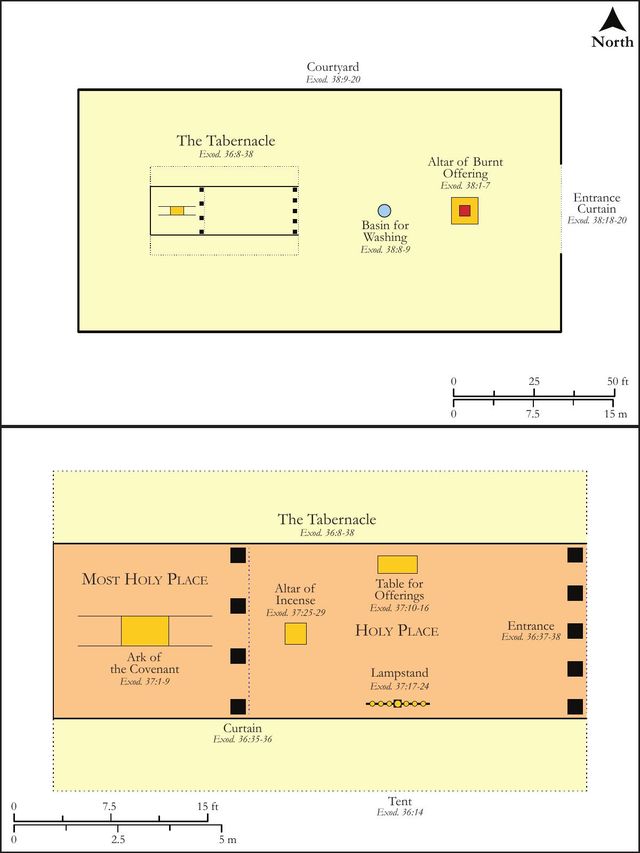
This verse is strategically placed within the latter half of the book of Exodus, specifically in chapters 35-40, which meticulously detail the construction and erection of the Tabernacle and its sacred furnishings. It directly follows the comprehensive divine instructions given by God to Moses on Mount Sinai in Exodus 25-31, particularly the precise blueprint for the lampstand in Exodus 25:31-40. These subsequent chapters document the faithful and precise execution of those commands by Bezalel, Oholiab, and the skilled artisans of Israel. Verse 23 specifically focuses on the ancillary components of the menorah, demonstrating that even the tools for its maintenance were divinely specified and crafted with the same high standard as the primary structure, emphasizing the completeness and holistic nature of God's design for worship.
Historical & Cultural Context
The Tabernacle served as God's portable dwelling place among the Israelites during their wilderness wanderings, symbolizing His tangible presence and providing a central focal point for worship and atonement. Sacred spaces were adorned with precious materials, as in the house Solomon built for the LORD, signifying God's glory, majesty, and the value placed upon His worship. Gold, being a noble, incorruptible, and highly valued metal, was consistently associated with divinity, royalty, and purity. The continuous light provided by the menorah in the otherwise dark Holy Place was not merely practical illumination but deeply symbolic, representing God's constant presence, His guiding revelation, and the spiritual light He provides to His people. The inclusion of "snuffers" and "snuffdishes" highlights the practical realities of maintaining oil lamps in an enclosed space, but also culturally underscores the meticulous care, cleanliness, and reverence expected in sacred environments, reflecting the awe and holiness due to a transcendent God.
Key Themes
ShowHideExodus 37:23 contributes significantly to several overarching themes within the book and broader biblical narrative. The theme of Divine Precision and Obedience is paramount, as Bezalel's exact adherence to God's detailed instructions for even the smallest accessories underscores the importance of obedience in worship and service. The use of "pure gold" reinforces the theme of Holiness and Purity, emphasizing that everything associated with God's presence must reflect His unblemished character. The continuous light of the menorah, maintained by these tools, speaks to Divine Revelation and Presence, signifying God's constant illumination and guidance for His people, a theme echoed in passages like Psalm 119:105. Furthermore, the necessity of maintenance highlights the theme of Diligent Stewardship, indicating that sacred duties require ongoing care and attention to remain effective and pure, a principle applicable to the spiritual lives of believers who are called to shine as lights in the world (Matthew 5:14-16).
Exposition and Analysis
ShowHideKey Word Analysis
ShowHideFrom a root meaning "to glisten," this term refers to the seven individual burners or vessels designed to hold the oil and wick, essential for producing light within the Holy Place. Each lamp, part of the larger menorah, contributed to the continuous illumination, symbolizing divine illumination, revelation, and the constant presence of God among His people. The number seven signifies completeness and perfection.
Derived from a root meaning "to take," this term refers to the tweezers or tongs specifically crafted for trimming the wicks of the lamps. Their inclusion underscores the necessity of continuous maintenance to ensure a clear, unhindered light. Symbolically, they represent the ongoing need for spiritual discipline, the removal of impurities, and diligent care in one's walk with God and in corporate worship.
This phrase emphasizes the unalloyed quality of the metal, signifying its highest value, sanctity, and incorruptibility. Gold (from a root meaning "to shimmer"), being precious, radiant, and resistant to tarnish, signifies the divine origin, enduring value, and absolute purity of the Tabernacle furnishings. "Pure" (from a root meaning "to be pure") further emphasizes its unblemished quality, pointing to the unblemished perfection required in God's presence and in all aspects of His service.
Verse Breakdown
ShowHide"And he made his seven lamps"
This clause identifies Bezalel, the chief craftsman, as meticulously forming the seven oil-holding vessels for the menorah. These lamps were not merely functional but were integral to the symbolic representation of God's perfect and complete light within the Tabernacle, reflecting the divine blueprint with precision.
"and his snuffers"
This refers to the tongs specifically designed to trim the burnt wicks, removing carbon buildup to ensure a bright, steady flame. Their inclusion highlights the divine emphasis on the practical maintenance necessary for continuous and clear illumination, signifying that even the seemingly minor details of worship and sacred service are important to God.
"and his snuffdishes"
These were small trays or pans designed to collect the trimmed wick remnants and ash. They ensured cleanliness and order around the sacred lampstand, underscoring the importance of purity, diligence, and meticulous care in all aspects of worship and service to God, reflecting the holiness of the divine presence.
"[of] pure gold"
This material specification for all these accessories, mirroring the menorah itself, signifies the supreme value, sanctity, and divine origin of every item used in God's service. "Pure gold" speaks to unblemished quality, reflecting the holiness of God and the preciousness of His presence, demanding the highest standard of excellence in His worship.
Literary Devices
ShowHideExodus 37:23 employs several literary devices to convey its profound theological significance. The Repetition of the phrase "pure gold" throughout the Tabernacle descriptions, and specifically implied here for the menorah's accessories, powerfully emphasizes the divine standard of excellence, the sanctity of the materials, and the enduring value of God's dwelling place. Symbolism is central to the verse's meaning, with the lamps representing divine light, revelation, and God's constant presence. Gold itself is a potent symbol of divinity, purity, incorruptibility, and supreme value. Furthermore, the "snuffers" and "snuffdishes," while practical tools, function as Metonymy or Synecdoche, where these specific parts (maintenance tools) stand for the broader concept of diligent stewardship, meticulous care, and ongoing spiritual discipline required for sacred service. This precise attention to detail, even for seemingly minor accessories, highlights the Theological Significance of the Mundane, elevating everyday tasks when performed with reverence and obedience in service to God.
Theological and Thematic Connections
ShowHideExodus 37:23, in its precise description of the menorah's accessories, powerfully communicates the themes of divine precision, holiness, and the necessity of diligent stewardship in worship. God's meticulous instructions for every component, down to the tools for maintenance, underscore His absolute purity and the high standard He requires for anything associated with His presence. The continuous light of the menorah symbolized God's constant revelation and guidance, emphasizing that His truth must be maintained clearly and without obstruction. This attention to detail serves as a timeless reminder that all aspects of our service to God, no matter how small or seemingly insignificant, should be approached with reverence, excellence, and an unwavering commitment to purity, reflecting the character of the God we serve.
Reflection and Application
ShowHideThe crafting of the lamps, snuffers, and snuffdishes from pure gold for the Tabernacle offers profound and enduring lessons for contemporary believers. Just as the ancient priests were charged with meticulously maintaining the menorah to ensure a continuous, clear light in the Holy Place, so too are we called to diligent stewardship of our spiritual lives and our witness in the world. Our lives are meant to be a radiant light, reflecting the glory of Christ to a world shrouded in darkness. This divine calling necessitates constant attention to purity, the removal of spiritual "dross" (such as sin, distractions, and impure motives), and an unwavering commitment to spiritual disciplines like prayer, Bible study, and fellowship. Every aspect of our lives, from the grand acts of service to the seemingly mundane "snuffers and snuffdishes" of daily tasks and interactions, can and should be consecrated to God and performed with excellence. By embracing this meticulous approach, we ensure that our witness for Him remains bright, unhindered, and impactful, bringing glory to His name.
Questions for Reflection
ShowHideFAQ
ShowHideWhy were "snuffers" and "snuffdishes" so important in the Tabernacle?
ShowHideThe "snuffers" (tongs) and "snuffdishes" (trays) were crucial for the practical and symbolic maintenance of the menorah. As oil lamps burned, their wicks would char and create soot, which would diminish the light. The snuffers were used to trim these burnt portions, ensuring a clean, bright, and continuous flame. The snuffdishes collected the trimmed remnants, maintaining cleanliness and order around the sacred lampstand. Theologically, their importance underscores God's demand for purity, excellence, and diligent stewardship in all aspects of worship. Even the seemingly minor details of sacred service were divinely commanded and crafted from "pure gold," emphasizing that God cares about the proper function and cleanliness of everything associated with His presence, symbolizing the need for spiritual purification and discipline in our lives to shine brightly for Him (compare Matthew 5:16).
What is the significance of "pure gold" for these items?
ShowHideThe consistent use of "pure gold" for the menorah and its accessories, as seen in Exodus 25:31 and here in Exodus 37:23, carries profound significance. Gold is a precious metal, resistant to corrosion and tarnish, symbolizing permanence, incorruptibility, and divine glory. Its purity signifies God's absolute holiness and the unblemished nature of His presence. By requiring "pure gold" for even the maintenance tools, God emphasized the supreme value and sanctity of everything within His dwelling place. It communicated that only the best, the most precious, and the most undefiled was acceptable in His service, reflecting His own perfect character and the high regard in which His worship should be held. This standard foreshadows the perfect sacrifice and purity found in Christ.
Christ-Centered Fulfillment
ShowHideExodus 37:23, with its focus on the menorah's accessories of "pure gold" for continuous light and meticulous maintenance, finds its ultimate fulfillment in Jesus Christ. The menorah's seven lamps, providing constant light in the Holy Place, prefigure Jesus, who declared Himself to be the Light of the World. Unlike the temporary, maintained light of the Tabernacle, Christ is the eternal, self-sustaining source of divine truth and revelation, illuminating the path to God and dispelling spiritual darkness. The "pure gold" of the lamps and their accessories points to the perfect, unblemished holiness of Christ, who, as our great High Priest, entered a greater and more perfect Tabernacle, not made with human hands, offering His own blood as the once-for-all sacrifice for sin (Hebrews 9:11-14). The need for "snuffers" and "snuffdishes" to maintain the lamps foreshadows Christ's ongoing work of sanctification in believers, cleansing us from impurities so that we might reflect His light brightly (Ephesians 5:25-27). He is the one who perfectly fulfills the Tabernacle's purpose, bringing God's presence not just among us, but within us through the indwelling Holy Spirit (John 14:16-17), making us living temples of the Holy Spirit (1 Corinthians 6:19-20).