


Exodus 10:19
Bible text: King James Version (1769 Blayney text) · Public domain
Bible text: King James Version with Strong's numbers · Public domain
Bible text: Berean Standard Bible · Public domain
Bible text: American Standard Version (1901) · Public domain
Bible text: World English Bible, Messianic edition · Public domain
Bible text: Geneva Bible (1599) · Public domain
Bible text: Young's Literal Translation · Public domain
- וַיַּהֲפֹךְvai·ya·ha·Fokhand he turnedH2015Conj-w ¦ V-Qal-ConsecImperf-3msVerb Qal Consecutive Imperfect 3rd Singular Masculineוַandיַּהֲפֹךְhe turned
- יְהוָהYah·wehYahwehH3068N-properNoun Proper Title
- רוּחַRu·acha windH7307N-fscNoun Singular Feminine Construct
- יָםyamwestH3220N-msNoun Singular Masculine Absolute
- חָזָקcha·ZakstrongH2389Adj-msAdjective Singular Masculine Absolute
- מְאֹדme·'OdveryH3966Adj-msAdjective Numerical Singular Masculine Absolute
- וַיִּשָּׂאvai·yi·Sa'and it carried awayH5375Conj-w ¦ V-Qal-ConsecImperf-3msVerb Qal Consecutive Imperfect 3rd Singular Masculineוַandיִּשָּׂאit carried away
- אֶת'et<obj.>H853DirObjMParticle Object Indicator
- הָאַרְבֶּהha·'ar·Behthe locust[s]H697Art ¦ N-msNoun Singular Masculine Absoluteהָtheאַרְבֶּהlocust[s]
- וַיִּתְקָעֵהוּvai·yit·ka·'E·huand it blew itH8628Conj-w ¦ V-Qal-ConsecImperf-3ms ¦ 3msVerb Qal Consecutive Imperfect 3rd Singular Masculineוַandיִּתְקָעֵit blewהוּit
- יָמָּהYa·mah[the] sea of towardsH3220N-msc ¦ SfxNoun Singular Masculine Constructיָמָּ[the] sea ofהtowards
- סּוּףSufreed[s]H5488N-msNoun Title Singular Masculine Absolute
- לֹאlo'notH3808NegParticle Negative
- נִשְׁאַרnish·'Arit remainedH7604V-Niphal-Perf-3msVerb Niphal Perfect 3rd Singular Masculine
- אַרְבֶּה'ar·Beha locustH697N-msNoun Singular Masculine Absolute
- אֶחָד'e·ChadoneH259Adj-fsAdjective Numerical Singular Feminine Absolute
- בְּכֹלbe·Kholin allH3605Prep-b ¦ N-mscNoun Singular Masculine Constructבְּinכֹלall
- גְּבוּלge·Vul[the] territory ofH1366N-mscNoun Singular Masculine Construct
- מִצְרָיִםmitz·Ra·yimEgyptH4714N-properNoun Proper Location
English is a literal word-by-word gloss of the Hebrew, not the KJV's wording. Why?
This is the original text the KJV's translators worked from — each Hebrew word with its own literal English meaning in this verse, prepared by scholars at Tyndale House, Cambridge. The KJV translates whole sentences, not word by word, so its wording differs: one Hebrew word can become several English words, and the KJV may choose “the LORD” where the gloss reads “Yahweh”. Both are faithful — they answer different questions. For the KJV's own rendering, switch to the KJV text.
Details
See on the biblical-era maps

Study this verse
Public-domain commentary
Matthew Henry
From his Commentary on the Whole Bible. Henry comments on passages, not single verses — this entry covers Exodus 10:12–20. His two-level outline is real structure in the source text, so it is rendered as structure.
Here is, I. The invasion of the land by the locusts - God's great army, Joe 2:11. God bids Moses stretch out his hand (Exo 10:12), to beckon them, as it wee (for they came at a call), and he stretched forth his rod, Exo 10:13. Compare Exo 9:22 23. Moses ascribes it to the stretching out, not of his own hand, but the rod of God, the instituted sign of God's presence with him. The locusts obey the summons, and fly upon the wings of the wind, the east wind, and caterpillars without number, as we are told, Psa 105:34, Psa 105:35. A formidable army of horse and foot might more easily have been resisted than this host of insects. Who then is able to stand before the great God?
II.The desolations they made in it (Exo 10:15):
They covered the face of the earth, and ate up the fruit of it. The earth God has given to the children of men; yet, when God pleases, he can disturb their possession and send locusts and caterpillars to force them out. Herbs grow for the service of man; yet, when God pleases, those contemptible insects shall not only be fellow-commoners with him, but shall plunder him, and eat the bread out of his mouth. Let our labour be, not for the habitation and meat which thus lie exposed, but for those which endure to eternal life, which cannot be thus invaded, nor thus corrupted.
III.Pharaoh's admission, hereupon, Exo 10:16, Exo 10:17.
He had driven Moses and Aaron from him (Exo 10:11), telling them (it is likely) he would have no more to do with them. But now he calls for them again in all haste, and makes court to them with as much respect as before he had dismissed them with disdain. Note, The day will come when those who set at nought their counsellors, and despise all their reproofs, will be glad to make an interest in them and engage them to intercede on their behalf. The foolish virgins court the wise to give them of their oil; and see Psa 141:6.
1.Pharaoh confesses his fault: I have sinned against the Lord your God, and against you. He now sees his own folly in the slights and affronts he had put on God and his ambassadors, and seems at least, to repent of it. When God convinces men of sin, and humbles them for it, their contempt of God's ministers, and the word of the Lord in their mouths, will certainly come into the account, and lie heavily upon their consciences. Some think that when Pharaoh said, "The Lord your God," he did in effect say, "The Lord shall not be my God." Many treat with God as a potent enemy, whom they are willing not to be at war with, but care not for treating with him as their rightful prince, to whom they are willing to submit with loyal affection. True penitents lament sin as committed against God, even their own God, to whom they stand obliged.
2.He begs pardon, not of God, as penitents ought, but of Moses, which was more excusable in him, because, by a special commission, Moses was made a god to Pharaoh, and whosesoever sins he remitted they were forgiven; when he prays, Forgive this once, he, in effect, promises not to offend in like manner any more, yet seems loth to express that promise, nor does he say any thing particularly of letting the people go. Note, Counterfeit repentance commonly cheats men with general promises and is loth to covenant against particular sins.
3.He entreats Moses and Aaron to pray for him. There are those who, in distress, implore the help of other persons' prayers, but have no mind to pray for themselves, showing thereby that they have no true love to God, nor any delight in communion with him. Pharaoh desires their prayers that this death only might be taken away, not this sin: he deprecates the plague of locusts, not the plague of a hard heart, which yet was much the more dangerous.
IV.The removal of the judgment, upon the prayer of Moses, Exo 10:18, Exo 10:19. This was,
1.As great an instance of the power of God as the judgment itself. An east wind brought the locusts, and now a west wind carried them off. Note, Whatever point of the compass the wind is in, it is fulfilling God's word, and turns about by his counsel. The wind bloweth where it listeth, as it respects any control of ours; not so as it respects the control of God: he directeth it under the whole heaven.
2.It was as great a proof of the authority of Moses, and as firm a ratification of his commission and his interest in that God who both makes peace and creates evil, Isa 45:7. Nay, hereby he not only commanded the respect, but recommended himself to the good affections of the Egyptians, inasmuch as, while the judgment came in obedience to his summons, the removal of it was in answer to his prayers. He never desired the woeful day, though he threatened it. His commission indeed ran against Egypt, but his intercession was for it, which was a good reason why they should love him, though they feared him.
3.It was also as strong an argument for their repentance as the judgment itself; for by this it appeared that God is ready to forgive, and swift to show mercy. If he turn away a particular judgment, as he did often from Pharaoh, or defer it, as in Ahab's case, upon the profession of repentance and the outward tokens of humiliation, what will he do if we be sincere, and how welcome will true penitents be to him! O that this goodness of God might lead us to repentance!
V.Pharaoh's return to his impious resolution again not to let the people go (Exo 10:20), through the righteous hand of God upon him, hardening his heart, and confirming him in his obstinacy. Note, Those that have often baffled their convictions, and stood it out against them, forfeit the benefit of them, and are justly given up to those lusts of their own hearts which (how strong soever their convictions) prove too strong for them.
Continue studying Exodus 10:19 across the web’s major study libraries — every link below opens this exact verse, chapter, or book on the destination site.
Read & Compare
 BibleGatewayThis verse in more than 200 translations and 70 languages.
 Bible.comThe YouVersion reader — hundreds of translations, reading plans, and highlights.
 ESV.orgCrossway's official English Standard Version reader.
 NET BibleThe NET translation with 60,000+ translators' notes on every rendering decision.
 STEP BibleTyndale House's free study tool — original text, vocabulary, and scholarly resources.
 BibliaLogos Bible Software's free web reader.
 USCCBThe New American Bible (Revised Edition) with the U.S. bishops' study notes.
Commentaries
 BibleHub CommentariesDozens of classic commentaries on this verse, gathered on one page.
 StudyLightMore than 100 commentary sets — the largest collection on the web.
 BibleRefPlain-English commentary on what this verse means, verse by verse.
 Enduring WordDavid Guzik's free commentary on this chapter, widely used by Bible teachers.
 Bible Study ToolsVerse commentary alongside Greek and Hebrew study aids.
Original Language & Research
- BibleHub InterlinearThe verse word by word — original language, transliteration, and English.
- BibleHub LexiconEvery word's original-language definition and Strong's entry.
 Blue Letter BibleDeep-study tools — Strong's numbers, concordance, and word studies.
 SefariaThe Hebrew text with Rashi and centuries of Jewish commentary.
Sermons, Hymns & Audio


TrulyRandomVerse is not affiliated with these sites and doesn’t control their content. They’re linked because they’re genuinely useful.
Summary
Exodus 10:19 powerfully concludes the eighth plague, detailing the Lord's immediate and comprehensive removal of the devastating locust swarm from Egypt. Through a divinely directed and exceptionally strong west wind, God swept every single locust into the Red Sea, leaving the land entirely purged of the pestilence. This act serves as a profound demonstration of God's absolute sovereignty over creation and His thoroughness in both judgment and deliverance.
Context
ShowHideLiterary Context
This verse serves as the climactic resolution to the plague of locusts, which is meticulously described in Exodus 10:1-19. Immediately prior to this, Pharaoh, overwhelmed by the unprecedented devastation and urged by his desperate officials, finally called for Moses and Aaron, confessing his sin against the Lord and pleading for the removal of the locusts (Exodus 10:16-18). Exodus 10:19 then narrates God's swift and total response to this plea, showcasing His immediate power to reverse the judgment. The narrative flow swiftly moves from this divine intervention to Pharaoh's predictable and stubborn hardening of heart once the pressure was relieved (Exodus 10:20), setting the stage for the ninth plague of darkness. The pattern of divine judgment, Pharaoh's temporary submission, God's deliverance, and Pharaoh's subsequent hardening is a recurring literary motif throughout the plague narratives, emphasizing the escalating conflict between Yahweh and Pharaoh.
Historical & Cultural Context
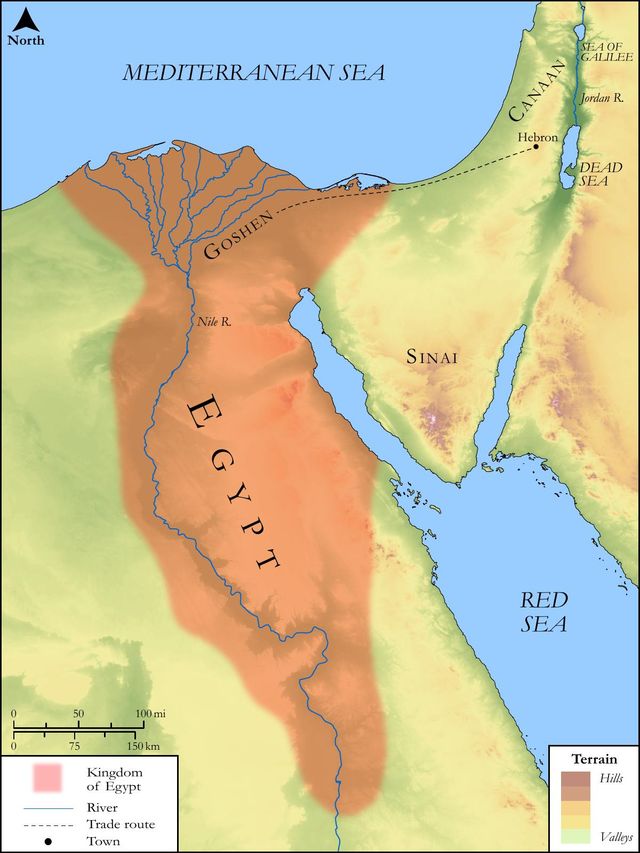
Agricultural lands like Egypt and Canaan were highly vulnerable to natural disasters, especially locust plagues, which could decimate crops and lead to widespread famine. However, the plagues described in Exodus 7-12 were not mere natural occurrences but divinely orchestrated judgments, each specifically targeting aspects of Egyptian life and their pantheon of gods. The "west wind" mentioned in this verse is geographically logical, as a strong wind from the Mediterranean Sea (west of Egypt) would indeed blow locusts eastward towards the Red Sea. Yet, the extraordinary "mighty strong" nature of this wind, its precise timing, and its absolute effectiveness in removing every locust, underscore its supernatural origin. This event served as a direct challenge to Egyptian deities associated with agriculture, fertility, and the elements, such as Ra (sun god) or Seth (god of storms and chaos), demonstrating Yahweh's unparalleled supremacy over all creation and all other gods.
Key Themes
ShowHideExodus 10:19 contributes significantly to several overarching themes within the book of Exodus. Primarily, it reinforces the theme of Yahweh's absolute sovereignty over creation. God demonstrates His power not only to initiate judgments through natural phenomena but also to precisely control and reverse them. This highlights His complete authority over the natural world, a power far exceeding that attributed to any Egyptian deity or even Pharaoh himself. Secondly, it underscores the theme of God's thoroughness and completeness in deliverance. When God acts to save or remove an obstacle, He does so entirely, leaving no remnant of the destructive force. This foreshadows His complete and effective salvation from sin and bondage, a theme that culminates in the ultimate deliverance at the Red Sea crossing. Lastly, the verse, within the broader narrative of the plagues, contributes to the theme of God's faithfulness to His covenant people, Israel, by actively intervening on their behalf against their oppressors, even amidst Pharaoh's persistent rebellion, thereby revealing His glory and power to both Egyptians and Israelites, as seen in Exodus 9:16.
Exposition and Analysis
ShowHideExodus 10:19 succinctly narrates the divine reversal of the locust plague, highlighting God's power and precision in His actions.
Key Word Analysis
ShowHideThis verb (H2015) signifies a primitive root meaning "to turn about or over," implying a change or overturn. Here, it emphasizes God's active and deliberate agency in reversing the direction of the wind. It's not a mere shift in weather patterns but a divinely commanded reorientation, demonstrating God's direct control over natural forces. The Lord is the one who initiates and directs this powerful change.
The word (H7307) refers to "wind," but also carries broader connotations of "breath" or "spirit." In this context, while literally denoting a powerful atmospheric current, its connection to "spirit" subtly hints at the divine, unseen power behind the natural phenomenon. This was no ordinary breeze but a supernaturally empowered and directed force, a tangible manifestation of God's unseen presence and power.
This numeral (H259) means "united" or "one." In the phrase "not one locust," it underscores the absolute completeness and totality of the removal. It's not just that most locusts were gone, but that not a single one remained, emphasizing the perfection and efficacy of God's intervention. This highlights the thoroughness of God's work when He chooses to deliver.
Verse Breakdown
ShowHide"And the LORD turned a mighty strong west wind,"
This opening clause immediately establishes Yahweh, the covenant God of Israel, as the sole actor and orchestrator of this event. The description "mighty strong" (Hebrew: chazaq me'od) emphasizes the extraordinary power and intensity of the wind, far beyond typical meteorological phenomena, underscoring its divine origin and purpose. The "west wind" is geographically precise, indicating God's specific direction for the locusts' removal.
"which took away the locusts, and cast them into the Red sea;"
The wind is God's instrument, actively "taking away" (lifting and carrying) the immense swarm and "casting them" (forcefully throwing them) into the designated body of water. This demonstrates God's precise control over the plague's movement and its ultimate, irreversible disposal. The Red Sea (Hebrew: Yam Suph, "Sea of Reeds") is not just a convenient geographical location but a place of complete destruction and, later, profound deliverance.
"there remained not one locust in all the coasts of Egypt."
This concluding statement powerfully affirms the absolute success and completeness of God's intervention. The phrase "not one locust" is a powerful hyperbole, emphasizing that the land was entirely purged, leaving no lingering threat or sign of the devastation. It is a testament to God's thorough, effective, and perfect deliverance from the scourge.
Literary Devices
ShowHideThe verse prominently employs Divine Agency, with "the LORD" explicitly stated as the active subject who "turned," "took away," and "cast." This emphasizes God's direct, personal, and decisive involvement in the events, rather than attributing them to natural forces alone. The phrase "not one locust" functions as Hyperbole or Emphatic Exaggeration, a common biblical literary technique used to stress the absolute completeness and thoroughness of God's work, rather than implying a literal count of zero. This exaggeration magnifies the power and efficacy of God's deliverance, leaving no doubt about the totality of the plague's removal.
Theological and Thematic Connections
ShowHideExodus 10:19 profoundly reveals God's character and power. It affirms His absolute sovereignty over creation, demonstrating that He not only initiates judgments through natural phenomena but also commands and redirects them with precise timing and immense power to bring relief. This showcases His unparalleled authority over all forces, visible and invisible, challenging any notion of other deities or human rulers holding ultimate control. Furthermore, it highlights God's completeness in deliverance. When God acts to save or remove an obstacle, He does so thoroughly, leaving no remnant of the destructive force. This foreshadows His perfect and comprehensive salvation from sin and its consequences. Finally, the verse underscores God's unwavering faithfulness to His covenant people, acting decisively against their oppressors, even when Pharaoh's repentance is fleeting, thereby ensuring His promises are fulfilled.
This theme of divine control over nature and complete deliverance resonates throughout the biblical narrative:
Reflection and Application
ShowHideExodus 10:19 offers both profound encouragement and a sobering warning for contemporary believers. It reminds us that no "plague" or overwhelming challenge in our lives—be it a destructive habit, a crushing financial burden, a debilitating illness, or a spiritual struggle—is too great for God to remove. Just as He completely cleared the locusts from Egypt, He is capable of bringing thorough deliverance and restoration to situations that seem utterly hopeless. This verse calls us to cultivate a deep trust in God's sovereign power and His perfect timing, knowing that His interventions are not partial but complete and effective. It also serves as a cautionary tale, illustrating that even clear, undeniable demonstrations of God's power and mercy do not guarantee lasting change in a hardened heart unless there is genuine, sustained repentance and submission to His will. We are invited to examine our own hearts: do we truly repent and turn to God, or do we, like Pharaoh, return to our stubborn ways once the immediate pressure is relieved?
Questions for Reflection
ShowHideFAQ
ShowHideWas the removal of the locusts a natural event or a miracle?
ShowHideWhile a strong west wind is a natural phenomenon, its precise timing, its "mighty strong" nature, and the absolute completeness of the locusts' removal, leaving "not one locust," strongly indicate a divinely orchestrated miracle. God used a natural means, but He supernaturally empowered and directed it to achieve His specific purpose, demonstrating His absolute control over creation and His ability to manipulate natural forces for His will.
Why did God choose to cast the locusts into the "Red Sea" specifically?
ShowHideGeographically, a west wind would naturally blow locusts from the fertile Nile Delta region towards the east, making the Red Sea (or Sea of Reeds, Yam Suph) a logical destination for their complete removal from Egypt. Theologically, casting them into the sea signifies their total and irreversible destruction, a place of no return. It also serves as a powerful foreshadowing of God's later, even greater act of judgment and deliverance at this very body of water when He would destroy Pharaoh's army and save Israel, marking the Red Sea as a place of both judgment and salvation.
Does "there remained not one locust" mean literally zero?
ShowHideThis phrase is most likely an emphatic hyperbole, a common literary device in biblical narrative used to stress the completeness and thoroughness of an action. While there might have been a stray locust here or there, the intent is to convey that the plague was decisively and effectively ended, with no significant remnant remaining to continue the devastation or pose a threat. It highlights the perfection and efficacy of God's intervention, leaving no doubt about the totality of the plague's removal.
Christ-Centered Fulfillment
ShowHideExodus 10:19, while an Old Testament narrative of divine judgment and deliverance, profoundly points forward to the person and work of Jesus Christ. Just as God demonstrated His absolute authority over creation by commanding the winds and the sea to remove the devastating locusts, Jesus, as God incarnate, displayed this very same divine authority by calming a furious storm with a mere word (Mark 4:39) and walking on the turbulent waters (Matthew 14:25). These acts reveal Him to be the Lord who commands nature, not merely a prophet, but the very Creator.
Furthermore, the complete removal of the locusts—the "plague" devastating Egypt—foreshadows Christ's ultimate work in removing the "plague" of sin and its destructive power from humanity. Through His sinless life, sacrificial death, and victorious resurrection, Jesus completely disarmed the powers of sin, death, and the devil, leaving "not one" remnant of their dominion for those who trust in Him (Colossians 2:15). The Red Sea, where the locusts were cast, can be seen as a powerful type of baptism and a place of ultimate deliverance from bondage. In the New Testament, Christian baptism is associated with being united with Christ in His death and resurrection, signifying a complete break from the old life of sin and slavery (Romans 6:3-4). Thus, Jesus is the ultimate deliverer who completely removes the spiritual plagues that afflict humanity, offering thorough, lasting, and eternal salvation.