


Esther 8:2
Bible text: King James Version (1769 Blayney text) · Public domain
Bible text: Berean Standard Bible · Public domain
Bible text: American Standard Version (1901) · Public domain
Bible text: World English Bible, Messianic edition · Public domain
Bible text: Geneva Bible (1599) · Public domain
Bible text: Young's Literal Translation · Public domain
- וַיָּסַרvai·Ya·sarand he removedH5493Conj-w ¦ V-Hiphil-ConsecImperf-3msVerb Hiphil Consecutive Imperfect 3rd Singular Masculineוַandיָּסַרhe removed
- הַמֶּלֶךְha·Me·lekhthe kingH4428Art ¦ N-msNoun Singular Masculine Absoluteהַtheמֶּלֶךְking
- אֶת'et<obj.>H853DirObjMParticle Object Indicator
- טַבַּעְתּוֹta·ba'·Tohis signet-ringH2885N-fsc ¦ 3msNoun Singular Feminine Constructטַבַּעְתּsignet-ringוֹhis
- אֲשֶׁר'a·SherwhichH834RelParticle Relative
- הֶעֱבִירhe·'e·Virhe had taken awayH5674V-Hiphil-Perf-3msVerb Hiphil Perfect 3rd Singular Masculine
- מֵהָמָןme·ha·Manfrom HamanH2001Prep-m ¦ N-proper-mNoun Proper MasculineמֵfromהָמָןHaman
- וַיִּתְּנָהּvai·yi·te·Nahand he gave itH5414Conj-w ¦ V-Qal-ConsecImperf-3ms ¦ 3fsVerb Qal Consecutive Imperfect 3rd Singular Masculineוַandיִּתְּנָhe gaveהּit
- לְמָרְדֳּכָיle·ma·re·do·Khaito MordecaiH4782Prep-l ¦ N-proper-mNoun Proper MasculineלְtoמָרְדֳּכָיMordecai
- וַתָּשֶׂםva·Ta·semand she appointedH7760Conj-w ¦ V-Qal-ConsecImperf-3fsVerb Qal Consecutive Imperfect 3rd Singular Feminineוַandתָּשֶׂםshe appointed
- אֶסְתֵּר'es·TerEstherH635N-proper-fNoun Proper Feminine
- אֶת'et<obj.>H853DirObjMParticle Object Indicator
- מָרְדֳּכַיma·re·do·KhaiMordecaiH4782N-proper-mNoun Proper Masculine
- עַל'aloverH5921PrepPreposition
- בֵּיתbeit[the] house ofH1004N-mscNoun Singular Masculine Construct
- הָמָןha·ManHamanH2001N-proper-mNoun Proper Masculine
English is a literal word-by-word gloss of the Hebrew, not the KJV's wording. Why?
This is the original text the KJV's translators worked from — each Hebrew word with its own literal English meaning in this verse, prepared by scholars at Tyndale House, Cambridge. The KJV translates whole sentences, not word by word, so its wording differs: one Hebrew word can become several English words, and the KJV may choose “the LORD” where the gloss reads “Yahweh”. Both are faithful — they answer different questions. For the KJV's own rendering, switch to the KJV text.
Details
See on the biblical-era maps
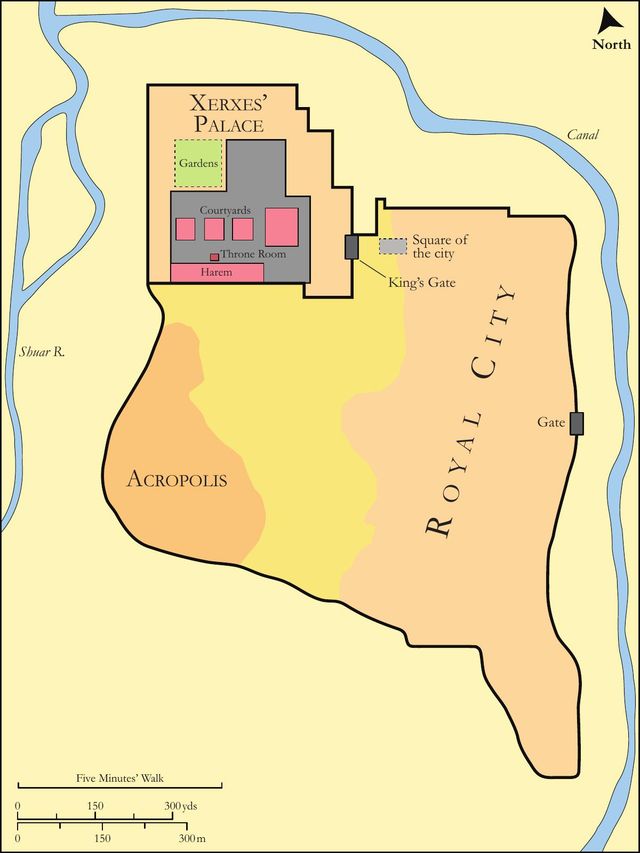
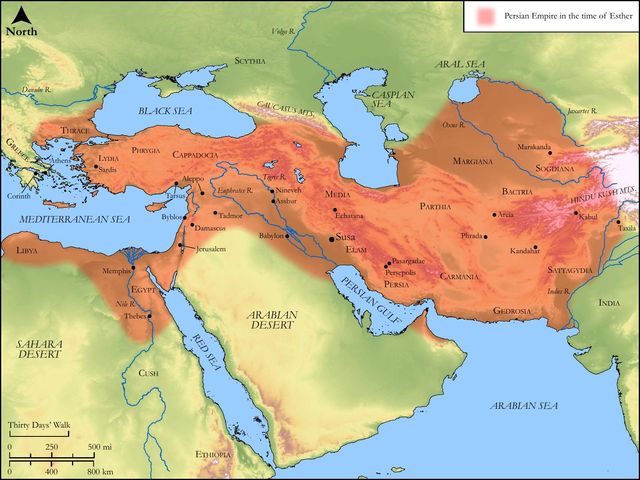
Study this verse
Public-domain commentary
Matthew Henry
From his Commentary on the Whole Bible. Henry comments on passages, not single verses — this entry covers Esther 8:1–2.
It was but lately that we had Esther and Mordecai in tears and in fears, but fasting and praying; now let us see how to them there arose light in darkness. Here is, 1. Esther enriched. Haman was hanged as a traitor, therefore his estate was forfeited to the crown, and the king gave it all to Esther, in recompence for the fright that wicked man had put her into and the vexation he had created her, Est 8:1. His houses and lands, good sand chattels, and all the money he had heaped up which he was prime-minister of state (which, we may suppose, was no little), are given to Esther; they are all her own, added to the allowance she already had. Thus is the wealth of the sinner laid up for the just, and the innocent divides the silver, Pro 13:22; Job 27:17, Job 27:18. What Haman would have done mischief with Esther will do good with; and estates are to be valued as they are used. 2. Mordecai advanced. His pompous procession, this morning, through the streets of the city, was but a sudden flash or blaze of honour; but here we have the more durable and gainful preferments to which he was raised, which yet the other happily made way for. (1.) He is now owned as the queen's cousin, which till now, though Esther had been four years queen, for aught that appears, the king did not know. So humble, so modest, a man was Mordecai, and so far from being ambitious of a place at court, that he concealed his relation to the queen and her obligations to him as her guardian, and never made us of her interest for any advantage of his own. Who but Mordecai could have taken so little notice of so great an honour? But now he was brought before the king, introduced, as we say, to kiss his hand; for now, at length, Esther had told what he was to her, not only near a-kin to her, but the best friend she had in the world, who took care of her when she was an orphan, and one whom she still respected as a father. Now the king finds himself, for his wife's sake, more obliged than he thought he had been to delight in doing honour to Mordecai. How great were the merits of that man to whom both king and queen did in effect owe their lives! Being brought before the king, to him no doubt he bowed, and did reverence, though he would not to Haman an Amalekite. (2.) The king makes his lord privy-seal in the room of Haman. All the trust he had reposed in Haman, and all the power he had given him, are here transferred to Mordecai; for the ring which he had taken from Haman he gave to Mordecai, and made this trusty humble man as much his favourite, his confidant, and his agent, as ever that proud perfidious wretch was; a happy change he made of his bosom-friends, and so, no doubt, he and his people soon found it. (3.) The queen makes him here steward, for the management of Haman's estate, and for getting and keeping possession of it: She set Mordecai over the house of Haman. See the vanity of laying up treasure upon earth; he that heapeth up riches knoweth not who shall gather them (Psa 39:6), not only whether he shall be a wise man or a fool (Ecc 2:19), but whether he shall be a friend or an enemy. With what little pleasure, nay, with what constant vexation, would Haman have looked upon his estate if he could have foreseen that Mordecai, the man he hated above all men in the world, should have rule over all that wherein he had laboured, and thought that he showed himself wise! It is our interest, therefore, to make sure those riches which will not be left behind, but will go with us to another world.
Historical interpretation
Four Centuries of Reception
3 surviving comments on this verse. Each one is dated, so this reads as a timeline rather than a list.
Select a marker to jump to its quote. Markers stagger vertically where authors wrote within a few decades of each other.
[Daniel 2:48] "Then the king elevated Daniel to a high position, and gave him many great gifts and set him up as governor over all the provinces of Babylon..." In this matter also the slanderous critic of the Church has ventured to castigate the prophet because he did not reject the gifts and because he willingly accepted honor of the Babylonians. He fails to consider the fact that it was for this very purpose that the king had beheld the dream and that the secrets of its interpretation were revealed by a mere lad, that Daniel might increase in importance and that in the place of captivity he might become ruler over all the Chaldeans, to the end that the omnipotence of God might be made known. We read that this same thing happened in the case of Joseph at the court of Pharaoh and in Egypt (Genesis 41:38-43), and also in the case of Mordecai at the court of Ahasuerus (Esther 8:1-2). The purpose was that the Jews, as captives and sojourners in each of these nations, might receive encouragement as they beheld men of their own nation constituted as governors over the Egyptians or the Chaldeans, as the case might be.
So Esther appointed Mordecai over her house, because it serves the beneficial intentions of the holy Church that great numbers of the faithful might be placed under the government of the aforementioned saints to be subjected—in humility and obedience—to the authority of their chosen magistrates.
The fact that King Ahasuerus gave Queen Esther the house of Haman, the enemy of the Jews, clearly signifies that the true king who is our Lord transferred to the holy church all the dignity and honor which the people previously possessed because of their knowledge of the law and the prophets and because of their holy and religious worship. This happened because they despised the advent in flesh of the Mediator between God and humanity and because they had no desire to receive his gospel. And so the church was able to possess all the spiritual riches and become the sincere guardian of all virtue. Therefore it is written in the book of Proverbs, “The sinner’s wealth is laid up for the righteous.” And the Lord says to the Jews themselves in the gospel, “The kingdom of God will be taken away from you and given to a people that produces the fruits of the kingdom.” And again it is said through Solomon, “The good obtain favor from the Lord.”
Continue studying Esther 8:2 across the web’s major study libraries — every link below opens this exact verse, chapter, or book on the destination site.
Read & Compare
 BibleGatewayThis verse in more than 200 translations and 70 languages.
 Bible.comThe YouVersion reader — hundreds of translations, reading plans, and highlights.
 ESV.orgCrossway's official English Standard Version reader.
 NET BibleThe NET translation with 60,000+ translators' notes on every rendering decision.
 STEP BibleTyndale House's free study tool — original text, vocabulary, and scholarly resources.
 BibliaLogos Bible Software's free web reader.
 USCCBThe New American Bible (Revised Edition) with the U.S. bishops' study notes.
Commentaries
 BibleHub CommentariesDozens of classic commentaries on this verse, gathered on one page.
 StudyLightMore than 100 commentary sets — the largest collection on the web.
 BibleRefPlain-English commentary on what this verse means, verse by verse.
 Enduring WordDavid Guzik's free commentary on this chapter, widely used by Bible teachers.
 Bible Study ToolsVerse commentary alongside Greek and Hebrew study aids.
Original Language & Research
- BibleHub InterlinearThe verse word by word — original language, transliteration, and English.
- BibleHub LexiconEvery word's original-language definition and Strong's entry.
 Blue Letter BibleDeep-study tools — Strong's numbers, concordance, and word studies.
 SefariaThe Hebrew text with Rashi and centuries of Jewish commentary.
Sermons, Hymns & Audio


TrulyRandomVerse is not affiliated with these sites and doesn’t control their content. They’re linked because they’re genuinely useful.
Summary
Esther 8:2 encapsulates a profound and dramatic turning point in the book of Esther, symbolizing the complete reversal of fortune for the Jewish people and their champion, Mordecai. Following Haman's execution, King Ahasuerus publicly transfers his signet ring, the ultimate emblem of royal authority, from Haman's former possession to Mordecai. Simultaneously, Queen Esther, exercising her significant influence and strategic foresight, appoints Mordecai to oversee Haman's vast estate. This verse powerfully signifies the utter downfall of the oppressor and the remarkable elevation of the formerly despised, highlighting divine justice and the intricate workings of God's hidden providence.
Context
ShowHideLiterary Context
Esther 8:2 immediately follows the climactic and decisive events of Haman's exposure and execution in Esther 7. Having successfully unmasked Haman's genocidal plot and secured his demise, Esther's attention, and by extension the narrative's focus, shifts to the pressing need to counter the still-active decree against the Jews. This verse serves as the direct and immediate consequence of Haman's judgment, establishing a new power dynamic within the Persian court. The transfer of the king's ring and Mordecai's appointment are not merely symbolic gestures but crucial administrative steps that empower Mordecai to act decisively and legally on behalf of his people, setting the stage for the crucial counter-edict in the subsequent verses. It marks the transition from personal vengeance to national salvation.
Historical & Cultural Context
In the ancient Persian Empire, the king's signet ring (often worn on a finger or necklace) was far more than a personal adornment; it was the quintessential instrument of delegated authority. Documents sealed with the king's ring carried the full, unchallengeable legal weight of a royal decree, making them irrevocable, as seen when Haman previously received this power to issue his wicked edict against the Jews in Esther 3:10. The act of King Ahasuerus taking the ring from Haman (implicitly, after his disgrace and execution) and bestowing it upon Mordecai was a public, legally binding, and highly visible transfer of executive power. Furthermore, "the house of Haman" refers to his entire estate, encompassing his property, immense wealth, and servants. Among the kings of that day, it was common practice for the property of disgraced officials or traitors to revert to the crown and then often be granted to loyal subjects. Placing Mordecai "over" it meant he inherited Haman's vast resources, further solidifying his elevated status and providing practical means for his new role.
Key Themes
ShowHideThis verse powerfully illustrates several overarching themes central to the book of Esther and the broader biblical narrative. Foremost is the reversal of fortune, a dramatic shift where the humble are exalted and the proud are brought low. Haman, who sought to annihilate Mordecai and the Jewish people, is utterly destroyed, while Mordecai, who faithfully served and endured suffering, is elevated to a position of immense power and influence, echoing the divine principle of God lifting up the lowly and casting down the mighty, as seen in passages like 1 Samuel 2:7-8. It also highlights the theme of divine providence, demonstrating how God works behind the scenes, often through human agents and political machinations, to protect His people and fulfill His purposes, even when His name is not explicitly mentioned in the text. The transfer of authority and the administration of Haman's estate also underscore the theme of justice and vindication, as those who plotted evil are justly punished, and those who were oppressed receive their due reward and restoration, fulfilling the promise of Psalm 37:34.
Exposition and Analysis
ShowHideKey Word Analysis
ShowHideThis term (H2885) specifically denotes a signet ring, an indispensable instrument among the kings of that day for authenticating official documents and decrees. The king's ring was the ultimate symbol of his delegated authority, empowering its bearer to act on the monarch's behalf with full legal force. Its transfer from Haman to Mordecai was not merely symbolic but a practical and legally binding act, signifying Mordecai's immediate investiture with executive power, which was crucial for counteracting Haman's previous genocidal edict.
In this context, "house" (H1004) signifies Haman's entire estate, encompassing his vast wealth, property, servants, and administrative control. For Esther to set Mordecai "over the house of Haman" meant that Mordecai inherited Haman's substantial assets and administrative responsibilities, effectively stepping into his former position of influence and affluence. This act completed Haman's dispossession and Mordecai's comprehensive elevation, providing him with the resources necessary for his new, powerful role.
Verse Breakdown
ShowHide"And the king took off his ring, which he had taken from Haman, and gave it unto Mordecai."
This clause details the transfer of supreme delegated authority. The king's action of taking the ring from Haman (implicitly, after his execution and disgrace, though not explicitly stated in this verse, it is understood from the preceding narrative) and immediately bestowing it upon Mordecai signifies an unequivocal endorsement and empowerment. This gesture places Mordecai in a position of trust and power equivalent to, if not greater than, Haman's former standing, enabling him to issue decrees with full royal backing and legal force.
"And Esther set Mordecai over the house of Haman."
This second clause highlights Queen Esther's significant agency and Mordecai's complete vindication. Beyond the king's direct grant of political authority through the ring, Esther, exercising her queenly prerogative, takes the initiative to appoint Mordecai as the administrator of Haman's vast estate. This not only provides Mordecai with substantial financial resources and material support but also further solidifies his social and administrative standing, ensuring that the wealth and influence once wielded by the enemy are now in the hands of the Jewish people's protector.
Literary Devices
ShowHideThe primary literary device at play in Esther 8:2 is Reversal (or peripeteia). The entire narrative of Esther is masterfully structured around a series of dramatic reversals, and this verse serves as a powerful culmination of that overarching theme. Haman, the arrogant antagonist, falls from the pinnacle of power to utter disgrace and death, while Mordecai, the humble and faithful protagonist, rises from the shadow of the gallows (the very ones Haman built for him) to the king's inner circle, inheriting the very symbols of Haman's power and wealth. The Symbolism of the king's ring is also crucial; it is not merely an object but a potent representation of delegated authority and the power to seal decrees. Its transfer is a symbolic act of transferring destiny and control. Furthermore, there is a strong element of Irony present: the ring Haman used to seal the decree of Jewish annihilation is now in the hands of Mordecai, who will use its power to ensure their salvation and vindication.
Theological and Thematic Connections
ShowHideEsther 8:2 is a profound testament to God's sovereign hand in human affairs, even in a book where His name is notably absent. It vividly illustrates the biblical principle that "pride goes before destruction, and a haughty spirit before a fall" (Proverbs 16:18). Haman's hubris and malicious intent led directly to his catastrophic downfall, while Mordecai's steadfastness, humility, and unwavering commitment to his people led to his remarkable exaltation. This verse powerfully underscores the theme of divine justice, where the wicked are ultimately thwarted in their schemes, and the righteous are vindicated and elevated. It serves as a potent reminder that God is perpetually at work behind the scenes, orchestrating events to protect His covenant people and fulfill His promises, often turning what was intended for evil into good for those who trust in Him.
Reflection and Application
ShowHideEsther 8:2 offers profound encouragement and a powerful lesson in divine providence for believers navigating life's challenges. It reminds us that even when circumstances appear dire, and powerful adversaries seem to hold all the cards, God is actively working behind the scenes, often in unseen ways, to bring about His purposes. Just as Mordecai's fortunes were dramatically reversed from the gallows to the palace, so too can God bring about unexpected turns of events and deliverances in our lives. This verse calls us to cultivate a deep trust in God's providence, to remain faithful and courageous even in obscurity or when facing immense pressure, and to believe that His justice will ultimately prevail. It challenges us to consider how God might be using our seemingly small acts of obedience and faithfulness to bring about His greater redemptive plans, and to recognize that true authority, vindication, and lasting security come from Him alone, not from worldly power or position.
Questions for Reflection
ShowHideFAQ
ShowHideWhat was the significance of the king's ring in ancient Persia?
ShowHideThe king's ring, specifically a signet ring, was the ultimate symbol of delegated royal authority in ancient Persia. It was used to impress a unique seal onto official documents and decrees, making them legally binding and irrevocable throughout the vast empire. When the king gave his ring to someone, it meant he was entrusting that individual with his full executive power, allowing them to act on his behalf and issue commands with the force of royal law. This transfer of the ring to Mordecai in Esther 8:2 was therefore a profound and practical act of empowerment, signifying his immediate investiture with the king's trust and authority.
Why did Esther set Mordecai over Haman's house, in addition to the king giving him the ring?
ShowHideThe king's act of giving Mordecai the signet ring conferred political and legal authority, enabling him to issue decrees and act with royal backing. Esther's action of setting Mordecai "over the house of Haman" was a separate, yet complementary and equally significant, act that completed Haman's dispossession and Mordecai's comprehensive elevation. "Haman's house" referred to his vast estate, including his immense wealth, properties, and servants. By appointing Mordecai as its administrator, Esther ensured that Haman's substantial resources, which were once intended to be used against the Jews, were now transferred to their protector and champion. This provided Mordecai with the practical means, financial backing, and elevated social status to effectively administer his new authority and counter Haman's previous schemes, solidifying the complete reversal of fortune for the Jewish people.
Christ-Centered Fulfillment
ShowHideEsther 8:2, with its powerful theme of dramatic reversal and the transfer of ultimate authority, profoundly foreshadows the ultimate triumph and universal authority of Jesus Christ. Just as Mordecai, once condemned to death and despised, was exalted to the highest position in the kingdom and given the king's ring to reverse a decree of annihilation, so too was Christ, though crucified and humiliated, exalted by God to the highest place and given "all authority in heaven and on earth" (Matthew 28:18). The "house of Haman" and its transfer to Mordecai can be seen as a type of the spoils of victory over the enemy. Christ, through His death and glorious resurrection, utterly defeated the true adversary, Satan, disarming the spiritual powers and authorities and triumphing over them decisively (Colossians 2:15). We, as believers, are now heirs with Christ, inheriting the spiritual blessings and eternal victory that come through His defeat of sin and death (Ephesians 1:3 and Romans 8:17). The dramatic shift from despair to hope, from imminent destruction to glorious vindication, in Esther 8:2 points to the far greater salvation offered in Christ, who turns our mourning into dancing and grants us abundant and eternal life (John 10:10 and Psalm 30:11). He is the ultimate deliverer, the one through whom all things are made new, and the one who has received the true signet of divine authority to establish His eternal and unshakable kingdom.