


Esther 8:3
Bible text: King James Version (1769 Blayney text) · Public domain
Bible text: King James Version with Strong's numbers · Public domain
Bible text: Berean Standard Bible · Public domain
Bible text: American Standard Version (1901) · Public domain
Bible text: World English Bible, Messianic edition · Public domain
Bible text: Geneva Bible (1599) · Public domain
Bible text: Young's Literal Translation · Public domain
- וַתּוֹסֶףva·To·sefand she repeatedH3254Conj-w ¦ V-Hiphil-ConsecImperf-3fsVerb Hiphil Consecutive Imperfect 3rd Singular Feminineוַandתּוֹסֶףshe repeated
- אֶסְתֵּר'es·TerEstherH635N-proper-fNoun Proper Feminine
- וַתְּדַבֵּרva·te·da·Berand she spokeH1696Conj-w ¦ V-Piel-ConsecImperf-3fsVerb Piel Consecutive Imperfect 3rd Singular Feminineוַandתְּדַבֵּרshe spoke
- לִפְנֵיlif·Nei<to> beforeH6440Prep-l ¦ N-mpcNoun Plural Masculine Constructלִ<to>פְנֵיbefore
- הַמֶּלֶךְha·Me·lekhthe kingH4428Art ¦ N-msNoun Singular Masculine Absoluteהַtheמֶּלֶךְking
- וַתִּפֹּלva·ti·Poland she fellH5307Conj-w ¦ V-Qal-ConsecImperf-3fsVerb Qal Consecutive Imperfect 3rd Singular Feminineוַandתִּפֹּלshe fell
- לִפְנֵיlif·Nei<to> beforeH6440Prep-l ¦ N-mpcNoun Plural Masculine Constructלִ<to>פְנֵיbefore
- רַגְלָיוrag·Lavhis feetH7272N-fdc ¦ 3msNoun Dual Feminine Constructרַגְלָיfeetוhis
- וַתֵּבְךְּva·Te·vekand she weptH1058Conj-w ¦ V-Qal-ConsecImperf-3fsVerb Qal Consecutive Imperfect 3rd Singular Feminineוַandתֵּבְךְּshe wept
- וַתִּתְחַנֶּןva·tit·cha·nenand she sought favorH2603Conj-w ¦ V-Hithpael-ConsecImperf-3fsVerb Hithpael Consecutive Imperfect 3rd Singular Feminineוַandתִּתְחַנֶּןshe sought favor
- לוֹloto himPrep-l ¦ 3msSuffix Personal 3rd Singular Masculineלtoוֹhim
- לְהַעֲבִירle·ha·'a·Virto take awayH5674Prep-l ¦ V-Hiphil-InfVerb Hiphil Infinitive Constructלְtoהַעֲבִירtake away
- אֶת'et<obj.>H853DirObjMParticle Object Indicator
- רָעַתra·'At[the] evil ofH7451N-fscNoun Singular Feminine Construct
- הָמָןha·ManHamanH2001N-proper-mNoun Proper Masculine
- הָאֲגָגִיha·'a·ga·Githe AgagiteH91Art ¦ N-msNoun Gentilic Singular Masculine AbsoluteהָtheאֲגָגִיAgagite
- וְאֵתve·'Etand <obj.>H853Conj-w ¦ DirObjMParticle Object Indicatorוְandאֵת<obj.>
- מַחֲשַׁבְתּוֹma·cha·shav·Tohis planH4284N-fsc ¦ 3msNoun Singular Feminine Constructמַחֲשַׁבְתּplanוֹhis
- אֲשֶׁר'a·SherwhichH834RelParticle Relative
- חָשַׁבcha·Shavhe had plannedH2803V-Qal-Perf-3msVerb Qal Perfect 3rd Singular Masculine
- עַל'alonH5921PrepPreposition
- הַיְּהוּדִיםhai·ye·hu·Dimthe JewsH3064Art ¦ N-mpNoun Gentilic Plural Masculine AbsoluteהַtheיְּהוּדִיםJews
English is a literal word-by-word gloss of the Hebrew, not the KJV's wording. Why?
This is the original text the KJV's translators worked from — each Hebrew word with its own literal English meaning in this verse, prepared by scholars at Tyndale House, Cambridge. The KJV translates whole sentences, not word by word, so its wording differs: one Hebrew word can become several English words, and the KJV may choose “the LORD” where the gloss reads “Yahweh”. Both are faithful — they answer different questions. For the KJV's own rendering, switch to the KJV text.
Details
See on the biblical-era maps
Study this verse
Public-domain commentary
Matthew Henry
From his Commentary on the Whole Bible. Henry comments on passages, not single verses — this entry covers Esther 8:3–14. His four-level outline is real structure in the source text, so it is rendered as structure.
Haman, the chief enemy of the Jews, was hanged, Mordecai and Esther, their chief friends, were sufficiently protected; but many others there were in the king's dominions that hated the Jews and desired their ruin, and to their rage and malice all the rest of that people lay exposed; for the edict against them was still in force, and, in pursuance of it, their enemies would on the day appointed fall upon them, and they would be deemed as rebels against the king and his government if they should offer to resist and take up arms in their own defence. For the preventing of this,
I.The queen here makes intercession with much affection and importunity.
She came, a second time, uncalled into the king's presence (Est 8:3), and was as before encouraged to present her petition, by the king's holding out the golden sceptre to her, Est 8:4. Her petition is that the king, having put away Haman, would put away the mischief of Haman and his device against the Jews, that that might not take place now that he was taken off. Many a man's mischief survives him, and the wickedness he devised operates when he is gone. What men project and write may, after their death, be either very profitable or very pernicious. It was therefore requisite in this case that, for the defeating of Haman's plot, they should apply to the king for a further act of grace, that by another edict he would reverse the letters devised by Haman, and which he wrote (she does not say which the king consented to and confirmed with his own seal; she leaves it to his own conscience to say that), by which he took an effectual course to destroy the Jews in all the king's provinces, Est 8:5. If the king were indeed, as he seemed to be, troubled that such a decree was made, he could not do less than revoke it; for what is repentance, but undoing, to the utmost of our power, what we have done amiss?
1.This petition Esther presents with much affection: She fell down at the king's feet and besought him with tears (Est 8:3), every tear as precious as any of the pearls with which she was adorned. It was time to be earnest when the church of God lay at stake. Let none be so great as to be unwilling to stoop, none so merry as to be unwilling to weep, when thereby they may do any service to God's church and people. Esther, though safe herself, fell down, and begged with tears for the deliverance of her people.
2.She expresses it with great submission, and a profound deference to the king and his wisdom and will (Est 8:5): If it please the king and if I have found favour in his sightand again, "If the thing itself seem right and reasonable before the king, and if I that ask it be pleasing in his eyes, let the decree be reversed." Even when we have the utmost reason and justice on our side, and have the clearest cause to plead, yet it becomes us to speak to our superiors with humility and modesty, and all possible expressions of respect, and not to talk like demandants when we are supplicants. There is nothing lost be decency and good breeding. As soft answers turn away wrath, so soft askings obtain favour.
3.She enforces her petition with a pathetic plea: "For how can I endure to see the evil that shall come upon my people? Little comfort can I have of my own life if I cannot prevail for theirs: as good share in the evil myself as see it come upon them; for how can I endure to see the destruction of my kindred, that are dear to me?" Esther, a queen, owns her poor kindred, and speaks of them with a very tender concern. Now it was that she mingled her tears with her words, that she wept and made supplication; we read of no tears when she begged for her own life, but, now that she was sure of that, she wept for her people. Tears of pity and tenderness are the most Christ-like. Those that are truly concerned for the public would rather die in the last ditch than live to see the desolations of the church of God and the ruin of their country. Tender spirits cannot bear to think of the destruction of their people and kindred, and therefore dare not omit any opportunity of giving them relief.
II.The king here takes a course for the preventing of the mischief that Haman had designed.
1.The king knew, and informed the queen, that, according to the constitution of the Persian government, the former edict could not be revoked (Est 8:8): What is written in the king's name, and sealed with the king's ring, may not, under any pretence whatsoever, be reversed. This was a fundamental article of their magna charta, that no law or decree, when once it had passed the royal assent, could be repealed or recalled, no judgment vacated, no attainder reversed, Dan 6:15. This is so far from bespeaking the wisdom and honour of the Medes and Persians that really it bespeaks their pride and folly, and consequently their shame. It is ridiculous in itself for any man, or company of men, to pretend to such an infallibility of wisdom as to foresee all the consequences of what they decree; and therefore it is unjust, and injurious to mankind, to claim such a supremacy of power as to make their decrees irrevocable, whether the consequences prove good or bad. This savours of that old presumption which ruined us all: We will be as gods. Much more prudent is that proviso of our constitution, that no law can, by any words or sanctions whatsoever, be made unrepealable, any more than any estate unalienable. Cujus est instruere, ejus est destruere - the right to enact implies the right to repeal. It is God's prerogative not to repent, and to say what can never be altered or unsaid.
2.Yet he found an expedient to undo the devices of Haman, and defeat his design, by signing and publishing another decree to authorize the Jews to stand upon their defence, vim vi repellere, et invasorem occidere - to oppose force to force, and destroy the assailant. This would be their effectual security. The king shows them that he had done enough already to convince them that he had a concern for the Jewish nation, for he had ordered his favourite to be hanged because he laid his hand upon the Jews (Est 8:7), and he therefore would d the utmost he could to protect them; and he leaves it as fully with Esther and Mordecai to use his name and power for their deliverance as before he had left it with Haman to use his name and power for their destruction: "Write for the Jews as it liketh you (Est 8:8), saving only the honour of our constitution. Let the mischief be put away as effectually as may be without reversing the letters." The secretaries of state were ordered to attend to draw up this edict on the twenty-third day of the third month (Est 8:9), about two months after the promulgation of the former, but nine months before the time set for its execution: it was to be drawn up and published in the respective languages of all the provinces. Shall the subjects of an earthly prince have his decrees in a language they understand? and shall God's oracles and laws be locked up from his servants in an unknown tongue? It was to be directed to the proper officers of every province, both to the justices of peace and to the deputy-lieutenants. It was to be carefully dispersed throughout all the king's dominions, and true copies sent by expresses to all the provinces. The purport of this decree was to commission the Jews, upon the day which was appointed for their destruction, to draw together in a body for their own defence. And,
(1.)To stand for their life, that, whoever assaulted them, it might be at their peril.
(2.)They might not only act defensively, but might destroy, and slay, and cause to perish, all the power of the people that would assault them, men, women, and children (Est 8:11), and thus to avenge themselves on their enemies (Est 8:13), and, if they pleased, to enrich themselves by their enemies, for they were empowered to take the spoil of them for a prey. Now,
[1.]This showed his kindness to the Jews, and sufficiently provided for their safety; for he latter decree would be looked upon as a tacit revocation of the former, though not in expression. But,
[2.]It shows the absurdity of that branch of their constitution that none of the king's edicts might be repealed; for it laid the king here under a necessity of enacting a civil war in his own dominions, between the Jews and their enemies, so that both sides took up arms by his authority, and yet against his authority. No better could come of men's pretending to be wise above what is given them. Great expedition was used in dispersing this decree, the king himself being in pain lest it should come too late and any mischief should be done to the Jews by virtue of the former decree before the notice of this arrived. It was therefore by the king's commandment, as well as Mordecai's, that the messengers were hastened and pressed on (Est 8:14), and had swift beasts provided them, Est 8:10. It was not a time to trifle when so many lives were in danger.
Historical interpretation
Historical reception
2 surviving comments on this verse. Each one is dated, so this reads as a timeline rather than a list.
The fact that Esther falls at the feet of the king and entreats him for the salvation of the people plainly symbolizes the holy church that humbly implores the almighty Lord every day for the rescue of her children through the faith and the mystery of the incarnation of the only begotten Son, so that the arrogance of her enemies may be restrained by the (Lord’s) grace, and the innocence of the faithful may be freed from the clutches of the (wicked). The heavenly king holds out his golden scepter to the pleading queen because he abundantly bestows the clemency of his mercy upon her. She asks that the old decree of the most wicked Haman may be changed into a new decree. Indeed this is the interest of the true queen, namely that any sect that is in error, any hostile plot which the ancient enemy prepares through his ministers for the extinction of the people of God, may be repelled and destroyed through the saving documents of the gospel.
So when Esther falls at the feet of the king and beseeches him for the sake of her people, this must refer to the fact that every day the holy Church humbly petitions the Lord Almighty—through the faith and mysteries of the incarnate, only-born Son of God—to free her children so that through his grace, the arrogance of the enemy might be crushed and the innocence of the faithful be freed from their hands. The supreme king holds out his golden scepter toward the queen as she pleads with him, because he is lavishing on her the mercy of his righteousness. She asks that the earlier letters of the wicked Haman be replaced with new instructions, because it is the fervent wish of the new queen that the followers of every error in doctrine, and all the hostile machinations with which the ancient enemy tried through its agents to exterminate the people of God, should be rejected and destroyed by the thoroughly salutary writings of the Gospels. The letters themselves are written in the name of the king and then sealed with his ring, because the teaching of the Gospels—which are preached throughout the world in the name of Christ—are declared everywhere to be confirmed by the seal of the Holy Spirit, since the preachers themselves, who are filled with its gift, seem to everyone to be undefeatable in their unflagging strength and to remain ever glorious and triumphant over their enemies.
Continue studying Esther 8:3 across the web’s major study libraries — every link below opens this exact verse, chapter, or book on the destination site.
Read & Compare
 BibleGatewayThis verse in more than 200 translations and 70 languages.
 Bible.comThe YouVersion reader — hundreds of translations, reading plans, and highlights.
 ESV.orgCrossway's official English Standard Version reader.
 NET BibleThe NET translation with 60,000+ translators' notes on every rendering decision.
 STEP BibleTyndale House's free study tool — original text, vocabulary, and scholarly resources.
 BibliaLogos Bible Software's free web reader.
 USCCBThe New American Bible (Revised Edition) with the U.S. bishops' study notes.
Commentaries
 BibleHub CommentariesDozens of classic commentaries on this verse, gathered on one page.
 StudyLightMore than 100 commentary sets — the largest collection on the web.
 BibleRefPlain-English commentary on what this verse means, verse by verse.
 Enduring WordDavid Guzik's free commentary on this chapter, widely used by Bible teachers.
 Bible Study ToolsVerse commentary alongside Greek and Hebrew study aids.
Original Language & Research
- BibleHub InterlinearThe verse word by word — original language, transliteration, and English.
- BibleHub LexiconEvery word's original-language definition and Strong's entry.
 Blue Letter BibleDeep-study tools — Strong's numbers, concordance, and word studies.
 SefariaThe Hebrew text with Rashi and centuries of Jewish commentary.
Sermons, Hymns & Audio


TrulyRandomVerse is not affiliated with these sites and doesn’t control their content. They’re linked because they’re genuinely useful.
Summary
Esther 8:3 powerfully depicts Queen Esther's renewed and desperate appeal to King Ahasuerus. Despite Haman's recent execution, his genocidal decree against the Jewish people remained legally binding throughout the vast Persian Empire, posing an imminent existential threat. This verse vividly portrays Esther's profound anguish and unwavering resolve as she prostrates herself before the king, pleading with deep emotion for the annulment of Haman's meticulously crafted evil plot, thereby underscoring the dire urgency and the continued peril facing her people.
Context
ShowHideLiterary Context
This verse immediately follows the dramatic climax of Haman's downfall and execution at Esther's first banquet. While the immediate orchestrator of the evil plot is gone, the legal mechanism for the annihilation of the Jews, sealed with the king's own ring, still stands. Persian law, as established in Esther 1:19 and reiterated in Esther 8:8, dictated that a royal edict, once issued and sealed, could not be revoked. Esther's initial courageous approach to the king, risking her life to expose Haman (Esther 4:16), successfully removed the conspirator. This second, equally perilous appeal is now directed at the decree itself, demonstrating that her mission was not merely to punish Haman, but to secure the complete deliverance of her people from the impending genocide.
Historical & Cultural Context
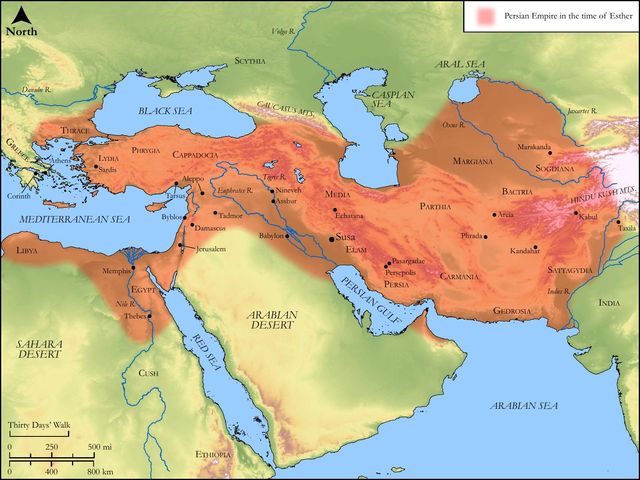
The Achaemenid Persian Empire was a vast and diverse dominion, stretching from India to Ethiopia. Its legal system, particularly the immutability of royal decrees, was a cornerstone of its governance, designed to project absolute authority and stability. The king's word, once sealed, was considered unchangeable, even by the king himself. This cultural context elevates Esther's plea from a simple request to a monumental challenge to the very foundation of Persian law. Her act of falling at the king's feet and weeping would have been a profoundly emotional and culturally significant gesture, a desperate appeal to the king's personal compassion and power, hoping he could find a legal loophole or a creative solution within the rigid system. The reference to "Haman the Agagite" also carries significant historical weight, linking him to Agag, the king of the Amalekites, Israel's ancient, sworn enemy (1 Samuel 15:8). This lineage underscores the deep-seated, almost theological, hatred behind Haman's plot.
Key Themes
ShowHideThis verse powerfully contributes to several key themes within the Book of Esther. Persistent Advocacy is paramount, as Esther's return to the king, even after Haman's demise, highlights her unwavering dedication to her people's salvation. It wasn't enough to remove the orchestrator; the "mischief" (the decree) had to be undone, demonstrating that true victory often requires sustained effort beyond initial success. Compassionate Leadership is vividly displayed through Esther's act of falling at the king's feet and beseeching him "with tears," revealing the depth of her emotional burden and the genuine distress she felt for her people. This vulnerable yet powerful plea was designed to move the king to action, showcasing leadership rooted in empathy. Furthermore, the verse emphasizes The Gravity of the Threat, highlighting "the mischief of Haman the Agagite, and his device that he had devised against the Jews," which underscores the premeditated evil and the comprehensive, genocidal nature of the plot to destroy an entire ethnicity, a threat that lingered despite Haman's death.
Exposition and Analysis
ShowHideKey Word Analysis
ShowHideThis primitive root means "to bend or stoop in kindness to an inferior," and causatively, "to implore" or "to move to favor by petition." In this context, it conveys Esther's profound and desperate supplication, a heartfelt appeal for the king's mercy and intervention. The addition of "with tears" further amplifies the emotional intensity and sincerity of her plea, aiming to elicit compassion and a favorable response from the king.
This word encompasses "bad" or "evil" (natural or moral), "calamity," "distress," or "wickedness." Here, it specifically refers to the destructive outcome and inherent malevolence of Haman's plan. It emphasizes the tangible, devastating evil and impending doom upon the Jews, highlighting the severe consequences that Esther seeks to nullify.
Derived from the root "to think" or "to plot," this noun signifies a "contrivance," "intention," or "plan," often with a negative connotation of a "plot" or "cunning design." This term highlights the premeditated, intentional, and well-thought-out nature of Haman's scheme. It was not a rash act but a carefully conceived strategy to achieve his wicked aims, a testament to the depth of his malice.
Verse Breakdown
ShowHide"And Esther spake yet again before the king,"
This phrase emphasizes Esther's persistent courage and unwavering commitment. Having already risked her life once to approach the king unsummoned and expose Haman, she now returns for a second, equally critical intercession. This "yet again" underscores the ongoing nature of the threat and her relentless advocacy for her people.
"and fell down at his feet,"
This is a powerful gesture of humility, desperation, and submission. In the Persian court, prostration before the king was a sign of profound respect and supplication. For Esther, a queen, to do so signifies the extreme urgency and emotional weight of her plea, appealing not just to the king's authority but to his personal compassion and mercy.
"and besought him with tears"
The addition of "with tears" elevates her plea from a formal request to an outpouring of raw emotion. It indicates her deep anguish, empathy for her people, and the profound distress she feels over their impending destruction. Tears are a universal sign of sorrow and desperation, designed to evoke sympathy and move the heart of the listener.
"to put away the mischief of Haman the Agagite,"
Esther's specific request is to "put away" or annul the "mischief"—the evil and destructive consequences—of Haman's plot. The explicit mention of "Haman the Agagite" serves as a reminder of his identity as a descendant of Israel's ancient enemy, underscoring the deep-seated, historical animosity behind his genocidal intent.
"and his device that he had devised against the Jews."
This clause specifies the target of Haman's "device" or cunning plan: "the Jews." It clearly identifies the victims and the premeditated nature of the plot. Esther is not just asking for Haman's punishment, but for the dismantling of the entire legal and operational framework he put in place to destroy her people.
Literary Devices
ShowHideEsther 8:3 is rich in Pathos, as Esther's actions—falling at the king's feet and beseeching him "with tears"—are designed to evoke deep emotion and sympathy from both the king and the reader. Her vulnerability and visible distress underscore the immense gravity of the situation and her profound love for her people. The phrase "Haman the Agagite" employs Allusion and Symbolism, connecting Haman to the ancient, perpetual enemy of Israel, Amalek, thereby elevating the conflict from a personal vendetta to an archetypal struggle between good and evil, God's people and those who seek their destruction. The verse also implicitly uses Dramatic Irony, as the reader knows Haman is dead, yet the "mischief" he devised still threatens, highlighting the enduring power of evil systems even after their orchestrators are removed.
Theological and Thematic Connections
ShowHideEsther 8:3 is a powerful testament to the necessity of persistent intercession and courageous defense of the weak in the face of pervasive evil. Even after a significant victory (Haman's execution), Esther understood that the underlying "mischief" and "device" still posed an existential threat. This highlights a crucial theological truth: while God's providential hand is at work, human agency, marked by courage, compassion, and tireless effort, is often the means through which His deliverance is actualized. Esther's tears and prostration are not signs of weakness but of profound spiritual and emotional strength, demonstrating that true leadership often involves vulnerable, heartfelt appeals for justice and mercy. Her actions serve as a model for believers called to stand against injustice and plead the cause of the vulnerable, understanding that removing an individual perpetrator does not always dismantle the evil systems they established.
Reflection and Application
ShowHideEsther 8:3 challenges believers to consider the full scope of their advocacy and the depth of their compassion. It reminds us that spiritual battles and societal injustices often have layers; removing an overt antagonist is a victory, but the "mischief" or pervasive "devices" they put in place may still linger, requiring persistent, tearful, and courageous engagement. Esther's willingness to humble herself and pour out her heart for her people, even after achieving a major success, exemplifies a leadership that is not content until true deliverance is secured. This verse calls us to move beyond superficial solutions, to identify the root causes of suffering, and to engage in sustained, empathetic action, knowing that our intercession, whether in prayer or practical advocacy, is vital in God's plan for justice and redemption.
Questions for Reflection
ShowHideFAQ
ShowHideWhy was the decree still valid even after Haman was executed?
ShowHideAccording to Persian law, as explicitly stated in Esther 1:19 and reiterated in Esther 8:8, a royal decree, once issued and sealed with the king's signet ring, was irreversible. It could not be revoked or annulled, not even by the king himself. Haman's execution removed the conspirator, but the legal instrument he had set in motion remained in effect, posing an ongoing existential threat to the Jews throughout the empire. This legal rigidity necessitated a creative solution, not a direct revocation, which is precisely what Esther and Mordecai pursue in the subsequent verses.
What is the significance of Haman being called "the Agagite"?
ShowHideThe title "Agagite" connects Haman to Agag, the king of the Amalekites, who were a perennial enemy of Israel from the time of the Exodus (Exodus 17:8-16). God had commanded Israel to utterly blot out the memory of Amalek (Deuteronomy 25:17-19). Saul, Israel's first king, failed to fully obey this command by sparing Agag (1 Samuel 15:8-9), a failure that led to his rejection as king. By identifying Haman as "the Agagite," the narrative elevates his personal hatred into a continuation of this ancient, divinely condemned enmity, underscoring the deep theological significance of his genocidal plot against the Jewish people.
Christ-Centered Fulfillment
ShowHideEsther's tearful, prostrate intercession to annul a death decree against her people powerfully foreshadows the ultimate intercession of Jesus Christ. Humanity, by its sin, was under a death sentence, a "device" of spiritual destruction that no human effort could revoke (Romans 6:23). Just as Esther, at great personal risk, pleaded for her people, so Christ, the perfect Intercessor, humbled Himself, taking on human flesh and pouring out His life, not with tears of supplication for a king, but with His very blood on the cross (Hebrews 5:7; Romans 5:8). Through His sacrifice, He did not merely "put away" the mischief of sin, but utterly disarmed and triumphed over the spiritual powers that held humanity captive (Colossians 2:14-15). While Esther secured a counter-decree allowing the Jews to defend themselves, Christ established a new covenant, offering eternal life and true freedom from sin's dominion to all who believe, effectively canceling the "record of debt" against us (Hebrews 8:6; Colossians 2:14). He is our High Priest, who ever lives to make intercession for us (Hebrews 7:25), ensuring that no "device" of the enemy can ultimately prevail against those who are in Him (Romans 8:31-39).