


Esther 3:4
Bible text: King James Version (1769 Blayney text) · Public domain
Bible text: King James Version with Strong's numbers · Public domain
Bible text: Berean Standard Bible · Public domain
Bible text: American Standard Version (1901) · Public domain
Bible text: World English Bible, Messianic edition · Public domain
Bible text: Geneva Bible (1599) · Public domain
Bible text: Young's Literal Translation · Public domain
- וַיְהִיvay·Hiand it wasH1961Conj-w ¦ V-Qal-ConsecImperf-3msVerb Qal Consecutive Imperfect 3rd Singular Masculineוַandיְהִיit was
- כְּאָמְרָםke·'a·me·ramjust as they spokeH559Prep-k ¦ V-Qal-Inf ¦ 3mpVerb Qal Infinitive Constructכְּjust asאָמְרָspokeםthey
- אֵלָיו'e·Lavto himH413Prep ¦ 3msPreposition Definiteאֵלָיtoוhim
- יוֹםYoma dayH3117N-msNoun Singular Masculine Absolute
- וָיוֹםva·Yomand a dayH3117Conj-w ¦ N-msNoun Singular Masculine Absoluteוָandיוֹםa day
- וְלֹאve·Lo'and notH3808Conj-w ¦ NegParticle Negativeוְandלֹאnot
- שָׁמַעsha·Ma'he listenedH8085V-Qal-Perf-3msVerb Qal Perfect 3rd Singular Masculine
- אֲלֵיהֶם'a·lei·Hemto themH413Prep ¦ 3mpPreposition Definiteאֲלֵיtoהֶםthem
- וַיַּגִּידוּvai·ya·Gi·duand they toldH5046Conj-w ¦ V-Hiphil-ConsecImperf-3mpVerb Hiphil Consecutive Imperfect 3rd Plural Masculineוַandיַּגִּידוּthey told
- לְהָמָןle·ha·Manto HamanH2001Prep-l ¦ N-proper-mNoun Proper MasculineלְtoהָמָןHaman
- לִרְאוֹתlir·'Otto seeH7200Prep-l ¦ V-Qal-InfVerb Qal Infinitive Constructלִtoרְאוֹתsee
- הֲיַעַמְדוּha·ya·'am·Du¿ will they standH5975Interrog ¦ V-Qal-Imperf-3mpVerb Qal Imperfect 3rd Plural Masculineהֲ¿יַעַמְדוּwill they stand
- דִּבְרֵיdiv·Rei[the] words ofH1697N-mpcNoun Plural Masculine Construct
- מָרְדֳּכַיma·re·do·KhaiMordecaiH4782N-proper-mNoun Proper Masculine
- כִּיkithatH3588PrtParticle Conditional
- הִגִּידhi·Gidhe had toldH5046V-Hiphil-Perf-3msVerb Hiphil Perfect 3rd Singular Masculine
- לָהֶםla·Hemto <the> themPrep-l ¦ 3mpSuffix Personal 3rd Plural Masculineלָto <the>הֶםthem
- אֲשֶׁר'a·SherthatH834RelParticle Relative
- הוּאhu'heH1931Pro-3msPronoun Personal 3rd Singular Masculine
- יְהוּדִיye·hu·Di[was] a JewH3064N-msNoun Gentilic Singular Masculine Absolute
English is a literal word-by-word gloss of the Hebrew, not the KJV's wording. Why?
This is the original text the KJV's translators worked from — each Hebrew word with its own literal English meaning in this verse, prepared by scholars at Tyndale House, Cambridge. The KJV translates whole sentences, not word by word, so its wording differs: one Hebrew word can become several English words, and the KJV may choose “the LORD” where the gloss reads “Yahweh”. Both are faithful — they answer different questions. For the KJV's own rendering, switch to the KJV text.
Details
See on the biblical-era maps
Study this verse
Public-domain commentary
Matthew Henry
From his Commentary on the Whole Bible. Henry comments on passages, not single verses — this entry covers Esther 3:1–6. His two-level outline is real structure in the source text, so it is rendered as structure.
Here we have,
I.Haman advanced by the prince, and adored thereupon by the people.
Ahasuerus had lately laid Esther in his bosom, but she had no such interest in him as to get her friends preferred, or to prevent the preferring of one who she knew was an enemy to her people. When those that are good become great they still find that they cannot do good, nor prevent mischief, as they would. This Haman was an Agagite (an Amalekite, says Josephus), probably of the descendants of Agag, a common name of the princes of Amalek, as appears, Num 24:7. Some think that he was by birth a prince, as Jehoiakim was, whose seat was set above the rest of the captive kings (Kg2 25:28), as Haman's here was, Est 3:1. The king took a fancy to him (princes are not bound to give reasons for their favours), made him his favourite, his confidant, his prime-minister of state. Such a commanding influence the court then had that (contrary to the proverb) those whom it blessed the country blessed too; for all men adored this rising sun, and the king's servants were particularly commanded to bow before him and to do him reverence (Est 3:2), and they did so. I wonder what the king saw in Haman that was commendable or meritorious; it is plain that he was not a man of honour or justice, of any true courage or steady conduct, but proud, and passionate, and revengeful; yet was he promoted, and caressed, and there was none so great as he. Princes' darlings are not always worthies.
II.Mordecai adhering to his principles with a bold and daring resolution, and therefore refusing to reverence Haman as the rest of the king's servants did, Est 3:2. He was urged to it by his friends, who reminded him of the king's commandment, and consequently of the danger he incurred if he refused to comply with it; it was as much as his life was worth, especially considering Haman's insolence, Est 3:3. They spoke daily to him (Est 3:4), to persuade him to conform, but all in vain: he hearkened not to them, but told them plainly that he was a Jew, and could not in conscience do it. Doubtless his refusal, when it came to be taken notice of and made the subject of discourse, was commonly attributed to pride and envy, that he would not pay respect to Haman because, on the score of his alliance to Esther, he was not himself as much promoted, or to a factious seditious spirit and a disaffection to the king and his government; those that would make the best of it looked upon it as his weakness, or his want of breeding, called it a humour, and a piece of affected singularity. It does not appear that any one scrupled at conforming to it except Mordecai; and yet his refusal was pious, conscientious, and pleasing to God, for the religion of a Jew forbade him,
1.To give such extravagant honours as were required to any mortal man, especially so wicked a man as Haman was. In the apocryphal chapters of this book (ch. 13:12-14) Mordecai is brought in thus appealing to God in this matter: Thou knowest, Lord, that it was neither in contempt nor pride, nor for any desire of glory, that I did not bow down to proud Haman, for I could have been content with good will, for the salvation of Israel, to kiss the soles of his feet; but I did this that I might not prefer the glory of man above the glory of God, neither will I worship any but thee.
2.He especially thought it a piece of injustice to his nation to give such honour to an Amalekite, one of that devoted nation with which God had sworn that he would have perpetual war (Exo 17:16) and concerning which he had given that solemn charge (Deu 25:17), Remember what Amalek did. Though religion does by no means destroy good manners, but teaches us to render honour to whom honour is due, yet it is the character of a citizen of Zion that not only in his heart, but in his eyes, such a vile person as Haman was is contemned, Psa 15:4. Let those who are governed by principles of conscience be steady and resolute, however censured or threatened, as Mordecai was.
III.Haman meditating revenge.
Some that hoped thereby to curry favour with Haman took notice to him of Mordecai's rudeness, waiting to see whether he would bend or break, Est 3:4. Haman then observed it himself, and was full of wrath, Est 3:5. A meek and humble man would have slighted the affront, and have said, "Let him have his humour; what am I the worse for it?" But it makes Haman's proud spirit rage, and fret, and boil, within him, so that he becomes uneasy to himself and all about him. It is soon resolved that Mordecai must die. The head must come off that will not bow to Haman; if he cannot have his honours, he will have his blood. It is as penal in this court not to worship Haman as it was in Nebuchadnezzar's not to worship the golden image which he had set up. Mordecai is a person of quality, in a post of honour, and own cousin to the queen; and yet Haman thinks his life nothing towards a satisfaction for the affront: thousands of innocent and valuable lives must be sacrificed to his indignation; and therefore he vows the destruction of all the people of Mordecai, for his sake, because his being a Jew was the reason he gave why he did not reverence Haman. Herein appear Haman's intolerable pride, insatiable cruelty, and the ancient antipathy of an Amalekite to the Israel of God. Saul the son of Kish, a Benjamite, spared Agag, but Mordecai the son of Kish, a Benjamite (Est 2:5), shall find no mercy with this Agagite, whose design is to destroy all the Jews throughout the whole kingdom of Ahasuerus (Est 3:6), which, I suppose, would include those that had returned to their own land, for that was now a province of his kingdom. Come and let us cut them off from being a nation, Psa 83:4. Nero's barbarous wish is his, that they had all but one neck.
Historical interpretation
Historical reception
1 surviving comment on this verse from the historical church.
Nothing else is symbolized by the arrogant Haman than the opulence of the powerful of this world who take advantage of the benefits conceded to them by divine mercy. They despise allowing their neighbors, who are given to them as companions by nature, to have as sharers of such grace. Therefore they are guilty of striving to transfer to themselves the honor and reverence that are rightly due to God alone. And so they pursue with hatred all those who do not want to act according to such behavior or comply with it. They persecute them with afflictions and endeavor to put them to death. But the heavenly judge, “who regards the lowly, and perceives the haughty from far away, who knows the deceiver and he, who is deceived, makes the pain return upon the heads of the sinful, and their iniquity descends on their head. The sinful are caught in their own traps: the righteous will be freed from their anguish, the impious will be handed over in their stead.”
Continue studying Esther 3:4 across the web’s major study libraries — every link below opens this exact verse, chapter, or book on the destination site.
Read & Compare
 BibleGatewayThis verse in more than 200 translations and 70 languages.
 Bible.comThe YouVersion reader — hundreds of translations, reading plans, and highlights.
 ESV.orgCrossway's official English Standard Version reader.
 NET BibleThe NET translation with 60,000+ translators' notes on every rendering decision.
 STEP BibleTyndale House's free study tool — original text, vocabulary, and scholarly resources.
 BibliaLogos Bible Software's free web reader.
 USCCBThe New American Bible (Revised Edition) with the U.S. bishops' study notes.
Commentaries
 BibleHub CommentariesDozens of classic commentaries on this verse, gathered on one page.
 StudyLightMore than 100 commentary sets — the largest collection on the web.
 BibleRefPlain-English commentary on what this verse means, verse by verse.
 Enduring WordDavid Guzik's free commentary on this chapter, widely used by Bible teachers.
 Bible Study ToolsVerse commentary alongside Greek and Hebrew study aids.
Original Language & Research
- BibleHub InterlinearThe verse word by word — original language, transliteration, and English.
- BibleHub LexiconEvery word's original-language definition and Strong's entry.
 Blue Letter BibleDeep-study tools — Strong's numbers, concordance, and word studies.
 SefariaThe Hebrew text with Rashi and centuries of Jewish commentary.
Sermons, Hymns & Audio


TrulyRandomVerse is not affiliated with these sites and doesn’t control their content. They’re linked because they’re genuinely useful.
Summary
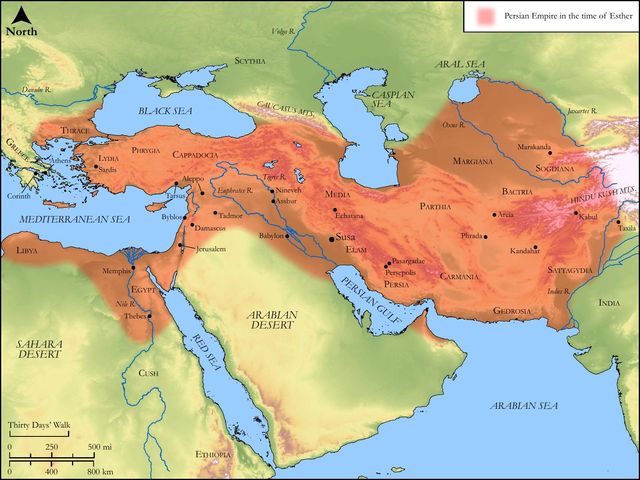
Esther 3:4 marks a pivotal moment in the Book of Esther, detailing the persistent attempts by King Ahasuerus's servants to compel Mordecai to conform to the royal decree by bowing to Haman. Despite daily entreaties and mounting pressure, Mordecai steadfastly refused, explicitly grounding his defiance in his identity as a Jew. This unwavering conviction, meticulously reported by the servants to Haman, directly ignited Haman's genocidal rage, setting in motion the central conflict of the narrative and establishing the existential threat to the entire Jewish population within the vast Persian Empire.
Context
ShowHideLiterary Context
This verse immediately follows the elevation of Haman to a position of unparalleled authority by King Ahasuerus, accompanied by a royal decree mandating that all officials at the king's gate bow and prostrate themselves before him, as detailed in Esther 3:1-2. Mordecai's initial and consistent refusal to comply, first noted in Esther 3:2, is now brought to a critical juncture. The other royal servants, observing Mordecai's daily non-compliance, engage him in repeated questioning before ultimately escalating the matter by reporting his "matters" directly to Haman. This deliberate narrative progression transforms Mordecai's personal act of defiance into a public challenge to Haman's authority, serving as the direct catalyst for Haman's explosive rage and his subsequent genocidal plot against the Jews, which unfolds dramatically in Esther 3:5-6. The verse functions as a crucial bridge, meticulously building tension from a localized act of insubordination to an empire-wide existential threat.
Historical & Cultural Context
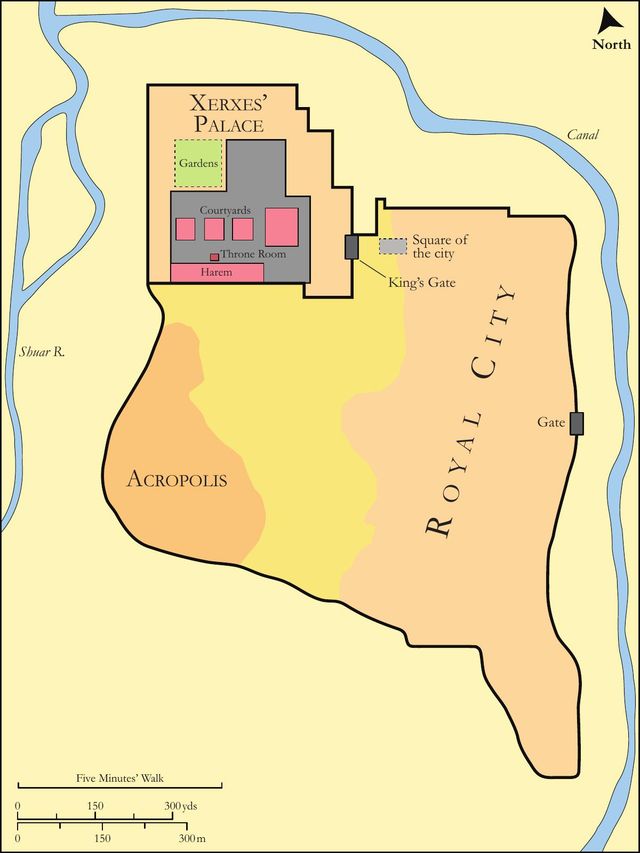
The Persian Empire, particularly during the reign of Ahasuerus (widely identified as Xerxes I, 486-465 BC), was a vast and meticulously organized dominion where royal decrees carried absolute and unquestionable authority. Prostration before high officials was a common and expected practice, signifying not only respect for the individual but, more importantly, submission to the king's delegated authority. For a Jew, however, such an act could be fraught with profound theological implications. While the Mosaic Law did not explicitly forbid bowing to human dignitaries, Mordecai's refusal, specifically attributed to his identity as a Jew, strongly suggests a deeper conviction rooted in the unique monotheism of Israel. This act was likely a refusal to grant excessive honor or a form of homage that might compromise his allegiance to Yahweh, the one true God, especially to a figure like Haman, who might have been perceived as an idolater or an enemy of God's people. This context vividly illustrates the clash between imperial demands for absolute conformity and the deeply held religious and ethnic identity of the Jewish people, setting the stage for the dramatic conflict that follows.
Key Themes
ShowHideEsther 3:4 powerfully contributes to several foundational themes within the book. The theme of Unwavering Conviction is paramount, as Mordecai's daily refusal to bow demonstrates a steadfast adherence to deeply held principles over pragmatic conformity, echoing the faithful defiance seen in biblical figures like Daniel and his companions in Daniel 3. This refusal is intrinsically linked to the theme of Identity and Faith, as Mordecai explicitly states "he [was] a Jew," indicating that his actions were not arbitrary but stemmed from his unique covenantal relationship with God and the distinctiveness of his people. This highlights the tension between assimilation and maintaining a distinct religious identity in a foreign land. Finally, the verse serves as the Inciting Incident for the book's central conflict, dramatically escalating a personal act of non-compliance into a public challenge that directly provokes Haman's pride and sets the stage for the unfolding drama of divine providence and national deliverance seen throughout the entire Book of Esther.
Exposition and Analysis
ShowHideKey Word Analysis
ShowHideVerse Breakdown
ShowHide"Now it came to pass, when they spake daily unto him,"
This clause establishes the setting of sustained pressure. The royal servants, observing Mordecai's consistent non-compliance with the royal decree to bow to Haman, repeatedly engaged him. Their "speaking daily" implies ongoing attempts to persuade him to conform, highlighting the consistent test of Mordecai's resolve and the public nature of his defiance.
"and he hearkened not unto them,"
Despite the continuous verbal pressure and the implicit threat of insubordination, Mordecai remained resolute in his refusal. His deliberate act of "not hearkening" underscores his unwavering conviction and highlights the depth of his commitment to his principles, which he prioritized over the demands of human authority or the avoidance of potential conflict.
"that they told Haman, to see whether Mordecai's matters would stand:"
Having exhausted their own efforts to persuade Mordecai, the servants escalated the situation by reporting his persistent defiance directly to Haman. Their motivation was to test Haman's reaction and determine if Mordecai's stubborn refusal would be tolerated, or if it would provoke a strong, official response, thereby challenging Haman's authority and pride. This action directly precipitates the central conflict of the book.
"for he had told them that he [was] a Jew."
This final clause provides the explicit reason for Mordecai's defiance, as communicated by him to the servants. His identity as a Jew was not merely a personal characteristic but the foundational principle guiding his actions. It implies that his refusal to bow was rooted in his religious and ethnic distinctiveness, likely due to the implications of such an act for his monotheistic faith and his refusal to render homage that might compromise his devotion to God.
Literary Devices
ShowHideEsther 3:4 is rich in literary devices that amplify its dramatic and theological significance. Foreshadowing is prominently featured, as Mordecai's defiant act and the servants' subsequent reporting directly set the stage for Haman's enraged response and the ensuing plot against the Jews, hinting at the massive, life-threatening conflict that is about to engulf the entire nation. There is a profound Irony in that Mordecai's quiet, principled refusal, an act of personal integrity and faithfulness, inadvertently becomes the catalyst for an empire-wide threat against his entire people, illustrating how seemingly small acts of defiance can have monumental, unforeseen consequences. The verse also serves as a crucial moment of Characterization, vividly revealing Mordecai's steadfastness, deep-seated conviction, and moral courage, while simultaneously building anticipation for Haman's prideful, volatile, and ultimately genocidal nature, which will soon be unleashed. Furthermore, it functions as the Inciting Incident of the plot, transforming a static situation of individual non-compliance into a dynamic, urgent conflict that drives the entire narrative forward, setting the stage for divine intervention.
Theological and Thematic Connections
ShowHideMordecai's steadfast refusal to bow to Haman, explicitly rooted in his Jewish identity, resonates deeply with the broader biblical theme of ultimate obedience to God over human authority. This act exemplifies a profound conviction that one's primary allegiance belongs to the divine, even when it incurs significant personal risk, societal disapproval, or potential persecution. It underscores the timeless principle that true faith may necessitate non-conformity to worldly systems or decrees that compromise one's spiritual integrity or unique covenantal identity. This verse vividly highlights the inherent tension between the demands of earthly power and the unwavering call of divine faithfulness, setting the stage for God's providential intervention to protect and deliver His people from existential threat.
Reflection and Application
ShowHideMordecai's unwavering stance in Esther 3:4 serves as a powerful and enduring testament to the importance of conviction and integrity in the face of immense pressure. In a world that frequently demands conformity, compromise, or silence from those who claim to follow Christ, Mordecai's example reminds us that our primary allegiance is to God alone. There will be times when faithfulness requires us to stand firm, even when it means defying prevailing norms, risking personal comfort, or incurring the displeasure of powerful figures. This verse challenges us to deeply examine the foundations of our own convictions: are we willing to allow our identity in Christ to profoundly shape our actions, even when it leads to misunderstanding, opposition, or potential negative consequences? It encourages us to cultivate a faith so deeply rooted in God's truth and His Word that it becomes the unshakeable foundation for every choice we make, enabling us to live authentically and courageously as followers of Christ in every sphere of life, reflecting His light even in the darkest of circumstances.
Questions for Reflection
ShowHideFAQ
ShowHideWhy was Mordecai's Jewish identity the reason for his refusal to bow to Haman?
ShowHideWhile the text of Esther does not explicitly detail the specific Jewish law Mordecai was upholding, his declaration "for he had told them that he [was] a Jew" indicates that his refusal was deeply rooted in his ethno-religious identity and the implications of his monotheistic faith. For many Jews, bowing or prostrating before a human official, particularly one like Haman who may have been seen as an idolater or an enemy of God's people, could be perceived as an act of homage bordering on worship. Such an act would violate the First Commandment, which mandates having no other gods before the Lord (Exodus 20:3). Furthermore, some Jewish traditions held that bowing to a human was forbidden if that person was an idolater or if the act could be misconstrued as an act of veneration reserved for God alone. Mordecai's refusal was therefore a principled stand, prioritizing his allegiance to God and his distinct identity as a member of God's covenant people over conformity to a human decree, even at great personal risk. His action underscored the unique and unyielding nature of Jewish monotheism in a polytheistic empire.
Christ-Centered Fulfillment
ShowHideMordecai's steadfast refusal to bow, rooted in his identity as a Jew and his unwavering conviction in the face of overwhelming pressure, finds its ultimate and perfect fulfillment in the person and work of Jesus Christ. Jesus, the quintessential Jew, born under the Law and perfectly embodying the covenant people of God, consistently demonstrated absolute and perfect obedience to God's will, even when it meant defying human expectations, religious traditions, and the immense political and spiritual pressures of His day. He refused to compromise His divine identity or His redemptive mission, standing firm against the insidious temptations of Satan in the wilderness (Matthew 4:1-11) and the misguided demands of those who sought to make Him an earthly king (John 6:15). His ultimate act of obedience was His willing submission to the Father's will even unto death on the cross (Philippians 2:8), a "standing" in defiance of sin and death that led not to His destruction but to the salvation of all who believe. Just as Mordecai's principled defiance ultimately led to the miraculous deliverance of his people from Haman's genocidal plot, Christ's perfect obedience and ultimate sacrifice delivered humanity from the bondage of sin and the tyranny of death, establishing Him as the true Deliverer and the King of kings to whom every knee will one day bow, not out of compulsion, but out of worship, adoration, and joyful recognition of His supreme Lordship (Philippians 2:10-11).