


Esther 10:1
Bible text: King James Version (1769 Blayney text) · Public domain
Bible text: Berean Standard Bible · Public domain
Bible text: American Standard Version (1901) · Public domain
Bible text: World English Bible, Messianic edition · Public domain
Bible text: Geneva Bible (1599) · Public domain
Bible text: Young's Literal Translation · Public domain
- וַיָּשֶׂםvai·ya·Semand he putH7760Conj-w ¦ V-Qal-ConsecImperf-3msVerb Qal Consecutive Imperfect 3rd Singular Masculineוַandיָּשֶׂםhe put
- הַמֶּלֶךְha·Me·lekhthe kingH4428Art ¦ N-msNoun Singular Masculine Absoluteהַtheמֶּלֶךְking
- אֲחַשְׁוֵרוֹשׁ'a·cha·she·roshAhasuerusH325N-proper-mNoun Proper Masculine
- מַסmasa taxH4522N-msNoun Singular Masculine Absolute
- עַל'alonH5921PrepPreposition
- הָאָרֶץha·'A·retzthe landH776Art ¦ N-fsNoun Singular Feminine Absoluteהָtheאָרֶץland
- וְאִיֵּיve·'i·Yeiand [the] islands ofH339Conj-w ¦ N-mpcNoun Plural Masculine Constructוְandאִיֵּי[the] islands of
- הַיָּםhai·Yamthe seaH3220Art ¦ N-msNoun Singular Masculine Absoluteהַtheיָּםsea
English is a literal word-by-word gloss of the Hebrew, not the KJV's wording. Why?
This is the original text the KJV's translators worked from — each Hebrew word with its own literal English meaning in this verse, prepared by scholars at Tyndale House, Cambridge. The KJV translates whole sentences, not word by word, so its wording differs: one Hebrew word can become several English words, and the KJV may choose “the LORD” where the gloss reads “Yahweh”. Both are faithful — they answer different questions. For the KJV's own rendering, switch to the KJV text.
Details
See on the biblical-era maps
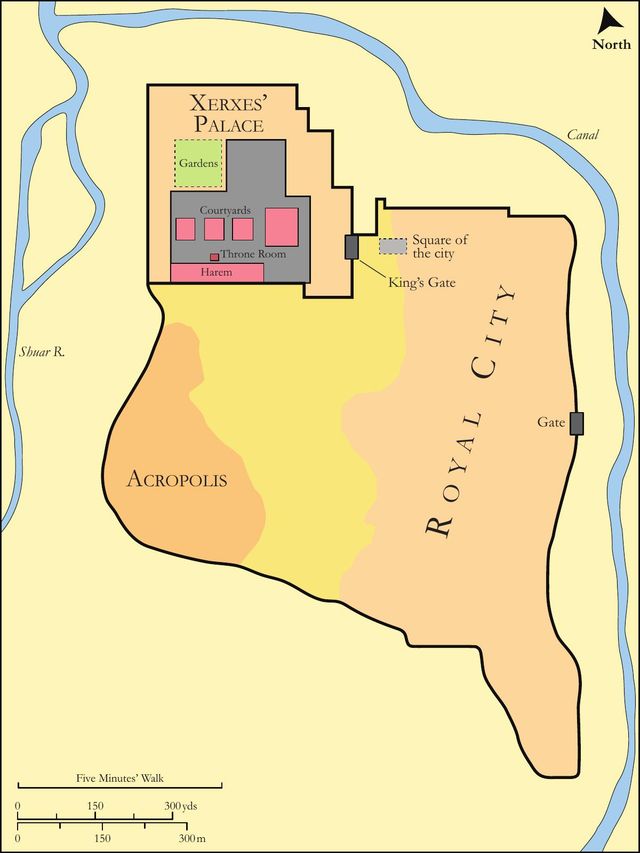
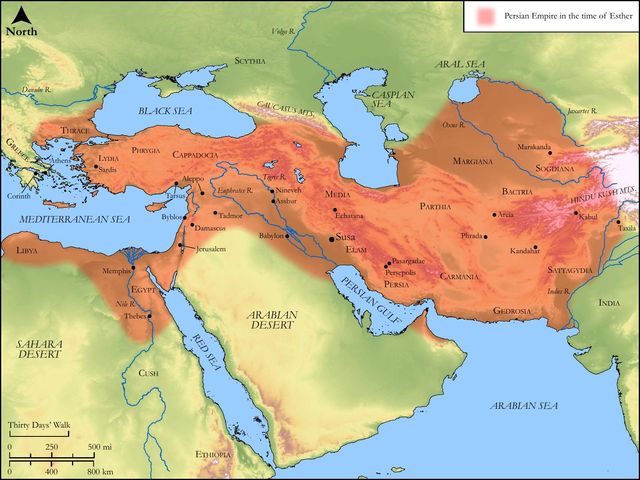
Study this verse
Public-domain commentary
Matthew Henry
From his Commentary on the Whole Bible. Henry comments on passages, not single verses — this entry covers Esther 10:1–3. His three-level outline is real structure in the source text, so it is rendered as structure.
We are here told,
I.How great and powerful king Ahasuerus was.
He had a vast dominion, both in the continent and among the islands, from which he raised a vast revenue. Besides the usual customs which the kings of Persia exacted (Ezr 4:13), he laid an additional tribute upon his subjects, to serve for some great occasion he had for money (Est 10:1): The king laid a tribute. Happy is our island, that pays no tribute but what is laid upon it by its representatives, and those of its own choosing, and is not squeezed or oppressed by an arbitrary power, as some of the neighbouring nations are. Besides this instance of the grandeur of Ahasuerus, many more might be given, that were acts of his power and of his might. These however are not thought fit to be recorded here in the sacred story, which is confined to the Jews, and relates the affairs of other nations only as they fell in with their affairs; but they are written in the Persian chronicles (Est 10:2), which are long since lost and buried in oblivion, while the sacred writings live, live in honour, and will live till time shall be no more. When the kingdoms of men, monarchs and monarchies, are destroyed, and their memorial has perished with them (Psa 9:6), the kingdom of God among men, and the records of that kingdom, shall remain and be as the days of heaven, Dan 2:44.
II.How great and good Mordecai was.
1.He was great; and it does one good to see virtue and piety thus in honour.
(1.)He was great with the king, next to him, as one he most delighted and confided in. Long had Mordecai sat contentedly in the king's gate, and now at length he is advanced to the head of his council-board. Men of merit may for a time seem buried alive; but often, by some means or other, they are discovered and preferred at last. The declaration of the greatness to which the king advanced Mordecai was written in the chronicles of the kingdom, as very memorable, and contributing to the great achievements of the king. He never did such acts of power as he did when Mordecai was his right hand.
(2.)He was great among the Jews (Est 10:3), not only great above them, more honourable than any of them, but great with them, dear to them, familiar with them, and much respected by them. So far were they from envying his preferment that they rejoiced in it, and added to it by giving him a commanding interest among them and submitting all their affairs to his direction.
2.He was good, very good, for he did good. This goodness made him truly great, and then his greatness gave him an opportunity of doing so much the more good. When the king advanced him,
(1.)He did not disown his people the Jews, nor was he ashamed of his relation to them, though they were strangers and captives, dispersed and despised. Still he wrote himself Mordecai the Jew, and therefore no doubt adhered to the Jews' religion, by the observances of which he distinguished himself, and yet it was no hindrance to his preferment, nor looked upon as a blemish to him.
(2.)He did not seek his own wealth, or the raising of an estate for himself and his family, which is the chief thing most aim at when they get into great places at court; but he consulted the welfare of his people, and made it his business to advance that. His power, his wealth, and all his interest in the king and queen, he improved for the public good.
(3.)He not only did good, but he did it in a humble condescending way, was easy of access, courteous and affable in his behaviour, and spoke peace to all that made their application to him. Doing good works is the best and chief thing expected from those that have wealth and power; but giving good words is also commendable, and makes the good deed the more acceptable.
(4.)He did not side with any one party of his people against another, nor make some his favourites, while the rest were neglected and crushed; but, whatever differences there were among them, he was a common father to them all, recommended himself to the multitude of his brethren, not despising the crowd, and spoke peace to all their seed, without distinction. Thus making himself acceptable by humility and beneficence, he was universally accepted, and gained the good word of all his brethren. Thanks be to God, such a government as this we are blessed with, which seeks the welfare of our people, speaking peace to all their seed. God continue it long, very long, and grant us, under the happy protection and influence of it, to live quiet and peaceable lives, in godliness, honesty, and charity!
Historical interpretation
Historical reception
2 surviving comments on this verse. Each one is dated, so this reads as a timeline rather than a list.
What does the text mean when it says that King Ahasuerus made all lands and all islands of the sea subject to his tributes? Since the historical king of the Persians and Medes did not have all lands under his rule, nor was he able to make all the islands of the sea subject to his tributes since the fame of his name could not even reach some of those islands or parts of the world, this sentence more truly applies to our king and Lord Christ whose power is in heaven, on earth, over the sea and every abyss. And he called himself “door,” because through him we have access to eternal life, according to the testimony of the psalmist, “And the kings of the entire universe adore him. And all the kings of the earth serve him, the kings of Tharsis and the islands offer gifts, the kings of Arabia and Sheba bring gifts.” Therefore not only the voices and the writings of the Jewish people alone, but also those of all the nations testify how the power of this king, his authority, dignity and preeminence advanced the true Mordecai, that is, the assembly of the holy teachers and masters of the church who lead the Christian people. Those whom he made his elect at the beginning through the gift of grace, those whom he made glorious and honorable before all the nations are the ones who look out for the good of his people and speak the words which concern the peace of his seed, according to the prediction of Isaiah: “Listen! Your sentinels lift up their voices; together they sing your praises.”
That King Ahasuerus exacted tribute from all the islands, which is where the Hebrew version of the story of Esther comes to an end...
Why are we told that King Ahasuerus exacted tribute from every land, and from all the islands of the sea? Because the historical king of the Persians and Medes never held every land under his sway, and could not exact tribute from all the islands of the sea since not even his name could have reached the aforementioned islands and parts of the world; whereas this statement more accurately reflects our king and Lord Christ, whose power is in Heaven, and on earth, and on the sea and in all the depths. In fact, in the Gospels he calls himself a gateway, since through him we gain the entry to eternal life; and according to a statement of the Psalmist: “The whole world, all the kings of the earth, adore him. All the kings of the earth will serve him, the kings of Tarshish and the islands will offer him gifts, the kings of Arabia and Sheba will bring presents” (Psalms 72). So the strength, and power, and dignity, and grandeur of this king, and how he raised up the true Mordecai—that is, the community of sacred teachers who were leaders of the Church at the head of the Christian people—are documented in the statements and the writings of not only the single people of Judea, but of all the nations as well. He has from the start exalted his chosen ones with the gift of his grace, and has glorified and honored them in the sight of all the nations; these seek the best for their people and whatever they say is concerned with the well-being of their seed, since according to the prophecy of Isaiah: “The watchmen of the Lord will lift up their voices, and will praise altogether (Isaiah 52); their feet are beautiful, the feet of those who bring the gospel of peace, the gospel of good things” (Romans 10). This is because they always ask after the peace of Jerusalem, and their seed will be known among the nations and their offshoots amid the peoples. All who have seen them will know them, because they are the seed which the Lord has blessed.
Continue studying Esther 10:1 across the web’s major study libraries — every link below opens this exact verse, chapter, or book on the destination site.
Read & Compare
 BibleGatewayThis verse in more than 200 translations and 70 languages.
 Bible.comThe YouVersion reader — hundreds of translations, reading plans, and highlights.
 ESV.orgCrossway's official English Standard Version reader.
 NET BibleThe NET translation with 60,000+ translators' notes on every rendering decision.
 STEP BibleTyndale House's free study tool — original text, vocabulary, and scholarly resources.
 BibliaLogos Bible Software's free web reader.
 USCCBThe New American Bible (Revised Edition) with the U.S. bishops' study notes.
Commentaries
 BibleHub CommentariesDozens of classic commentaries on this verse, gathered on one page.
 StudyLightMore than 100 commentary sets — the largest collection on the web.
 BibleRefPlain-English commentary on what this verse means, verse by verse.
 Enduring WordDavid Guzik's free commentary on this chapter, widely used by Bible teachers.
 Bible Study ToolsVerse commentary alongside Greek and Hebrew study aids.
Original Language & Research
- BibleHub InterlinearThe verse word by word — original language, transliteration, and English.
- BibleHub LexiconEvery word's original-language definition and Strong's entry.
 Blue Letter BibleDeep-study tools — Strong's numbers, concordance, and word studies.
 SefariaThe Hebrew text with Rashi and centuries of Jewish commentary.
Sermons, Hymns & Audio


TrulyRandomVerse is not affiliated with these sites and doesn’t control their content. They’re linked because they’re genuinely useful.
Summary
Esther 10:1 opens a concise administrative epilogue to the Book of Esther, shifting the narrative focus from the dramatic events of Jewish deliverance to the stable and expansive dominion of King Ahasuerus. It succinctly records that the king imposed a tribute across his vast empire, encompassing both the continental landmass and distant maritime territories, thereby reinforcing his continued authority, the enduring prosperity of his reign, and the established order of the Persian kingdom following the pivotal events of Haman's plot and the subsequent Jewish victory.
Context
ShowHideLiterary Context
Esther 10:1 initiates the final, brief chapter of the Book of Esther, functioning not as a continuation of the preceding dramatic narrative but as a concluding administrative note. It immediately follows the detailed accounts of Haman's demise, the Jewish people's successful self-defense, and the institution of the Feast of Purim in Esther 8 and Esther 9. After the intense climax of divine intervention and human agency that secured the survival and flourishing of the Jewish people, this verse deliberately reorients the reader's attention to the mundane yet significant reality of King Ahasuerus's ongoing administration. It provides a sense of closure and stability, demonstrating that despite the internal turmoil and near-catastrophe, the vast Persian Empire remains firmly under the king's control, setting the stage for the brief mention of Mordecai's elevated status in the subsequent verses of Esther 10.
Historical & Cultural Context
King Ahasuerus is widely identified with Xerxes I, who reigned over the sprawling Achaemenid Persian Empire from 486-465 BC. This empire was the largest the earth had yet witnessed, famously stretching from India to Ethiopia, a geographical scope highlighted in Esther 1:1. The imposition of "tribute" (Hebrew: מַס, mas) was a standard administrative practice in ancient empires, including Persia. It represented a regular levy—whether in goods, silver, or conscripted labor—exacted from conquered or subject territories to fund the imperial administration, military, and grand building projects. The mention of "the isles of the sea" (Hebrew: אִיֵּי הַיָּם, 'iyyei hayyam) refers to the coastal regions and islands within the Persian sphere of influence, particularly those in the Aegean and Mediterranean Seas, underscoring the immense geographical reach and comprehensive control of Ahasuerus's dominion. This detail confirms the historical reality of Persian imperial power.
Key Themes
ShowHideThis verse subtly reinforces several key themes woven throughout the Book of Esther. Firstly, it underscores Royal Authority and Imperial Stability. Even after the dramatic events of a near-genocidal plot, Ahasuerus's power is unchallenged, and his empire continues to function with order and prosperity, symbolized by the collection of tribute. Secondly, it serves as a crucial Transition and Conclusion, effectively bringing the narrative to a close by shifting from specific ethnic conflict to a broader statement about the king's enduring administrative actions. This transition sets the stage for the final verses, which describe Mordecai's rise to prominence and his service to the king, as seen in Esther 10:3. Thirdly, and perhaps most profoundly, it subtly points to Divine Providence in Human Affairs. Although God is never explicitly mentioned in Esther, the stability and continued functioning of the Persian Empire—the very context in which the Jewish people found refuge, protection, and even elevation—can be understood as part of God's overarching plan to preserve His covenant people. This seemingly mundane administrative detail quietly affirms that God's purposes are woven into the fabric of human governance and history.
Exposition and Analysis
ShowHideKey Word Analysis
ShowHideThis is the title (rather than a personal name) of the Persian king, widely identified with Xerxes I. His mention here at the end of the book reinforces his central role as the sovereign ruler under whom the dramatic events unfolded and whose authority ultimately enabled the Jewish people's deliverance and subsequent security. The continuity of his reign and administrative power is crucial to the book's concluding message of stability.
This term refers to a forced levy, tax, or even conscripted labor imposed by a sovereign ruler upon his subjects or conquered territories. In the context of the Persian Empire, it signifies the king's absolute right to extract resources and labor from his vast populace, underscoring his supreme authority and the economic power and administrative reach of his kingdom. The collection of maç was essential for maintaining the empire's infrastructure, military, and royal court, demonstrating a stable and functioning government.
From a root meaning "to be desirable," this word properly refers to a habitable spot, dry land, a coast, or an island. Its use in the phrase "isles of the sea" (along with H3220, yâm, "sea") emphasizes the immense geographical breadth of Ahasuerus's empire, extending beyond the continental landmass to distant maritime territories. This detail reinforces the king's comprehensive dominion and the global reach of his administrative power, highlighting the vastness of the kingdom under God's providential oversight.
Verse Breakdown
ShowHide"And the king Ahasuerus laid a tribute upon the land"
This clause establishes the continued and active reign of King Ahasuerus. The act of "laying a tribute" signifies his unquestioned authority and the practical, economic foundation of his rule. It indicates a stable and functioning administration, capable of extracting resources from its subjects, which was crucial for maintaining the vast Persian Empire. This mundane detail grounds the extraordinary narrative of Esther in the everyday realities of imperial governance, demonstrating that despite the internal turmoil, the king's power remained absolute.
"and [upon] the isles of the sea"
This extension of the tribute emphasizes the unparalleled geographical scope of Ahasuerus's dominion. Beyond the immediate landmass, his authority reached distant coastal regions and islands, demonstrating the comprehensive nature of his control. This detail reinforces the theme of the king's immense power and the vastness of the empire, a recurring motif that highlights the seemingly insurmountable odds faced by the Jews and the magnitude of their deliverance, all under the overarching hand of divine providence.
Literary Devices
ShowHideEsther 10:1 employs several literary devices to achieve its concluding effect. Primarily, it functions as a Summary and Transition. After the dramatic climax and resolution of the previous chapters, this verse provides a concise summary of the king's ongoing administrative activities, effectively transitioning the narrative from the specific events concerning the Jews back to the broader context of the Persian Empire's stability. It offers a sense of normalcy and continuity following the extraordinary upheaval. Furthermore, there is an element of Understatement in its simplicity. While the previous chapters detailed a near-genocidal plot and a miraculous reversal, this final chapter begins with a seemingly mundane administrative detail. This understatement, however, subtly reinforces the king's absolute and enduring power, suggesting that even after such a significant internal crisis, the empire's fundamental structure and authority remained intact. The verse also utilizes Merism through the phrase "the land, and the isles of the sea," which signifies the totality of the king's dominion, encompassing all known territories from the continental heartland to the furthest maritime boundaries.
Theological and Thematic Connections
ShowHideEsther 10:1, though seemingly a simple administrative note, carries profound theological weight by subtly affirming God's sovereignty over all earthly powers and the mundane details of human governance. It reminds us that even when God is not explicitly named, His hand is at work in the rise and fall of empires, the stability of nations, and the daily affairs of rulers. The continued order and prosperity of the Persian Empire, symbolized by the collection of tribute, provided the necessary context for the Jewish people to survive, thrive, and for Mordecai to rise to a position of influence. This demonstrates that God's purposes are often fulfilled not just through miraculous intervention but also through the established structures and seemingly ordinary operations of the world, highlighting His immanent control over all creation.
Reflection and Application
ShowHideEsther 10:1, despite its brevity and seemingly mundane content, offers a powerful reminder that God's sovereign purposes are not confined to the dramatic and miraculous but are also at work in the ordinary, administrative, and even secular aspects of life. The stability and order of the Persian Empire, signified by the collection of tribute, created the environment in which the Jewish people could find refuge and in which Mordecai could rise to a position of great influence, as detailed in the subsequent verses. This encourages us to recognize God's hand in the functioning of governments, the stability of societies, and the continuation of daily life. It challenges us to see divine providence not just in grand, overt interventions but also in the consistent, underlying structures that allow human flourishing and the advancement of His kingdom. Even in the seemingly unspiritual realm of politics and economics, God is actively orchestrating circumstances for His ultimate glory and the good of His people. This perspective calls us to pray for our leaders, to engage thoughtfully with civic responsibilities, and to trust that God is at work even when His presence is not overtly declared.
Questions for Reflection
ShowHideFAQ
ShowHideWhy does the Book of Esther end with such a seemingly mundane administrative detail?
ShowHideThe seemingly mundane administrative detail in Esther 10:1 serves several crucial purposes. Firstly, it provides a sense of closure and historical grounding after the intense drama of the preceding chapters. It reinforces the continued power and stability of King Ahasuerus's empire, demonstrating that life returns to a new normal, albeit one in which the Jewish people are now secure and influential. Secondly, it sets the stage for the brief but significant mention of Mordecai's elevated status in Esther 10:3, showing that the Jewish community's deliverance was not a fleeting event but led to lasting positive change within the empire's established order. It subtly emphasizes that God's providence works not only through dramatic interventions but also through the ongoing, seemingly ordinary operations of human governance, ensuring the context for His people's well-being.
What is the significance of "tribute" in this context?
ShowHideThe "tribute" (Hebrew maç) mentioned in Esther 10:1 is highly significant. It signifies King Ahasuerus's absolute authority and economic control over his vast empire. The ability to levy taxes and tribute across "the land" and "the isles of the sea" demonstrates the immense geographical reach and administrative efficiency of his reign. In a broader sense, it underscores the stability and prosperity of the Persian Empire, which, from a theological perspective, provided the secure environment in which the Jewish people, after their deliverance, could not only survive but also thrive and gain prominence. It emphasizes the king's power and the empire's enduring structure, which God used for His purposes, even without direct divine intervention being explicitly stated.
Christ-Centered Fulfillment
ShowHideWhile Esther 10:1 describes the earthly dominion of King Ahasuerus, it implicitly points to the ultimate, eternal reign of Christ. The stability and order of the Persian Empire, which allowed for the preservation and flourishing of God's people, foreshadows the divine ordering of all history for the coming of the true King. Just as Ahasuerus exercised authority over "the land and the isles of the sea," Christ has been given "all authority in heaven and on earth" (Matthew 28:18). All earthly powers, whether seemingly benevolent or oppressive, ultimately serve God's overarching redemptive plan, culminating in Christ. The tribute laid upon the land by Ahasuerus pales in comparison to the universal homage due to the Lamb of God, who is worthy to receive "power and wealth and wisdom and strength and honor and glory and praise!" (Revelation 5:12). The seemingly mundane administrative details of an ancient empire remind us that God orchestrates every detail of history, from the grandest empires to the smallest personal circumstances, to bring about His purposes, which ultimately converge in Christ, the one in whom "all things hold together" (Colossians 1:17) and in whom "all things" will ultimately be summed up (Ephesians 1:10). The stability of Ahasuerus's kingdom provided a temporary haven; Christ's eternal kingdom is the ultimate, unshakable reality where His people find everlasting security and peace, a kingdom that "will never be destroyed" (Daniel 2:44).