


Esther 9:32
Bible text: King James Version (1769 Blayney text) · Public domain
Bible text: Berean Standard Bible · Public domain
Bible text: American Standard Version (1901) · Public domain
Bible text: World English Bible, Messianic edition · Public domain
Bible text: Geneva Bible (1599) · Public domain
Bible text: Young's Literal Translation · Public domain
- וּמַאֲמַרu·ma·'a·Marand [the] command ofH3982Conj-w ¦ N-mscNoun Singular Masculine Constructוּandמַאֲמַר[the] command of
- אֶסְתֵּר'es·TerEstherH635N-proper-fNoun Proper Feminine
- קִיַּםki·Yamit confirmedH6965V-Piel-Perf-3msVerb Piel Perfect 3rd Singular Masculine
- דִּבְרֵיdiv·Rei[the] words ofH1697N-mpcNoun Plural Masculine Construct
- הַפֻּרִיםha·pu·Rimthe PurimH6332Art ¦ N-mpNoun Plural Masculine AbsoluteהַtheפֻּרִיםPurim
- הָאֵלֶּהha·'E·leh<the> theseH428Art ¦ PrtParticle Demonstrativeהָ<the>אֵלֶּהthese
- וְנִכְתָּבve·nikh·Tavand [it was] writtenH3789Conj-w ¦ V-Niphal-Prtcpl-msVerb Niphal Participle Singular Masculine Absoluteוְandנִכְתָּב[it was] written
- בַּסֵּפֶרba·Se·ferin the bookH5612Prep-b ¦ N-msNoun Singular Masculine Absoluteבַּin theסֵּפֶרbook
English is a literal word-by-word gloss of the Hebrew, not the KJV's wording. Why?
This is the original text the KJV's translators worked from — each Hebrew word with its own literal English meaning in this verse, prepared by scholars at Tyndale House, Cambridge. The KJV translates whole sentences, not word by word, so its wording differs: one Hebrew word can become several English words, and the KJV may choose “the LORD” where the gloss reads “Yahweh”. Both are faithful — they answer different questions. For the KJV's own rendering, switch to the KJV text.
Details
See on the biblical-era maps
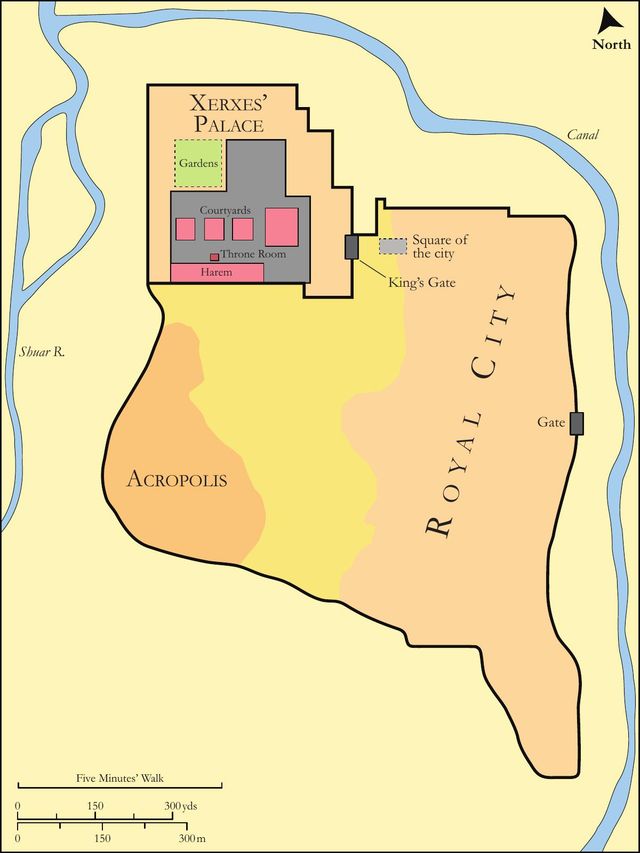
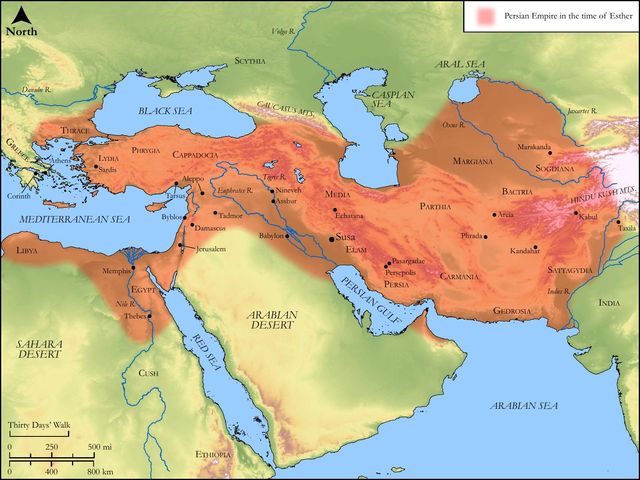
Study this verse
Public-domain commentary
Matthew Henry
From his Commentary on the Whole Bible. Henry comments on passages, not single verses — this entry covers Esther 9:20–32. His four-level outline is real structure in the source text, so it is rendered as structure.
We may well imagine how much affected Mordecai and Esther were with the triumphs of the Jews over their enemies, and how they saw the issue of that decisive day with a satisfaction proportionable to the care and concern with which they expected it. How were their hearts enlarged with joy in God and his salvation, and what new songs of praise were put into their mouths! But here we are told what course they took to spread the knowledge of it among their people, and to perpetuate the remembrance of it to posterity, for the honour of God and the encouragement of his people to trust in him at all times.
I.The history was written, and copies of it were dispersed among all the Jews in all the provinces of the empire, both nigh and far, Est 9:20.
They all knew something of the story, being nearly concerned in it - were by the first edict made sensible of their danger and by the second of their deliverance; but how this amazing turn was given they could not tell. Mordecai therefore wrote all these things. And if this book be the same that he wrote, as many think it is, I cannot but observe what a difference there is between Mordecai's style and Nehemiah's. Nehemiah, at every turn, takes notice of divine Providence and the good hand of his God upon him, which is very proper to stir up devout affections in the minds of his readers; but Mordecai never so much as mentions the name of God in the whole story. Nehemiah wrote his book at Jerusalem, where religion was in fashion and an air of it appeared in men's common conversation; Mordecai wrote his at Shushan the palace, where policy reigned more then piety, and he wrote according to the genius of the place. Even those that have the root of the matter in them are apt to lose the savour of religion, and let their leaf wither, when they converse wholly with those that have little religion. Commend me to Nehemiah's way of writing; that I would imitate, and yet learn from Mordecai's that men may be truly devout though they do not abound in the shows and expressions of devotion, and therefore that we must not judge nor despise our brethren. But, because there is so little of the language of Canaan in this book, many think it was not written by Mordecai, but was an extract out of the journals of the kings of Persia, giving an account of the matter of fact, which the Jews themselves knew how to comment upon.
II.A festival was instituted, to be observed yearly from generation to generation by the Jews, in remembrance of this wonderful work which God wrought for them, that the children who should be born might know it, and declare it to their children, that they might set their hope in God, Psa 78:6, Psa 78:7. It would be for the honour of God as the protector of his people, and the honour of Israel as the care of Heaven, a confirmation of the fidelity of God's covenant, an invitation to strangers to come into the bonds of it, and an encouragement to God's own people cheerfully to depend upon his wisdom, power, and goodness, in the greatest straits. Posterity would reap the benefit of this deliverance, and therefore ought to celebrate the memorial of it. Now concerning this festival we are here told,
1.When it was observed - every year on the fourteenth and fifteenth days of the twelfth month, just a month before the passover, Est 9:21. Thus the first month and the last month of the year kept in remembrance the months that were past, even the days when God preserved them. They kept two days together as thanksgiving days, and did not think them too much to spend in praising God. Let us not be niggardly in our returns of praise to him who bestows his favours so liberally upon us. Observe, They did not keep the day when they fought, but the days when they rested, and on the fifteenth those in Shushan, and both those days they kept. The sabbath was appointed not on the day that God finished his work, but on the day that he rested from it. The modern Jews observe the thirteenth day, the day appointed for their destruction, as a fasting-day, grounding the practice on Est 9:31, the matters of their fastings and cry. But that refers to what was in the day of their distress (Est 4:3, Est 4:16), which was not to be continued when God had turned their fasts into joy and gladness, Zac 8:19.
2.How it was called - The feast of Purim (Est 9:26), from Pur, a Persian word which signified a lot, because Haman had by lot determined this to be the time of the Jews' destruction, but the Lord, at whose disposal the lot is, had determined it to be the time of their triumph. The name of this festival would remind them of the sovereign dominion of the God of Israel, who served his own purposes by the foolish superstitions of the heathen, and outwitted the monthly prognosticators in their own craft (Isa 47:13), frustrating the tokens of the liars and making the diviners mad, Isa 44:25, Isa 44:26.
3.By whom it was instituted and enacted. It was not a divine institution, and therefore it is not called a holy day, but a human appointment, by which it was made a good day, Est 9:19, Est 9:22.
(1.)The Jews ordained it, and took it upon themselves (Est 9:27), voluntarily undertook to do as they had begun. Est 9:23. They bound themselves to this by common consent.
(2.)Mordecai and Esther confirmed their resolve, that it might be the more binding on posterity, and might come well recommended by those great names. They wrote,
[1.]With all authority (Est 9:29), as well they might, Esther being queen and Mordecai prime-minister of state. It is well when those who are in authority use their authority to authorize that which is good.
[2.]With words of peace and truth. Though they wrote with authority, they wrote with tenderness, not imperious, not imposing, but in such language as the council at Jerusalem use in their decree (Act 15:29): "If you do so and so, you shall do well. Fare you well." Such was the style of these letters, or such the salutation or valediction of them: Peace and truth be with you.
4.By whom it was to be observed - by all the Jews, and by their seed, and by all such as joined themselves to them, Est 9:27. The observance of this feast was to be both universal and perpetual; the proselytes must observe it, in token of their sincere affection to the Jewish nation and their having united interests with them. A concurrence in joys and praises is one branch of the communion of saints.
5.Why it was to be observed - that the memorial of the great things God had done for his church might never perish from their seed, Est 9:28. God does not work wonders for a day, but to be had in everlasting remembrance. What he does shall be for ever, and therefore should for ever be had in mind, Ecc 3:14. In this affair they would remember,
(1.)Haman's bad practices against the church, to his perpetual reproach (Est 9:24): Because he had devised against the Jews to destroy them. Let this be kept in mind, that God's people may never be secure, while they have such malicious enemies, on whom they ought to have a jealous eye. Their enemies aim at no less then their destruction; on God therefore let them depend for salvation.
(2.)Esther's good services to the church, to her immortal honour. When Esther, in peril of her life, came before the king, he repealed the edict, Est 9:25. This also must be remembered, that wherever this feast should be kept, and this history read in explication of it, this which she did might be told for a memorial of her. Good deeds done for the Israel of God ought to be remembered, for the encouragement of others to do the like. God will not forget them, and therefore we must not.
(3.)Their own prayers, and the answers given to them (Est 9:31): The matters of their fastings and their cry. The more cries we have offered up in our trouble, and the more prayers for deliverance, the more we are obliged to be thankful to God for deliverance. Call upon me in the time of trouble, and then offer to God thanksgiving.
6.How it was to be observed. And of this let us see,
(1.)What was here enjoined, which was very good, that they should make it,
[1.]A day of cheerfulness, a day of feasting and joy (Est 9:22), and a feast was made for laughter, Ecc 10:19. When God gives us cause to rejoice why should we not express our joy?
[2.]A day of generosity, sending portions one to another, in token of their pleasantness and mutual respect, and their being knit by this and other public common dangers and deliverances so much the closer to each other in love. Friends have their goods in common.
[3.]A day of charity, sending gifts to the poor. It is not to our kinsmen and rich neighbours only that we are to send tokens, but to the poor and the maimed, Luk 14:12, Luk 14:13. Those that have received mercy must, in token of their gratitude, show mercy; and there never wants occasion, for the poor we have always with us. Thanksgiving and almsgiving should go together, that, when we are rejoicing and blessing God, the heart of the poor may rejoice with us and their loins may bless us.
(2.)What was added to this, which was much better. They always, at the feast, read the whole story over in the synagogue each day, and put up three prayers to God, in the first of which they praise God for counting them worthy to attend this divine service; in the second they thank him for the miraculous preservation of their ancestors; in the third they praise him that they have lived to observe another festival in memory of it. So bishop Patrick.
(3.)What it has since degenerated to, which is much worse. Their own writers acknowledge that this feast is commonly celebrated among them with gluttony, and drunkenness, and excess of riot. Their Talmud says expressly that, in the feast of Purim, a man should drink till he knows not the difference between Cursed be Haman, and Blessed be Mordecai. See what the corrupt and wicked nature of man often brings that to which was at first well intended: here is a religious feast turned into a carnival, a perfect revel, as wakes are among us. Nothing more purifies the heart and adorns religion than holy joy; nothing more pollutes the heart and reproaches religion than carnal mirth and sensual pleasure. Corruptio optimi est pessima - What is best becomes when corrupted the worst.
Historical interpretation
Historical reception
2 surviving comments on this verse. Each one is dated, so this reads as a timeline rather than a list.
The fateful days in which God gives the victory over the enemies to his true confessors must never be forgotten but must be celebrated all over the world by every generation, because the remembrance of the future rest of souls and of the resurrection of the bodies on the day of judgment must be kept alive with firm hope among all the faithful. And no church of Christ in the whole world must be deprived of this religious celebration but, always remembering this truly saving rite, must be ready at any moment and make herself worthy of receiving future blessings so that what she now celebrates in this world with faith and hope she may possess there forever in true reality and eternal blessedness. In the meantime, while we journey as pilgrims, the zeal of the teachers and the admonishment of the church must lead us to follow the example of Esther and Mordecai in doctrine and zeal so that we may be always devout in observing this rite which is to be celebrated and performed.
For we require this admonition so that we will have always in our hearts the peace of Christianity, and will adopt the truth of the Gospel itself; which will prevent us from inadvertently falling, through discord and disagreement, into the errors of the heretics from which there can be no salvation but certain damnation and ruin. So all those who recognize that, through the seed of the word of God, they have been reborn in baptism from the Church and the ministry of the sacred teachers as sons to God the Father, are certainly required to fast in piety, i.e. to lead a pious, chaste and modest life; to send up the cries of their prayers and teachings; to celebrate the days of lots, i.e. of the victory to come, with reverence and firm hope; and to observe with robust faith and good works everything contained in the book of the two Testaments.
Continue studying Esther 9:32 across the web’s major study libraries — every link below opens this exact verse, chapter, or book on the destination site.
Read & Compare
 BibleGatewayThis verse in more than 200 translations and 70 languages.
 Bible.comThe YouVersion reader — hundreds of translations, reading plans, and highlights.
 ESV.orgCrossway's official English Standard Version reader.
 NET BibleThe NET translation with 60,000+ translators' notes on every rendering decision.
 STEP BibleTyndale House's free study tool — original text, vocabulary, and scholarly resources.
 BibliaLogos Bible Software's free web reader.
 USCCBThe New American Bible (Revised Edition) with the U.S. bishops' study notes.
Commentaries
 BibleHub CommentariesDozens of classic commentaries on this verse, gathered on one page.
 StudyLightMore than 100 commentary sets — the largest collection on the web.
 BibleRefPlain-English commentary on what this verse means, verse by verse.
 Enduring WordDavid Guzik's free commentary on this chapter, widely used by Bible teachers.
 Bible Study ToolsVerse commentary alongside Greek and Hebrew study aids.
Original Language & Research
- BibleHub InterlinearThe verse word by word — original language, transliteration, and English.
- BibleHub LexiconEvery word's original-language definition and Strong's entry.
 Blue Letter BibleDeep-study tools — Strong's numbers, concordance, and word studies.
 SefariaThe Hebrew text with Rashi and centuries of Jewish commentary.
Sermons, Hymns & Audio


TrulyRandomVerse is not affiliated with these sites and doesn’t control their content. They’re linked because they’re genuinely useful.
Summary
Esther 9:32 serves as the culminating affirmation of the annual festival of Purim, solidifying its observance for all generations. It highlights Queen Esther's decisive and authoritative role in formally endorsing the celebration, transforming what began as a spontaneous outpouring of gratitude for divine deliverance into an official, enduring decree. The verse emphatically underscores the permanence of this memorial through its documentation in official records, ensuring that the miraculous salvation of the Jewish people from Haman's genocidal plot would be perpetually remembered and celebrated.
Context
ShowHideLiterary Context
Esther 9:32 functions as the narrative's final seal on the establishment of the Purim festival. It immediately follows the detailed account of the Jewish people's victory over their enemies (Esther 9:1-19) and Mordecai's initial instructions for the annual observance of Purim (Esther 9:20-28). Specifically, verse 29 explicitly states that "Esther the queen, the daughter of Abihail, and Mordecai the Jew, wrote with all authority, to confirm this second letter of Purim." This verse, therefore, acts as the ultimate validation, emphasizing Esther's supreme authority in ensuring the festival's permanence. It brings a definitive close to the detailed narrative of Purim's inception, transitioning from the events themselves to their lasting, legally binding commemoration.
Historical & Cultural Context
The book of Esther is set within the vast Persian Empire during the reign of Ahasuerus (commonly identified as Xerxes I, 486-465 BC). During this post-exilic period, Jewish communities were dispersed across the empire, living as minorities. Persian governance was characterized by the absolute authority of royal decrees (maʼămar), which, once issued, were considered irrevocable. This is powerfully illustrated by Haman's initial genocidal decree against the Jews (see Esther 3:12) and the subsequent counter-decree allowing Jewish self-defense (see Esther 8:8). The act of "writing in the book" refers to the meticulous maintenance of official royal chronicles or archives, which served as permanent, legally recognized records of significant events, laws, and edicts. For a dispersed people like the Jews, the establishment of a unifying festival like Purim, confirmed by royal authority and inscribed in state records, was paramount for preserving their distinct identity, heritage, and faith in a foreign land.
Key Themes
ShowHideThis verse powerfully reinforces several overarching themes central to the book of Esther. Firstly, it underscores the theme of Divine Providence, even though God is never explicitly mentioned in the narrative. The miraculous reversal of fortune, from impending annihilation to decisive victory, culminating in the establishment of Purim, implicitly points to God's hidden hand orchestrating events for the deliverance of His people. The festival itself serves as a perpetual memorial to this unseen divine intervention. Secondly, the verse highlights the theme of Jewish Resilience and Identity. In a hostile foreign land, the Jewish people not only survived a genocidal plot but established a lasting tradition that solidified their communal identity and celebrated their unique heritage. The formal confirmation by Esther and its inscription in a royal record ensured that this identity would be preserved across generations, echoing the covenant promises of God to His people to remember His works and teach them to their children, as seen in Deuteronomy 4:9. Lastly, the verse emphasizes the Authority of Leadership in preserving and transmitting spiritual heritage. Esther, through her courageous actions and her royal decree, played a vital role in ensuring that the memory of God's deliverance and the significance of Purim would be upheld and passed down, much like Moses establishing the Passover in Exodus 12.
Exposition and Analysis
ShowHideKey Word Analysis
ShowHideThis term (H3982) refers to something "authoritatively said," specifically an edict or commandment. In the context of the Persian Empire, a royal maʼămar carried the full, unchangeable weight of the king's authority. Esther's use of this power to confirm Purim signifies its transition from a spontaneous custom to a legally binding, permanent, and universally observed statute throughout the empire.
This primitive root (H6965) means "to rise," but in a causative sense, "to establish," "uphold," "make stand firm," or "ratify." Applied to Esther's action, it emphasizes the lasting validity and permanent nature of the Purim observance. It indicates that her decree was not merely an endorsement but an act that secured the festival's place as an enduring tradition, ensuring its perpetuity for all future generations.
This word (H5612) primarily means "writing" or "a document," and by implication, "a book." Among the kings of that day, writing was the primary means of formalizing laws, recording historical events, and ensuring their preservation. The act of writing "in the book" (likely a royal chronicle or official record) elevated Purim's status, making it an undeniable and historically verifiable part of Jewish tradition and Persian law, thereby guaranteeing its enduring legacy.
Verse Breakdown
ShowHide"And the decree of Esther confirmed these matters of Purim;"
This clause highlights Queen Esther's decisive and authoritative role in the formal establishment of the Purim festival. Following Mordecai's initial instructions to observe the feast, Esther, leveraging her royal position and influence, issued a maʼămar (decree) that qûwm (confirmed or established) the practices and observances associated with Purim. This act transformed the spontaneous celebration of deliverance into a legally binding and perpetually observed annual tradition, underscoring her indispensable contribution to the preservation of her people's heritage and the commemoration of God's hidden providence.
"and it was written in the book."
This concluding phrase emphasizes the permanence and official nature of Esther's decree. The "book" most likely refers to the official royal chronicles or state archives of the Persian Empire, where significant events, laws, and royal edicts were meticulously recorded. This act of documentation served multiple purposes: it legally validated the observance of Purim, ensured its historical preservation for future generations, and provided an undeniable record of the miraculous deliverance of the Jewish people. It signifies that the events and their commemoration were not merely oral traditions but formally inscribed history, ensuring their enduring legacy and legal standing.
Literary Devices
ShowHideEsther 9:32 employs several significant literary devices to underscore its message. The most prominent is Confirmation, as the entire verse functions to formally ratify and bring closure to the preceding narrative of Purim's establishment. This act provides a sense of finality and permanence to the extraordinary events described in the earlier chapters. There is also a strong element of Emphasis on Esther's authority; by stating "the decree of Esther confirmed," the narrative elevates her unique and crucial role in solidifying the festival, portraying her as a pivotal figure in the deliverance and preservation of her people. The phrase "it was written in the book" serves as a form of Legal Documentation or Official Record, lending undeniable historical weight and validity to both the events and the subsequent festival. This act of inscription also functions as a powerful act of Memorialization, ensuring that the memory of God's hidden deliverance and the resilience of the Jewish people would be perpetually preserved and passed down through generations, effectively transforming a historical event into an eternal tradition.
Theological and Thematic Connections
ShowHideEsther 9:32, though brief, carries significant theological weight by emphasizing the importance of remembering God's acts of deliverance and establishing practices that ensure their perpetual commemoration. While God is not explicitly named in Esther, the entire narrative, culminating in this verse, is a powerful testament to His hidden but active providence. The formal establishment and documentation of Purim underscore the biblical principle that God's faithfulness to His covenant people is to be remembered and celebrated across generations, providing hope and a foundation for future faith. This act of memorialization is not merely historical but deeply theological, serving as a constant reminder of God's sovereignty over human affairs and His commitment to preserving His people against all odds. It teaches that even in the absence of overt divine intervention, God is at work behind the scenes, using human instruments to fulfill His purposes and ensure His people's survival.
Reflection and Application
ShowHideEsther 9:32 offers profound insights for contemporary believers, encouraging us to reflect on the importance of remembering and commemorating God's faithfulness in our own lives and in the life of the church. Just as Purim was established to ensure the Jewish people never forgot their miraculous deliverance, we are called to intentionally recall and celebrate God's past mercies, provisions, and interventions. This practice of remembrance strengthens our faith, cultivates gratitude, and provides a wellspring of hope in times of uncertainty. Furthermore, the verse underscores the value of establishing spiritual disciplines and traditions within our personal lives and communities that serve as tangible reminders of God's work. Whether it's through regular Bible study, communal worship, observing ordinances like communion, or simply documenting personal testimonies of God's grace, these practices help us transmit our spiritual heritage to future generations. The emphasis on "writing in the book" also reminds us of the power of testimony and documentation, urging us to share our stories of God's goodness, ensuring that His mighty acts are not forgotten but continue to inspire and encourage others for years to come.
Questions for Reflection
ShowHideFAQ
ShowHideWhy is Esther's decree specifically highlighted when Mordecai also issued letters?
ShowHideWhile Mordecai initiated the observance of Purim through his letters (Esther 9:20-22), Esther's decree provided the ultimate royal and legal confirmation. As queen, her maʼămar (decree) carried the full authority of the Persian monarchy, making the observance of Purim an official, legally binding, and irrevocable statute throughout the empire. This elevated Purim from a mere suggestion or custom to an established law, ensuring its permanence and universal observance among the Jewish people, similar to how a king's decree was unchangeable once issued, as seen in Esther 8:8. Her involvement underscored the significance of the event and solidified its place in the royal records.
What "book" is referred to in this verse?
ShowHideThe "book" most likely refers to the official royal chronicles or state archives of the Persian Empire. These records were meticulously kept, documenting important events, laws, and decrees. The phrase "it was written in the book" signifies that Esther's decree confirming Purim was formally inscribed into these official records, lending it legal validity, historical permanence, and ensuring its preservation for future reference. This act of documentation was crucial for establishing the festival as an enduring tradition, much like the recording of other significant events in Esther 6:1.
Christ-Centered Fulfillment
ShowHideEsther 9:32, with its emphasis on the confirmation and perpetual remembrance of a great deliverance, finds its ultimate fulfillment and deepest meaning in the person and work of Jesus Christ. Just as Purim commemorates the salvation of God's people from physical annihilation, Christ's death and resurrection accomplished the definitive spiritual deliverance for all humanity from sin and death. The "decree of Esther" ensured a lasting memorial, but Christ's finished work on the cross established an eternal covenant, sealed not by human decree but by divine blood (see Hebrews 9:12). The command to remember Purim foreshadows the New Covenant's call to remember Christ's sacrifice through the Lord's Supper, where believers are commanded to "do this in remembrance of me" (as recorded in Luke 22:19). While Purim celebrated a temporary reprieve, Christ's victory offers eternal life and a permanent reconciliation with God (see Romans 5:10). The "writing in the book" of Purim's decree points forward to the ultimate "book of life" where the names of those redeemed by Christ are eternally inscribed (as mentioned in Revelation 20:15). Thus, Esther 9:32, though rooted in a specific historical Jewish deliverance, ultimately points to the greater, universal, and everlasting deliverance secured by the King of kings, Jesus Christ, whose saving work is eternally confirmed and perpetually remembered.