


Esther 1:16
Bible text: King James Version (1769 Blayney text) · Public domain
Bible text: King James Version with Strong's numbers · Public domain
Bible text: Berean Standard Bible · Public domain
Bible text: American Standard Version (1901) · Public domain
Bible text: World English Bible, Messianic edition · Public domain
Bible text: Geneva Bible (1599) · Public domain
Bible text: Young's Literal Translation · Public domain
- וַיֹּאמֶרvai·Yo·merand he saidH559Conj-w ¦ V-Qal-ConsecImperf-3msVerb Qal Consecutive Imperfect 3rd Singular Masculineוַandיֹּאמֶרhe said
- מְמוּכָןmu·me·khanMemucanH4462N-proper-mNoun Proper Masculine
- לִפְנֵיlif·Nei<to> beforeH6440Prep-l ¦ N-mpcNoun Plural Masculine Constructלִ<to>פְנֵיbefore
- הַמֶּלֶךְha·Me·lekhthe kingH4428Art ¦ N-msNoun Singular Masculine Absoluteהַtheמֶּלֶךְking
- וְהַשָּׂרִיםve·ha·sa·Rimand the officialsH8269Conj-w ¦ Art ¦ N-mpNoun Plural Masculine Absoluteוְandהַtheשָּׂרִיםofficials
- לֹאlo'notH3808NegParticle Negative
- עַל'alonH5921PrepPreposition
- הַמֶּלֶךְha·Me·lekhthe kingH4428Art ¦ N-msNoun Singular Masculine Absoluteהַtheמֶּלֶךְking
- לְבַדּוֹle·va·Doto only himH905Prep-l ¦ N-msc ¦ 3msNoun Singular Masculine Constructלְtoבַדּonlyוֹhim
- עָוְתָה'a·ve·Tahshe did wrongH5753V-Qal-Perf-3fsVerb Qal Perfect 3rd Singular Feminine
- וַשְׁתִּיvash·TiVashtiH2060N-proper-fNoun Proper Feminine
- הַמַּלְכָּהha·mal·Kahthe queenH4436Art ¦ N-fsNoun Singular Feminine Absoluteהַtheמַּלְכָּהqueen
- כִּיkiforH3588PrtParticle Conditional
- עַל'alonH5921PrepPreposition
- כָּלkolallH3605N-mscNoun Singular Masculine Construct
- הַשָּׂרִיםha·sa·Rimthe officialsH8269Art ¦ N-mpNoun Plural Masculine Absoluteהַtheשָּׂרִיםofficials
- וְעַלve·'aland onH5921Conj-w ¦ PrepPrepositionוְandעַלon
- כָּלkolallH3605N-mscNoun Singular Masculine Construct
- הָעַמִּיםha·'a·Mimthe peoplesH5971Art ¦ N-mpNoun Plural Masculine Absoluteהָtheעַמִּיםpeoples
- אֲשֶׁר'a·SherwhichH834RelParticle Relative
- בְּכָלbe·khol[are] in allH3605Prep-b ¦ N-mscNoun Singular Masculine Constructבְּ[are] inכָלall
- מְדִינוֹתme·di·Not[the] provinces ofH4082N-fpcNoun Plural Feminine Construct
- הַמֶּלֶךְha·Me·lekhthe kingH4428Art ¦ N-msNoun Singular Masculine Absoluteהַtheמֶּלֶךְking
- אֲחַשְׁוֵרוֹשׁ'a·chash·ve·Ro·oshAhasuerusH325N-proper-mNoun Proper Masculine
English is a literal word-by-word gloss of the Hebrew, not the KJV's wording. Why?
This is the original text the KJV's translators worked from — each Hebrew word with its own literal English meaning in this verse, prepared by scholars at Tyndale House, Cambridge. The KJV translates whole sentences, not word by word, so its wording differs: one Hebrew word can become several English words, and the KJV may choose “the LORD” where the gloss reads “Yahweh”. Both are faithful — they answer different questions. For the KJV's own rendering, switch to the KJV text.
Details
See on the biblical-era maps
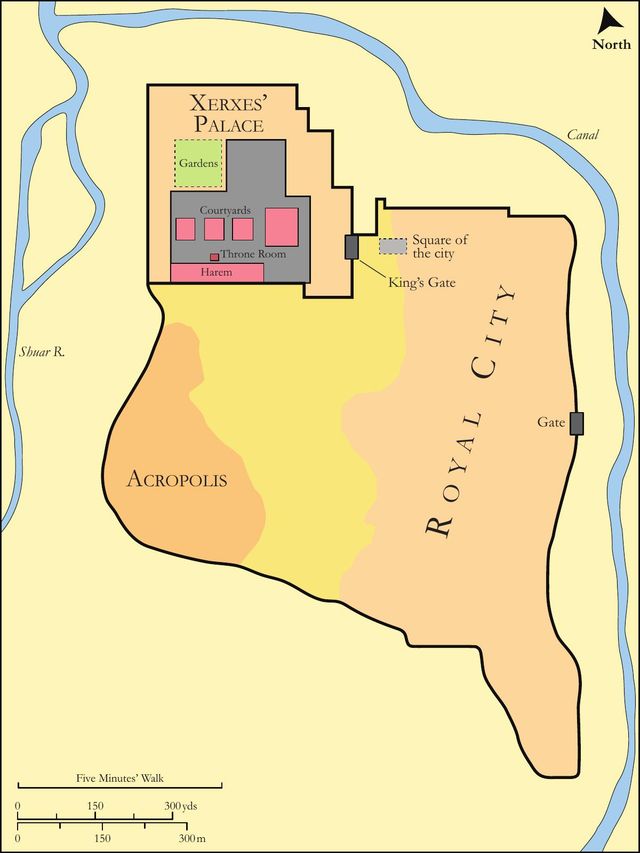
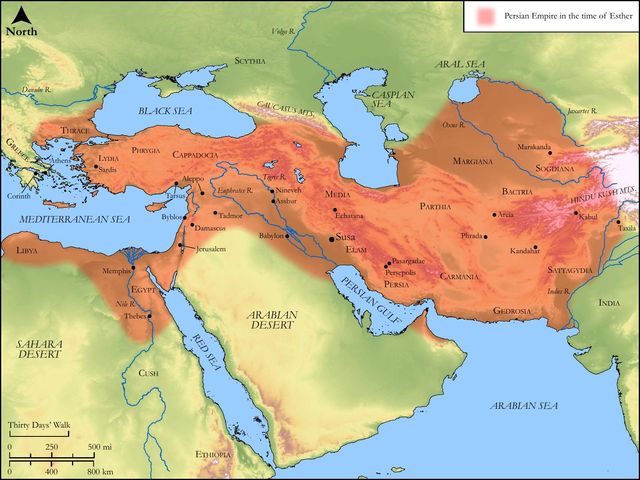
Study this verse
Public-domain commentary
Matthew Henry
From his Commentary on the Whole Bible. Henry comments on passages, not single verses — this entry covers Esther 1:10–22. His three-level outline is real structure in the source text, so it is rendered as structure.
We have here a damp to all the mirth of Ahasuerus's feast; it ended in heaviness, not as Job's children's feast by a wind from the wilderness, not as Belshazzar's by a hand-writing on the wall, but by is own folly. An unhappy falling out there was, at the end of the feast, between the king and queen, which broke of the feast abruptly, and sent the guests away silent and ashamed.
I.It was certainly the king's weakness to send for Vashti into his presence when he was drunk, and in company with abundance of gentlemen, many of whom, it is likely, were in the same condition. When his heart was merry with wine nothing would serve him but Vashti must come, well dressed as she was, with the crown on her head, that the princes and people might see what a handsome woman she was, Est 1:10, Est 1:11. Hereby,
1.He dishonoured himself as a husband, who ought to protect, but by no means expose, the modesty of his wife, who ought to be to her a covering of the eyes (Gen 20:16), not to uncover them.
2.He diminished himself as a king, in commanding that from his wife which she might refuse, much to the honour of her virtue. It was against the custom of the Persians for the women to appear in public, and he put a great hardship upon her when he did not court, but command her to do so uncouth a thing, and make her a show. If he had not been put out of the possession of himself by drinking to excess, he would not have done such a thing, but would have been angry at any one that should have mentioned it. When the wine is in the wit is out, and men's reason departs from them.
II.However, perhaps it was not her wisdom to deny him.
She refused to come (Est 1:12); though he sent his command by seven honourable messengers, and publicly, and Josephus says sent again and again, yet she persisted in her denial. Had she come, while it was evident that she did it in pure obedience, it would have been no reflection upon her modesty, nor a bad example. The thing was not in itself sinful, and therefore to obey would have been more her honour than to be so precise. Perhaps she refused in a haughty manner, and then it was certainly evil; she scorned to come at the king's commandment. What a mortification was this to him! While he was showing the glory of his kingdom he showed the reproach of his family, that he had a wife that would do as she pleased. Strifes between yoke-fellows are bad enough at any time, but before company they are very scandalous, and occasion blushing and uneasiness.
III.The king thereupon grew outrageous.
He that had rule over 127 provinces had no rule over his own spirit, but his anger burned in him, Est 1:12. He would have consulted his own comfort and credit more if he had stifled his resentment, had passed by the affront his wife gave him, and turned it off with a jest.
IV.Though he was very angry, he would not do any thing in this matter till he advised with his privy-counsellors; as he had seven chamberlains to execute his orders, who are named (Est 1:10), so he had seven counsellors to direct his orders. The greater power a man has the greater need he has of advice, that he may not abuse his power. Of these counsellors it is said that they were learned men, for they knew law and judgment, that they were wise men, for they knew the times, and that the king put great confidence in them and honour upon them, for they saw the king's face and sat first in the kingdom, Est 1:13, Est 1:14. In the multitude of such counsellors there is safety. Now here is,
1.The question proposed to this cabinet-council (Est 1:15): What shall we do to the queen Vashti according to the law? Observe,
(1.)Though it was the queen that was guilty, the law must have its course.
(2.)Though the king was very angry, yet he would do nothing but what he was advised was according to law.
2.The proposal which Memucan made, that Vashti should be divorced for her disobedience. Some suggest that he gave this severe advice, and the rest agreed to it, because they knew it would please the king, would gratify both his passion now and his appetite afterwards. But Josephus says that, on the contrary, he had a strong affection for Vashti, and would not have put her away for this offence if he could legally have passed it by; and then we must suppose Memucan, in his advice, to have had a sincere regard to justice and the public good.
(1.)He shows what would be the bad consequences of the queen's disobedience to her husband, if it were passed by and not animadverted upon, that it would embolden other wives both to disobey their husbands and to domineer over them. Had this unhappy falling out between the king and his wife, wherein she was conqueror, been private, the error would have remained with themselves and the quarrel might have been settled privately between themselves; but it happening to be public, and perhaps the ladies that were now feasting with the queen having shown themselves pleased with her refusal, her bad example would be likely to have a bad influence upon all the families of the kingdom. If the queen must have her humour, and the king must submit to it (since the houses of private persons commonly take their measures from the courts of princes), the wives would be haughty and imperious and would scorn to obey their husbands, and the poor despised husbands might fret at it, but could not help themselves; for the contentions of a wife are a continual dropping, Pro 19:13; Pro 27:15; and see Pro 21:9; Pro 25:24. When wives despise their husbands, whom they ought to reverence (Eph 5:33), and contend for dominion over those to whom they ought to be in subjection (Pe1 3:1), there cannot but be continual guilt and grief, confusion and every evil work. And great ones must take heed of setting copies of this kind, Est 1:16-18.
(2.)He shows what would be the good consequence of a decree against Vashti that she should be divorced. We may suppose that before they proceeded to this extremity they sent to Vashti to know if she would yet submit, cry Peccavi - I have done wrong, and ask the king's pardon, and that, if she had done so, the mischief of her example would have been effectually prevented, and process would have been stayed; but it is likely she continued obstinate, and insisted upon it as her prerogative to do as she pleased, whether it pleased the king or no, and therefore they gave this judgment against her, that she come no more before the king, and this judgment so ratified as never to be reversed, Est 1:19. The consequence of this, it was hoped, would be that the wives would give to their husbands honour, even the wives of the great, notwithstanding their own greatness, and the wives of the small, notwithstanding the husband's meanness (Est 1:20); and thus every man would bear rule in his own house, as he ought to do, and, the wives being subject, the children and servants would be so too. It is the interest of states and kingdoms to provide that good order be kept in private families.
3.The edict that passed according to this proposal, signifying that the queen was divorced for contumacy, according to the law, and that, if other wives were in like manner undutiful to their husbands, they must expect to be in like manner disgraced (Est 1:21, Est 1:22): were they better than the queen? Whether it was the passion or the policy of the king that was served by this edict, God's providence served its own purpose by it, which was to make way for Esther to the crown.
Historical interpretation
Historical reception
2 surviving comments on this verse. Each one is dated, so this reads as a timeline rather than a list.
But let us hear what Scripture has to say about the stubbornness of Vashti, that most foolish of queens: “So the king was angered, and enflamed by his excessive rage he questioned his wise men, who were always at his side according to royal custom; and he used to do whatever they advised him, since they knew the laws and the rules of the ancestors. And in the first and second place were Carshena, Shethar, Admatha, Tarshish, Meres, Marsena, and Memucan, the seven leaders of Persia and Media who would see his face and whose authority was normally second only to his own; and it was to their judgment that Queen Vashti was subject when she did not want to obey the command of King Ahasuerus given to her through the eunuchs. And as the king and his officials listened to him, Memucan said: ‘Vashti has injured not only the king, but all the officials and peoples who are in all the provinces of King Ahasuerus. For her words will go out to all the women, so that they will despise their husbands and say: “King Ahasuerus ordered Queen Vashti to come to him, and she did not want to.” And with this example, all the wives of the officials of Persia and Media will hold cheap the authority of their husbands; so that the king’s indignation is just. And if it pleases you, let an edict go forth from your face, and let it be written according to the law of Persia and Media— which it is forbidden to ignore—that Vashti may no longer come into the king’s presence, but that her reign should be given to another who is better than her.’” Now, when Vashti shows her arrogance, King Ahasuerus seeks the advice of the seven wise men who are always at his side according to royal custom, and commands that their judgment about her should be carried out; and this can only mean that our Savior— through his learned men who are filled with the grace of the Holy Spirit, and always take care to stand in his presence with upright faith and good works—bases his verdict upon the stubbornness of the Jewish people who are guilty of punishing and condemning him. He ruled, in other words, that they should be driven from the seat of the king, i.e. from their relationship with God for which they were ordained and chosen; and that another, better people—namely, the Church of the nations—should take its place in genuine faith and full devotion. So the Lord promised by the Law and the prophets shows in the Gospel itself that he was destined, at the behest of the Father, to summon Judea when he says: “I was sent only to the lost sheep of the house of Israel (Matthew 15)”; and likewise: “It is not good to take the bread of children and toss it to the dogs” (ibid.). But when the gentile woman continues to petition him, the Lord himself rightly praises her great faith; and elsewhere the faith of the centurion is shown preference over the faith of the Jews, when he says: “Amen, I tell you, many will come from the East and the West and will recline with Abraham, Isaac and Jacob in the kingdom of Heaven; while the children of this kingdom will be cast into the outer darkness, where there will be weeping and gnashing of teeth” (Matthew 8). Likewise, in another passage the Truth herself says to Jerusalem: “Jerusalem, Jerusalem, you kill your prophets and you stone those who were sent to you; how often have I wanted to gather your children, like the hen gathers her chicks beneath her wings, but you did not want me to. See, your house will be left to you desolate” (Luke 13). Moreover, after his resurrection he commanded his disciples as follows about summoning the nations: “Go and teach all the nations, baptizing them in the name of the Father, the Son, and the Holy Spirit, and teaching them to keep everything I have ordered you to do. And see, I myself am with you for all the days until the very end of the age” (Matthew 28). It is also fitting that he was publishing his decision about Vashti through Memucan, who is mentioned last in the series of seven wise men, because he symbolizes the persona of the apostle Paul who was the last to be called as an apostle, and through whom the Jews are properly reproached for their faithlessness. For he says about himself: “But I am the least of the apostles” (1 Corinthians 15).And elsewhere he says: “To me, the least among the saints, has been given this grace, so that I might evangelize Christ among the nations” (2 Corinthians 3). So while he had been preaching the word of God together with Barnabas in the Synagogue of the Jews, and the Jews—who were full of zeal— were speaking out blasphemously against what Paul was saying, he said to them firmly: “It was proper that the word of God should first be spoken to you; but since you reject it, and judge yourselves undeserving of eternal life, see we are turning to the nations. For so the Lord has commanded us: ‘I placed you as a light for the nations, so that you may bring salvation to the ends of the earth.’ And hearing this, the nations rejoiced, and they glorified the word of the Lord, and whoever had been preordained for eternal life believed” (Acts 13).
The advice which King Ahasuerus asks of his seven sages who were, according to royal custom always by his side, concerning the insolent Vashti—as well as the sentence he orders them to pass concerning her—undoubtedly signifies the sentence our Savior passes against the arrogance of the Jewish people. He passes this sentence through his teachers who are always in his presence and full of the grace of the Holy Spirit in their orthodox faith and good works. The Jewish people themselves who incurred this judgment bear the responsibility for the punishment and condemnation they have received of being expelled from the royal bridal room, that is, from the congregation of God for which they had been ordained and elected, so that another, better bride, namely, the church of the nations, may take their place with sincere faith and full devotion.
Continue studying Esther 1:16 across the web’s major study libraries — every link below opens this exact verse, chapter, or book on the destination site.
Read & Compare
 BibleGatewayThis verse in more than 200 translations and 70 languages.
 Bible.comThe YouVersion reader — hundreds of translations, reading plans, and highlights.
 ESV.orgCrossway's official English Standard Version reader.
 NET BibleThe NET translation with 60,000+ translators' notes on every rendering decision.
 STEP BibleTyndale House's free study tool — original text, vocabulary, and scholarly resources.
 BibliaLogos Bible Software's free web reader.
 USCCBThe New American Bible (Revised Edition) with the U.S. bishops' study notes.
Commentaries
 BibleHub CommentariesDozens of classic commentaries on this verse, gathered on one page.
 StudyLightMore than 100 commentary sets — the largest collection on the web.
 BibleRefPlain-English commentary on what this verse means, verse by verse.
 Enduring WordDavid Guzik's free commentary on this chapter, widely used by Bible teachers.
 Bible Study ToolsVerse commentary alongside Greek and Hebrew study aids.
Original Language & Research
- BibleHub InterlinearThe verse word by word — original language, transliteration, and English.
- BibleHub LexiconEvery word's original-language definition and Strong's entry.
 Blue Letter BibleDeep-study tools — Strong's numbers, concordance, and word studies.
 SefariaThe Hebrew text with Rashi and centuries of Jewish commentary.
Sermons, Hymns & Audio


TrulyRandomVerse is not affiliated with these sites and doesn’t control their content. They’re linked because they’re genuinely useful.
Summary
Esther 1:16 captures the pivotal moment when Memucan, one of King Ahasuerus's chief advisors, strategically reframes Queen Vashti's defiance. He argues that her refusal to appear before the king is not merely a personal slight but a dangerous precedent that threatens to undermine the authority of all husbands throughout the vast Persian Empire, thereby jeopardizing the very foundation of societal order. This calculated declaration effectively sets the stage for the king's subsequent decree to depose Vashti and initiate the search for a new queen, a decision that ultimately paves the way for Esther's ascent.
Context
ShowHideLiterary Context
This verse immediately follows King Ahasuerus's intense anger and consultation with his seven wise men, who were experts in law and judgment, concerning Queen Vashti's refusal to obey his command to appear during a lavish banquet (Esther 1:12-15). Memucan's counsel in Esther 1:16 is the opening statement of his more elaborate argument, which extends through Esther 1:17-20, ultimately leading to Vashti's dethronement. This legal and political maneuvering creates the narrative vacuum necessary for Esther's eventual introduction and elevation to queen.
Historical & Cultural Context
The events of the book of Esther are set within the Achaemenid Persian Empire during the reign of King Ahasuerus, generally identified as Xerxes I (486-465 BC). This was an era characterized by absolute monarchy, where the king's word held supreme legal authority, and any challenge to it, particularly from within the royal household, was considered a grave offense. Persian society was profoundly patriarchal, with women expected to be subordinate to men. Royal banquets served not only as social gatherings but also as displays of the king's immense wealth, power, and authority. The "seven princes of Persia and Media" mentioned in Esther 1:14 were not mere advisors but high-ranking officials with direct access to the king, whose counsel carried significant weight in matters of state and law, reflecting the hierarchical and formal nature of the Persian court.
Key Themes
ShowHideMemucan's strategic framing of Vashti's "wrong" underscores several key themes prevalent in Esther and in the Persian court it portrays. First, it highlights the critical theme of Authority and Order, particularly the preservation of male and royal authority within a rigidly patriarchal society. Memucan's argument that Vashti's act was not merely a personal slight but a public offense against all men in the empire emphasizes the Ripple Effect of Actions, demonstrating how individual choices, especially by figures in power, can be perceived to have far-reaching societal consequences, as seen in the proposed decree in Esther 1:20. Furthermore, the scene illustrates the Influence of Counsel, showing how advisors can shape royal decisions through persuasive rhetoric, even if their motivations are intertwined with self-interest or a desire to maintain the prevailing social order. This seemingly secular decision-making process ultimately serves as a backdrop for the overarching theme of Divine Providence, subtly orchestrating events for the deliverance of God's people, even when God's name is not explicitly mentioned in the text.
Exposition and Analysis
ShowHideKey Word Analysis
ShowHideVerse Breakdown
ShowHide"And Memucan answered before the king and the princes"
This clause introduces Memucan as the speaker, highlighting his prominence and the formal setting of his address. His counsel is delivered publicly, in the presence of both the king and the other high-ranking princes, lending significant weight and formality to his words. This signifies the commencement of the formal legal and advisory process in response to Vashti's defiance.
"Vashti the queen hath not done wrong to the king only"
Memucan immediately establishes the gravity of Vashti's act, acknowledging it as a "wrong" or transgression. Crucially, he strategically reframes its impact, arguing that its consequences extend far beyond a personal affront to the king. This rhetorical move is essential for escalating the perceived severity of the offense and justifying a more severe, public punishment.
"but also to all the princes, and to all the people that [are] in all the provinces of the king Ahasuerus"
This is the core of Memucan's argument, expanding the scope of Vashti's transgression to an empire-wide crisis. By claiming that her disobedience threatens the authority of all husbands and the order of all households throughout the vast empire, Memucan transforms a domestic dispute into a matter of state security and societal stability. This calculated exaggeration is designed to provoke a strong, decisive reaction from the king, ensuring that Vashti's fate is sealed as a public example and a deterrent for other women.
Literary Devices
ShowHideThe primary literary device employed in Esther 1:16 is Rhetoric, specifically Persuasion through the use of Hyperbole. Memucan's speech is a masterclass in political rhetoric, meticulously crafted to sway the king and the other princes. He achieves this by dramatically exaggerating the potential consequences of Vashti's actions, transforming a personal act of defiance into an existential threat to the social order of the entire Persian Empire. This Hyperbole—the claim that Vashti's refusal would lead to widespread disrespect among women in "all the provinces"—is not a literal prediction but a strategic overstatement intended to create a sense of urgency and justify a severe, public response. The use of such persuasive language not only reflects the political maneuvering within the Persian court but also serves to Foreshadow the king's drastic decision and the subsequent events that will lead to Esther's elevation, highlighting the often-unforeseen consequences of human actions.
Theological and Thematic Connections
ShowHideEsther 1:16, while seemingly a secular account of court intrigue and human political maneuvering, subtly reveals profound theological themes: the ripple effect of human actions, the nature of authority, and the sovereign hand of God working through human decisions. Memucan's counsel, born of a desire to maintain patriarchal order and perhaps his own standing, highlights how human choices, even those motivated by self-interest or culturally conditioned reasoning, can become unwitting instruments in a larger divine plan. The fear of widespread female disrespect, while culturally specific, underscores the universal truth that defiance of established authority, whether just or unjust, often has consequences that extend beyond the immediate parties involved. Ultimately, this seemingly harsh and politically motivated decision inadvertently sets the stage for God's providential deliverance of His people through Esther, demonstrating that even in the absence of explicit divine intervention or mention of His name, God remains sovereign over the affairs of humanity, orchestrating events for His purposes.
Reflection and Application
ShowHideThe narrative of Esther 1:16, though set in a vastly different cultural context, offers profound insights into the nature of counsel, the far-reaching impact of decisions, and the subtle workings of divine providence. It prompts us to consider how our own actions, particularly those made by individuals in positions of influence, can have unintended consequences that ripple through communities and even societies. It also challenges us to critically evaluate the counsel we receive and offer, discerning its underlying motivations—whether rooted in genuine wisdom, self-preservation, or cultural biases. While Memucan's advice was arguably self-serving and culturally conditioned, it inadvertently became a crucial step in God's larger plan for His people. This reminds us that God can orchestrate His purposes even through flawed human instruments and seemingly secular events, calling us to trust in His unseen hand even when circumstances appear chaotic or unjust. We are invited to reflect on the broader implications of our choices, recognizing that even small acts can contribute to larger currents, and to seek God's wisdom in all our deliberations, knowing that He is ultimately sovereign over all.
Questions for Reflection
ShowHideFAQ
ShowHideWhy was Vashti's refusal considered such a grave offense, extending beyond just the king?
ShowHideIn the highly patriarchal society of ancient Persia, the king's command was absolute, and a queen's refusal to obey a direct royal summons, especially in a public setting, was seen as an unprecedented challenge to his authority. Memucan's argument, though perhaps exaggerated for rhetorical effect, tapped into a real cultural fear: if the queen could defy the king with impunity, it might set a dangerous precedent, emboldening other women throughout the vast empire to disrespect their husbands. This, in their view, would undermine the established social order and lead to widespread domestic chaos. Thus, Vashti's act was reframed from a personal slight to a societal threat, necessitating a severe public response to preserve male authority and social stability, as detailed in the subsequent decree of Esther 1:19-20.
Who was Memucan, and what was his role in this decision?
ShowHideMemucan was one of the "seven princes of Persia and Media," who were the highest-ranking advisors to King Ahasuerus and had direct access to him (Esther 1:14). In this specific instance, he acts as the primary voice among the advisors, offering the decisive counsel that directly leads to Queen Vashti's dethronement. His role was crucial; he skillfully articulated a perspective that resonated with the king's anger and the princes' desire to maintain order, effectively transforming a personal grievance into a matter of state policy and setting in motion the chain of events that would ultimately bring Esther to power. His strategic intervention was a key turning point in the unfolding narrative.
Christ-Centered Fulfillment
ShowHideWhile Esther 1:16 details a human king's response to disobedience within a pagan court, it subtly points to the profound contrast with the perfect obedience and supreme authority of our true King, Jesus Christ. Unlike King Ahasuerus, whose authority was challenged by a queen and whose decisions were swayed by human counsel and fear, Christ's reign is absolute and unchallenged. His authority is not derived from human decree but from His divine nature, as declared in Matthew 28:18, where He states, "All authority in heaven and on earth has been given to me." Furthermore, Vashti's act of disobedience contrasts sharply with Christ's perfect obedience, who "humbled himself by becoming obedient to the point of death, even death on a cross" (Philippians 2:8). Memucan's fear of widespread female disrespect highlights the brokenness of human relationships and authority structures due to sin, a brokenness that Christ came to redeem and reconcile through His perfect life, atoning death, and resurrection (2 Corinthians 5:19). Ultimately, even the seemingly arbitrary and self-serving decisions of human rulers like Ahasuerus and his advisors are, in God's sovereign plan, orchestrated to fulfill His redemptive purposes, foreshadowing how God works through all circumstances to bring about the salvation found in Christ, the ultimate deliverer of His people (Romans 8:28).