


Esther 1:15
Bible text: King James Version (1769 Blayney text) · Public domain
Bible text: Berean Standard Bible · Public domain
Bible text: American Standard Version (1901) · Public domain
Bible text: World English Bible, Messianic edition · Public domain
Bible text: Geneva Bible (1599) · Public domain
Bible text: Young's Literal Translation · Public domain
- כְּדָתke·Dataccording to [the] lawH1881Prep-k ¦ N-fsNoun Singular Feminine Absoluteכְּaccording toדָת[the] law
- מַהmahwhat?H4100InterrogPronoun Interrogative
- לַּעֲשׂוֹתla·'a·Sot[is] to doH6213Prep-l ¦ V-Qal-InfVerb Qal Infinitive Constructלַּ[is] toעֲשׂוֹתdo
- בַּמַּלְכָּהba·mal·Kahwith the queenH4436Prep-b ¦ N-fsNoun Singular Feminine Absoluteבַּwith theמַּלְכָּהqueen
- וַשְׁתִּיvash·TiVashtiH2060N-proper-fNoun Proper Feminine
- עַל'alonH5921PrepPreposition
- אֲשֶׁר'a·SherthatH834RelParticle Relative
- לֹאlo'notH3808NegParticle Negative
- עָשְׂתָה'a·se·Tahshe didH6213V-Qal-Perf-3fsVerb Qal Perfect 3rd Singular Feminine
- אֶת'et<obj.>H853DirObjMParticle Object Indicator
- מַאֲמַרma·'a·Mar[the] command ofH3982N-mscNoun Singular Masculine Construct
- הַמֶּלֶךְha·Me·lekhthe kingH4428Art ¦ N-msNoun Singular Masculine Absoluteהַtheמֶּלֶךְking
- אֲחַשְׁוֵרוֹשׁ'a·chash·ve·Ro·oshAhasuerusH325N-proper-mNoun Proper Masculine
- בְּיַדbe·Yadby [the] hand ofH3027Prep-b ¦ N-cscNoun Singular common gender Constructבְּbyיַד[the] hand of
- הַסָּרִיסִיםha·sa·ri·Simthe eunuchsH5631Art ¦ N-mpNoun Plural Masculine Absoluteהַtheסָּרִיסִיםeunuchs
English is a literal word-by-word gloss of the Hebrew, not the KJV's wording. Why?
This is the original text the KJV's translators worked from — each Hebrew word with its own literal English meaning in this verse, prepared by scholars at Tyndale House, Cambridge. The KJV translates whole sentences, not word by word, so its wording differs: one Hebrew word can become several English words, and the KJV may choose “the LORD” where the gloss reads “Yahweh”. Both are faithful — they answer different questions. For the KJV's own rendering, switch to the KJV text.
Details
See on the biblical-era maps
Study this verse
Public-domain commentary
Matthew Henry
From his Commentary on the Whole Bible. Henry comments on passages, not single verses — this entry covers Esther 1:10–22. His three-level outline is real structure in the source text, so it is rendered as structure.
We have here a damp to all the mirth of Ahasuerus's feast; it ended in heaviness, not as Job's children's feast by a wind from the wilderness, not as Belshazzar's by a hand-writing on the wall, but by is own folly. An unhappy falling out there was, at the end of the feast, between the king and queen, which broke of the feast abruptly, and sent the guests away silent and ashamed.
I.It was certainly the king's weakness to send for Vashti into his presence when he was drunk, and in company with abundance of gentlemen, many of whom, it is likely, were in the same condition. When his heart was merry with wine nothing would serve him but Vashti must come, well dressed as she was, with the crown on her head, that the princes and people might see what a handsome woman she was, Est 1:10, Est 1:11. Hereby,
1.He dishonoured himself as a husband, who ought to protect, but by no means expose, the modesty of his wife, who ought to be to her a covering of the eyes (Gen 20:16), not to uncover them.
2.He diminished himself as a king, in commanding that from his wife which she might refuse, much to the honour of her virtue. It was against the custom of the Persians for the women to appear in public, and he put a great hardship upon her when he did not court, but command her to do so uncouth a thing, and make her a show. If he had not been put out of the possession of himself by drinking to excess, he would not have done such a thing, but would have been angry at any one that should have mentioned it. When the wine is in the wit is out, and men's reason departs from them.
II.However, perhaps it was not her wisdom to deny him.
She refused to come (Est 1:12); though he sent his command by seven honourable messengers, and publicly, and Josephus says sent again and again, yet she persisted in her denial. Had she come, while it was evident that she did it in pure obedience, it would have been no reflection upon her modesty, nor a bad example. The thing was not in itself sinful, and therefore to obey would have been more her honour than to be so precise. Perhaps she refused in a haughty manner, and then it was certainly evil; she scorned to come at the king's commandment. What a mortification was this to him! While he was showing the glory of his kingdom he showed the reproach of his family, that he had a wife that would do as she pleased. Strifes between yoke-fellows are bad enough at any time, but before company they are very scandalous, and occasion blushing and uneasiness.
III.The king thereupon grew outrageous.
He that had rule over 127 provinces had no rule over his own spirit, but his anger burned in him, Est 1:12. He would have consulted his own comfort and credit more if he had stifled his resentment, had passed by the affront his wife gave him, and turned it off with a jest.
IV.Though he was very angry, he would not do any thing in this matter till he advised with his privy-counsellors; as he had seven chamberlains to execute his orders, who are named (Est 1:10), so he had seven counsellors to direct his orders. The greater power a man has the greater need he has of advice, that he may not abuse his power. Of these counsellors it is said that they were learned men, for they knew law and judgment, that they were wise men, for they knew the times, and that the king put great confidence in them and honour upon them, for they saw the king's face and sat first in the kingdom, Est 1:13, Est 1:14. In the multitude of such counsellors there is safety. Now here is,
1.The question proposed to this cabinet-council (Est 1:15): What shall we do to the queen Vashti according to the law? Observe,
(1.)Though it was the queen that was guilty, the law must have its course.
(2.)Though the king was very angry, yet he would do nothing but what he was advised was according to law.
2.The proposal which Memucan made, that Vashti should be divorced for her disobedience. Some suggest that he gave this severe advice, and the rest agreed to it, because they knew it would please the king, would gratify both his passion now and his appetite afterwards. But Josephus says that, on the contrary, he had a strong affection for Vashti, and would not have put her away for this offence if he could legally have passed it by; and then we must suppose Memucan, in his advice, to have had a sincere regard to justice and the public good.
(1.)He shows what would be the bad consequences of the queen's disobedience to her husband, if it were passed by and not animadverted upon, that it would embolden other wives both to disobey their husbands and to domineer over them. Had this unhappy falling out between the king and his wife, wherein she was conqueror, been private, the error would have remained with themselves and the quarrel might have been settled privately between themselves; but it happening to be public, and perhaps the ladies that were now feasting with the queen having shown themselves pleased with her refusal, her bad example would be likely to have a bad influence upon all the families of the kingdom. If the queen must have her humour, and the king must submit to it (since the houses of private persons commonly take their measures from the courts of princes), the wives would be haughty and imperious and would scorn to obey their husbands, and the poor despised husbands might fret at it, but could not help themselves; for the contentions of a wife are a continual dropping, Pro 19:13; Pro 27:15; and see Pro 21:9; Pro 25:24. When wives despise their husbands, whom they ought to reverence (Eph 5:33), and contend for dominion over those to whom they ought to be in subjection (Pe1 3:1), there cannot but be continual guilt and grief, confusion and every evil work. And great ones must take heed of setting copies of this kind, Est 1:16-18.
(2.)He shows what would be the good consequence of a decree against Vashti that she should be divorced. We may suppose that before they proceeded to this extremity they sent to Vashti to know if she would yet submit, cry Peccavi - I have done wrong, and ask the king's pardon, and that, if she had done so, the mischief of her example would have been effectually prevented, and process would have been stayed; but it is likely she continued obstinate, and insisted upon it as her prerogative to do as she pleased, whether it pleased the king or no, and therefore they gave this judgment against her, that she come no more before the king, and this judgment so ratified as never to be reversed, Est 1:19. The consequence of this, it was hoped, would be that the wives would give to their husbands honour, even the wives of the great, notwithstanding their own greatness, and the wives of the small, notwithstanding the husband's meanness (Est 1:20); and thus every man would bear rule in his own house, as he ought to do, and, the wives being subject, the children and servants would be so too. It is the interest of states and kingdoms to provide that good order be kept in private families.
3.The edict that passed according to this proposal, signifying that the queen was divorced for contumacy, according to the law, and that, if other wives were in like manner undutiful to their husbands, they must expect to be in like manner disgraced (Est 1:21, Est 1:22): were they better than the queen? Whether it was the passion or the policy of the king that was served by this edict, God's providence served its own purpose by it, which was to make way for Esther to the crown.
Historical interpretation
Historical reception
2 surviving comments on this verse. Each one is dated, so this reads as a timeline rather than a list.
But let us hear what Scripture has to say about the stubbornness of Vashti, that most foolish of queens: “So the king was angered, and enflamed by his excessive rage he questioned his wise men, who were always at his side according to royal custom; and he used to do whatever they advised him, since they knew the laws and the rules of the ancestors. And in the first and second place were Carshena, Shethar, Admatha, Tarshish, Meres, Marsena, and Memucan, the seven leaders of Persia and Media who would see his face and whose authority was normally second only to his own; and it was to their judgment that Queen Vashti was subject when she did not want to obey the command of King Ahasuerus given to her through the eunuchs. And as the king and his officials listened to him, Memucan said: ‘Vashti has injured not only the king, but all the officials and peoples who are in all the provinces of King Ahasuerus. For her words will go out to all the women, so that they will despise their husbands and say: “King Ahasuerus ordered Queen Vashti to come to him, and she did not want to.” And with this example, all the wives of the officials of Persia and Media will hold cheap the authority of their husbands; so that the king’s indignation is just. And if it pleases you, let an edict go forth from your face, and let it be written according to the law of Persia and Media— which it is forbidden to ignore—that Vashti may no longer come into the king’s presence, but that her reign should be given to another who is better than her.’” Now, when Vashti shows her arrogance, King Ahasuerus seeks the advice of the seven wise men who are always at his side according to royal custom, and commands that their judgment about her should be carried out; and this can only mean that our Savior— through his learned men who are filled with the grace of the Holy Spirit, and always take care to stand in his presence with upright faith and good works—bases his verdict upon the stubbornness of the Jewish people who are guilty of punishing and condemning him. He ruled, in other words, that they should be driven from the seat of the king, i.e. from their relationship with God for which they were ordained and chosen; and that another, better people—namely, the Church of the nations—should take its place in genuine faith and full devotion. So the Lord promised by the Law and the prophets shows in the Gospel itself that he was destined, at the behest of the Father, to summon Judea when he says: “I was sent only to the lost sheep of the house of Israel (Matthew 15)”; and likewise: “It is not good to take the bread of children and toss it to the dogs” (ibid.). But when the gentile woman continues to petition him, the Lord himself rightly praises her great faith; and elsewhere the faith of the centurion is shown preference over the faith of the Jews, when he says: “Amen, I tell you, many will come from the East and the West and will recline with Abraham, Isaac and Jacob in the kingdom of Heaven; while the children of this kingdom will be cast into the outer darkness, where there will be weeping and gnashing of teeth” (Matthew 8). Likewise, in another passage the Truth herself says to Jerusalem: “Jerusalem, Jerusalem, you kill your prophets and you stone those who were sent to you; how often have I wanted to gather your children, like the hen gathers her chicks beneath her wings, but you did not want me to. See, your house will be left to you desolate” (Luke 13). Moreover, after his resurrection he commanded his disciples as follows about summoning the nations: “Go and teach all the nations, baptizing them in the name of the Father, the Son, and the Holy Spirit, and teaching them to keep everything I have ordered you to do. And see, I myself am with you for all the days until the very end of the age” (Matthew 28). It is also fitting that he was publishing his decision about Vashti through Memucan, who is mentioned last in the series of seven wise men, because he symbolizes the persona of the apostle Paul who was the last to be called as an apostle, and through whom the Jews are properly reproached for their faithlessness. For he says about himself: “But I am the least of the apostles” (1 Corinthians 15).And elsewhere he says: “To me, the least among the saints, has been given this grace, so that I might evangelize Christ among the nations” (2 Corinthians 3). So while he had been preaching the word of God together with Barnabas in the Synagogue of the Jews, and the Jews—who were full of zeal— were speaking out blasphemously against what Paul was saying, he said to them firmly: “It was proper that the word of God should first be spoken to you; but since you reject it, and judge yourselves undeserving of eternal life, see we are turning to the nations. For so the Lord has commanded us: ‘I placed you as a light for the nations, so that you may bring salvation to the ends of the earth.’ And hearing this, the nations rejoiced, and they glorified the word of the Lord, and whoever had been preordained for eternal life believed” (Acts 13).
The advice which King Ahasuerus asks of his seven sages who were, according to royal custom always by his side, concerning the insolent Vashti—as well as the sentence he orders them to pass concerning her—undoubtedly signifies the sentence our Savior passes against the arrogance of the Jewish people. He passes this sentence through his teachers who are always in his presence and full of the grace of the Holy Spirit in their orthodox faith and good works. The Jewish people themselves who incurred this judgment bear the responsibility for the punishment and condemnation they have received of being expelled from the royal bridal room, that is, from the congregation of God for which they had been ordained and elected, so that another, better bride, namely, the church of the nations, may take their place with sincere faith and full devotion.
Continue studying Esther 1:15 across the web’s major study libraries — every link below opens this exact verse, chapter, or book on the destination site.
Read & Compare
 BibleGatewayThis verse in more than 200 translations and 70 languages.
 Bible.comThe YouVersion reader — hundreds of translations, reading plans, and highlights.
 ESV.orgCrossway's official English Standard Version reader.
 NET BibleThe NET translation with 60,000+ translators' notes on every rendering decision.
 STEP BibleTyndale House's free study tool — original text, vocabulary, and scholarly resources.
 BibliaLogos Bible Software's free web reader.
 USCCBThe New American Bible (Revised Edition) with the U.S. bishops' study notes.
Commentaries
 BibleHub CommentariesDozens of classic commentaries on this verse, gathered on one page.
 StudyLightMore than 100 commentary sets — the largest collection on the web.
 BibleRefPlain-English commentary on what this verse means, verse by verse.
 Enduring WordDavid Guzik's free commentary on this chapter, widely used by Bible teachers.
 Bible Study ToolsVerse commentary alongside Greek and Hebrew study aids.
Original Language & Research
- BibleHub InterlinearThe verse word by word — original language, transliteration, and English.
- BibleHub LexiconEvery word's original-language definition and Strong's entry.
 Blue Letter BibleDeep-study tools — Strong's numbers, concordance, and word studies.
 SefariaThe Hebrew text with Rashi and centuries of Jewish commentary.
Sermons, Hymns & Audio


TrulyRandomVerse is not affiliated with these sites and doesn’t control their content. They’re linked because they’re genuinely useful.
Summary
Esther 1:15 marks a pivotal moment in the Persian court, presenting King Ahasuerus's seven advisors with an urgent legal and political quandary: how to address Queen Vashti's unprecedented and public defiance of the king's direct command. This verse critically underscores the absolute nature of royal authority within the Achaemenid Empire and the severe implications of insubordination, initiating a chain of events that would profoundly reshape the imperial succession and providentially steer the destiny of God's people.
Context
ShowHideLiterary Context
This crucial verse immediately follows a lavish 180-day feast hosted by King Ahasuerus for his officials and princes, culminating in a seven-day banquet for all the inhabitants of Susa. During this final revelry, the king, "merry with wine," commanded his seven eunuchs to bring Queen Vashti before him, adorned with her royal crown, to display her beauty to the assembled guests (Esther 1:10-11). Her shocking refusal, detailed in Esther 1:12, ignited the king's fury. Verse 15 captures the urgent consultation among the king's wise men, who were "men who understood the times" and were experts in law and judgment, as they grappled with the unprecedented challenge to royal authority. This consultation directly precedes the counsel of Memucan, whose advice in Esther 1:16-22 leads to Vashti's dethronement and the subsequent search for a new queen.
Historical & Cultural Context
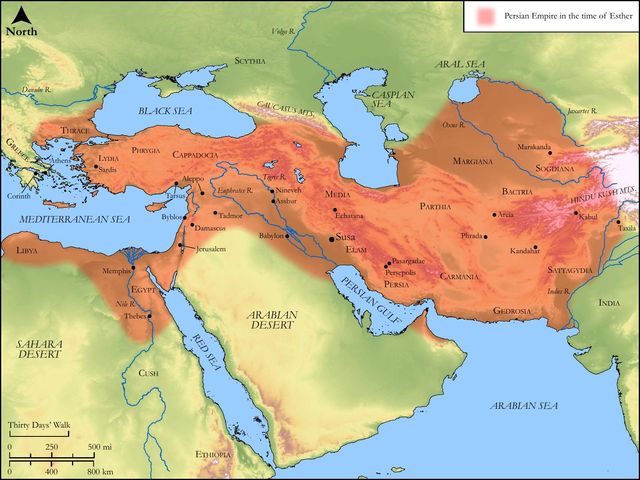
The events of Esther 1:15 unfold within the historical backdrop of the vast Achaemenid Persian Empire, which, at its zenith under King Ahasuerus (commonly identified as Xerxes I, 486-465 BC), stretched from India to Ethiopia. The Persian monarchy was characterized by its absolute authority; the king's decree, once issued, was considered immutable, a principle famously illustrated in Daniel 6:8. The "wise men who understood the times" (Esther 1:13) were not merely royal advisors but legal experts, scholars, and judges, whose counsel was essential for maintaining order and legitimacy within the empire's complex legal framework. In this culture, a queen's public defiance of the king's direct command was an act of profound insubordination, threatening not only the king's personal honor but also the very fabric of social order, particularly concerning the submission of women to their husbands throughout the sprawling empire.
Key Themes
ShowHideEsther 1:15 contributes significantly to several overarching themes within the book of Esther. Firstly, it highlights the Absolute Authority of the Persian King and the severe consequences of disobedience. Vashti's refusal was not a minor slight but a direct challenge to the supreme power in the land, demanding a response that would reaffirm the king's unassailable position. Secondly, the phrase "according to law" introduces the theme of the Rule of Law and Immutable Decrees. Even in an absolute monarchy, actions were often framed within a legal system, emphasizing the gravity and permanence of royal edicts. This concern for legal precedent is further elaborated by Memucan, who fears that Vashti's actions could undermine Social Order and Domestic Harmony throughout the empire, setting a dangerous example for other women (Esther 1:16-18). Finally, though God is never explicitly mentioned in the book of Esther, this seemingly secular crisis subtly introduces the theme of Divine Providence. Vashti's removal, a direct consequence of this legal deliberation, providentially clears the path for Esther, a Jewish orphan, to ascend to the throne, thereby positioning her to deliver her people from impending destruction, as seen in Esther 2.
Exposition and Analysis
ShowHideKey Word Analysis
ShowHideThis term (H1881) refers to a royal edict, statute, or decree. Its usage here, "according to law" (כַּדָּת, ka-dath), underscores the Persian Empire's emphasis on legal precedent and the immutability of royal decrees. The advisors are not seeking a capricious punishment driven by the king's anger, but rather a legally justifiable course of action that aligns with established imperial statutes, even if those statutes are being interpreted in an unprecedented situation.
This word (H3982) denotes an authoritative utterance or royal command. It highlights the direct and undeniable nature of the king's instruction to Vashti. Her failure to "perform the commandment" was not a mere oversight but a deliberate act of non-compliance against a direct, publicly issued royal order, which carried immense weight and demanded a formal response.
These (H5631) were eunuchs, typically trusted officials in the royal court, often responsible for the king's private affairs, including the royal harem. Their role as intermediaries for the king's command to Vashti emphasizes the official and public nature of the summons, making Vashti's refusal an act of defiance against the king's direct representatives, thereby escalating the gravity of her insubordination.
Verse Breakdown
ShowHide"What shall we do unto the queen Vashti"
This opening phrase reveals the immediate crisis and the gravity of the situation. The king's wise men are faced with an unprecedented act of defiance from the queen herself, necessitating a formal, collective decision. It highlights their role as legal and political arbiters, tasked with advising the king on matters of state and justice, particularly when the king is enraged and requires a measured, legitimate response.
"according to law"
This crucial phrase indicates the advisors' commitment to due process, or at least to a semblance of it, within the Persian legal system. They are not merely seeking a punitive measure driven by the king's anger, but rather a legally sound justification for action that would set a valid precedent and maintain the integrity of royal decrees throughout the empire. This concern for legal standing underscores the seriousness with which royal edicts were viewed.
"because she hath not performed the commandment of the king Ahasuerus by the chamberlains?"
This clause precisely articulates the queen's offense. Her failure to "perform" (i.e., obey or carry out) the king's "commandment" (his direct, authoritative order) delivered by his trusted "chamberlains" (official representatives) constituted a public act of insubordination. This defiance, witnessed by many, demanded a public and legally sanctioned response to uphold the king's absolute authority and prevent further challenges to his will.
Literary Devices
ShowHideEsther 1:15 employs several significant Literary Devices. The verse opens with a Rhetorical Question, "What shall we do unto the queen Vashti according to law...?", which is not posed to elicit information but rather to prompt a formal deliberation and decisive action from the king's advisors. This question immediately establishes the high stakes and the urgent need for a resolution to an unprecedented challenge to royal authority. Furthermore, the verse functions as a subtle form of Foreshadowing, as the legal proceedings initiated here directly pave the way for Vashti's removal and the subsequent search for a new queen, ultimately setting the stage for Esther's dramatic entrance and her pivotal role in saving her people. There is also a degree of Irony present; despite King Ahasuerus's seemingly absolute and unchallengeable power, his authority is publicly defied by his own queen, forcing his wise men to resort to legalistic maneuvering to restore order and reinforce his dominion, rather than simply issuing an arbitrary command.
Theological and Thematic Connections
ShowHideWhile the book of Esther famously omits any direct mention of God, Esther 1:15, with its focus on human law, authority, and consequence, subtly highlights profound theological truths. The advisors' urgent question and subsequent legal deliberation underscore the reality that human decisions, even those driven by pride, anger, or political expediency, operate within a larger framework of divine sovereignty. God's providential hand often works behind the scenes, orchestrating seemingly secular events and human choices to fulfill His purposes. Vashti's defiance and the court's response, though rooted in human folly and political maneuvering, ultimately served to clear the path for Esther's ascent, demonstrating how God can use unexpected circumstances and the actions of both the righteous and the unrighteous to achieve His redemptive plan. This verse reminds us that even when God's presence is not explicitly stated, His control over human affairs remains absolute, guiding the course of history toward His ultimate ends.
Reflection and Application
ShowHideEsther 1:15 invites us to reflect on the profound implications of our choices and the intricate ways in which events unfold, often beyond our immediate comprehension. Vashti's decision, whatever her motivations, had far-reaching consequences, not only for her personal fate but for the entire empire and, ultimately, for the Jewish people. This reminds us that our actions, whether in defiance or obedience, can set in motion a ripple effect that impacts many. Spiritually, the verse encourages us to cultivate an awareness of God's unseen hand in the seemingly secular or chaotic events of life. Just as Vashti's removal, driven by human pride and legalism, became a crucial step in God's plan for Esther, so too can difficult or perplexing circumstances in our own lives be part of a larger divine tapestry. It calls us to trust in God's sovereignty, even when His presence is not overtly manifest, and to consider how our responses to authority and challenging situations can either hinder or align with His purposes.
Questions for Reflection
ShowHideFAQ
ShowHideWhy was Queen Vashti's refusal considered such a grave offense?
ShowHideQueen Vashti's refusal was considered a grave offense for several interconnected reasons within the context of the Persian Empire. Firstly, it was a direct and public act of defiance against the king's absolute authority. In this culture, the king's word was law, and his commands were to be obeyed without question. Vashti's refusal, delivered through the king's own chamberlains and witnessed by his assembled guests, was a profound public insult and a challenge to his supreme power. Secondly, the wise men, particularly Memucan, feared the dangerous precedent it would set. They argued that if the queen could openly disobey the king, it would embolden other women throughout the vast empire to disrespect their husbands, leading to widespread domestic discord and a breakdown of social order, as articulated in Esther 1:16-18. Thus, her act was perceived not merely as a personal slight but as a threat to the stability and hierarchy of the entire kingdom.
Does the narrative of Esther 1:15 endorse the absolute authority of King Ahasuerus or the subjugation of women?
ShowHideThe book of Esther, including Esther 1:15, describes the historical and cultural realities of a pagan, absolute monarchy, but it does not necessarily endorse the ethics or practices of that society. The narrative presents the events as they unfolded, showcasing the arbitrary and often self-serving nature of Ahasuerus's rule and the legalistic concerns of his advisors. While the story highlights the consequences of Vashti's defiance within that specific cultural context, it does not present the king's absolute power or the advisors' fear of female insubordination as divinely ordained or morally ideal. Instead, the book subtly demonstrates how God works providentially within and through imperfect human systems, even those characterized by injustice and flawed authority, to achieve His ultimate purposes, such as the preservation of His people. The story's focus is on God's unseen hand, not on validating the specific power dynamics of the Persian court.
Christ-Centered Fulfillment
ShowHideWhile Esther 1:15 focuses on a pagan king and his queen, it subtly points to the profound need for perfect obedience and the ultimate reign of a perfect King, found only in Jesus Christ. Vashti's defiance, leading to her dethronement, highlights the instability of human authority and the consequences of disobedience, even in a seemingly all-powerful empire. In contrast, Jesus Christ is the King whose authority is truly absolute, not by arbitrary decree, but by divine right and perfect character, as He Himself declared, "All authority in heaven and on earth has been given to Me" (Matthew 28:18). Unlike Vashti, who "hath not performed the commandment," Christ perfectly fulfilled every commandment of God's law, living a life of complete obedience even unto death on the cross, becoming "obedient to the point of death, even death on a cross" (Philippians 2:8). His "commandment" to us is not burdensome but leads to life, for "if you love me, you will keep my commandments" (John 14:15). Furthermore, just as a new queen was sought to replace the disobedient Vashti, Christ, the perfect Bridegroom, seeks a bride—His Church—who, through His grace, strives for obedience and faithfulness, reflecting His glory rather than defying His will, that He might "present her to himself as a radiant church, without stain or wrinkle or any other blemish, but holy and blameless" (Ephesians 5:25-27). Thus, this ancient Persian crisis, with its emphasis on law and obedience, ultimately foreshadows the perfect reign and redemptive work of our Lord Jesus Christ, who perfectly embodies the authority and obedience that human kings and queens could never achieve.