


Deuteronomy 33:16
Bible text: King James Version (1769 Blayney text) · Public domain
Bible text: King James Version with Strong's numbers · Public domain
Bible text: Berean Standard Bible · Public domain
Bible text: American Standard Version (1901) · Public domain
Bible text: World English Bible, Messianic edition · Public domain
Bible text: Geneva Bible (1599) · Public domain
Bible text: Young's Literal Translation · Public domain
- וּמִמֶּגֶדu·mi·Me·gedand from [the] excellent gift ofH4022Conj-w ¦ Prep-m ¦ N-mscNoun Singular Masculine Constructוּandמִfromמֶּגֶד[the] excellent gift of
- אֶרֶץ'E·retz[the] earthH776N-fsNoun Singular Feminine Absolute
- וּמְלֹאָהּu·me·lo·'Ahand what fills itH4393Conj-w ¦ N-msc ¦ 3fsNoun Singular Masculine Constructוּandמְלֹאָwhat fillsהּit
- וּרְצוֹןu·re·Tzonand [the] favor ofH7522Conj-w ¦ N-mscNoun Singular Masculine Constructוּandרְצוֹן[the] favor of
- שֹׁכְנִיsho·khe·Ni[the one who] dweltH7931V-Qal-Prtcpl-msVerb Qal Participle Singular Masculine Construct
- סְנֶהse·Neh<of> [the] bushH5572N-msNoun Singular Masculine Absolute
- תָּבוֹאתָהta·Vo·tahmay it come !H935V-Qal-Imperf-3fs ¦ SfxVerb Qal Imperfect 3rd Singular Feminineתָּבוֹאתָmay it comeה!
- לְרֹאשׁle·Roshto [the] head ofH7218Prep-l ¦ N-mscNoun Singular Masculine Constructלְtoרֹאשׁ[the] head of
- יוֹסֵףyo·SefJosephH3130N-proper-mNoun Proper Masculine
- וּלְקָדְקֹדu·le·ka·de·Kodand to [the] scalp ofH6936Conj-w ¦ Prep-l ¦ N-mscNoun Singular Masculine Constructוּandלְtoקָדְקֹד[the] scalp of
- נְזִירne·Zir[the] consecrated one ofH5139N-mscNoun Singular Masculine Construct
- אֶחָיו'e·Chavhis brothersH251N-mpc ¦ 3msNoun Plural Masculine Constructאֶחָיbrothersוhis
English is a literal word-by-word gloss of the Hebrew, not the KJV's wording. Why?
This is the original text the KJV's translators worked from — each Hebrew word with its own literal English meaning in this verse, prepared by scholars at Tyndale House, Cambridge. The KJV translates whole sentences, not word by word, so its wording differs: one Hebrew word can become several English words, and the KJV may choose “the LORD” where the gloss reads “Yahweh”. Both are faithful — they answer different questions. For the KJV's own rendering, switch to the KJV text.
Details
See on the biblical-era map
Study this verse
Public-domain commentary
Matthew Henry
From his Commentary on the Whole Bible. Henry comments on passages, not single verses — this entry covers Deuteronomy 33:12–17. His four-level outline is real structure in the source text, so it is rendered as structure.
Here is, I. The blessing of Benjamin, Deu 33:12. Benjamin is put next to Levi, because the temple, where the priests' work lay, was just upon the edge of the lot of this tribe; and it is put before Joseph because of the dignity of Jerusalem (part of which was in this tribe) above Samaria, which was in the tribe of Ephraim, and because Benjamin adhered to the house of David, and to the temple of the Lord, when the rest of the tribes deserted both with Jeroboam. 1. Benjamin is here called the beloved of the Lord, and the father of this tribe was Jacob's beloved son, the son of his right hand. Note, Those are blessed indeed that are beloved of the Lord. Saul the first king, and Paul the great apostle, were both of this tribe. 2. He is here assured of the divine protection: he shall dwell safely. Note, Those are safe whom God loves, Psa 91:1. 3. It is here intimated that the temple in which God would dwell should be built in the borders of this tribe. Jerusalem the holy city was in the lot of this tribe (Jos 18:28); and though Zion, the city of David, is supposed to belong to Judah, yet Mount Moriah, on which the temple was built, was in Benjamin's lot. God is therefore said to dwell between his shoulders, because the temple stood on that mount, as the head of a man upon his shoulders. And by this means Benjamin was covered all the day long under the protection of the sanctuary (Psa 125:2), which is often spoken of as a place of refuge, Psa 27:4, Psa 27:5; Neh 6:10. Benjamin, dwelling by the temple of God, dwelt in safety by him. Note, It is a happy thing to be in the neighbourhood of the temple. This situation of Benjamin, it is likely, was the only thing that kept that tribe in adherence with Judah to the divine institutions, when the other ten tribes apostatized. Those have corrupt and wicked hearts indeed who, the nearer they are to the church, are so much the further from God.
II.The blessing of Joseph, including both Manasseh and Ephraim.
In Jacob's blessing (Gen. 49) that of Joseph is the largest, and so it is here; and thence Moses here borrows the title he gives to Joseph (Deu 33:16), that he was separated from his brethren, or, as it might be read, a Nazarite among them, both in regard of his piety, wherein it appears, by many instances, he excelled them all, and of his dignity in Egypt, where he was both their ruler and benefactor. His brethren separated him from them by making him a slave, but God distinguished him from them by making him a prince. Now the blessings here prayed for, and prophesied of, for this tribe, are great plenty and great power.
1.Great plenty, Deu 33:13-16. In general: Blessed of the Lord be his land. Those were very fruitful countries that fell into the lot of Ephraim and Manasseh, yet Moses prays they might be watered with the blessing of God, which makes rich, and on which all fruitfulness depends. Now,
(1.)He enumerates many particulars which he prays may contribute to the wealth and abundance of those two tribes, looking up to the Creator for the benefit and serviceableness of all the inferior creatures, for they are all that to us which he makes them to be. He prays,
[1.]For seasonable rains and dews, the precious things of heaven; and so precious they are, though but pure water, that without them the fruits of the earth would all fail and be cut off.
[2.]For plentiful springs, which help to make the earth fruitful, called here the deep that coucheth beneath; both are the rivers of God (Psa 65:9), and he made particularly the fountains of waters, Rev 14:7.
[3.]For the benign influences of the heavenly bodies (Deu 33:14), for the precious fruits (the word signifies that which is most excellent, and the best in its kind) put forth by the quickening heat of the sun, and the cooling moisture of the moon. "Let them have the yearly fruits in their several months, according to the course of nature, in one month olives, in another dates," etc. So some understand it.
[4.]For the fruitfulness even of their hills and mountains, which in other countries used to be barren (Deu 33:15): Let them have the chief things of the ancient mountains; and, if the mountains be fruitful, the fruits on them will be first and best ripened. They are called ancient mountains, not because prior in time to other mountains, but because , like the first-born, they were superior in worth and excellency; and lasting hills, not only because as other mountains they were immovable (Hab 3:6), but because the fruitfulness of them should continue.
[5.]For the productions of the lower grounds (Deu 33:16): For the precious things of the earth. Though the earth itself seems a useless worthless lump of matter, yet there are precious things produced out of it, for the support and comfort of human life. Job 28:5. Out of it cometh bread, because out of it came our bodies, and to it they must return. But what are the precious things of the earth to a soul that came from God and must return to him? Or what is its fulness to the fulness that is in Christ, whence we receive grace for grace? Some make these precious things here prayed for to be figures of spiritual blessings in heavenly things by Christ, the gifts, graces, and comforts of the Spirit.
(2.)He crowns all with the good-will, or favourable acceptance, of him that dwelt in the bush (Deu 33:16), that is, of God, that God who appeared to Moses in the bush that burned and was not consumed (Exo 3:2), to give him his commission for the bringing of Israel out of Egypt. Though God's glory appeared there but for a while, yet it is said to dwell there, because it continued as long as there was occasion for it: the good-will of the shechinah in the bush; so it might be read, for shechinah signifies that which dwelleth; and, though it was but a little while a dweller in the bush, yet it continued to dwell with the people of Israel. My dweller in the bush; so it should be rendered; that was an appearance of the divine Majesty to Moses only, in token of the particular interest he had in God, which he desires to improve for the good of this tribe. Many a time God has appeared to Moses, but now that he is just dying he seems to have the most pleasing remembrance of that which was the first time, when his acquaintance with the visions of the Almighty first began, and his correspondence with heaven was first settled: that was a time of love never to be forgotten. It was at the bush that God declared himself the God of Abraham, Isaac, and Jacob, and so confirmed the promise made to the fathers, that promise which reached as far as the resurrection of the body and eternal life, as appears by our Saviour's argument from it, Luk 20:37. So that, when he prays for the good-will of him that dwelt in the bush, he has an eye to the covenant then and there renewed, on which all our hopes of God's favour must be bottomed. Now he concludes this large blessing with a prayer for the favour or good-will of God,
[1.]Because that is the fountain and spring-head of all these blessings; they are gifts of God's good-will; they are so to his own people, whatever they are to others. Indeed when Ephraim (a descendant from Joseph) slid back from God, as a backsliding heifer, those fruits of his country were so far from being the gifts of God's good-will that they were intended but to fatten him for the slaughter, as a lamb in a large place, Hos 4:16, Hos 4:17.
[2.]Because that is the comfort and sweetness of all these blessings; then we have joy of them when we taste God's good-will in them.
[3.]Because that is better than all these, infinitely better; for if we have but the favour and good-will of God we are happy, and may be easy in the want of all these things, and may rejoice in the God of our salvation though the fig-tree do not blossom, and there be no fruit in the vine, Hab 3:17, Hab 3:18.
2.Great power Joseph is here blessed with, Deu 33:17. Here are three instances of his power foretold:
(1.)His authority among his brethren: His glory is like the firstling of his bullock, or young bull, which is a stately creature, and therefore was formerly used as an emblem of royal majesty. Joshua, who was to succeed Moses, was of the tribe of Ephraim the son of Joseph, and his glory was indeed illustrious, and he was an honour to his tribe. In Ephraim was the royal city of the ten tribes afterwards. And of Manasseh were Gideon, Jephthah, and Jair, who were all ornaments and blessings to their country. Some think he is compared to the firstling of the bullock because the birthright which Reuben lost devolved upon Joseph (Ch1 5:1, Ch1 5:2), and to the firstling of his bullock, because Bashan, which was in the lot of Manasseh, was famous for bulls and cows, Psa 22:12; Amo 4:1.
(2.)His force against his enemies and victory over them: His horns are like the horn of a unicorn, that is, "The forces he shall bring into the field shall be very strong and formidable, and with them he shall push the people," that is, "He shall overcome all that stand in his way." It appears from the Ephraimites' contests, both with Gideon (Jdg 8:1) and with Jephthah (Jdg 12:1), that they were a warlike tribe and fierce. Yet we find the children of Ephraim, when they had forsaken the covenant of God, though they were armed, turning back in the day of battle (Psa 78:9, Psa 78:10); for, though here pronounced strong and bold as unicorns, when God had departed from them they became as weak as other men.
(3.)The numbers of his people, in which Ephraim, though the younger house, exceeded, Jacob having, in the foresight of the same thing, crossed hands, Gen 48:19. They are the ten thousands of Ephraim, and the thousands of Manasseh. Jonathan's Targum applies it to the ten thousands of Canaanites conquered by Joshua, who was of the tribe of Manasseh. And the gloss of the Jerusalem Targum upon the former part of this verse is observable, that "as the firstlings of the bullock were never to be worked, nor could the unicorn ever be tamed, so Joseph should continue free; and they would have continued free if they had not by sin sold themselves."
Historical interpretation
Historical reception
1 surviving comment on this verse from the historical church.
The Nazarite: See the note on Gen. 49. 26.
Continue studying Deuteronomy 33:16 across the web’s major study libraries — every link below opens this exact verse, chapter, or book on the destination site.
Read & Compare
 BibleGatewayThis verse in more than 200 translations and 70 languages.
 Bible.comThe YouVersion reader — hundreds of translations, reading plans, and highlights.
 ESV.orgCrossway's official English Standard Version reader.
 NET BibleThe NET translation with 60,000+ translators' notes on every rendering decision.
 STEP BibleTyndale House's free study tool — original text, vocabulary, and scholarly resources.
 BibliaLogos Bible Software's free web reader.
 USCCBThe New American Bible (Revised Edition) with the U.S. bishops' study notes.
Commentaries
 BibleHub CommentariesDozens of classic commentaries on this verse, gathered on one page.
 StudyLightMore than 100 commentary sets — the largest collection on the web.
 BibleRefPlain-English commentary on what this verse means, verse by verse.
 Enduring WordDavid Guzik's free commentary on this chapter, widely used by Bible teachers.
 Bible Study ToolsVerse commentary alongside Greek and Hebrew study aids.
Original Language & Research
- BibleHub InterlinearThe verse word by word — original language, transliteration, and English.
- BibleHub LexiconEvery word's original-language definition and Strong's entry.
 Blue Letter BibleDeep-study tools — Strong's numbers, concordance, and word studies.
 SefariaThe Hebrew text with Rashi and centuries of Jewish commentary.
Sermons, Hymns & Audio


TrulyRandomVerse is not affiliated with these sites and doesn’t control their content. They’re linked because they’re genuinely useful.
Summary
Deuteronomy 33:16 encapsulates Moses' profound prophetic blessing upon the tribe of Joseph, encapsulating divine favor, abundant provision, and the unique, providential journey of Joseph, who was divinely set apart from his brethren. This verse powerfully links the promised blessings of the land to the enduring "good will" of the God who revealed Himself in the burning bush, underscoring His covenant faithfulness and active involvement in the destiny of His people.
Context
ShowHideLiterary Context
This verse is an integral part of Moses' farewell address and blessing upon the twelve tribes of Israel, recorded in Deuteronomy chapter 33. Following the detailed exposition of the Mosaic Law and the covenant renewal in the preceding chapters, Moses, on the cusp of his death, delivers a final prophetic word to each tribe, echoing and expanding upon the patriarchal blessings given by Jacob in Genesis chapter 49. The blessing for Joseph (which includes the tribes of Ephraim and Manasseh) is notably extensive and rich, reflecting the significant role his descendants would play in the future of Israel, particularly in the northern kingdom. It stands as a testament to God's enduring covenant promises as the nation prepares to enter the Promised Land.
Historical & Cultural Context
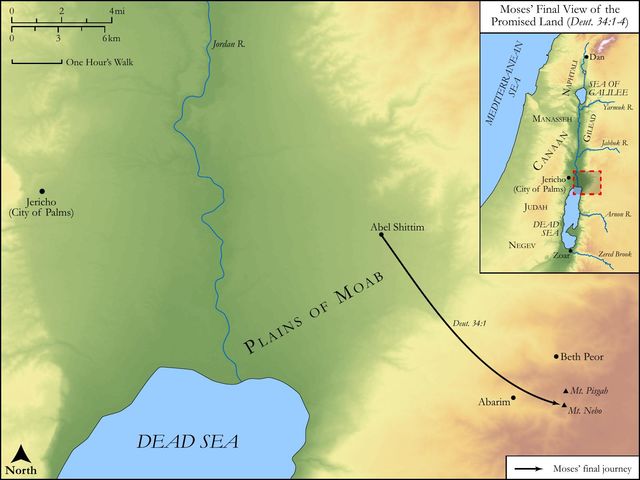
The Israelites stood on the plains of Moab, poised to cross the Jordan River and conquer Canaan. Their identity was deeply rooted in their tribal affiliations and their shared history of deliverance from Egypt. Agricultural prosperity and the abundance of the land were paramount concerns for a people transitioning from nomadic life to settled existence. The reference to "him that dwelt in the bush" immediately evokes the foundational event of God's self-revelation to Moses at Mount Horeb in Exodus chapter 3, a pivotal moment that established God's covenant relationship with Israel and initiated their liberation. This historical anchor grounds the future blessings in God's past faithfulness and miraculous intervention. Joseph's personal history, marked by betrayal and subsequent exaltation, was a well-known narrative that resonated deeply with the tribal memory, symbolizing God's ability to turn adversity into triumph.
Key Themes
ShowHideDeuteronomy 33:16 contributes to several overarching themes within Deuteronomy and the broader Pentateuch. Firstly, it highlights Divine Favor and Covenant Faithfulness, emphasizing that the blessings bestowed are not arbitrary but flow from God's steadfast character and His covenant relationship with Israel, particularly as revealed at the burning bush. Secondly, the verse underscores Abundance and Prosperity, promising the "precious things of the earth," which speaks to God's desire to provide bountifully for His people, both materially and spiritually, as they inherit the land. This theme is central to Deuteronomy's vision of a blessed life in obedience to God's commands. Lastly, the reference to Joseph as "him that was separated from his brethren" powerfully develops the theme of Providential Exaltation through Suffering. Joseph's life, marked by unjust suffering and separation (Genesis 37:28), ultimately led to his divine appointment as a savior for his family and nations (Genesis 50:20). This narrative thread reinforces the idea that God's purposes often unfold through unexpected and challenging circumstances, ultimately leading to vindication and blessing.
Exposition and Analysis
ShowHideKey Word Analysis
ShowHideFrom an unused root meaning to be eminent, this term refers to a distinguished or valuable thing, specifically a product or fruit. It denotes the choicest produce, the excellent fruits, and the most desirable products of the earth. In this context, it suggests a land rich in resources, yielding its finest and most superlative bounty and quality to Joseph's descendants, implying not just sufficiency but overflowing abundance.
This word signifies divine favor, delight, pleasure, or acceptance. When applied to God, it speaks of His benevolent disposition, His gracious will, and His active pleasure in blessing His people. It is not a passive wish but an active, powerful inclination of God's character that brings about the desired outcome. The phrase "good will of him that dwelt in the bush" firmly anchors the blessing in God's specific, revealed character and His covenant initiative.
While often associated with the Nazarite vow (Numbers 6), here the term carries a broader meaning of one who is "consecrated," "set apart," or "distinguished." In Joseph's context, it powerfully alludes to his literal separation from his family when sold into slavery (Genesis 37:28), but also to his unique destiny and divine appointment. It highlights his distinct status, not merely as an outcast, but as one divinely elevated and crowned among his brothers, fulfilling Jacob's earlier prophecy in Genesis 49:26.
Verse Breakdown
ShowHide"And for the precious things of the earth and fulness thereof"
This clause pronounces a blessing of abundant material prosperity and natural resources for the tribe of Joseph. It encompasses the choicest produce of the land, its agricultural richness, and all its inherent wealth. It speaks to a comprehensive and overflowing provision from creation itself, signifying God's desire to bless His people with physical sustenance and well-being.
"and [for] the good will of him that dwelt in the bush"
This is a profound theological statement, directly attributing the source of the blessing to Yahweh, the God who revealed Himself to Moses at the burning bush (Exodus 3:2-6). It emphasizes that the prosperity of Joseph's descendants is not merely due to natural causes or human effort, but flows from the active, benevolent, and covenantal will of the sovereign God who initiated Israel's redemption. It grounds the blessing in divine power and faithfulness.
"let [the blessing] come upon the head of Joseph"
This is the direct petition for the blessing to be poured out upon Joseph and, by extension, his descendants (the tribes of Ephraim and Manasseh). The "head" symbolizes the entire person and, by extension, the entire tribal lineage, indicating a comprehensive and encompassing blessing upon their leadership, prosperity, and future.
"and upon the top of the head of him [that was] separated from his brethren"
This phrase serves as a powerful reiteration and amplification of the recipient, specifically highlighting Joseph's unique and divinely ordained status. The repetition of "head" emphasizes the totality of the blessing. The description "separated from his brethren" points to Joseph's extraordinary life journey, where his initial separation through betrayal ultimately led to his exalted position and his role in preserving his family, underscoring God's providential hand in transforming adversity into a blessing.
Literary Devices
ShowHideDeuteronomy 33:16 employs several potent literary devices to convey its message. The use of Parallelism is evident in the repetition of "upon the head of Joseph, and upon the top of the head of him that was separated from his brethren," which emphasizes the comprehensive nature of the blessing and reinforces the identity of the recipient. The phrase "precious things of the earth and fulness thereof" uses Merism or Hyperbole to convey the idea of complete and overflowing abundance, encompassing all possible good things from the land. The verse is rich in Allusion, most notably to the foundational narrative of God's self-revelation at the burning bush (Exodus 3) and to the entire life story of Joseph, particularly his betrayal, suffering, and subsequent exaltation as "him that was separated" (Genesis 37-50). This allusive language adds layers of historical and theological depth. Furthermore, there is a subtle Irony in the description of Joseph as "separated," as what began as a traumatic and unjust separation (being sold into slavery) was ultimately transformed by God's providence into a unique status of exaltation and blessing.
Theological and Thematic Connections
ShowHideDeuteronomy 33:16 stands as a profound testament to God's sovereign good will and His capacity to bring about blessing even through the most challenging circumstances. The explicit reference to "him that dwelt in the bush" firmly roots the blessing in God's unchanging character as the covenant-keeping God who actively intervenes in human history. This verse teaches that true prosperity, encompassing both material abundance and spiritual favor, originates from the divine initiative and is a manifestation of God's benevolent disposition towards His chosen people. Joseph's story, embedded within this blessing, serves as a powerful theological paradigm: suffering and separation, when submitted to divine providence, can become the very means by which God sets individuals apart for unique purposes and ultimately brings about their vindication and exaltation. It underscores that God's plan is often revealed not in spite of adversity, but through it, demonstrating His faithfulness to those whom He has called and consecrated.
Reflection and Application
ShowHideDeuteronomy 33:16 offers enduring lessons for believers navigating life's complexities. It reminds us that God's "good will" is the ultimate source of all true blessing, extending far beyond mere material possessions to encompass His active favor and providential care over our lives. Just as God set Joseph apart and used his painful "separation" for a greater redemptive purpose, so too can our seasons of hardship, isolation, or perceived injustice be transformed into periods of divine preparation and unique anointing. This verse encourages us to trust in God's sovereign plan, even when circumstances seem to contradict His promises. It affirms that God is capable and willing to provide abundantly for His people, not only with the "precious things of the earth" but also with spiritual richness and fulfillment. Our response should be one of grateful recognition of His unfailing good will and a confident expectation that He works all things for the good of those who are called according to His purpose, setting us apart for His glory.
Questions for Reflection
ShowHideFAQ
ShowHideWhat is the significance of "him that dwelt in the bush" in this blessing?
ShowHideThe phrase "him that dwelt in the bush" is a direct and powerful allusion to God's self-revelation to Moses at the burning bush on Mount Horeb, as recorded in Exodus chapter 3. This was the foundational moment when God revealed His holy presence, declared His covenant name (Yahweh), and commissioned Moses to lead Israel out of slavery. In Deuteronomy 33:16, linking the blessing to "him that dwelt in the bush" signifies that the blessings upon Joseph's tribe are not random but flow directly from the character and covenant faithfulness of the God who initiated Israel's redemption. It underscores God's active, personal involvement and His benevolent disposition towards His people, grounding the future prosperity in His historical, miraculous intervention.
Why is Joseph singled out with such a profound and extensive blessing compared to other tribes?
ShowHideJoseph receives a particularly rich blessing for several reasons rooted in his unique history and the subsequent prominence of his descendants. Firstly, Joseph's personal story of suffering, faithfulness, and ultimate exaltation (Genesis 37-50) made him a pivotal figure in Israel's survival. He was instrumental in preserving his family during a severe famine, effectively saving the nascent nation. Secondly, Joseph's two sons, Ephraim and Manasseh, were adopted by Jacob as his own (Genesis 48:5), effectively granting Joseph a "double portion" or two tribal inheritances within Israel. These two tribes, particularly Ephraim, became highly influential and populous, often representing the entire northern kingdom of Israel in later biblical history. Moses' blessing reflects this historical and future significance, acknowledging God's special favor and providential care over Joseph's lineage.
How does Joseph's "separation" relate to the blessing he receives?
ShowHideThe phrase "him that was separated from his brethren" refers to Joseph's traumatic experience of being sold into slavery by his brothers (Genesis 37:28). However, in this context, "separated" (Hebrew: nâzîyr') also carries the connotation of being "consecrated," "set apart," or "distinguished" for a special purpose. What began as a painful and unjust separation ultimately became the means by which God elevated Joseph to a position of power in Egypt, enabling him to save his family and many nations from famine. This highlights God's sovereignty in turning evil for good (Genesis 50:20) and His ability to use adversity to set individuals apart for unique divine purposes. The blessing acknowledges not only Joseph's past suffering but also his unique status and the divine purpose behind his trials, culminating in his vindication and exaltation.
Christ-Centered Fulfillment
ShowHideDeuteronomy 33:16, with its focus on Joseph's unique status, divine favor, and providential exaltation through suffering, finds its ultimate and most profound fulfillment in the person and work of Jesus Christ. Joseph, "separated from his brethren" through betrayal and suffering, yet ultimately exalted to a position of power to save his people, serves as a powerful type of Christ. Jesus, too, was "separated" from His brethren, rejected by His own people (John 1:11), and subjected to profound suffering and death. Yet, through this ultimate act of separation and sacrifice, God's "good will" was perfectly manifested. The "good will of him that dwelt in the bush," the very presence of God, finds its fullest expression in Christ, "the radiance of God's glory and the exact representation of his being" (Hebrews 1:3). All the "precious things of the earth and fulness thereof," indeed, all spiritual blessings, are now found "in Christ" (Ephesians 1:3). He is the one upon whom the blessing truly comes, the ultimate "Prince" and "Savior" who was humiliated but then "highly exalted" (Philippians 2:8-11) to bring salvation and abundant life to all who believe.