


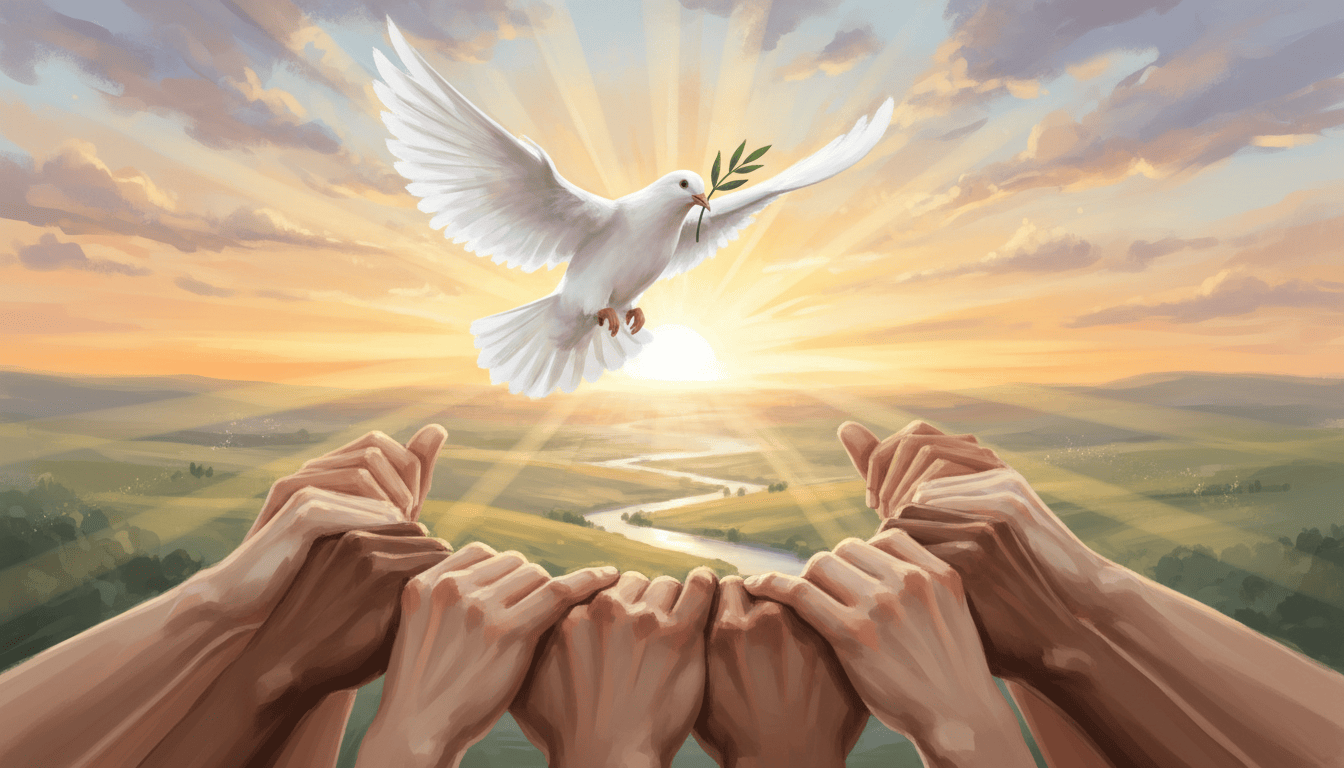
Martin Luther King Jr. DayJustice and Faith
Introduction
Martin Luther King Jr. Day honors the legacy of Dr. Martin Luther King Jr., a Baptist minister and civil rights leader who preached that every person bears the image of God and urged nonviolent resistance. Deeply rooted in his Christian faith, Dr. King called America to live up to its founding ideals and to the biblical vision of justice, equality, and love. While this is a civic holiday, it provides an opportunity to reflect on what Scripture teaches about justice, oppression, racial reconciliation, and the prophetic call to stand against injustice. The Bible is replete with calls for justice, commands to care for the oppressed, and visions of a kingdom where people from every nation worship together in unity. Dr. Scripture calls believers both to personal holiness and to deal justly with every neighbor, without respect of persons (James 2:1).
God's Justice and Righteousness
Scripture reveals that God is perfectly just. Moses declared, "The Rock, his work is perfect: for all his ways are judgment: a God of truth and without iniquity, just and right is he." God's justice is not arbitrary or partial but perfectly consistent with his righteous character. He judges without favoritism, showing no partiality.
He is the Rock, his work is perfect: for all his ways are judgment: a God of truth and without iniquity, just and right is he.
Deuteronomy 32:4
KJV
The psalmist proclaims, "Justice and judgment are the habitation of thy throne: mercy and truth shall go before thy face." Justice is not peripheral to God's nature but foundational. His throne—his rule and authority—rests on justice and righteousness. God delights in justice and hates wickedness.
Justice and judgment are the habitation of thy throne: mercy and truth shall go before thy face.
Psalms 89:14
KJV
Because God is just, he commands his people to pursue justice. "He hath shewed thee, O man, what is good; and what doth the LORD require of thee, but to do justly, and to love mercy, and to walk humbly with thy God?" Justice is not optional for believers but required, flowing from love for God and neighbor.
He hath shewed thee, O man, what is good; and what doth the LORD require of thee, but to do justly, and to love mercy, and to walk humbly with thy God?
Micah 6:8
KJV
Created in God's Image: The Basis for Human Dignity
The foundation for human dignity and equality is that all people are created in the image of God. "So God created man in his own image, in the image of God created he him; male and female created he them." Regardless of race, ethnicity, social status, or any other human distinction, every person bears God's image and possesses inherent worth and dignity.
So God created man in his own image, in the image of God created he him; male and female created he them.
Genesis 1:27
KJV
This truth condemns all forms of racism, oppression, and dehumanization. To harm someone made in God's image is to attack God's own image-bearer. James writes, "With it we bless our Lord and Father, and with it we curse people who are made in the likeness of God. From the same mouth come blessing and cursing. My brothers, these things ought not to be so."
Therewith bless we God, even the Father; and therewith curse we men, which are made after the similitude of God. Out of the same mouth proceedeth blessing and cursing. My brethren, these things ought not so to be.
James 3:9-10
KJV
The early church proclaimed that "there is neither Jew nor Greek, there is neither bond nor free, there is neither male nor female: for ye are all one in Christ Jesus." Ethnic, social, and gender distinctions do not diminish our equal standing before God or our unity in Christ. The gospel breaks down dividing walls and creates one new humanity.
There is neither Jew nor Greek, there is neither bond nor free, there is neither male nor female: for ye are all one in Christ Jesus.
Galatians 3:28
KJV
For he is our peace, who hath made both one, and hath broken down the middle wall of partition between us; Having abolished in his flesh the enmity, even the law of commandments contained in ordinances; for to make in himself of twain one new man, so making peace; And that he might reconcile both unto God in one body by the cross, having slain the enmity thereby:
The Prophetic Call for Justice
The Old Testament prophets repeatedly condemned injustice and called God's people to righteousness. Isaiah rebuked those who "justify the wicked for reward, and take away the righteousness of the righteous from him!" Amos thundered, "Let judgment run down as waters, and righteousness as a mighty stream." The prophets demanded social righteousness, care for the vulnerable, and impartial justice — not ritual alone.
Which justify the wicked for reward, and take away the righteousness of the righteous from him!
Isaiah 5:23
KJV
But let judgment run down as waters, and righteousness as a mighty stream.
Amos 5:24
KJV
God condemned Israel for oppressing the poor, accepting bribes, perverting justice, and exploiting the weak. Through Isaiah, God declared, "I cannot endure iniquity and solemn assembly... Wash yourselves; make yourselves clean; remove the evil of your deeds from before my eyes; cease to do evil, learn to do good; seek justice, correct oppression; bring justice to the fatherless, plead the widow's cause."
Bring no more vain oblations; incense is an abomination unto me; the new moons and sabbaths, the calling of assemblies, I cannot away with; it is iniquity, even the solemn meeting. Your new moons and your appointed feasts my soul hateth: they are a trouble unto me; I am weary to bear them. And when ye spread forth your hands, I will hide mine eyes from you: yea, when ye make many prayers, I will not hear: your hands are full of blood. Wash you, make you clean; put away the evil of your doings from before mine eyes; cease to do evil; Learn to do well; seek judgment, relieve the oppressed, judge the fatherless, plead for the widow.
Isaiah 1:13-17
KJV
These prophetic denunciations remind us that God cares about how we treat one another, especially the poor and powerless. Faith that does not produce justice and mercy is not biblical faith.
The Year of Jubilee: Liberty in the Land
God instituted the Year of Jubilee, a return of every family to its inheritance every fifty years (Leviticus 25:10). In the Jubilee year, land was returned to its original owners, debts were canceled, and slaves were freed. This prevented the permanent accumulation of wealth and poverty, ensuring that families could recover from economic misfortune.
And ye shall hallow the fiftieth year, and proclaim liberty throughout all the land unto all the inhabitants thereof: it shall be a jubile unto you; and ye shall return every man unto his possession, and ye shall return every man unto his family.
Leviticus 25:10
KJV
The Jubilee demonstrated that the land was the LORD's (Leviticus 25:23) and that no Israelite family was to lose its inheritance forever. Jesus inaugurated his ministry by quoting Isaiah's Jubilee prophecy: "The Spirit of the Lord is upon me, because he hath anointed me to preach the gospel to the poor; he hath sent me to heal the brokenhearted, to preach deliverance to the captives, and recovering of sight to the blind, to set at liberty them that are bruised, to preach the acceptable year of the Lord."
The Spirit of the Lord is upon me, because he hath anointed me to preach the gospel to the poor; he hath sent me to heal the brokenhearted, to preach deliverance to the captives, and recovering of sight to the blind, to set at liberty them that are bruised, To preach the acceptable year of the Lord.
Luke 4:18-19
KJV
Love Your Neighbor as Yourself
When asked which commandment was greatest, Jesus replied, "You shall love the Lord your God with all your heart and with all your soul and with all your mind. This is the great and first commandment. And a second is like it: You shall love your neighbor as yourself." Love for God and love for neighbor are inseparable, summarizing all of God's moral demands.
Jesus said unto him, Thou shalt love the Lord thy God with all thy heart, and with all thy soul, and with all thy mind. This is the first and great commandment. And the second is like unto it, Thou shalt love thy neighbour as thyself.
Matthew 22:37-39
KJV
The Good Samaritan parable defines "neighbor" broadly. When a lawyer asked, "Who is my neighbor?" Jesus told the story of a Samaritan who helped a wounded Jew, crossing ethnic and religious boundaries to show mercy. The neighbor is anyone in need, regardless of race, religion, or social status. Love transcends human divisions.
But he, willing to justify himself, said unto Jesus, And who is my neighbour? And Jesus answering said, A certain man went down from Jerusalem to Jericho, and fell among thieves, which stripped him of his raiment, and wounded him, and departed, leaving him half dead. And by chance there came down a certain priest that way: and when he saw him, he passed by on the other side. And likewise a Levite, when he was at the place, came and looked on him, and passed by on the other side. But a certain Samaritan, as he journeyed, came where he was: and when he saw him, he had compassion on him, And went to him, and bound up his wounds, pouring in oil and wine, and set him on his own beast, and brought him to an inn, and took care of him. And on the morrow when he departed, he took out two pence, and gave them to the host, and said unto him, Take care of him; and whatsoever thou spendest more, when I come again, I will repay thee. Which now of these three, thinkest thou, was neighbour unto him that fell among the thieves? And he said, He that shewed mercy on him. Then said Jesus unto him, Go, and do thou likewise.
Luke 10:29-37
KJV
Paul writes, "Love worketh no ill to his neighbour: therefore love is the fulfilling of the law." Injustice toward our neighbor violates the law of love. Racism, oppression, exploitation, and discrimination are all failures to love, sins against God and our neighbor.
Love worketh no ill to his neighbour: therefore love is the fulfilling of the law.
Romans 13:10
KJV
Speak Up for Those Who Cannot Speak
Proverbs commands, "Open your mouth for the mute, for the rights of all who are destitute. Open your mouth, judge righteously, defend the rights of the poor and needy." Believers are called to open their mouths for the dumb (Proverbs 31:8-9), using whatever influence and power we have to defend those who cannot defend themselves.
Open thy mouth for the dumb in the cause of all such as are appointed to destruction. Open thy mouth, judge righteously, and plead the cause of the poor and needy.
Proverbs 31:8-9
KJV
Dr. King embodied this principle, speaking against injustice and pleading for those denied the dignity God gives every person. His "Letter from Birmingham Jail" reminded white clergy that silence in the face of injustice is complicity, that the time for justice is always now, and that "injustice anywhere is a threat to justice everywhere."
James warns against showing partiality based on wealth or status. If a rich person enters the assembly and receives honor while a poor person is treated with contempt, believers have "made distinctions among yourselves and become judges with evil thoughts." God has chosen the poor to be rich in faith and heirs of his kingdom. Showing favoritism based on external circumstances contradicts the gospel.
My brethren, have not the faith of our Lord Jesus Christ, the Lord of glory, with respect of persons. For if there come unto your assembly a man with a gold ring, in goodly apparel, and there come in also a poor man in vile raiment; And ye have respect to him that weareth the gay clothing, and say unto him, Sit thou here in a good place; and say to the poor, Stand thou there, or sit here under my footstool: Are ye not then partial in yourselves, and are become judges of evil thoughts? Hearken, my beloved brethren, Hath not God chosen the poor of this world rich in faith, and heirs of the kingdom which he hath promised to them that love him?
James 2:1-5
KJV
Nonviolence and Loving Enemies
Jesus radically redefined love by commanding, "Love your enemies, bless them that curse you, do good to them that hate you, and pray for them which despitefully use you." Dr. King rooted his philosophy of nonviolent resistance in this teaching, refusing to repay evil with evil or hatred with hatred. He insisted that only love could break the cycle of violence and that redemptive suffering could transform oppressors.
But I say unto you, Love your enemies, bless them that curse you, do good to them that hate you, and pray for them which despitefully use you, and persecute you;
Matthew 5:44
KJV
Paul writes, "Recompense to no man evil for evil. Provide things honest in the sight of all men... Dearly beloved, avenge not yourselves, but rather give place unto wrath... Therefore if thine enemy hunger, feed him; if he thirst, give him drink... Be not overcome of evil, but overcome evil with good."
Recompense to no man evil for evil. Provide things honest in the sight of all men. If it be possible, as much as lieth in you, live peaceably with all men. Dearly beloved, avenge not yourselves, but rather give place unto wrath: for it is written, Vengeance is mine; I will repay, saith the Lord. Therefore if thine enemy hunger, feed him; if he thirst, give him drink: for in so doing thou shalt heap coals of fire on his head. Be not overcome of evil, but overcome evil with good.
Romans 12:17-21
KJV
This teaching does not mean indifference to evil: the believer is to "overcome evil with good" (Romans 12:21), by blessing, persuasion, and appeal to conscience. Jesus overturned tables in the temple but never struck a person. He resisted evil without becoming evil.
The Vision of Reconciliation
The ultimate biblical vision is a redeemed humanity from every nation worshiping God together. John saw "a great multitude, which no man could number, of all nations, and kindreds, and people, and tongues, stood before the throne, and before the Lamb, clothed with white robes, and palms in their hands; and cried with a loud voice, saying, Salvation to our God which sitteth upon the throne, and unto the Lamb."
After this I beheld, and, lo, a great multitude, which no man could number, of all nations, and kindreds, and people, and tongues, stood before the throne, and before the Lamb, clothed with white robes, and palms in their hands; And cried with a loud voice, saying, Salvation to our God which sitteth upon the throne, and unto the Lamb.
This multiethnic, multicultural worship is God's design for eternity and should characterize the church now. Paul declares that in Christ, God is reconciling all things to himself, making peace by the blood of the cross. The church is called to be a sign of this reconciliation, demonstrating unity across human divisions.
And, having made peace through the blood of his cross, by him to reconcile all things unto himself; by him, I say, whether they be things in earth, or things in heaven.
Colossians 1:20
KJV
Reconciliation between peoples is not peripheral to the gospel: Christ "is our peace, who hath made both one" (Ephesians 2:14). Christ died to create, in himself, "one new man, so making peace." The dividing wall of hostility has been broken down. Believers from different races and ethnicities are no longer strangers but fellow citizens, members of God's household.
Having abolished in his flesh the enmity, even the law of commandments contained in ordinances; for to make in himself of twain one new man, so making peace; And that he might reconcile both unto God in one body by the cross, having slain the enmity thereby: And came and preached peace to you which were afar off, and to them that were nigh. For through him we both have access by one Spirit unto the Father. Now therefore ye are no more strangers and foreigners, but fellowcitizens with the saints, and of the household of God;
Conclusion: Faith and Justice Inseparable
Martin Luther King Jr. Day reminds us that biblical faith cannot be divorced from pursuit of justice. God demands that we do justice, love mercy, and walk humbly with him. We cannot claim to love God while hating or oppressing our neighbor. We cannot worship on Sunday while tolerating injustice Monday through Saturday. Dr. King's legacy challenges believers to confront injustice, to plead the cause of the oppressed, and to work toward the reconciliation and unity that Christ died to achieve. As we honor his memory, let us recommit ourselves to the biblical vision of a kingdom where justice flows like a river, where all people are valued as image-bearers of God, and where love triumphs over hatred. Until that kingdom comes in fullness, we labor on earth as ambassadors of reconciliation, pursuing justice, practicing mercy, and loving all people as Christ loved us.