


HanukkahThe Festival of Lights
Introduction
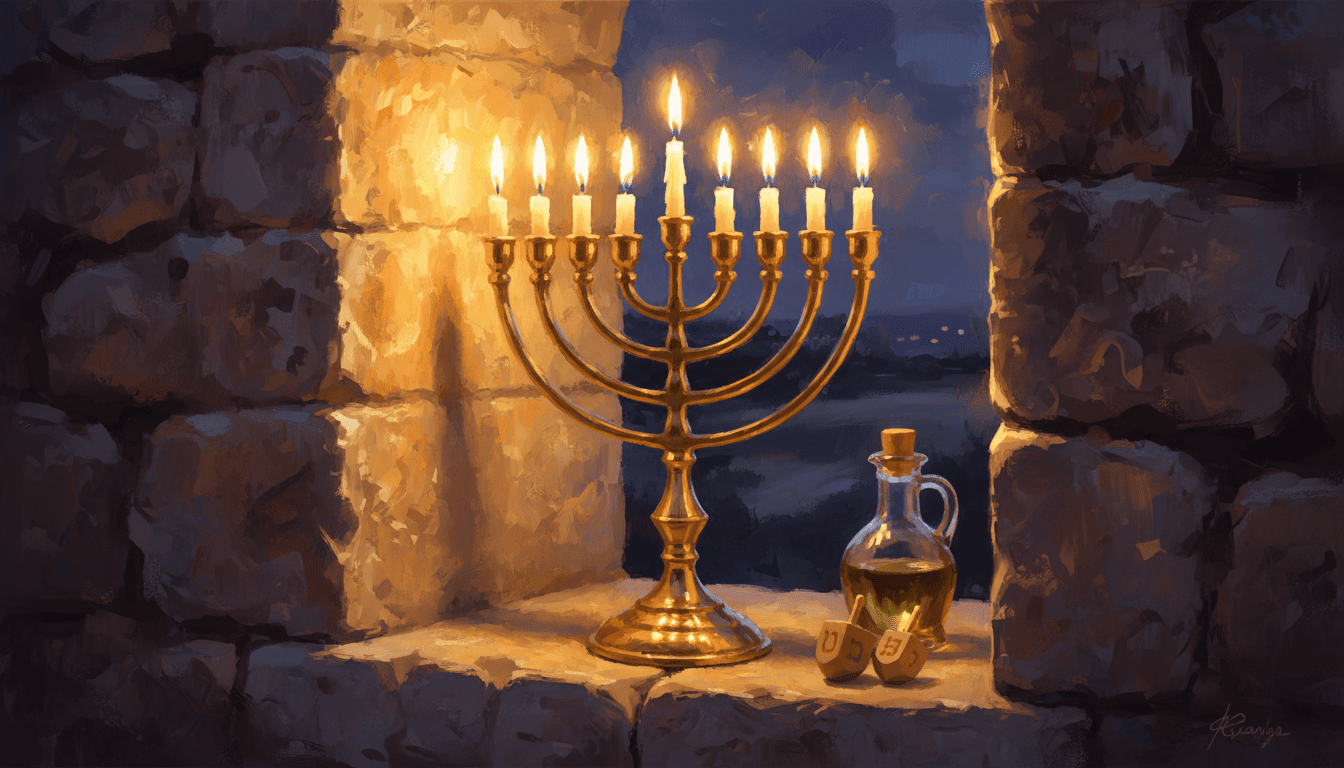
Hanukkah, the Festival of Lights, commemorates the rededication of the Second Temple in Jerusalem after the Maccabean revolt against Greek oppression in the second century BC. Though not commanded in the Torah, Hanukkah celebrates God's faithfulness in preserving his people and his covenant during a time of intense persecution. For eight days, Jews light candles on a menorah, remembering the miracle of a single day's worth of oil burning for eight days in the rededicated temple. While Hanukkah occurred during the intertestamental period, the Gospel of John records that Jesus observed this feast, and his presence at the celebration provides theological insights. Hanukkah reminds us of God's sovereignty over history, his faithfulness to preserve his people, and the light of truth shining in darkness.
Historical Background: The Maccabean Revolt
After Alexander the Great conquered the Persian Empire, his successors sought to spread Greek culture throughout their territories. Under Antiochus IV Epiphanes, the Seleucid king who ruled over Judea, this cultural imperialism became violent religious persecution. Antiochus outlawed Jewish religious practices, desecrated the temple by sacrificing pigs on the altar, and erected an idol of Zeus in the Holy Place—the "abomination of desolation" prophesied by Daniel.
And arms shall stand on his part, and they shall pollute the sanctuary of strength, and shall take away the daily sacrifice, and they shall place the abomination that maketh desolate.
Daniel 11:31
KJV
A Jewish priest named Mattathias and his five sons, led by Judah Maccabee ("The Hammer"), launched a revolt against the Seleucids. Despite being vastly outnumbered, the Maccabees won a series of miraculous military victories. In 164 BC, they recaptured Jerusalem and cleansed the temple of its pagan defilements. They sought to rededicate the temple by lighting the menorah, but found only enough consecrated oil to burn for one day. Miraculously, the oil lasted eight days—enough time to prepare new consecrated oil.
This event is celebrated in the books of 1 and 2 Maccabees (part of the Apocrypha), which describe how Judah Maccabee and his brothers purified the sanctuary, built a new altar, and celebrated the dedication with great rejoicing. They decreed that the days of the dedication should be observed annually with gladness and joy.
Jesus at the Feast of Dedication
John's Gospel records that Jesus was in Jerusalem at the time of the Feast of Dedication (Hanukkah), walking in the temple in Solomon's Portico. The Jewish leaders surrounded him and asked, "How long will you keep us in suspense? If you are the Christ, tell us plainly."
And it was at Jerusalem the feast of the dedication, and it was winter. And Jesus walked in the temple in Solomon's porch. Then came the Jews round about him, and said unto him, How long dost thou make us to doubt? If thou be the Christ, tell us plainly.
John 10:22-24
KJV
Jesus responded that he had already told them, but they did not believe. The works that he did in his Father's name bore witness about him, but they did not believe because they were not among his sheep. His sheep hear his voice, know him, and follow him. He gives them eternal life, and they will never perish. No one can snatch them out of his hand or out of the Father's hand, for he and the Father are one.
Jesus answered them, I told you, and ye believed not: the works that I do in my Father's name, they bear witness of me. But ye believe not, because ye are not of my sheep, as I said unto you. My sheep hear my voice, and I know them, and they follow me: And I give unto them eternal life; and they shall never perish, neither shall any man pluck them out of my hand. My Father, which gave them me, is greater than all; and no man is able to pluck them out of my Father's hand. I and my Father are one.
John 10:25-30
KJV
This declaration of unity with the Father provoked the Jews to pick up stones to stone him for blasphemy. Jesus asked for which good work they were stoning him. They replied, "It is not for a good work that we are going to stone you but for blasphemy, because you, being a man, make yourself God." Jesus defended his claim by quoting Psalm 82, where God calls Israel's judges "gods," then argued that if Scripture called those to whom God's word came "gods," how much more is the one whom the Father sanctified and sent into the world entitled to call himself the Son of God.
Then the Jews took up stones again to stone him. Jesus answered them, Many good works have I shewed you from my Father; for which of those works do ye stone me? The Jews answered him, saying, For a good work we stone thee not; but for blasphemy; and because that thou, being a man, makest thyself God. Jesus answered them, Is it not written in your law, I said, Ye are gods? If he called them gods, unto whom the word of God came, and the scripture cannot be broken; Say ye of him, whom the Father hath sanctified, and sent into the world, Thou blasphemest; because I said, I am the Son of God?
John 10:31-36
KJV
The Light of the World
The central symbol of Hanukkah is light—the menorah with its eight candles, the miracle of oil burning in the darkness. This imagery connects powerfully to Jesus's declaration earlier in John's Gospel: "I am the light of the world: he that followeth me shall not walk in darkness, but shall have the light of life."
Then spake Jesus again unto them, saying, I am the light of the world: he that followeth me shall not walk in darkness, but shall have the light of life.
John 8:12
KJV
John's prologue declares that in Jesus was life, and the life was the light of men. The light shines in the darkness, and the darkness has not overcome it. Jesus is the true light that enlightens everyone, coming into the world to dispel the darkness of sin, ignorance, and death.
In him was life; and the life was the light of men. And the light shineth in darkness; and the darkness comprehended it not.
John 1:4-5
KJV
That was the true Light, which lighteth every man that cometh into the world.
John 1:9
KJV
Isaiah prophesied that the people who walked in darkness would see a great light, and on those dwelling in a land of deep darkness, a light would dawn. This prophecy was fulfilled in Christ, who came as light to those living under the shadow of death.
The people that walked in darkness have seen a great light: they that dwell in the land of the shadow of death, upon them hath the light shined.
Isaiah 9:2
KJV
Jesus exhorted his followers, "Ye are the light of the world. A city that is set on an hill cannot be hid. Neither do men light a candle, and put it under a bushel, but on a candlestick; and it giveth light unto all that are in the house. Let your light so shine before men, that they may see your good works, and glorify your Father which is in heaven."
Ye are the light of the world. A city that is set on an hill cannot be hid. Neither do men light a candle, and put it under a bushel, but on a candlestick; and it giveth light unto all that are in the house. Let your light so shine before men, that they may see your good works, and glorify your Father which is in heaven.
Matthew 5:14-16
KJV
Dedication and Consecration
Hanukkah means "dedication." The Maccabees dedicated the temple after cleansing it from defilement, setting it apart again for God's purposes. This theme of dedication and consecration runs throughout Scripture. God commands his people to be holy, to set themselves apart from the world, to be consecrated for his use.
Sanctify yourselves therefore, and be ye holy: for I am the LORD your God. And ye shall keep my statutes, and do them: I am the LORD which sanctify you.
Leviticus 20:7-8
KJV
Paul urges believers to present their bodies as living sacrifices, holy and acceptable to God, which is their spiritual worship. We are not to be conformed to this world but transformed by the renewal of our minds. Our entire lives should be dedicated to God, set apart for his glory.
I beseech you therefore, brethren, by the mercies of God, that ye present your bodies a living sacrifice, holy, acceptable unto God, which is your reasonable service. And be not conformed to this world: but be ye transformed by the renewing of your mind, that ye may prove what is that good, and acceptable, and perfect, will of God.
Romans 12:1-2
KJV
Peter writes that believers are a chosen race, a royal priesthood, a holy nation, a people for God's own possession. We have been called out of darkness into God's marvelous light, set apart to proclaim his excellencies. Like the rededicated temple, we are to be vessels consecrated for God's use.
But ye are a chosen generation, a royal priesthood, an holy nation, a peculiar people; that ye should shew forth the praises of him who hath called you out of darkness into his marvellous light:
1 Peter 2:9
KJV
Jesus spoke of consecrating himself for the sake of his disciples, that they also might be sanctified in truth. He prayed to the Father, "Sanctify them in the truth; your word is truth." Dedication involves being set apart by God's Word, transformed by its truth.
Sanctify them through thy truth: thy word is truth. As thou hast sent me into the world, even so have I also sent them into the world. And for their sakes I sanctify myself, that they also might be sanctified through the truth.
John 17:17-19
KJV
Our Bodies as Temples
Paul teaches that believers' bodies are temples of the Holy Spirit. The Spirit dwells within us, making us holy ground. Just as the temple in Jerusalem needed to be cleansed and rededicated, we must continually purify ourselves from sin and dedicate ourselves afresh to God.
What? know ye not that your body is the temple of the Holy Ghost which is in you, which ye have of God, and ye are not your own?
Paul commands, "Let us cleanse ourselves from all filthiness of the flesh and spirit, perfecting holiness in the fear of God." The Christian life is one of ongoing sanctification, progressively being set apart for God's purposes.
Having therefore these promises, dearly beloved, let us cleanse ourselves from all filthiness of the flesh and spirit, perfecting holiness in the fear of God.
Faithfulness in Persecution
Hanukkah celebrates God's faithfulness in preserving his people during intense persecution. Antiochus sought to destroy Jewish faith and identity, but God raised up deliverers who refused to compromise. The Maccabees chose death over disobedience, trusting God even when outnumbered and facing overwhelming odds.
Hebrews 11 recounts heroes of faith, including those who "suffered mocking and flogging, and even chains and imprisonment. They were stoned, they were sawn in two, they were killed with the sword. They went about in skins of sheep and goats, destitute, afflicted, mistreated—of whom the world was not worthy."
And others had trial of cruel mockings and scourgings, yea, moreover of bonds and imprisonment: They were stoned, they were sawn asunder, were tempted, were slain with the sword: they wandered about in sheepskins and goatskins; being destitute, afflicted, tormented; (Of whom the world was not worthy:) they wandered in deserts, and in mountains, and in dens and caves of the earth.
Hebrews 11:36-38
KJV
Jesus warned his disciples that they would face persecution: "If the world hate you, ye know that it hated me before it hated you. If ye were of the world, the world would love his own: but because ye are not of the world, but I have chosen you out of the world, therefore the world hateth you."
If the world hate you, ye know that it hated me before it hated you. If ye were of the world, the world would love his own: but because ye are not of the world, but I have chosen you out of the world, therefore the world hateth you.
John 15:18-19
KJV
Yet Jesus promises that those who endure to the end will be saved. Paul declares that neither death nor life, nor angels nor rulers, nor things present nor things to come, can separate us from the love of God in Christ Jesus our Lord. God is faithful; he will preserve his people.
But he that shall endure unto the end, the same shall be saved.
Matthew 24:13
KJV
For I am persuaded, that neither death, nor life, nor angels, nor principalities, nor powers, nor things present, nor things to come, Nor height, nor depth, nor any other creature, shall be able to separate us from the love of God, which is in Christ Jesus our Lord.
Romans 8:38-39
KJV
The Greater Than the Temple
When Jesus was challenged at Hanukkah, he claimed to be the fulfillment of what the temple represented—the place where God dwells among his people. He declared, "Destroy this temple, and in three days I will raise it up." The Jews thought he spoke of the physical temple, but he spoke of the temple of his body. After his resurrection, the disciples remembered and believed.
Jesus answered and said unto them, Destroy this temple, and in three days I will raise it up. Then said the Jews, Forty and six years was this temple in building, and wilt thou rear it up in three days? But he spake of the temple of his body. When therefore he was risen from the dead, his disciples remembered that he had said this unto them; and they believed the scripture, and the word which Jesus had said.
John 2:19-22
KJV
Jesus is greater than the temple, greater than the priesthood, greater than the sacrifices. He is the reality to which all these pointed. The temple was where God's glory dwelt; Jesus is Immanuel, God with us. The temple required cleansing and rededication; Jesus is the spotless Lamb who needs no purification. The temple mediated between God and humanity; Jesus is the one mediator between God and man.
For there is one God, and one mediator between God and men, the man Christ Jesus;
1 Timothy 2:5
KJV
Standing Firm in the Truth
The Maccabees stood firm for the truth of God's Word when surrounding culture demanded compromise. They valued God's covenant more than their own lives. This same commitment is required of believers today. We are called to contend for the faith once for all delivered to the saints, to resist the world's pressure to conform, to shine as lights in a dark generation.
Beloved, when I gave all diligence to write unto you of the common salvation, it was needful for me to write unto you, and exhort you that ye should earnestly contend for the faith which was once delivered unto the saints.
Jude 1:3
KJV
Paul exhorts, "Be watchful, stand firm in the faith, act like men, be strong. Let all that you do be done in love." We hold fast to the truth without compromise, yet do so with love and grace.
Watch ye, stand fast in the faith, quit you like men, be strong. Let all your things be done with charity.
Jesus prayed that his disciples would not be taken out of the world but protected from the evil one. They are not of the world, just as Jesus is not of the world. We live in the world but belong to another kingdom, dedicated to another King.
I pray not that thou shouldest take them out of the world, but that thou shouldest keep them from the evil. They are not of the world, even as I am not of the world.
John 17:15-16
KJV
Conclusion: Let Your Light Shine
Hanukkah celebrates the victory of light over darkness, faithfulness over compromise, divine power over human might. The small cruse of oil that burned for eight days testified that God provides miraculously for his people. The Maccabees' victory against overwhelming odds demonstrated that God fights for those who trust him. Jesus's presence at this feast and his claim to be one with the Father revealed that he is the true Light, the greater than the temple, the ultimate Deliverer. As we remember Hanukkah, let us dedicate ourselves afresh to God, allowing him to cleanse our hearts and set us apart for his purposes. Let us stand firm in the truth, refusing to compromise with the world's values. And let us shine as lights in the darkness, proclaiming the excellencies of the One who called us out of darkness into his marvelous light.