


Acts 18:15
Bible text: King James Version (1769 Blayney text) · Public domain
Bible text: King James Version with Strong's numbers · Public domain
Bible text: Berean Standard Bible · Public domain
Bible text: American Standard Version (1901) · Public domain
Bible text: World English Bible, Messianic edition · Public domain
Bible text: Geneva Bible (1599) · Public domain
Bible text: Young's Literal Translation · Public domain
- εἰeiifG1487CONDConjunction
- δὲdehoweverG1161CONJConjunction
- ζητήματάzētēmataquestionsG2213N-NPNNoun Nominative Plural Neuter
- ἐστινestinit isG1510V-PAI-3SVerb Present Active Indicative 3rd Singular
- περὶperiaboutG4012PREPPreposition
- λόγουlogoua wordG3056N-GSMNoun Genitive Singular Masculine
- καὶkaiandG2532CONJConjunction
- ὀνομάτωνonomatōnnamesG3686N-GPNNoun Genitive Plural Neuter
- καὶkaiandG2532CONJConjunction
- νόμουnomoulawG3551N-GSMNoun Genitive Singular Masculine
- τοῦtou<the>G3588T-GSMDefinite article Genitive Singular Masculine
- καθ᾽kath᾽ofG2596PREPPreposition
- ὑμᾶςhumasyoursG4771P-2APPersonal pronoun Accusative 2nd Plural
- ὄψεσθεopsestheyou will beholdG3700V-FDI-2PVerb Future Middle Deponent Indicative 2nd Plural
- αὐτοί·autoi[to it] yourselvesG846P-NPMPersonal pronoun Nominative Plural Masculine
- κριτὴςkritēsa judgeG2923N-NSMNoun Nominative Singular Masculine
- γὰρgarforG1063CONJConjunction
- ἐγὼegōI myselfG1473P-1NSPersonal pronoun Nominative 1st Singular
- τούτωνtoutōnof these thingsG3778D-GPNDemonstrative pronoun Genitive Plural Neuter
- οὐounotG3756PRT-NNegative Particle Negative
- βούλομαιboulomairesolveG1014V-PNI-1SVerb Present Middle Or Passive Deponent Indicative 1st Singular
- εἶναιeinaito beG1511V-PANVerb Present Active Infinitive
English is a literal word-by-word gloss of the Greek, not the KJV's wording. Why?
This is the original text the KJV's translators worked from — each Greek word with its own literal English meaning in this verse, prepared by scholars at Tyndale House, Cambridge. The KJV translates whole sentences, not word by word, so its wording differs: one Greek word can become several English words, and the KJV may choose “charity” where the gloss reads “love”. Both are faithful — they answer different questions. For the KJV's own rendering, switch to the KJV text.
Details
See on the biblical-era maps

Study this verse
Public-domain commentary
Matthew Henry
From his Commentary on the Whole Bible. Henry comments on passages, not single verses — this entry covers Acts 18:12–17. His three-level outline is real structure in the source text, so it is rendered as structure.
We have here an account of some disturbance given to Paul and his friends at Corinth, but no great harm done, nor much hindrance given to the work of Christ there.
I.Paul is accused by the Jews before the Roman governor, Act 18:12, Act 18:13.
The governor was Gallio, deputy of Achaia, that is, proconsul; for Achaia was a consular province of the empire. This Gallio was elder brother to the famous Seneca; in his youth he was called Novatus, but took the name of Gallio upon his being adopted into the family of Julius Gallio; he is described by Seneca, his brother, to be a man of great ingenuous and great probity, and a man of wonderful good temper; he was called Dulcis Gallio - Sweet Gallio, for his sweet disposition; and is said to have been universally beloved. Now observe,
1.How rudely Paul is apprehended, and brought before Gallio; The Jews made insurrection with one accord against Paul. They were the ringleaders of all the mischief against Paul, and they entered into a confederacy to do him a mischief. They were unanimous in it: they came upon him with one accord; hand joined in hand to do this wickedness. They did it with violence and fury: They made an insurrection to the disturbance of the public peace, and hurried Paul away to the judgment-seat, and, for aught that appears, allowed him no time to prepare for his trial.
2.How falsely Paul is accused before Gallio (Act 18:13): This fellow persuades men to worship God contrary to the law. They could not charge him with persuading men not to worship God at all, or to worship other gods (Deu 13:2): but only to worship God in a way contrary to the law. The Romans allowed the Jews in their provinces the observance of their own law; and what then? Must those therefore be prosecuted as criminals who worship God in any other way? Does their toleration include a power of imposition? But the charge was unjust; for their own law had in it a promise of a prophet whom God would raise up to them, and him they should hear. Now Paul persuaded them to believe in this prophet, who was come, and to hear him, which was according to the law; for he came not to destroy the law, but to fulfil it. The law relating to the temple-service those Jews at Corinth could not observe, because of their distance from Jerusalem, and there was no part of their synagogue-worship which Paul contradicted. Thus when people are taught to worship God in Christ, and to worship him in the Spirit, they are ready to quarrel, as if they were taught to worship him contrary to the law; whereas this is indeed perfective of the law.
II.Gallio, upon the first hearing, or rather without any hearing at all, dismisses the cause, and will not take any cognizance of it, Act 18:14, Act 18:15. Paul was going about to make his defence, and to show that he did not teach men to worship God contrary to the law; but the judge, being resolved not to pass any sentence upon this cause, would not give himself the trouble of examining it. Observe,
1.He shows himself very ready to do the part of a judge in any matter that it was proper for him to take cognizance of. He said to the Jews, that were the prosecutors, "If it were a matter of wrong, or wicked lewdness, - if you could charge the prisoner with theft or fraud, with murder or rapine, or any act of immorality, - I should think myself bound to bear with you in your complaints, though they were clamorous and noisy;" for the rudeness of the petitioners was no good reason, if their cause was just, why they should not have justice done them. It is the duty of magistrates to right the injured, and to animadvert upon the injurious; and, if the complaint be not made with all the decorum that might be, yet they should hear it out. But,
2.He will by no means allow them to make a complaint to him of a thing that was not within his jurisdiction (Act 18:15): "If it be a question of words and names, and of your law, look you to it: end it among yourselves as you can, but I will be no judge of such matters; you shall neither burden my patience with the hearing of it, nor burden my conscience with giving judgment upon it;" and therefore, when they were urgent and pressing to be heard, he drove them from the judgment-seat (Act 18:16), and ordered another cause to be called. Now,
(1.)Here was something right in Gallio's conduct, and praise-worthy - that he would not pretend to judge of things he did not understand; that he left the Jews to themselves in matters relating to their own religion, but yet would not let them, under pretence of that, run down Paul, and abuse him; or, at least, would not himself be the tool of their malice, to give judgment against him. He looked upon the matter to be not within his jurisdiction, and therefore would not meddle in it. But,
(2.)It was certainly wrong to speak so slightly of a law and religion which he might have known to be of God, and with which he ought to have acquainted himself. In what way God is to be worshipped, whether Jesus be the Messiah, whether the gospel be a divine revelation, were not questions of words and names, as he scornfully and profanely called them. They are questions of vast importance, and in which, if he had understood them himself aright, he would have seen himself nearly concerned. He speaks as if he boasted of his ignorance of the scriptures, and took a pride in it; as if it were below him to take notice of the law of God, or make any enquiries concerning it.
III.The abuse done to Sosthenes, and Gallio's unconcernedness in it, Act 18:17.
1.The parties put a great contempt upon the court, when they took Sosthenes and beat him before the judgment-seat. Many conjectures there are concerning this matter, because it is uncertain who this Sosthenes was, and who the Greeks were that abused him. It seems most probable that Sosthenes was a Christian, and Paul's particular friend, that appeared for him on this occasion, and probably had taken care of his safety, and conveyed him away, when Gallio dismissed the cause; so that, when they could not light on Paul, they fell foul on him who protected him. It is certain that there was one Sosthenes that was a friend of Paul, and well known at Corinth; it is likely he was a minister, for Paul calls him his brother, and joins him with himself in his first epistle to the church at Corinth (Co1 1:1), as he does Timothy in his second, and it is probable that this was he; he is said to be a ruler of the synagogue, either joint-ruler with Crispus (Act 18:8), or a ruler of one synagogue, as Crispus was of another. As for the Greeks that abused him, it is very probable that they were either Hellenist Jews, or Jewish Greeks, those that joined with the Jews in opposing the gospel (Act 18:4, Act 18:6), and that the native Jews put them on to do it, thinking it would in them be less offensive. They were so enraged against Paul that they beat Sosthenes; and so enraged against Gallio, because he would not countenance the prosecution, that they beat him before the judgment-seat, whereby they did, in effect, tell him that they cared not for him; if he would not be their executioner, they would be their own judges.
2.The court put no less a contempt upon the cause, and the persons too. But Gallio cared for none of these things. If by this be meant that he cared not for the affronts of bad men, it was commendable. While he steadily adhered to the laws and rules of equity, he might despise their contempts; but, if it be meant (as I think it is) that he concerned not himself for the abuses done to good men, it carries his indifference too far, and gives us but an ill character of him. Here is wickedness done in the place of judgment (which Solomon complains of, Ecc 3:16), and nothing done to discountenance and suppress it. Gallio, as a judge, ought to have protected Sosthenes, and restrained and punished the Greeks that assaulted him. For a man to be mobbed in the street or in the market, perhaps, may not be easily helped; but to be so in his court, the judgment-seat, the court sitting and not concerned at it, is an evidence that truth is fallen in the street, and equity cannot enter; for he that departeth from evil maketh himself a prey, Isa 59:14, Isa 59:15. Those that see and hear of the sufferings of God's people, and have no sympathy with them, nor concern for them, do not pity and pray for the, it being all one to them whether the interests of religion sink or swim, are of the spirit of Gallio here, who, when a good man was abused before his face, cared for none of these things; like those that were at ease in Zion, and were not grieved for the affliction of Joseph (Amo 6:6), like the king and Haman, that sat down to drink when the city Shushan was perplexed, Est 3:15.
Historical interpretation
Historical reception
1 surviving comment on this verse from the historical church.
"Saying, This fellow seduceth men contrary to the law to worship God. And when Paul was about to open his mouth, Gallio said: If indeed it were any wrong-doing or wicked lewdness, O ye Jews, reason would that I should bear with you. But if it be a question of words and names, and of your law, look ye to it; for I will be no judge of such matters. And he drave them from the judgment-seat." This Gallio seems to me to have been a sensible man. Thus observe, when these had said, "Against the law he seduceth men to worship God," he "cared for none of these things": and observe how he answers them: "If indeed it were" any matter affecting the city, "any wrong-doing or wicked lewdness," etc. And observe how prudent he is: for he does not say straightway, I care not, but, "If," says he, "it were a matter of wrong-doing or wicked lewdness, O ye Jews, reason would that I should bear with you; but if it be a question of doctrine and words and of your law, see ye to it, for I do not choose to be a judge of such matters." He taught them that not such are the matters which crave a judicial sentence, but they do all things out of order. And he does not say, It is not my duty, but, "I do not choose," that they may not trouble him again. Thus Pilate said in the case of Christ, "Take ye Him, and judge him according to your law." But they were just like men drunken and mad.
Continue studying Acts 18:15 across the web’s major study libraries — every link below opens this exact verse, chapter, or book on the destination site.
Read & Compare
 BibleGatewayThis verse in more than 200 translations and 70 languages.
 Bible.comThe YouVersion reader — hundreds of translations, reading plans, and highlights.
 ESV.orgCrossway's official English Standard Version reader.
 NET BibleThe NET translation with 60,000+ translators' notes on every rendering decision.
 STEP BibleTyndale House's free study tool — original text, vocabulary, and scholarly resources.
 BibliaLogos Bible Software's free web reader.
 USCCBThe New American Bible (Revised Edition) with the U.S. bishops' study notes.
Commentaries
 BibleHub CommentariesDozens of classic commentaries on this verse, gathered on one page.
 StudyLightMore than 100 commentary sets — the largest collection on the web.
 BibleRefPlain-English commentary on what this verse means, verse by verse.
 Enduring WordDavid Guzik's free commentary on this chapter, widely used by Bible teachers.
 Bible Study ToolsVerse commentary alongside Greek and Hebrew study aids.
Original Language & Research
- BibleHub InterlinearThe verse word by word — original language, transliteration, and English.
- BibleHub LexiconEvery word's original-language definition and Strong's entry.
 Blue Letter BibleDeep-study tools — Strong's numbers, concordance, and word studies.
 CNTR CollationThe earliest Greek manuscripts of this verse, collated letter by letter.
Sermons, Hymns & Audio


TrulyRandomVerse is not affiliated with these sites and doesn’t control their content. They’re linked because they’re genuinely useful.
Summary
Acts 18:15 records the Roman proconsul Gallio's pivotal judgment concerning the Apostle Paul in Corinth. When Jewish leaders accused Paul of promoting a religion contrary to their law, Gallio, discerning the dispute as an internal religious matter rather than a civil offense, decisively refused to adjudicate. His declaration that he would not be a judge of "words and names, and of your law" effectively dismissed the charges, inadvertently granting early Christianity a period of legal protection under Roman law and allowing Paul's ministry in Corinth to continue unhindered.
Context
ShowHideLiterary Context
Acts 18:15 is situated within Paul's significant eighteen-month ministry in Corinth, as detailed in Acts 18:1-18. Having established a thriving church, Paul faced intense opposition from some Jewish factions who, incensed by his success among both Jews and Gentiles, brought him before the newly appointed proconsul, Gallio. The preceding verses describe the accusation: Paul was charged with "persuading men to worship God contrary to the law" (Acts 18:13). This specific verse captures Gallio's immediate and definitive refusal to engage with the dispute, highlighting his perception of the matter as purely religious and outside Roman civil jurisdiction. His decision directly follows Paul's attempt to speak in his own defense, which Gallio preempts.
Historical & Cultural Context
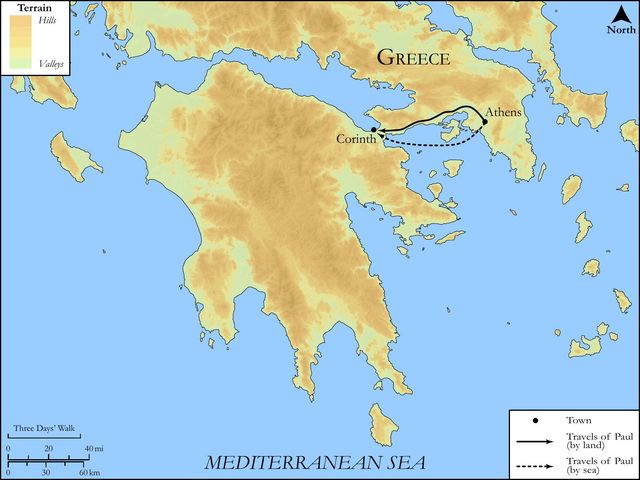
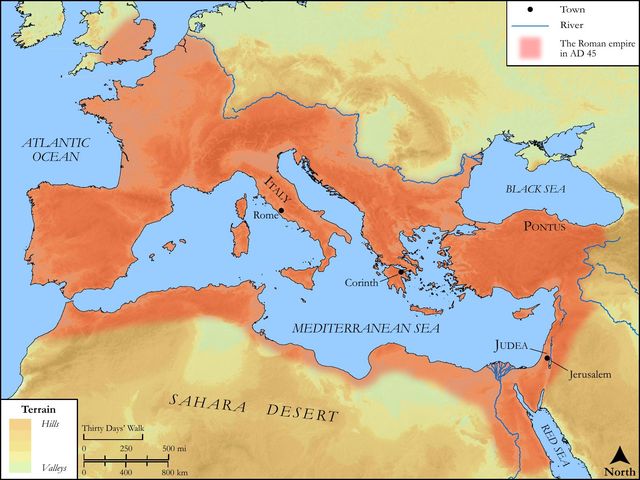
Corinth, the capital of the Roman province of Achaia, was a cosmopolitan hub known for its trade, wealth, and diverse religious practices. As a Roman proconsul, Gallio (Lucius Junius Gallio Annaeanus) held significant judicial and administrative authority, responsible for maintaining Roman law and order. The Roman Empire generally tolerated various religions, particularly those with ancient roots like Judaism, which was recognized as a religio licita (licit religion). This status meant Jews were largely exempt from emperor worship and could practice their faith freely, provided they did not disturb public peace. The accusation against Paul aimed to portray Christianity as a new, illicit cult, distinct from Judaism, and therefore a potential threat to Roman order. Gallio's ruling, however, effectively categorized the emerging Christian movement under the umbrella of Judaism for legal purposes, thus affording it the same protections.
Key Themes
ShowHideGallio's ruling in Acts 18:15 underscores several key themes. Firstly, it highlights Roman Legal Neutrality towards internal religious disputes, particularly when they did not threaten public order. Gallio's pragmatism avoided entanglement in what he considered theological minutiae. Secondly, it emphasizes the crucial Distinction Between Civil and Religious Law. Gallio clearly delineated his role as a civil judge, refusing to arbitrate matters of doctrine or religious tradition, which he deemed "your law" (i.e., Jewish law). This distinction inadvertently created a legal space for the early church to grow without immediate state persecution. Thirdly, and most significantly from a theological perspective, the incident demonstrates Divine Protection and Gospel Advancement. God sovereignly used a secular Roman official's impartiality to protect Paul, allowing the apostle to continue his vital ministry in Corinth and beyond, ensuring the unimpeded spread of the gospel message, as seen in Paul's continued teaching for "a year and six months" (Acts 18:11).
Exposition and Analysis
ShowHideKey Word Analysis
ShowHideFrom Strong's G2213, this term refers to "a search (properly concretely), i.e. (in words) a debate." Gallio uses it to characterize the accusation against Paul not as a criminal charge but as a contentious theological dispute or a matter of internal Jewish debate. His choice of word dismisses the gravity the accusers intended, reducing their complaint to a mere argument.
From Strong's G3056, logos signifies "something said (including the thought); by implication, a topic (subject of discourse), also reasoning (the mental faculty) or motive." In this context, it refers to doctrines, teachings, or arguments central to the Jewish faith. Gallio views Paul's alleged transgression as a matter of religious discourse, not a violation of Roman civil statutes.
From Strong's G3551, nomos denotes "law (through the idea of prescriptive usage), generally (regulation), specially, (of Moses (including the volume); also of the Gospel), or figuratively (a principle)." Here, it specifically refers to the Mosaic Law and the broader body of Jewish religious traditions and interpretations. Gallio's phrase "your law" explicitly distances Roman jurisprudence from the intricacies of Jewish religious legalism.
From Strong's G2923, kritēs means "a judge." Gallio's emphatic declaration, "I will be no judge of such matters," underscores his refusal to arbitrate religious disputes. He asserts the limits of his authority, clearly distinguishing between the realm of civil law, which he was appointed to uphold, and the realm of religious doctrine, which he considered outside his purview.
Verse Breakdown
ShowHide"But if it be a question of words and names"
Gallio immediately frames the accusation as a theological or doctrinal dispute, not a criminal one. The "words" refer to teachings or doctrines, and "names" could refer to the specific name of Jesus as Messiah, or perhaps the various titles and factions within Judaism (e.g., whether Jesus was the Christ, or whether Paul's followers were a distinct sect). This opening dismisses the very premise of the Jewish leaders' complaint as irrelevant to Roman law.
"and [of] your law"
This phrase further clarifies Gallio's understanding: the dispute concerns the internal religious laws and traditions of the Jewish people. By emphasizing "your law," he explicitly states that these are not matters of Roman law or public order, which would fall under his jurisdiction. He views it as an internal, sectarian squabble.
"look ye [to it]; for I will be no judge of such [matters]."
This is Gallio's decisive verdict. "Look ye to it" is an imperative, essentially telling the accusers to deal with their own religious issues. His declaration, "I will be no judge of such matters," firmly establishes the boundary between Roman civil authority and religious doctrine. He refuses to arbitrate theological debates, thus dismissing the case and effectively protecting Paul from legal persecution by the Roman state on these grounds.
Literary Devices
ShowHideThe passage powerfully employs Contrast by juxtaposing the Jewish leaders' fervent religious accusations with Gallio's pragmatic, secular indifference. This highlights the fundamental difference between the spiritual nature of the gospel and the worldly concerns of Roman governance. There is also a subtle Irony at play: a pagan Roman official, through his disinterest in religious affairs, becomes an unwitting instrument of divine providence, safeguarding the nascent Christian movement. Gallio's declaration also acts as a form of Legal Dismissal, a formal rejection of the charges based on their perceived lack of legal merit within the Roman system, rather than a judgment on the truth of Paul's teachings. This moment serves as a Foreshadowing of the complex relationship between the Roman Empire and Christianity, initially one of tolerance (or indifference), which would later evolve into periods of intense persecution.
Theological and Thematic Connections
ShowHideActs 18:15 profoundly illustrates God's sovereign hand in protecting His servants and advancing His kingdom, even through the actions of secular authorities. Gallio's dismissal of the charges against Paul was not out of sympathy for Christianity, but out of a pragmatic Roman legal policy that distinguished between civil offenses and internal religious disputes. This incident underscores that the gospel's message, centered on faith in Jesus Christ, transcends human legal systems and political agendas. It is a spiritual truth, not a civil crime. God can use unexpected means and individuals, even those indifferent to spiritual matters, to ensure His purposes are fulfilled and His Word continues to spread unhindered. This divine orchestration provided a crucial window of opportunity for the early church to grow and establish itself without immediate state-sponsored persecution.
Reflection and Application
ShowHideGallio's pragmatic dismissal in Acts 18:15 offers profound lessons for believers today. It reminds us that not all disagreements, even within the broader Christian community, are matters for legal or combative resolution. We are called to discern between essential doctrines of the faith, which are worth contending for, and non-essential "questions of words and names" that can distract from the core mission of the gospel. This passage also powerfully reinforces the sovereignty of God; He is able to work through secular systems and individuals, even those who are indifferent or hostile to the faith, to accomplish His divine purposes. Just as Gallio's neutrality protected Paul, God continues to orchestrate circumstances to protect His church and advance His kingdom. Our focus should remain on proclaiming the transformative power of Christ, trusting that God will provide the necessary protection and open doors for the gospel to flourish, rather than becoming entangled in endless disputes that detract from our primary calling.
Questions for Reflection
ShowHideFAQ
ShowHideWhy was Gallio so dismissive of the charges against Paul?
ShowHideGallio's dismissal stemmed from his understanding of Roman law and his role as proconsul. He viewed the accusations against Paul as an internal dispute concerning Jewish religious law and doctrine ("words and names, and of your law"), not a matter of Roman civil or criminal law. The Roman Empire generally tolerated established religions like Judaism, considering them religio licita (licit religions). Gallio's pragmatic approach was to avoid entanglement in sectarian squabbles that did not threaten public order or violate Roman statutes. By declaring he would be "no judge of such matters," he effectively stated that the case fell outside his jurisdiction and was irrelevant to the Roman state, thus protecting Paul from legal prosecution on these grounds. This decision inadvertently provided a period of legal protection for the nascent Christian movement, as it was implicitly treated as a sect of Judaism rather than a new, illicit cult.
Christ-Centered Fulfillment
ShowHideGallio's declaration in Acts 18:15 serves as a powerful, albeit indirect, testament to the Christ-centered nature of the gospel. The "questions of words and names, and of your law" that Gallio dismissed were precisely the issues that Jesus Christ came to fulfill and transcend. The Old Covenant law, with its intricate regulations and traditions, found its ultimate purpose and completion in Christ (Matthew 5:17). Paul's preaching was not about adherence to a legalistic system, but about faith in the person and work of Jesus, who is the end of the law for righteousness to everyone who believes (Romans 10:4). Gallio's inability to comprehend the spiritual significance of Paul's message, viewing it merely as a "question of words," ironically highlights the profound spiritual shift inaugurated by Christ. His kingdom is not of this world, nor is it governed by earthly laws or human traditions (John 18:36). The freedom Paul experienced from Roman legal entanglement foreshadows the spiritual freedom from the condemnation of the law that Christ offers to all who believe in Him (Galatians 5:1). Thus, Gallio's secular judgment, though devoid of theological insight, providentially cleared the way for the proclamation of a gospel whose power lies not in human jurisprudence, but in the divine work of Christ on the cross.