


2 Kings 18:1
- וַיְהִיvay·Hiand it wasH1961Conj-w ¦ V-Qal-ConsecImperf-3msVerb Qal Consecutive Imperfect 3rd Singular Masculineוַandיְהִיit was
- בִּשְׁנַתbish·Natin yearH8141Prep-b ¦ N-fscNoun Singular Feminine Constructבִּinשְׁנַתyear
- שָׁלֹשׁsha·LoshthreeH7969N-csNoun Singular common gender Absolute
- לְהוֹשֵׁעַle·ho·She·a'of HosheaH1954Prep-l ¦ N-proper-mNoun Proper MasculineלְofהוֹשֵׁעַHoshea
- בֶּןben[the] son ofH1121N-mscNoun Singular Masculine Construct
- אֵלָה'e·LahElahH425N-proper-mNoun Proper Masculine
- מֶלֶךְMe·lekh[the] king ofH4428N-mscNoun Singular Masculine Construct
- יִשְׂרָאֵלYis·ra·'ElIsraelH3478N-properNoun Proper Location
- מָלַךְma·Lakhhe became kingH4427V-Qal-Perf-3msVerb Qal Perfect 3rd Singular Masculine
- חִזְקִיָּהchiz·ki·YahHezekiahH2396N-proper-mNoun Proper Masculine
- בֶןven[the] son ofH1121N-mscNoun Singular Masculine Construct
- אָחָז'a·ChazAhazH271N-proper-mNoun Proper Masculine
- מֶלֶךְMe·lekh[the] king ofH4428N-mscNoun Singular Masculine Construct
- יְהוּדָהye·hu·DahJudahH3063N-properNoun Proper Location
English is a literal word-by-word gloss of the Hebrew, not the KJV's wording. Why?
This is the original text the KJV's translators worked from — each Hebrew word with its own literal English meaning in this verse, prepared by scholars at Tyndale House, Cambridge. The KJV translates whole sentences, not word by word, so its wording differs: one Hebrew word can become several English words, and the KJV may choose “the LORD” where the gloss reads “Yahweh”. Both are faithful — they answer different questions. For the KJV's own rendering, switch to the KJV text.
Details
See on the biblical-era map
Study this verse
Public-domain commentary
Matthew Henry
From his Commentary on the Whole Bible. Henry comments on passages, not single verses — this entry covers 2 Kings 18:1–8. His three-level outline is real structure in the source text, so it is rendered as structure.
We have here a general account of the reign of Hezekiah. It appears, by comparing his age with his father's, that he was born when his father was about eleven or twelve years old, divine Providence so ordering that he might be of full age, and fit for business, when the measure of his father's iniquity should be full. Here is,
I.His great piety, which was the more wonderful because his father was very wicked and vile, one of the worst of the kings, yet he was one of the best, which may intimate to us that what good there is in any is not of nature, but of grace, free grace, sovereign grace, which, contrary to nature, grafts into the good olive that which was wild by nature (Rom 11:24), and also that grace gets over the greatest difficulties and disadvantages: Ahaz, it is likely, gave his son a bad education as well as a bad example; Urijah his priest perhaps had the tuition of him; his attendants and companions, we may suppose, were such as were addicted to idolatry; and yet Hezekiah became eminently good. When God's grace will work what can hinder it?
1.He was a genuine son of David, who had a great many degenerate ones (Kg2 18:3): He did that which was right, according to all that David his father did, with whom the covenant was made, and therefore he was entitled to the benefit of it. We have read of some of them who did that which was right, but not like David, Kg2 14:3. They did not love God's ordinances, nor cleave to them, as he did; but Hezekiah was a second David, had such a love for God's word, and God's house, as he had. Let us not be frightened with an apprehension of the continual decay of virtue, as if, when times and men are bad, they must needs, of course, grow worse and worse; that does not follow, for, after many bad kings, God raised up one that was like David himself.
2.He was a zealous reformer of his kingdom, and as we find (Ch2 29:3) he began betimes to be so, fell to work as soon as ever he came to the crown, and lost no time. He found his kingdom very corrupt, the people in all things too superstitious. They had always been so, but in the last reign worse than ever. By the influence of his wicked father, a deluge of idolatry had overspread the land; his spirit was stirred against this idolatry, we may suppose (as Paul's at Athens), while his father lived, and therefore, as soon as ever he had power in his hands, he set himself to abolish it (Kg2 18:4), though, considering how the people were wedded to it, he might think it could not be done without opposition.
(1.)The images and the groves were downright idolatrous and of heathenish original. These he broke and destroyed. Though his own father had set them up, and shown an affection for them, yet he would not protect them. We must never dishonour God in honour to our earthly parents.
(2.)The high places, though they had sometimes been used by the prophets upon special occasions and had been hitherto connived at by the good kings, were nevertheless an affront to the temple and a breach of the law which required them to worship there only, and, being from under the inspection of the priests, gave opportunity for the introducing of idolatrous usages. Hezekiah therefore, who made God's word his rule, not the example of his predecessors, removed them, made a law for the removal of them, the demolishing of the chapels, tabernacles, and altars there erected, and the suppressing of the use of them, which law was put in execution with vigour; and, it is probable, the terrible judgments which the kingdom of Israel was now under for their idolatry made Hezekiah the more zealous and the people the more willing to comply with him. It is well when our neighbours' harms are our warnings.
(3.)The brazen serpent was originally of divine institution, and yet, because it had been abused to idolatry, he broke it to pieces. The children of Israel had brought that with them to Canaan; where they set it up we are not told, but, it seems, it had been carefully preserved, as a memorial of God's goodness to their fathers in the wilderness and a traditional evidence of the truth of that story, Num 21:9, for the encouragement of the sick to apply to God for a cure and of penitent sinners to apply to him for mercy. But in process of time, when they began to worship the creature more than the Creator, those that would not worship images borrowed from the heathen, as some of their neighbours did, were drawn in by the tempter to burn incense to the brazen serpent, because that was made by order from God himself and had been an instrument of good to them. But Hezekiah, in his pious zeal for God's honour, not only forbade the people to worship it, but, that it might never be so abused any more, he showed the people that it was Nehushtan, nothing else but a piece of brass, and that therefore it was an idle wicked thing to burn incense to it; he then broke it to pieces, that is, as bishop Patrick expounds it, ground it to powder, which he scattered in the air, that no fragment of it might remain. If any think that the just honour of the brazen serpent was hereby diminished they will find it abundantly made up again, Joh 3:14, where our Saviour makes it a type of himself. Good things, when idolized, are better parted with than kept.
3.Herein he was a nonesuch, Kg2 18:5. None of all the kings of Judah were like him, either before or after him. Two things he was eminent for in his reformation: - (1.) Courage and confidence in God. In abolishing idolatry, there was danger of disobliging his subjects, and provoking them to rebel; but he trusted in the Lord God of Israel to bear him out in what he did and save him from harm. A firm belief of God's all-sufficiency to protect and reward us will conduce much to make us sincere, bold, and vigorous, in the way of our duty, like Hezekiah. When he came to the crown he found his kingdom compassed with enemies, but he did not seek for succour to foreign aids, as his father did, but trusted in the God of Israel to be the keeper of Israel. (2.) Constancy and perseverance in his duty. For this there was none like him, that he clave to the Lord with a fixed resolution and never departed from following him, Kg2 18:6. Some of his predecessors that began well fell off: but he, like Caleb, followed the Lord fully. He not only abolished all idolatrous usages, but kept God's commandments, and in every thing made conscience of his duty.
II.His great prosperity, Kg2 18:7, Kg2 18:8.
He was with God, and then God was with him, and, having the special presence of God with him, he prospered whithersoever he went, had wonderful success in all his enterprises, in his wars, his buildings, and especially his reformation, for that good work was carried on with less difficulty than he could have expected. Those that do God's work with an eye to his glory, and with confidence in his strength, may expect to prosper in it. Great is the truth and will prevail. Finding himself successful,
1.He threw off the yoke of the king of Assyria, which his father had basely submitted to. This is called rebelling against him, because so the king of Assyria called it; but it was really an asserting of the just rights of his crown, which it was not in the power of Ahaz to alienate. If it was imprudent to make this bold struggle so soon, yet I see not that it was, as some think, unjust; when he had thrown out the idolatry of the nations he might well throw off the yoke of their oppression. The surest way to liberty is to serve God.
2.He made a vigorous attack upon the Philistines, and smote them even unto Gaza, both the country villages and the fortified town, the tower of the watchmen and the fenced cities, reducing those places which they had made themselves masters of in his father's time, Ch2 28:18. When he had purged out the corruptions his father had brought in he might expect to recover the possessions his father had lost. Of his victories over the Philistines Isaiah prophesied, Isa 14:28, etc.
Continue studying 2 Kings 18:1 across the web’s major study libraries — every link below opens this exact verse, chapter, or book on the destination site.
Read & Compare
 BibleGatewayThis verse in more than 200 translations and 70 languages.
 Bible.comThe YouVersion reader — hundreds of translations, reading plans, and highlights.
 ESV.orgCrossway's official English Standard Version reader.
 NET BibleThe NET translation with 60,000+ translators' notes on every rendering decision.
 STEP BibleTyndale House's free study tool — original text, vocabulary, and scholarly resources.
 BibliaLogos Bible Software's free web reader.
 USCCBThe New American Bible (Revised Edition) with the U.S. bishops' study notes.
Commentaries
 BibleHub CommentariesDozens of classic commentaries on this verse, gathered on one page.
 StudyLightMore than 100 commentary sets — the largest collection on the web.
 BibleRefPlain-English commentary on what this verse means, verse by verse.
 Enduring WordDavid Guzik's free commentary on this chapter, widely used by Bible teachers.
 Bible Study ToolsVerse commentary alongside Greek and Hebrew study aids.
Original Language & Research
- BibleHub InterlinearThe verse word by word — original language, transliteration, and English.
- BibleHub LexiconEvery word's original-language definition and Strong's entry.
 Blue Letter BibleDeep-study tools — Strong's numbers, concordance, and word studies.
 SefariaThe Hebrew text with Rashi and centuries of Jewish commentary.
Sermons, Hymns & Audio


TrulyRandomVerse is not affiliated with these sites and doesn’t control their content. They’re linked because they’re genuinely useful.
Summary
This pivotal verse precisely dates the ascension of Hezekiah to the throne of Judah, placing it in the third year of Hoshea, the final king of the Northern Kingdom of Israel. It marks a significant transition from the unfaithful reign of Hezekiah's father, Ahaz, setting the stage for a period of remarkable spiritual reform and national deliverance in Judah, even as the Northern Kingdom faced its imminent demise and exile at the hands of the formidable Assyrian Empire.
Context
ShowHideLiterary Context
This verse serves as a crucial chronological and thematic hinge in the book of 2 Kings. It immediately follows the detailed account of the fall of Samaria and the exile of the Northern Kingdom of Israel in 2 Kings 17. By dating Hezekiah's reign concurrently with Hoshea's final years, the narrative starkly juxtaposes the spiritual trajectory of the two kingdoms: Israel's utter collapse due to idolatry and unfaithfulness, versus Judah's opportunity for renewal under a righteous king. Furthermore, it directly follows the wicked reign of Ahaz (detailed in 2 Kings 16), highlighting a dramatic shift in Judah's leadership and spiritual direction. The subsequent chapters of 2 Kings 18-20 are dedicated almost entirely to Hezekiah's reign, underscoring his importance in the biblical record as a beacon of faithfulness.
Historical & Cultural Context
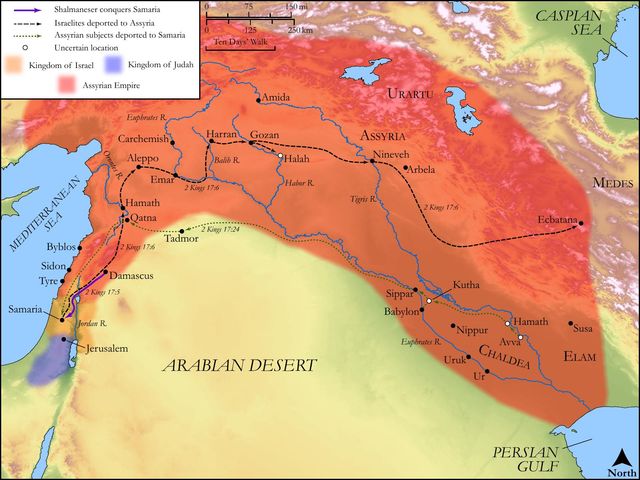
The late 8th century BCE was a period of immense geopolitical upheaval in the ancient Near East, dominated by the relentless expansion of the Neo-Assyrian Empire. At the time of this verse, Hoshea, the king of Israel, was a vassal of Assyria, but his attempts to rebel by seeking aid from Egypt ultimately led to the Assyrian siege and destruction of Samaria, Israel's capital, and the deportation of its people (as recorded in 2 Kings 17:3-6). Judah, though smaller, was also under Assyrian influence, especially after Ahaz, Hezekiah's father, had sought Assyrian protection and adopted their idolatrous practices (see 2 Kings 16:7-18). Hezekiah's ascension thus occurs at a critical juncture, with the looming threat of Assyria and the immediate example of Israel's downfall serving as a stark warning and a call to a different path for Judah.
Key Themes
ShowHideThe verse introduces several key themes that will be developed throughout Hezekiah's narrative. Firstly, it highlights Divine Sovereignty in Leadership, demonstrating God's hand in raising up a righteous king like Hezekiah even after a period of profound spiritual decline under Ahaz. Secondly, it emphasizes the Contrast Between Righteous and Unrighteous Rule, setting Hezekiah's faithful leadership against the backdrop of his wicked father and the idolatrous kings of Israel, whose reigns culminated in national catastrophe. Thirdly, it underscores the theme of Hope for Renewal and Reform, signifying that even when a nation seems lost to sin, God can inspire and empower individuals to lead a return to covenant faithfulness. Finally, the Chronological Precision of the verse reinforces the historical reliability of the biblical narrative, grounding the theological message in verifiable historical events.
Exposition and Analysis
ShowHideKey Word Analysis
ShowHideFrom the root meaning "strengthened" and the divine name "Yah," this name means "Yahweh strengthens" or "Yahweh is my strength." This etymology is profoundly significant for Hezekiah's reign, which is characterized by his unwavering reliance on God's strength in the face of overwhelming Assyrian power (e.g., 2 Kings 19:14-19). His life and actions powerfully illustrate the meaning of his name, demonstrating that true strength and deliverance come from dependence on the Lord.
This name means "deliverer" or "salvation." This carries a tragic irony in the context of the Northern Kingdom. Hoshea was unable to deliver Israel from its impending destruction and exile; in fact, his actions directly contributed to it. The juxtaposition of his name with the fall of Israel highlights the ultimate futility of human efforts and alliances apart from God's true salvation.
This primitive root signifies the formal assumption of royal power and authority, often implying the act of ascending the throne or being inducted into royalty. The use of "began to reign" indicates the commencement of a new era, not just a mere succession, but the inauguration of a distinct period of rule with its own policies and character, particularly in stark contrast to the preceding monarch.
Verse Breakdown
ShowHide"Now it came to pass in the third year of Hoshea son of Elah king of Israel,"
This clause provides a precise chronological anchor, synchronizing the timelines of the Northern Kingdom (Israel) and the Southern Kingdom (Judah). By dating Hezekiah's ascension to the third year of Hoshea, the narrator highlights the concurrent existence of both kingdoms just before Israel's final collapse. This specific dating emphasizes the historical accuracy and interconnectedness of the biblical narrative, setting the stage for the contrasting fates of Israel and Judah. It implicitly underscores the divine timing of Hezekiah's righteous rule as a response to the spiritual decay culminating in Israel's judgment.
"[that] Hezekiah the son of Ahaz king of Judah began to reign."
This clause announces the commencement of Hezekiah's rule in Judah. The mention of his father, Ahaz, immediately establishes a stark contrast, as Ahaz was one of Judah's most wicked kings, known for his widespread idolatry and unfaithfulness. Hezekiah's reign, therefore, is presented from its very beginning as a new chapter, promising a dramatic departure from the spiritual decline that characterized his father's rule and the Northern Kingdom, signaling a period of potential revival and faithfulness to Yahweh.
Literary Devices
ShowHideThe verse employs several significant literary devices that enrich its meaning. Juxtaposition is prominent, setting the beginning of Hezekiah's righteous reign in Judah directly against the backdrop of Hoshea's final, doomed years in Israel. This stark contrast highlights the divergent paths and destinies of the two kingdoms, one heading towards judgment, the other towards reform. The precise Chronological Marker ("in the third year of Hoshea") serves not only to establish historical accuracy but also to create a sense of impending doom for Israel, subtly foreshadowing its imminent fall detailed in the preceding chapter. This precise dating also emphasizes the divine control over history, as a righteous king is raised up in Judah at a critical juncture, offering a glimmer of hope amidst the regional turmoil. Furthermore, the naming of Hezekiah, whose name means "Yahweh strengthens," functions as a form of Proleptic Naming, hinting at the divine strength and reliance on God that will characterize his reign and ultimately lead to Judah's miraculous deliverance from Assyria.
Theological and Thematic Connections
ShowHideThis foundational verse underscores the theological truth of God's active involvement in human history and His sovereign appointment of leaders. Even in the darkest periods of spiritual decline, such as the rampant idolatry under King Ahaz and the impending judgment on Israel, God orchestrates the rise of individuals who can bring about His purposes. Hezekiah's ascension signifies that God's grace can initiate renewal and reform, offering hope for a people who have strayed. It also highlights the profound impact of leadership on a nation's spiritual and physical well-being, contrasting the consequences of unfaithfulness (Israel's exile) with the potential for blessing through righteous rule (Judah's temporary reprieve and revival).
Reflection and Application
ShowHideThe beginning of Hezekiah's reign, marked by this verse, offers profound lessons for contemporary believers. It reminds us that even when our circumstances seem bleak, or when we inherit a legacy of unfaithfulness, God is capable of bringing about radical transformation and renewal. Hezekiah, despite inheriting a kingdom steeped in idolatry from his father Ahaz, chose a different path, demonstrating the power of individual conviction and unwavering reliance on God. This challenges us to consider our own spheres of influence—whether personal, familial, or communal—and ask how we can be agents of God's reform and righteousness, rather than simply accepting the status quo. His story encourages us to seek God's strength ("Yahweh strengthens") in the face of overwhelming challenges, trusting that true deliverance and spiritual flourishing come from Him alone.
Questions for Reflection
ShowHideFAQ
ShowHideWhy is the precise dating in this verse important?
ShowHideThe precise dating ("in the third year of Hoshea son of Elah king of Israel") is crucial for several reasons. Firstly, it establishes the historical accuracy and reliability of the biblical account, allowing synchronicity with other historical records of the ancient Near East. Secondly, it highlights the concurrent timelines of the Northern Kingdom (Israel) and the Southern Kingdom (Judah), underscoring that Hezekiah's righteous reign in Judah began precisely as Israel was on the brink of its final destruction and exile, as detailed in 2 Kings 17. This chronological marker sets a dramatic backdrop, contrasting Israel's demise due to unfaithfulness with Judah's opportunity for renewal under a righteous king.
How does Hezekiah's reign compare to his father Ahaz's?
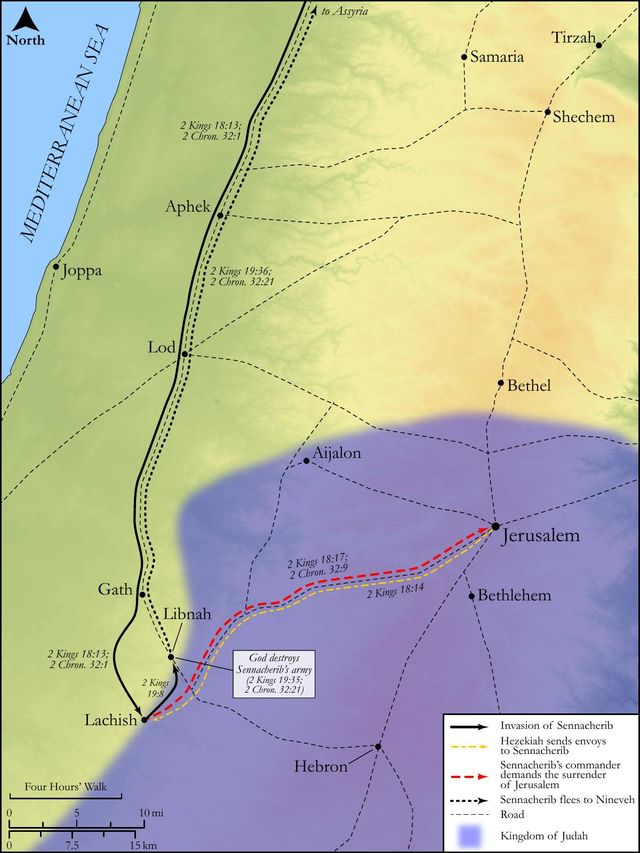
ShowHideHezekiah's reign stands in stark contrast to that of his father, Ahaz. Ahaz was one of Judah's most wicked kings, known for introducing widespread idolatry, even sacrificing his own son to pagan gods, and forming an unholy alliance with Assyria out of fear rather than trusting in the Lord (see 2 Kings 16:3-4 and 2 Chronicles 28:1-5). In contrast, Hezekiah is consistently presented as one of Judah's most righteous kings, who "did what was right in the eyes of the Lord, according to all that David his father had done" (2 Kings 18:3). He initiated sweeping religious reforms, destroyed idols, cleansed the temple, and restored proper worship of Yahweh, demonstrating deep faith and reliance on God, particularly during the Assyrian invasion (as seen in 2 Kings 19).
What was the state of the Northern Kingdom (Israel) at this time?
ShowHideAt the time Hezekiah began his reign, the Northern Kingdom of Israel was in a state of terminal decline and on the verge of complete collapse. King Hoshea, mentioned in this verse, was the last king of Israel. He had become a vassal of the powerful Assyrian Empire, paying tribute to avoid invasion. However, Hoshea eventually rebelled by seeking an alliance with Egypt, which provoked the Assyrian king Shalmaneser V to besiege Samaria, Israel's capital. This siege lasted three years and culminated in the city's fall and the mass deportation of the Israelite population by Sargon II, Shalmaneser's successor, as detailed in 2 Kings 17:5-6. Thus, Hezekiah's ascension in Judah occurred amidst the final, devastating moments of Israel's national existence.
Christ-Centered Fulfillment
ShowHideThe beginning of Hezekiah's reign, marked by this verse, serves as a powerful foreshadowing of the ultimate righteous King, Jesus Christ. Hezekiah, whose name means "Yahweh strengthens," came to power after a period of profound spiritual darkness under his father Ahaz, initiating a much-needed spiritual revival and delivering his people from the mighty Assyrian threat through divine intervention. In a far greater and eternal sense, Jesus Christ, the Son of David, came into a world steeped in sin and spiritual decay, not merely to reform a nation, but to bring ultimate salvation and spiritual cleansing to all who believe. He is the true King who perfectly embodies "Yahweh is my strength," demonstrating absolute reliance on the Father and conquering the ultimate enemies of sin and death (as declared in Colossians 2:15). While Hezekiah's reign was temporary and his deliverance physical, Christ's reign is eternal, and His deliverance is spiritual and everlasting, ushering in the true Kingdom of God (as promised in Luke 1:32-33). Hezekiah's reliance on God for strength and his role as a deliverer point directly to Jesus, the Lamb of God who takes away the sin of the world (John 1:29), the King who truly saves His people from their sins (Matthew 1:21).