


2 Kings 18:2
- בֶּןbena son ofH1121N-mscNoun Singular Masculine Construct
- עֶשְׂרִים'es·RimtwentyH6242N-mpNoun Plural Masculine Absolute
- וְחָמֵשׁve·cha·Meshand fiveH2568Conj-w ¦ N-csNoun Singular common gender Absoluteוְandחָמֵשׁfive
- שָׁנָהsha·Nahyear[s]H8141N-fsNoun Singular Feminine Absolute
- הָיָהha·Yahhe wasH1961V-Qal-Perf-3msVerb Qal Perfect 3rd Singular Masculine
- בְמָלְכוֹve·ma·le·Khowhen he became kingH4427Prep-b ¦ V-Qal-Inf ¦ 3msVerb Qal Infinitive Constructבְwhenמָלְכbecame kingוֹhe
- וְעֶשְׂרִיםve·'es·Rimand twentyH6242Conj-w ¦ N-mpNoun Plural Masculine Absoluteוְandעֶשְׂרִיםtwenty
- וָתֵשַׁעva·Te·sha'and nineH8672Conj-w ¦ N-csNoun Singular common gender Absoluteוָandתֵשַׁעnine
- שָׁנָהsha·Nahyear[s]H8141N-fsNoun Singular Feminine Absolute
- מָלַךְma·Lakhhe reignedH4427V-Qal-Perf-3msVerb Qal Perfect 3rd Singular Masculine
- בִּירוּשָׁלִָםbi·ru·sha·Limin JerusalemH3389Prep-b ¦ N-properNoun Proper LocationבִּinירוּשָׁלִָםJerusalem
- וְשֵׁםve·Shemand [the] name ofH8034Conj-w ¦ N-mscNoun Singular Masculine Constructוְandשֵׁם[the] name of
- אִמּוֹ'i·Mohis motherH517N-fsc ¦ 3msNoun Singular Feminine Constructאִמּmotherוֹhis
- אֲבִי'a·Vi[was] AbiH21N-proper-fNoun Proper Feminine
- בַּתbat[the] daughter ofH1323N-fscNoun Singular Feminine Construct
- זְכַרְיָהze·khar·YahZechariahH2148N-proper-mNoun Proper Masculine
English is a literal word-by-word gloss of the Hebrew, not the KJV's wording. Why?
This is the original text the KJV's translators worked from — each Hebrew word with its own literal English meaning in this verse, prepared by scholars at Tyndale House, Cambridge. The KJV translates whole sentences, not word by word, so its wording differs: one Hebrew word can become several English words, and the KJV may choose “the LORD” where the gloss reads “Yahweh”. Both are faithful — they answer different questions. For the KJV's own rendering, switch to the KJV text.
Details
See on the biblical-era map
Study this verse
Public-domain commentary
Matthew Henry
From his Commentary on the Whole Bible. Henry comments on passages, not single verses — this entry covers 2 Kings 18:1–8. His three-level outline is real structure in the source text, so it is rendered as structure.
We have here a general account of the reign of Hezekiah. It appears, by comparing his age with his father's, that he was born when his father was about eleven or twelve years old, divine Providence so ordering that he might be of full age, and fit for business, when the measure of his father's iniquity should be full. Here is,
I.His great piety, which was the more wonderful because his father was very wicked and vile, one of the worst of the kings, yet he was one of the best, which may intimate to us that what good there is in any is not of nature, but of grace, free grace, sovereign grace, which, contrary to nature, grafts into the good olive that which was wild by nature (Rom 11:24), and also that grace gets over the greatest difficulties and disadvantages: Ahaz, it is likely, gave his son a bad education as well as a bad example; Urijah his priest perhaps had the tuition of him; his attendants and companions, we may suppose, were such as were addicted to idolatry; and yet Hezekiah became eminently good. When God's grace will work what can hinder it?
1.He was a genuine son of David, who had a great many degenerate ones (Kg2 18:3): He did that which was right, according to all that David his father did, with whom the covenant was made, and therefore he was entitled to the benefit of it. We have read of some of them who did that which was right, but not like David, Kg2 14:3. They did not love God's ordinances, nor cleave to them, as he did; but Hezekiah was a second David, had such a love for God's word, and God's house, as he had. Let us not be frightened with an apprehension of the continual decay of virtue, as if, when times and men are bad, they must needs, of course, grow worse and worse; that does not follow, for, after many bad kings, God raised up one that was like David himself.
2.He was a zealous reformer of his kingdom, and as we find (Ch2 29:3) he began betimes to be so, fell to work as soon as ever he came to the crown, and lost no time. He found his kingdom very corrupt, the people in all things too superstitious. They had always been so, but in the last reign worse than ever. By the influence of his wicked father, a deluge of idolatry had overspread the land; his spirit was stirred against this idolatry, we may suppose (as Paul's at Athens), while his father lived, and therefore, as soon as ever he had power in his hands, he set himself to abolish it (Kg2 18:4), though, considering how the people were wedded to it, he might think it could not be done without opposition.
(1.)The images and the groves were downright idolatrous and of heathenish original. These he broke and destroyed. Though his own father had set them up, and shown an affection for them, yet he would not protect them. We must never dishonour God in honour to our earthly parents.
(2.)The high places, though they had sometimes been used by the prophets upon special occasions and had been hitherto connived at by the good kings, were nevertheless an affront to the temple and a breach of the law which required them to worship there only, and, being from under the inspection of the priests, gave opportunity for the introducing of idolatrous usages. Hezekiah therefore, who made God's word his rule, not the example of his predecessors, removed them, made a law for the removal of them, the demolishing of the chapels, tabernacles, and altars there erected, and the suppressing of the use of them, which law was put in execution with vigour; and, it is probable, the terrible judgments which the kingdom of Israel was now under for their idolatry made Hezekiah the more zealous and the people the more willing to comply with him. It is well when our neighbours' harms are our warnings.
(3.)The brazen serpent was originally of divine institution, and yet, because it had been abused to idolatry, he broke it to pieces. The children of Israel had brought that with them to Canaan; where they set it up we are not told, but, it seems, it had been carefully preserved, as a memorial of God's goodness to their fathers in the wilderness and a traditional evidence of the truth of that story, Num 21:9, for the encouragement of the sick to apply to God for a cure and of penitent sinners to apply to him for mercy. But in process of time, when they began to worship the creature more than the Creator, those that would not worship images borrowed from the heathen, as some of their neighbours did, were drawn in by the tempter to burn incense to the brazen serpent, because that was made by order from God himself and had been an instrument of good to them. But Hezekiah, in his pious zeal for God's honour, not only forbade the people to worship it, but, that it might never be so abused any more, he showed the people that it was Nehushtan, nothing else but a piece of brass, and that therefore it was an idle wicked thing to burn incense to it; he then broke it to pieces, that is, as bishop Patrick expounds it, ground it to powder, which he scattered in the air, that no fragment of it might remain. If any think that the just honour of the brazen serpent was hereby diminished they will find it abundantly made up again, Joh 3:14, where our Saviour makes it a type of himself. Good things, when idolized, are better parted with than kept.
3.Herein he was a nonesuch, Kg2 18:5. None of all the kings of Judah were like him, either before or after him. Two things he was eminent for in his reformation: - (1.) Courage and confidence in God. In abolishing idolatry, there was danger of disobliging his subjects, and provoking them to rebel; but he trusted in the Lord God of Israel to bear him out in what he did and save him from harm. A firm belief of God's all-sufficiency to protect and reward us will conduce much to make us sincere, bold, and vigorous, in the way of our duty, like Hezekiah. When he came to the crown he found his kingdom compassed with enemies, but he did not seek for succour to foreign aids, as his father did, but trusted in the God of Israel to be the keeper of Israel. (2.) Constancy and perseverance in his duty. For this there was none like him, that he clave to the Lord with a fixed resolution and never departed from following him, Kg2 18:6. Some of his predecessors that began well fell off: but he, like Caleb, followed the Lord fully. He not only abolished all idolatrous usages, but kept God's commandments, and in every thing made conscience of his duty.
II.His great prosperity, Kg2 18:7, Kg2 18:8.
He was with God, and then God was with him, and, having the special presence of God with him, he prospered whithersoever he went, had wonderful success in all his enterprises, in his wars, his buildings, and especially his reformation, for that good work was carried on with less difficulty than he could have expected. Those that do God's work with an eye to his glory, and with confidence in his strength, may expect to prosper in it. Great is the truth and will prevail. Finding himself successful,
1.He threw off the yoke of the king of Assyria, which his father had basely submitted to. This is called rebelling against him, because so the king of Assyria called it; but it was really an asserting of the just rights of his crown, which it was not in the power of Ahaz to alienate. If it was imprudent to make this bold struggle so soon, yet I see not that it was, as some think, unjust; when he had thrown out the idolatry of the nations he might well throw off the yoke of their oppression. The surest way to liberty is to serve God.
2.He made a vigorous attack upon the Philistines, and smote them even unto Gaza, both the country villages and the fortified town, the tower of the watchmen and the fenced cities, reducing those places which they had made themselves masters of in his father's time, Ch2 28:18. When he had purged out the corruptions his father had brought in he might expect to recover the possessions his father had lost. Of his victories over the Philistines Isaiah prophesied, Isa 14:28, etc.
Continue studying 2 Kings 18:2 across the web’s major study libraries — every link below opens this exact verse, chapter, or book on the destination site.
Read & Compare
 BibleGatewayThis verse in more than 200 translations and 70 languages.
 Bible.comThe YouVersion reader — hundreds of translations, reading plans, and highlights.
 ESV.orgCrossway's official English Standard Version reader.
 NET BibleThe NET translation with 60,000+ translators' notes on every rendering decision.
 STEP BibleTyndale House's free study tool — original text, vocabulary, and scholarly resources.
 BibliaLogos Bible Software's free web reader.
 USCCBThe New American Bible (Revised Edition) with the U.S. bishops' study notes.
Commentaries
 BibleHub CommentariesDozens of classic commentaries on this verse, gathered on one page.
 StudyLightMore than 100 commentary sets — the largest collection on the web.
 BibleRefPlain-English commentary on what this verse means, verse by verse.
 Enduring WordDavid Guzik's free commentary on this chapter, widely used by Bible teachers.
 Bible Study ToolsVerse commentary alongside Greek and Hebrew study aids.
Original Language & Research
- BibleHub InterlinearThe verse word by word — original language, transliteration, and English.
- BibleHub LexiconEvery word's original-language definition and Strong's entry.
 Blue Letter BibleDeep-study tools — Strong's numbers, concordance, and word studies.
 SefariaThe Hebrew text with Rashi and centuries of Jewish commentary.
Sermons, Hymns & Audio


TrulyRandomVerse is not affiliated with these sites and doesn’t control their content. They’re linked because they’re genuinely useful.
Summary
Second Kings 18:2 serves as the foundational introduction to King Hezekiah of Judah, providing crucial chronological and familial details that foreshadow his impactful and righteous reign. This verse establishes that Hezekiah ascended the throne in Jerusalem at the age of twenty-five and ruled for twenty-nine years. It further identifies his mother as Abi, the daughter of Zachariah, a detail that not only grounds Hezekiah within the legitimate Davidic lineage but also subtly hints at divine providence, especially given the spiritual decline under his father, Ahaz. This concise yet information-rich introduction sets the stage for a period of significant spiritual revival, national reform, and profound challenges under one of Judah's most exemplary monarchs.
Context
ShowHideLiterary Context
This verse marks a pivotal transition in the narrative of 2 Kings, immediately following the account of the deeply idolatrous and wicked reign of King Ahaz, Hezekiah's father, detailed in 2 Kings 16. The book of 2 Kings consistently employs a standardized introductory formula for its kings, typically including their age at accession, the duration of their reign, and their mother's name. Hezekiah's introduction here, particularly after such a corrupt predecessor, signals a dramatic and divinely orchestrated shift in Judah's spiritual trajectory. His reign is extensively chronicled in 2 Kings 18-20 and further elaborated upon in 2 Chronicles 29-32, underscoring its profound theological and historical significance within the biblical narrative. The specific details provided in 2 Kings 18:2 establish the precise historical framework for the subsequent accounts of his sweeping religious reforms, his unwavering trust in Yahweh during the existential Assyrian crisis, and his personal struggles with illness and pride.
Historical & Cultural Context
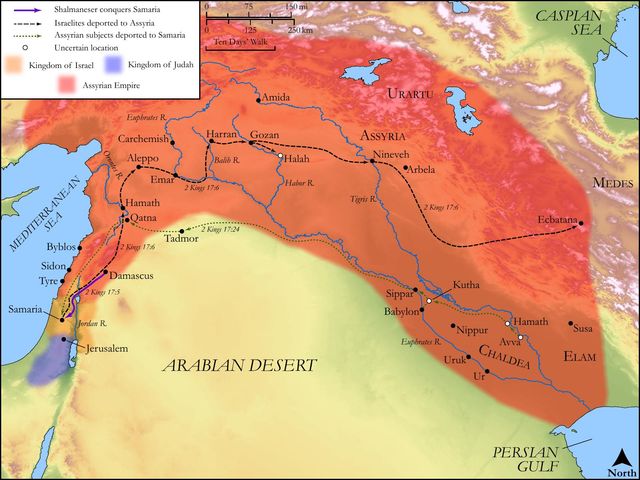
Hezekiah's reign, traditionally dated from approximately 715 to 686 BC, unfolded during an exceptionally tumultuous era in the ancient Near East, characterized by the relentless expansion and dominance of the Neo-Assyrian Empire. Judah, a relatively small kingdom, found itself under immense geopolitical pressure, frequently subjected to Assyrian vassalage, a condition exacerbated by Ahaz's earlier submission. Jerusalem, as the capital, functioned as both the political and religious epicenter of the kingdom, meaning the character and policies of its king held profound implications for the nation's spiritual vitality and physical security. The inclusion of the king's age at accession and the precise duration of his reign was a standard convention in ancient Near Eastern royal annals, providing a reliable historical framework. Similarly, the mention of the king's mother's name, while not always accompanied by extensive details of her influence, was a common genealogical marker, particularly crucial for validating the legitimacy and continuity of the Davidic royal line.
Key Themes
ShowHideThe introductory details of Hezekiah in 2 Kings 18:2 immediately bring several foundational themes to the forefront of the narrative. Firstly, the theme of Divine Sovereignty and Providence in Leadership is powerfully evident; despite being the son of the deeply unrighteous King Ahaz, Hezekiah emerges as a beacon of righteousness, demonstrating God's sovereign ability to raise up faithful leaders even in the most challenging and spiritually compromised circumstances (2 Kings 18:3). Secondly, the meticulous recording of Lineage and Genealogy underscores the enduring importance of the Davidic covenant and the divinely preserved continuity of the royal line, which is absolutely crucial for the eventual advent of the Messiah. This genealogical detail firmly connects Hezekiah within the messianic lineage, as later affirmed in Matthew 1:9. Thirdly, the verse sets the stage for a profound Spiritual Revival in Judah. Hezekiah's reign, in stark contrast to his father's, would be characterized by a zealous return to Yahweh worship, the extensive cleansing and rededication of the Temple, and the systematic destruction of idolatrous practices, as comprehensively recounted in 2 Chronicles 29-31.
Exposition and Analysis
ShowHideKey Word Analysis
ShowHideThis primitive root signifies "to reign" or "to ascend the throne," and causatively, "to induct into royalty." In the context of 2 Kings 18:2, it marks the formal beginning of Hezekiah's rule, emphasizing his assumption of royal authority and responsibilities. The verb implies not just a passive holding of power, but active governance and leadership, which is particularly significant given Hezekiah's proactive reforms.
Derived from the Hebrew word for "father," this name means "my father" or "fatherly." As Hezekiah's mother's name, its presence is a standard genealogical marker. While not explicitly stated, the name might subtly point to God's continued fatherly care and covenant faithfulness towards Judah, even when a king like Ahaz had deviated, setting the stage for Hezekiah's righteous reign.
Meaning "Yahweh remembers" or "the Lord has remembered," this name carries profound theological significance. Although this Zachariah is not the prophet, his name, as Abi's father, serves as a subtle, yet powerful, theological allusion. It suggests God's enduring remembrance of His covenant promises to David and to His people, even during periods of national apostasy, foreshadowing the divine intervention and spiritual renewal that would characterize Hezekiah's reign.
Verse Breakdown
ShowHide"Twenty and five years old was he when he began to reign;"
This clause provides the precise age of Hezekiah at his accession to the throne. At twenty-five, he was in the prime of his youth, suggesting a period of vigor, energy, and potential for dynamic leadership. This detail also highlights the significant duration of his subsequent reign, indicating ample time for substantial impact and comprehensive reforms, marking the definitive beginning of a new, distinct era for Judah following the spiritual darkness of Ahaz's rule.
"and he reigned twenty and nine years in Jerusalem."
This specifies both the duration and the geographical center of Hezekiah's rule. Twenty-nine years is a considerable period for an ancient monarch, signifying a stable and impactful reign that allowed for the implementation of long-term policies and reforms. The phrase "in Jerusalem" underscores his authority over the capital city, which was the political and spiritual heart of the kingdom and the site of the Temple. This made his religious policies particularly crucial and impactful on the nation's spiritual life and destiny, enabling him to navigate significant geopolitical challenges, including the formidable Assyrian threat.
"His mother's name also [was] Abi, the daughter of Zachariah."
This final clause identifies Hezekiah's mother and her father. The inclusion of the mother's name is a consistent feature in the regnal formulas of the kings of Judah, serving primarily as a genealogical marker that affirms Hezekiah's legitimate place within the Davidic lineage. While the text does not explicitly detail Abi's influence, her lineage, particularly through her father Zachariah ("Yahweh remembers"), subtly foreshadows God's remembering His covenant with Judah through the righteous reign that Hezekiah would inaugurate.
Literary Devices
ShowHide2 Kings 18:2 employs several key literary devices to convey its meaning and set the stage for Hezekiah's narrative. Chronological Detail is prominently featured, providing precise numerical figures for Hezekiah's age at accession and the duration of his reign. This factual precision lends historical credibility to the narrative and firmly anchors the account within a specific historical timeframe. The inclusion of the mother's name and her father functions as a crucial Genealogical Marker, establishing Hezekiah's legitimate lineage and connecting him to the broader Davidic dynasty, which is foundational for the biblical narrative of salvation history and the messianic promise. Implicitly, the verse also utilizes Contrast by immediately following the detailed account of Ahaz's profound wickedness; Hezekiah's introduction, with its inherent potential for a new beginning and spiritual renewal, powerfully highlights the stark difference between the two reigns. Finally, the verse acts as potent Foreshadowing, setting the stage for the extensive and highly significant events of Hezekiah's reign, including his profound religious reforms, his unwavering faith, and the dramatic confrontation with the formidable Assyrian Empire.
Theological and Thematic Connections
ShowHideThe seemingly straightforward details of Hezekiah's introduction in 2 Kings 18:2 carry profound theological weight. This verse powerfully demonstrates God's sovereign hand in raising up leaders, even from challenging or unrighteous backgrounds, to fulfill His divine purposes. Despite being the son of the apostate King Ahaz, Hezekiah emerged as one of Judah's most righteous kings, illustrating that an individual's spiritual trajectory is not solely determined by their parentage or environment but by their personal response to God's call and covenant. This verse underscores the enduring theme of divine faithfulness to the Davidic covenant, as God meticulously preserves a righteous line through whom His promises will ultimately be fulfilled, culminating in the Messiah. Hezekiah's reign, initiated at a relatively young age and lasting for a significant period, would become a powerful testament to God's power to bring about profound spiritual renewal and national deliverance when His people, led by a faithful king, turn back to Him in obedience and trust.
Reflection and Application
ShowHideThe seemingly straightforward details of 2 Kings 18:2 offer rich ground for profound reflection and practical application in our lives today. Hezekiah's remarkable emergence as a righteous king, despite being the son of a wicked and idolatrous father, serves as a powerful reminder that our spiritual trajectory is never predetermined by our family background, past circumstances, or the prevailing culture. God possesses the sovereign ability to raise up and powerfully use anyone who is willing to turn to Him, embrace His truth, and walk in His ways, regardless of their heritage or the spiritual climate around them. This verse instills hope, encouraging us that genuine spiritual renewal is always possible, even in the most challenging and seemingly hopeless environments. It calls us to critically examine our own spheres of influence—whether our family, workplace, church, or community—and to prayerfully consider how we, like Hezekiah, might initiate or contribute to a return to God's truth and righteousness. The Bible's meticulous recording of seemingly minor historical and genealogical details also affirms God's sovereign attention to every aspect of human history, assuring us that our individual lives, too, are intricately woven into His grand, unfolding redemptive narrative.
Questions for Reflection
ShowHideFAQ
ShowHideWhy is the mother's name mentioned for kings in the Bible?
ShowHideThe inclusion of the king's mother's name is a standard and significant feature in the regnal formulas for the kings of Judah, though it appears less consistently for the kings of Israel. This practice serves several crucial purposes. Firstly, it provides vital genealogical information, which was especially important for the Davidic dynasty. It reinforced the legitimacy and continuity of the royal line, a critical aspect given the messianic prophecies that centered on David's descendants. Secondly, the queen mother often held a position of considerable influence within the royal court, sometimes even acting as a regent or advisor. Her character, background, or political alliances could therefore be relevant to understanding the king's reign. For instance, a righteous mother might be seen as a positive influence on her son's piety, while a wicked one could help explain a king's deviation from God's commands. In Hezekiah's case, while Abi's direct influence isn't extensively detailed, her name and her father Zachariah's name ("Yahweh remembers") might subtly underscore God's continued remembrance of His covenant with David, even amidst the spiritual decline initiated by Hezekiah's father, Ahaz.
Does Hezekiah's age at accession (25) have any special significance?
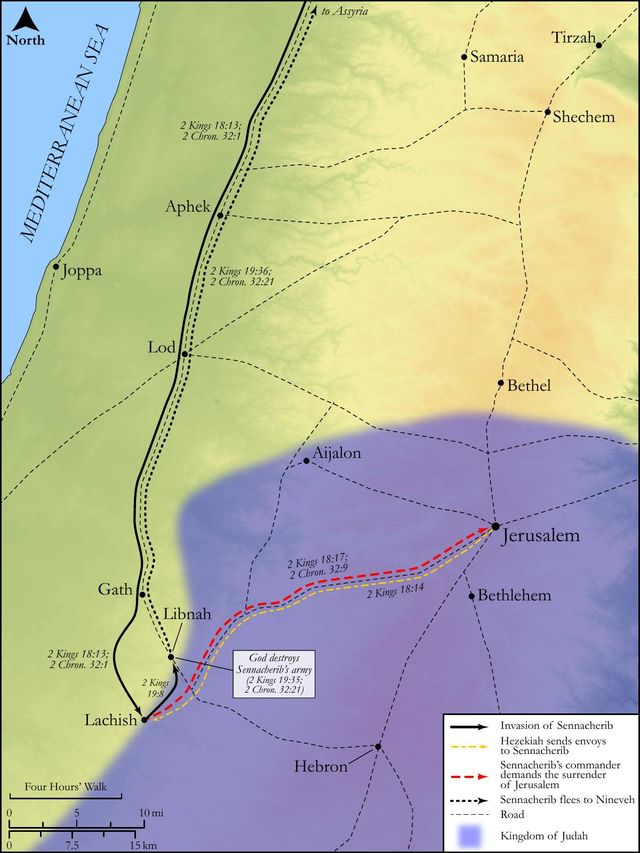
ShowHideHezekiah's age of twenty-five at the beginning of his reign is relatively young for a monarch, particularly when considering the immense responsibilities and national challenges he would immediately face. This youthfulness might suggest a dynamic, energetic, and perhaps even idealistic approach to his rule, enabling him to undertake bold reforms. More importantly, his long reign of twenty-nine years allowed him ample time to implement comprehensive religious reforms and to lead Judah through critical national crises, most notably the formidable Assyrian invasion under Sennacherib. This extended period highlights God's strategic timing in raising up a righteous king who would have the sustained opportunity to make a profound and lasting impact on the nation's spiritual and political landscape, demonstrating that God can powerfully use individuals at various stages of life to accomplish His sovereign purposes.
Christ-Centered Fulfillment
ShowHideHezekiah's introduction in 2 Kings 18:2, though seemingly a simple historical record, profoundly points forward to the ultimate King, Jesus Christ. Hezekiah, a righteous king who initiated widespread religious reforms, cleansed the temple, and led his people back to Yahweh, serves as a powerful type of Christ's perfect righteousness and His redemptive work of spiritual purification. Just as Hezekiah zealously led Judah back to true worship, Jesus, the Lamb of God who takes away the sin of the world, cleanses His people from sin and establishes a new covenant of worship in spirit and truth (John 4:23-24). The meticulous recording of Hezekiah's lineage, specifically through his mother Abi and her father Zachariah, underscores his integral place in the Davidic line, a lineage absolutely critical for the Messiah. Hezekiah is indeed explicitly listed in the genealogy of Jesus (Matthew 1:9), affirming that Christ is the rightful and promised heir to David's eternal throne. Hezekiah's reign, marked by God's strengthening hand amidst existential Assyrian threats, prefigures the eternal and unshakable kingdom of Christ, who reigns supreme over all earthly powers and whose dominion is an everlasting dominion that will never pass away. Ultimately, Hezekiah's story is a testament to God's unwavering faithfulness in preserving the royal line until the arrival of the true King, Jesus, who not only reigns for a set number of years but whose kingdom is without end.