


1 Samuel 29:11
Bible text: King James Version (1769 Blayney text) · Public domain
Bible text: Berean Standard Bible · Public domain
Bible text: American Standard Version (1901) · Public domain
Bible text: World English Bible, Messianic edition · Public domain
Bible text: Geneva Bible (1599) · Public domain
Bible text: Young's Literal Translation · Public domain
- וַיַּשְׁכֵּםvai·yash·Kemand he rose earlyH7925Conj-w ¦ V-Hiphil-ConsecImperf-3msVerb Hiphil Consecutive Imperfect 3rd Singular Masculineוַandיַּשְׁכֵּםhe rose early
- דָּוִדda·VidDavidH1732N-proper-mNoun Proper Masculine
- הוּאhu'heH1931Pro-3msPronoun Personal 3rd Singular Masculine
- וַאֲנָשָׁיוva·'a·na·Shavand his menH582Conj-w ¦ N-mpc ¦ 3msNoun Plural Masculine Constructוַandאֲנָשָׁיmenוhis
- לָלֶכֶתla·Le·khetto goH1980Prep-l ¦ V-Qal-InfVerb Qal Infinitive Constructלָtoלֶכֶתgo
- בַּבֹּקֶרba·Bo·kerin the morningH1242Prep-b ¦ N-msNoun Singular Masculine Absoluteבַּin theבֹּקֶרmorning
- לָשׁוּבla·Shuvto returnH7725Prep-l ¦ V-Qal-InfVerb Qal Infinitive Constructלָtoשׁוּבreturn
- אֶל'eltoH413PrepPreposition
- אֶרֶץ'E·retz[the] land ofH776N-fscNoun Singular Feminine Construct
- פְּלִשְׁתִּיםpe·lish·Tim[the] PhilistinesH6430N-mpNoun Gentilic Plural Masculine Absolute
- וּפְלִשְׁתִּיםu·fe·lish·Timand [the] PhilistinesH6430Conj-w ¦ N-mpNoun Gentilic Plural Masculine Absoluteוּandפְלִשְׁתִּים[the] Philistines
- עָלוּ'a·Luthey went upH5927V-Qal-Perf-3cpVerb Qal Perfect 3rd Plural common gender
- יִזְרְעֶאלyiz·re·'ElJezreelH3157N-properNoun Proper Location
English is a literal word-by-word gloss of the Hebrew, not the KJV's wording. Why?
This is the original text the KJV's translators worked from — each Hebrew word with its own literal English meaning in this verse, prepared by scholars at Tyndale House, Cambridge. The KJV translates whole sentences, not word by word, so its wording differs: one Hebrew word can become several English words, and the KJV may choose “the LORD” where the gloss reads “Yahweh”. Both are faithful — they answer different questions. For the KJV's own rendering, switch to the KJV text.
Details
See on the biblical-era map
Study this verse
Public-domain commentary
Matthew Henry
From his Commentary on the Whole Bible. Henry comments on passages, not single verses — this entry covers 1 Samuel 29:6–11. His two-level outline is real structure in the source text, so it is rendered as structure.
If the reasons Achish had to trust David were stronger than the reasons which the princes offered why they should distrust him (as I do not see that, in policy, they were, for the princes were certainly in the right), yet Achish was but one of five, though the chief, and the only one that had the title of king; accordingly, in a council of war held on this occasion, he was over-voted, and obliged to dismiss David, though he was extremely fond of him. Kings cannot always do as they would, nor have such as they would about them.
I.The discharge Achish gives him is very honourable, and not a final discharge, but only from the present service.
1.He signifies the great pleasure and satisfaction he had taken in him and in his conversation: Thou art good in my sight as an angel of God, Sa1 29:9. Wise and good men will gain respect, wherever they go, from all that know how to make a right estimate of persons and things, though of different professions in religion. What Achish says of David, God, by the prophet, says of the house of David (Zac 12:8), that it shall be as the angel of the Lord. But the former is a court-compliment; the latter is a divine promise.
2.He gives him a testimonial of his good behaviour, Sa1 29:6. It is very full and in obliging terms: "Thou hast been upright, and thy whole conduct has been good in my sight, and I have not found evil in thee." Saul would not have given him such a testimonial, though he had done far more service to him than Achish. God's people should behave themselves always so inoffensively as if possible to get the good word of all they have dealings with; and it is a debt we owe to those who have acquitted themselves well to give them the praise of it.
3.He lays all the blame of his dismission upon the princes, who would by no means suffer him to continue in the camp. "The king loves thee entirely, and would venture his life in thy hand; but the lords favour thee not, and we must not disoblige them, nor can we oppose them; therefore return and go in peace." He had better part with his favourite than occasion a disgust among his generals and a mutiny in his army. Achish intimates a reason why they were uneasy. It was not so much for David's own sake as for the sake of his soldiers that attended him, whom he calls his master's servants (namely, Saul's), Sa1 29:10. They could trust him, but not them. (4.) He orders him to be gone early, as soon as it was light (Sa1 29:10), to prevent their further resentments, and the jealousies they would have been apt to conceive if he had lingered.
II.His reception of this discourse is very complimental; but, I fear, not without some degree of dissimulation.
"What?" says David, "must I leave my lord the king, whom I am bound by office to protect, just now when he is going to expose himself in the field? Why may not I go and fight against the enemies of my lord the king?" Sa1 29:8. He seemed anxious to serve him when he was at this juncture really anxious to leave him, but he was not willing that Achish should know that he was. No one knows how strong the temptation is to compliment and dissemble which those are in that attend great men, and how hard it is to avoid it.
III.God's providence ordered it wisely and graciously for him.
For, besides that the snare was broken and he was delivered out of the dilemma to which he was first reduced, it proved a happy hastening of him to the relief of his own city, which sorely wanted him, though he did not know it. Thus the disgrace which the lords of the Philistines put upon him prove, in more ways than one, an advantage to him. The steps of a good man ore ordered by the Lord, and he delighteth in his way. What he does with us we know not now, but we shall know hereafter, and shall see it was all for good.
Historical interpretation
Historical reception
1 surviving comment on this verse from the historical church.
The Philistines had gone up to Jezreel. When David departed with his men, the Philistines went up to Jezreel, that is, to combat in the seed of God, where they had previously assembled in Aphek, that is, in the new wrath. And the reprobates often, having driven away the stronger doctors of the Church from their proximity, exert all their strength to corrupt the weaker ones, whom, out of respect or fear of the former, although raging in spirit, they had previously not presumed to touch and disturb. Not only those who carry arms or argue against the good, but also those who, presenting examples of depravity under the name of brothers, display them to the sight of the pious, ascending into Jezreel, that is, the seed of God, try to infect it with the tares of diabolic seed. We see and hear that the mysteries of this reading are being fulfilled even today in many places, driving the Lord from the hearts of many, and oppressing His chosen ones; but with the approach of the world's end, with the heaps of evils growing, we do not doubt in trembling fear that they must be fulfilled more and more.
Continue studying 1 Samuel 29:11 across the web’s major study libraries — every link below opens this exact verse, chapter, or book on the destination site.
Read & Compare
 BibleGatewayThis verse in more than 200 translations and 70 languages.
 Bible.comThe YouVersion reader — hundreds of translations, reading plans, and highlights.
 ESV.orgCrossway's official English Standard Version reader.
 NET BibleThe NET translation with 60,000+ translators' notes on every rendering decision.
 STEP BibleTyndale House's free study tool — original text, vocabulary, and scholarly resources.
 BibliaLogos Bible Software's free web reader.
 USCCBThe New American Bible (Revised Edition) with the U.S. bishops' study notes.
Commentaries
 BibleHub CommentariesDozens of classic commentaries on this verse, gathered on one page.
 StudyLightMore than 100 commentary sets — the largest collection on the web.
 BibleRefPlain-English commentary on what this verse means, verse by verse.
 Enduring WordDavid Guzik's free commentary on this chapter, widely used by Bible teachers.
 Bible Study ToolsVerse commentary alongside Greek and Hebrew study aids.
Original Language & Research
- BibleHub InterlinearThe verse word by word — original language, transliteration, and English.
- BibleHub LexiconEvery word's original-language definition and Strong's entry.
 Blue Letter BibleDeep-study tools — Strong's numbers, concordance, and word studies.
 SefariaThe Hebrew text with Rashi and centuries of Jewish commentary.
Sermons, Hymns & Audio


TrulyRandomVerse is not affiliated with these sites and doesn’t control their content. They’re linked because they’re genuinely useful.
Summary
1 Samuel 29:11 marks a crucial turning point in David's exile among the Philistines, depicting his prompt departure from the Philistine army's encampment. This verse highlights God's providential hand in orchestrating events to spare David from the moral dilemma of fighting against his own people, Israel, and simultaneously positions him to deal with the devastating Amalekite raid on Ziklag, a critical event preceding his ascension to the throne of Judah. It underscores how divine sovereignty can utilize human mistrust and political maneuvering to achieve its redemptive purposes.
Context
ShowHideLiterary Context
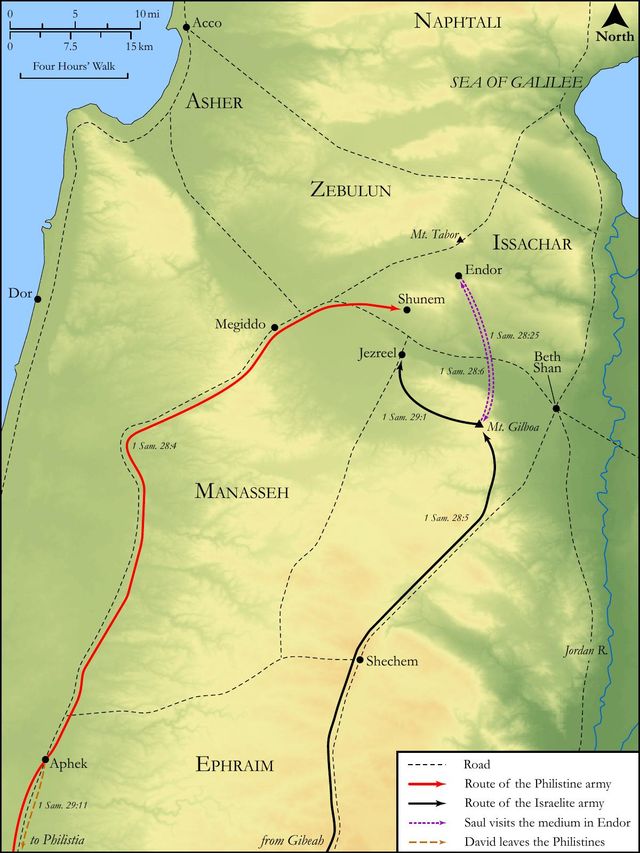
This verse immediately follows the intense deliberations among the Philistine lords regarding David's participation in their impending battle against Israel. Despite King Achish's trust in David, the other Philistine commanders harbored deep suspicion, fearing David would betray them in battle to reconcile with Saul. Their collective decision, articulated in 1 Samuel 29:4-5, was to send David back to the place Achish had assigned him. Verse 11 describes David's immediate compliance, effectively removing him from a direct confrontation with his own nation. This departure is narratively vital, as it sets the stage for two concurrent and pivotal events: David's return to a ransacked Ziklag in 1 Samuel 30 and the tragic Battle of Gilboa in 1 Samuel 31, where Saul and his sons perish, clearing the path for David's kingship.
Historical & Cultural Context
The period of 1 Samuel 29 is set against the backdrop of ongoing hostilities between Israel and the Philistines, a dominant force in the coastal plain of Canaan. The Philistines were a formidable military power, known for their advanced iron technology and well-organized army, often posing an existential threat to early Israel. Their "lords" (seranim) were the rulers of their five principal cities (Gaza, Ashkelon, Ashdod, Gath, Ekron), forming a powerful confederacy. The gathering at Aphek and the movement towards Jezreel indicate a major military campaign aimed at the heart of Israelite territory, specifically the Jezreel Valley, a strategic crossroads. David's presence among them, as a servant of Achish, was culturally precarious; while Achish trusted him, the other lords' suspicion was rooted in the common practice of servants shifting their loyalties, especially in battle. David's precarious position highlights the complex political landscape and the constant threat of war that characterized the era.
Key Themes
ShowHide1 Samuel 29:11 powerfully illustrates the theme of Divine Providence, showcasing God's unseen hand guiding David's circumstances. What appears to be a rejection or a setback from a human perspective is, in fact, a divinely orchestrated intervention, preventing David from being forced into a morally compromising position of fighting against his own people. This highlights God's faithfulness in protecting His chosen servant from situations that would compromise his integrity or future role as king. The verse also underscores the theme of God's Sovereignty over Human Decisions, as the Philistine lords' mistrust, though seemingly an independent decision, ultimately served God's greater plan for David and Israel. Furthermore, David's "prompt obedience" in departing quickly reflects a readiness to respond to unfolding events, whether out of relief or simple efficiency, setting the stage for the next crucial phase of his journey toward the throne, as detailed in 1 Samuel 30 and 1 Samuel 31.
Exposition and Analysis
ShowHideKey Word Analysis
ShowHideThis word (H7925) signifies the act of starting early in the morning, often with a sense of promptness and diligence. In this context, it emphasizes David and his men's immediate and decisive compliance with the Philistine lords' command to depart. It suggests that David did not linger or protest, but quickly responded to the situation, possibly out of relief at being extricated from a profound moral dilemma.
This primitive root (H3212) means "to walk" or "to go," and in this context, specifically "to depart" or "to go away." It highlights the physical act of moving away from the Philistine encampment. This departure was the direct consequence of the Philistine lords' decision, providentially removing David from the impending conflict against Israel and redirecting his path.
This term (H6430) refers to the inhabitants of Pelesheth, the Philistine coastal plain. Their presence and actions are central to the narrative, as it is their collective decision, born of suspicion, that leads to David's departure. This highlights the significant role of this powerful, often adversarial, nation in shaping the events of early Israelite history and, specifically, David's journey to kingship.
Verse Breakdown
ShowHide"So David and his men rose up early to depart in the morning"
This clause describes the immediate and decisive action taken by David and his followers. The phrase "rose up early" (Hebrew: shâkam) signifies promptness and diligence, indicating their swift compliance with the Philistine lords' command to leave the army. This rapid departure was crucial, as it prevented David from being involved in the imminent battle against his own people, Israel, a moral quandary he had desperately sought to avoid.
"to return into the land of the Philistines"
This specifies their immediate destination. David and his men were not returning to Israelite territory but to Ziklag, the city within Philistine territory that King Achish had granted them as a base. This detail underscores their continued, albeit temporary, status as servants of the Philistine king, even as they were being dismissed from military service. It also sets the geographical stage for the events of the following chapter.
"And the Philistines went up to Jezreel"
This parallel clause describes the simultaneous movement of the Philistine army. While David departs south towards Ziklag, the Philistine forces advance north into the Jezreel Valley, a strategically vital plain. This movement sets the stage for their fateful confrontation with Saul's army on Mount Gilboa, which would result in the tragic deaths of Saul and his sons. The juxtaposition of David's departure and the Philistines' advance highlights the divergent paths and destinies of David and the reigning Israelite monarchy.
Literary Devices
ShowHideThe verse employs several significant literary devices. Juxtaposition is evident in the simultaneous but contrasting movements of David and the Philistines: David departs south towards Ziklag, while the Philistines advance north into the Jezreel Valley. This highlights their diverging destinies and the providential separation of David from the impending conflict. Foreshadowing is powerfully at play; David's removal from the battle directly precedes Saul's death, subtly hinting at the divine preparation for David's ascension to the throne. The entire narrative surrounding David's dismissal can be seen as an instance of Divine Irony or Providence, where what appears to be a rejection (the Philistine lords' mistrust and dismissal of David) is, in fact, a divine deliverance. Their human suspicion inadvertently serves God's perfect plan to protect David from a moral compromise and preserve him for his future kingship, demonstrating God's sovereign hand at work even through the decisions of His adversaries.
Theological and Thematic Connections
ShowHide1 Samuel 29:11 is a profound testament to God's meticulous and sovereign providence. It demonstrates that even in complex and morally ambiguous situations, God is actively at work behind the scenes, orchestrating events and using human decisions—even those born of suspicion or self-interest—to fulfill His ultimate purposes. David was in an impossible position, caught between loyalty to his Philistine benefactor and allegiance to his own people. God, through the Philistine lords' mistrust, delivered David from this dilemma, protecting his integrity and ensuring he would not lift his hand against the Lord's anointed or his own nation. This divine intervention highlights God's faithfulness to His promises and His unwavering commitment to guiding His chosen instruments, even when their path seems fraught with peril or rejection.
Reflection and Application
ShowHideThis verse offers a powerful reminder that God's hand is often most evident when our human plans are thwarted, or when we face situations that seem to be setbacks or rejections. David's dismissal from the Philistine army, though perhaps initially disheartening or confusing, was God's perfect plan to protect him from moral compromise and position him for his true calling. For believers today, this passage encourages a deep trust in God's sovereign timing and His ability to work all things for our good, even when circumstances appear to be against us. It challenges us to recognize that what seems like a closed door might actually be God's way of redirecting us to a path of greater blessing and alignment with His will. We are called to cultivate a posture of prompt obedience and trust, knowing that God is always working, even in the unseen details, to fulfill His purposes in our lives and in the world.
Questions for Reflection
ShowHideFAQ
ShowHideWhy were the Philistine lords so insistent on David's departure, despite Achish's trust?
ShowHideThe Philistine lords' insistence on David's departure stemmed from deep-seated suspicion and practical military concerns, overriding King Achish's personal trust in David. They argued that David, a former commander in Saul's army and a renowned warrior of Israel, could not be trusted in a battle against his own people. Their concern was articulated in 1 Samuel 29:4, where they explicitly stated, "For with what should he reconcile himself unto his master? should it not be with the heads of these men?" They feared David would turn against them during the battle to regain favor with Saul, potentially leading to a catastrophic betrayal from within their ranks. From their perspective, David was an unreliable foreign element whose presence posed an unacceptable risk to their military cohesion and success. This practical mistrust, though human in origin, served as the divine mechanism to remove David from a morally impossible situation and preserve him for his future role as king of Israel.
Christ-Centered Fulfillment
ShowHide1 Samuel 29:11, while depicting David's providential deliverance, ultimately points to the greater deliverance and perfect obedience found in Jesus Christ. David was spared from a compromising battle by the mistrust of others, an act of God's unseen hand. Christ, however, was not spared from the ultimate battle against sin and death; instead, He willingly entered it. Unlike David, who was prevented from fighting against his own people, Jesus, the true Son of David, deliberately came to reconcile His people to God, even though it meant facing the full wrath of God for their sin. His journey to the cross, though seemingly a rejection by the world, was the ultimate act of divine providence, perfectly orchestrated to achieve redemption (Acts 2:23). Where David was protected from a moral dilemma, Christ perfectly fulfilled all righteousness, never compromising His integrity or mission (Hebrews 4:15). The "land of the Philistines" represents a place of temporary refuge and moral ambiguity for David, but Christ's "departure" was from heaven to earth, and then from earth to the cross, to secure an eternal home for His people (John 14:2-3). Thus, David's deliverance foreshadows the perfect and complete salvation accomplished by the Lamb of God, who takes away the sin of the world!, not by being removed from conflict, but by conquering it through His sacrificial death and glorious resurrection.