


1 Corinthians 3:3
Bible text: King James Version (1769 Blayney text) · Public domain
Bible text: King James Version with Strong's numbers · Public domain
Bible text: Berean Standard Bible · Public domain
Bible text: American Standard Version (1901) · Public domain
Bible text: World English Bible, Messianic edition · Public domain
Bible text: Geneva Bible (1599) · Public domain
Bible text: Young's Literal Translation · Public domain
- ἔτιetistillG2089ADVAdverb
- γὰρgarforG1063CONJConjunction
- σαρκικοίsarkikoifleshlyG4559A-NPMAdjective Nominative Plural Masculine
- ἐστεesteyou areG1510V-PAI-2PVerb Present Active Indicative 2nd Plural
- ὅπουhopouWhereG3699CONJConjunction
- γὰρgarforG1063CONJConjunction
- ἐνen[are] amongG1722PREPPreposition
- ὑμῖνhuminyouG4771P-2DPPersonal pronoun Dative 2nd Plural
- ζῆλοςzēlosjealousyG2205N-NSMNoun Nominative Singular Masculine
- καὶkaiandG2532CONJConjunction
- ἔριςerisstrifeG2054N-NSFNoun Nominative Singular Feminine
- καὶkaiandG2532CONJConjunction
- διχοστασίαιdichostasiaidissensionsG1370N-NPFNoun Nominative Plural Feminine
- οὐχὶouchisurelyG3780PRT-NNegative Particle Negative
- σαρκικοίsarkikoifleshlyG4559A-NPMAdjective Nominative Plural Masculine
- ἐστεesteare youG1510V-PAI-2PVerb Present Active Indicative 2nd Plural
- καὶkaiandG2532CONJConjunction
- κατὰkataaccording toG2596PREPPreposition
- ἄνθρωπονanthrōponmanG444N-ASMNoun Accusative Singular Masculine
- περιπατεῖτε;peripateiteare walking?G4043V-PAI-2PVerb Present Active Indicative 2nd Plural
English is a literal word-by-word gloss of the Greek, not the KJV's wording. Why?
This is the original text the KJV's translators worked from — each Greek word with its own literal English meaning in this verse, prepared by scholars at Tyndale House, Cambridge. The KJV translates whole sentences, not word by word, so its wording differs: one Greek word can become several English words, and the KJV may choose “charity” where the gloss reads “love”. Both are faithful — they answer different questions. For the KJV's own rendering, switch to the KJV text.
Details
See on the biblical-era maps

Study this verse
Public-domain commentary
Matthew Henry
From his Commentary on the Whole Bible. Henry comments on passages, not single verses — this entry covers 1 Corinthians 3:1–4.
Here, I. Paul blames the Corinthians for their weakness and nonproficiency. Those who are sanctified are so only in part: there is still room for growth and increase both in grace and knowledge, Pe2 3:18. Those who through divine grace are renewed to a spiritual life may yet in many things be defective. The apostle tells them he could not speak to them as unto spiritual men, but as unto carnal men, as to babes in Christ, Co1 3:1. They were so far from forming their maxims and measures upon the ground of divine revelation, and entering into the spirit of the gospel, that is was but too evident they were much under the command of carnal and corrupt affections. They were still mere babes in Christ. They had received some of the first principles of Christianity, but had not grown up to maturity of understanding in them, or of faith and holiness; and yet it is plain, from several passages in this epistle, that the Corinthians were very proud of their wisdom and knowledge. Note, It is but too common for persons of very moderate knowledge and understanding to have a great measure of self-conceit. The apostle assigns their little proficiency in the knowledge of Christianity as a reason why he had communicated no more of the deep things of it to them. They could not bear such food, they needed to be fed with milk, not with meat, Co1 3:2. Note, It is the duty of a faithful minister of Christ to consult the capacities of his hearers and teach them as they can bear. And yet it is natural for babes to grow up to men; and babes in Christ should endeavour to grow in Stature, and become men in Christ. It is expected that their advances in knowledge should be in proportion to their means and opportunities, and their time of professing religion, that they may be able to bear discourses on the mysteries of our religion, and not always rest in plain things. It was a reproach to the Corinthians that they had so long sat under the ministry of Paul and had made no more improvement in Christian knowledge. Note, Christians are utterly to blame who do not endeavour to grow in grace and knowledge.
II.He blames them for their carnality, and mentions their contention and discord about their ministers as evidence of it:
For you are yet carnal; for whereas there are among you envyings, and strifes, and divisions, are you not carnal, and walk as men? Co1 3:3. They had mutual emulations, and quarrels, and factions among them, upon the account of their ministers, while one said, I am of Paul; and another, I am of Apollos, Co1 3:4. These were proofs of their being carnal, that fleshly interests and affections too much swayed them. Note, Contentions and quarrels about religion are sad evidences of remaining carnality. True religion makes men peaceable and not contentious. Factious spirits act upon human principles, not upon principles of true religion; they are guided by their own pride and passions, and not by the rules of Christianity: Do you not walk as men? Note, It is to be lamented that many who should walk as Christians, that is, above the common rate of men, do indeed walk as men, live and act too much like other men.
Historical interpretation
Eighteen Centuries of Reception
5 surviving comments on this verse. Each one is dated, so this reads as a timeline rather than a list.
Select a marker to jump to its quote. Markers stagger vertically where authors wrote within a few decades of each other.
And on this account does Paul declare to the Corinthians, "I have fed you with milk, not with meat, for hitherto ye were not able to bear it." That is, ye have indeed learned the advent of our Lord as a man; nevertheless, because of your infirmity, the Spirit of the Father has not as yet rested upon you. "For when envying and strife," he says, "and dissensions are among you, are ye not carnal, and walk as men?" That is, that the Spirit of the Father was not yet with them, on account of their imperfection and shortcomings of their walk in life. As, therefore, the apostle had the power to give them strong meat-for those upon whom the apostles laid hands received the Holy Spirit, who is the food of life [eternal]-but they were not capable of receiving it, because they had the sentient faculties of the soul still feeble and undisciplined in the practice of things pertaining to God.
For he called those who had already believed on the Holy Spirit spiritual, and those newly instructed and not yet purified carnal; whom with justice he calls still carnal, as minding equally with the heathen the things of the flesh: "For whereas there is among you envy and strife, are ye not carnal, and walk as men? "
But these words were written to the Corinthians in regard of the circumstances of that particular time; seeing that schisms and dissensions were agitated among them, while one attributes everything to Paul, another to Apollos. For which reason the "peace-making" apostle, for fear he should seem to claim all gifts for himself, says that he had been sent "not to baptize, but to preach.
"For whereas there is among you jealousy and strife."
At this point he prepares himself to wrestle with those whose part was obedience: for in what went before he hath been casting down the rulers of the Church, where he said that wisdom of speech is nothing worth. But here he strikes at those in subjection. And he points out that this, so far from helping them at all or causing them to acquire any thing, had even become an obstacle to their profiting in the greater things. For this it was which brought forth jealousy, and jealousy had made them "carnal;" and the having become "carnal" left them not at liberty to hear truths of the sublimer sort.
[Responding to the question "Many people are quite unable to understand the theological differences which have caused divisions in the Christian Church. Do you consider that these differences are fundamental, and is the time now ripe for reunion?"]
The time is always ripe for reunion. Divisions between Christians are a sin and a scandal, and Christians ought at all times to be making contributions toward reunion, if it is only by their prayers. I am only a layman and a recent Christian, and I do not know much about these things, but in all the things which I have written and thought I have always stuck to traditional, dogmatic positions. The result is that letters of agreement reach me from what are ordinarily regarded as the most different kinds of Christians; for instance, I get letters from Jesuits, monks, nuns, and also from Quakers and Welsh Dissenters, and so on. So it seems to me that the "extremist" elements in every church are nearest one another and the liberal and "broad-minded" people in each body could never be united at all. The world of dogmatic Christianity is a place in which thousands of people of quite different types keep on saying the same thing, and the world of "broad-mindedness" and watered-down "religion" is a world where a small number of people (all of the same type) say totally different things and change their minds every few minutes. We shall never get reunion from them.
Continue studying 1 Corinthians 3:3 across the web’s major study libraries — every link below opens this exact verse, chapter, or book on the destination site.
Read & Compare
 BibleGatewayThis verse in more than 200 translations and 70 languages.
 Bible.comThe YouVersion reader — hundreds of translations, reading plans, and highlights.
 ESV.orgCrossway's official English Standard Version reader.
 NET BibleThe NET translation with 60,000+ translators' notes on every rendering decision.
 STEP BibleTyndale House's free study tool — original text, vocabulary, and scholarly resources.
 BibliaLogos Bible Software's free web reader.
 USCCBThe New American Bible (Revised Edition) with the U.S. bishops' study notes.
Commentaries
 BibleHub CommentariesDozens of classic commentaries on this verse, gathered on one page.
 StudyLightMore than 100 commentary sets — the largest collection on the web.
 BibleRefPlain-English commentary on what this verse means, verse by verse.
 Enduring WordDavid Guzik's free commentary on this chapter, widely used by Bible teachers.
 Bible Study ToolsVerse commentary alongside Greek and Hebrew study aids.
Original Language & Research
- BibleHub InterlinearThe verse word by word — original language, transliteration, and English.
- BibleHub LexiconEvery word's original-language definition and Strong's entry.
 Blue Letter BibleDeep-study tools — Strong's numbers, concordance, and word studies.
 CNTR CollationThe earliest Greek manuscripts of this verse, collated letter by letter.
Sermons, Hymns & Audio


TrulyRandomVerse is not affiliated with these sites and doesn’t control their content. They’re linked because they’re genuinely useful.
Summary
The Apostle Paul powerfully confronts the Corinthian church in 1 Corinthians 3:3, identifying their persistent internal conflicts—envying, strife, and divisions—as undeniable evidence of their spiritual immaturity and "carnal" nature. This verse serves as a crucial explanation for why Paul had to address them as spiritual infants, unable to receive deeper theological truths, highlighting a critical disconnect between their professed faith and their worldly conduct.
Context
ShowHideLiterary Context
1 Corinthians 3:3 directly follows Paul's initial assessment of the Corinthian believers in 1 Corinthians 3:1-2, where he laments that he could not speak to them as spiritual people but only as "carnal, even as babes in Christ." He had to feed them "milk" rather than "solid food" because they were not yet ready for deeper doctrines. Verse 3 then provides the irrefutable evidence for this judgment: the presence of "envying, and strife, and divisions" among them. These internal conflicts were not merely minor disagreements but profound schisms that betrayed their lack of spiritual growth. Paul had already addressed the pervasive issue of disunity and factionalism in the very opening of his epistle, pleading for unity in 1 Corinthians 1:10-13. Here, he returns to the root cause, linking their divisive behaviors directly to their carnal state before transitioning into a discussion about the roles of various spiritual leaders (Paul, Apollos, Cephas) and the true foundation of the church, which is Christ.
Historical & Cultural Context
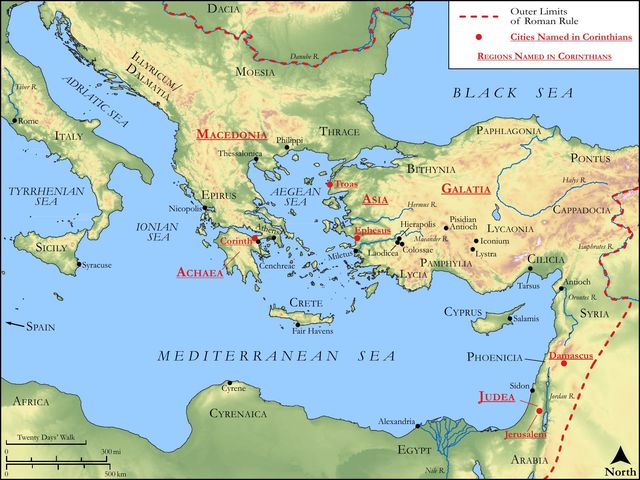
The city of Corinth was a bustling, wealthy, and cosmopolitan Roman port city, notorious for its moral laxity and diverse religious practices. Its culture was deeply influenced by Greek philosophy and rhetoric, leading many Corinthians to admire eloquent speakers and intellectual prowess. This cultural backdrop contributed to the factionalism Paul observed, as believers began to align themselves with particular leaders based on their speaking styles or perceived wisdom, rather than on the unified message of Christ. The concept of "wisdom" was highly valued, but Paul consistently contrasts the "wisdom of the world" with the "wisdom of God" throughout 1 Corinthians 1-2 and 1 Corinthians 2. The early church in Corinth, composed of both Jews and Gentiles, struggled to shed the divisive attitudes and pagan influences of their former lives, often failing to live out the transformative power of the Gospel. Their "carnal" behavior reflected a failure to distinguish themselves from the prevailing worldly ethos, despite their new identity in Christ.
Key Themes
ShowHideThe verse powerfully underscores several key themes central to Paul's epistle. Firstly, it highlights the stark contrast between Carnality vs. Spirituality. Paul identifies the Corinthian believers as "carnal" (Greek: sarkikos), meaning they were still largely governed by their sinful nature and worldly thinking, rather than being "spiritual" (pneumatikos), guided by the Holy Spirit. This was not a denial of their salvation but a lament over their profound lack of spiritual maturation. Secondly, the passage explicitly lists the Evidences of Immaturity: "envying" (zēlos, intense rivalry or jealousy), "strife" (éris, contention or discord), and "divisions" (dichostasía, dissensions or factions). These are not minor disagreements but deep-seated conflicts that tear at the very fabric of the church, echoing similar lists of the "works of the flesh" found in passages like Galatians 5:19-21. Finally, the phrase Walking "as Men" signifies behaving according to human wisdom and worldly standards, rather than divine principles. It suggests a failure to live out the radical transformation that Christ brings, indicating that their conduct was indistinguishable from that of unbelievers, who "set their minds on the things of the flesh" as described in Romans 8:5.
Exposition and Analysis
ShowHideKey Word Analysis
ShowHideThis term (G4559) derives from sarx, meaning "flesh." It describes something pertaining to the flesh, and by extension, that which is bodily, temporal, or, in a spiritual sense, animalistic or unregenerate. In this context, it signifies a state where believers are still dominated by the impulses and desires of their fallen nature, rather than being fully guided by the Holy Spirit. It points to a lack of spiritual maturity and a continued adherence to worldly patterns of thought and behavior.
This word (G2205) primarily means "heat" or "zeal." While it can denote positive ardor, in an unfavorable sense, as used here, it refers to jealousy, intense rivalry, or malice. It describes a passionate, often negative, desire for what another possesses or a competitive spirit that breeds resentment and division within the community.
This term (G1370) is derived from a word meaning "two ways" and "standing." It signifies disunion, dissension, or sedition. It refers to the act of standing apart or creating factions, indicating a fracturing of unity and the formation of opposing groups within the church, a direct contradiction to the body of Christ.
Verse Breakdown
ShowHide"For ye are yet carnal:"
Paul reiterates his initial assessment from 1 Corinthians 3:1. The conjunction "For" (G1063, gar) indicates that this clause provides the reason or explanation for his inability to speak to them as spiritual persons. The phrase "yet carnal" (G2089, eti + G4559, sarkikós) emphasizes their continuing state of spiritual immaturity, implying that despite the passage of time since their conversion, they had not progressed beyond an infantile spiritual condition.
"for whereas [there is] among you envying, and strife, and divisions,"
This clause further elaborates on why they are carnal, presenting the concrete evidence of their fleshly nature. The presence of "envying" (G2205, zēlos), "strife" (G2054, éris), and "divisions" (G1370, dichostasía) among them serves as undeniable proof. These behaviors are not merely minor disagreements but profound manifestations of a self-centered, worldly mindset that undermines the unity and love characteristic of a Spirit-filled community. The phrase "among you" (G1722, en + G5213, hymîn) highlights that these destructive behaviors were internal to the church itself.
"are ye not carnal, and walk as men?"
This is a powerful rhetorical question (G3780, ouchí for "not") that serves to drive Paul's point home. It is designed to elicit an obvious affirmative answer, confronting the Corinthians with the undeniable truth of their condition. The repetition of "carnal" reinforces the central accusation. To "walk as men" (G4043, peripatéō + G2596, katá + G444, ánthrōpos) means to live according to purely human standards, wisdom, and impulses, behaving no differently from unbelievers. It implies a failure to exhibit the transformed life that should distinguish followers of Christ from the world around them.
Literary Devices
ShowHidePaul's communication in 1 Corinthians 3:3 is highly effective due to his strategic use of several literary devices. The most prominent is the Rhetorical Question: "are ye not carnal, and walk as men?" This question is not posed to solicit information but to emphasize an obvious truth and to challenge the Corinthians directly, compelling them to acknowledge their spiritual state. It serves as a powerful indictment, leaving no room for denial. Furthermore, there is an implicit Metaphorical Extension from the "milk and solid food" analogy in the preceding verses. Their "carnality" is the reason they are still on "milk"; the envy, strife, and divisions are the symptoms of this inability to digest "solid food," representing deeper spiritual truths and mature Christian living. The specific vices listed—envying, strife, and divisions—function as a Synecdoche or Metonymy, where these specific manifestations represent the broader category of fleshly, worldly behavior that is antithetical to the Spirit. They are vivid, concrete examples that stand for the entire spectrum of their immaturity. Finally, the Repetition of the word "carnal" (G4559, sarkikós) at the beginning and end of the verse serves to underscore the central point of Paul's rebuke, making their spiritual condition the undeniable focus of his argument.
Theological and Thematic Connections
ShowHideThe profound theological implication of 1 Corinthians 3:3 lies in its stark portrayal of the ongoing struggle between the flesh and the Spirit within the life of a believer and the church. While salvation is a gift received by grace through faith, this verse highlights that conversion does not automatically eradicate the influence of the sinful nature. True spiritual growth involves a continuous yielding to the Holy Spirit, allowing Him to transform one's character and conduct. The presence of envy, strife, and divisions among believers is a direct contradiction to the unity, love, and peace that the Spirit cultivates. It reveals a mindset still tethered to worldly values, self-interest, and human wisdom, rather than being conformed to the image of Christ. This passage serves as a timeless reminder that authentic faith is not merely intellectual assent but a dynamic process of spiritual maturation evidenced by transformed behavior and harmonious relationships within the body of Christ.
Reflection and Application
ShowHide1 Corinthians 3:3 serves as a timeless mirror for individual believers and church communities today. It compels us to honestly examine our own lives and the collective health of our congregations. Are we truly progressing in spiritual maturity, or are we still exhibiting behaviors characteristic of spiritual infancy? The presence of envying, strife, and divisions—whether overt conflicts, subtle resentments, or persistent factions—is a serious indicator that we may be "walking as men," governed by carnal impulses rather than by the Spirit of God. True spiritual maturity is not merely about accumulating knowledge but about embodying the fruit of the Spirit: love, joy, peace, patience, kindness, goodness, faithfulness, gentleness, and self-control. This verse challenges us to move beyond superficial Christianity, to embrace the "solid food" of God's Word, and to actively pursue unity, humility, and Christ-likeness, fostering an environment where mutual edification and love prevail over self-interest and discord.
Questions for Reflection
ShowHideFAQ
ShowHideWhat does Paul mean by "carnal" in this context?
ShowHideWhen Paul calls the Corinthians "carnal" (Greek: sarkikós), he is not denying their salvation but rather describing their spiritual state and behavior. It means they were "fleshly" or "governed by the flesh," indicating that their conduct was still dominated by the desires and impulses of their sinful nature, rather than being fully guided by the Holy Spirit. Despite being believers, they were acting like worldly people, showing a profound lack of spiritual maturity, as evidenced by their internal conflicts. This contrasts with being "spiritual" (pneumatikos), which signifies being led by the Spirit, as described in Romans 8:9.
Are "envying, strife, and divisions" always signs of spiritual immaturity?
ShowHideYes, within the context of the church, Paul consistently presents "envying, strife, and divisions" as clear indicators of spiritual immaturity and a carnal mindset. These behaviors directly contradict the unity, love, and peace that the Holy Spirit produces in believers. They are listed among the "works of the flesh" in passages like Galatians 5:19-21 and are antithetical to the "fruit of the Spirit" (Galatians 5:22-23). Their presence reveals a failure to live by divine principles and to prioritize the well-being and unity of the body of Christ.
How does "walking as men" differ from a spiritual walk?
ShowHideTo "walk as men" (Greek: peripatéō katá ánthrōpon) means to live according to purely human wisdom, standards, and self-centered impulses, without the transformative influence of the Holy Spirit. It implies a lack of distinction between the conduct of a believer and an unbeliever. A spiritual walk, by contrast, involves living a life transformed by the power of God, guided by the Holy Spirit, and reflecting the character of Christ. This means setting one's mind on the things of the Spirit, which leads to life and peace, rather than the things of the flesh, which lead to death and hostility towards God, as articulated in Romans 8:5-8.
Christ-Centered Fulfillment
ShowHide1 Corinthians 3:3, though a rebuke, powerfully points to the necessity and transformative power of Christ. The "carnal" state of the Corinthians, marked by envy, strife, and divisions, stands in stark contrast to the very nature and mission of Jesus Christ. Christ Himself is the embodiment of spiritual maturity and perfect humility, who "made himself nothing, taking the form of a servant" (Philippians 2:7). His ultimate sacrifice on the cross was precisely to break down the walls of hostility and division, uniting all believers into one new humanity, as beautifully described in Ephesians 2:14-16. The Holy Spirit, poured out by Christ after His ascension (John 16:7), is the divine agent who empowers believers to overcome the desires of the flesh and walk in newness of life (Romans 8:4). The fruit of the Spirit—love, joy, peace, patience, kindness, goodness, faithfulness, gentleness, self-control (Galatians 5:22-23)—directly counters the envy, strife, and divisions that plagued the Corinthian church. Thus, the call to move beyond carnality and "walk as men" is fundamentally a call to be more like Christ, who is the Head of the Church (Ephesians 5:23) and the one through whom true unity and spiritual maturity are not only possible but commanded.