


Numbers 32:36
Bible text: King James Version (1769 Blayney text) · Public domain
Bible text: Berean Standard Bible · Public domain
Bible text: American Standard Version (1901) · Public domain
Bible text: World English Bible, Messianic edition · Public domain
Bible text: Geneva Bible (1599) · Public domain
Bible text: Young's Literal Translation · Public domain
- וְאֶתve·'Etand <obj.>H853Conj-w ¦ DirObjMParticle Object Indicatorוְandאֶת<obj.>
- בֵּיתbeitBethH1039N-properNoun Proper Location
- נִמְרָהnim·RahNimrahH1039N-properNoun Proper Location
- וְאֶתve·'Etand <obj.>H853Conj-w ¦ DirObjMParticle Object Indicatorוְandאֶת<obj.>
- בֵּיתbeitBethH1028N-properNoun Proper Location
- הָרָןha·RanHaranH1028N-properNoun Proper Location
- עָרֵי'a·Reicities ofH5892N-mpcNoun Plural Masculine Construct
- מִבְצָרmiv·TzarfortificationH4013N-msNoun Singular Masculine Absolute
- וְגִדְרֹתve·gid·Rotand folds ofH1448Conj-w ¦ N-fpcNoun Plural Feminine Constructוְandגִדְרֹתfolds of
- צֹאןTzonsheepH6629N-csNoun Singular common gender Absolute
English is a literal word-by-word gloss of the Hebrew, not the KJV's wording. Why?
This is the original text the KJV's translators worked from — each Hebrew word with its own literal English meaning in this verse, prepared by scholars at Tyndale House, Cambridge. The KJV translates whole sentences, not word by word, so its wording differs: one Hebrew word can become several English words, and the KJV may choose “the LORD” where the gloss reads “Yahweh”. Both are faithful — they answer different questions. For the KJV's own rendering, switch to the KJV text.
Details
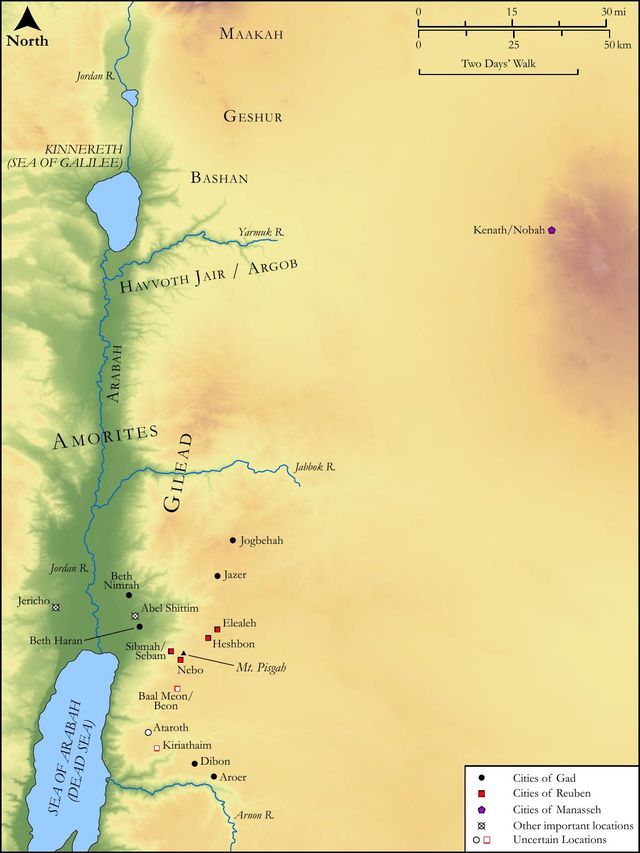
See on the biblical-era map
Study this verse
Continue studying Numbers 32:36 across the web’s major study libraries — every link below opens this exact verse, chapter, or book on the destination site.
Read & Compare
 BibleGatewayThis verse in more than 200 translations and 70 languages.
 Bible.comThe YouVersion reader — hundreds of translations, reading plans, and highlights.
 ESV.orgCrossway's official English Standard Version reader.
 NET BibleThe NET translation with 60,000+ translators' notes on every rendering decision.
 STEP BibleTyndale House's free study tool — original text, vocabulary, and scholarly resources.
 BibliaLogos Bible Software's free web reader.
 USCCBThe New American Bible (Revised Edition) with the U.S. bishops' study notes.
Commentaries
 BibleHub CommentariesDozens of classic commentaries on this verse, gathered on one page.
 StudyLightMore than 100 commentary sets — the largest collection on the web.
 BibleRefPlain-English commentary on what this verse means, verse by verse.
 Enduring WordDavid Guzik's free commentary on this chapter, widely used by Bible teachers.
 Bible Study ToolsVerse commentary alongside Greek and Hebrew study aids.
Original Language & Research
- BibleHub InterlinearThe verse word by word — original language, transliteration, and English.
- BibleHub LexiconEvery word's original-language definition and Strong's entry.
 Blue Letter BibleDeep-study tools — Strong's numbers, concordance, and word studies.
 SefariaThe Hebrew text with Rashi and centuries of Jewish commentary.
Sermons, Hymns & Audio


TrulyRandomVerse is not affiliated with these sites and doesn’t control their content. They’re linked because they’re genuinely useful.
Summary
Numbers 32:36 meticulously records the practical actions of the Gadites, specifically detailing their rebuilding and fortification of Bethnimrah and Bethharan as "fenced cities" and the construction of "folds for sheep." This verse is an integral part of the larger narrative in Numbers 32, which describes the allocation of the fertile Transjordanian territory to the tribes of Reuben, Gad, and half of Manasseh, emphasizing their commitment to securing their new homeland and protecting their essential pastoral livelihood before assisting the other tribes in the conquest of Canaan.
Context
ShowHideLiterary Context
Numbers 32:36 is situated within the latter half of Numbers 32, which recounts the pivotal request of the tribes of Reuben and Gad, later joined by half of the tribe of Manasseh, to settle in the rich pasturelands east of the Jordan River, as outlined in Numbers 32:1-5. Moses initially expresses strong reservations, fearing that this request would demoralize the other tribes from entering Canaan, echoing the disastrous outcome of the spies' negative report in Numbers 13:27-33. However, after the Transjordanian tribes solemnly pledge to send their armed men across the Jordan to fight alongside their brethren until the entire land of Canaan is subdued (Numbers 32:16-32), Moses grants their petition. Verses 34-42 then provide a detailed list of the specific cities that were rebuilt, fortified, or renamed by the Gadites, Reubenites, and Manassites, thereby demonstrating their immediate and tangible efforts to establish their presence and secure their inheritance in the newly allotted territory. Numbers 32:36 specifically highlights the Gadites' diligent work in two significant locations.
Historical & Cultural Context
The period of Israel's conquest and initial settlement was characterized by a constant need for vigilance and defense. Newly acquired territories, frequently inhabited by hostile indigenous peoples, demanded immediate fortification to ensure the safety and security of the incoming population. "Fenced cities" (fortified cities) were indispensable for protecting inhabitants and strategic points, serving as centers of refuge and administration. Culturally, the tribes of Reuben, Gad, and Manasseh were primarily pastoralists, renowned for possessing "a very great multitude of livestock" (Numbers 32:1). Their economic prosperity and daily sustenance were intrinsically linked to the health and safety of their flocks and herds. Consequently, the construction of "folds for sheep" (enclosures) was not merely a practical measure but an absolute economic necessity, designed to safeguard their most valuable assets from both natural predators and human raiders in a wild and often perilous frontier environment. This reflects the pervasive reality of that day, when both human and animal security were paramount for the survival, stability, and prosperity of a community.
Key Themes
ShowHideNumbers 32:36 powerfully contributes to several overarching theological and narrative themes found throughout the book of Numbers and the broader Pentateuch. It underscores the profound theme of Divine Promise and Human Responsibility, illustrating that while God graciously bestows the land upon Israel, He simultaneously expects their active participation in its possession, cultivation, and security. The diligent building of fortifications and sheepfolds exemplifies Prudence and Stewardship, as the tribes responsibly manage and protect the abundant resources God has provided, demonstrating foresight and wisdom in their settlement. Furthermore, the verse vividly highlights the Identity and Livelihood of these specific tribes, whose pastoral economy profoundly shaped their land choices and immediate priorities upon entering the Promised Land. Finally, it marks a tangible and crucial step in the Fulfillment of God's Covenant Promise to give Israel a land of their own, even as they prepared to fully enter the land flowing with milk and honey, a promise emphatically reiterated to Joshua in Joshua 1:3. The initial hesitation and concern expressed by Moses, deeply rooted in the traumatic memory of the spies' discouraging report in Numbers 13:27-33, further emphasizes the critical importance of faith coupled with diligent and obedient action in inheriting and securing God's promised blessings.
Exposition and Analysis
ShowHideKey Word Analysis
ShowHideThis term refers to a fortification, a castle, or, as used here, a fortified city. It denotes a place made strong and secure against attack, often through walls, towers, and other defensive structures. The emphasis on "fenced" highlights the immediate and critical need for security in a newly settled, potentially hostile environment, indicating a strategic and practical approach to securing their territory.
This feminine noun denotes an enclosure, especially for flocks, a sheep-cote, or a fold. These were typically constructed from stone walls or thorny bushes, providing essential protection for livestock from predators and thieves. Its mention underscores the pastoral nature of these tribes and their practical concern for safeguarding their primary economic asset.
This collective noun refers to a flock of sheep or goats, representing the small cattle that formed the backbone of the pastoral economy. The inclusion of "sheep" alongside "folds" highlights the specific type of livestock being protected and emphasizes the economic foundation of these tribes' livelihood, which necessitated such defensive measures.
Verse Breakdown
ShowHide"And Bethnimrah, and Bethharan"
These are two specific place names, identifying cities that were either rebuilt or fortified by the tribe of Gad. Their inclusion grounds the narrative in concrete geographical and tribal actions, demonstrating the tangible fulfillment of the Gadites' commitment to establish their presence in the Transjordanian territory.
"fenced cities"
This phrase describes the transformed nature of Bethnimrah and Bethharan after the Gadites' work. They were not merely resettled but made defensible, indicating a strategic and practical approach to securing their territory against potential threats, whether from remaining indigenous populations or future invaders. This highlights the proactive measures taken for human security.
"and folds for sheep"
This clause highlights the dual focus of their settlement efforts. Beyond ensuring human security, the Gadites prioritized the protection of their livestock, which constituted their primary wealth and livelihood. The construction of these enclosures demonstrates their diligence in safeguarding their economic future and ensuring the sustainability of their pastoral way of life.
Literary Devices
ShowHideNumbers 32:36 effectively employs Concrete Imagery by naming specific cities ("Bethnimrah," "Bethharan") and describing tangible structures ("fenced cities," "folds for sheep"). This grounds the abstract concept of tribal settlement in vivid, practical details, making the narrative more immediate and relatable to the reader. The deliberate pairing of "fenced cities" and "folds for sheep" functions as a form of Merism, where two distinct yet complementary aspects—human security and economic security—are mentioned to represent the comprehensive nature of the tribes' preparations for establishing a stable and sustainable life in the land. This highlights their holistic approach to settlement, addressing both defense and livelihood simultaneously. Furthermore, the mention of these specific cities can be understood as a form of Synecdoche, where these two particular locations stand in for the broader, collective effort of the Gadites and the other Transjordanian tribes to fortify and secure their entire allotted territory.
Theological and Thematic Connections
ShowHideNumbers 32:36 powerfully illustrates the profound biblical principle of divine sovereignty working in tandem with human responsibility. While God graciously promised the land to Israel as an inheritance, He simultaneously expected them to actively participate in its possession, cultivation, and stewardship. The tribes' diligence in building "fenced cities" and "folds for sheep" is not a sign of distrust in God's protective power, but rather a profound demonstration of wise and prudent action, recognizing that God often works through the faithful efforts and foresight of His people. This verse speaks to the enduring importance of preparing for the future, diligently protecting what has been entrusted to us, and establishing secure foundations, both physically and spiritually. It underscores that true faith is frequently expressed through diligent labor, strategic planning, and responsible stewardship.
Reflection and Application
ShowHideNumbers 32:36, though set in an ancient context of tribal settlement and land acquisition, offers timeless and profound lessons for contemporary believers. It calls us to embrace a balanced and mature approach to life, where unwavering faith in God's overarching providence is harmoniously coupled with diligent and practical action. Just as the Gadites meticulously built "fenced cities" for the security of their people and "folds for sheep" for the protection of their livelihood, we are similarly called to be wise and faithful stewards of the resources, relationships, gifts, and opportunities God has graciously entrusted to us. This involves thoughtful and prayerful planning for our future, actively protecting our families and communities, and diligently safeguarding our spiritual, emotional, and material well-being. The verse reminds us that while we place our ultimate trust in God for victory and provision, we also bear the responsibility for preparing for challenges, cultivating our talents, and building strong, resilient foundations in our lives. Our practical efforts, when undertaken with prayer, wisdom, and a spirit of obedience, become tangible expressions of our faith and profound trust in a God who sovereignly works through the diligent actions of His people.
Questions for Reflection
ShowHideFAQ
ShowHideWhy did these tribes want to settle east of the Jordan?
ShowHideThe tribes of Reuben, Gad, and half of Manasseh possessed an exceptionally large number of livestock, and the lands east of the Jordan River were renowned for being exceptionally fertile and ideally suited for pasture. This abundance of grazing land was perfectly aligned with their primary economic activity and source of wealth, making it a highly desirable and strategic location for their settlement, as detailed in Numbers 32:1-5.
What is the significance of "fenced cities" and "folds for sheep" being mentioned together?
ShowHideThe simultaneous mention of "fenced cities" and "folds for sheep" highlights the comprehensive, pragmatic, and holistic approach taken by the tribes to establish a secure and sustainable life in their newly acquired territory. "Fenced cities" directly addressed the critical need for human defense and protection against potential enemies and raiders, ensuring the safety of their families and communities. Concurrently, "folds for sheep" addressed the equally crucial need to protect their valuable livestock from predators and thieves, thereby safeguarding their economic stability and livelihood. This pairing represents a complete strategy for settlement, meticulously covering both the security of the people and the sustenance of their economy.
Does this verse imply a lack of faith in God's protection?
ShowHideNo, quite the opposite. This verse demonstrates a mature and profound understanding of the dynamic relationship between divine provision and human responsibility. God had indeed promised the land to His people, but He also expected them to actively possess, cultivate, and secure it. The diligent building of fortifications and sheepfolds was not a sign of distrust in God's omnipotence or protective power, but rather a profound act of wise stewardship, obedience, and foresight. It recognizes that God often works through the diligent and responsible efforts of His people. This principle resonates with the wisdom found in Proverbs 21:31, which states, "The horse is prepared for the day of battle, but victory belongs to the Lord."
Christ-Centered Fulfillment
ShowHideNumbers 32:36, with its emphasis on establishing secure dwelling places and protecting valuable flocks, finds profound and multifaceted Christ-centered fulfillment. Just as the "fenced cities" provided essential refuge and security for the ancient Israelites, Christ Himself is our ultimate stronghold and eternal refuge, the one in whom we truly "live and move and have our being" (Acts 17:28). He is the secure dwelling place, the unshakeable "rock" upon which we can build our lives, ensuring that when the storms of life inevitably come, we will not fall (Matthew 7:24-27). Furthermore, the "folds for sheep" beautifully prefigure Christ as the Good Shepherd, who not only courageously lays down His very life for His sheep but also provides perfect security, abundant life, and eternal protection for His beloved flock (John 10:11, John 10:27-28). He gathers His people into His secure fold, shielding them from spiritual predators, guiding them to green pastures, and leading them beside still waters (Psalm 23:1-2). The earthly settlement in the Promised Land, secured through human effort and diligence, ultimately points to the eternal rest, perfect security, and glorious inheritance that all believers find exclusively in Christ, our true and lasting "Promised Land" (Hebrews 4:9-10).