


Numbers 31:20
- וְכָלve·kholand everyH3605Conj-w ¦ N-mscNoun Singular Masculine Constructוְandכָלevery
- בֶּגֶדBe·gedgarmentH899N-msNoun Singular Masculine Absolute
- וְכָלve·kholand everyH3605Conj-w ¦ N-mscNoun Singular Masculine Constructוְandכָלevery
- כְּלִיke·liarticle ofH3627N-mscNoun Singular Masculine Construct
- עוֹרorhideH5785N-msNoun Singular Masculine Absolute
- וְכָלve·kholand everyH3605Conj-w ¦ N-mscNoun Singular Masculine Constructוְandכָלevery
- מַעֲשֵׂהma·'a·Sehproduct ofH4639N-mscNoun Singular Masculine Construct
- עִזִּים'i·Zimgoat hair<s>H5795N-mpNoun Plural Masculine Absolute
- וְכָלve·kholand everyH3605Conj-w ¦ N-mscNoun Singular Masculine Constructוְandכָלevery
- כְּלִיke·liarticle ofH3627N-mscNoun Singular Masculine Construct
- עֵץ'EtzwoodH6086N-msNoun Singular Masculine Absolute
- תִּתְחַטָּאוּtit·cha·Ta·'uyou will purify yourselvesH2398V-Hithpael-Imperf-2mpVerb Hithpael Imperfect 2nd Plural Masculine
English is a literal word-by-word gloss of the Hebrew, not the KJV's wording. Why?
This is the original text the KJV's translators worked from — each Hebrew word with its own literal English meaning in this verse, prepared by scholars at Tyndale House, Cambridge. The KJV translates whole sentences, not word by word, so its wording differs: one Hebrew word can become several English words, and the KJV may choose “the LORD” where the gloss reads “Yahweh”. Both are faithful — they answer different questions. For the KJV's own rendering, switch to the KJV text.
Details
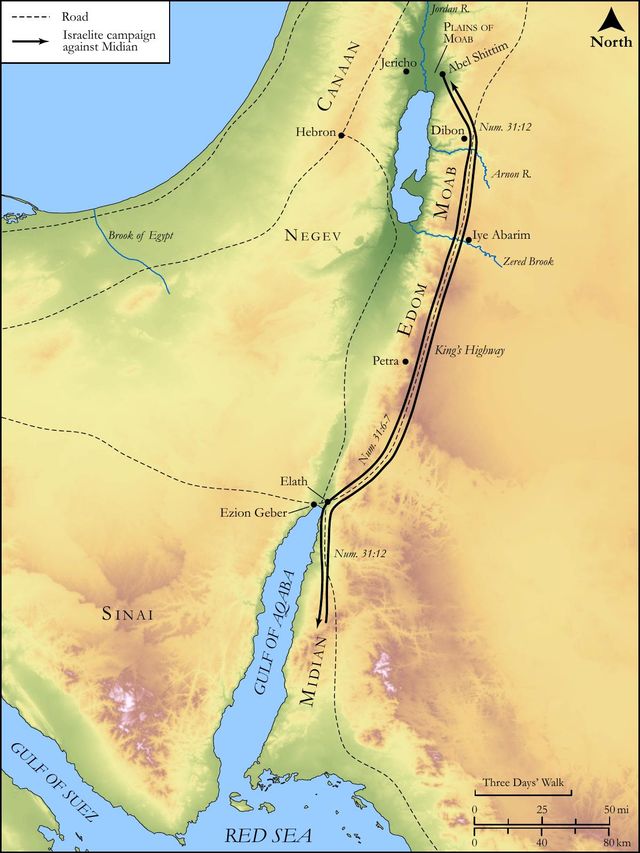
See on the biblical-era map
Study this verse
Continue studying Numbers 31:20 across the web’s major study libraries — every link below opens this exact verse, chapter, or book on the destination site.
Read & Compare
 BibleGatewayThis verse in more than 200 translations and 70 languages.
 Bible.comThe YouVersion reader — hundreds of translations, reading plans, and highlights.
 ESV.orgCrossway's official English Standard Version reader.
 NET BibleThe NET translation with 60,000+ translators' notes on every rendering decision.
 STEP BibleTyndale House's free study tool — original text, vocabulary, and scholarly resources.
 BibliaLogos Bible Software's free web reader.
 USCCBThe New American Bible (Revised Edition) with the U.S. bishops' study notes.
Commentaries
 BibleHub CommentariesDozens of classic commentaries on this verse, gathered on one page.
 StudyLightMore than 100 commentary sets — the largest collection on the web.
 BibleRefPlain-English commentary on what this verse means, verse by verse.
 Enduring WordDavid Guzik's free commentary on this chapter, widely used by Bible teachers.
 Bible Study ToolsVerse commentary alongside Greek and Hebrew study aids.
Original Language & Research
- BibleHub InterlinearThe verse word by word — original language, transliteration, and English.
- BibleHub LexiconEvery word's original-language definition and Strong's entry.
 Blue Letter BibleDeep-study tools — Strong's numbers, concordance, and word studies.
 SefariaThe Hebrew text with Rashi and centuries of Jewish commentary.
Sermons, Hymns & Audio


TrulyRandomVerse is not affiliated with these sites and doesn’t control their content. They’re linked because they’re genuinely useful.
Summary
Numbers 31:20 delivers specific divine instructions for the ceremonial purification of various spoils acquired from the Midianites, encompassing raiment, items crafted from skins, goats' hair, and wood. This command, issued in the aftermath of Israel's decisive military victory, profoundly underscores the Mosaic Law's unwavering emphasis on ritual purity. It ensures that the Israelite community remains undefiled by contact with death or the idolatrous practices of the conquered people, highlighting God's meticulous concern for the holiness of His covenant people, even extending to the thorough cleansing of inanimate objects that might carry ritual impurity.
Context
ShowHideLiterary Context
Numbers 31:20 is situated within the immediate aftermath of Israel's divinely sanctioned war against the Midianites, a punitive expedition initiated due to Midian's role in luring Israel into idolatry and sexual immorality at Peor, as detailed in Numbers 25. Following a comprehensive victory, the Israelite soldiers returned with captives and extensive spoils. However, Moses sternly rebuked the military leaders for sparing the Midianite women who had been instrumental in the Peor apostasy, commanding their execution (see Numbers 31:15-18). Immediately preceding this verse, Numbers 31:19 addresses the purification of the soldiers themselves—those who had killed or touched the dead—and their captives. Verse 20 then extends these stringent purification requirements to the inanimate objects taken as plunder. This meticulous attention to detail ensures that all potential sources of ritual impurity, whether from contact with the dead in battle or association with paganism, were thoroughly cleansed before being integrated into the Israelite camp, thereby reinforcing the pervasive nature of Israel's covenant obligations to holiness.
Historical & Cultural Context
In ancient Israel, under the Mosaic Covenant, ritual purity was an indispensable prerequisite for maintaining a holy relationship with God and for participating in communal worship and sacrifices. Contact with death, certain bodily discharges, or specific diseases rendered an individual or object ceremonially unclean (see Leviticus 11-15). The Midianites, as a pagan people deeply entrenched in idolatry and immorality, were considered defiling not only through their practices but also through their very essence and association. Consequently, the spoils of war, having been in contact with the dead and belonging to an idolatrous nation, were deemed ritually impure. The specific materials mentioned—raiment (clothing), skins, goats' hair, and wood—were common household and personal items in the camps of Israel and Midian. Each material possessed different properties regarding its ability to absorb or retain impurity, and thus required distinct methods of purification, as further elaborated in the subsequent verses (Numbers 31:21-24). This reflects a nuanced understanding of how impurity could cling to various substances, necessitating tailored cleansing protocols to restore them to a state of ritual acceptability for use within the holy community.
Key Themes
ShowHideThis verse powerfully contributes to several overarching themes within the book of Numbers and the broader Pentateuch. The most prominent is Ceremonial Purity and Holiness, emphasizing God's unwavering demand for a set-apart people, not just in their moral conduct but also in their physical environment and possessions. The detailed instructions underscore the Thoroughness of God's Requirements for Cleansing, leaving no aspect of life untouched by the need for separation from defilement. This meticulousness reflects God's Sovereign Attention to Detail, demonstrating His comprehensive care for the well-being and spiritual integrity of His people, providing clear guidelines for navigating a world filled with potential contamination. Furthermore, the purification of spoils from an idolatrous nation highlights the theme of Separation from Pagan Influence, ensuring that Israel's encounter with the unholy did not lead to their own spiritual compromise, a recurring concern throughout Israel's history (e.g., Deuteronomy 7:1-6). The very act of purification served as a constant reminder of Israel's unique covenant relationship with a holy God, who dwells among them and demands their purity (see Leviticus 19:2).
Exposition and Analysis
ShowHideKey Word Analysis
ShowHideThis Hebrew root, while often translated as "to sin" or "to miss the mark," also carries the meaning of "to cleanse," "to purge," or "to purify," particularly in a ceremonial or expiatory sense. In the context of Numbers 31:20, the command to "purify" (H2398) the spoils signifies a process of ritual cleansing to remove defilement, making them acceptable for use within the holy Israelite camp. This aspect of the word highlights that purification could involve an act of expiation or removal of that which causes defilement, even for inanimate objects, ensuring they no longer carried the "blame" or "harm" of their previous association with death and paganism.
This versatile Hebrew noun refers to "something prepared," encompassing any apparatus, implement, utensil, vessel, or even clothing. It denotes a general category of "things" or "articles." Its use here, "all that is made of skins" and "all things made of wood," signifies the comprehensive scope of the purification command, applying to a wide array of personal and household items. The inclusion of this term ensures that the command covers not just specific materials but the crafted objects themselves, emphasizing that their purpose and origin could render them impure.
This noun specifically refers to "clothing" or "garment," serving as a covering. As personal items in direct contact with individuals, raiment was highly susceptible to absorbing and retaining ritual impurity, whether from contact with the dead, bodily discharges, or association with pagan practices. The explicit mention of "raiment" underscores the meticulousness of the purification laws, ensuring that even the most intimate personal possessions were subject to cleansing, reflecting the holistic nature of God's demand for purity within the covenant community.
Verse Breakdown
ShowHide"And purify all [your] raiment"
This initial command targets clothing, a highly personal item that would have been in direct contact with the Midianites and potentially with their deceased. Clothing, being porous, was particularly prone to absorbing and retaining ritual impurity. The directive to purify "all" raiment emphasizes the comprehensive nature of the cleansing, leaving no personal item untouched by the defilement of war and pagan association, ensuring the Israelites' personal effects were ritually clean.
"and all that is made of skins"
This refers to various items crafted from animal hides, such as leather goods, tents, or containers. Skins, as organic materials, were susceptible to impurity, especially if they had been in contact with a dead body or were part of a pagan household. Their purification was essential to prevent the spread of ritual uncleanness within the Israelite camp, as these items were integral to daily life and shelter.
"and all work of goats' [hair]"
Goats' hair was a common material for weaving fabrics, especially for tents, curtains, and coarse garments, known for its durability. Similar to other textiles, items made of goats' hair could carry impurity. This specific mention highlights the meticulous detail of the purification laws, ensuring that even seemingly minor or specialized materials were not overlooked in the pursuit of communal holiness, reinforcing the idea that no aspect of the spoils was exempt.
"and all things made of wood"
Wood was a ubiquitous material for tools, utensils, furniture, and other household items. Unlike organic materials like skins or hair, wood could be purified by different methods, often by passing through fire or washing with water, depending on the nature of the impurity. The inclusion of wood underscores the principle that inanimate objects, not just people, could become ritually defiled and required specific cleansing to be made fit for use by God's holy people, demonstrating the pervasive reach of the purity laws into every aspect of material life.
Literary Devices
ShowHideNumbers 31:20 predominantly employs Enumeration and Repetition as its primary literary devices. The verse meticulously lists distinct categories of materials—raiment, skins, goats' hair, and wood—that are subject to purification. This detailed Enumeration serves to emphasize the comprehensive and meticulous nature of the purification command, ensuring that no type of material possession is overlooked. The repeated use of the quantifier "all" ("all your raiment," "all that is made of skins," "all work of goats' hair," and "all things made of wood") further reinforces this sense of Thoroughness and Universality in the cleansing process. This literary technique powerfully highlights God's demand for absolute purity, leaving no room for partial obedience or selective adherence to the law. The specificity of the materials also implies a practical, tangible application of abstract theological principles, grounding the concept of holiness in the everyday objects of life and illustrating the pervasive reach of God's covenant requirements.
Theological and Thematic Connections
ShowHideNumbers 31:20, with its precise instructions for purifying inanimate objects, profoundly illustrates the pervasive nature of holiness required by God under the Old Covenant. It teaches that impurity, whether through contact with death or association with paganism, could cling not only to people but also to their possessions and environment, rendering them unfit for use within the holy community. This meticulous attention to the cleansing of material things underscores the holistic demand for purity in Israel's life, reflecting God's own absolute holiness. The physical purification rituals were not merely hygienic but served as tangible reminders of the spiritual separation required from the defilement of the world, preparing the people to live in the presence of a holy God. This foreshadows the New Testament emphasis on spiritual transformation that impacts every area of a believer's life, not just their inward disposition, but also their external conduct and the environment they cultivate.
Reflection and Application
ShowHideWhile the specific ceremonial laws of Numbers 31:20 are no longer literally binding for New Covenant believers—as Christ has fulfilled the law—the underlying principles of purity, separation, and thoroughness retain profound spiritual relevance for our lives today. Just as the Israelites were commanded to cleanse their physical possessions from defilement, we are called to spiritual purification from the pervasive influences of sin and the world. This necessitates exercising profound discernment over what we allow into our lives, our homes, and our minds—our "raiment" and "possessions" in a spiritual sense. We must honestly ask ourselves: Are there attitudes, habits, forms of entertainment, or relationships that, though not inherently sinful in themselves, nevertheless defile our spirits, hinder our walk with God, or compromise our witness? The meticulousness of God's command in this ancient text reminds us that our pursuit of holiness should be comprehensive and intentional, extending to every corner of our existence. It calls for a conscious and disciplined effort to remove anything that might compromise our spiritual purity and draw us away from our wholehearted devotion to Christ, ensuring that our lives are truly set apart for His glory.
Questions for Reflection
ShowHideFAQ
ShowHideWhy were these specific materials (raiment, skins, goats' hair, wood) singled out for purification, and how were they purified?
ShowHideThese materials were common in ancient Israelite daily life and represented different categories of items that could absorb or retain ritual impurity. Raiment (clothing) and items made of skins or goats' hair (various textiles and leather goods) were organic, porous, and often in direct contact with individuals, making them highly susceptible to absorbing impurity through contact with the dead or defiled persons/objects. Wood, while generally less porous than textiles, was a ubiquitous material for household items, tools, and furniture, and could become impure through direct contact with a source of defilement, particularly if it was used in a pagan context. The specific mention of these materials, alongside the broader categories of metals in Numbers 31:22-23, demonstrates the comprehensive nature of the Mosaic purity laws, which accounted for the different properties of materials and how impurity could cling to them. Each material required a specific method of purification: items that could withstand fire were passed through it, then washed with water; items that could not withstand fire were only washed with water (as detailed in Numbers 31:23).
Does Numbers 31:20 have any relevance for Christians today, given that ceremonial laws are no longer strictly observed?
ShowHideWhile Christians are indeed no longer bound by the literal ceremonial laws of the Old Covenant, as Christ has fulfilled them and established a New Covenant (see Colossians 2:16-17), the underlying spiritual principles of Numbers 31:20 remain profoundly relevant and instructive. The verse teaches us about God's unwavering demand for holiness and purity, not just in our innermost being but also in our external lives and the environment we cultivate. It underscores the vital importance of spiritual discernment—recognizing and actively separating ourselves from anything that might defile our spirits, compromise our faith, or hinder our walk with God (see 2 Corinthians 6:17). This includes being mindful of the influences we allow into our homes, through media consumption, relationships, and even our possessions. The meticulousness of the ancient law serves as a powerful reminder that our pursuit of holiness should be comprehensive, impacting every aspect of our lives, as we are called to be holy in all our conduct, just as God is holy (see 1 Peter 1:15-16).
Christ-Centered Fulfillment
ShowHideThe meticulous purification rituals for inanimate objects in Numbers 31:20, necessitated by contact with death and pagan defilement, powerfully foreshadow the ultimate and comprehensive cleansing provided by Jesus Christ. In the Old Covenant, the blood of animals and various washings could only ritually cleanse external defilement, preparing people and objects for temporary access to God's presence (see Hebrews 9:13). These meticulous rituals were a shadow, pointing to a greater reality. Christ, through His perfect and singular sacrifice on the cross, became the Lamb of God who takes away the sin of the world, providing a spiritual purification that is not merely external or temporary, but internal, eternal, and complete (see John 1:29 and Hebrews 10:10). His shed blood cleanses our consciences from dead works to serve the living God (see Hebrews 9:14), purifying us from the defilement of sin and the world's pervasive influence. Just as the spoils of war needed to be made fit for integration into the holy Israelite camp, so too are believers, once defiled by sin and alienation from God, made holy and acceptable in God's sight through union with Christ, becoming a spiritual dwelling place for the Spirit (see Ephesians 2:21-22). He is our ultimate purification, making us truly clean, inside and out, for eternal fellowship with a holy God (see 1 John 1:7).