


Numbers 16:49
- וַיִּהְיוּvai·yih·Yuand they wereH1961Conj-w ¦ V-Qal-ConsecImperf-3mpVerb Qal Consecutive Imperfect 3rd Plural Masculineוַandיִּהְיוּthey were
- הַמֵּתִיםha·me·Timthose [who] diedH4191Art ¦ V-Qal-Prtcpl-mpVerb Qal Participle Plural Masculine Absoluteהַthoseמֵּתִים[who] died
- בַּמַּגֵּפָהba·ma·ge·Fahby the plagueH4046Prep-b ¦ N-fsNoun Singular Feminine Absoluteבַּby theמַּגֵּפָהplague
- אַרְבָּעָה'ar·ba·'Ahfour-H702Adj-csAdjective Numerical Singular common gender Absolute
- עָשָׂר'a·SarteenH6240Adj-csAdjective Numerical Singular common gender Absolute
- אֶלֶף'E·lefthousandH505Adj-csAdjective Numerical Singular common gender Absolute
- וּשְׁבַעu·she·Va'and sevenH7651Conj-w ¦ Adj-cscAdjective Numerical Singular common gender Constructוּandשְׁבַעseven
- מֵאוֹתme·'othundred<s>H3967Adj-fpAdjective Numerical Plural Feminine Absolute
- מִלְּבַדmi·le·Vad<from> <to> besidesH905Prep-m ¦ Prep-l ¦ N-mscNoun Singular Masculine Constructמִ<from>לְּ<to>בַדbesides
- הַמֵּתִיםha·me·Timthe [ones who] diedH4191Art ¦ V-Qal-Prtcpl-mpVerb Qal Participle Plural Masculine Absoluteהַtheמֵּתִים[ones who] died
- עַל'alonH5921PrepPreposition
- דְּבַרde·var[the] matter ofH1697N-mscNoun Singular Masculine Construct
- קֹרַחKo·rachKorahH7141N-proper-mNoun Proper Masculine
English is a literal word-by-word gloss of the Hebrew, not the KJV's wording. Why?
This is the original text the KJV's translators worked from — each Hebrew word with its own literal English meaning in this verse, prepared by scholars at Tyndale House, Cambridge. The KJV translates whole sentences, not word by word, so its wording differs: one Hebrew word can become several English words, and the KJV may choose “the LORD” where the gloss reads “Yahweh”. Both are faithful — they answer different questions. For the KJV's own rendering, switch to the KJV text.
Details
See on the biblical-era map
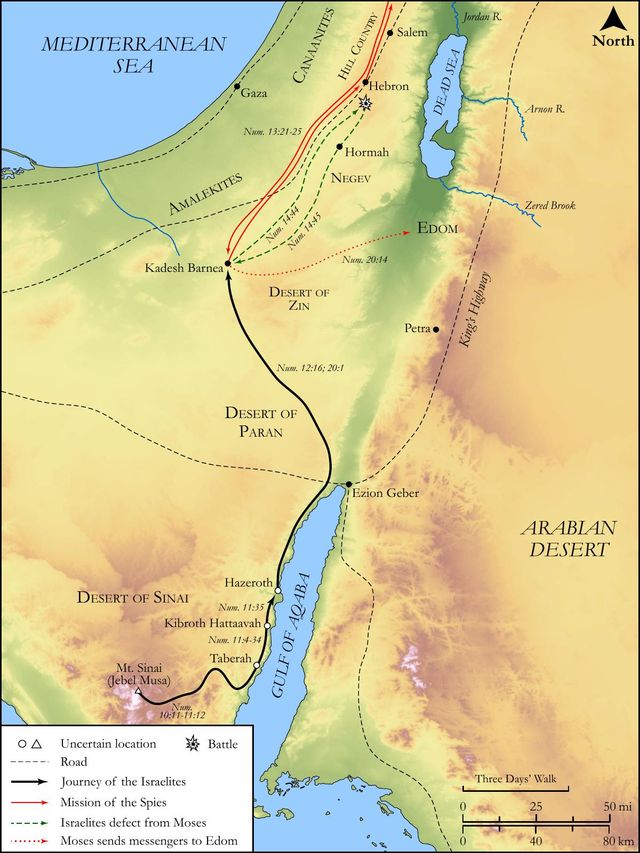
Study this verse
Public-domain commentary
Matthew Henry
From his Commentary on the Whole Bible. Henry comments on passages, not single verses — this entry covers Numbers 16:41–50. His three-level outline is real structure in the source text, so it is rendered as structure.
Here is, I. A new rebellion raised the very next day against Moses and Aaron. Be astonished, O heavens, at this, and wonder, O earth! Was there ever such an instance of the incurable corruption of sinners? On the morrow (Num 16:41) the body of the people mutinied. 1. Though they were so lately terrified by the sight of the punishment of the rebels. The shrieks of those sinking sinners, those sinners against their own souls, were yet sounding in their ears, the smell of the fire yet remained, and the gaping earth was scarcely thoroughly closed, and yet the same sins were re-acted and all these warnings slighted. 2. Though they were so lately saved from sharing in the same punishment, and the survivors were as brands plucked out of the burning, yet they fly in the face of Moses and Aaron, to whose intercession they owed their preservation. Their charge runs very high: You have killed the people of the Lord. Could any thing have been said more unjustly and maliciously? They canonize the rebels, calling those the people of the Lord who died in arms against him. They stigmatize divine justice itself. It was plain enough that Moses and Aaron had no hand in their death (they did what they could to save them), so that in charging them with murder they did in effect charge God himself with it. The continued obstinacy of this people, notwithstanding the terrors of God's law as it was given on Mount Sinai, and the terrors of his judgments as they were here executed on the disobedient, shows how necessary the grace of God is to the effectual change of men's hearts and lives, without which the most likely means will never attain the end. Love will do what fear could not.
II.God's speedy appearance against the rebels.
When they had gathered against Moses and Aaron, perhaps with a design to depose or murder them, they looked towards the tabernacle, as if their misgiving consciences expected some frowns thence, and, behold, the glory of the Lord appeared (Num 16:42), for the protection of his servants, and the confusion of his and their accusers and adversaries. Moses and Aaron thereupon came before the tabernacle, partly for their own safety (there they took sanctuary from the strife of tongues, Psa 27:5; Psa 31:20), and partly for advice, to know what was the mind of God upon this occasion, Num 16:43. Justice hereupon declares that they deserve to be consumed in a moment, Num 16:45. Why should those live another day who hate to be reformed, and whose rebellions are their daily practices? Let just vengeance take place and do its work, and the trouble will soon be over; only Moses and Aaron must first be secured.
III.The intercession which Moses and Aaron made for them.
Though they had as much reason, one would think, as Elias had to make intercession against Israel (Rom 11:2), yet they forgive and forget the indignities offered them, and are the best friends their enemies have.
1.They both fell on their faces, humbly to intercede with God for mercy, knowing how great the provocation was. This they had done several times before, upon similar occasions; and, though the people had basely requited them for it, yet, God having graciously accepted them, they still have recourse to the same method. This is praying always.
2.Moses, perceiving that the plague had begun in the congregation of the rebels (that is, that body of them which was gathered against Moses), sent Aaron by an act of his priestly office to make atonement for them, Num 16:46. And Aaron readily went and burned incense between the living and the dead, not to purify the infected air, but to pacify an offended God, and so stayed the progress of the judgment. By this it appeared,
(1.)That Aaron was a very good man, and a man that had a true love for the children of his people, though they hated and envied him. Though God was now avenging his quarrel and pleading the cause of his priesthood, yet he interposes to turn away God's wrath. Nay, forgetting his age and gravity, he ran into the midst of the congregation to help them. He did not say, "Let them smart awhile, and then, when I come, I shall be the more welcome;" but, as one tender of the life of every Israelite, he makes all possible speed into the gap at which death was entering. Moses and Aaron, who had been charged with killing the people of the Lord, might justly have upbraided them now; could they expect those to be their saviours whom they had so invidiously called their murderers? But those good men have taught us here by their example not to be sullen towards those that are peevish with us, nor to take the advantage which men give us by their provoking language to deny them any real kindness which it is in the power of our hands to do them. We must render good for evil.
(2.)That Aaron was a very bold man - bold to venture into the midst of an enraged rabble that were gathered together against him, and who, for aught he knew, might be the more exasperated by the plague that had begun - bold to venture into the midst of the infection, where the arrows of death flew thickest, and hundreds, nay thousands, were falling on the right hand and on the left. To save their lives he put his own into his hand, not counting it dear to him, so that he might but fulfil his ministry.
(3.)That Aaron was a man of God, and ordained for men, in things pertaining to God. His call to the priesthood was hereby abundantly confirmed and set above all contradiction; God had not only saved his life when the intruders were cut off, but now made him an instrument for saving Israel. Compare the censer of Aaron here with the censers of those sinners against their own souls. Those provoked God's anger, this pacified it; those destroyed men's lives, this saved them; no room therefore is left to doubt of Aaron's call to the priesthood. Note, Those make out the best title to public honours that lay out themselves the most for public good and obtain mercy of the Lord to be faithful and useful. If any man will be great, let him make himself the servant of all.
(4.)That Aaron was a type of Christ, who came into the world to make an atonement for sin and to turn away the wrath of God from us, and who, by his mediation and intercession, stands between the living and the dead, to secure his chosen Israel to himself, and save them out of the midst of a world infected with sin and the curse.
IV.The result and issue of the whole matter.
1.God's justice was glorified in the death of some. Great execution the sword of the Lord did in a very little time. Though Aaron made all the haste he could, yet, before he could reach his post of service, there were 14,700 men laid dead upon the spot, Num 16:49. There were but few comparatively that died about the matter of Korah, the ring-leaders only were made examples; but, the people not being led to repentance by the patience and forbearance of God with them, justice is not now so sparing of the blood of Israelites. They complained of the death of a few hundreds as an unmerciful slaughter made among the people of the Lord, but here God silences that complaint by the slaughter of many thousands. Note, Those that quarrel with less judgments prepare greater for themselves; for when God judges he will overcome.
2.His mercy was glorified in the preservation of the rest. God showed them what he could do by his power, and what he might do in justice, but then showed them what he would do in his love and pity: he would, notwithstanding all this, preserve them a people to himself in and by a mediator. The cloud of Aaron's incense coming from his hand stayed the plague. Note, It is much for the glory of God's goodness that many a time even in wrath he remembers mercy. And, even when judgments have been begun, prayer puts a stop to them; so ready is he to forgive, and so little pleasure does he take in the death of sinners.
Continue studying Numbers 16:49 across the web’s major study libraries — every link below opens this exact verse, chapter, or book on the destination site.
Read & Compare
 BibleGatewayThis verse in more than 200 translations and 70 languages.
 Bible.comThe YouVersion reader — hundreds of translations, reading plans, and highlights.
 ESV.orgCrossway's official English Standard Version reader.
 NET BibleThe NET translation with 60,000+ translators' notes on every rendering decision.
 STEP BibleTyndale House's free study tool — original text, vocabulary, and scholarly resources.
 BibliaLogos Bible Software's free web reader.
 USCCBThe New American Bible (Revised Edition) with the U.S. bishops' study notes.
Commentaries
 BibleHub CommentariesDozens of classic commentaries on this verse, gathered on one page.
 StudyLightMore than 100 commentary sets — the largest collection on the web.
 BibleRefPlain-English commentary on what this verse means, verse by verse.
 Enduring WordDavid Guzik's free commentary on this chapter, widely used by Bible teachers.
 Bible Study ToolsVerse commentary alongside Greek and Hebrew study aids.
Original Language & Research
- BibleHub InterlinearThe verse word by word — original language, transliteration, and English.
- BibleHub LexiconEvery word's original-language definition and Strong's entry.
 Blue Letter BibleDeep-study tools — Strong's numbers, concordance, and word studies.
 SefariaThe Hebrew text with Rashi and centuries of Jewish commentary.
Sermons, Hymns & Audio


TrulyRandomVerse is not affiliated with these sites and doesn’t control their content. They’re linked because they’re genuinely useful.
Summary
Numbers 16:49 records the chilling final casualty count of the divinely inflicted plague that swept through the Israelite congregation. This devastating plague erupted as a direct consequence of the people's immediate murmuring and open rebellion against Moses and Aaron, following the Lord's prior judgment on Korah, Dathan, and Abiram. The verse precisely states that 14,700 individuals perished from this specific plague, a figure explicitly differentiated from those who died earlier in connection with Korah's initial rebellion, thereby underscoring the severe and widespread nature of God's holy wrath against persistent sin and defiance.
Context
ShowHideLiterary Context
Numbers 16:49 serves as the grim epilogue to one of the most intense and rapid successions of divine judgments in the Pentateuch. The preceding narrative details the immediate aftermath of Korah's audacious rebellion against the divinely appointed leadership of Moses and Aaron. After the earth dramatically swallowed Dathan and Abiram's households and the 250 incense-offering leaders were consumed by fire (Numbers 16:31-35), the very next day, the entire congregation of Israel, instead of repenting, murmured against Moses and Aaron, accusing them of killing the Lord's people (Numbers 16:41). This fresh act of defiance provoked the Lord's swift and consuming wrath, causing a plague to break out among them. Moses, under divine instruction, commanded Aaron, the high priest, to take a censer with fire from the altar and incense, and run into the midst of the congregation to make atonement. Aaron obeyed, courageously standing "between the living and the dead," and the plague was stopped (Numbers 16:46-48). Verse 49 then delivers the shocking final death toll from this specific plague, meticulously distinguishing it from the earlier fatalities, thus bringing a somber and conclusive end to this harrowing narrative of rebellion and divine retribution.
Historical & Cultural Context
The events of Numbers 16 are situated squarely within Israel's forty-year wilderness wanderings, a formative period characterized by God's direct governance, miraculous provision, and often severe discipline. The Israelites, a nascent nation recently delivered from Egyptian bondage, were undergoing a profound process of covenant formation, learning to live under the Mosaic Law. Central to this new national identity was the divinely established authority structure, particularly the roles of Moses as the supreme leader and Aaron as the consecrated high priest. Rebellion against these leaders, as Moses himself articulated, was not merely insubordination to human figures but a direct challenge to God's own established order and His sovereign authority (Numbers 16:11). Culturally, the concept of a "plague" (מַגֵּפָה, maggêphâh) was universally understood in the ancient Near East, and especially within Israel, as a direct, punitive divine intervention – a "stroke" or "blow" from God, often in response to corporate or individual sin. The swiftness, severity, and widespread nature of such judgments were intended to instill a profound fear of the Lord and reinforce the sanctity of His commands and the holiness of His appointed priesthood, which were crucial for a people prone to idolatry and disobedience in a pagan-dominated environment.
Key Themes
ShowHideNumbers 16:49 powerfully reinforces several overarching themes foundational to the book of Numbers and the entire Pentateuch. Firstly, it starkly illustrates the Severity of Divine Judgment against sin, particularly the insidious sins of rebellion against God's appointed authority and persistent murmuring against His servants. The staggering death toll demonstrates unequivocally that God's holiness demands a response to sin, and His wrath is a terrifying reality for those who defy Him (Numbers 14:11-12). Secondly, the verse underscores the dire Consequences of Corporate Sin and Murmuring. Even after witnessing the earth swallow Korah's company, the congregation's immediate and widespread complaint demonstrates a hardened heart and a profound lack of fear of the Lord, leading to an even more widespread and devastating judgment. This illustrates that discontent and rebellion, when unchecked, can have swift and deadly outcomes, impacting the entire community. Thirdly, and implicitly, the verse points to the Necessity of Atonement and Intercession. The plague was only halted by Aaron's swift, divinely instructed act of atonement, standing as a mediator between God's wrath and the people (Numbers 16:48). This act foreshadows the ongoing and ultimate need for a priestly mediator to bridge the chasm between a holy God and sinful humanity, a theme that finds its ultimate culmination in the New Testament's revelation of Christ.
Exposition and Analysis
ShowHideKey Word Analysis
ShowHideThe Hebrew word מַגֵּפָה (maggêphâh) is derived from the primitive root נָגַף (nāgap̄), meaning "to strike" or "to smite." As a noun, it denotes a "pestilence," "slaughter," or "stroke," specifically implying a divine infliction. Unlike a natural calamity, maggêphâh in this context signifies a direct, punitive act of God, a targeted "blow" in response to sin or disobedience. Its use here underscores that the deaths were not accidental or coincidental but a precise and deliberate judgment from the Lord.
The verb מוּת (mûwth) is a primitive root meaning "to die" (literally or figuratively) or, causatively, "to kill." In this verse, the passive construction "they that died" subtly yet powerfully points to the divine agent behind the deaths – God Himself. The sheer number of those who "died" highlights the immense scale of this divine intervention and the absolute finality of the judgment, emphasizing the devastating consequence of defying divine authority.
The Hebrew word דָּבָר (dâbâr), often translated as "word," carries a broad semantic range, including "thing," "affair," "business," or "cause." In the phrase "the matter of Korah" (דְּבַר־קֹרַח, dĕvar-qōraḥ), it serves as a comprehensive descriptor for the entire rebellion initiated by Korah, Dathan, and Abiram. This encompasses their challenge to Moses' and Aaron's authority, their unauthorized offering of incense, and the subsequent, distinct judgments of the earth swallowing some and fire consuming others. The verse's distinction ("beside them that died about the matter of Korah") emphasizes that the 14,700 were a separate and additional group of fatalities, highlighting the distinct yet interconnected nature of God's layered judgments.
Verse Breakdown
ShowHide"Now they that died in the plague were fourteen thousand and seven hundred,"
This initial clause delivers the precise and staggering numerical tally of those who perished from the immediate, divinely sent plague that erupted among the murmuring congregation. The specific figure of "fourteen thousand and seven hundred" is not a round estimate but a meticulously recorded number, underscoring the immense scale, gravity, and devastating impact of God's wrath. The phrase "in the plague" clearly identifies the singular, supernatural cause of death as a direct affliction from God, distinct from other forms of demise.
"beside them that died about the matter of Korah."
This concluding phrase serves as a crucial clarification, explicitly stating that the 14,700 deaths from the plague are an additional and separate toll. This figure is distinct from the initial fatalities directly associated with Korah's rebellion, which included the 250 men consumed by fire for offering unauthorized incense (Numbers 16:35) and the households of Dathan and Abiram, along with Korah himself, who were swallowed by the earth (Numbers 16:31-33). This distinction emphasizes the layered nature of God's judgment and the cumulative, escalating consequences of continued and unrepentant rebellion.
Literary Devices
ShowHideNumbers 16:49 masterfully employs several literary devices to convey its profound and sobering message. Numerical Precision is strikingly evident in the exact figure of "fourteen thousand and seven hundred," which lends an undeniable sense of factual gravity and authoritative finality to the account, emphasizing the terrifying reality and immense scale of the divine judgment. This precision also functions as a powerful Summary Statement, providing a conclusive total for the immediate plague, bringing a grim and definitive closure to the narrative of the congregation's murmuring and its devastating consequences. Contrast is effectively utilized by explicitly distinguishing between those who died "in the plague" and those who died "about the matter of Korah." This clear separation highlights two distinct but intimately related phases of divine wrath, underscoring that the congregation's subsequent murmuring provoked a fresh, widespread, and additional judgment, extending beyond the initial punishment meted out to the direct rebels. Finally, the verse functions as a stark and chilling Theological Exclamation of the severity of God's holiness and His utter intolerance for rebellion, serving as an enduring and solemn reminder to the reader of the perilous dangers of defying divine authority and the sanctity of His established order.
Theological and Thematic Connections
ShowHideNumbers 16:49 stands as a profound theological statement on the absolute holiness of God and the terrifying gravity of sin, particularly corporate rebellion and persistent murmuring against divinely appointed authority. It unequivocally reveals that God's patience, though vast, has definitive limits, and His justice is swift and decisive when His covenant people persist in defiance and unbelief. The immense death toll underscores the seriousness with which God views challenges to His sovereignty, His established order, and the sanctity of His chosen priesthood. Furthermore, the fact that the plague was halted only through Aaron's immediate intercession and atonement highlights the critical and indispensable role of mediation in turning away divine wrath. This act of the high priest standing "between the living and the dead" is a powerful Old Testament prefigurement of the ultimate and ongoing need for a mediator to bridge the chasm between a holy God and sinful humanity, profoundly demonstrating that divine judgment can only be averted through a divinely ordained and accepted means of atonement.
Reflection and Application
ShowHideNumbers 16:49 serves as a profoundly sobering reminder of the devastating consequences of sin, particularly the insidious sins of murmuring, discontent, and open rebellion against God's established order and His appointed leaders. In an age where authority is frequently questioned, grievances are readily aired, and a spirit of entitlement often prevails, this passage challenges us to cultivate a spirit of humility, submission, and profound reverence for God and those He places in positions of leadership, whether in the church, our families, or society. The sheer number of deaths should instill within us a healthy and appropriate fear of the Lord, reminding us that God is not to be trifled with, and His holiness demands our utmost respect and obedience. It compels us to engage in honest self-examination: Do we find ourselves complaining when circumstances are difficult or when things do not align with our desires? Do we subtly or overtly undermine spiritual authority? Do we take God's abundant grace for granted, presuming upon His patience and mercy? Critically, the stopping of the plague through Aaron's decisive act of intercession also offers a powerful message of hope: even in the midst of severe judgment, God graciously provides a way for atonement and reconciliation. This calls us, in turn, to wholeheartedly embrace the means of grace He has provided, to humbly confess our sins, and to earnestly seek His boundless mercy through the ultimate and perfect High Priest, Jesus Christ.
Questions for Reflection
ShowHideFAQ
ShowHideWhy was the plague sent after Korah's rebellion, and why were so many people affected?
ShowHideThe plague was sent because, immediately after witnessing God's terrifying and undeniable judgment on Korah, Dathan, Abiram, and the 250 leaders who offered unauthorized incense, the entire congregation of Israel, instead of humbling themselves and repenting, murmured against Moses and Aaron. They accused them, saying, "You have killed the Lord's people" (Numbers 16:41). This was far more than a simple complaint; it was a direct and audacious challenge to God's own authority, as Moses and Aaron were His divinely appointed and consecrated representatives. Their collective murmuring demonstrated a profound lack of repentance, a hardened heart, and a shocking absence of fear and faith, even after such a clear and recent display of divine power and wrath. The immense number of people affected (14,700) underscores the corporate nature of their sin and the extreme seriousness with which God views rebellion, defiance, and a lack of reverence within His covenant community. It served as a stark and unforgettable lesson that challenging God's authority, even indirectly through His servants, carries severe and widespread consequences, impacting the entire community.
Christ-Centered Fulfillment
ShowHideNumbers 16:49, with its grim tally of those who perished in the divinely sent plague, powerfully foreshadows the ultimate consequences of sin and the indispensable necessity of a perfect High Priest. Aaron's swift and courageous action of running into the midst of the congregation, standing "between the living and the dead" with incense and fire from the altar to make immediate atonement (Numbers 16:47-48), is a vivid and profound Old Testament type of Christ. The plague itself is a terrifying manifestation of divine wrath against sin, offering a chilling glimpse of the spiritual death that all humanity faces due to our inherent rebellion against a holy God (Romans 6:23). Just as Aaron, the high priest, intervened decisively to stop the physical plague, Jesus Christ, our great and eternal High Priest, intervened perfectly to stop the spiritual plague of sin and death. He did not merely stand between the living and the dead; He became the ultimate sacrifice, offering Himself as the perfect, once-for-all atonement on the cross, bearing the full, unmitigated weight of God's wrath against sin (Isaiah 53:5-6). Through His perfect, substitutionary sacrifice, He fully appeased divine justice, securing eternal life and reconciliation for all who believe (Hebrews 9:11-14). Thus, Numbers 16:49, while detailing a severe and terrifying judgment, ultimately points forward to the glorious truth that God, in His infinite mercy and perfect wisdom, provided the perfect mediator in Christ, who delivers us from the plague of sin and offers us true, abundant, and everlasting life.